AasraAI
The Problem
When people face problems involving scholarships, applications, government services, complaints, education, or other essential services, finding information is often not the biggest challenge.
The real challenge is knowing what to do next.
People may have to search through multiple websites, understand complicated instructions, figure out which option applies to them, and then write emails, complaints, appeals, or applications themselves. For someone who is already confused or under pressure, this process can become overwhelming.
We wanted to build something that goes beyond simply answering questions.
Our Inspiration
AasraAI was inspired by a simple observation:
Access to information does not always mean access to a solution.
AI can understand natural language extremely well, but many AI assistants stop after providing an answer. We wanted to explore how AI could help a person move from a problem to a practical next step.
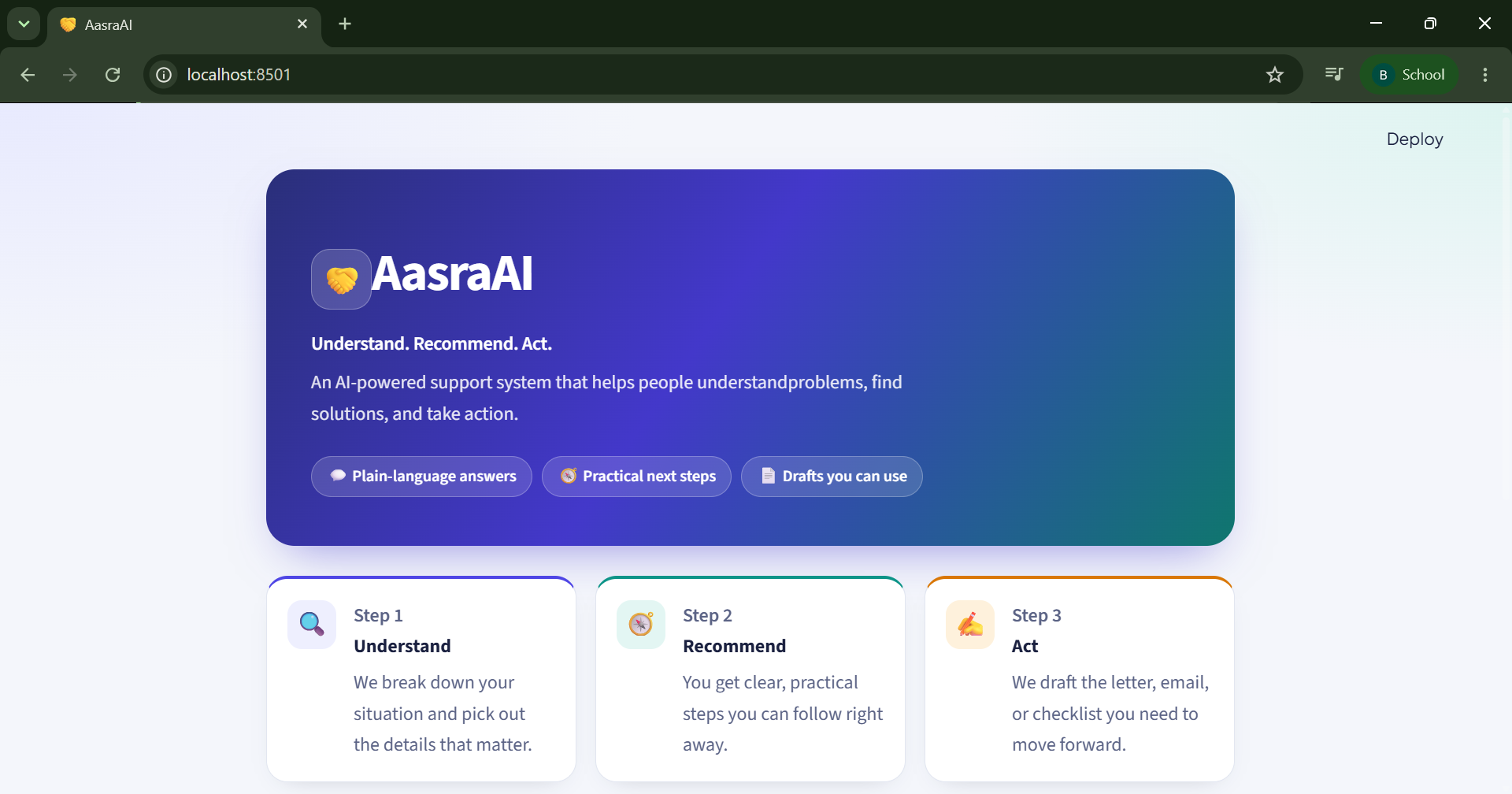
That led us to build AasraAI around three simple stages:
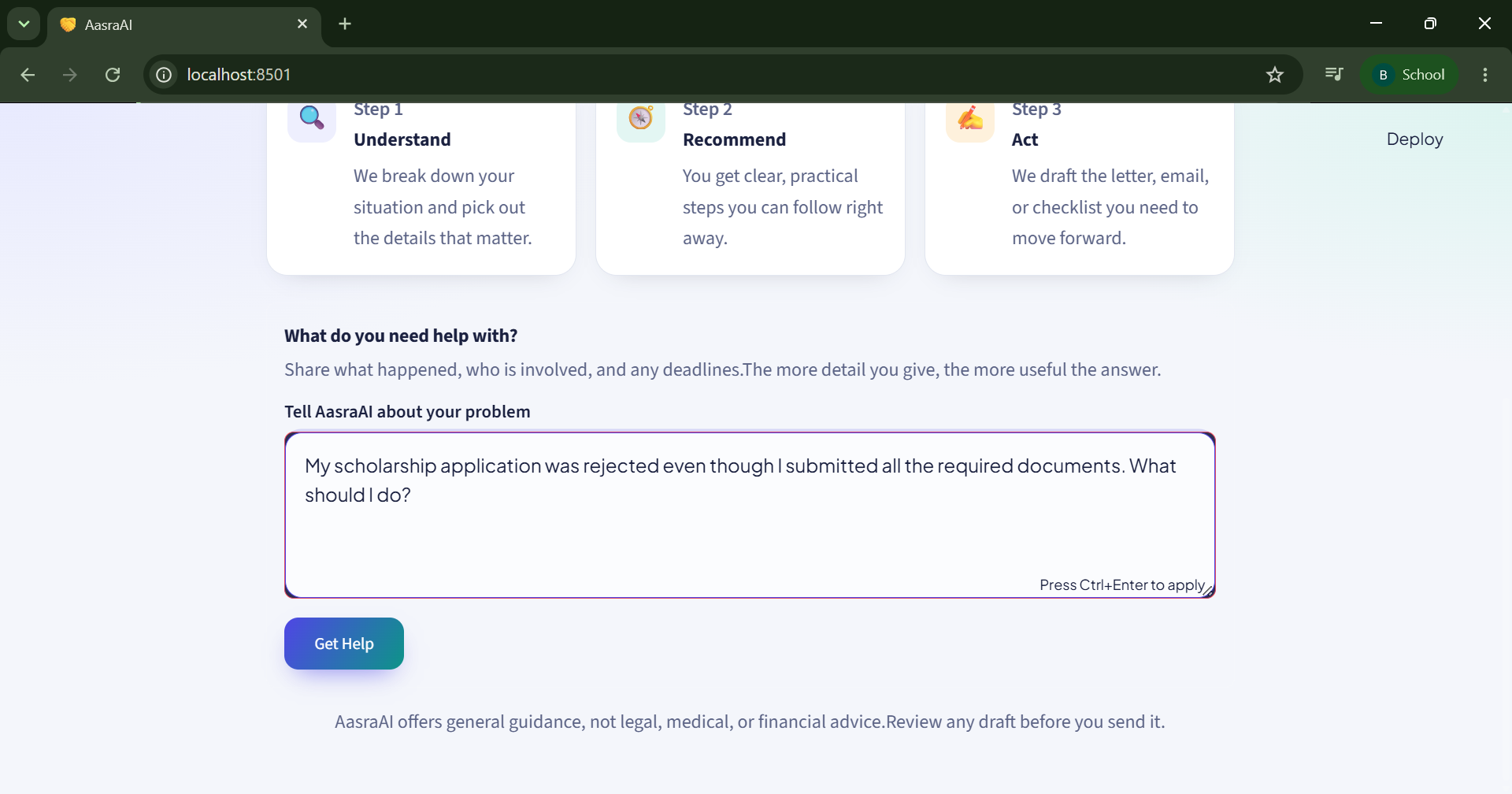
Understand → Recommend → Act
Our Solution
AasraAI is an AI-powered support system that helps people understand their problems, find practical solutions, and take action.
A user can describe their situation naturally, without needing to know the correct terminology or procedure.
AasraAI then:
- Understands the user's situation and identifies the important details.
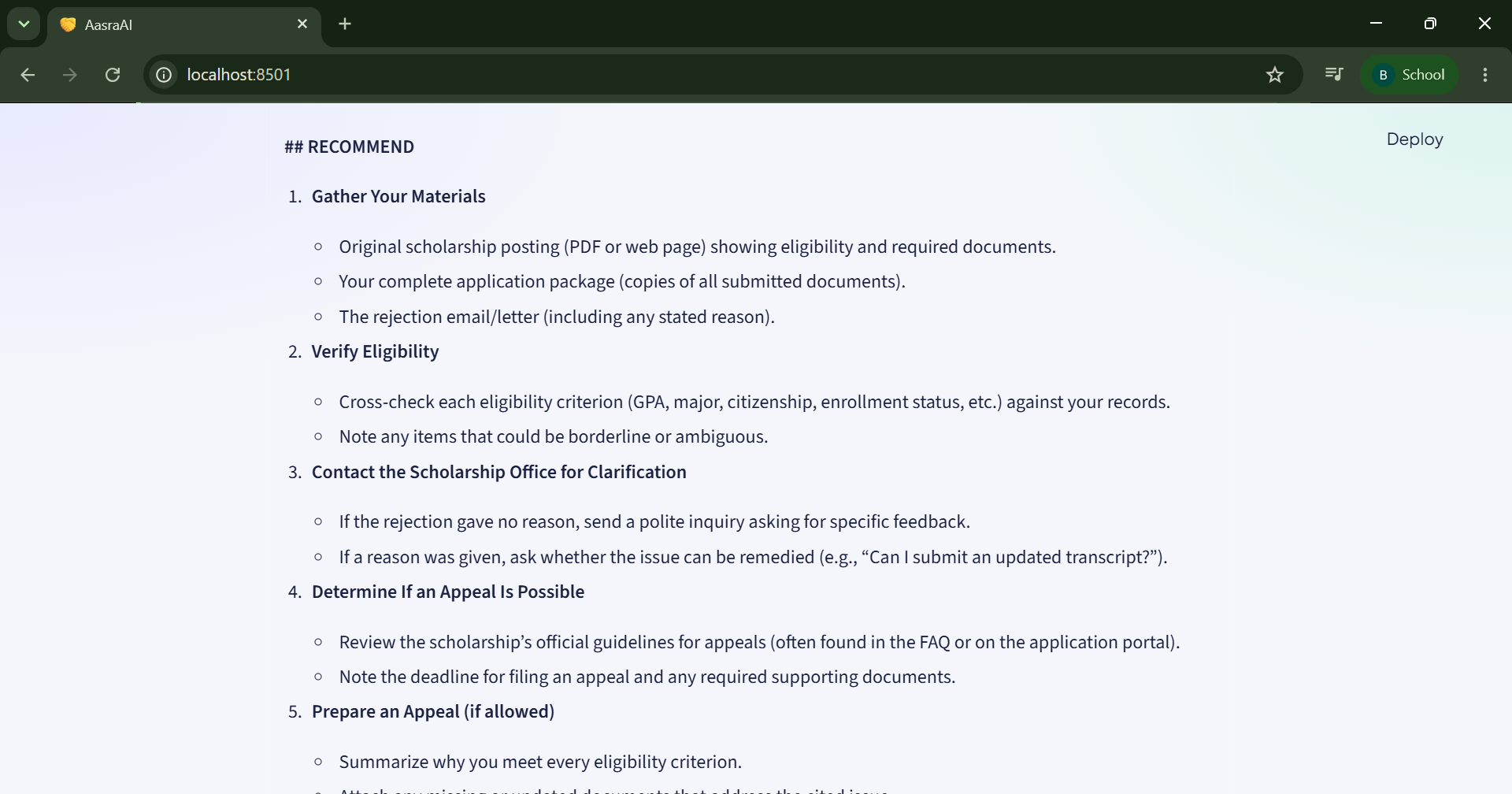
- Recommends relevant and practical next steps.
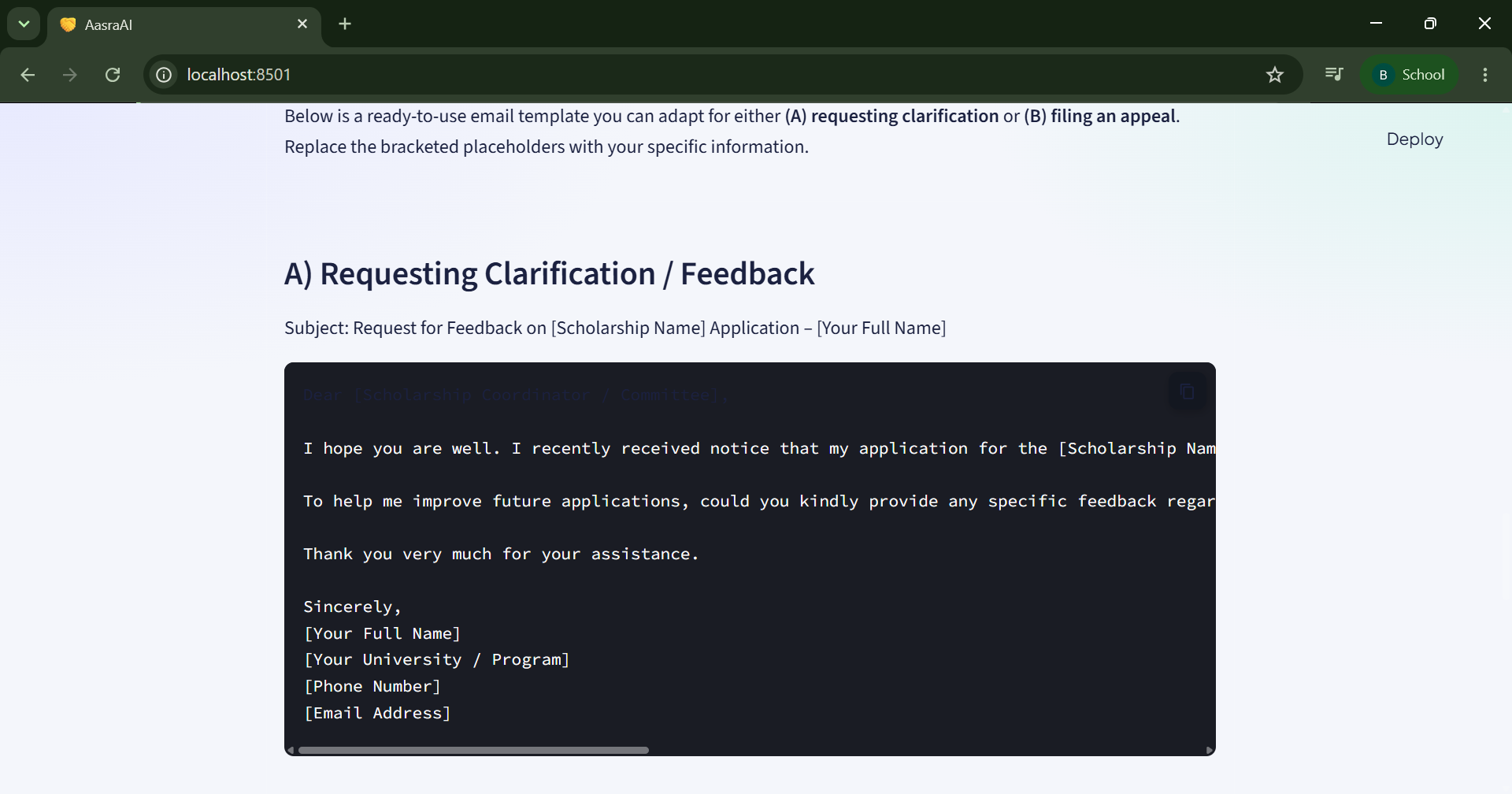
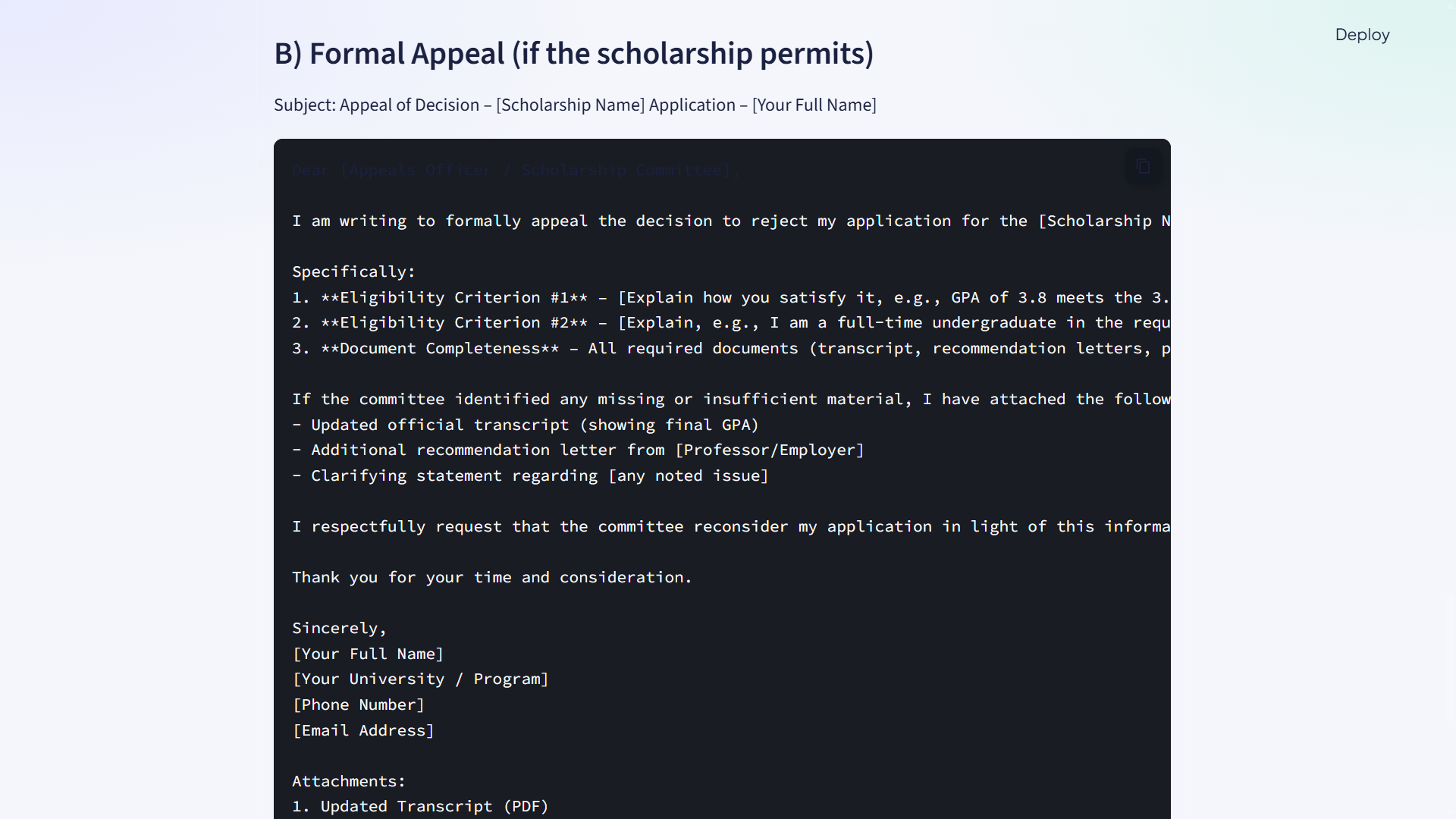
- Acts by turning those recommendations into useful outputs such as drafts, checklists, action plans, appeals, complaints, emails, and follow-up messages.
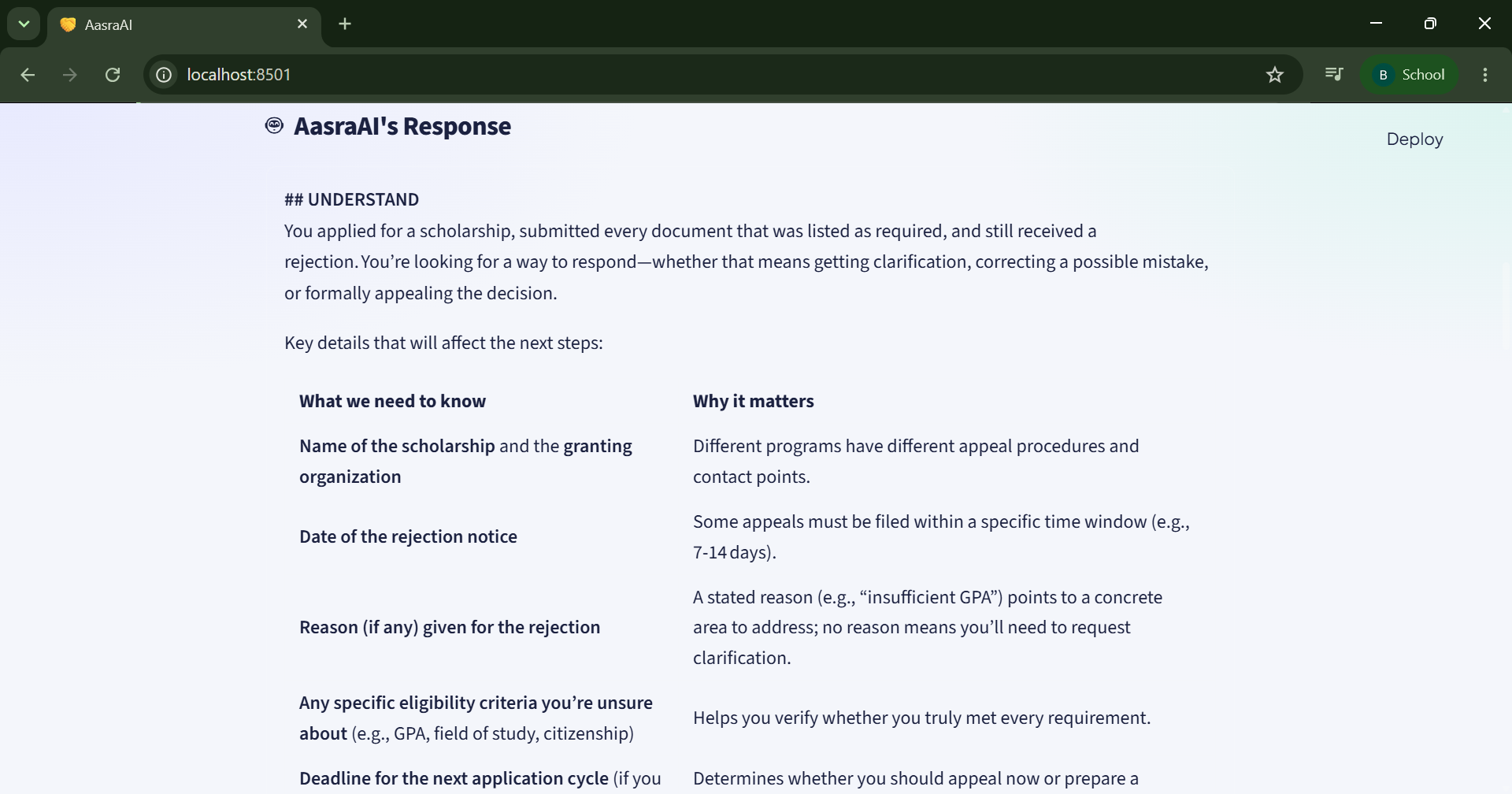
For example, if a student says that their scholarship application was rejected, AasraAI can help understand the situation, suggest possible next steps, and create a structured appeal or follow-up message.
The goal is not simply to give another AI-generated answer.
The goal is to help the user move forward.
How We Built It
We built AasraAI as a web-based AI application using Streamlit for the interface and the Groq API for AI-powered natural-language processing.
The application accepts a user's problem as natural language and sends it to the AI model with a structured prompt designed around the three-stage workflow:
Understand → Recommend → Act
The response is then presented in separate sections so that users can easily distinguish:
- What is happening
- What they should consider doing
- What they can do next
We also designed the interface to make the workflow visually clear rather than presenting users with a traditional chatbot conversation.
What We Learned
While building AasraAI, we learned that creating a useful AI application is not only about connecting an LLM to a user interface.
The way an AI response is structured matters.
We learned how to:
- Work with LLM APIs and structured prompts
- Convert unstructured user problems into actionable information
- Design an AI workflow around user outcomes
- Build a simple AI-powered web application with Streamlit
- Handle API keys securely using environment variables
- Design an interface that makes AI responses easier to understand
- Think about responsible AI when providing guidance for real-world problems
One of our biggest takeaways was that AI becomes more useful when it is designed around what the user needs to accomplish, rather than simply what the model can generate.
Challenges We Faced
One of our biggest challenges was avoiding the idea of building "just another chatbot."
A generic chatbot can answer questions, but our goal was to create a system that helps users progress toward an actual action.
We also had to think about situations where users provide incomplete or unclear information. Real-world problems are rarely described in perfectly structured sentences, so the system needs to understand the intent and identify the information that matters.
Another challenge was presenting AI-generated information in a way that is simple and actionable without making the system appear to provide professional legal, medical, or financial advice.
Impact
AasraAI aims to reduce the gap between having a problem and knowing what to do next.
By combining natural-language understanding with practical recommendations and action-oriented outputs, we hope to make complicated processes easier to navigate.
Our vision is simple:
Understand the problem.
Find the solution.
Take action.
What's Next
AasraAI is currently focused on helping users understand their problems, receive practical recommendations, and take actionable next steps.
We see several opportunities to expand the project in future versions:
- PDF and document understanding, so users can provide relevant documents directly.
- Voice input, allowing users to describe their problems naturally through speech.
- Multilingual support, particularly for Indian languages, to make AasraAI accessible to more users.
- Integration with verified government and public-service information sources.
- Personalized action tracking, helping users follow up on recommended steps.
- Specialized workflows for scholarships, education, public services, complaints, and other common real-world situations.
- Improved source verification and citations to make recommendations more trustworthy.
Responsible AI
AasraAI is designed to provide general guidance and should not replace qualified legal, medical, financial, or other professional advice.
Users should verify important information and review generated documents before taking action.
AasraAI
Understand. Recommend. Act.
An AI-powered support system that helps people understand problems, find solutions, and take action.
Built With
- ai
- apis
- artificial
- generative
- intelligence
- language
- large
- learning
- machine
- models
- natural
- processing
- python
- rest
- streamlit

Log in or sign up for Devpost to join the conversation.