Inspiration As geophysicists in the AASPI research group, we’ve spent countless hours interpreting seismic data, mapping faults, and identifying structural features. Fault detection is a critical step in subsurface characterization, yet traditional methods are time-consuming and often subjective. With our background in geoscience and data analytics, we saw an opportunity to leverage deep learning to make fault interpretation faster and more precise We wanted to build something that geoscientists—ourselves included—could actually use. Something that takes raw seismic data, applies an AI model, and marks faults on data.
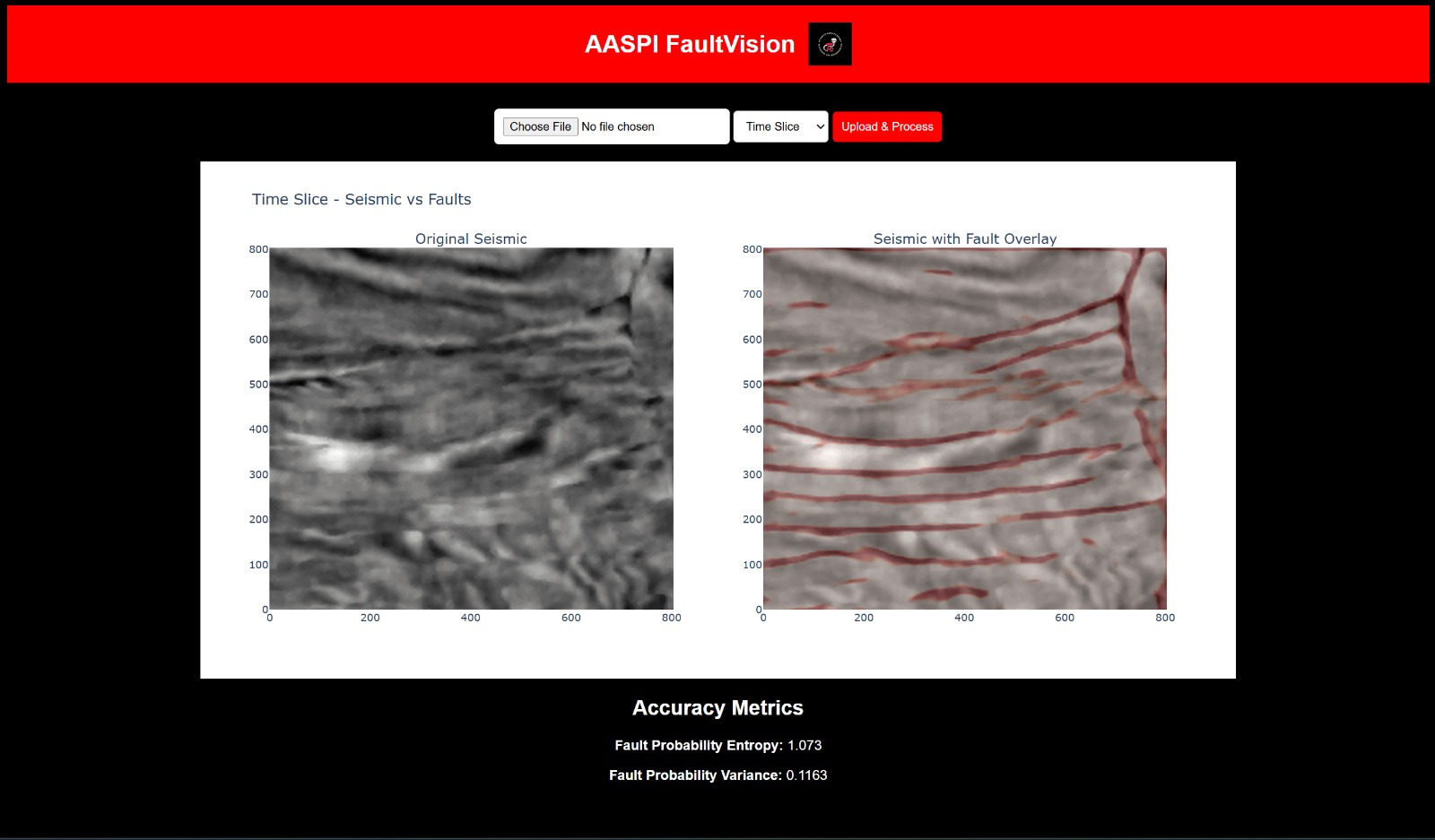
What It Does AASPI FaultVision is a web-based tool that processes 3D seismic volumes, detects faults using a trained Conv3D deep learning model, and visualizes the results.
With this tool, users can: Upload SEG-Y seismic volumes Apply AI-driven fault detection in real-time Select different seismic slices (X-line, Inline, Time) for visualization Overlay AI-predicted faults on seismic data using interactive Plotly visualizations
How We Built It Coming from a geoscience background, we approached this project from a data-driven geophysics perspective rather than just software development. The workflow follows the way seismic interpreters think and work: Data Processing: Used SEGYIO to handle SEG-Y files efficiently. Deep Learning Model: A Conv3D-based neural network trained on labeled fault datasets. Tiling Strategy: Since seismic volumes are large, we implemented an overlapping tile prediction method to optimize processing. Web App Development: Used Flask to create a simple yet powerful interface. Visualization: Integrated Plotly to provide interactive seismic slices with fault overlays.
Challenges We Ran Into Every seismic dataset is different, and working with large 3D volumes presented several challenges: Memory limitations: Seismic data can be huge, requiring efficient handling. Model inference speed: Running a Conv3D model on full seismic cubes is computationally expensive.
Accomplishments That We're Proud Of Built a functional end-to-end AI-powered fault detection tool Developed a fast, interactive seismic visualization system Created a tool that bridges geophysics and AI in a way that actually benefits interpreters What started as an idea turned into a tool that we (and others in the geophysics community) can use to speed up and improve seismic interpretation.
What We Learned
Model deployment matters: Training a deep learning model is one thing—getting it to work seamlessly in a real-world application is another. Data processing is key: Handling large seismic datasets efficiently is just as important as the AI itself. Geoscience + AI = Better tools: Combining domain knowledge with machine learning makes AI more useful for geoscientists.
What's Next for AASPI FaultVision We’ve built a solid foundation, but there’s still more to do:


Log in or sign up for Devpost to join the conversation.