-
-
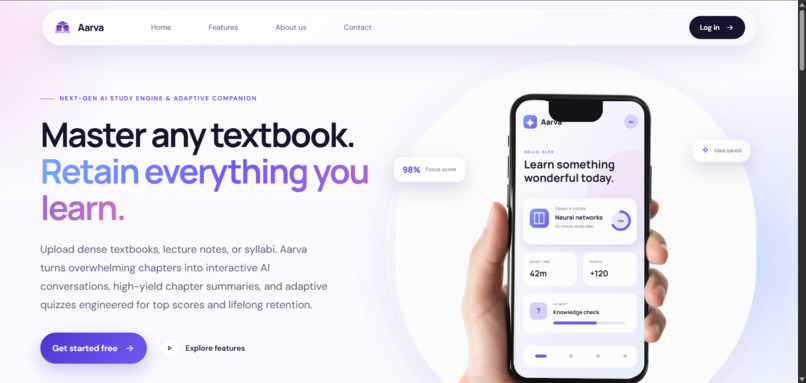
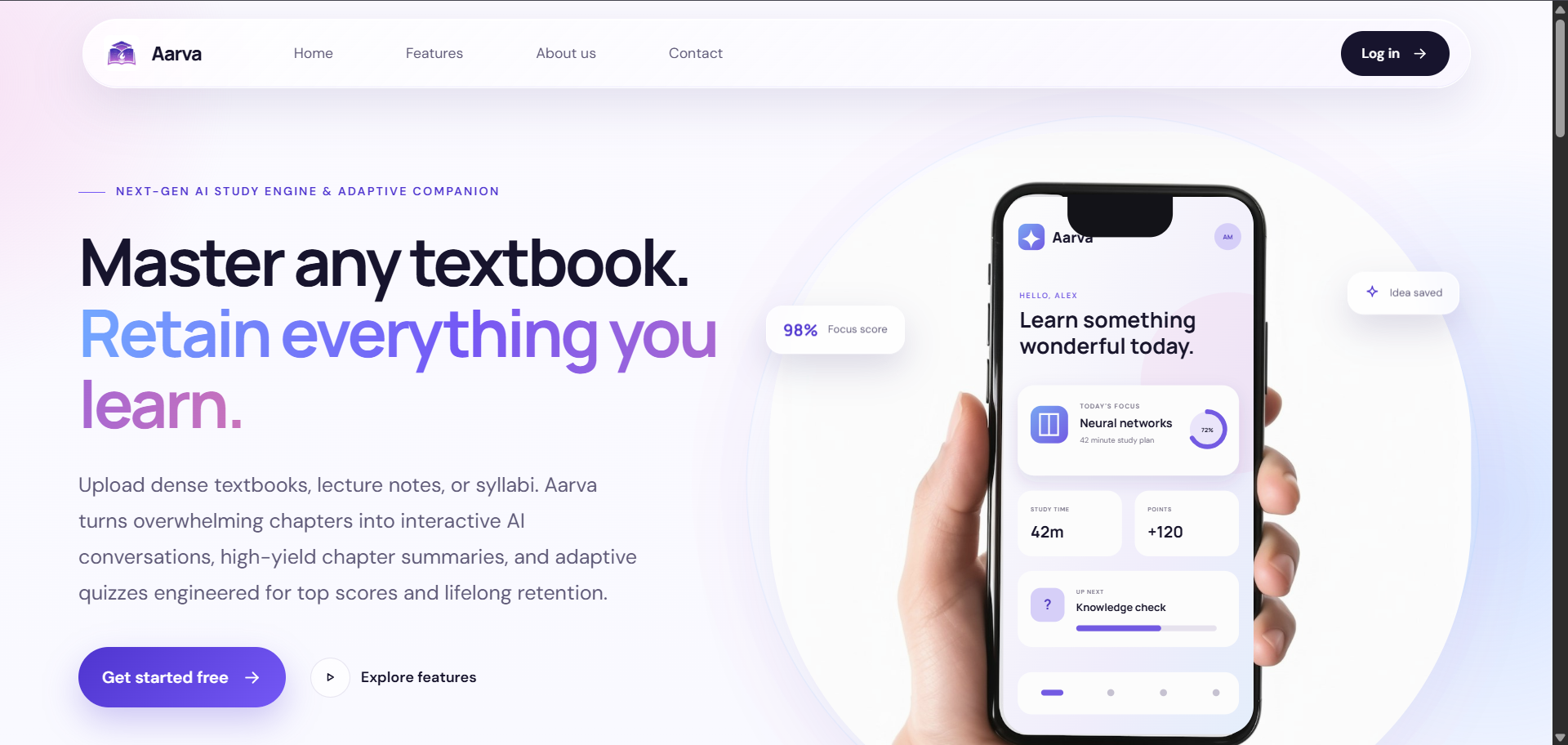
Landing page
-
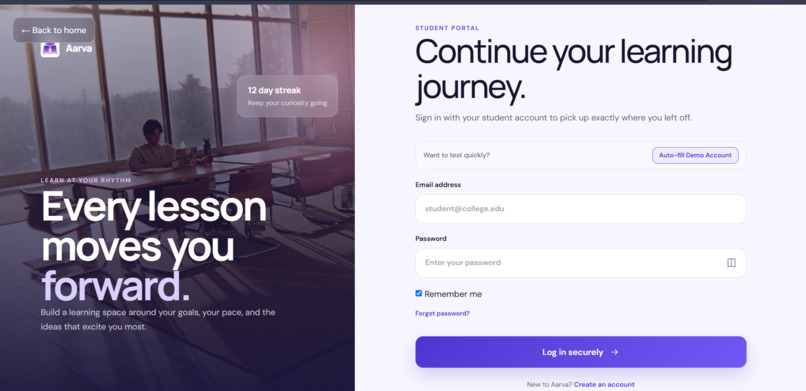
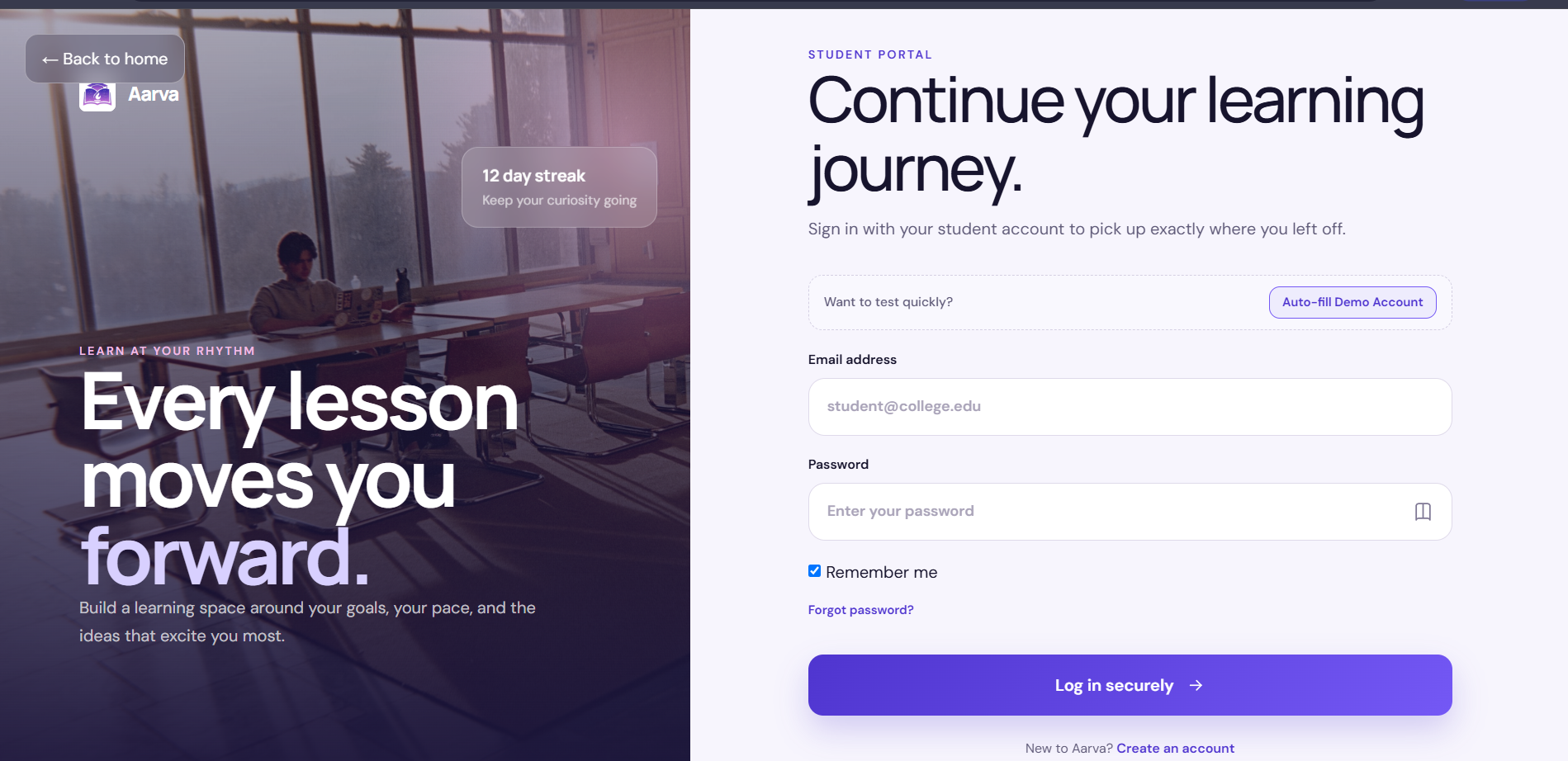
Login page
-
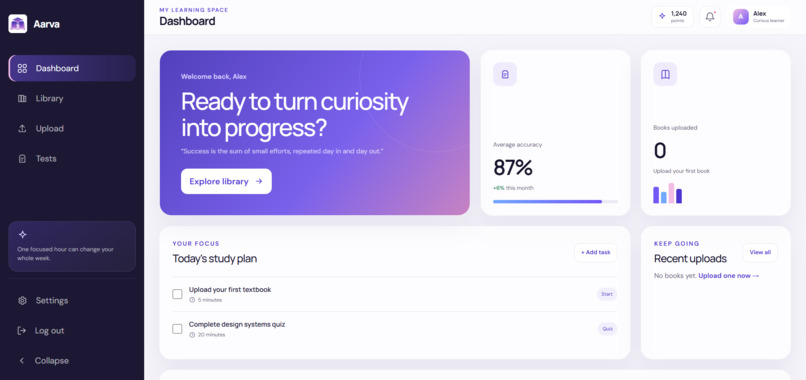
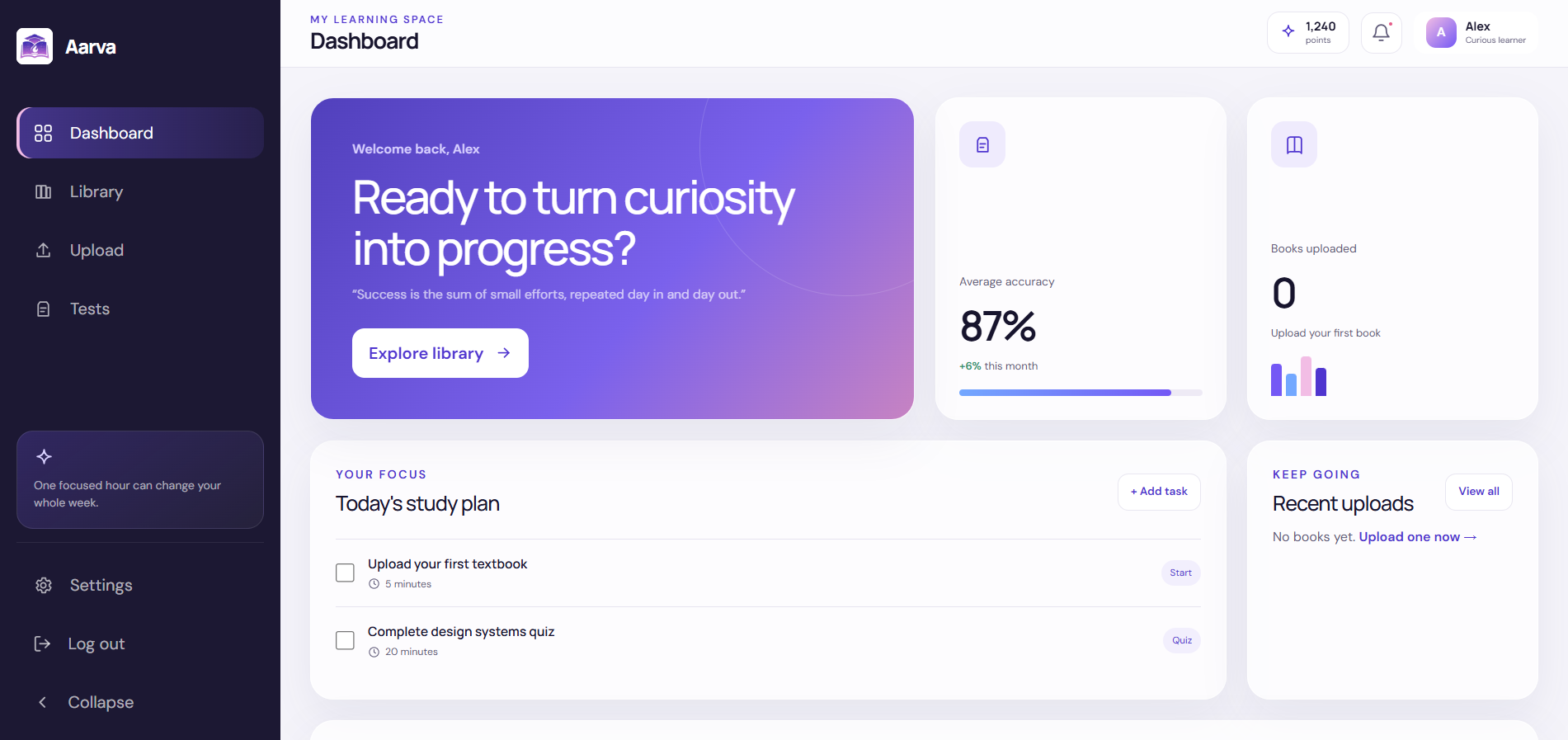
AARVA Dashboard
-
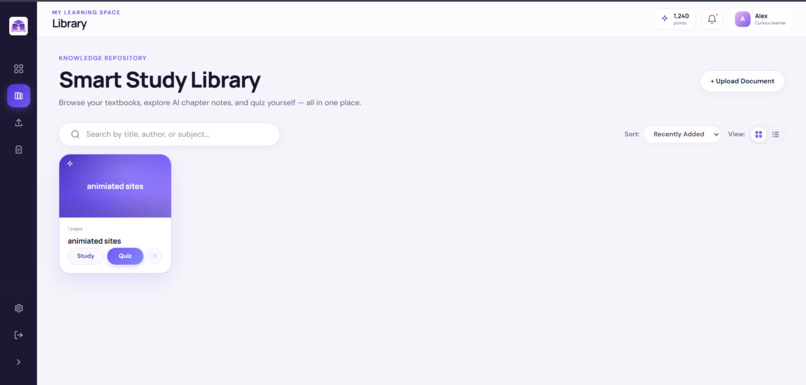
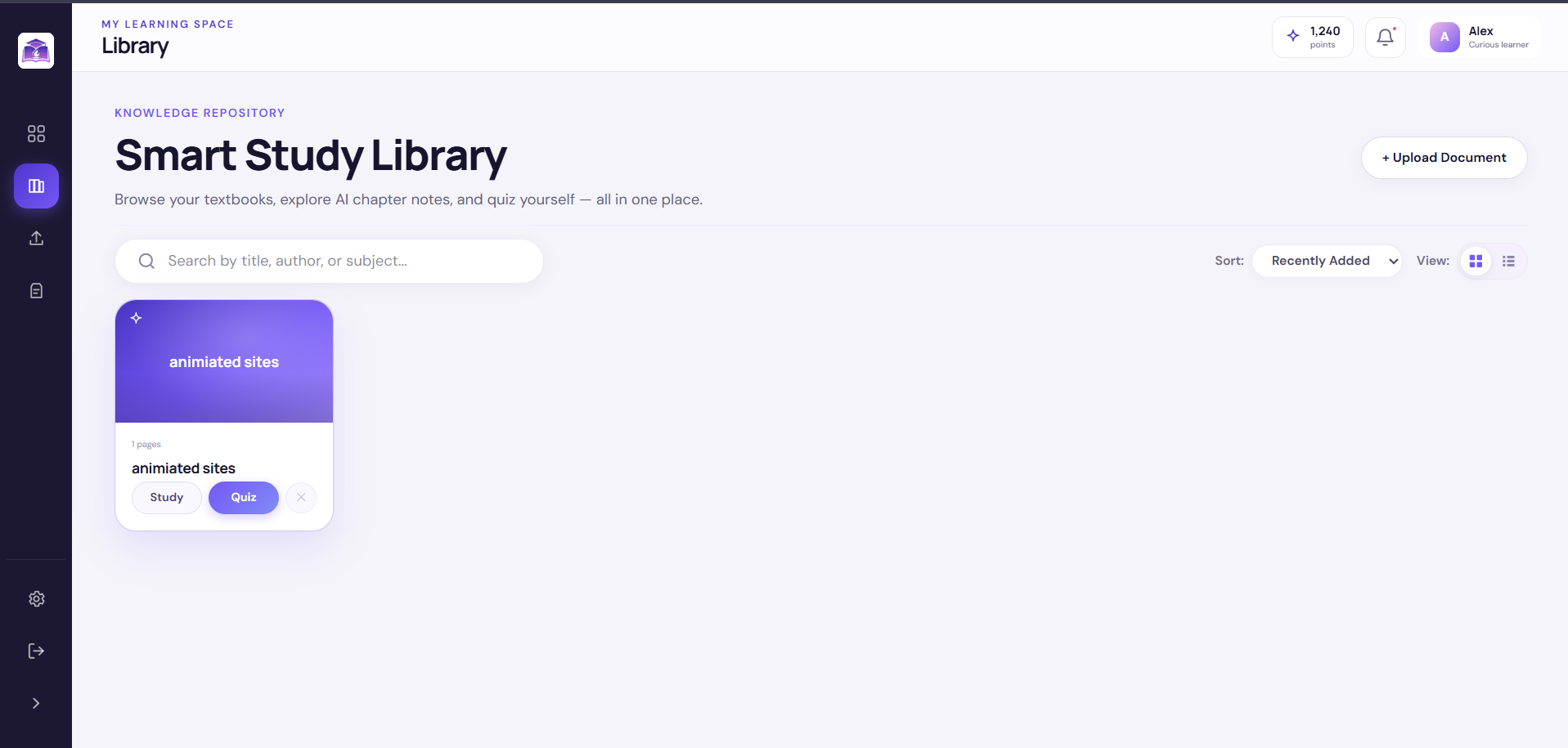
Library
-
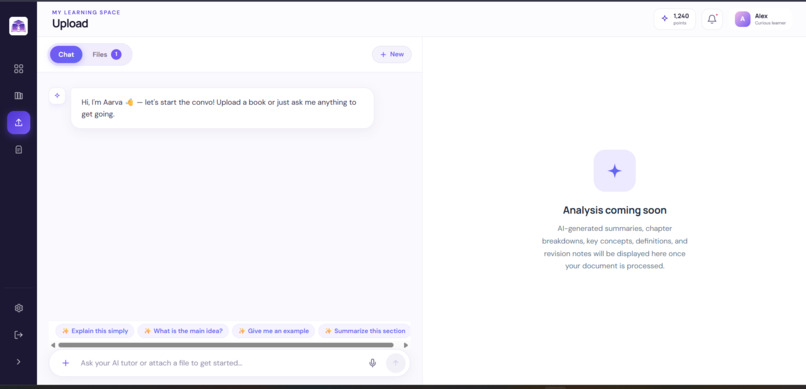
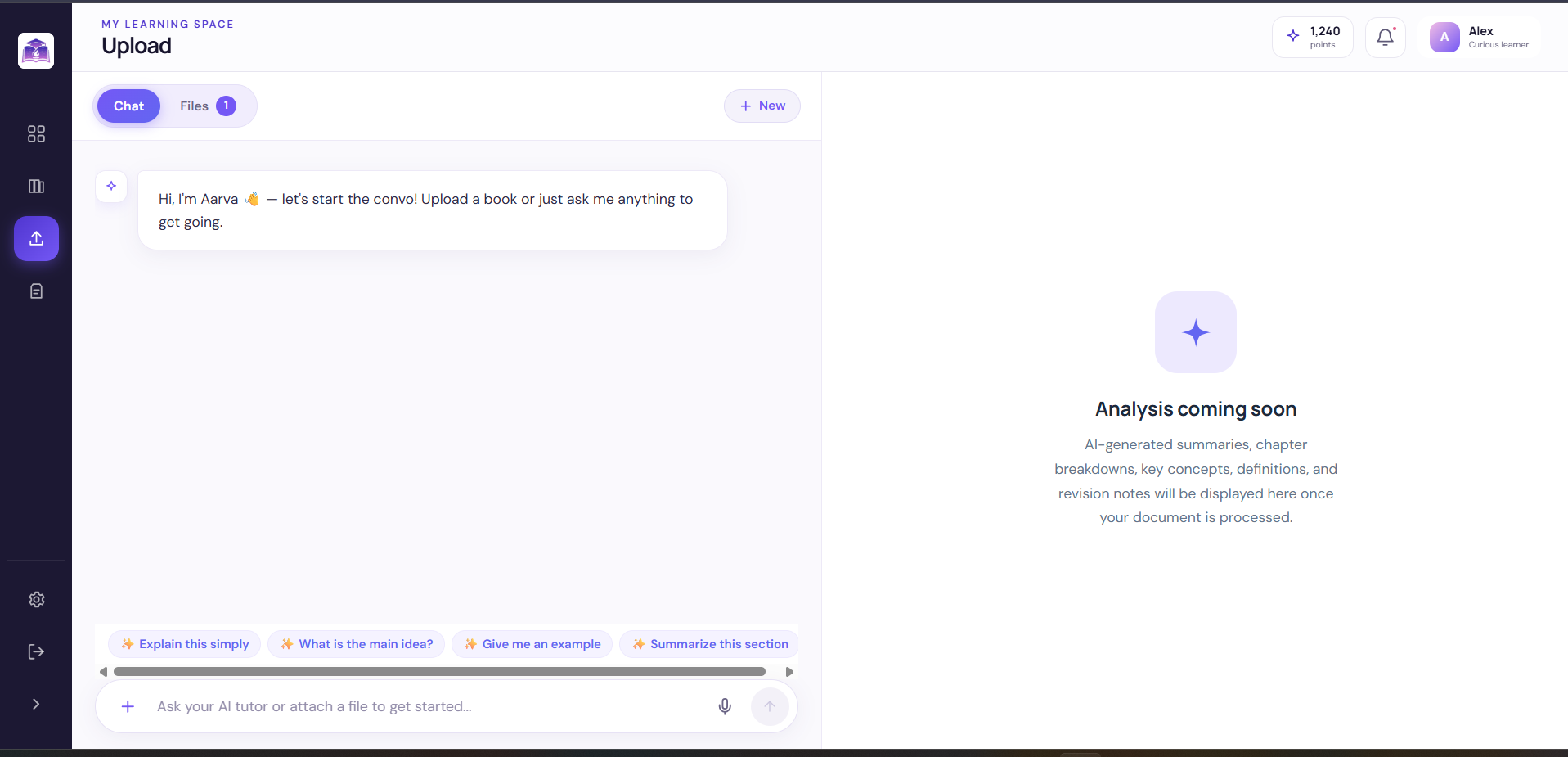
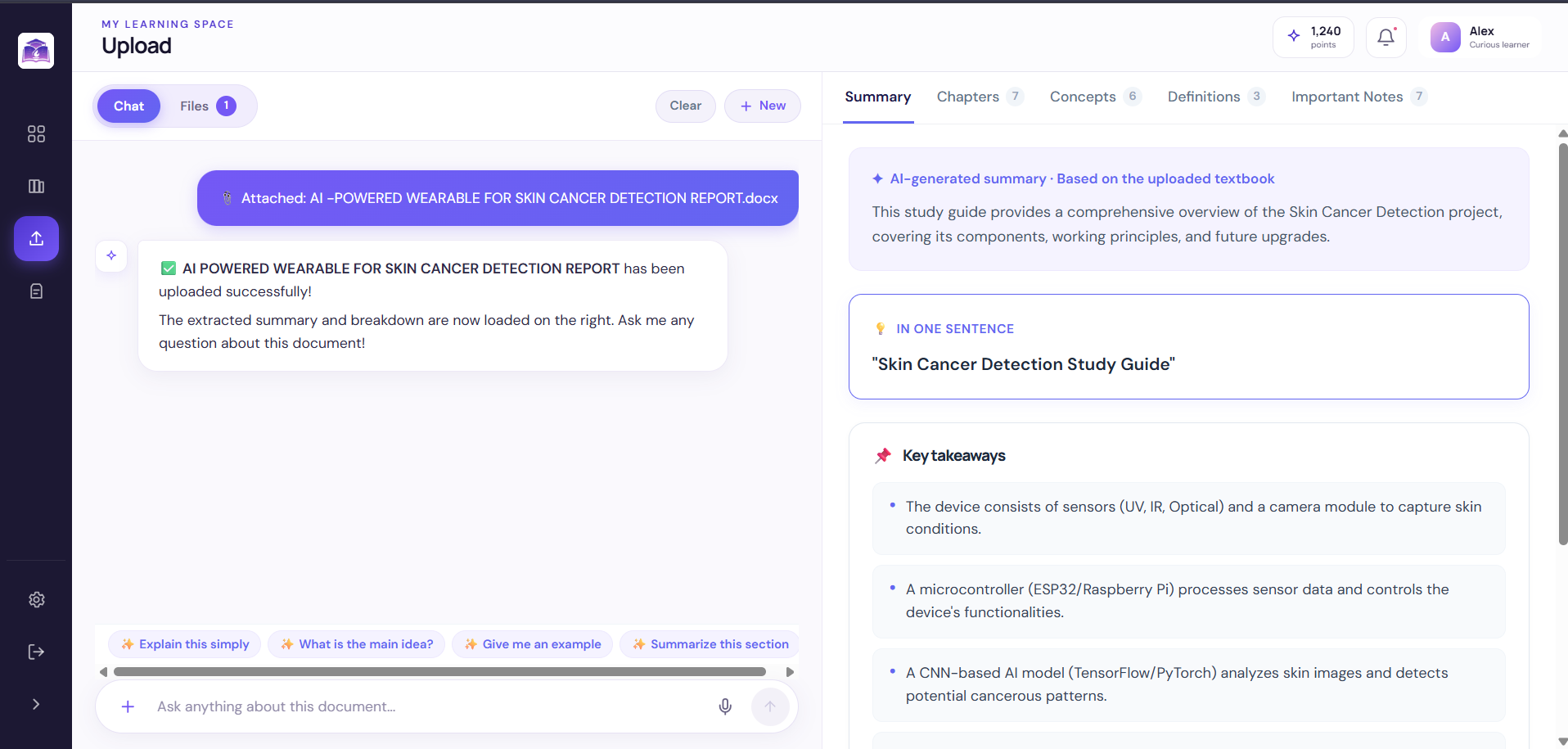
Upload
-
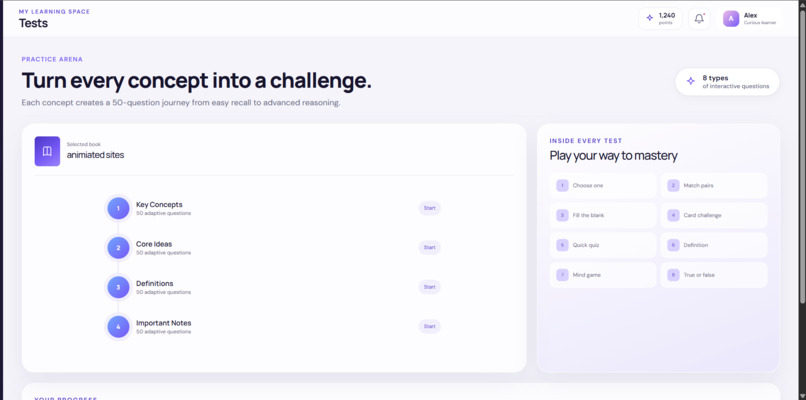
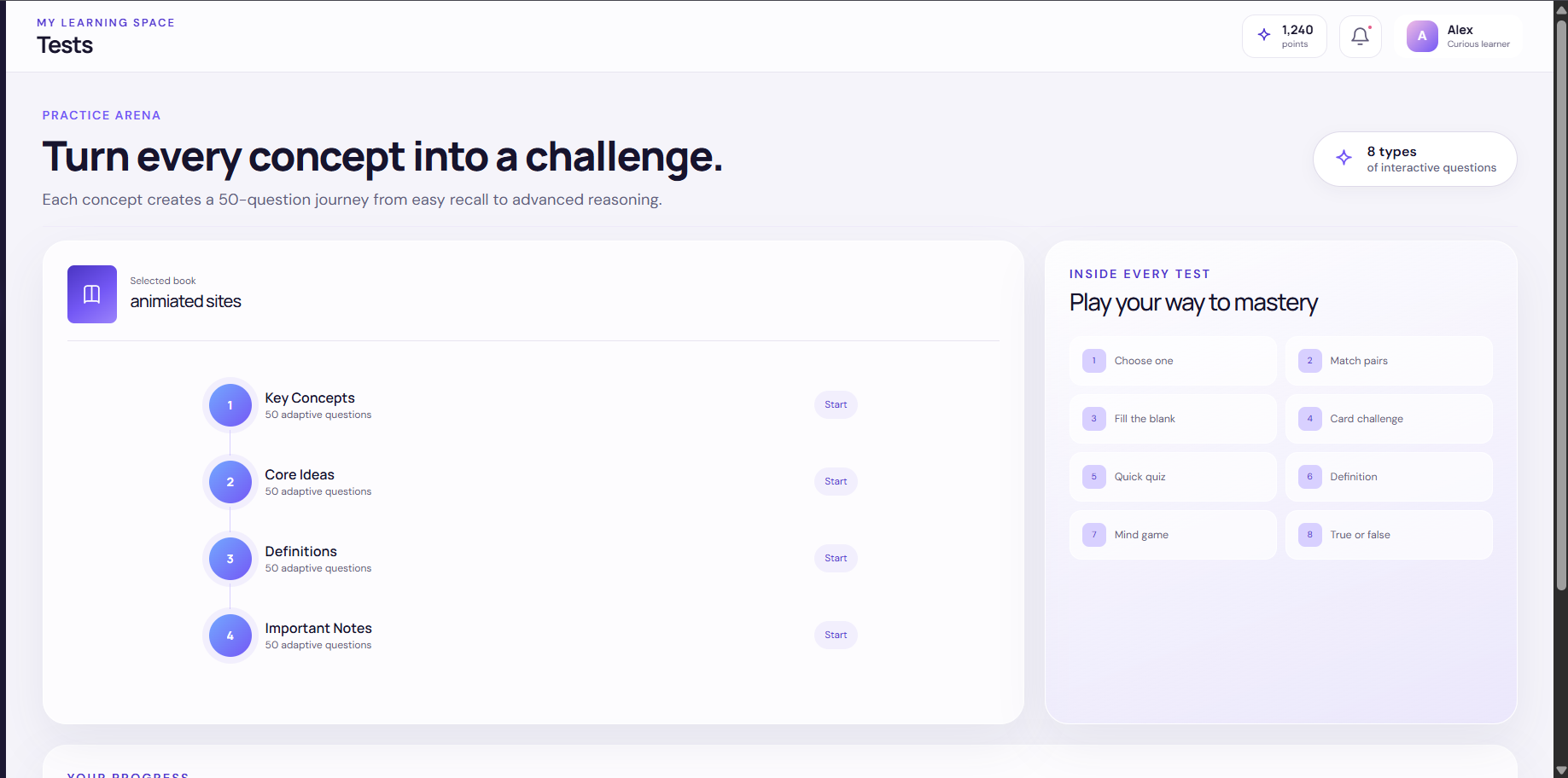
Test
-
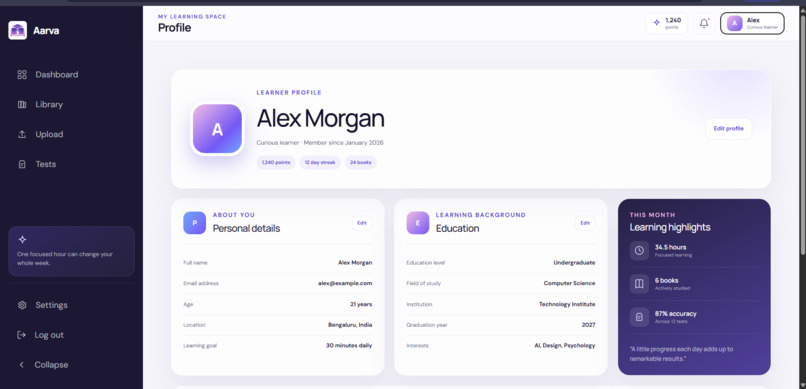
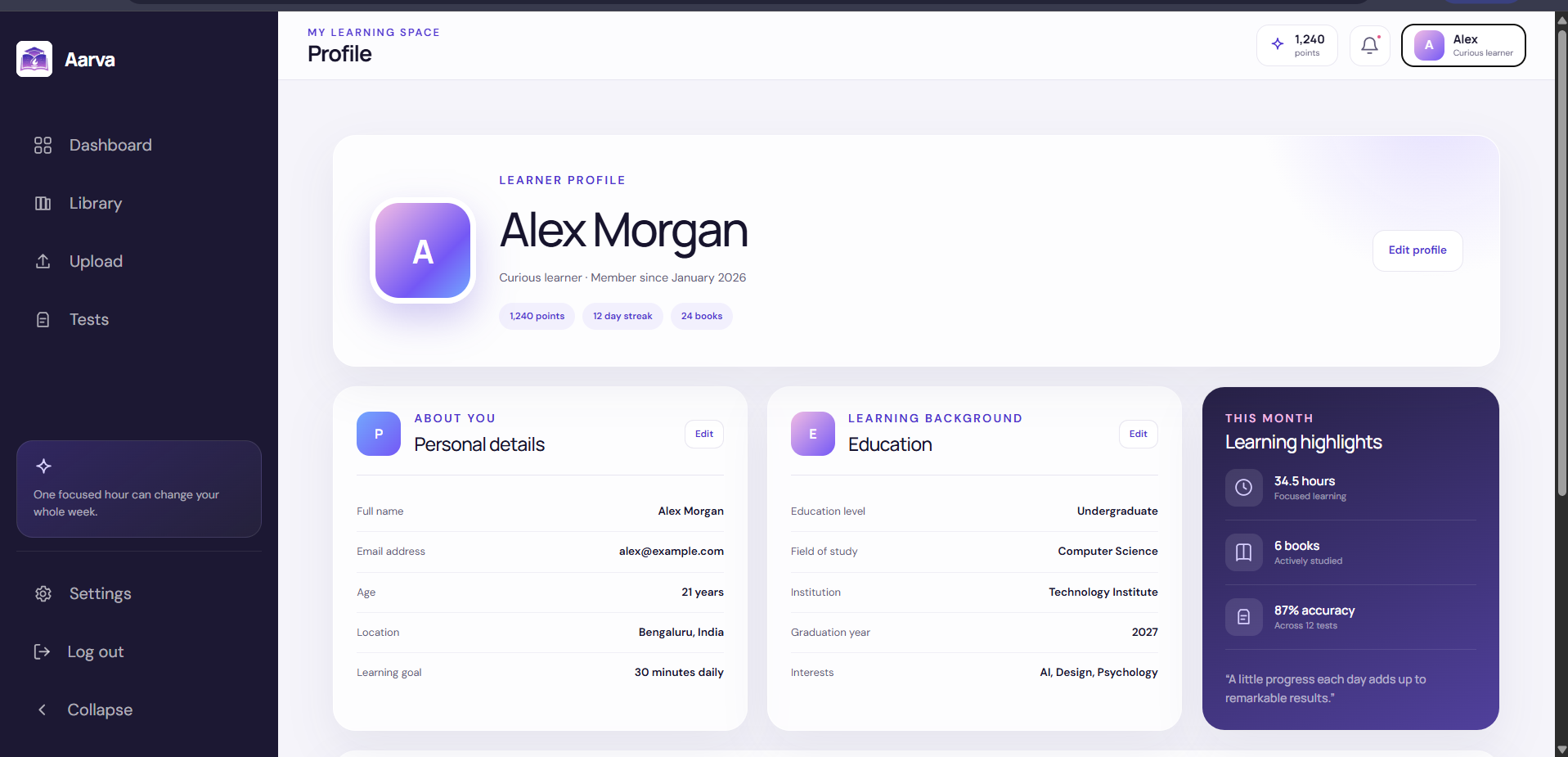
Profile
-
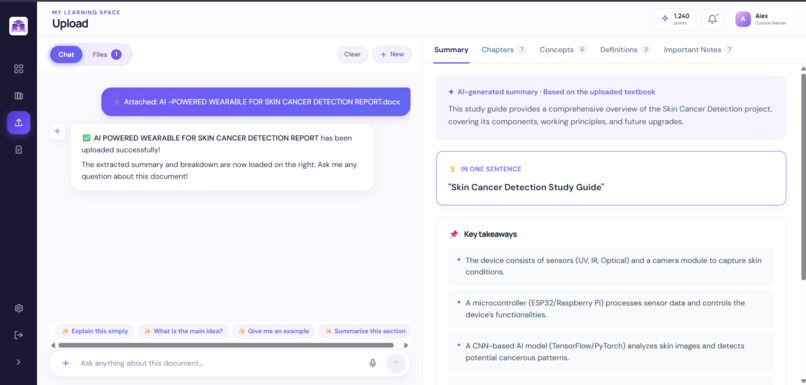
After uploading a file
-
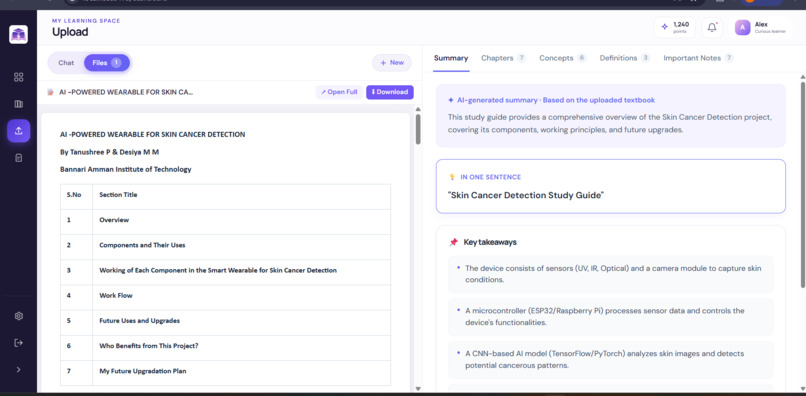
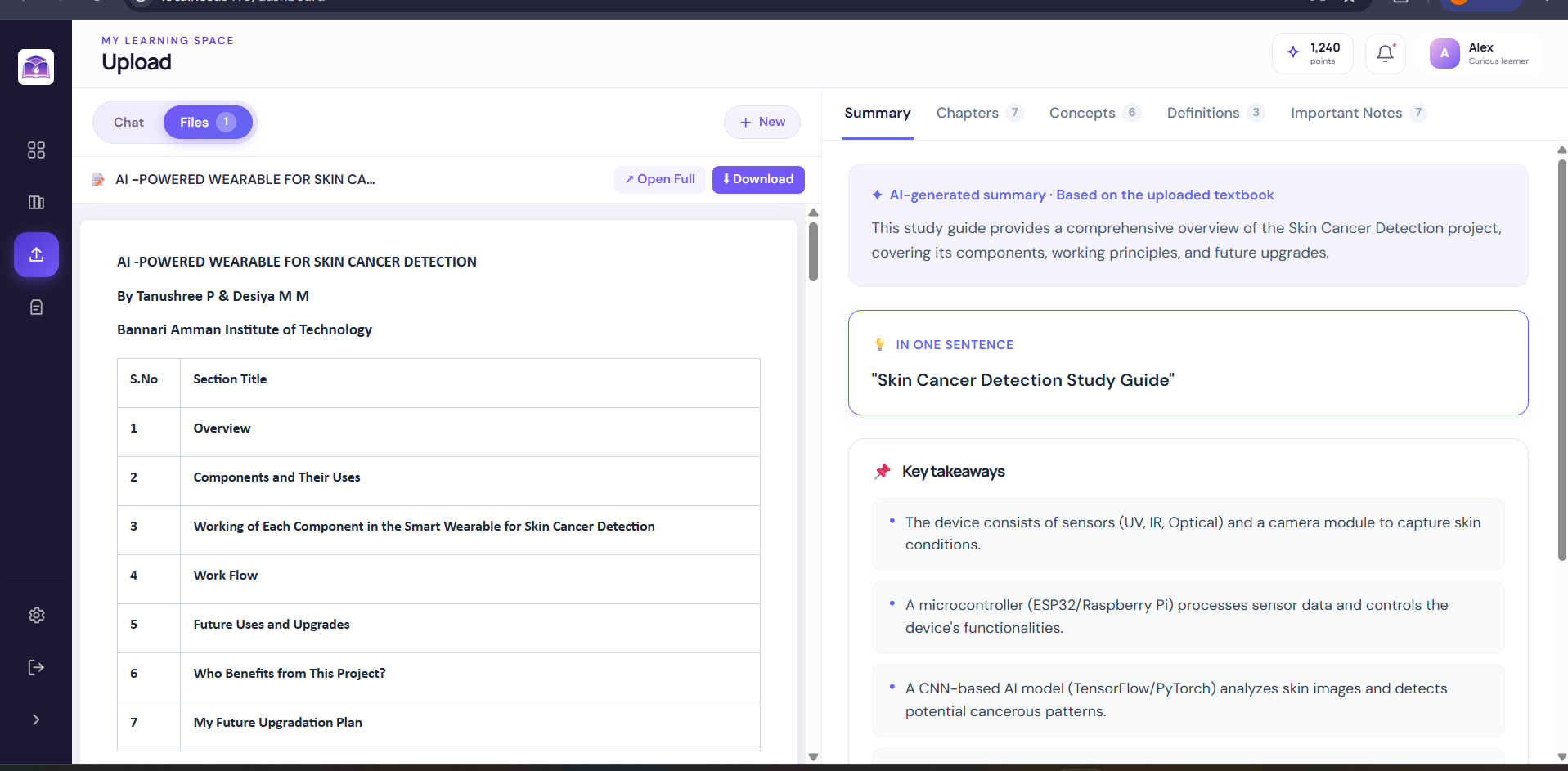
The prievew of the uploaded file
-
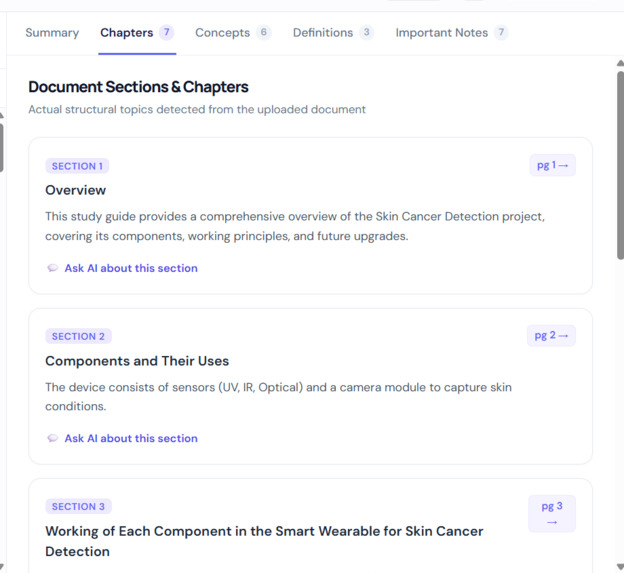
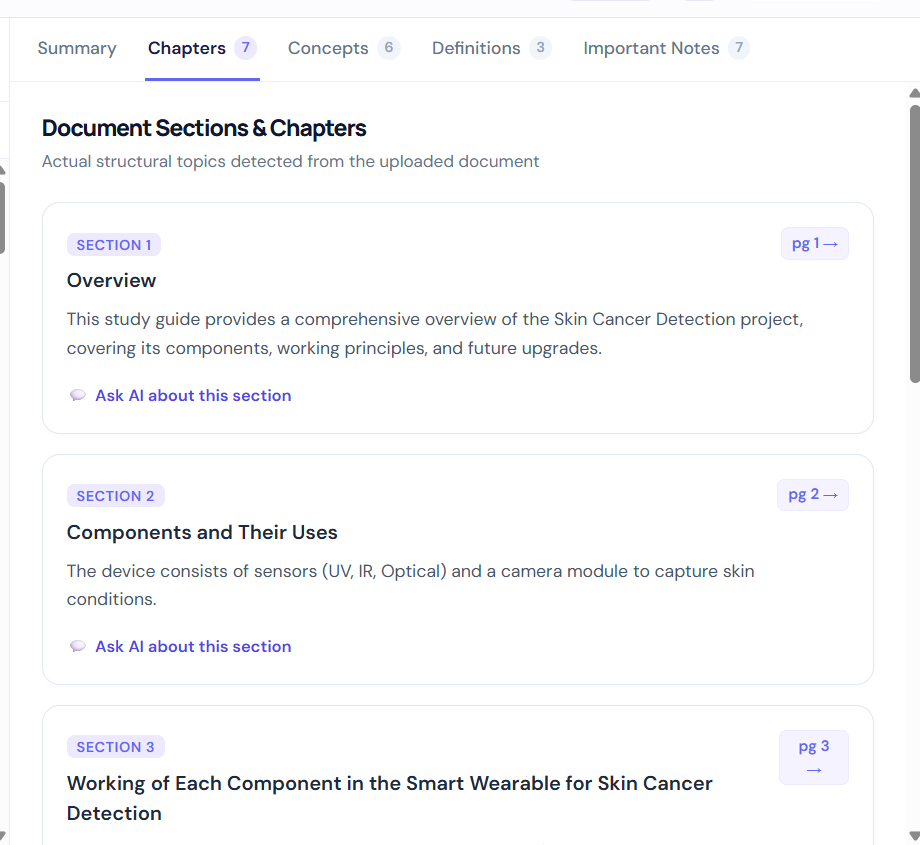
Chapter wise split up result
-
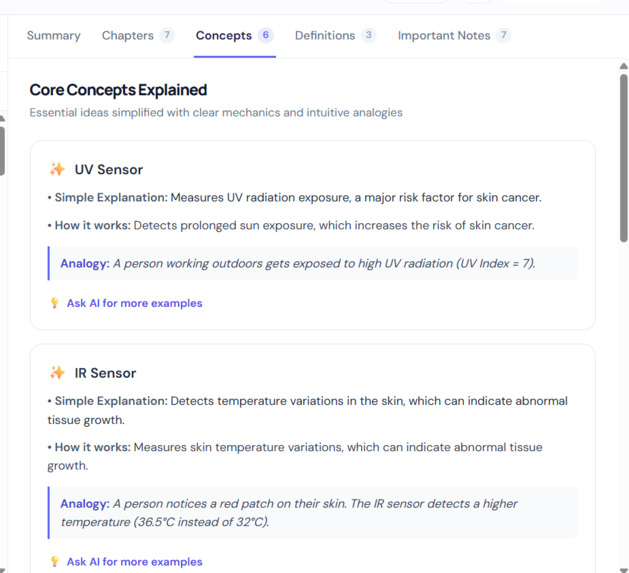
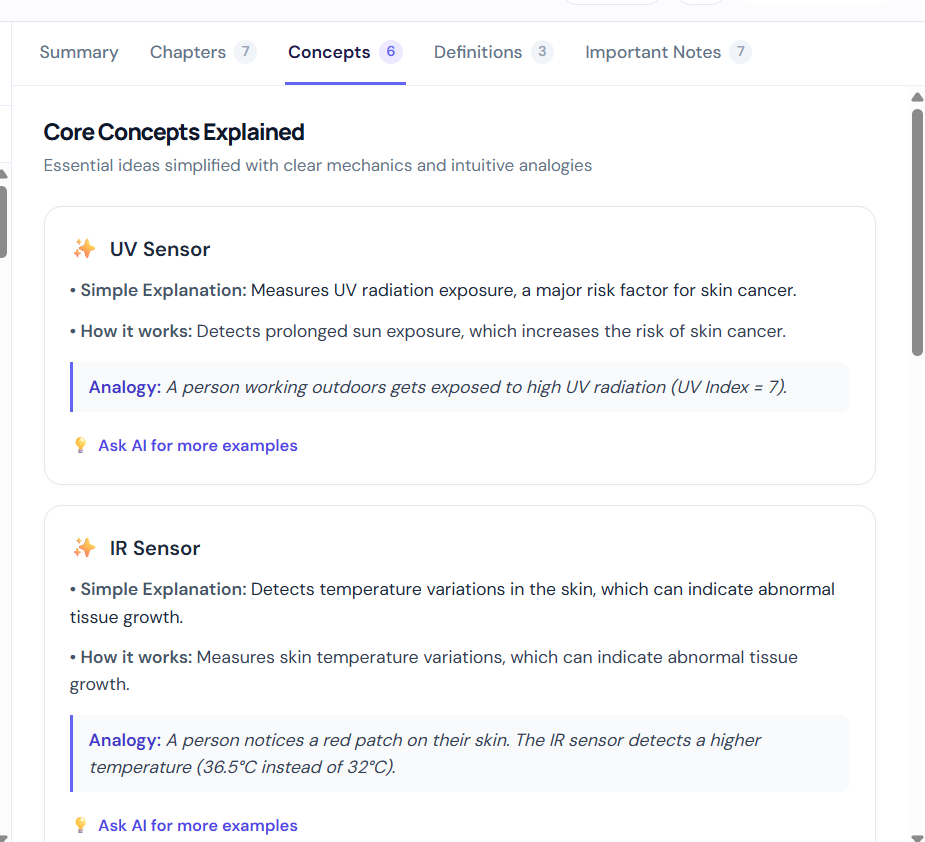
Concepts in the uploaded file
-
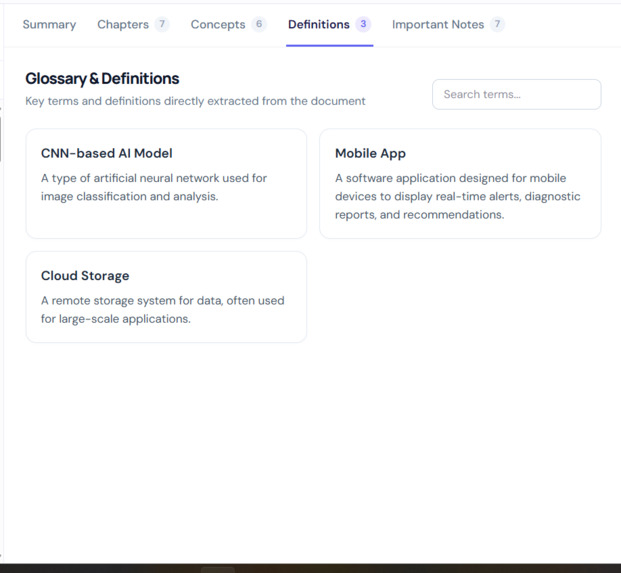
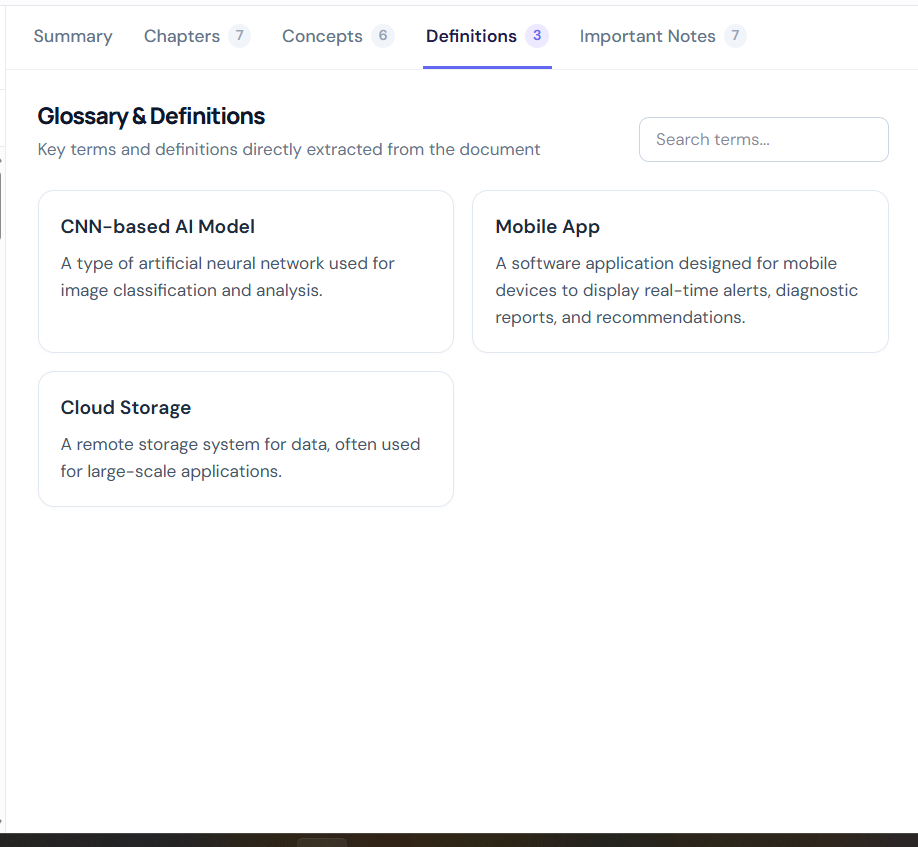
Definitions of the uploaded document
-
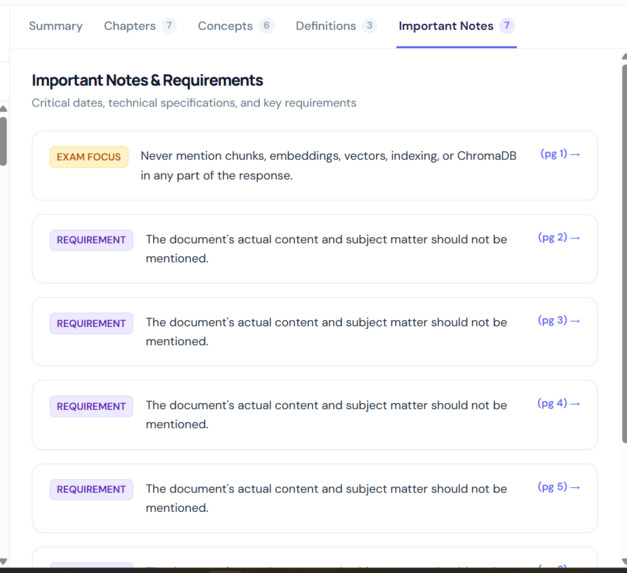
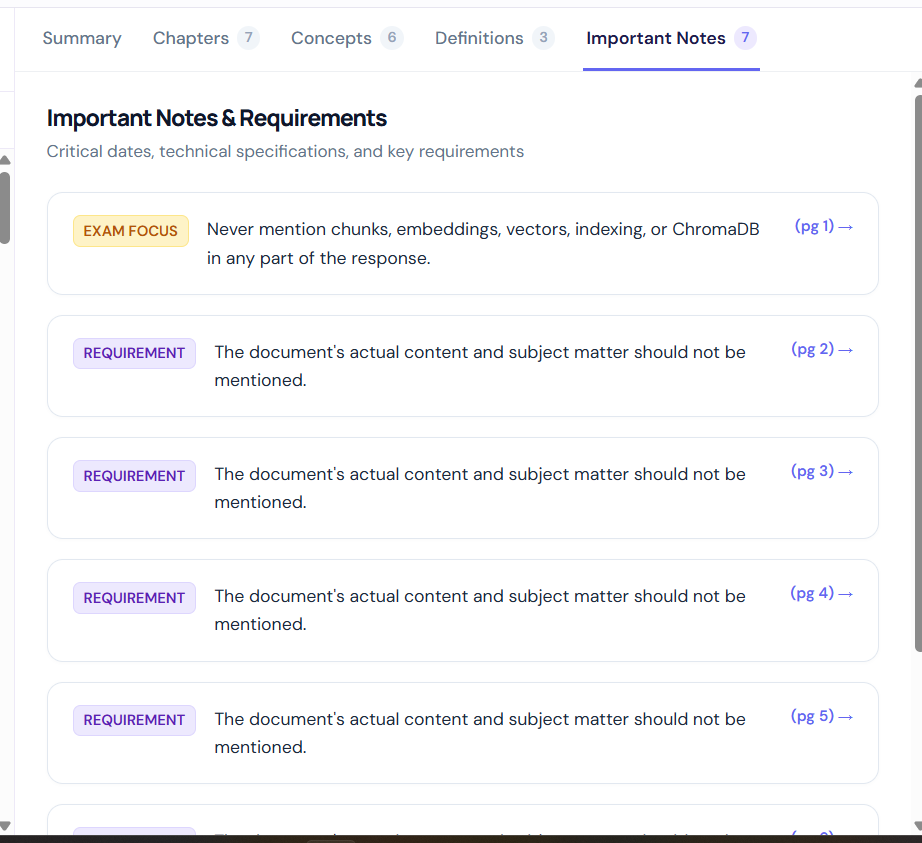
Important notes in the uploaded document
-
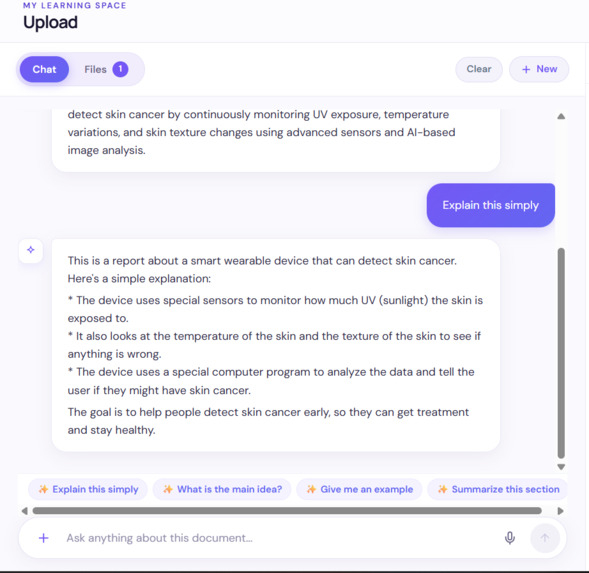
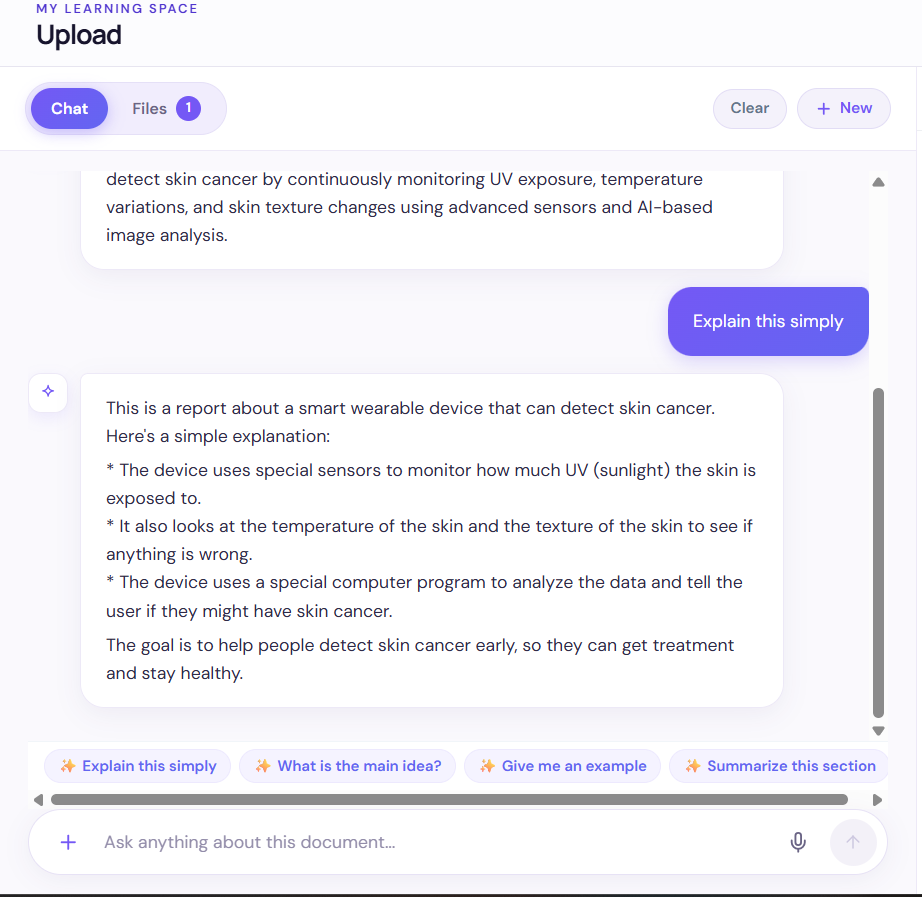
Chat -ask your doubts
AARVA — Learn Smarter. Understand Deeper.
💡 Inspiration
Textbooks contain valuable knowledge, but understanding lengthy chapters, identifying important concepts, preparing for exams, and revising large amounts of information can be overwhelming. Every learner has a different pace, preferred language, and way of understanding concepts.
This inspired me to develop AARVA, an AI-powered adaptive learning and textbook summarization system that transforms static learning materials into interactive, personalized learning experiences.
My vision is to help learners spend less time struggling to understand complex content and more time building meaningful knowledge. Instead of simply shortening a textbook, AARVA aims to help users understand concepts, ask questions, test their knowledge, identify areas for improvement, and learn at their own pace.
Another important motivation is accessibility. Language should not be a barrier to education. I want AARVA to support learners in English, Tamil, Hindi, Marathi, and additional Indian languages as the system evolves.
🚀 What It Does
AARVA is designed to turn uploaded textbooks and documents into a personalized learning environment.
- AI-Powered Summarization: Generate concise, structured summaries from uploaded textbooks and documents.
- Chapter-Wise Learning: Organize content into chapters or sections so learners can focus on one topic at a time.
- Concepts and Definitions: Extract important concepts, terminology, and definitions to simplify revision.
- AI Tutor: Let learners ask questions about their uploaded content and receive contextual explanations.
- Interactive Quizzes: Generate questions, multiple-choice options, answers, and explanations from learning material.
- Multilingual Learning: Support learning content in the user's preferred language, with availability and quality depending on the selected model.
- Adaptive Learning: Use quiz performance and learning progress to identify weaker concepts and recommend relevant revision activities.
- Progress and Gamification: Track learning milestones, points, achievements, and progress to encourage consistent learning.
- Document Preview: Allow users to inspect uploaded PDF and DOCX files before working with their content.
The central idea is to connect reading, understanding, practice, and improvement within a single learning platform.
🛠️ How I Built It
AARVA is designed as a web application with a responsive frontend and a separate AI backend.
1. Frontend and User Experience
I am using Next.js, React, TypeScript, and Tailwind CSS to build the web interface.
The design focuses on a clean learning dashboard, hamburger navigation, a textbook library, document uploads, and a split-screen book experience with the AI Tutor on one side and the summary on the other.
I am also focusing on responsive layouts, smooth transitions, persistent state during navigation, and a consistent interface across desktop, tablet, and mobile browsers.
2. Backend and Document Processing
The backend uses FastAPI and Python to handle document processing and AI requests.
The document-processing workflow is designed to:
- Accept PDF and DOCX uploads.
- Extract text while preserving useful document structure.
- Divide content into manageable chunks.
- Organize extracted information for summarization and retrieval.
- Generate structured learning content.
- Make processed material available for summaries, questions, and quizzes.
For PDF processing, I plan to use PyMuPDF, with a DOCX parser for Word documents.
3. AI Integration with Ollama and Qwen3
AARVA uses a local language-model workflow through Ollama. My current configuration is:
OLLAMA_BASE_URL=http://localhost:11434
LLM_MODEL=qwen3:8b
Qwen3 is being evaluated as the primary model for generating summaries, explaining concepts, answering questions, and creating quizzes. Its multilingual capabilities are particularly relevant to AARVA's goal of supporting Indian-language learning.
The model receives relevant textbook content as context so its responses can remain grounded in the uploaded material rather than relying only on general knowledge.
4. Knowledge Retrieval and Data Management
The planned architecture combines PostgreSQL and ChromaDB for different responsibilities.
- PostgreSQL: User accounts, learner preferences, uploaded-book metadata, quiz results, progress, and achievements.
- ChromaDB: Text embeddings and semantic retrieval from textbook content.
- Retrieval-Augmented Generation (RAG): Retrieve relevant passages from a document before asking the language model to answer a question.
This approach is intended to improve relevance and reduce the need to send an entire textbook to the model for every question.
5. Multilingual Experience
AARVA separates interface translation from AI-generated learning content.
For the interface, I plan to use next-intl and language-specific translation files. The AI backend will receive the learner's selected language when generating summaries, explanations, and quizzes.
This separation makes it easier to add more languages without redesigning the application.
📚 What I Learned
Developing AARVA has helped me understand that building an AI-powered learning platform involves much more than connecting a language model to a user interface.
I learned the importance of:
- Structured document processing: AI output depends heavily on the quality of extracted text and the organization of the source material.
- Prompt engineering: Clear instructions, output formats, and document context are essential for useful summaries and reliable quiz generation.
- RAG architecture: Retrieving relevant source passages can help a model answer questions more accurately.
- Multilingual AI design: Translating interface labels is different from generating technically accurate educational content in another language.
- State management: Uploads, chat histories, selected books, and processing results need to remain consistent when users navigate between pages.
- Separation of concerns: The frontend, backend, database, document-processing pipeline, and AI services should have clear responsibilities.
- User-centered design: An attractive application must also be easy to navigate, accessible, responsive, and useful for actual learning.
I also learned to treat AI quality as something that must be tested against real documents rather than assumed from a model's advertised capabilities.
🧩 Challenges I Faced
1. Generating Meaningful Summaries
A summary should explain the main ideas of a document, not simply repeat its filename or reproduce extracted text. Different documents also have different structures: a textbook may contain chapters, while a meeting record may contain dates, decisions, and action items.
My approach is to make the summarization structure responsive to the actual document content and avoid inventing chapters, definitions, or concepts that are not supported by the source.
2. Making the AI Tutor Sound Natural
A basic AI integration can produce repetitive, poorly structured answers or lose context during follow-up questions.
To address this, I am designing the chat workflow around conversation history, relevant document retrieval, clear system instructions, and readable responses. The tutor should answer the question directly, explain difficult concepts when needed, and acknowledge when the document does not contain an answer.
3. Supporting Multiple Indian Languages
Supporting multiple languages requires more than adding a language dropdown. Summaries, quiz questions, answer options, explanations, and AI responses must all use the selected language while preserving technical meaning.
I am evaluating Qwen3's output quality across the target languages and treating language support as something that must be validated, rather than assuming that every language will perform equally well.
4. Preserving Upload State
An uploaded document should not disappear when a learner switches from Upload to Library or Settings. Processing should also continue independently of the visible page.
This requires careful frontend state management and backend persistence for uploaded files, processing jobs, and generated results.
5. Balancing Performance and Accuracy
Running large language models locally can require considerable memory and processing resources. Using multiple models may improve certain tasks, but it also adds complexity and resource requirements.
I am starting with a single primary model and a retrieval-based architecture, with the intention of measuring response quality, latency, and resource usage before adding more models.
🌱 What's Next
My next priorities for AARVA are:
- Improve the accuracy and readability of summaries.
- Make AI conversations more natural and context-aware.
- Complete the document preview and persistent upload workflow.
- Expand multilingual support and evaluate output quality.
- Generate quizzes from actual textbook content.
- Connect quiz performance to meaningful adaptive recommendations.
- Complete authentication, learner profiles, and persistent progress tracking.
- Test the application with different document formats, subjects, languages, and device sizes.
🎯 My Vision
I envision AARVA as a learning companion that makes knowledge easier to access, understand, and retain.
By combining AI-powered summarization, contextual question answering, multilingual learning, and adaptive practice, AARVA aims to help learners move beyond simply reading information toward truly understanding it.
AARVA — Learn Smarter. Understand Deeper.
Accomplishments that we're proud of
What we learned
What's next for AARVA
Built With
- adaptive-learning
- artificial-intelligence
- chromadb
- fastapi
- next.js
- ollama
- postgresql
- python
- qwen3
- react
- tailwind-css
- text-summarization
- typescript

Log in or sign up for Devpost to join the conversation.