-
-
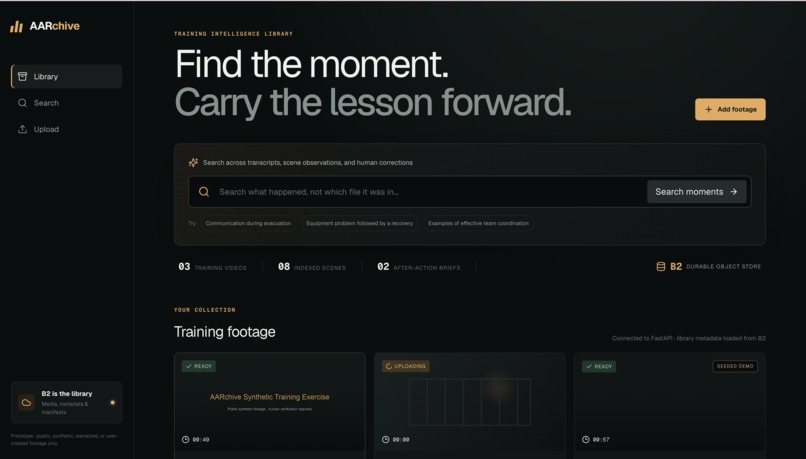
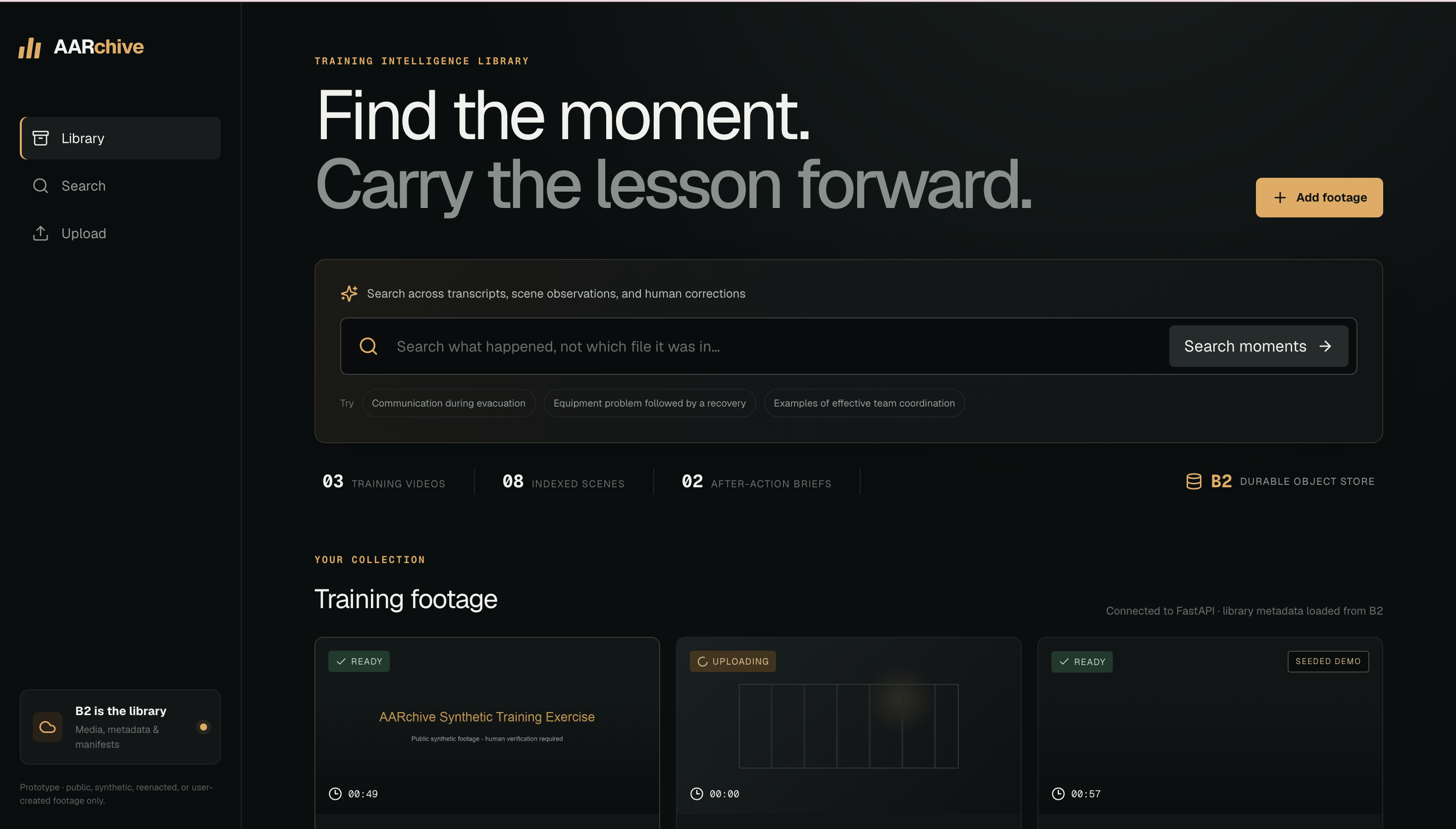
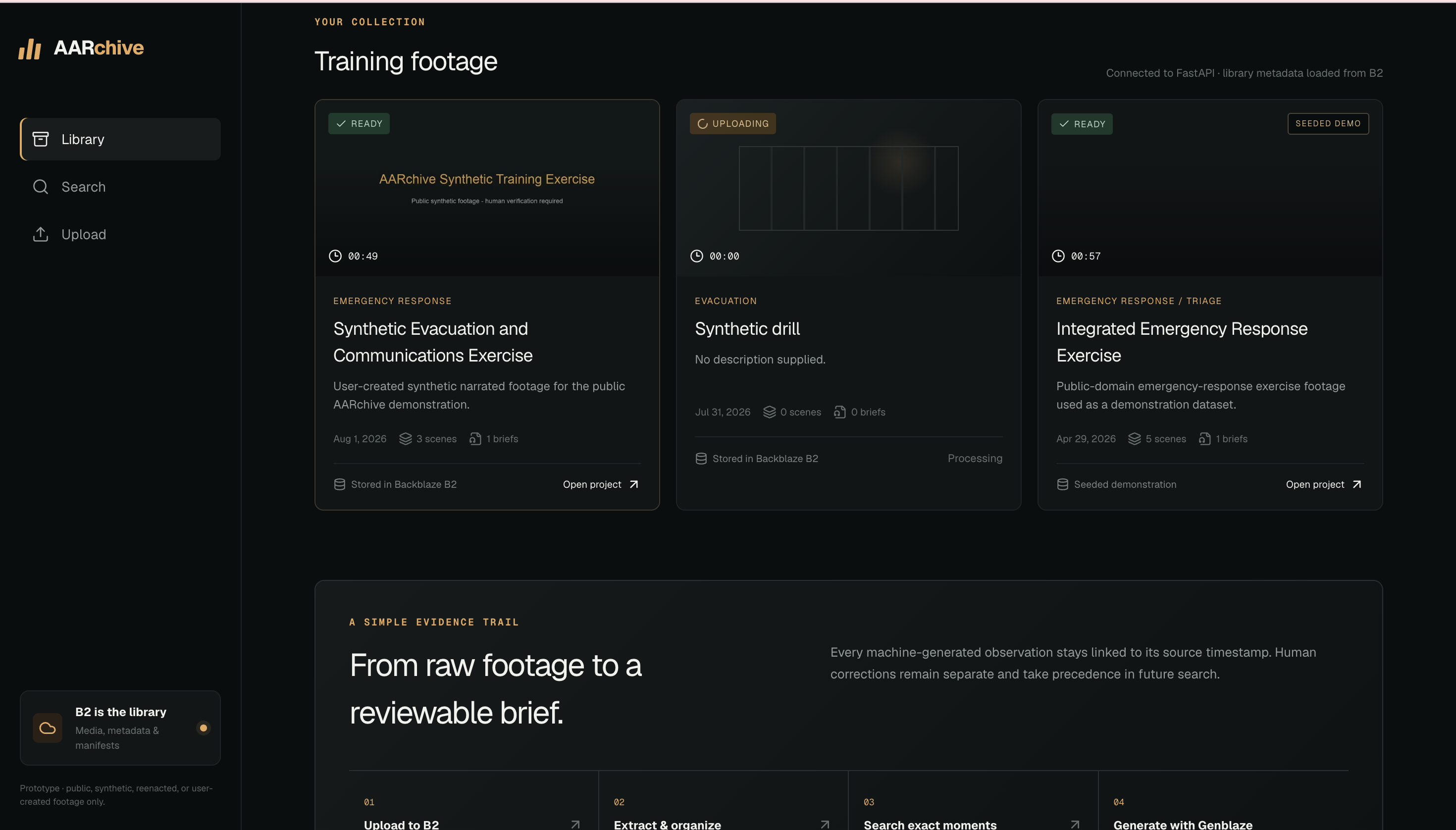
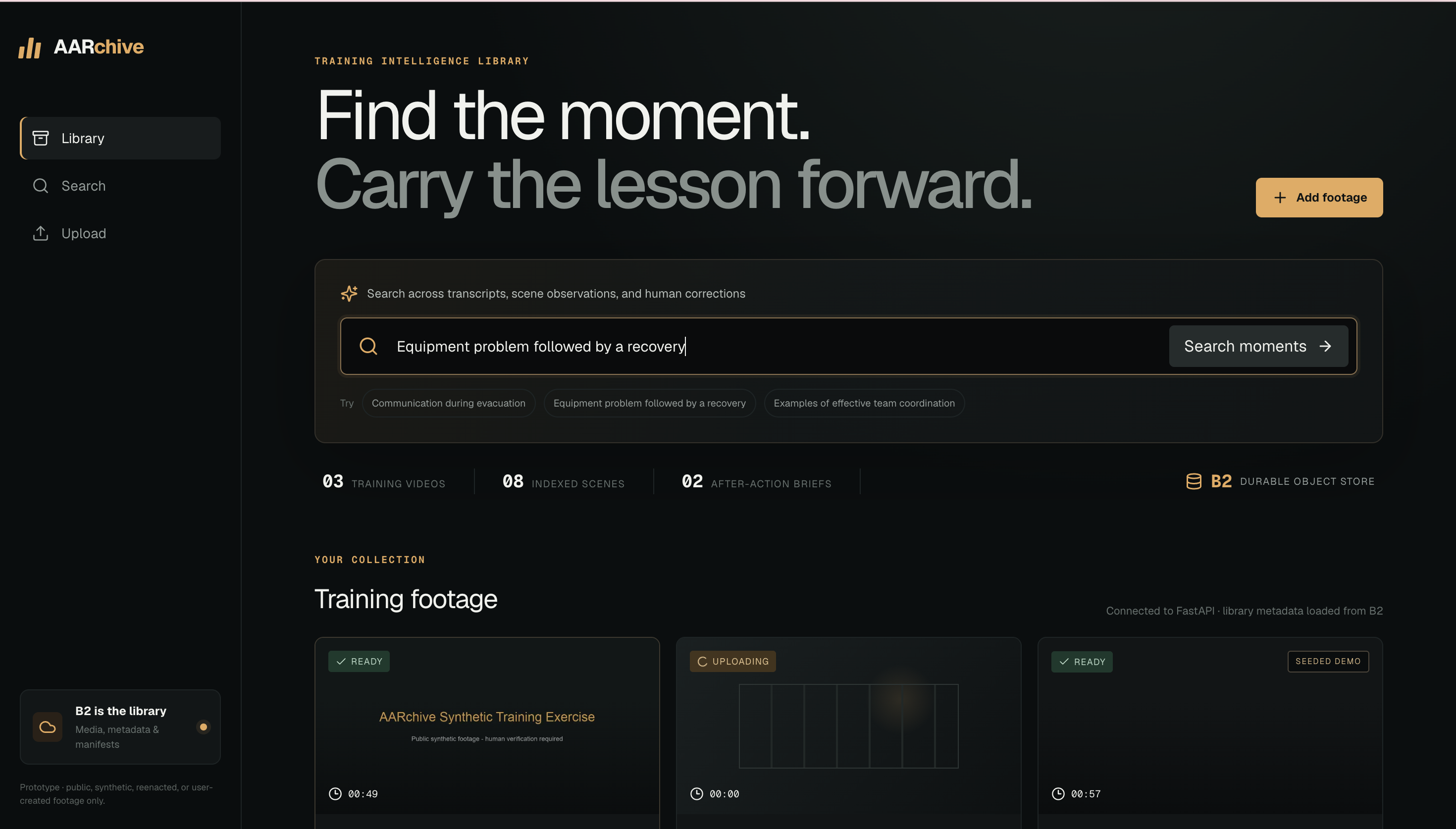
AARchive’s library searches training footage by what happened, with indexed scenes, briefs, and media stored in Backblaze B2.
-
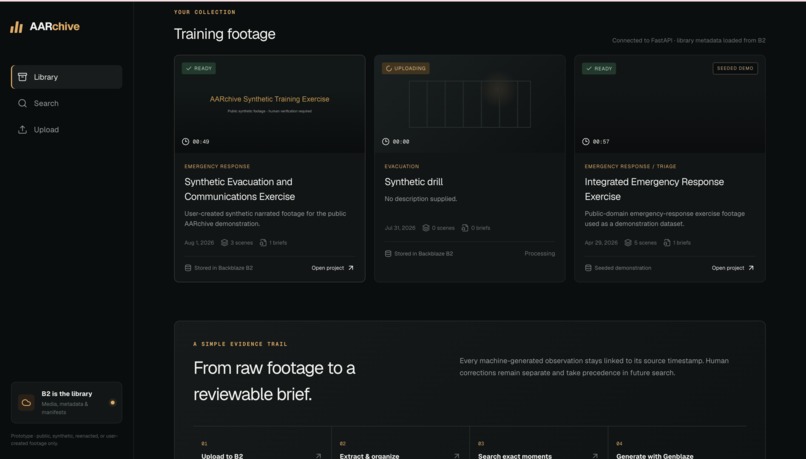
AARchive organizes training footage into searchable scenes and reviewable briefs, with media and metadata stored in Backblaze B2.
-
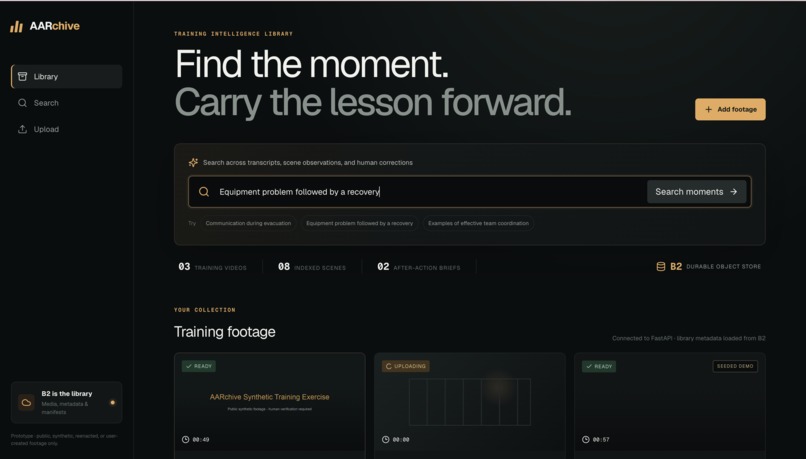
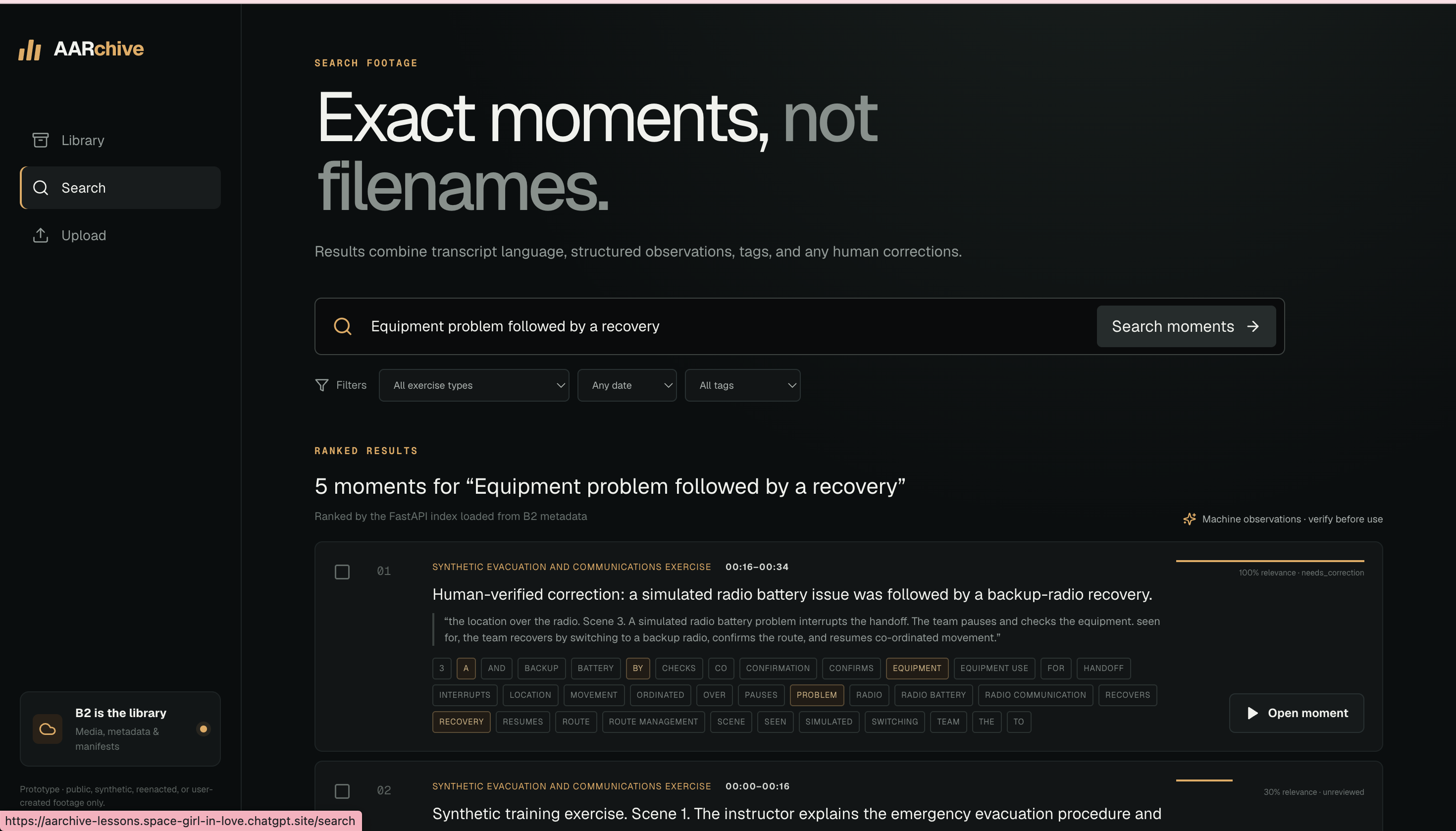
Search footage by what happened, not by filename.
-
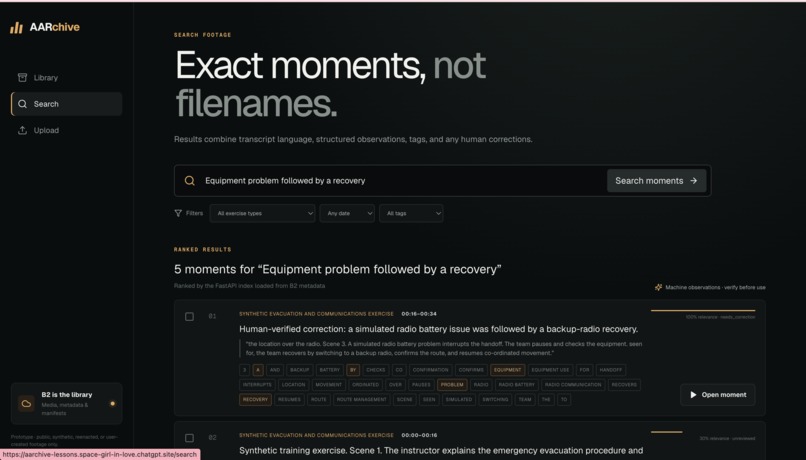
Human-verified results surface the exact footage and timestamp.
-
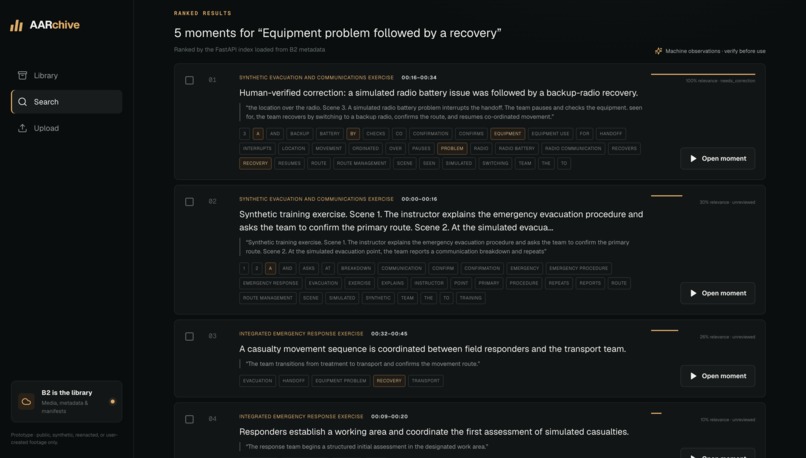
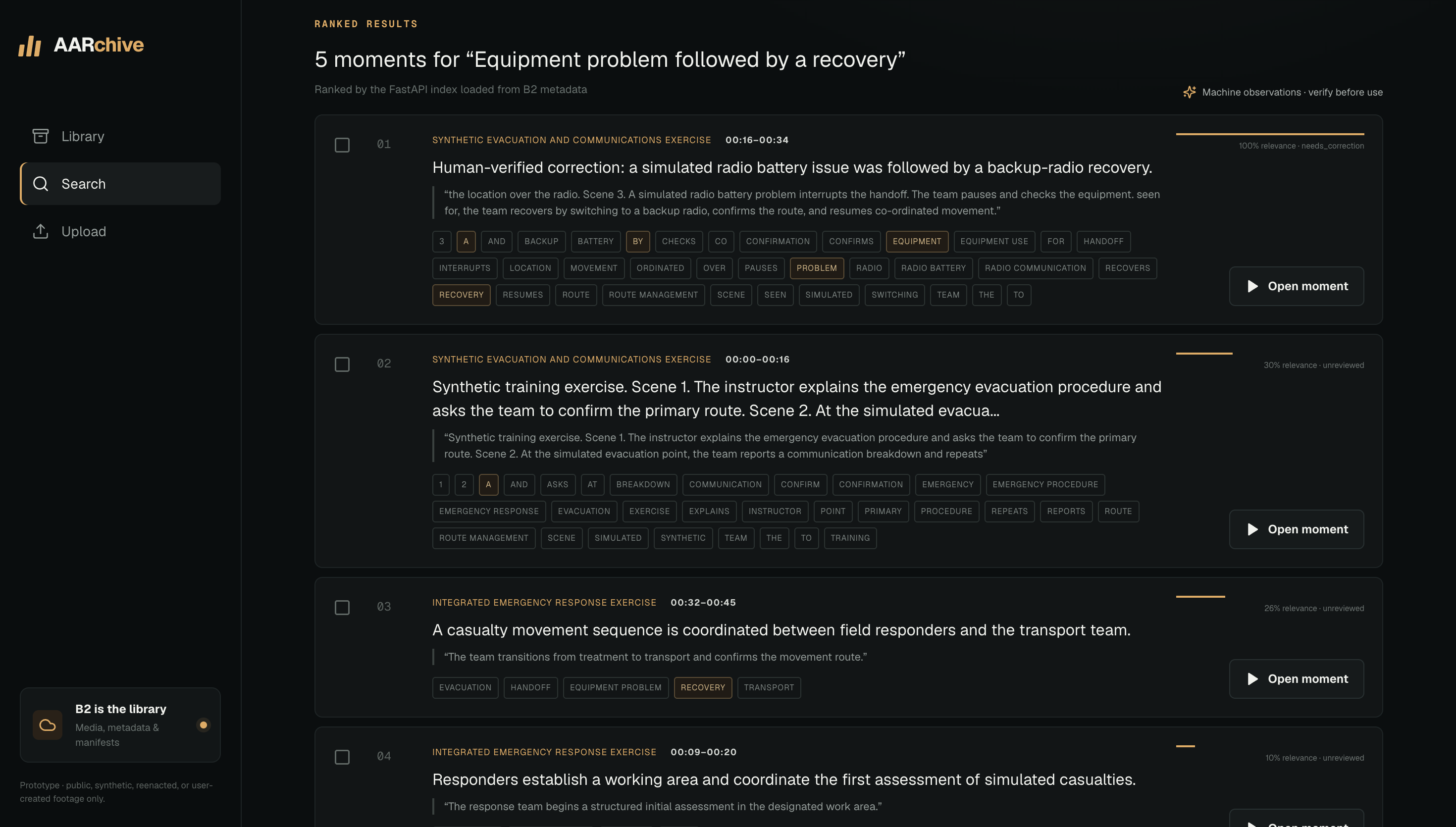
Ranked results prioritize the human-verified scene and exact timestamp.
-
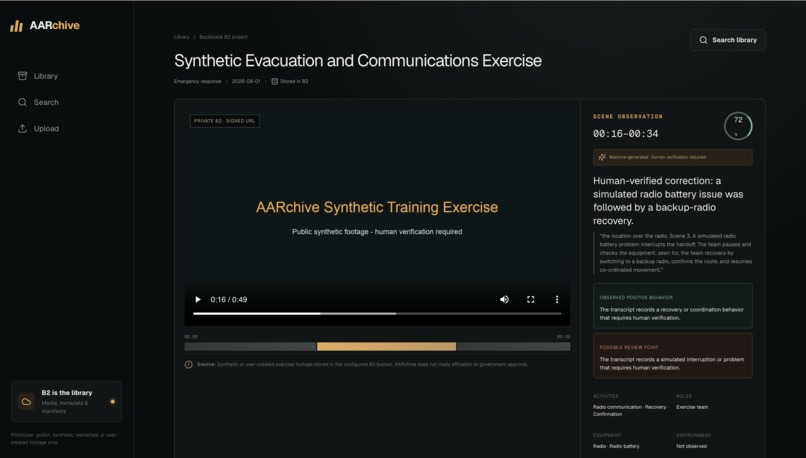
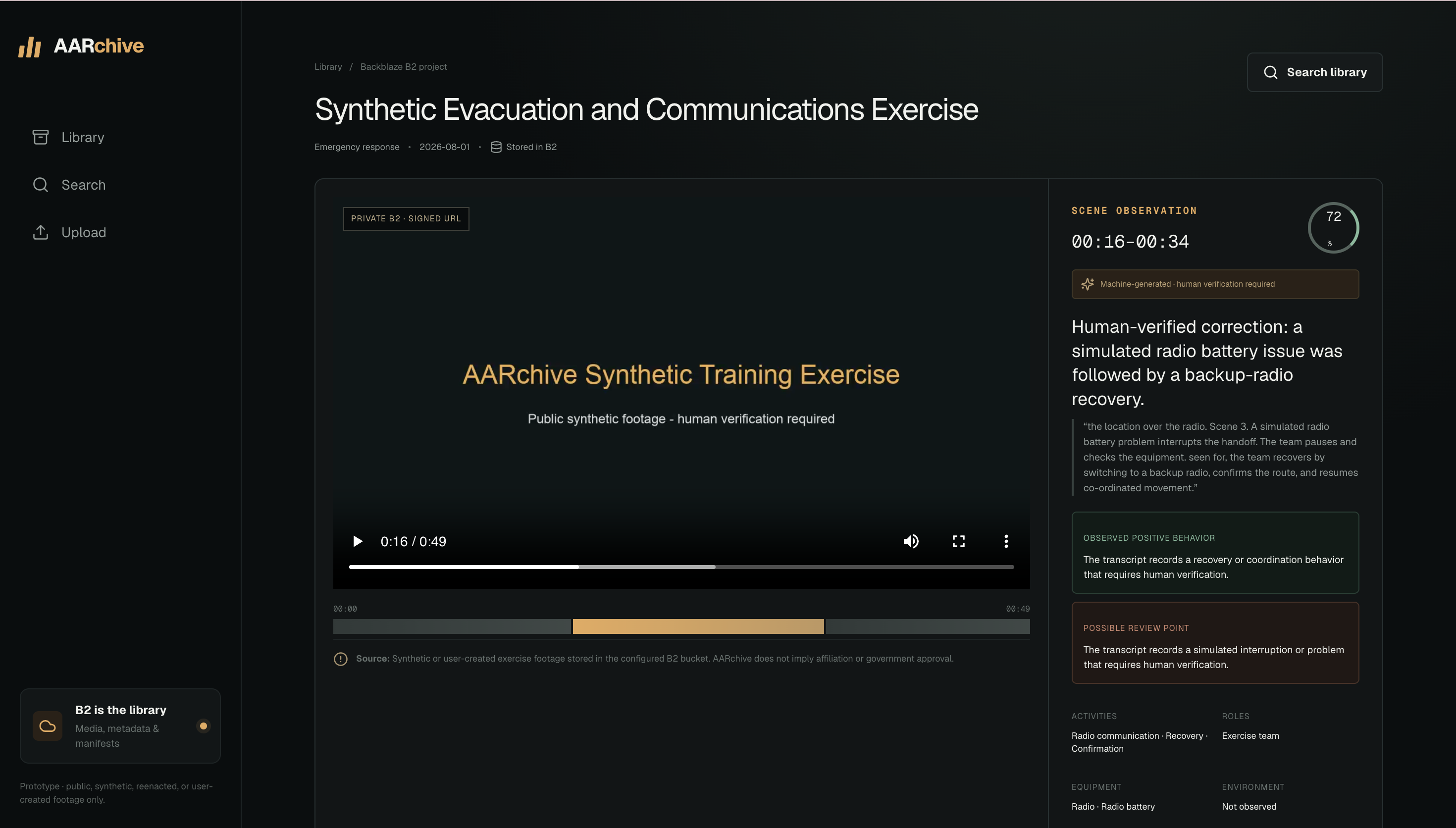
Open the exact B2-hosted moment with human-verified context.
-
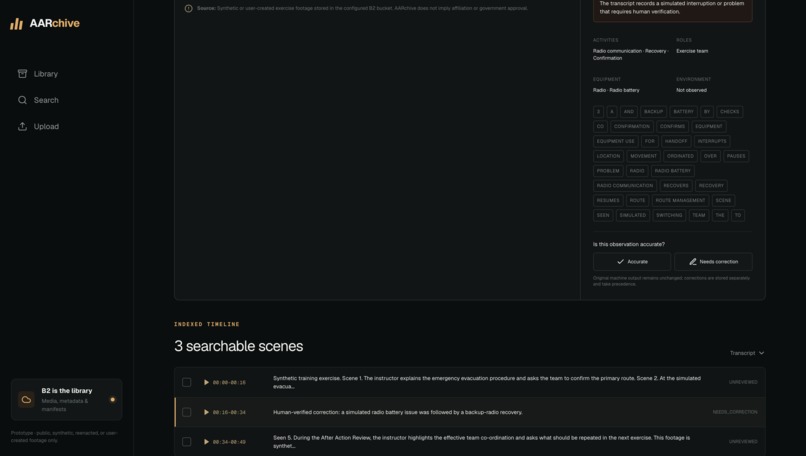
Human corrections stay separate while taking precedence in future search.
-
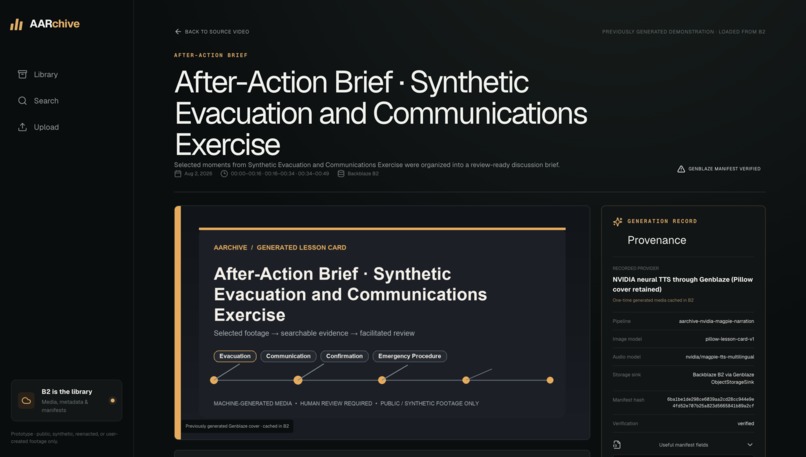
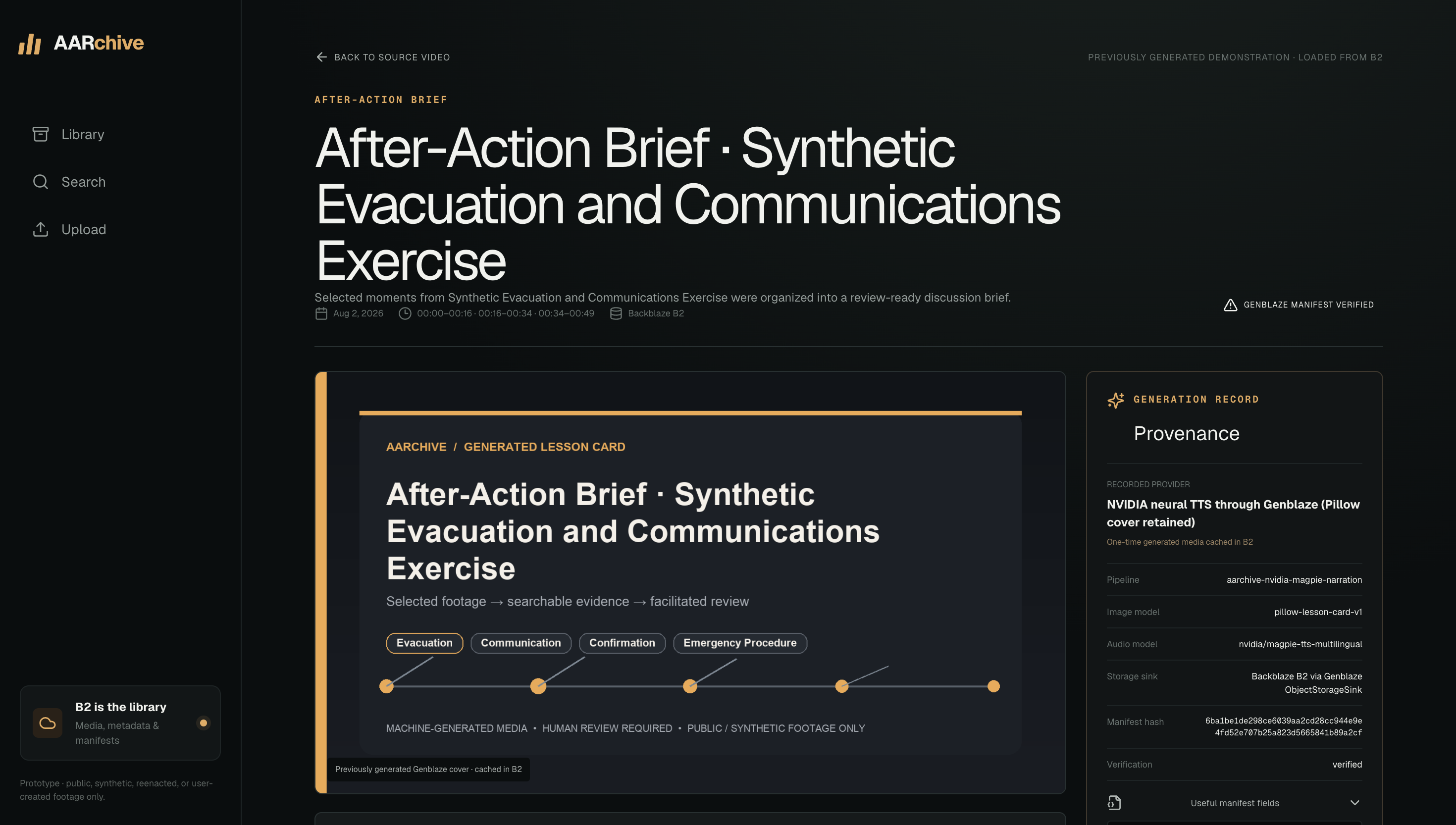
Generated after-action briefs include verified Genblaze provenance stored in Backblaze B2.
-
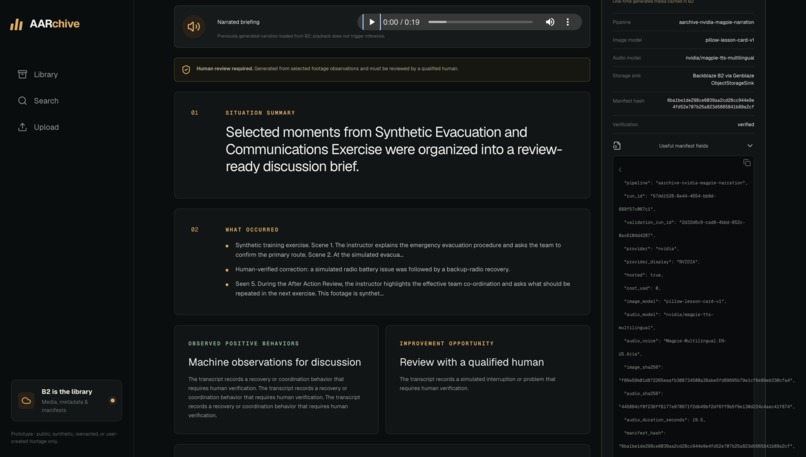
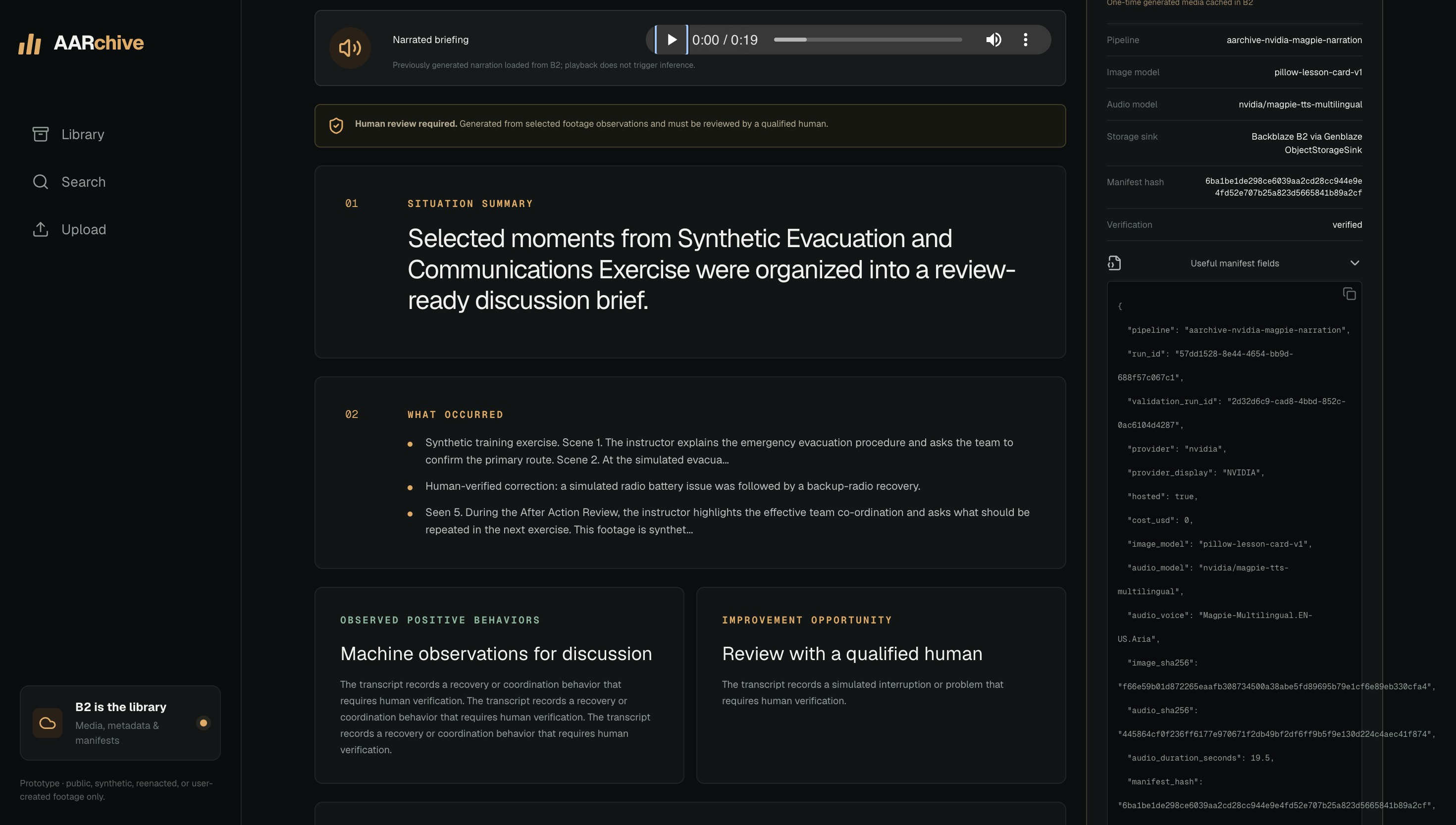
Review-ready briefs combine AI narration, human oversight, and verified provenance.
-
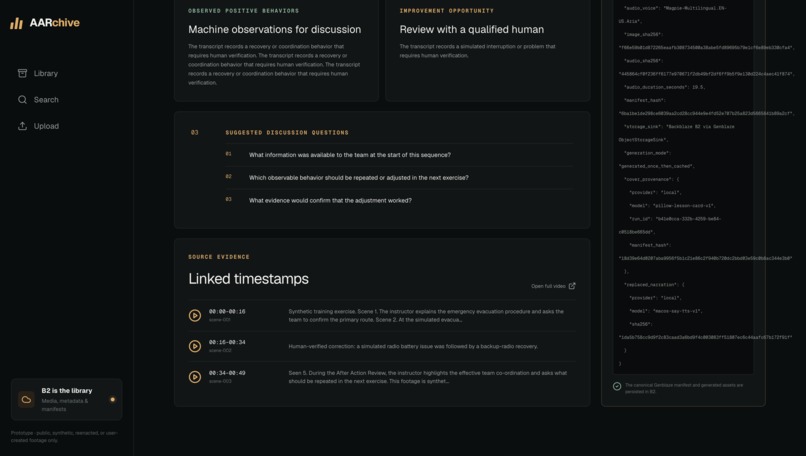
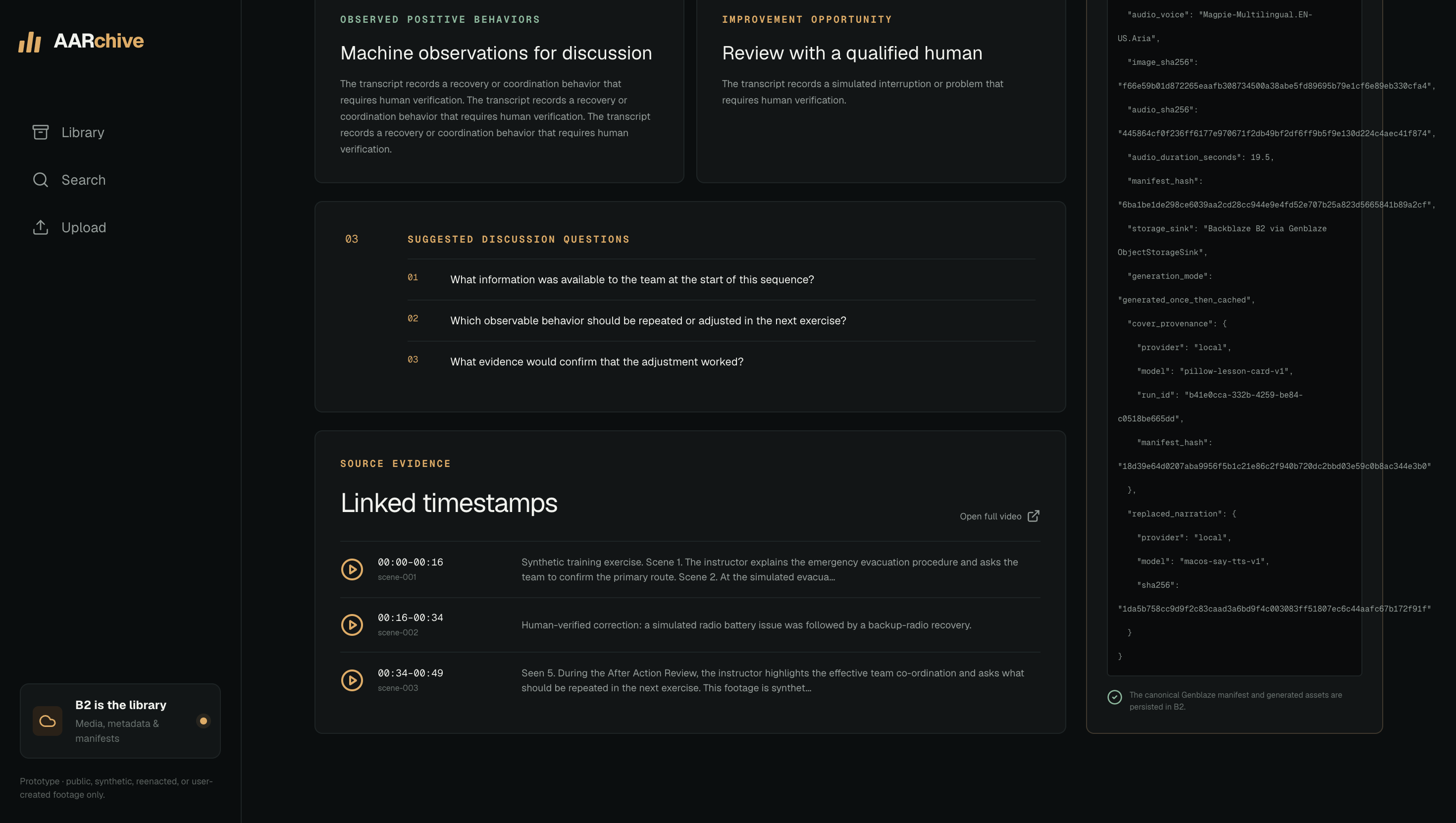
Briefs include discussion questions and linked source timestamps.
Inspiration
Through my involvement with the Interservice/Industry Training, Simulation and Education Conference (I/ITSEC), I heard a recurring problem: training organizations collect large amounts of exercise footage and supporting data, but much of it becomes difficult to use later. Someone has to already know the correct filename, exercise, or timestamp before they can find a valuable moment.
That made me ask a simple question:
What if people could search training footage by what happened instead of by where the file was stored?
I created AARchive to begin solving that problem without attempting to build the entire enterprise platform at once. The name combines AAR, or After-Action Review, with archive.
What it does
AARchive turns unstructured training footage into searchable, reusable after-action knowledge.
Users can:
- Upload public, synthetic, or user-created training footage.
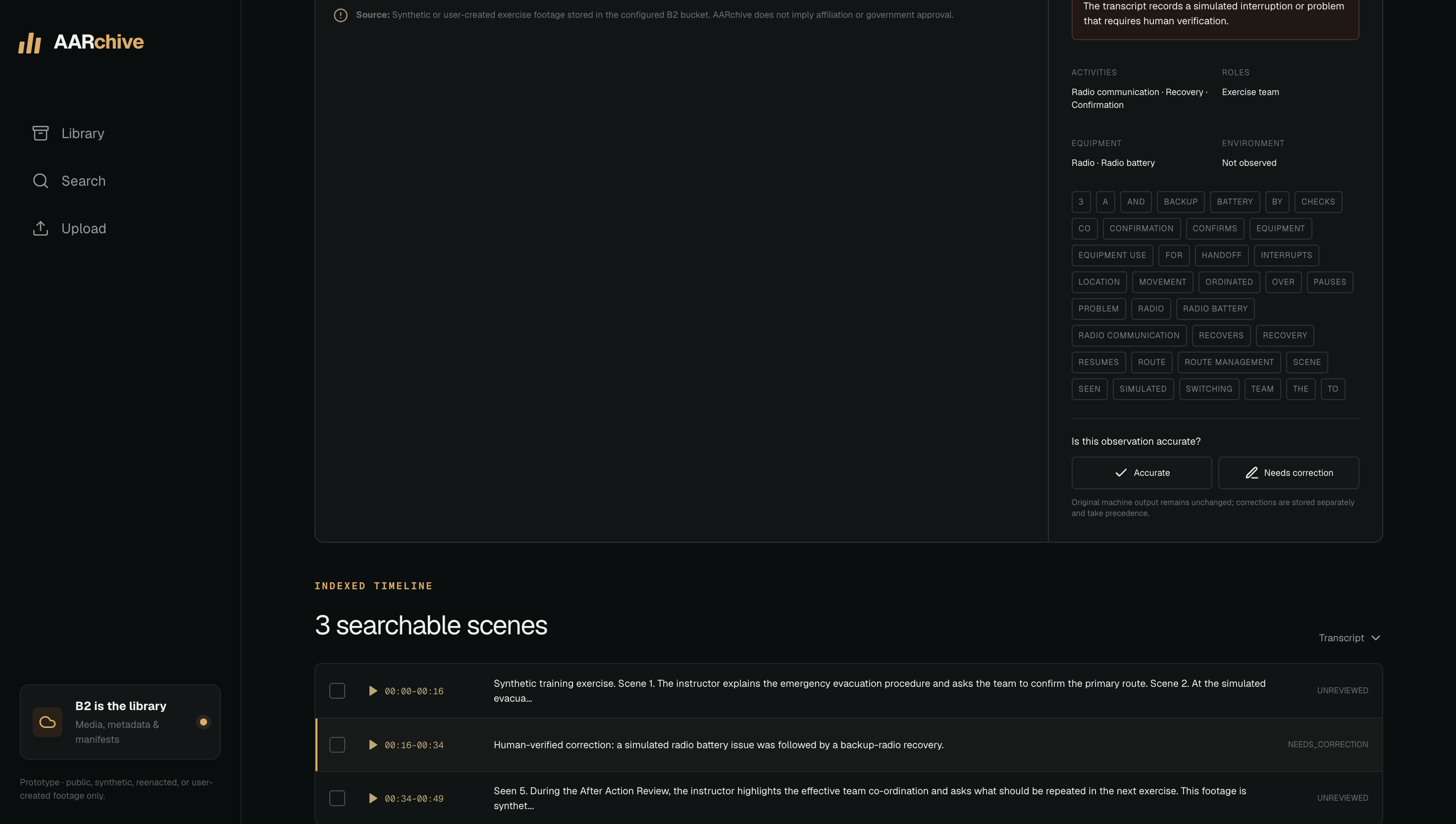
- Process the footage into timestamped scenes, transcripts, summaries, and searchable tags.
- Search for events in natural language, such as “equipment problem followed by a recovery.”
- Open the original video at the exact relevant timestamp.
- Review and correct AI-generated scene information.
- Select useful moments and generate an after-action brief.
- Access generated briefing media, source timestamps, and supporting provenance information.
Instead of manually reviewing an entire recording, an instructor can find the moment they need and carry that lesson into future training.
How we built it
AARchive uses a:
- A responsive web interface provides the training library, search results, video review, correction controls, and generated briefs.
- A deployed FastAPI backend handles uploads, processing, search, metadata, and communication with external services.
- Backblaze B2 serves as the knowledge library for:
- Source footage
- Extracted frames
- Transcripts
- Indexed scenes
- Human corrections
- Generated briefs
- Supporting metadata and provenance records
- Genblaze is used to support the generative-media workflow and organize generated outputs.
- Each indexed scene contains a timestamp range, transcript excerpt, summary, tags, and other structured information used during retrieval.
- Human corrections are preserved separately from the original AI output so users can distinguish machine-generated observations from reviewed information.
The public demonstration includes preprocessed content so the main workflow can be tested without waiting for a new video to finish processing.
Challenges we ran into
- Keeping the project functional without requiring paid API usage.
- Connecting a public frontend to a separately deployed FastAPI backend.
Accomplishments that we're proud of
- Turned training footage into timestamped, searchable scenes.
- Created search results that link users back to the exact moment in the original video.
- Implemented human-verification and correction controls instead of presenting AI output as automatically correct.
- Used Backblaze B2 as an active application data layer rather than treating it as a backup folder.
- Connected the interface to a deployed FastAPI backend.
- Created a clear workflow from source footage to searchable knowledge and reusable after-action material.
What we learned
- Media becomes much more valuable when it is paired with structured metadata, timestamps, and context.
- Storing footage is not the same as making it usable.
- Generative media can support knowledge preservation and training, not only content creation.
- Provenance and durable storage should be designed into the workflow from the beginning.
What's next for AARchive: After-Action Review w/ archive
The hackathon version proves the core concept, but AARchive can grow into a broader institutional-memory platform.
Future development could include:
- More advanced semantic and multimodal search.
- Organization-specific terminology and metadata structures.
- Private, on-premises, or disconnected deployment options.
- Comparison of similar events across exercises.
- Collaborative review and approval workflows.
- More detailed brief generation using multiple verified source moments.
- Support for emergency response, aviation, manufacturing, healthcare training, and other footage-heavy industries.
The long-term goal is to help organizations stop losing valuable lessons inside unsearchable media libraries.

Log in or sign up for Devpost to join the conversation.