Project Story:
Inspiration: India has the world’s largest youth population, yet our education system often suppresses curiosity, creativity, and problem-solving skills. Children are born curious, but traditional schooling slowly kills that spark. I wanted to build something that reverses this—an app that understands every student as an individual from a young age, guides them according to their natural strengths, and helps them become the person they were born to be.
The goal was simple but powerful: Use AI to give every Indian child a personalised guru who grows with them, understands them deeply, and nurtures their curiosity for life.
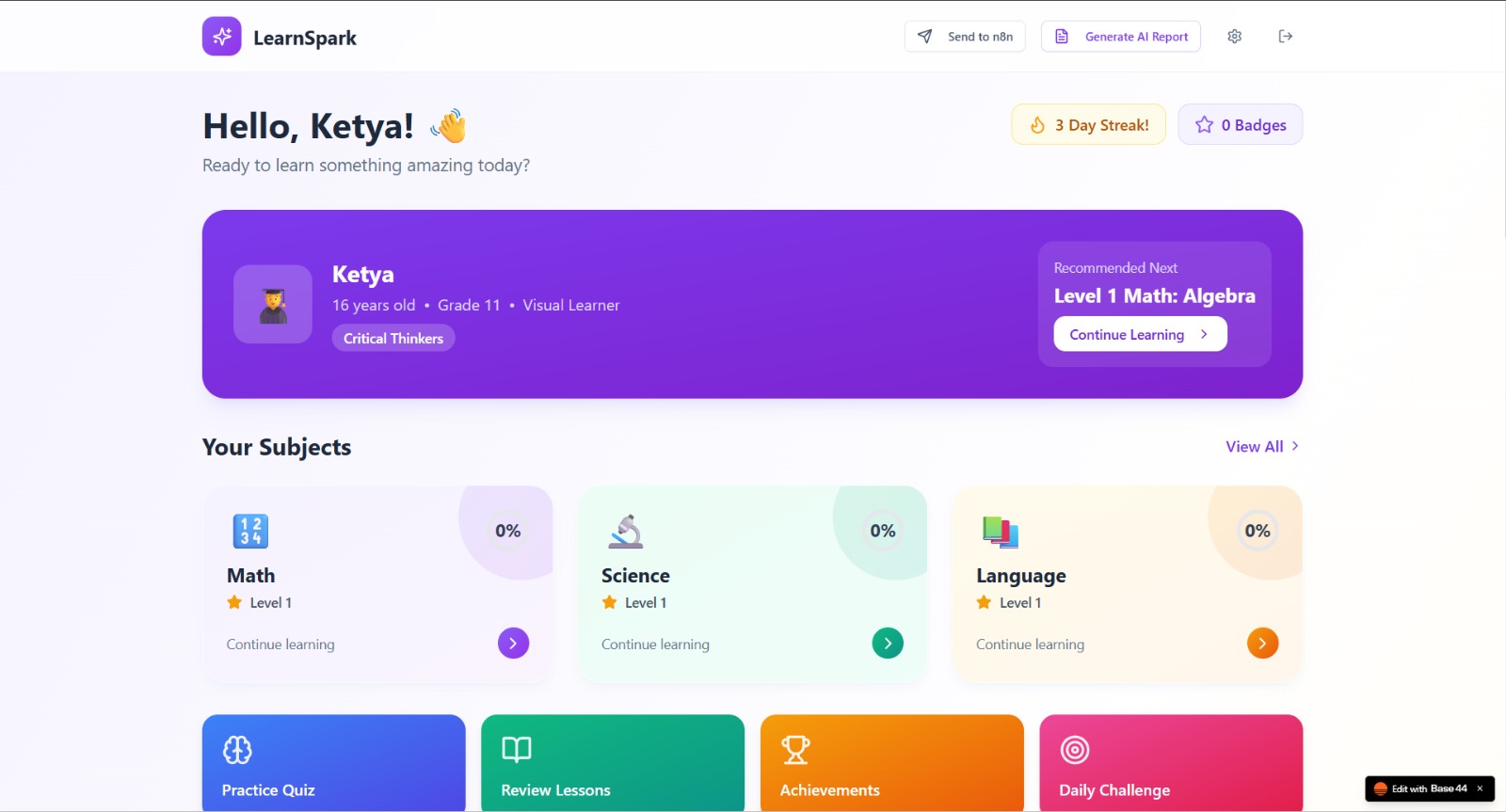
What I Built Aarambh is a fully functional prototype of an AI-powered adaptive learning app built using Base44 and n8n. It demonstrates how a child’s entire learning journey can be personalized through AI, data tracking, and daily feedback loops. This version is intentionally small—just enough to show the core idea in action—but built to be expandable.
Key Features:
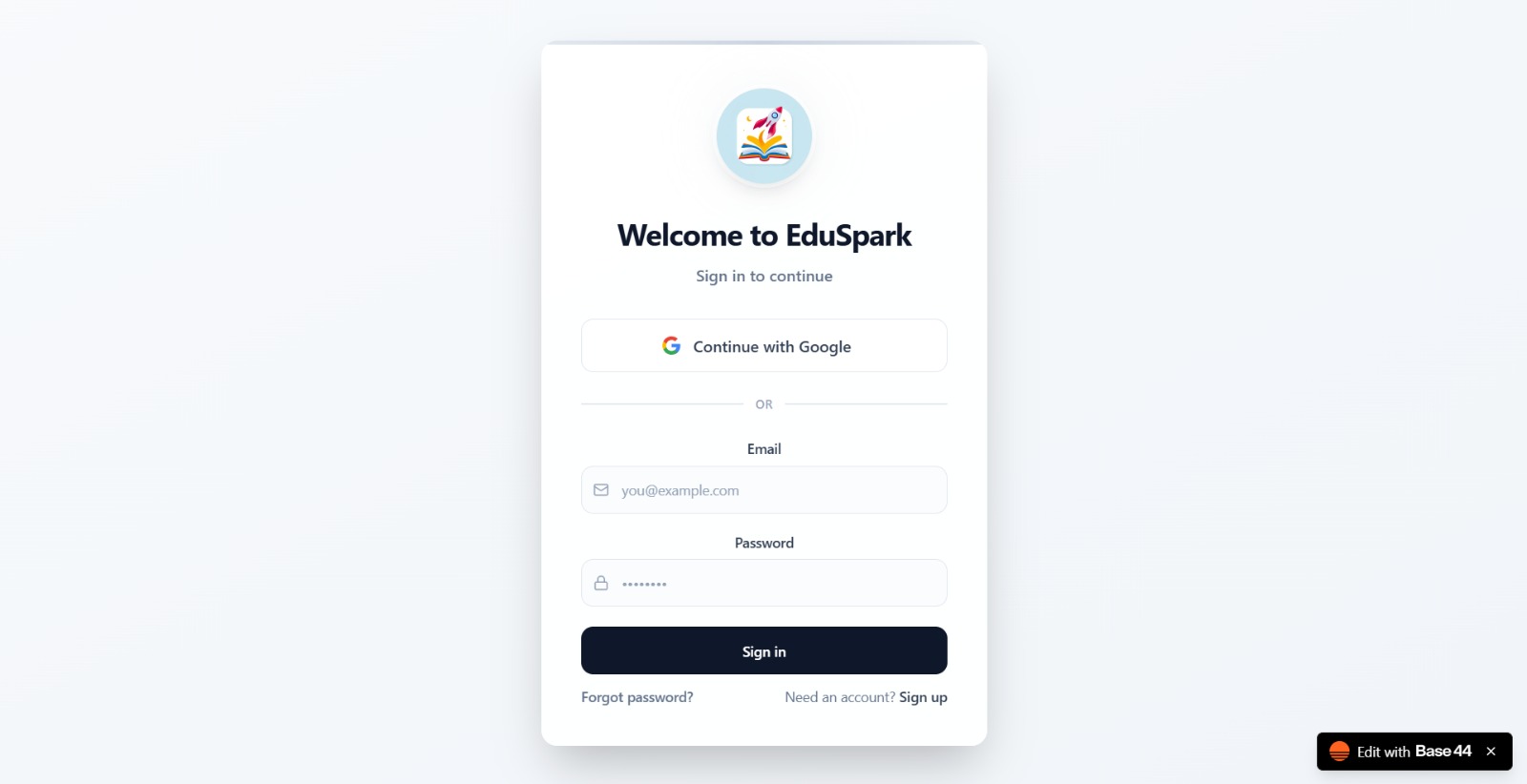
- Email login / signup with student age, grade, and interest profiling
- AI Tutor (Base44 LLM) generating adaptive lessons, quizzes, and explanations
- Personalized curriculum loosely aligned with CBSE/ICSE
- In-app activity tracking: clicks, time, answers, errors, patterns
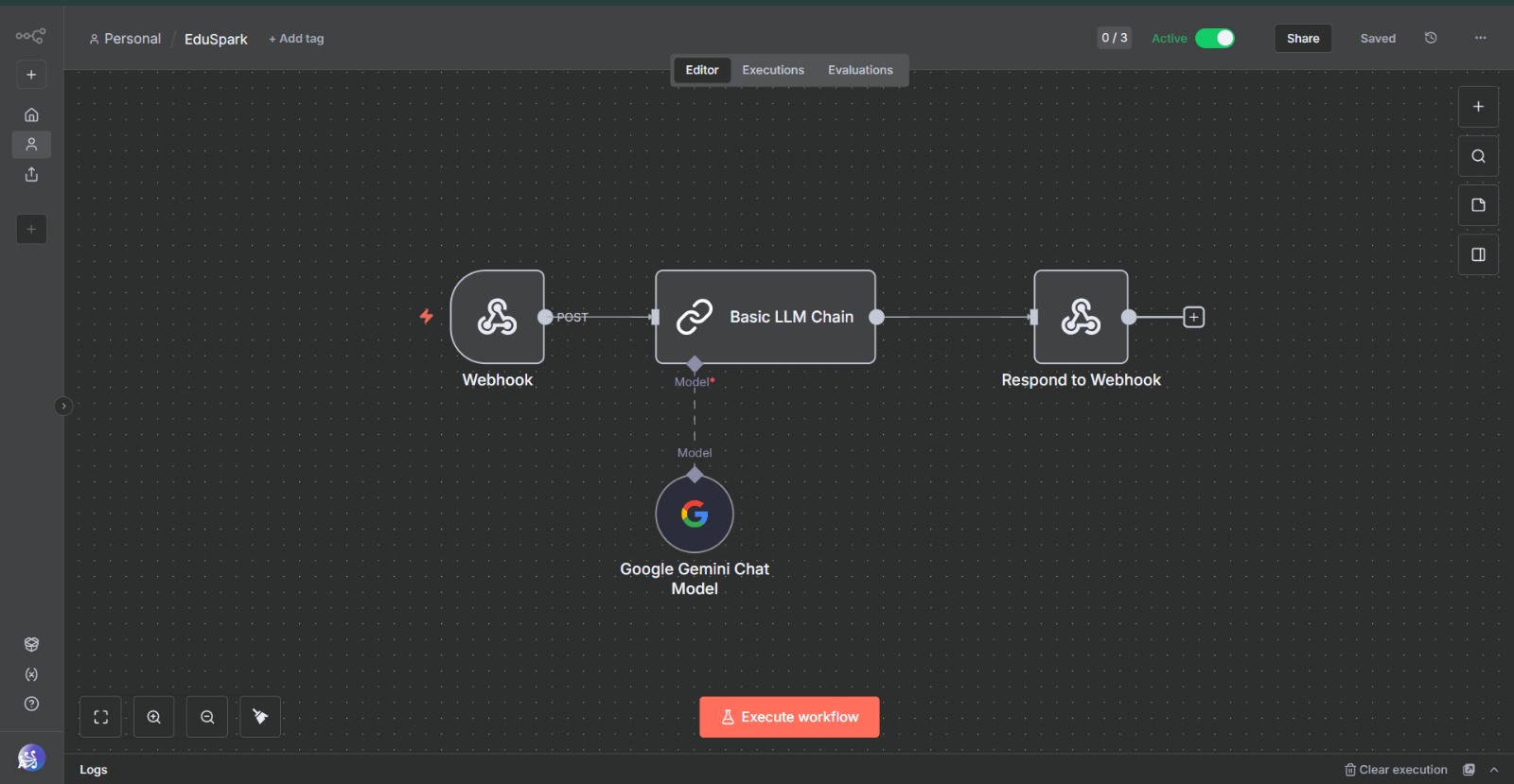
- n8n nightly feedback loop: Student activity → sent to n8n Gemini analyzes and returns insights App’s LLM adjusts the next day’s lessons
- Gamified and age-appropriate learning
- Parent-managed profiles for younger students It’s not a static interface — every element actually works.
Prototype vs Scalable Version This submission is a prototype — a small, functional demonstration of the core concept. It shows what is possible: personalized teaching, AI-generated lessons, daily analysis, and adaptive planning.
However, a truly scalable version for India requires much deeper work:
- Age-Group–Specific Research Across India Different age groups in India learn differently due to:
- neurological development
- linguistic diversity
- cultural environment
- school exposure
- learning speed
socio-economic context We must study real-world student behavior for each age band (4–6, 7–9, 10–12, 13–15, 16–18) to build a scientifically accurate adaptive model.
Educational Psychology + Cognitive Development Mapping A national-level version requires:
understanding curiosity decline patterns
mapping reasoning growth stages 3 designing interest-based pathways
building longitudinal student profiles
defining mastery-based skill ladders
identifying region-specific learning gaps This research becomes the backbone for the AI tutor’s decision-making.
A Unified Personalization Framework for India Once research is complete, we can build:
an age-wise competency map
a modular curriculum engine
AI-driven interest discovery
adaptive difficulty systems
parent/teacher dashboards
scalable data pipelines This transforms the prototype into a nationwide AI education infrastructure.
Data Volume and Infrastructure Planning A real deployment must house:
millions of student activity logs
behavior patterns
progress histories
daily n8n-like insights
model fine-tuning datasets This requires reliable cloud systems, database optimization, and privacy safeguards.
Summary The prototype shows the direction. Scaling it will build the revolution.
How I Built the Prototype
Concept & Research I explored child development, neuroscience, curiosity-building methods, and global adaptive learning systems to design the logic behind personalized Curriculum + AI Tutor + Daily Feedback.
Building in Base44 Using detailed prompts, I generated:
login system
student onboarding
dynamic quiz + lesson system
LLM tutor
backend database
activity tracking
API calls to n8n Every button and workflow was refined until it worked.
n8n Integration My workflow:
Webhook receives data
Gemini analyzes patterns
n8n returns a plain-text report
Base44’s LLM uses the report to adjust lessons This created a working prototype of a daily adaptive learning loop.
What I Learned Personalized learning is the future Every child learns differently — AI makes one-on-one tutoring possible at scale.
Base44 is powerful With the right prompt engineering, I could build full features without writing code.
AI + Automation = Real Adaptivity The nightly analysis loop using n8n proved how powerful daily feedback can be.
Understanding brain development matters Cognitive stages must guide lesson difficulty and interactivity.
Scalability requires research Prototype = proof of concept Scalable version = Indian-context scientific model
Challenges I Faced Making the system truly adaptive Capturing and using real student activity to personalize lessons was complex.
Fixing bugs in Base44 Ensuring all buttons, AI responses, and workflows worked required multiple refinements.
Integrating Base44 ↔ n8n Passing data, handling formats, and getting stable responses needed experimentation.
Balancing curriculum and personalization Aligning with CBSE/ICSE while staying flexible was challenging.
Thinking about national-scale implementation Realizing how much research is needed for India-wide use expanded my understanding of ed-tech systems.
Final Thoughts
Aarambh is more than a hackathon submission — It is the first step toward a new kind of Indian education system.
This prototype shows what is possible:
- curiosity preserved,
- aptitude strengthened,
- learning personalized,
- potential unlocked.
With deeper research across India's diverse age groups, the system can scale into a national AI-powered learning companion that grows with every child — helping them become the best version of themselves.

Log in or sign up for Devpost to join the conversation.