-
-

1024x1024 Logo
-
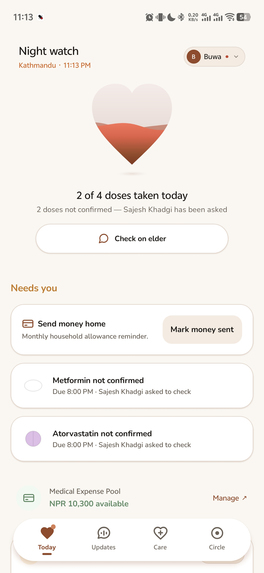
Primary User Homepage
-
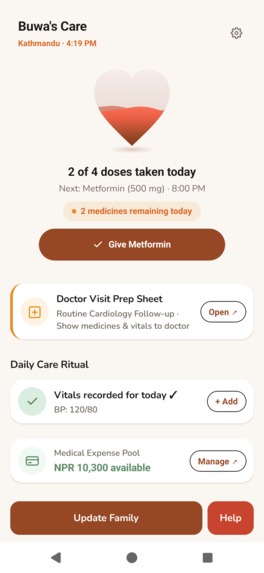
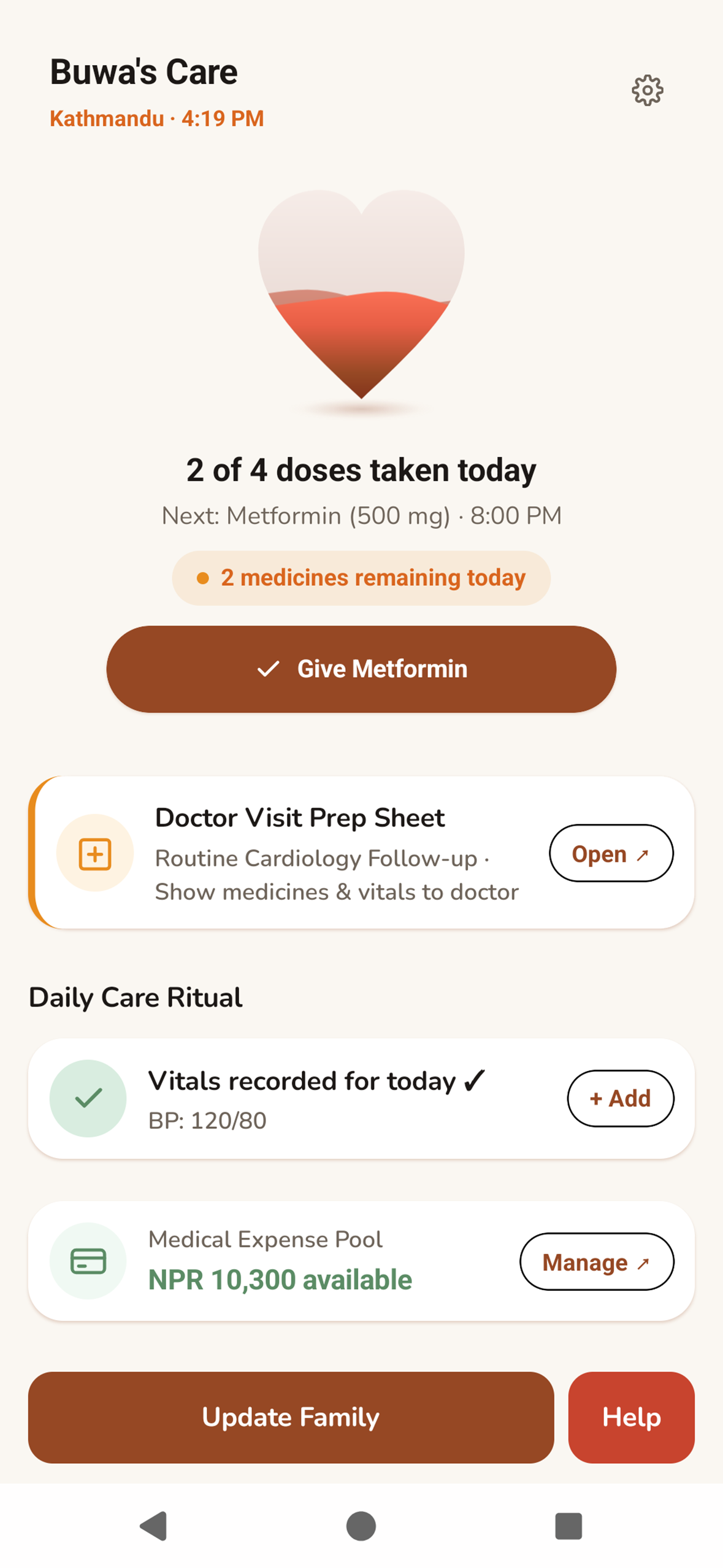
Caregiver Homepage
-
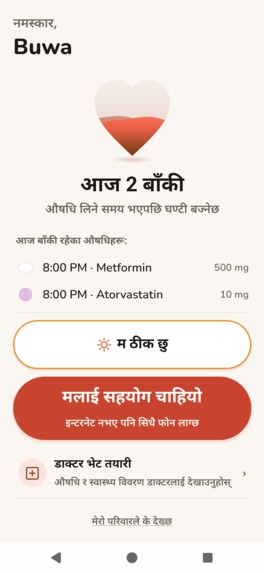
Elder Homepage
-
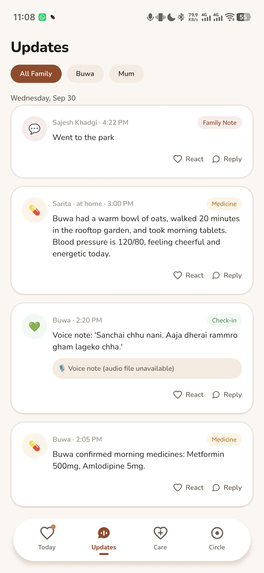
Updates Page
-
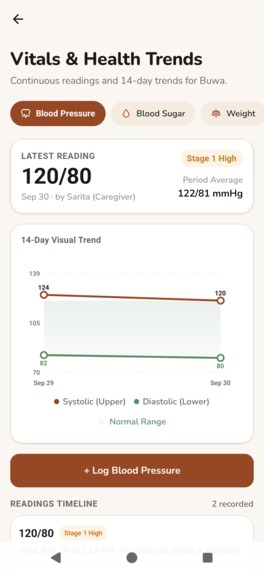
Vitals Page
-
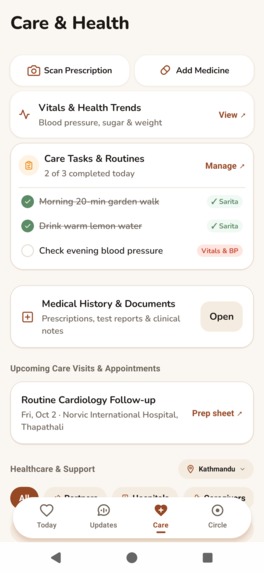
Care Page
-
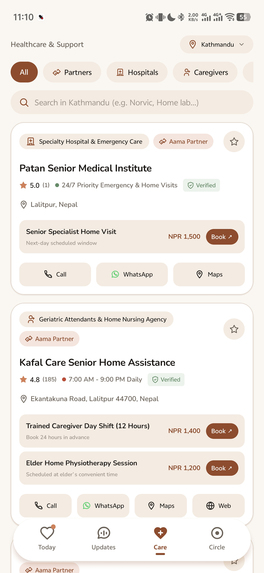
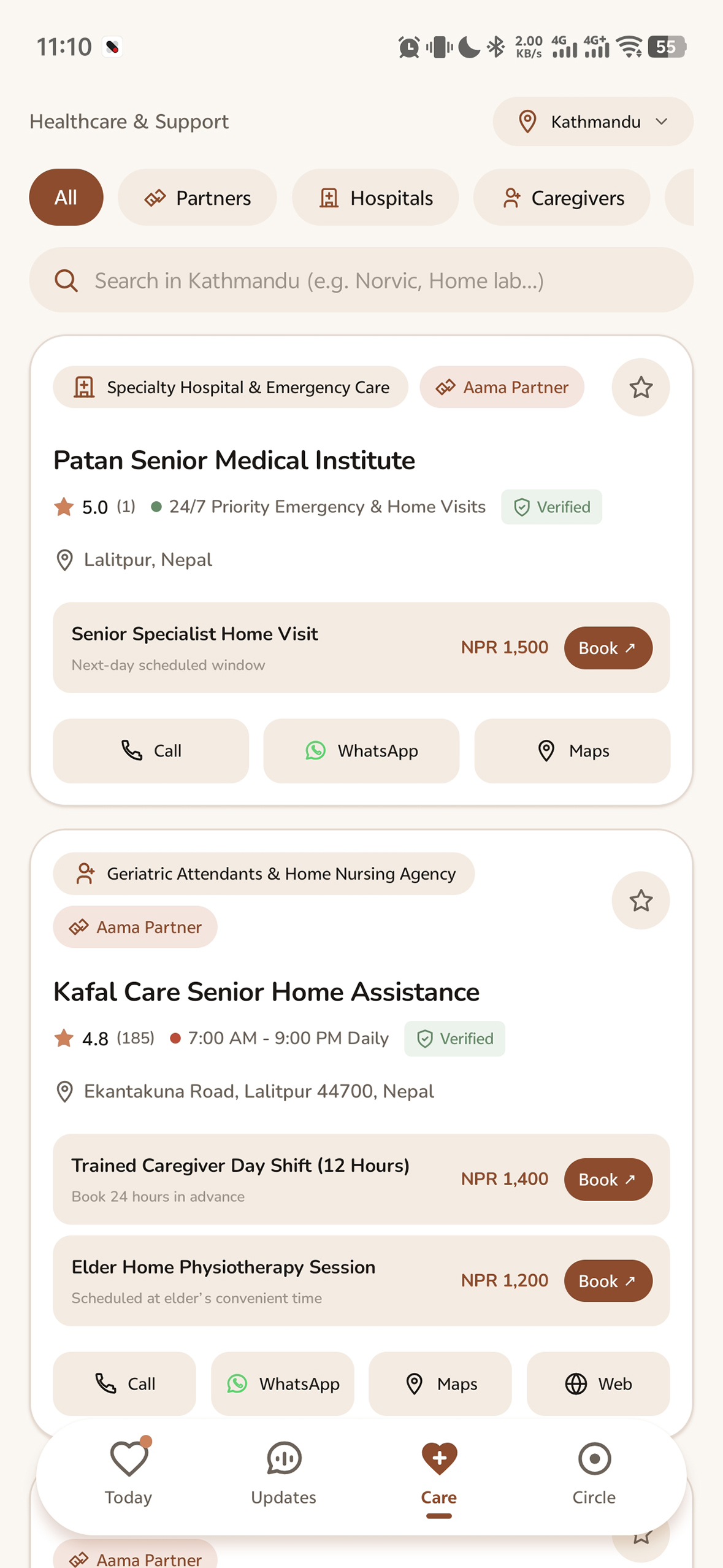
Healthcare Providers Search Page
-
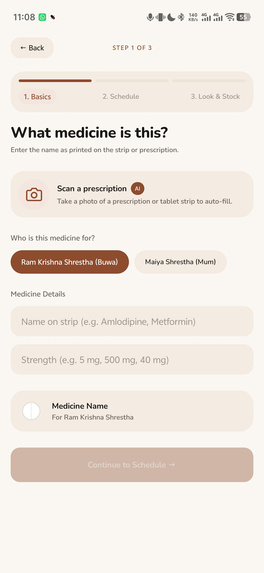
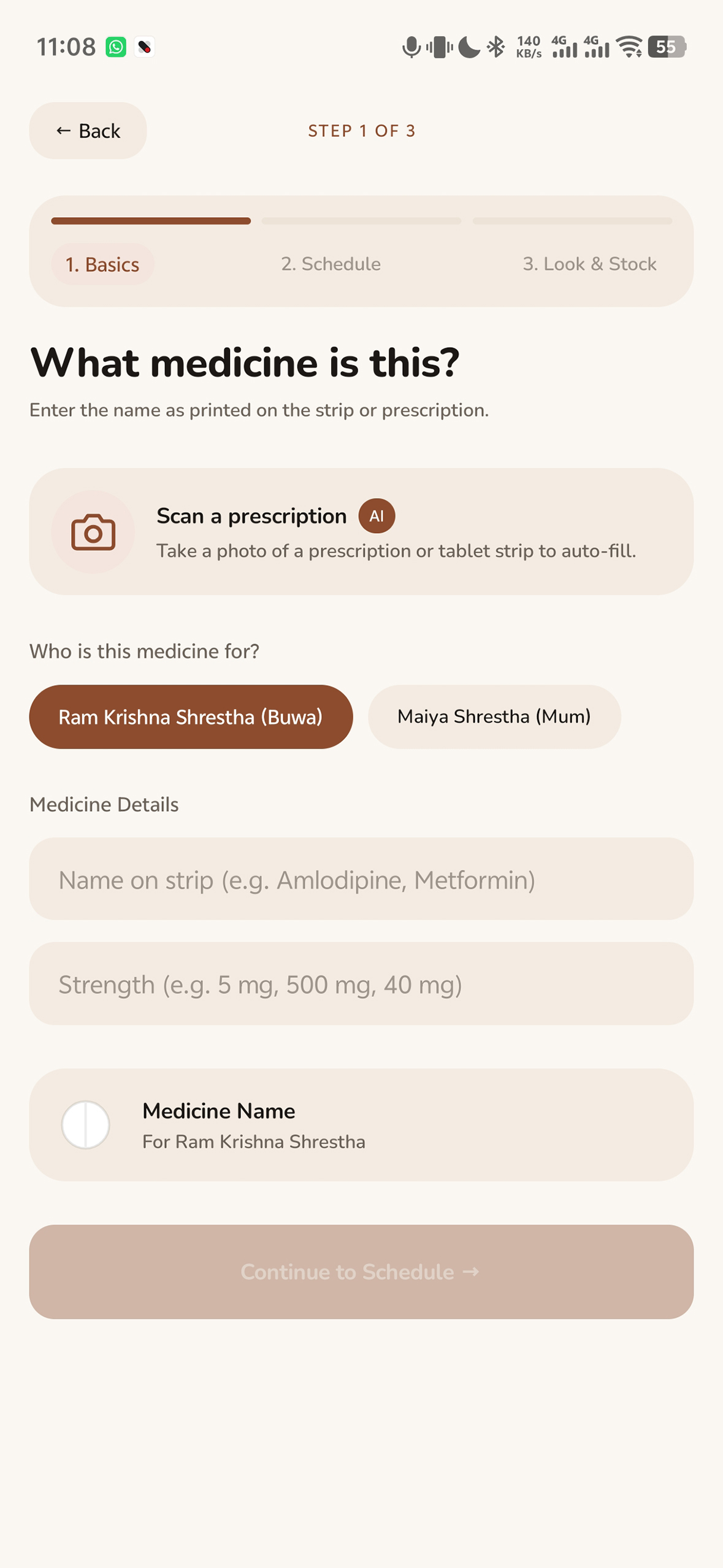
Add Medicine Page
-
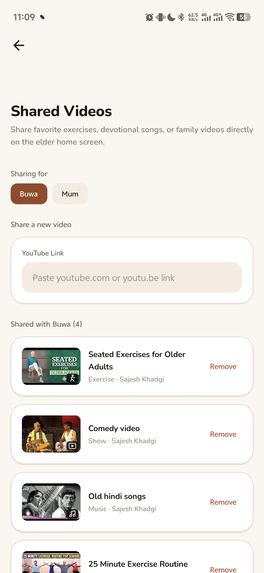
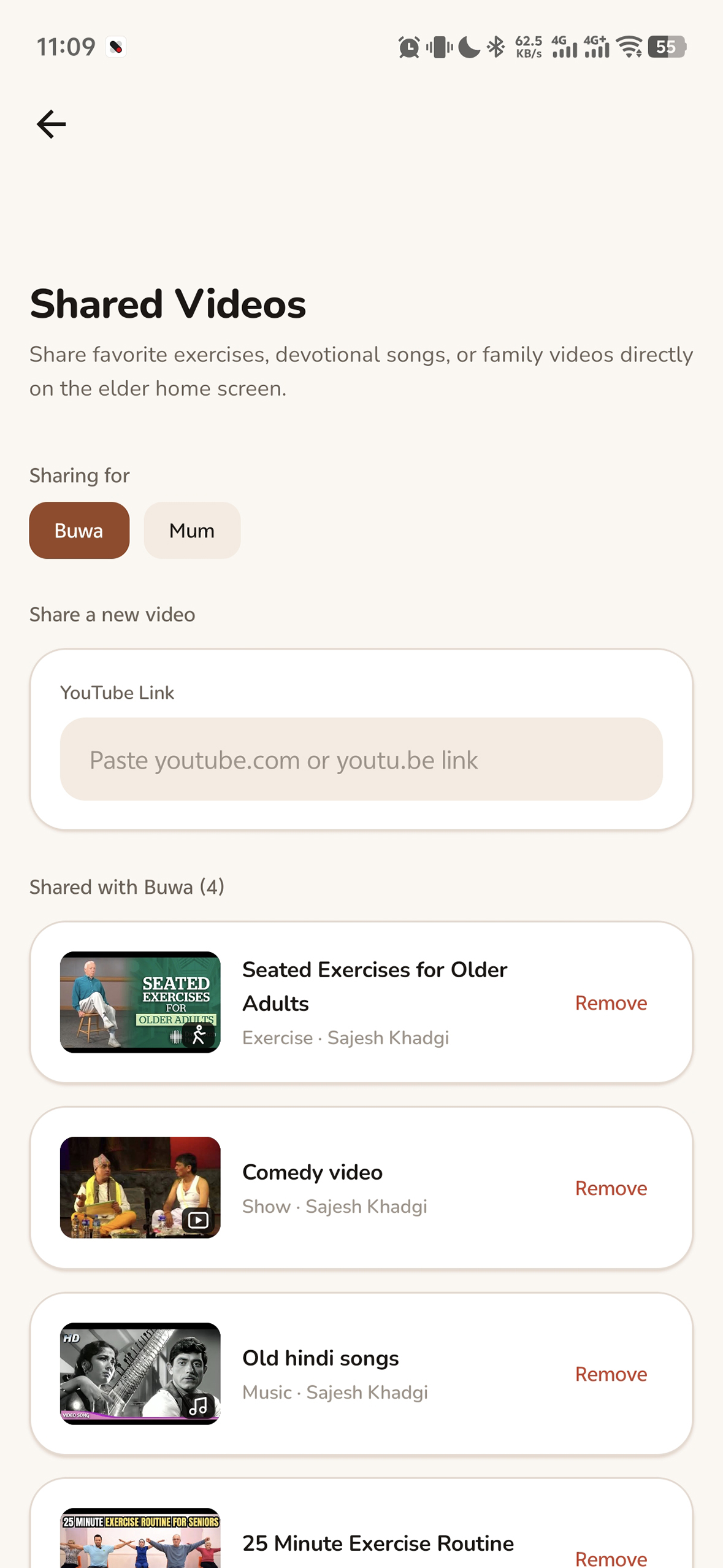
Shared Videos Page
-
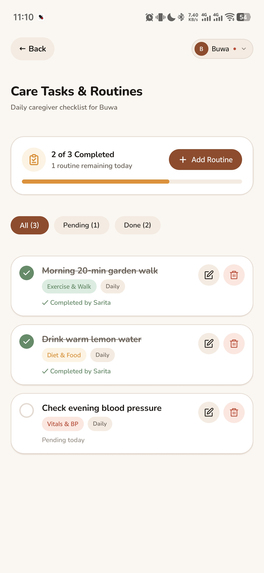
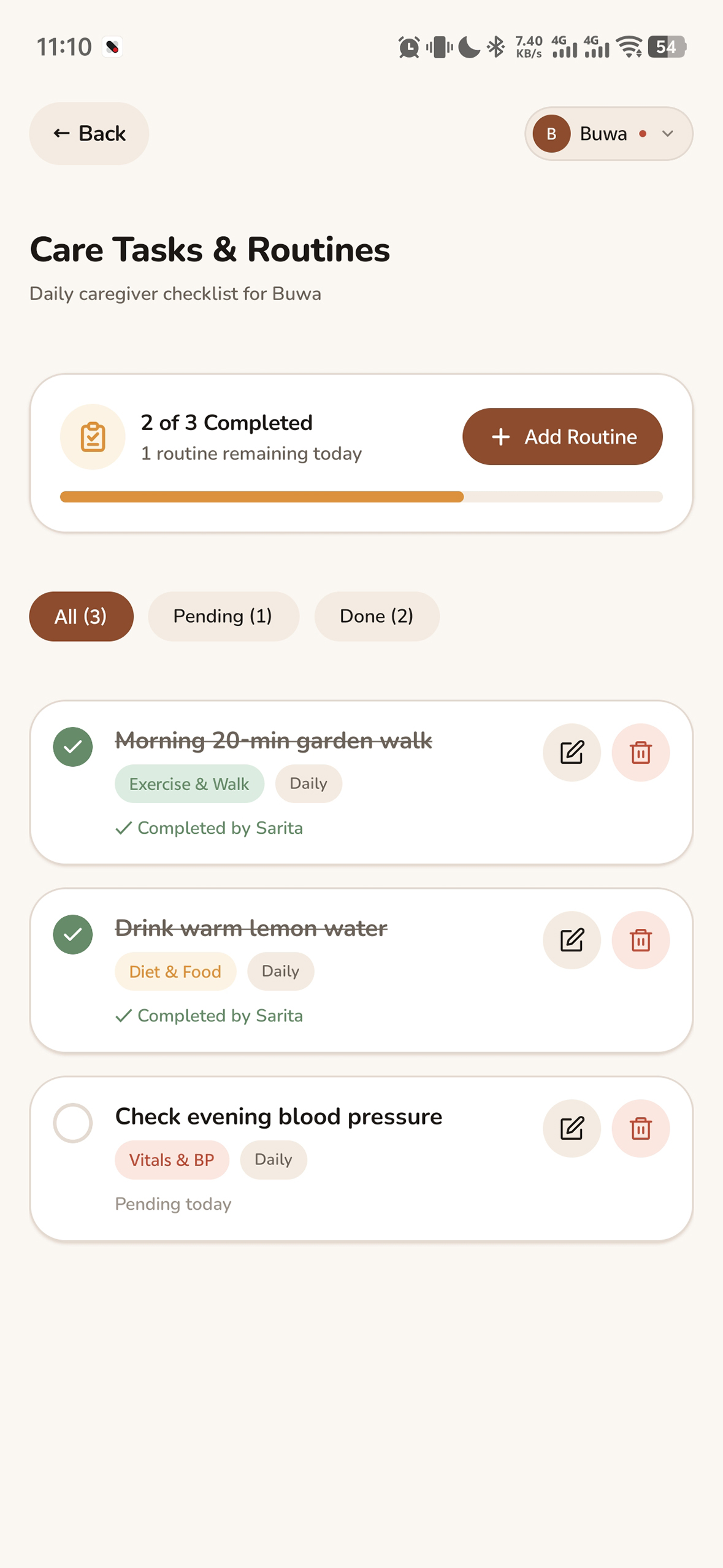
Care Tasks Page

Inspiration
Nearly a quarter of Nepali parents have sons and daughters working overseas, sending money back home to sustain their livelihood. While remittances cover the bills, someone still has to manage prescriptions, catch early symptoms, and take aging parents to the doctor.
Right now, families manage all of this over messy WhatsApp chats. Pill reminder apps assume an elderly parent is tech-savvy enough to log their own doses, and regional care startups are too expensive and don't operate in Nepal. The local caregiver ends up repeating the same health updates to siblings across different time zones with zero support.
Aama replaces that mess. We built Aama because long-distance care shouldn't mean constant guilt on one end and burnout on the other. It’s a simple, shared tool built around the person holding things together on the ground.
We chose to name this app ‘Aama’ which means ‘Mom’ in our language because what inspired us to build this app was the desire to care for our parents and elders with the same love they spent a lifetime giving us.
What It Does
Aama provides everyone in the family circle with what they need, without extra noise.
For Aging Parents
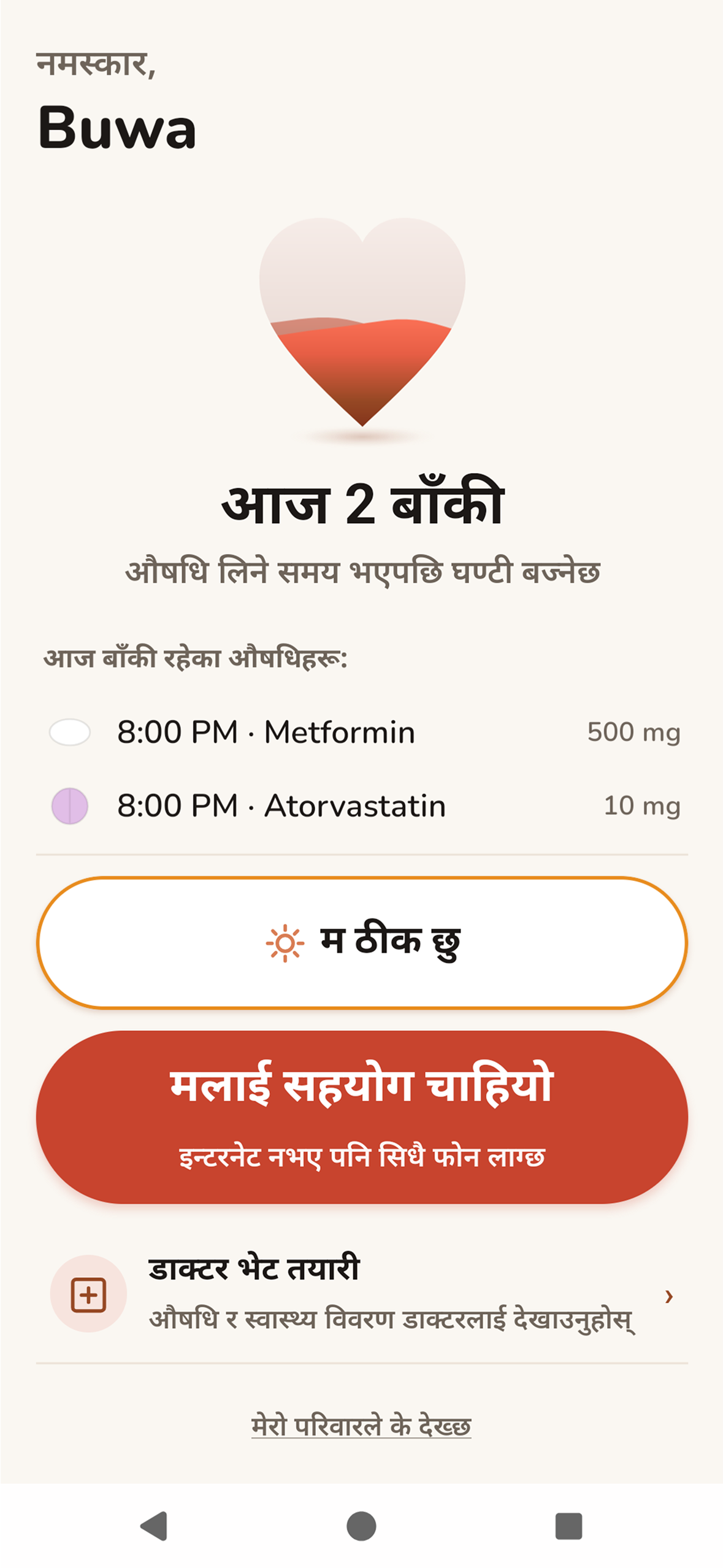
No complicated logins or passwords. The interface remains simple:
- Photo reminders: Medicines appear as clear photos of the pills instead of tiny, hard-to-read names.
- Full-screen alarms: Reminders ring loud like an incoming phone call, even when the phone is locked or asleep.
- Simple check-ins: One tap to confirm they are doing fine, and one clear button for emergency SOS.
- Local languages: Switch easily between Nepali, Hindi, and English.
- SOS Widget: One tap on the emergency widget on homescreen immediately alerts their children and the emergency contact.
For the Caregiver Back Home
No more repeating the same update to three siblings in three different countries:
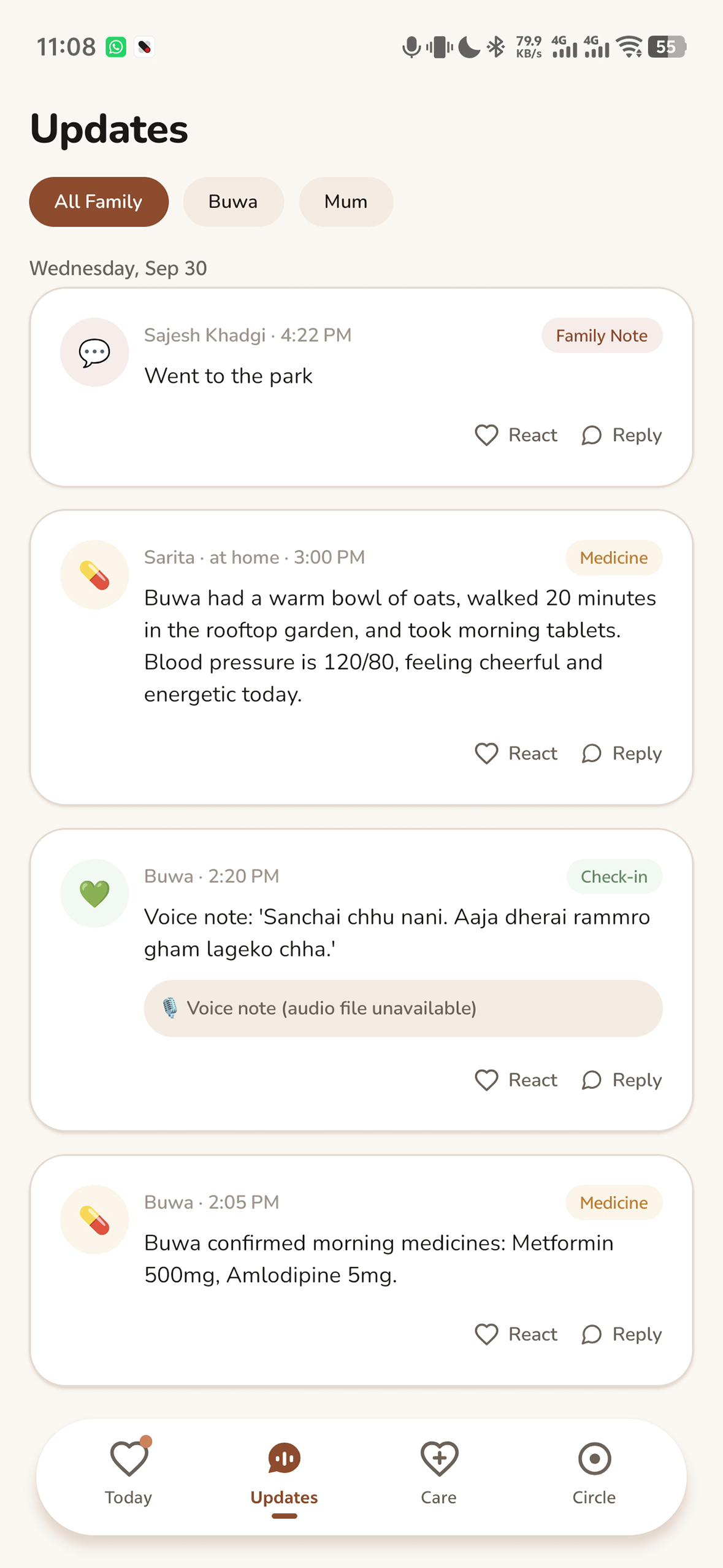
- One shared update: Post a quick photo, text note, or voice recording that reaches the entire family at once.
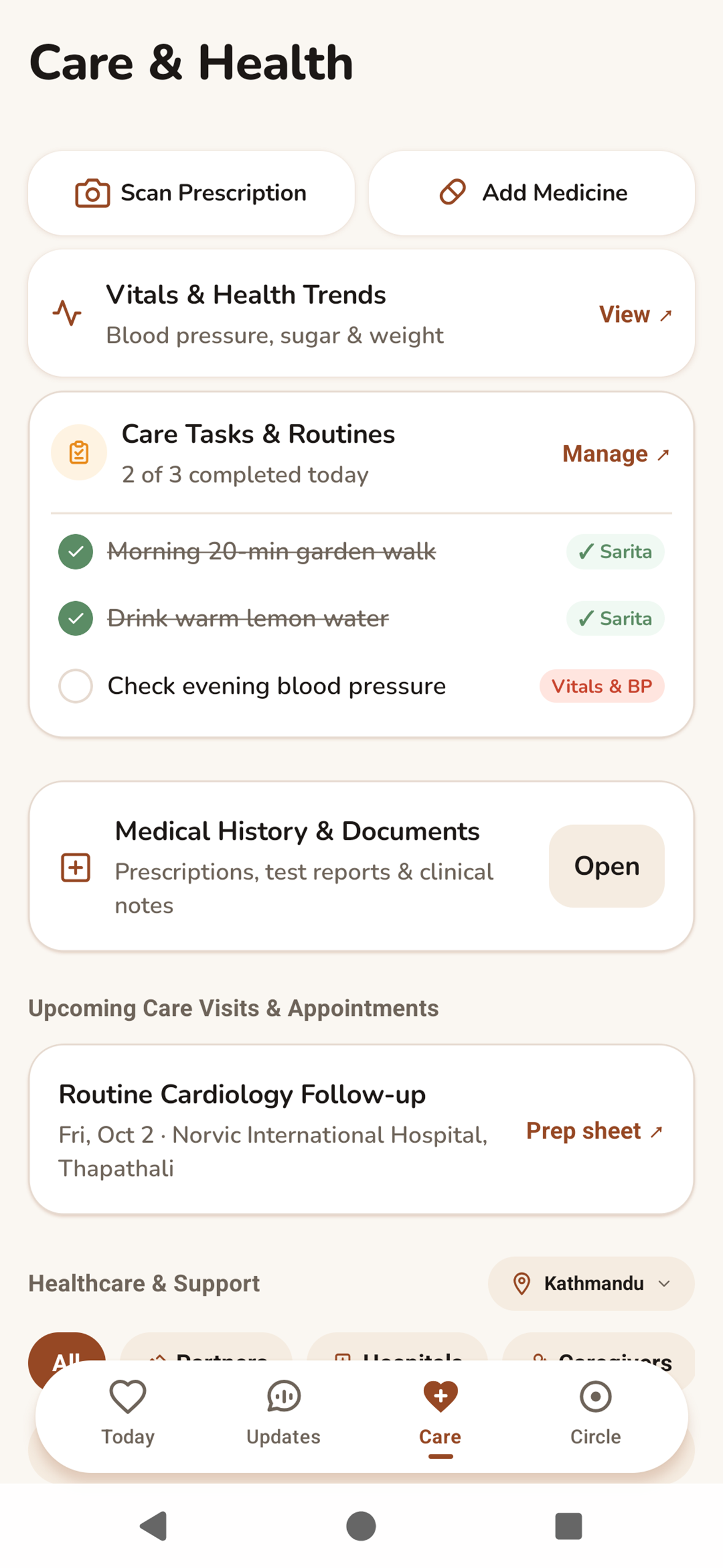
- Daily tracking: Log vitals, confirm taken doses, and prepare questions together for upcoming doctor visits.
- Clear family chat: Messages show who is talking and where they are posting from (e.g., Kathmandu, Melbourne, Dallas).
For Family Living Abroad
Stay in the loop without constant notification overload:
- Clean dashboard: Highlights what needs immediate attention without clutter.
- Smart alerts: The system prompts the parent first, then notifies the local caregiver if a dose is missed. Siblings receive a single daily summary timed to their local morning or evening. A genuine SOS is the only alert that bypasses Do Not Disturb.
- Healthcare Support: Can find doctor appointments, caregiver services and at-home blood test services easily.
- Medicine Additions: Medicines can be added manually or by scanning prescription cards directly using on device OCR, keeping the data safe.
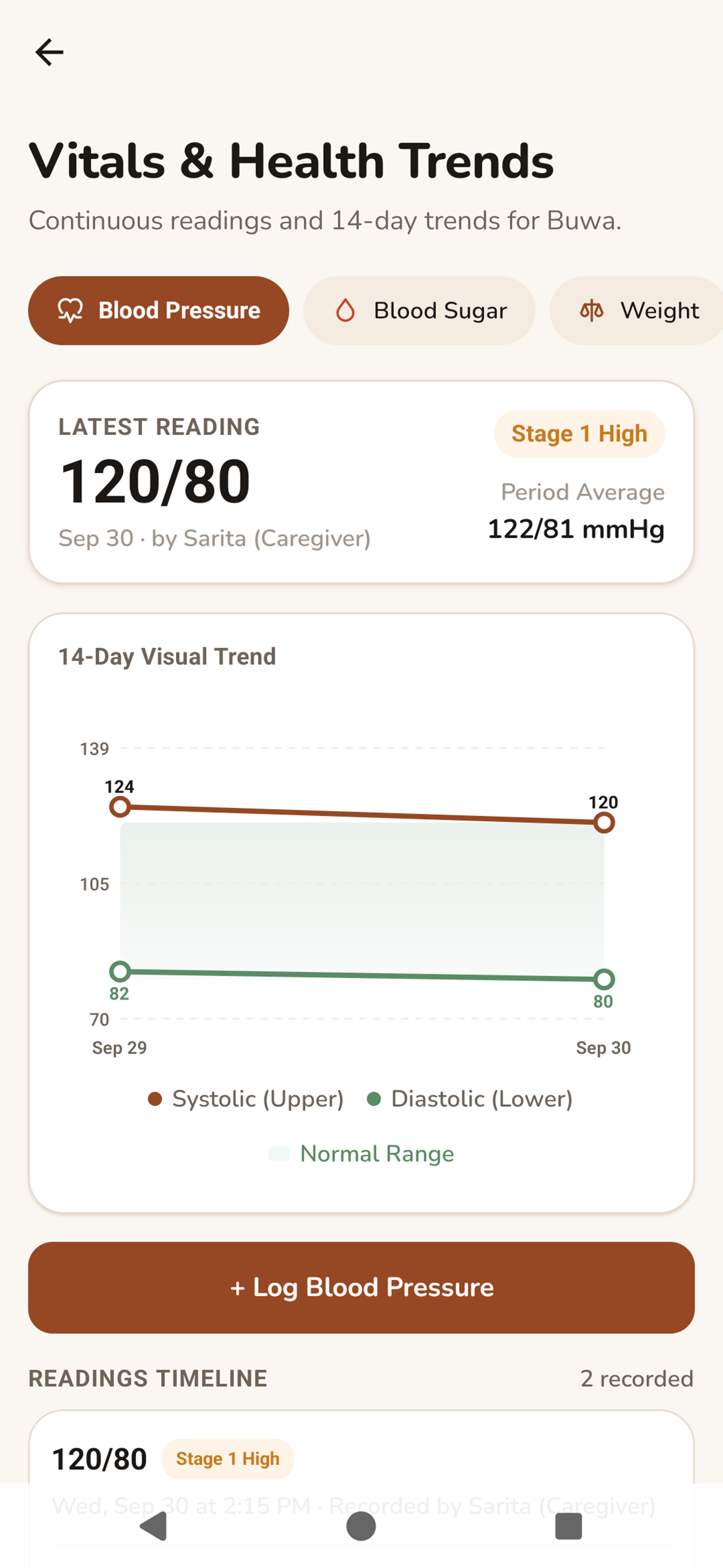
- Vitals Readings: Can view vitals logged by caregivers using simple charts.
- Caregiver Tasks and Updates: Can assign caregivers their tasks, view their updates and react or reply to the updates.
Practical Tools for Daily Care
- Two parents, one household: Manage separate schedules for both parents in one place.
- Offline emergency card: Medical history, blood type, and emergency contacts remain accessible directly from the phone screen without an active internet connection.
- Vitals with context: Blood pressure and blood glucose levels display alongside safe target ranges so normal fluctuations don't trigger panic.
- Shared expense log: Keep clinic visits and pharmacy receipts visible to everyone to eliminate awkward financial tensions.
Simple Pricing
The family member living overseas pays for the subscription, unlocking full access for the entire household. Parents and caregivers in Nepal never see a price tag. Core safety tools—emergency SOS, the offline medical card, and medicine alarms—remain free for everyone, with no exceptions.
How We Built It
- Frontend & Runtime: Built on React Native using Expo SDK 54 with the New Architecture enabled.
- Backend & Storage: Powered by Supabase (PostgreSQL, Row Level Security, Realtime, Storage, and 17 Deno edge functions).
- Authentication: Elder devices use a passwordless, cryptographically random 32-byte token stored in
SecureStoreand validated server-side to eliminate phishing risks and forgotten passwords. - Native Wake Alarms: Custom Kotlin modules utilize
AlarmManager.setExactAndAllowWhileIdlepaired with a full-screen wake intent to reliably break through Android's aggressive Doze mode on locked devices. - Prescription Parsing Pipeline:
- On-device OCR using Google ML Kit.
- Client-side PII stripping before transmission.
- LLM cascade across Groq with three fallback models, backed by an offline regex fallback parser.
- Mandatory human-in-the-loop review screen before any parsed prescription is saved.
- Escalation & Notifications: Orchestrated using OneSignal's Journeys API for stateful cross-timezone digests and multi-step escalation ladders.
- Payments: RevenueCat manages circle-wide entitlement synchronization via webhooks, with built-in promo-code paths for testers.
- Development Workflow: AI-assisted development utilizing tightly scoped, modular implementation prompts tested and verified on physical hardware before merging.
Challenges We Ran Into
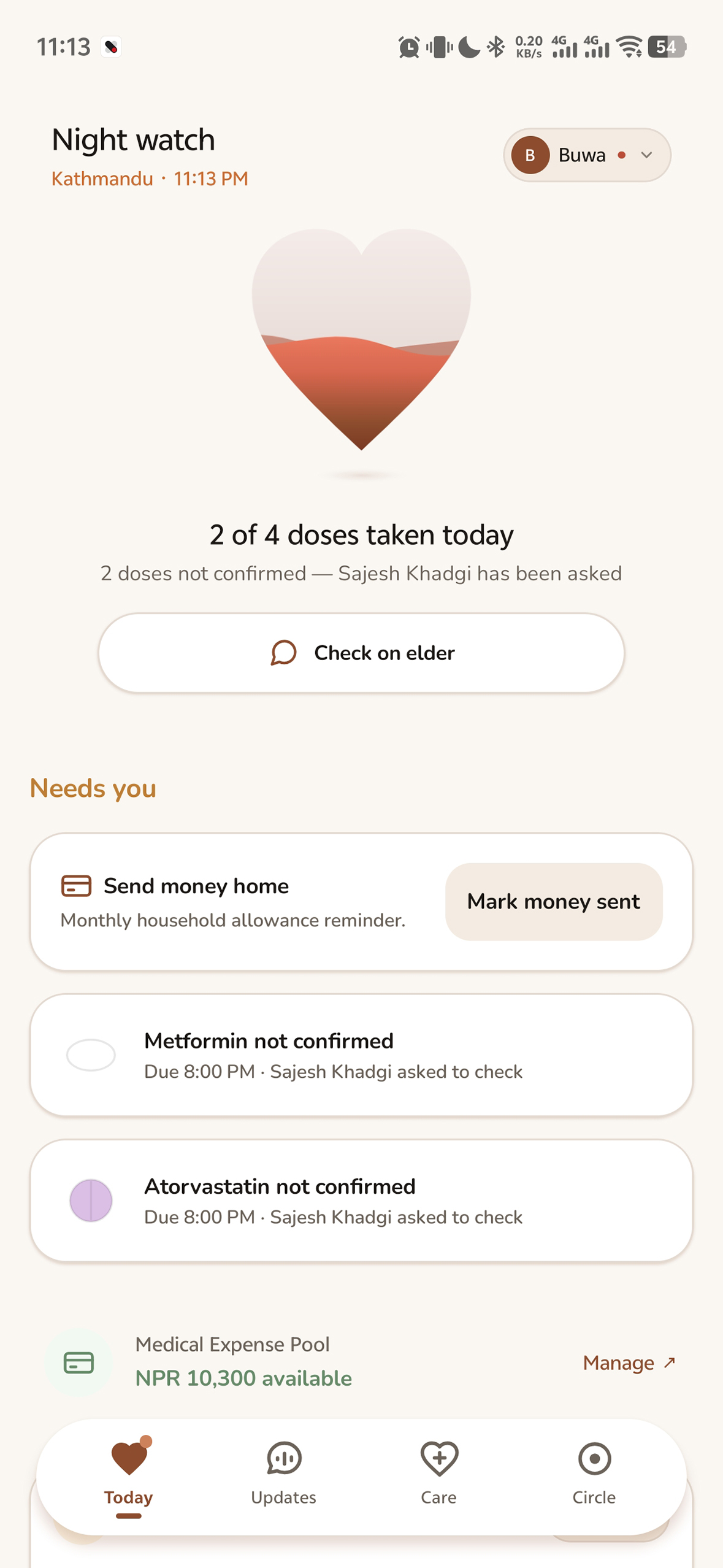
- The metaphor we almost shipped: We originally designed our daily progress tracker as an oil lamp (diyo), thinking a flame felt warmer than a standard progress bar. However, from the perspective of an anxious child abroad, a dying flame resembled a life running out. We immediately pivoted to a heart icon that fills with warmth and centralized our theme tokens to allow rapid, system-wide design adjustments.
- Handling offline devices: Older parents frequently disable mobile data or step away from Wi-Fi. Push notifications alone were insufficient. We decoupled our communication logic: routine dose confirmations queue locally via background sync until Wi-Fi reconnects, while urgent alerts trigger direct cellular phone calls.
- Google Play Store review delays: Google play store took almost 10 days to review this app, which caused a lot of anxiety on our end. We created play store tickets, messaged google dev team on reddit and explored various other ways to release the app in time. Finally, the app was released by Google on the deadline day and made us eligible for the hackathon.
- Protecting the three-tap rule: With numerous features requested by overseas siblings, feature creep was an ongoing risk. We enforced a strict constraint: the parent-facing UI is limited to a maximum of three core actions, insulating it from unnecessary clutter.
Accomplishments We're Proud Of
- Zero paywalls for care recipients: Inverted the traditional SaaS model so overseas family members absorb the cost, ensuring aging parents and local caregivers never encounter payment prompts.
- Reliable Android wake alarms: Engineered custom native modules capable of bypassing Android Doze mode to display full-screen, ring-through reminders reliably.
- Privacy-first prescription scanning: Kept optical recognition and PII-stripping entirely on-device, ensuring raw medical documents and personal identifiers are sanitized before touching external infrastructure.
- Releasing the app on time: Like mentioned earlier, we almost could not release the app on time. Being able to work on such deadline and also being successful was a huge win for us.
What We Learned
- Design for the user's worst emotional moment: In eldercare, interfaces cannot just be optimized for the happy path. Every visual, state indicator, and color token must be evaluated through the lens of an anxious family member fearing bad news.
- Network presence does not equal reachability: A phone displaying cellular signal often has data toggled off. Local queuing combined with direct cellular telephony is necessary when pushing life-critical reminders.
What's Next for Aama
- [ ] Automated cellular fallback calls: Direct automated voice calls triggered via cellular networks when local Wi-Fi/data remains inactive during critical alarm windows.
- [ ] iOS support: Full cross-platform release for families split between iOS and Android ecosystems.
- [ ] Vetted local healthcare directory: Direct emergency access to verified local clinics, diagnostics labs, and pharmacies across major cities in Nepal.
- [ ] Feedback-driven iteration: Continued product refinement based on multi-parent use cases and direct input from family caregivers.
Built With
- expo.io
- nextjs
- onesignal
- postgresql
- react-native
- revenuecat
- rls
- supabase
- vercel

Log in or sign up for Devpost to join the conversation.