-
-
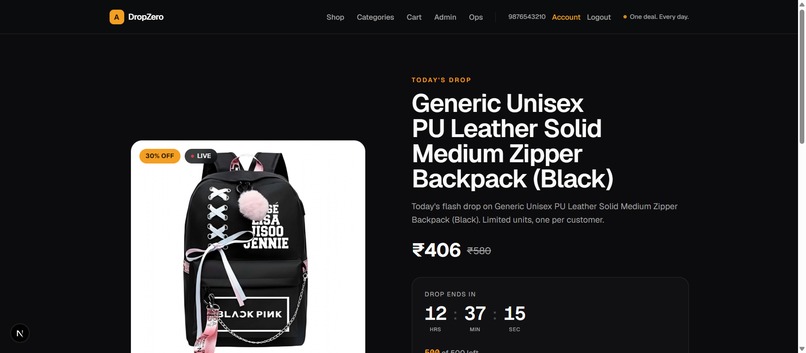
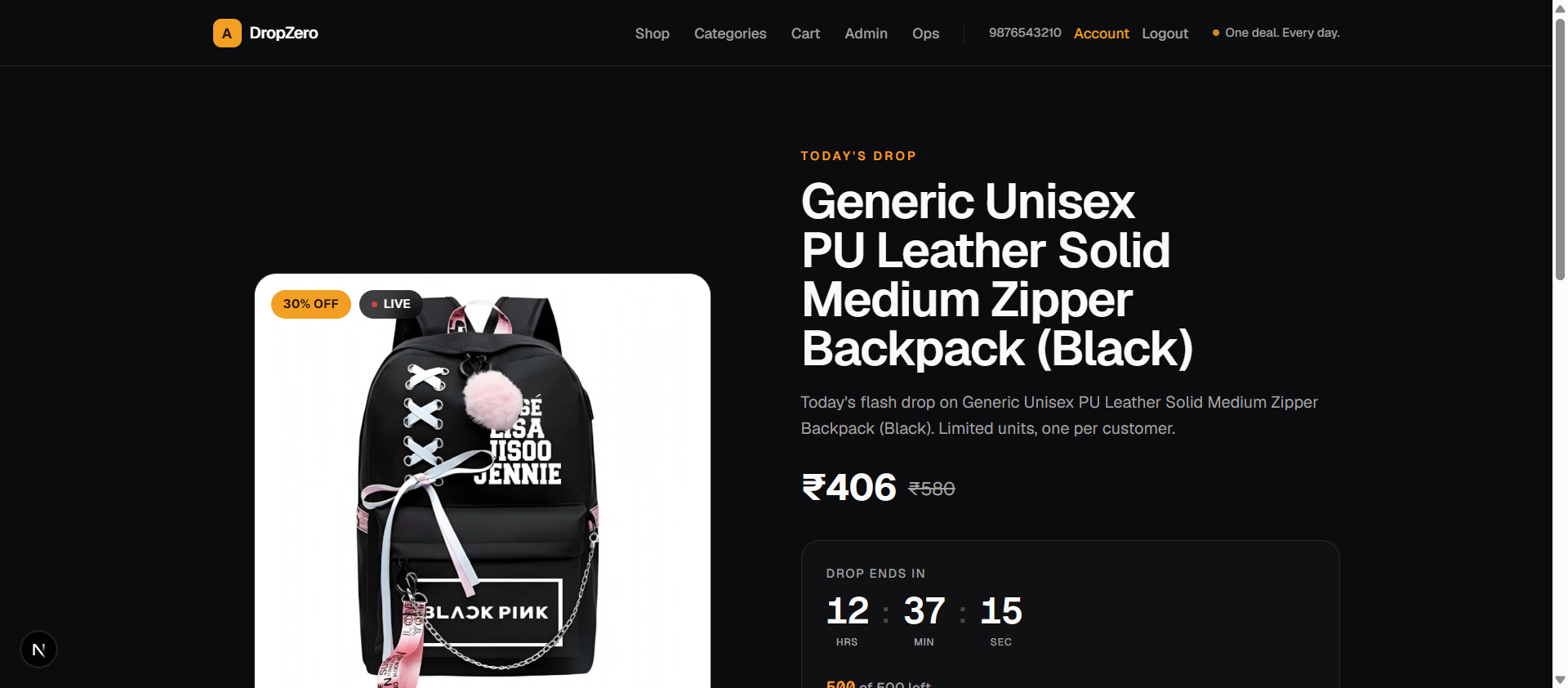
Today's Drop — one product a day at a steep discount in limited stock, with a live countdown and stock counter, served from Aurora DSQL.
-
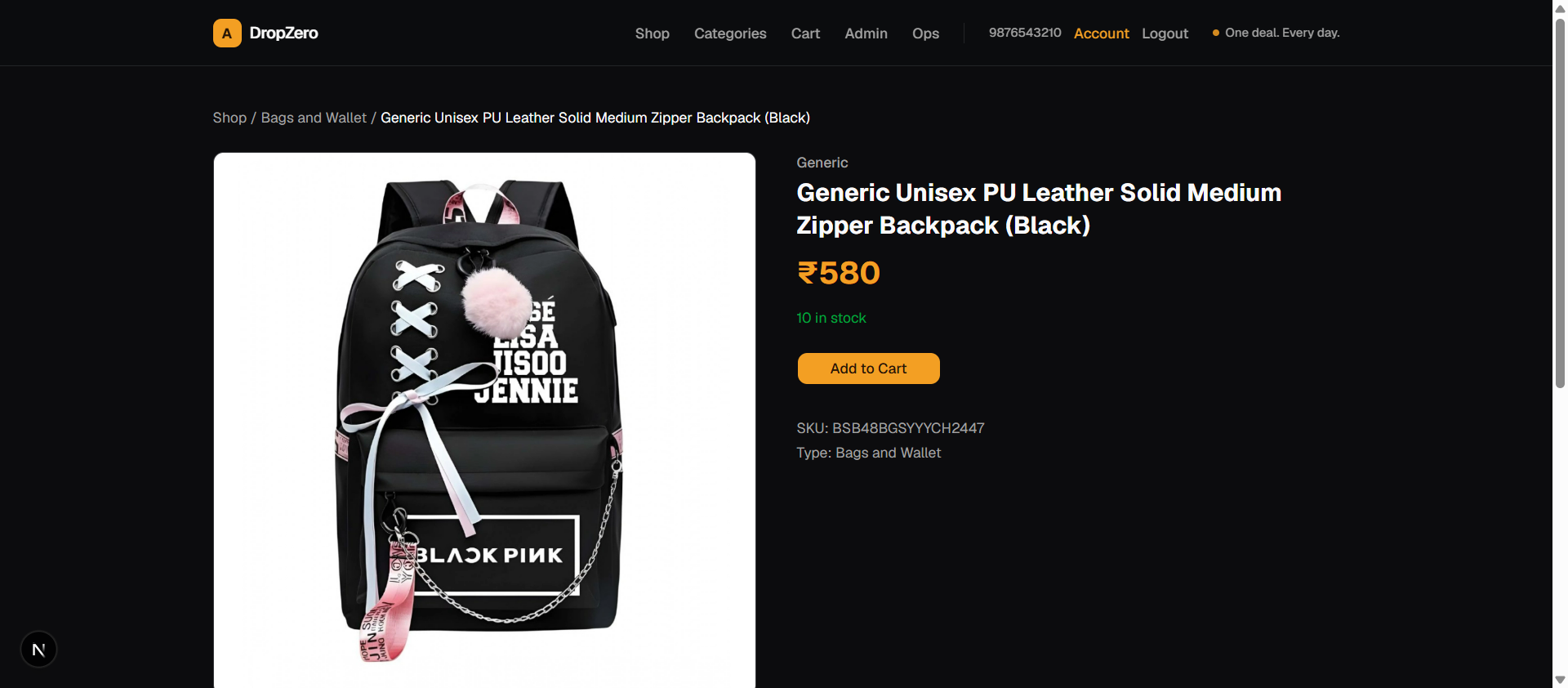
Product detail with a full image gallery, variants, pricing, and add-to-cart — synced from Google Drive into Aurora DSQL.
-
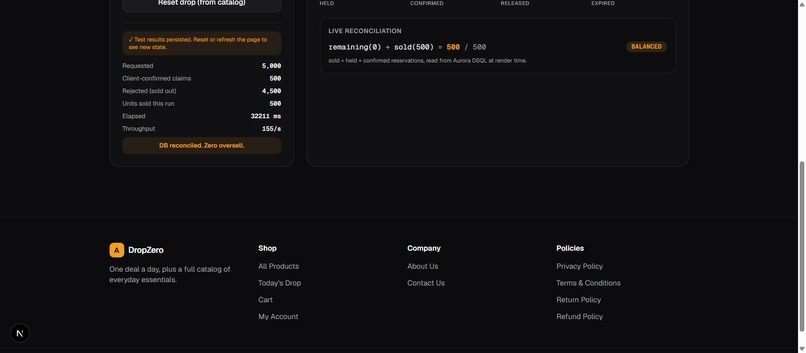
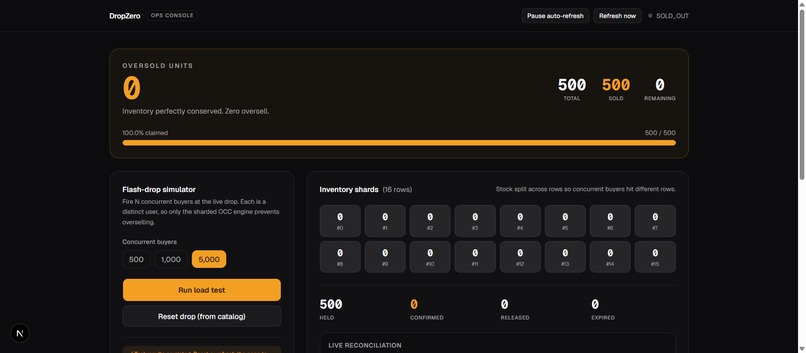
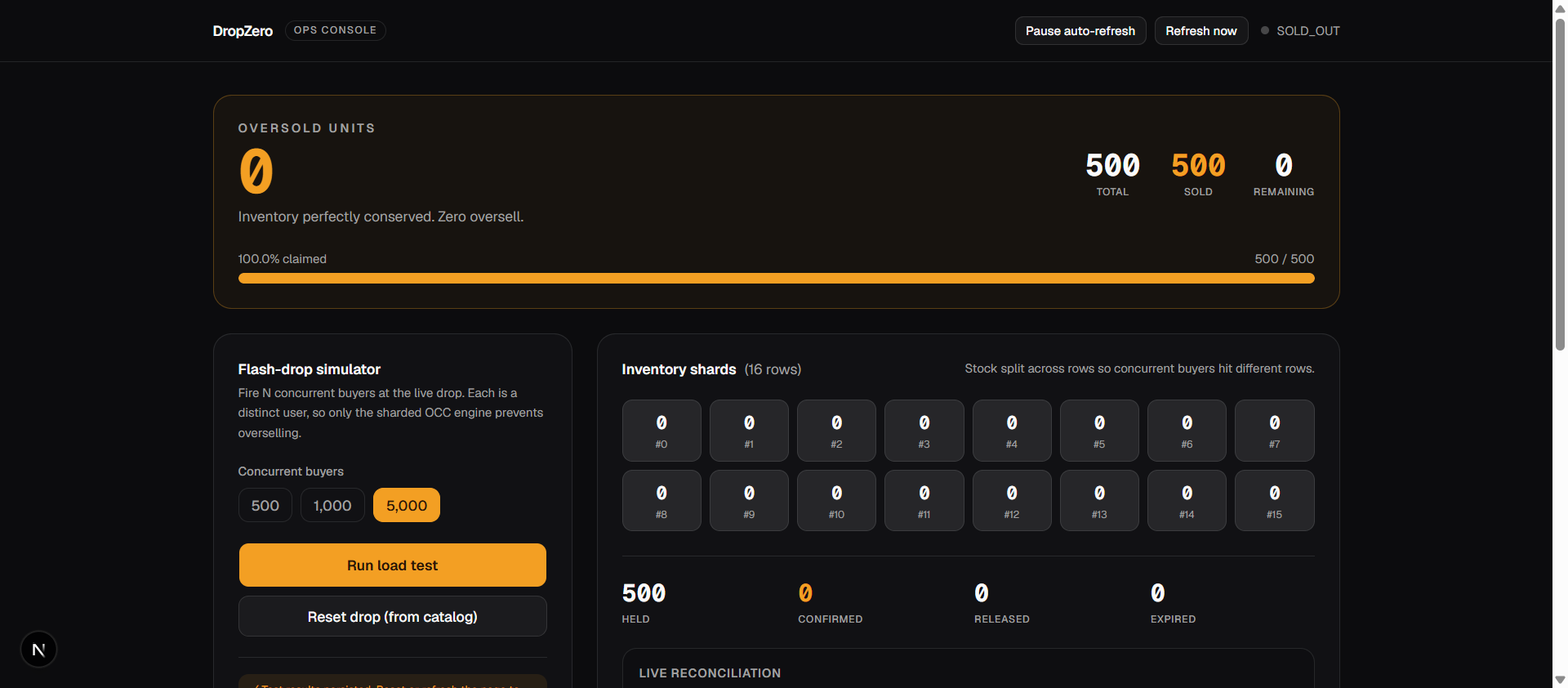
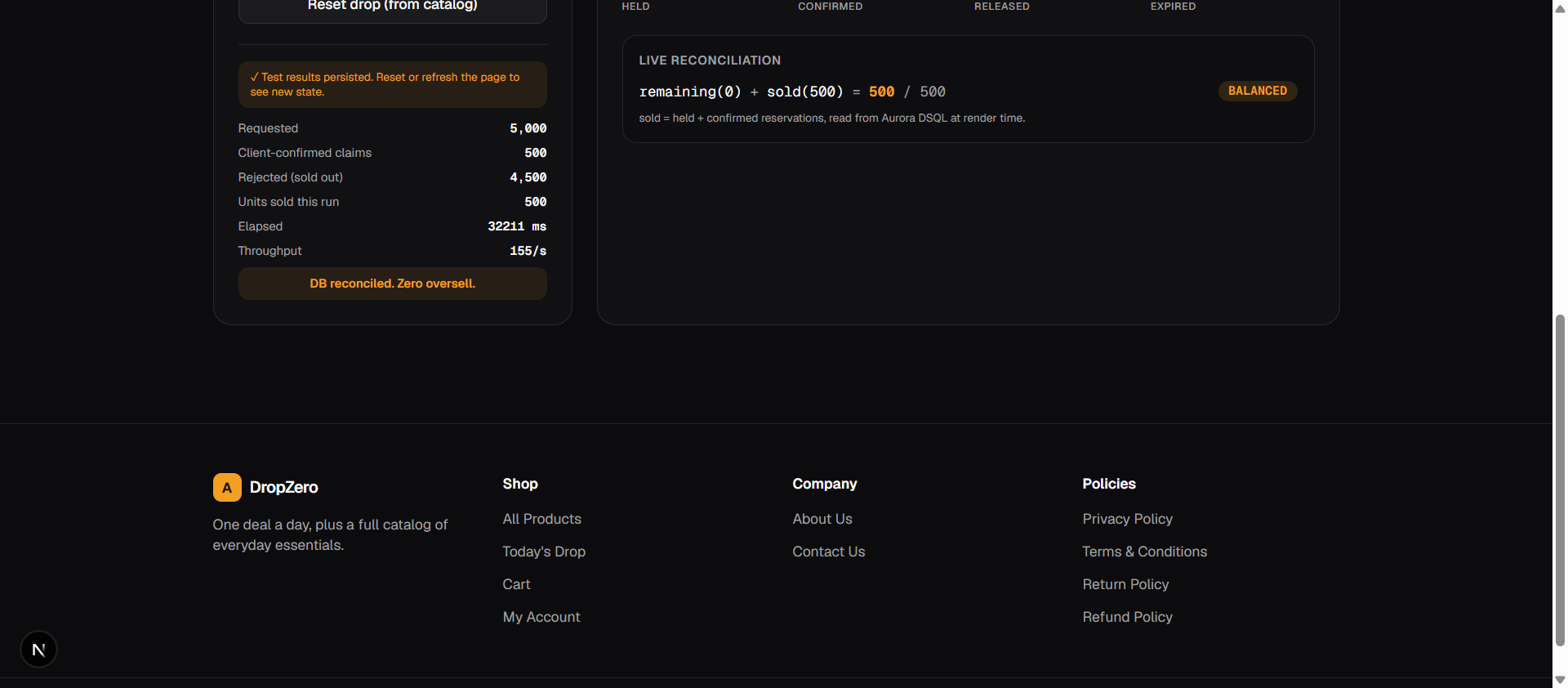
5,000 requested → 500 confirmed, 4,500 rejected, 0 oversold. Reconciliation reads BALANCED, straight from Aurora DSQL.
-
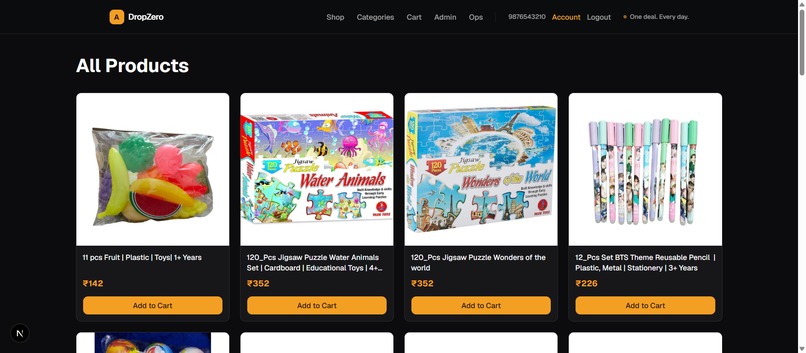
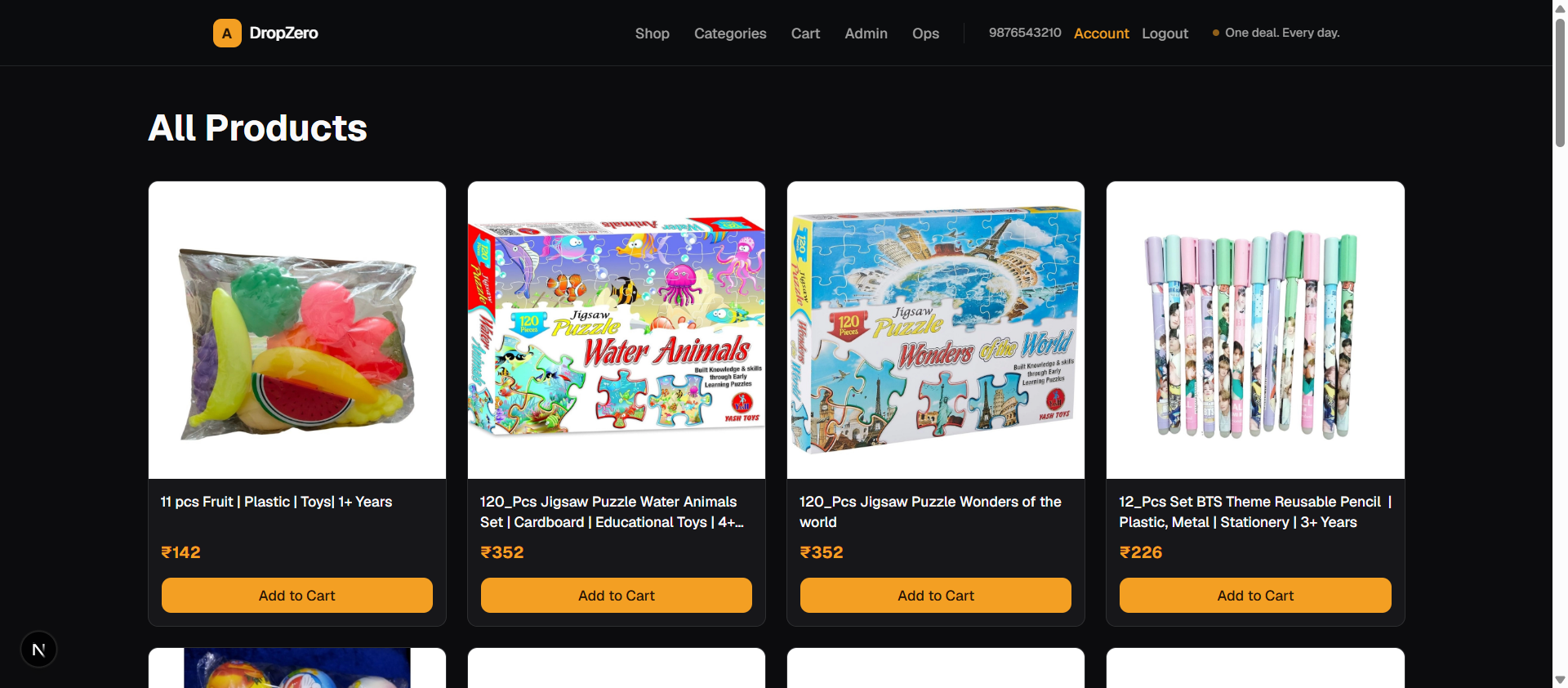
The full storefront — ~8,800 catalog products with server-side pagination and infinite scroll, beside the daily drop.
-
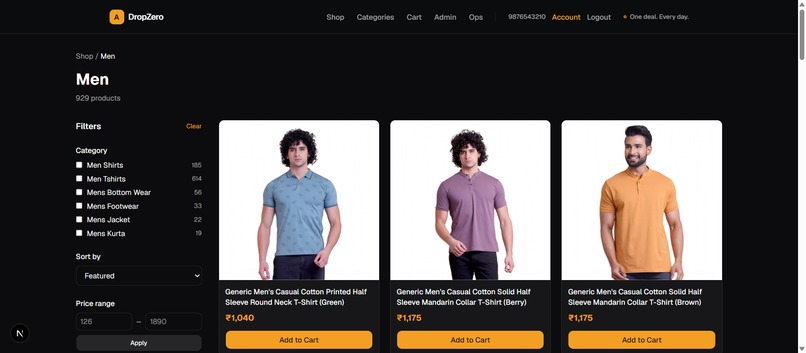
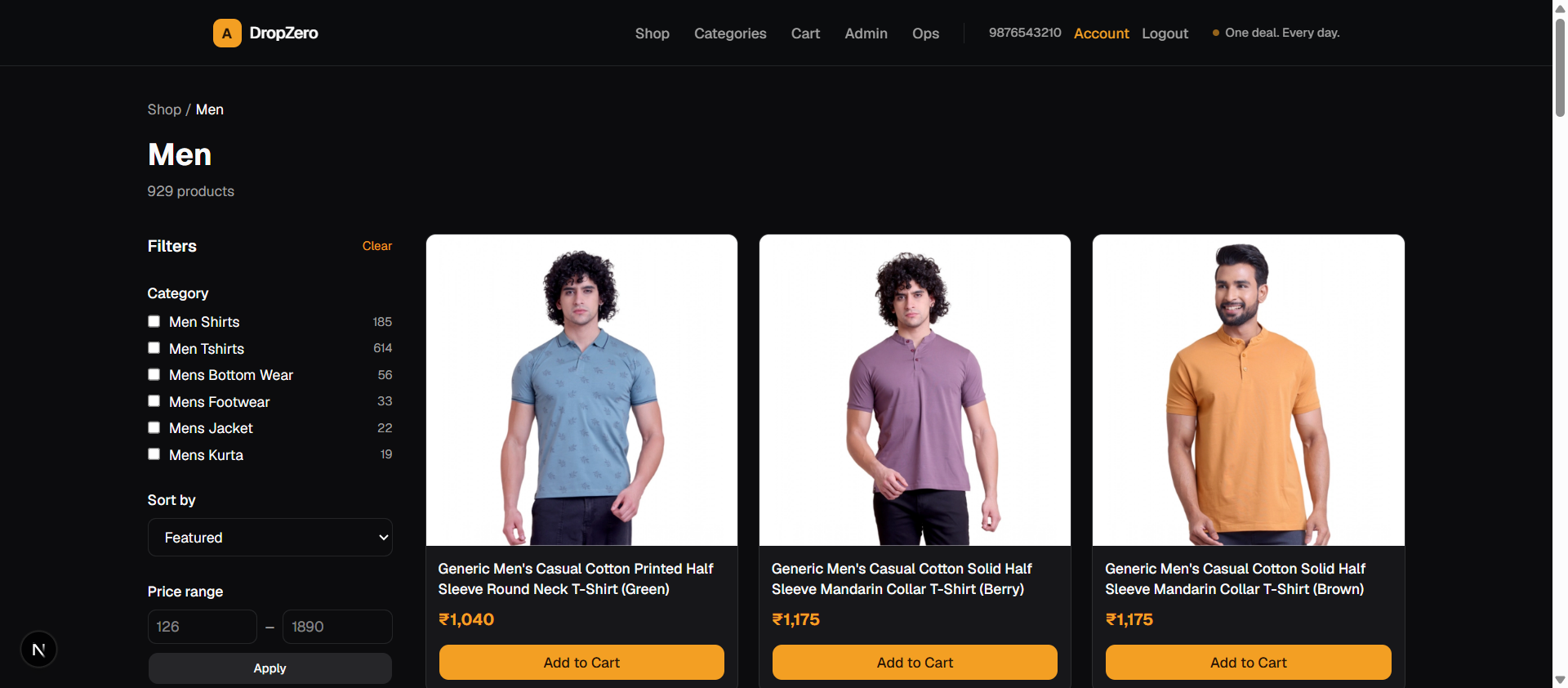
Category browsing with a parent/child taxonomy: subcategory checkboxes, price, brand, and in-stock filters — out-of-stock last.
-
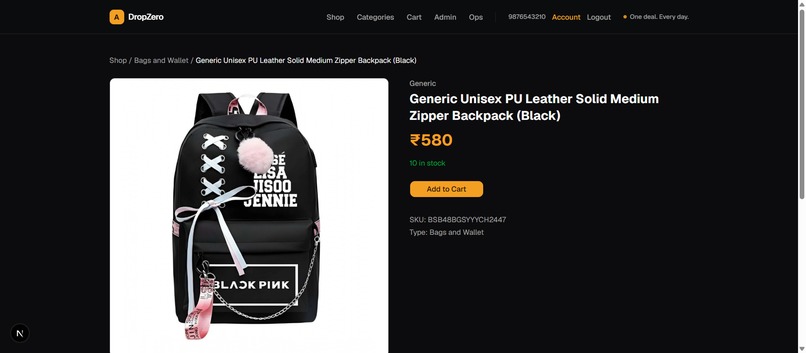
Product detail with a full image gallery, variants, pricing, and add-to-cart — synced from Google Drive into Aurora DSQL.
-
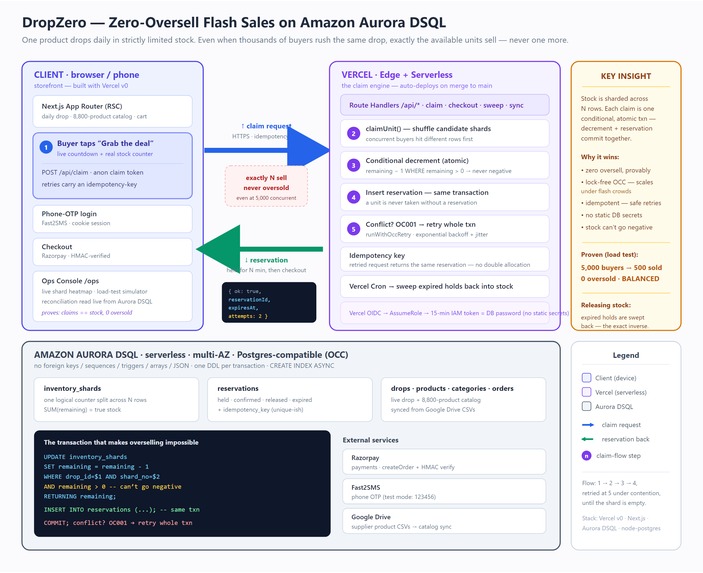
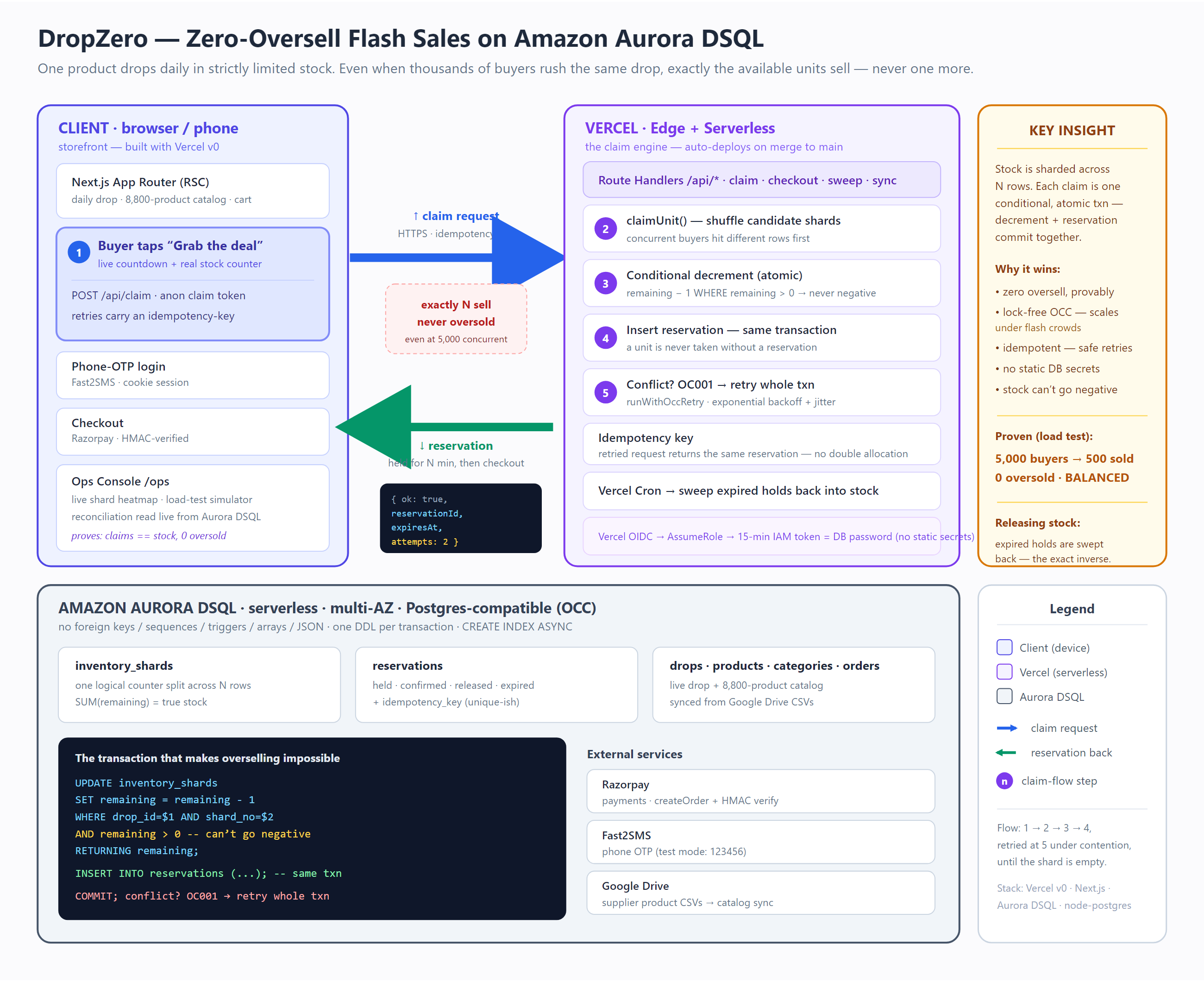
Architecture diagram
Inspiration
Flash-sale and "deal of the day" commerce is everywhere - but it has a dirty secret: under a flash crowd, stores oversell. Two shoppers both buy "the last unit," and one of them quietly gets a cancellation email later. We wanted to build a real, monetizable store where limited stock means limited stock - provably - and where standing the whole thing up (a polished frontend wired to a database that scales) takes hours, not weeks. That's exactly the Zero Stack promise: front-end in minutes with Vercel v0, back-end designed for scale with AWS Databases.
What it does
DropZero is two commerce experiences in one storefront:
- Daily Drop: one curated product goes live each day at a steep discount in strictly limited quantity - with a countdown, live stock counter, per-user limit, and timed reservations. The system guarantees zero oversell.
- Full catalog: ~8,800 products across an 8-parent / 40+ subcategory tree, each with an image gallery, variants, price, and stock - with faceted browsing (price / brand / in-stock), infinite scroll, and product detail pages. Products are synced from supplier CSVs in Google Drive.
Shoppers sign in with a phone OTP, add to cart, and check out with Razorpay. It's a complete, monetizable store.
How we built it
- Frontend with Vercel v0: the entire Next.js App Router UI (React Server Components, Tailwind, shadcn) was scaffolded with v0 and deployed on Vercel; merges to
mainauto-deploy. - Amazon Aurora DSQL as the database. The
node-postgrespool's password is minted per connection as a 15-minute IAM token via Vercel OIDC - no static DB password or AWS key anywhere. - The oversell-proof claim engine: each drop's stock is sharded across N rows so concurrent buyers contend on different rows. A claim is a single OCC-retried transaction doing a conditional decrement (
SET remaining = remaining - 1 WHERE remaining > 0 RETURNING) plus a reservation insert. DSQL fails conflicting commits withOC001; we retry the whole transaction. An idempotency key prevents double-allocation, and a Vercel Cron sweeps expired holds back into stock. - Catalog & taxonomy: a Google Drive CSV sync ingests Shopify-format exports per category, builds the parent/child category tree, and stores full image galleries and variants.
Challenges we ran into
- Proving zero oversell. We built a load test that fires thousands of concurrent claims as distinct users; the invariant is successful claims must equal stock exactly. Getting there required sharded inventory + atomic decrement-with-reservation + OCC retries + idempotency.
- Connecting without secrets. Wiring Vercel OIDC → AssumeRole → DSQL token-as-password took care - but the payoff is a deployment with zero long-lived credentials.
- "Postgres-compatible, but not Postgres." DSQL has no foreign keys, sequences, triggers, arrays, or JSON columns, and allows one DDL per transaction. We embraced those constraints in the schema and migrations.
- Messy real-world data. Supplier CSVs varied in format (some nested in subfolders), shared product names across categories, and packed multiple images/variants per product - all handled by the sync, batched to stay within serverless limits.
Accomplishments that we're proud of
- Mathematically zero oversell under load - a 5,000-concurrent-buyer load test against limited stock produces exactly the right number of claims and zero oversold, every time.
- No static secrets - database auth via short-lived, OIDC-derived IAM tokens.
- A production-shaped store: 8,800+ products, hierarchical categories, faceted search, product detail with galleries/variants, OTP auth, Razorpay checkout, policy pages, and an Ops Console that reconciles inventory live from Aurora DSQL.
What we learned
Optimistic concurrency control is a feature, not a footgun. When you design for it - shard the contention, make the critical write conditional and atomic, and retry on conflict - you get correctness guarantees that are hard to achieve with traditional locking, and Aurora DSQL scales that pattern for you. Pair that with v0 generating a production-shaped frontend in an afternoon, and "front-end in minutes, back-end designed for scale" stops being a tagline.
What's next for DropZero
- Per-variant inventory and back-in-stock alerts.
- Order tracking and a seller dashboard with live drop analytics.
- Search and recommendations across the full catalog.
- Multi-region drops that lean further into Aurora DSQL's distributed, multi-AZ design.
Built With
- amazon-aurora-dsql
- amazon-web-services
- fast2sms
- google-drive-api
- javascript
- next.js
- node-postgres
- papaparse
- postgresql
- razorpay
- react
- shadcn-ui
- sql
- swr
- tailwindcss
- typescript
- v0
- vercel
- vercel-oidc

Log in or sign up for Devpost to join the conversation.