-
-
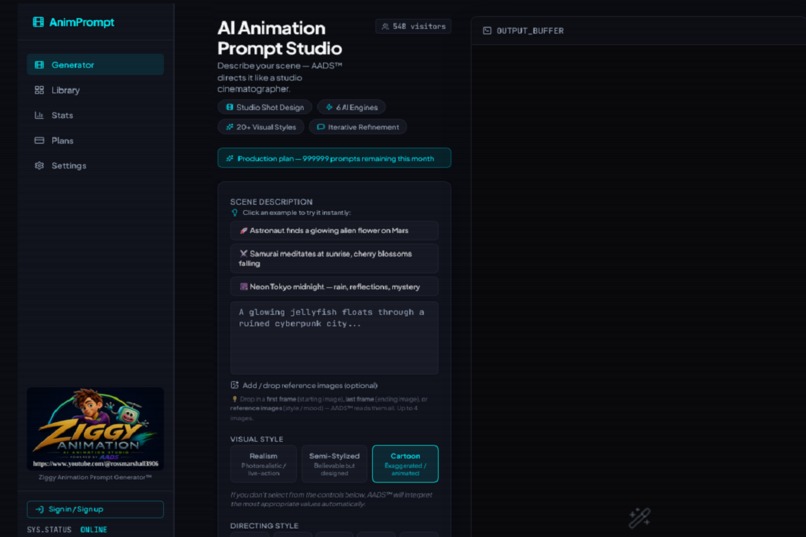
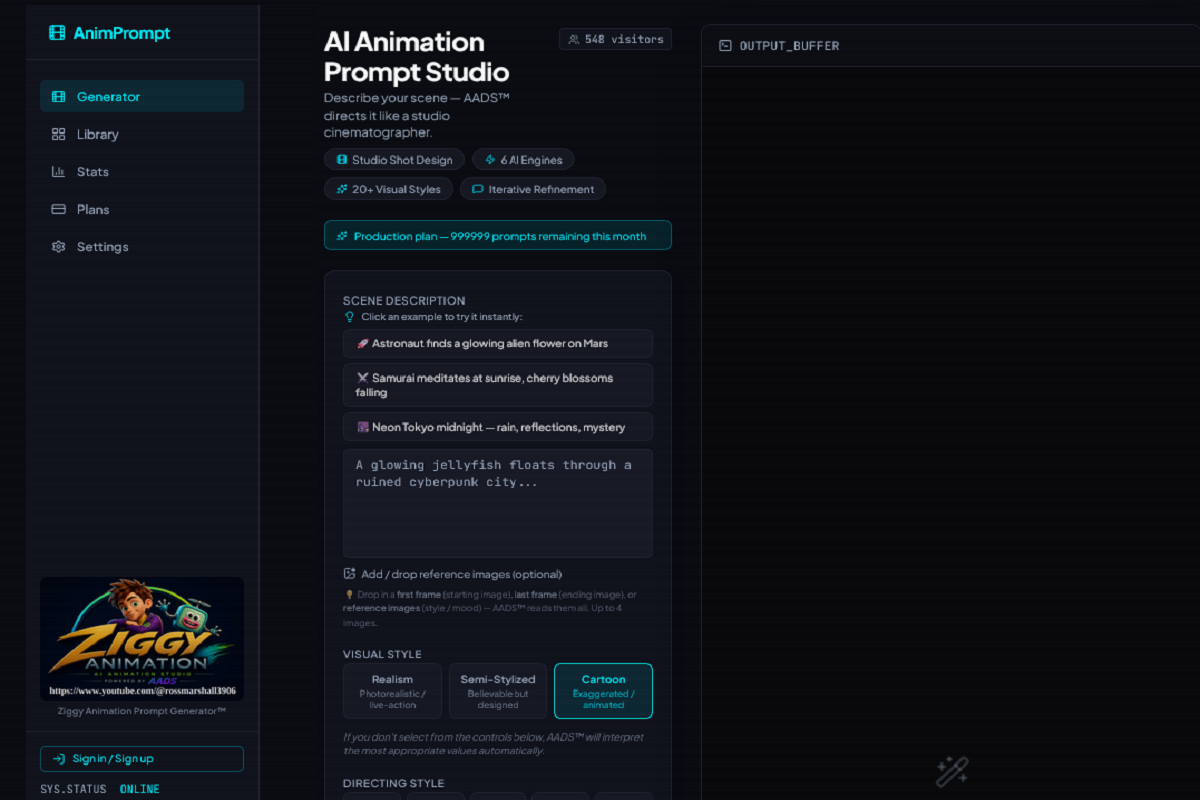
Top of Replit AADS Webite Front Page
-
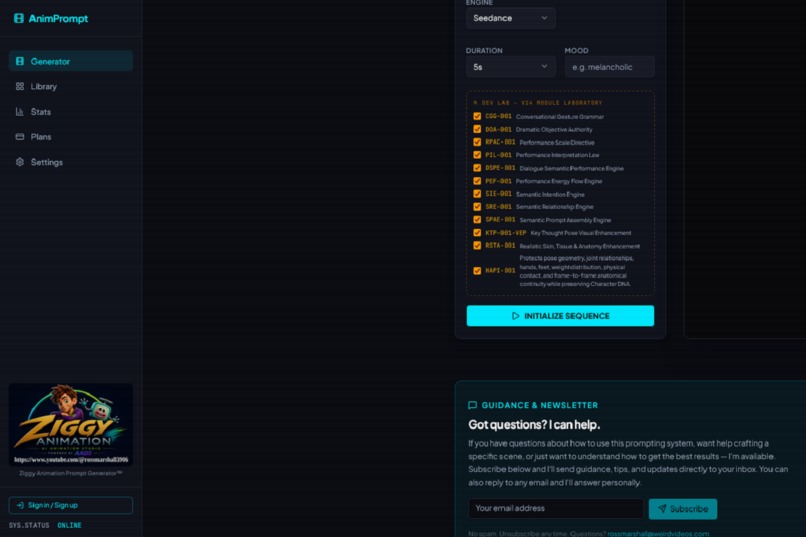
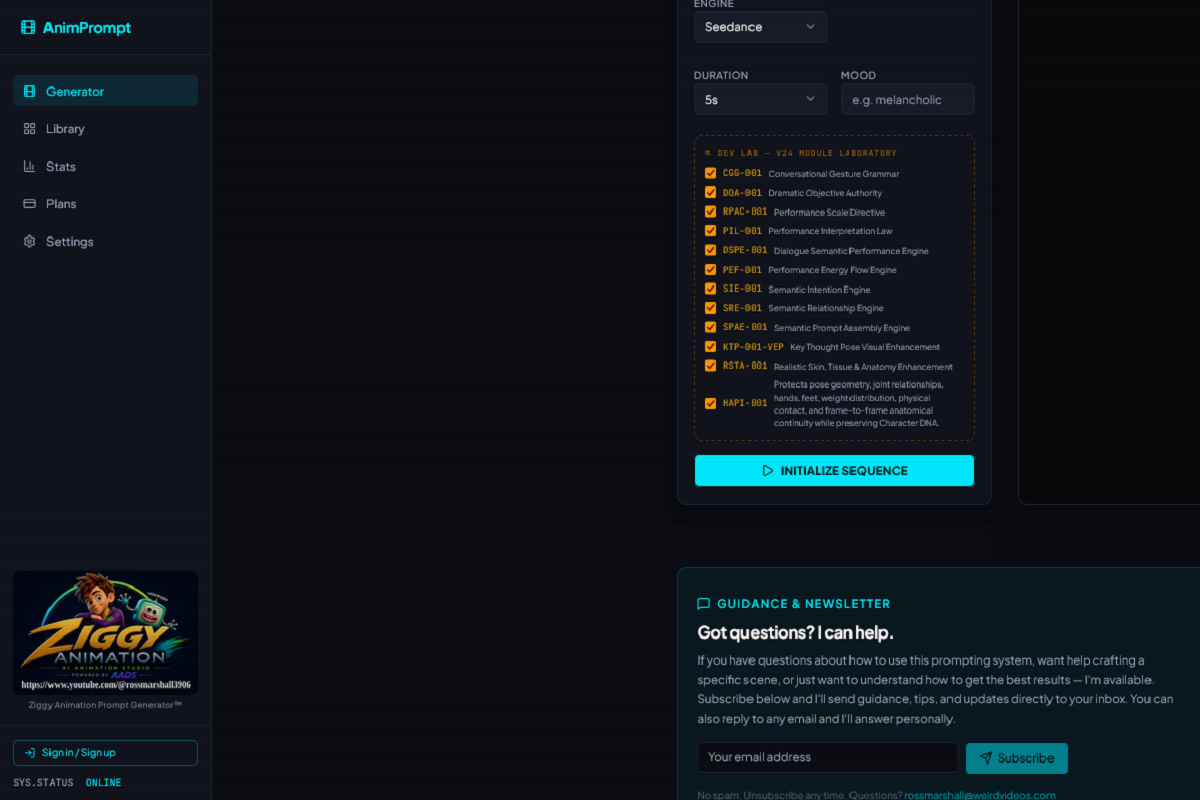
Bottom Page.
-
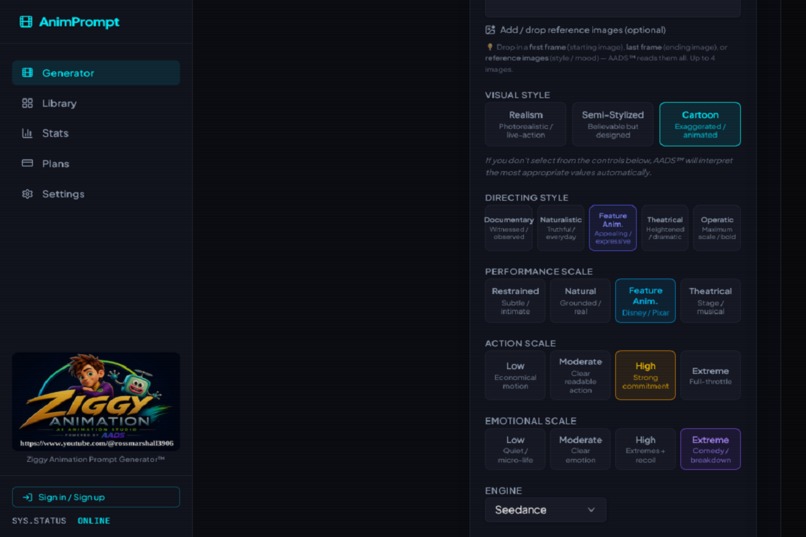
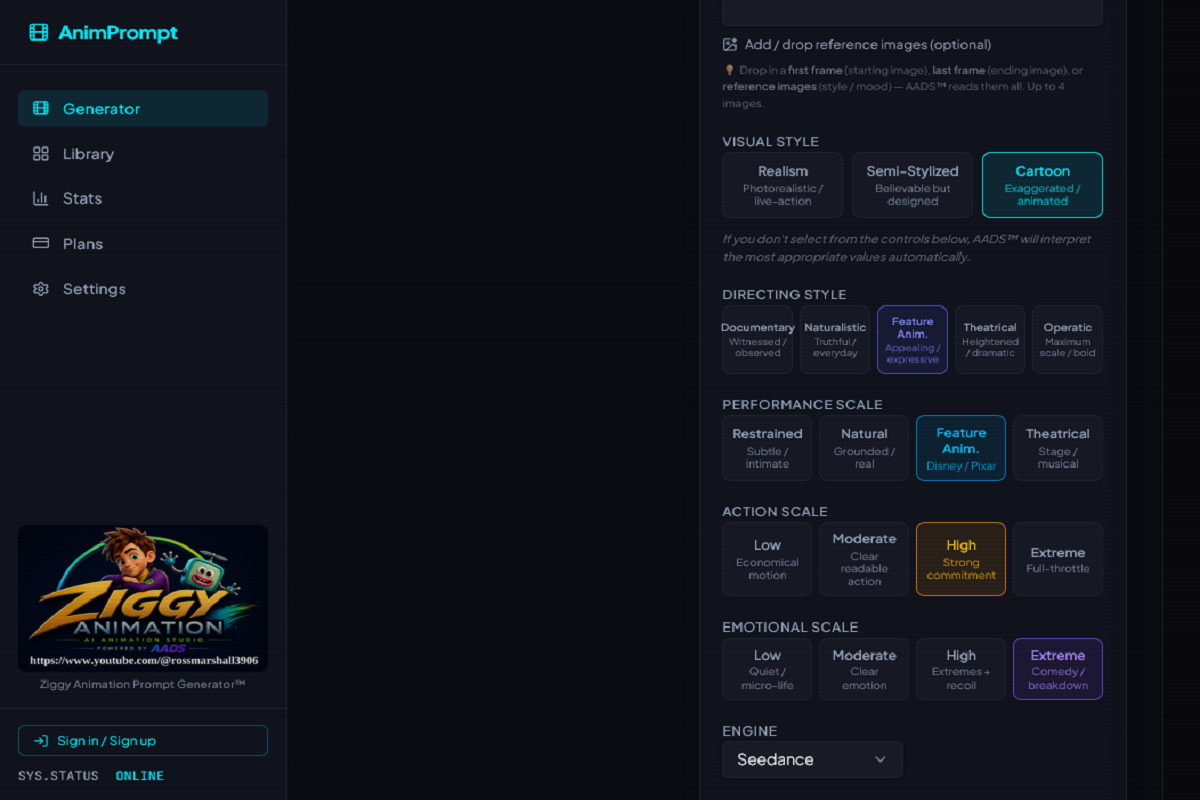
Middle Page
-
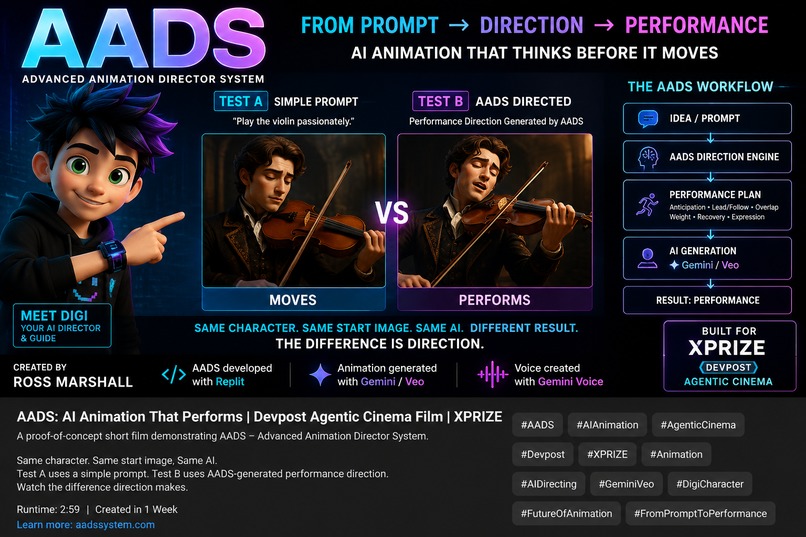
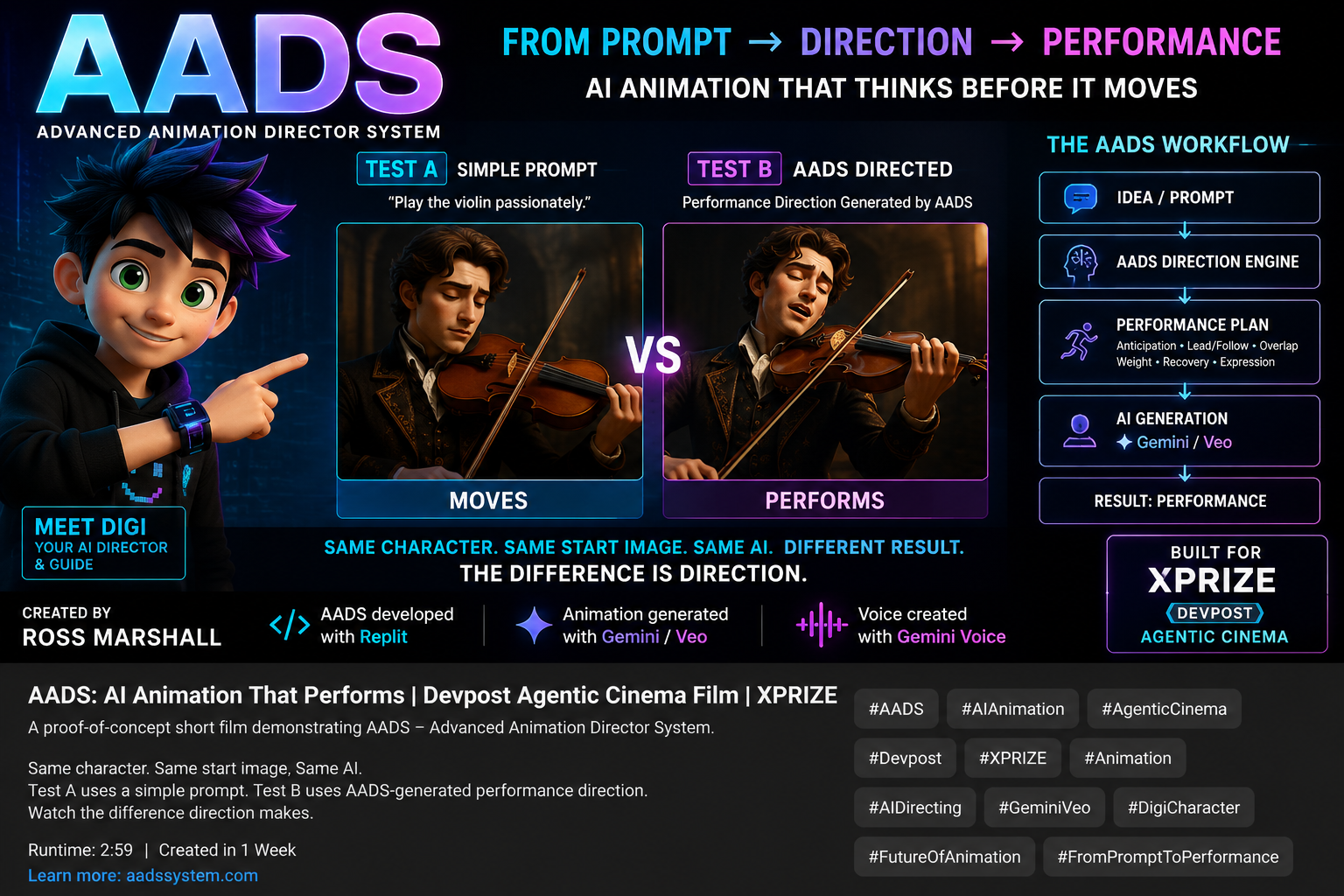
Youtube Thumbnail
Inspiration
Generative-video systems often treat character animation as a pixel-rendering problem instead of a directing problem. For stylized characters, ordinary prompts and direct motion transfer can flatten expressive geometry, distort silhouettes, weaken acting choices, and create “cartoon drift” between frames.
I created AADS—the AI Assistant Animation Director—to begin where an animation director begins: with thought, intention, subtext, and performance. AADS translates those creative decisions into precise behavioral instructions that an AI video renderer can understand and execute.
What It Does
AnimPrompt is the interactive application powered by AADS. It uses Google Gemini to transform a creative brief into a structured, production-ready animation prompt.
Users can provide character DNA and model-sheet details within the creative brief, protect exact dialogue, select a target video engine, and control:
- Visual style
- Directing style
- Performance style
- Action intensity
- Emotional intensity
- Physical performance intensity
- Shot duration
- Aspect ratio
- Mood
AADS then:
- Interprets the character’s psychological state and dramatic intention.
- Develops subtext, eye focus, breath, weight shifts, gestures, and full-body acting performance.
- Establishes Frame-0 action authority so the intended physical action is clear from the first visible frame.
- Connects the eyes, breath, head, shoulders, torso, weight, arms, wrists, hands, and fingers into one causal performance chain.
- Preserves character anatomy, prop placement, physical contact, and spatial continuity.
- Distinguishes living character holds from camera, object, environmental, and editorial holds.
- Preserves negative constraints without misclassifying legitimate animation language.
- Inserts protected dialogue exactly once.
- Produces an organized, renderer-ready production prompt without requiring manual 3D rigging.
How I Built It
The application is powered by Google Gemini 3.6 Flash through the Gemini REST generateContent API.
The submitted system uses:
- Node.js and JavaScript for the server and deterministic prompt-assembly system.
- HTML, CSS, and JavaScript for the responsive interactive interface.
- A focused AADS V25.6 contest kernel for semantic performance direction.
- Deterministic code for exact-once dialogue, continuity instructions, and final prompt assembly.
- Replit Autoscale for public hosting and deployment.
- GitHub for the public, MIT-licensed source repository.
- Offline automated tests covering request validation, creative controls, dialogue integrity, subject-aware holds, negative constraints, and malformed model responses.
AADS can structure prompts for multiple renderer targets, including Google Gemini Video, Seedance, Runway Gen-3, Kling, Pika, Sora, Luma Dream Machine, and general-purpose AI video generation. These are selectable output profiles rather than directly connected rendering APIs.
Live application: https://anim-prompt-dev-post-rescue.replit.app
Open-source repository: https://github.com/preanut2017-art/aads-animation-assistant
Challenges I Overcame
One of the largest technical challenges was teaching the application to distinguish between different meanings of stillness.
Words such as “hold,” “still,” “locked,” and “static” perform very different jobs in animation direction. A character can maintain a living hold while continuing to breathe, think, and adjust their eye focus. A camera can remain locked while the performer moves dynamically. A prop, interface, environment, or final editorial frame can remain still without freezing the character.
Early validation approaches could confuse these meanings and reject legitimate creative direction. I redesigned the contest system around subject-aware instructions and structural validation. Every hold is defined by what it controls: character, camera, object, contact, environment, or editorial timing.
Another challenge was preventing stiff or mechanical performance. A believable reaction cannot exist only in the face or hand. It must travel through an understandable causal chain—from perception and breath into the shoulders, torso, balance, limbs, wrists, hands, and fingers. AADS explicitly directs that complete performance pathway.
Exact dialogue was another important boundary. Instead of allowing the language model to repeat or alter protected dialogue, the application removes it from the model-generation stage and inserts it once through deterministic code.
Accomplishments I’m Proud Of
- Built and published a functioning, interactive Gemini-powered animation-directing application.
- Developed independent controls for emotion, physical performance, and action intensity.
- Added detailed full-body acting and performance-causality direction.
- Preserved protected dialogue exactly once.
- Created subject-aware living holds without freezing character performance.
- Kept realistic anatomy enhancement optional and disabled by default.
- Added selectable output profiles for major AI video-generation systems.
- Successfully used an AADS-generated prompt to create a dialogue-driven Digi animation test.
- Passed all 13 offline application and prompt-assembly tests.
- Released the complete contest application under the MIT License.
What I Learned
Great animation requires more than movement. It requires a readable chain of thought, intention, behavior, and physical consequence.
When an AI system understands why a character moves before deciding how the character moves, it can create more coherent and emotionally readable direction. Semantic Performance Prompting gives generative-video systems a stronger foundation for maintaining character identity, acting continuity, stylized appeal, and full-body performance.
I also learned that technical guardrails must understand cinematic context. A safety or continuity system that only recognizes isolated words can accidentally suppress valid creativity. Effective validation must preserve meaning, ownership, and function.
What’s Next
The next stage is to expand renderer-specific prompt adapters, test additional character and shot types across multiple video engines, and add stronger image-reference and model-sheet workflows.
I also plan to add controlled public-user access, request limits, production monitoring, and comparative shot evaluation. The long-term goal is to develop AADS into a professional directing layer between filmmakers, animators, and generative-video systems—one that protects character identity while producing expressive, intentional cinematic performance.

Log in or sign up for Devpost to join the conversation.