-
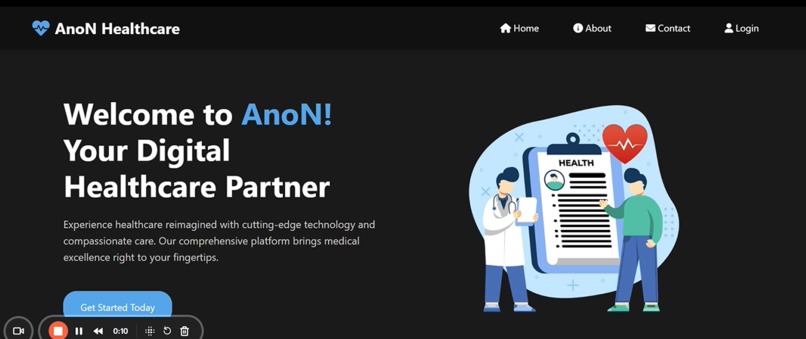
HomePage
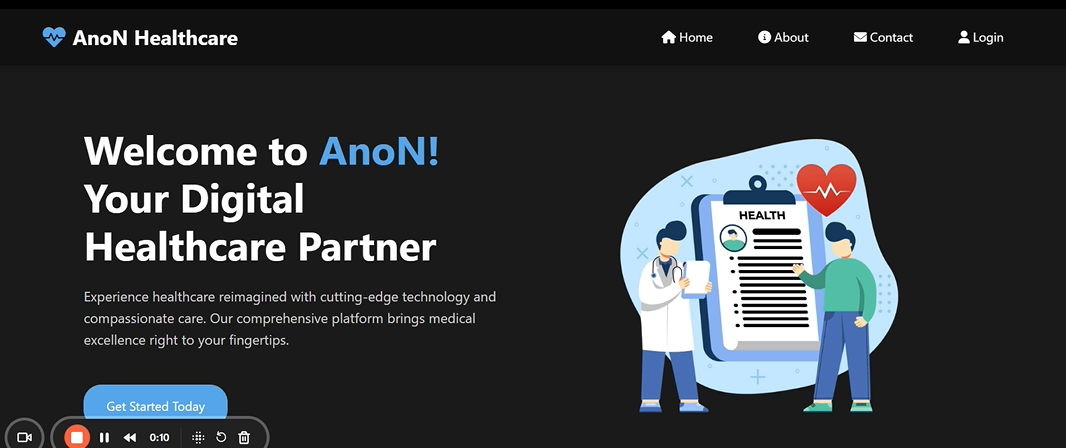
Project Story: AadhaarHealth Hub 🚀 Inspiration The Indian healthcare system faces a major challenge in the fragmentation of patient records across hospitals and clinics. Patients often lose access to historical data when changing locations or providers. Inspired by this gap, I wanted to build a centralized system where patient records could be accessed securely from anywhere, using a unique and widely adopted identifier – Aadhaar.
The idea was simple yet powerful:
One Patient, One ID, One Record – Accessible Anytime, Anywhere
🛠️ How I Built It The project was built as a web-based application using the following stack:
Frontend: HTML, CSS, JavaScript
Backend: Flask (Python)
Database: SQLite (for prototype)
OCR Integration: Tesseract OCR to extract text from uploaded medical reports
Authentication: Aadhaar-based OTP login system (simulated for demo)
🧠 Core Features: Aadhaar-based login for both patients and doctors
Dashboard for patients to view medical history, reports, and consult history
Upload and extract text from medical reports using OCR
Booking consultations – online or offline
Doctors get temporary access to patient records during consultations
Chatbot for basic AI-driven medical advice (Phase 2 under development)
📚 What I Learned Integration of OCR (Optical Character Recognition) to extract medical data from images
Secure role-based access control for sensitive medical information
Designing scalable databases for healthcare use cases
Building user-friendly dashboards for both patients and doctors
Challenges of simulating real-world authentication (Aadhaar OTP) in prototypes
⚠️ Challenges Faced OCR Accuracy: Extracting clean and structured text from handwritten or noisy reports was tough
Security Concerns: Ensuring that patient data is only accessible during authorized consultations
User Experience: Balancing complexity with simplicity in the dashboard interface
Scalability: Designing a system that can potentially scale across the country
🌐 Future Plans Integration with real-time Aadhaar authentication APIs (UIDAI)
Use of cloud databases for real-world scalability
Deployment on a secure cloud environment (like AWS or Azure)
Implementing AI diagnostics by analyzing patterns in report data
Mobile app version for rural accessibility
This project was a powerful learning experience and a step toward solving a real-world healthcare data problem in India using technology and innovation.

Log in or sign up for Devpost to join the conversation.