Inspiration
Aadhaar is one of the world’s largest digital identity systems, yet most analyses stop at how much it is used — not how or why it behaves the way it does.
We were inspired by a simple question:
Can Aadhaar data be used not just to report history, but to anticipate stress, inequality, and future demand?
As India’s Digital Public Infrastructure matures, governance must move from reactive reporting to predictive, evidence-based decision-making. Aadhaar Pulse was born from the belief that large-scale public data, when analyzed responsibly, can actively shape better policy outcomes.
What It Does
Aadhaar Pulse transforms raw Aadhaar enrolment, biometric authentication, and demographic update data into policy-ready intelligence. It:
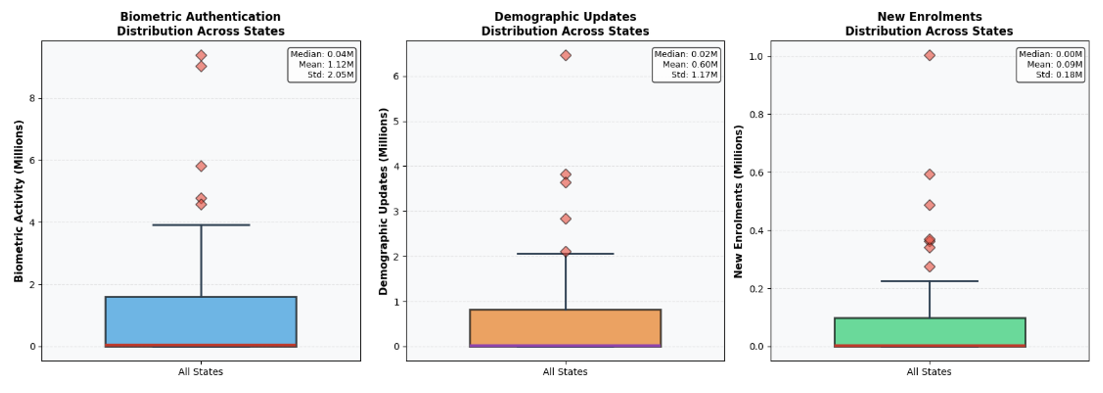
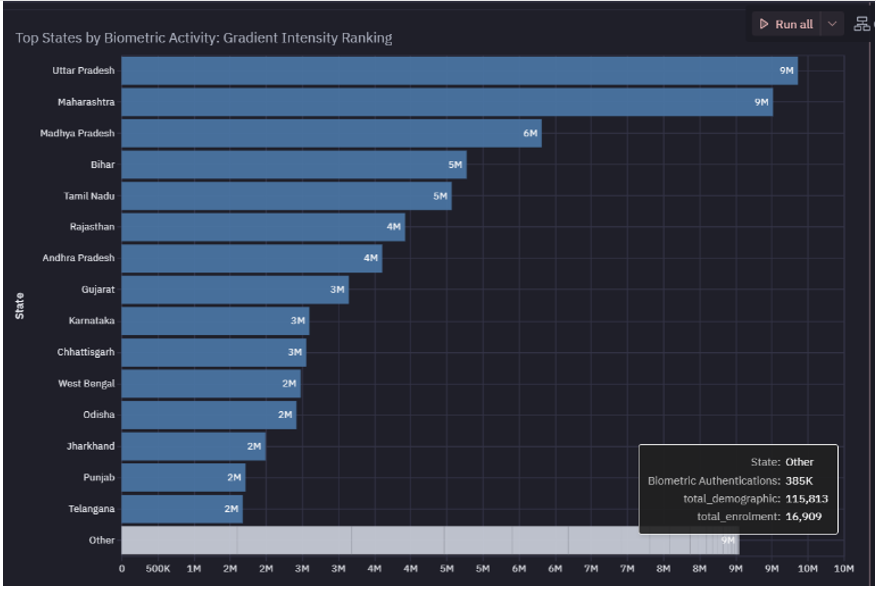
- Identifies digital divide patterns across states, districts, and clusters
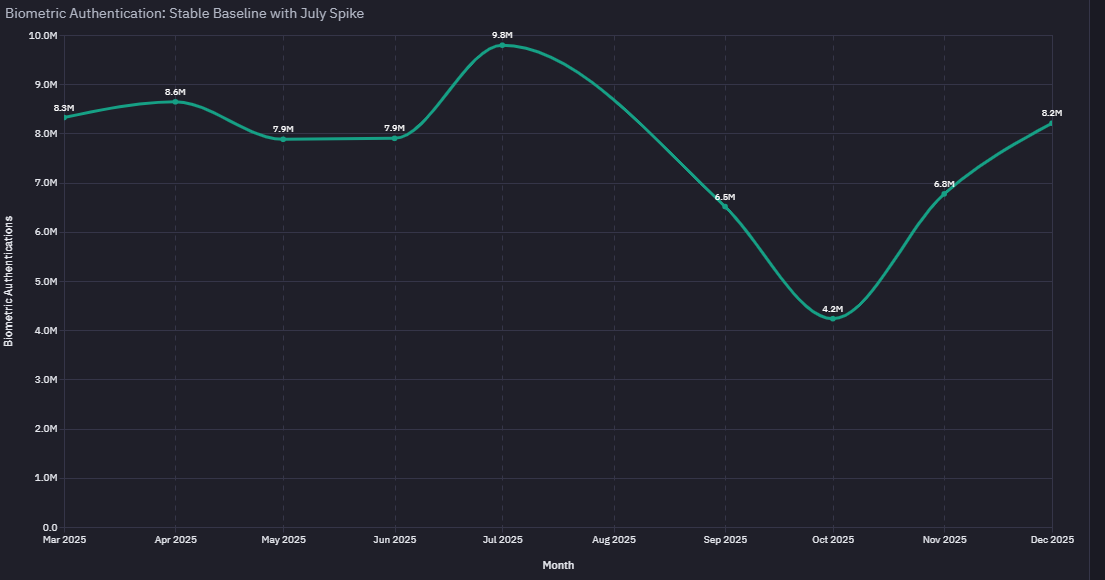
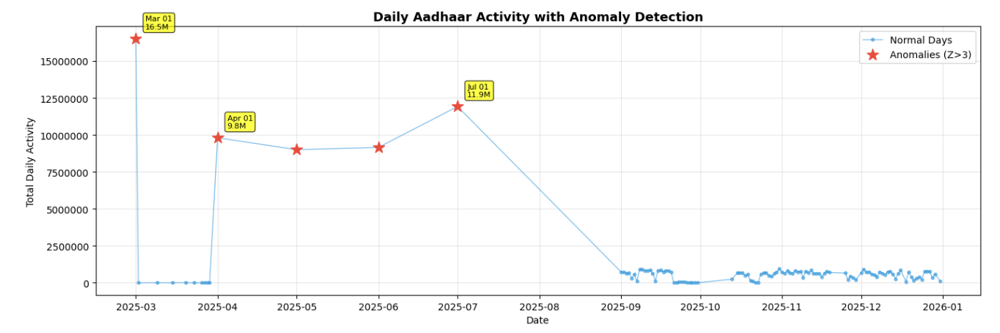
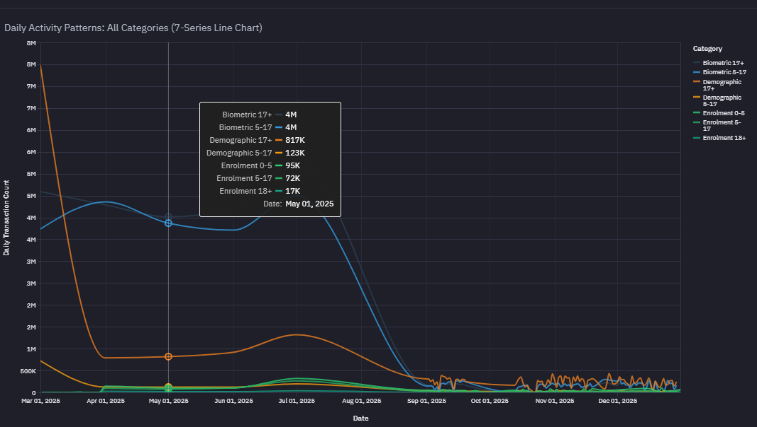
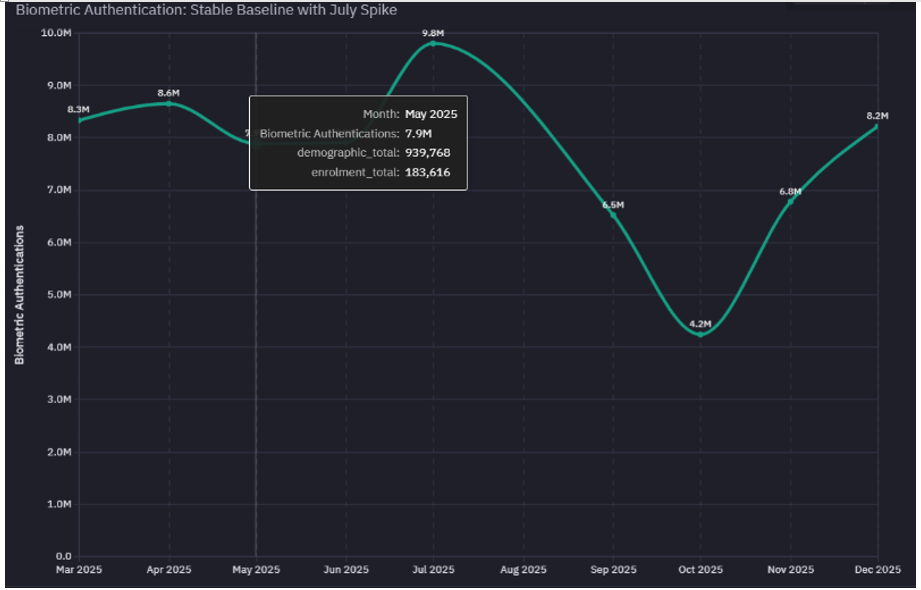
- Detects campaign-driven anomalies and system stress points
- Analyzes age-group behavior, revealing youth as key adoption multipliers
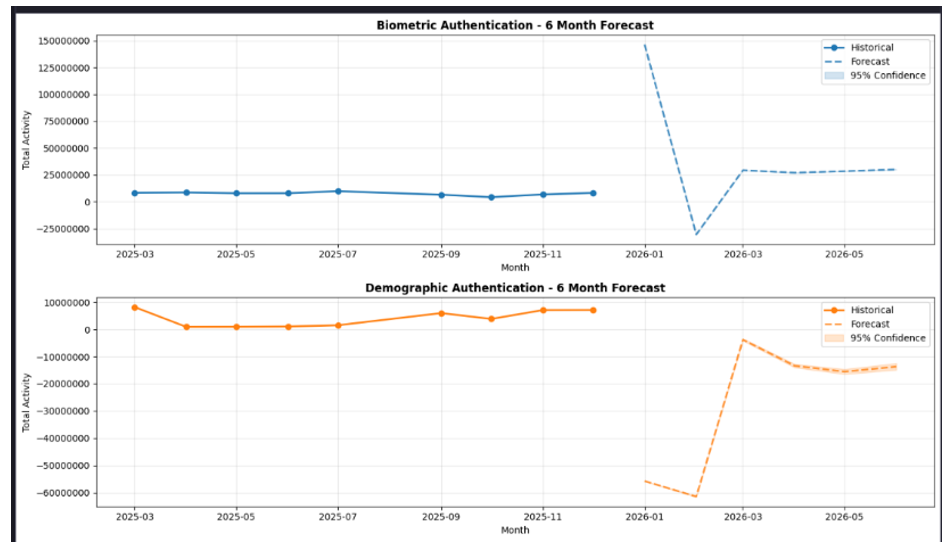
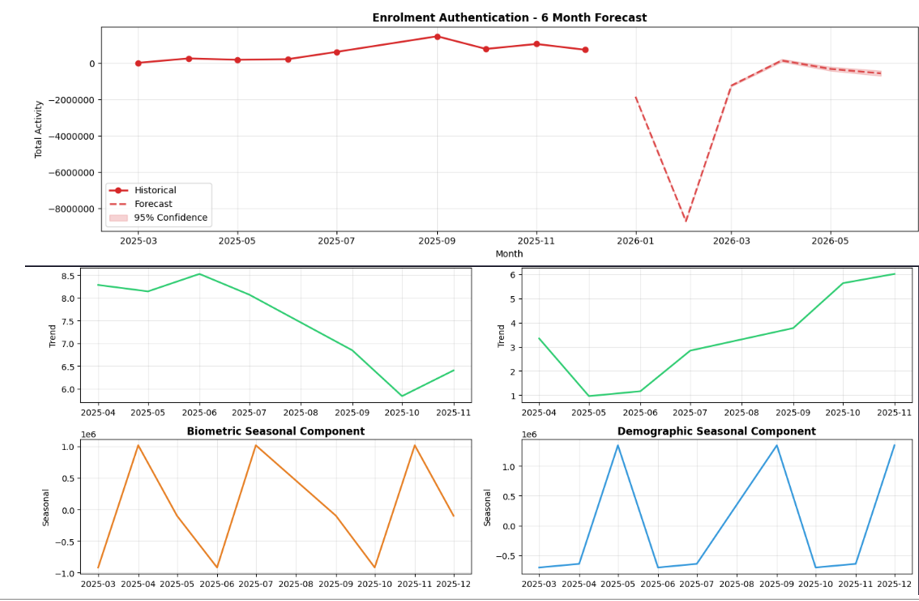
- Forecasts future demand and decline risks using time-series models
- Converts insights into actionable governance recommendations — from dynamic staffing to targeted interventions
In short, it turns Aadhaar from a transactional system into a predictive governance tool.
How We Built It
We worked with 4.3+ million cleaned records (≈ 110 million transactions) spanning March–December 2025.
🔹 Pipeline & Methods
Data Processing
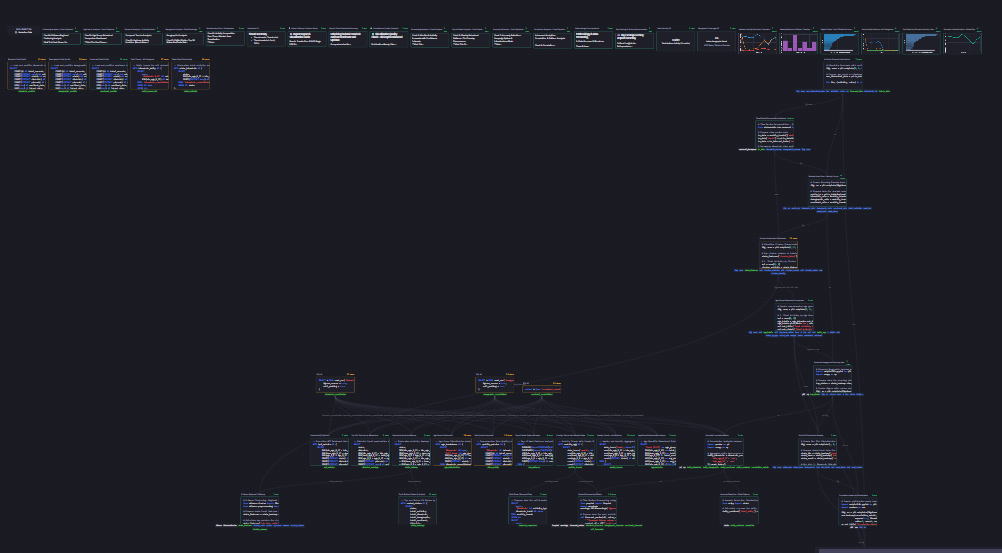
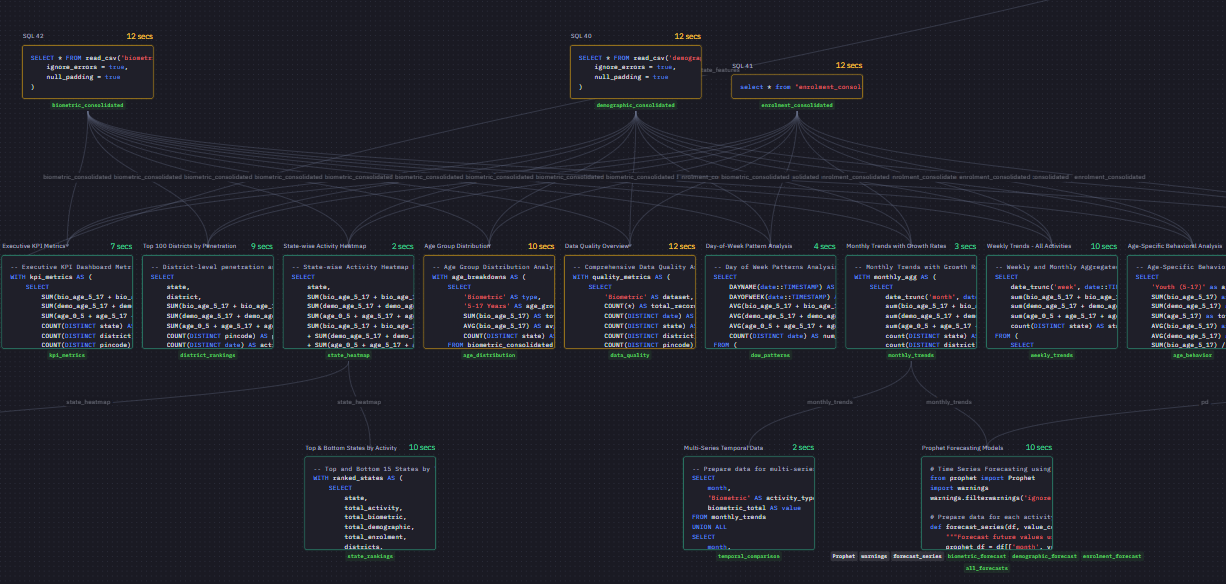
- DuckDB
- Pandas
- NumPy
Exploratory Analysis
- Statistical distributions
- Correlation analysis
- Inequality metrics
Temporal Modeling
- Seasonal decomposition
- Growth rate analysis
- Prophet forecasting
Machine Learning
- K-Means clustering for regional adoption segmentation
- Z-score–based anomaly detection for campaign spikes
Visualization
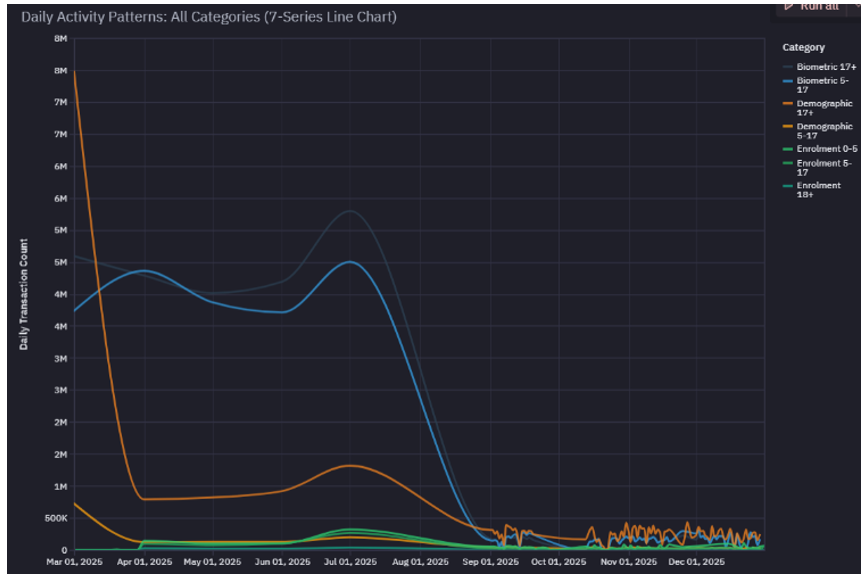
- Multi-series time plots
- Stacked area charts
- Cluster-based dashboards
Reproducibility was ensured through versioned notebooks, fixed random seeds, and preserved raw datasets.
Challenges We Ran Into
- Extreme volatility in demographic updates broke standard forecasting assumptions
- Campaign-driven spikes masked organic behavior, requiring careful anomaly isolation
- Urbanization paradox: high urban density did not always correlate with adoption
- Balancing technical rigor with policy interpretability
Rather than smoothing these issues away, we treated them as signals, not noise.
Accomplishments That We’re Proud Of
- Demonstrated that policy design, not users, is the primary driver of system stress
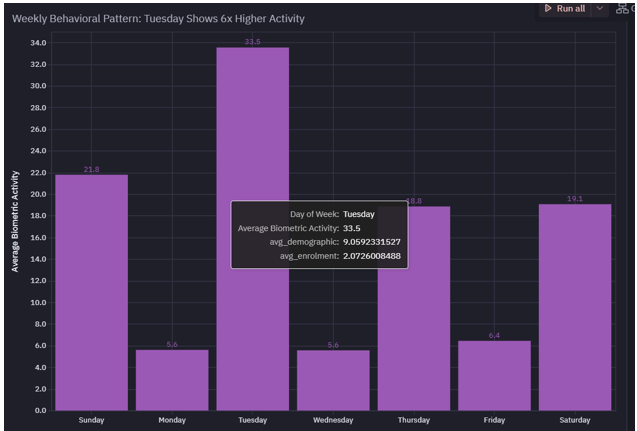
- Identified a Tuesday behavioral peak, enabling micro-level operational optimization
- Built a cluster-based governance framework instead of one-size-fits-all policies
- Quantified ROI, showing modest interventions can prevent ₹100+ crore future costs
- Shifted the Aadhaar narrative from enrolment saturation to lifecycle management
What We Learned
- Digital infrastructure maturity creates new governance challenges, not fewer
- Predictive models must be paired with institutional context
- Youth are not just beneficiaries — they are catalysts of digital adoption
- Good public analytics is as much about what not to predict as what to forecast
- Data can guide policy without replacing human judgment
What’s Next for Aadhaar Pulse
From Usage Data to Policy Intelligence
We aim to:
- Integrate real-time dashboards for operational decision-makers
- Add district- and pincode-level predictive alerts
- Incorporate life-event–based nudges for demographic updates
- Extend the framework to other DPIs (health, education, welfare)
- Explore privacy-preserving analytics for continuous governance use
Our long-term vision is to make Aadhaar Pulse a living decision-support system — helping India’s digital governance remain resilient, inclusive, and future-ready.

Log in or sign up for Devpost to join the conversation.