-
-
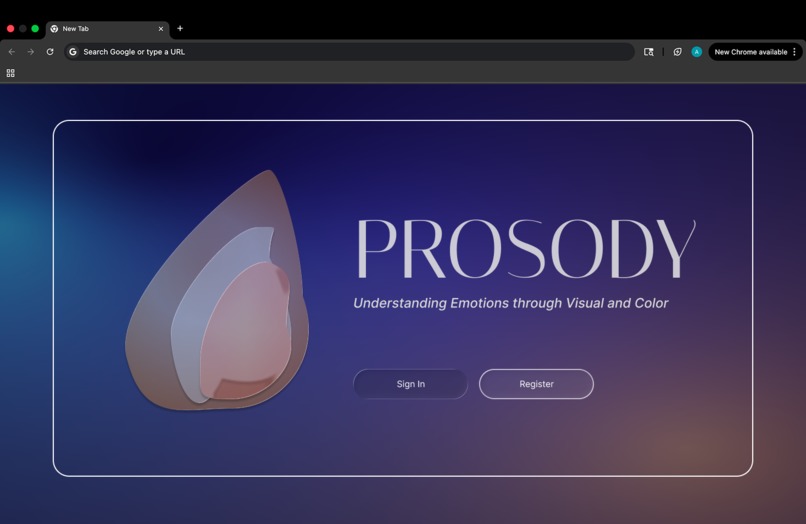
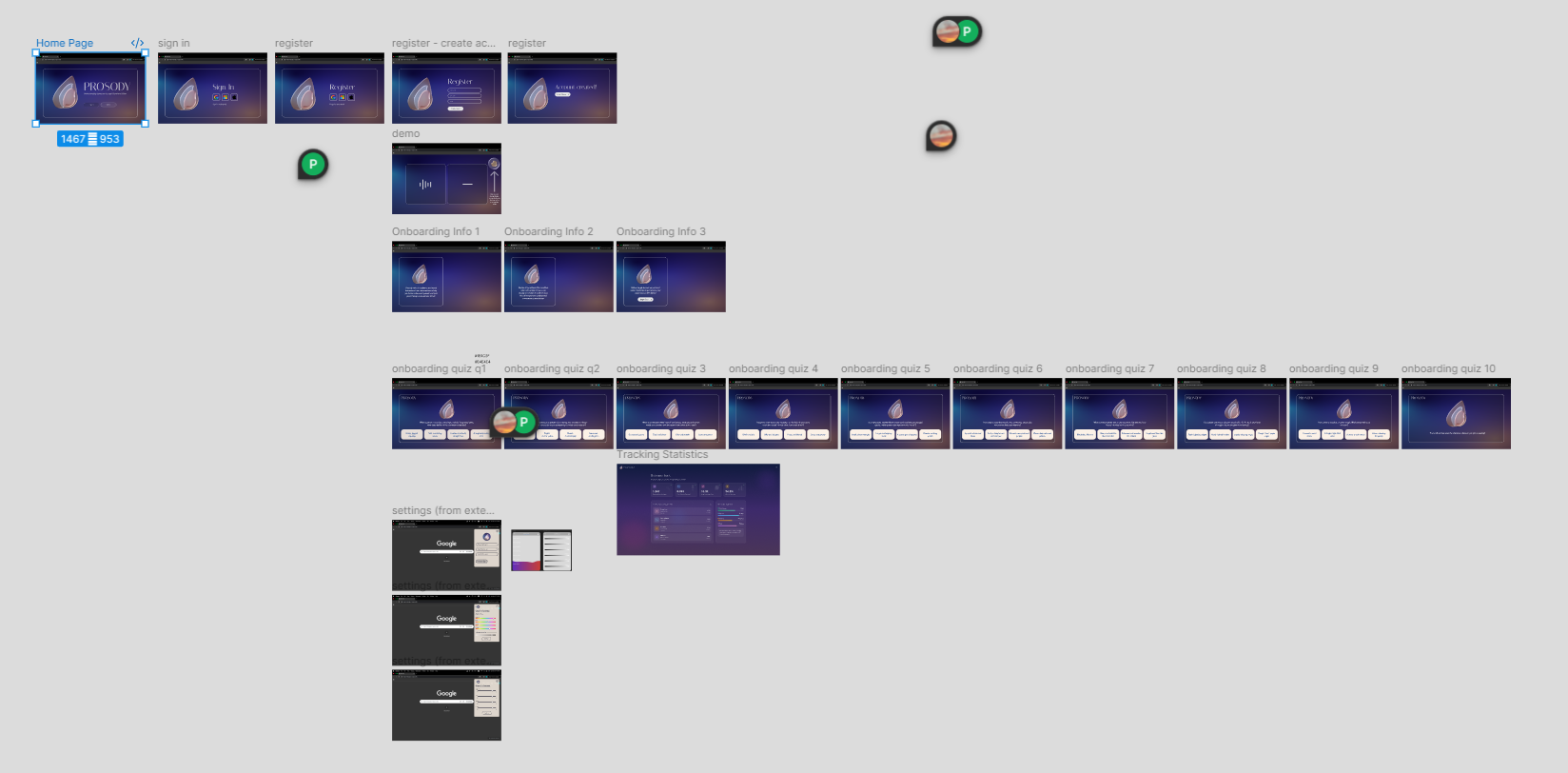
Welcome Page
-
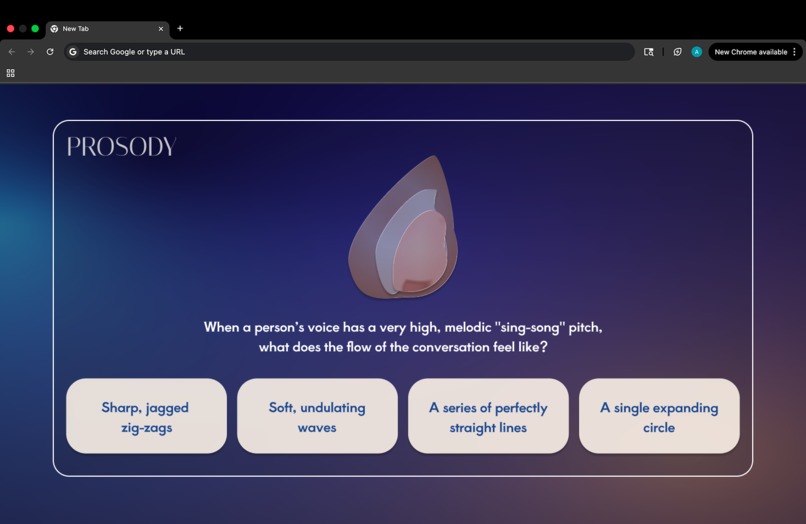
Quiz
-
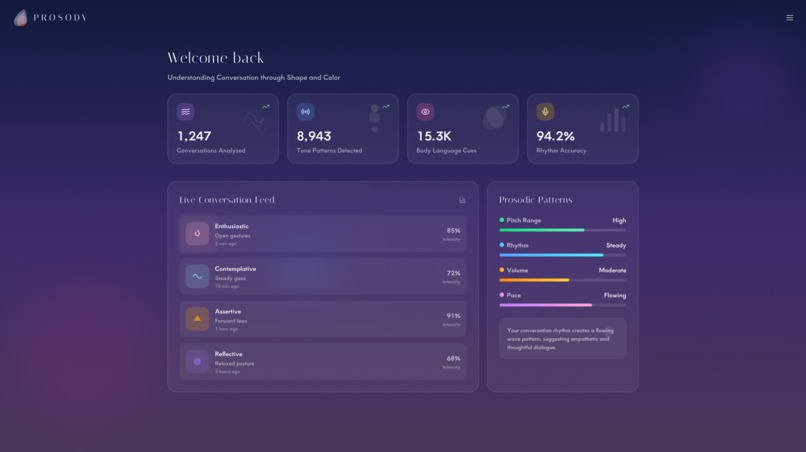
Tracking Dashboard
-
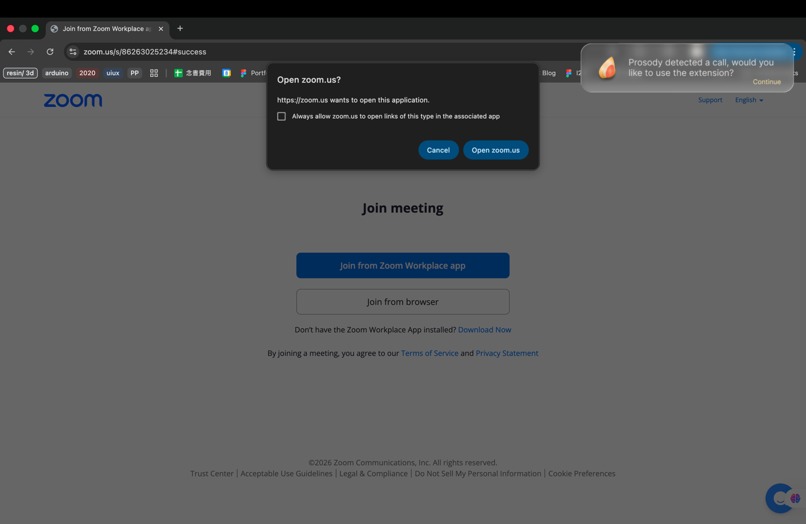
Activation Prompting
-
Research
-
Lofi
-
Hifi Model
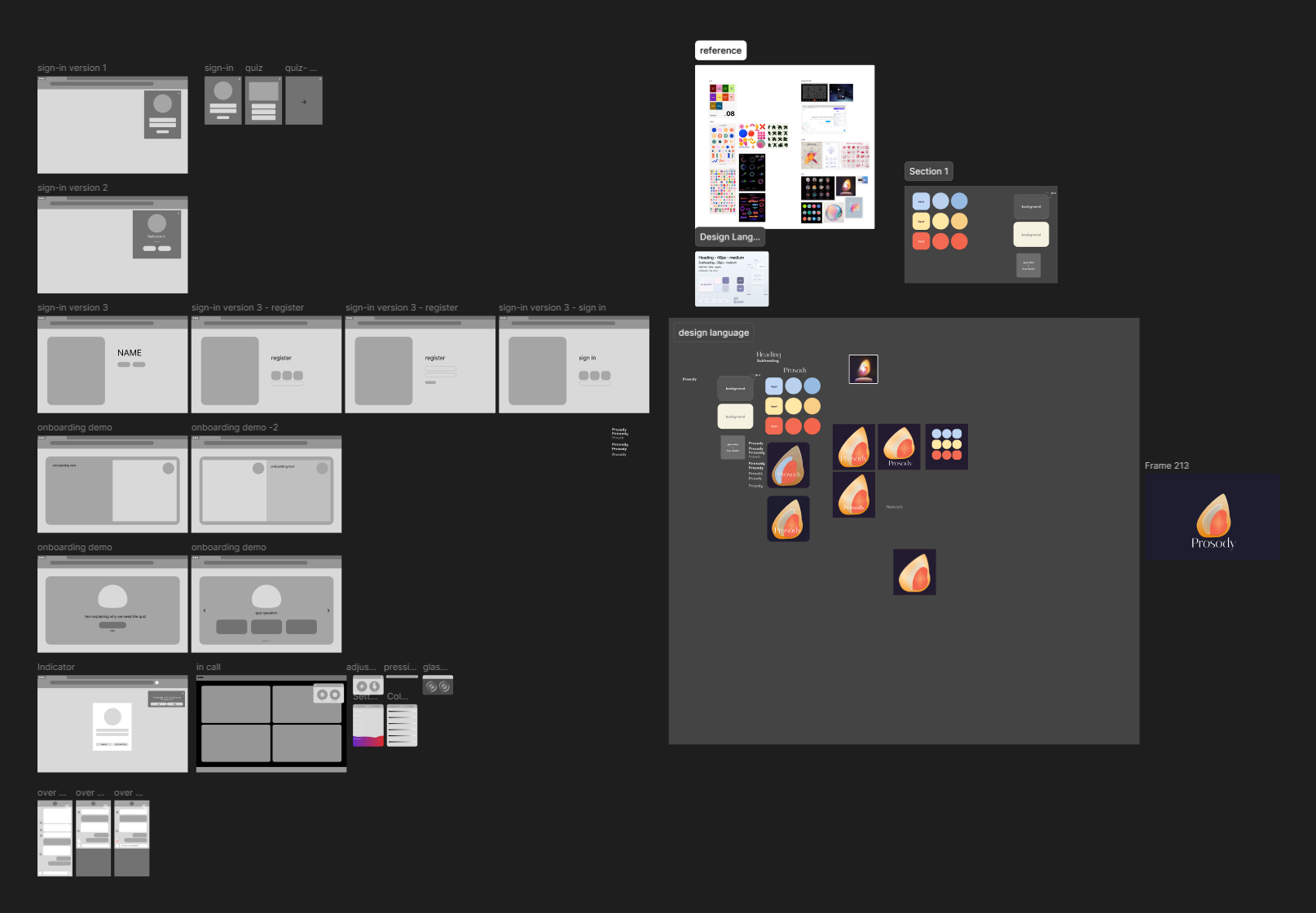
Inspiration
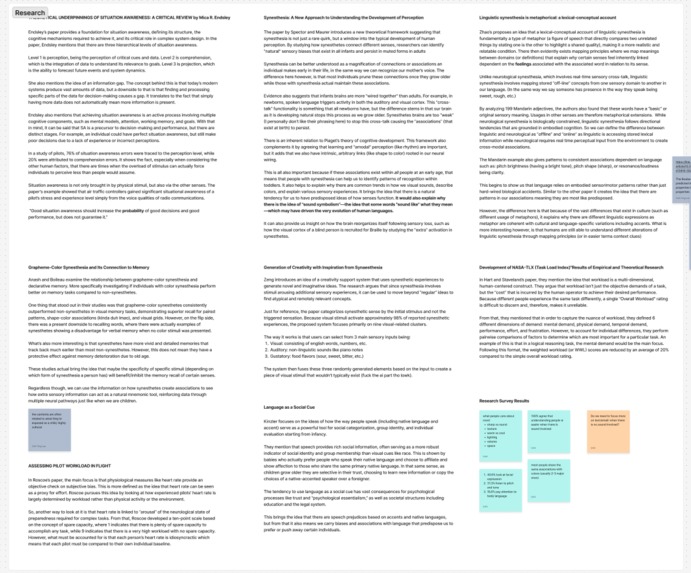
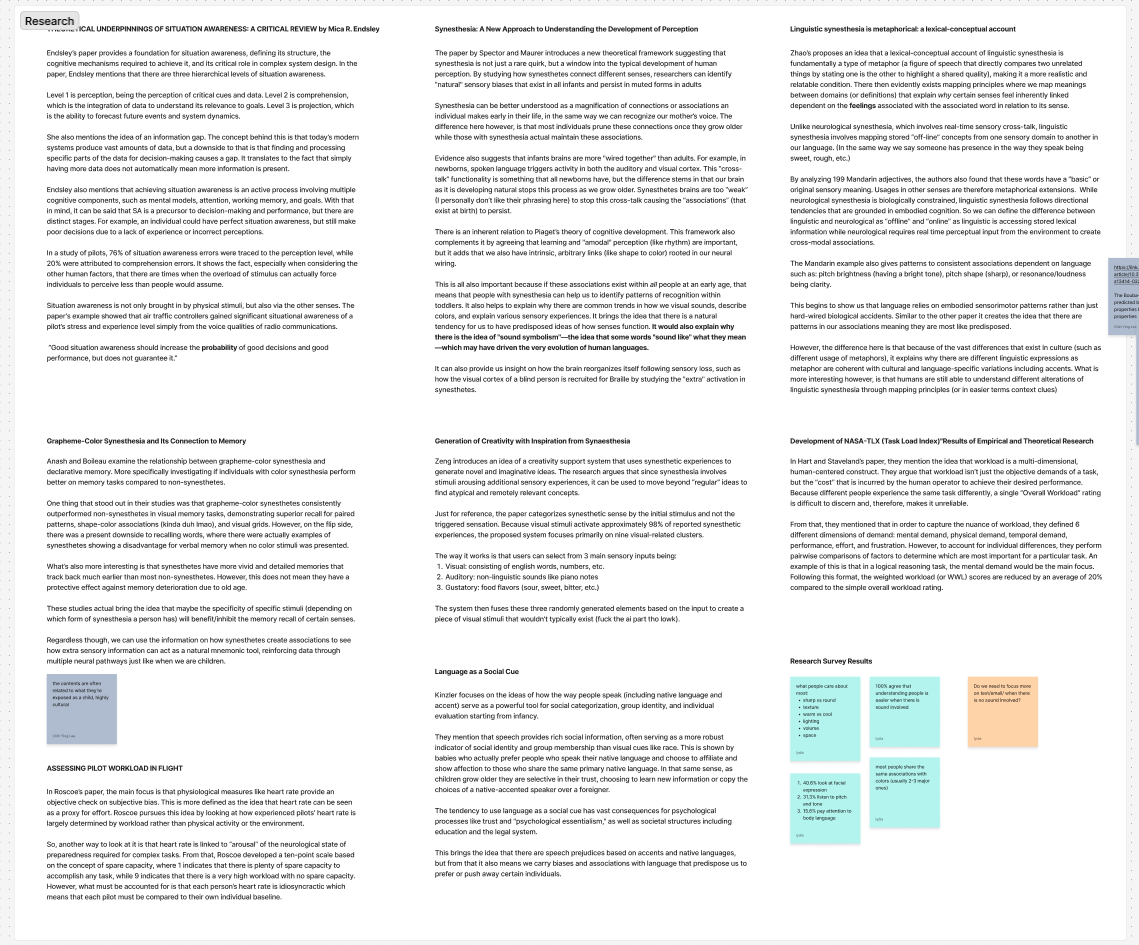
Many people struggle to interpret social cues or understand how their tone is perceived. Our survey showed that 57.1% of respondents often feel misinterpreted, and 91.4% reconsider their wording because of tone. Inspired by research on synesthesia and cross-sensory associations, we explored whether emotional signals in speech could be translated into a more intuitive visual experience.
What it does
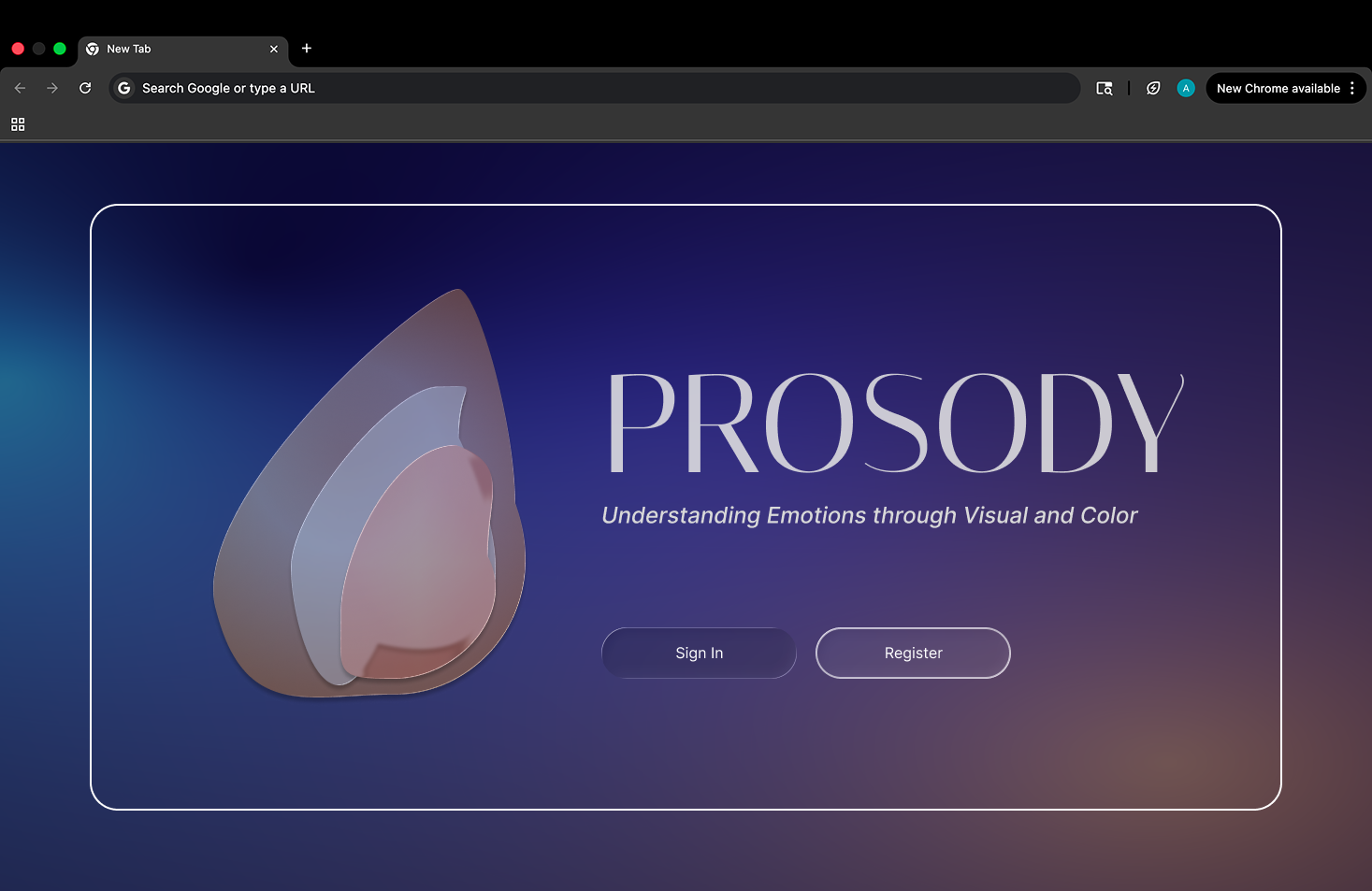
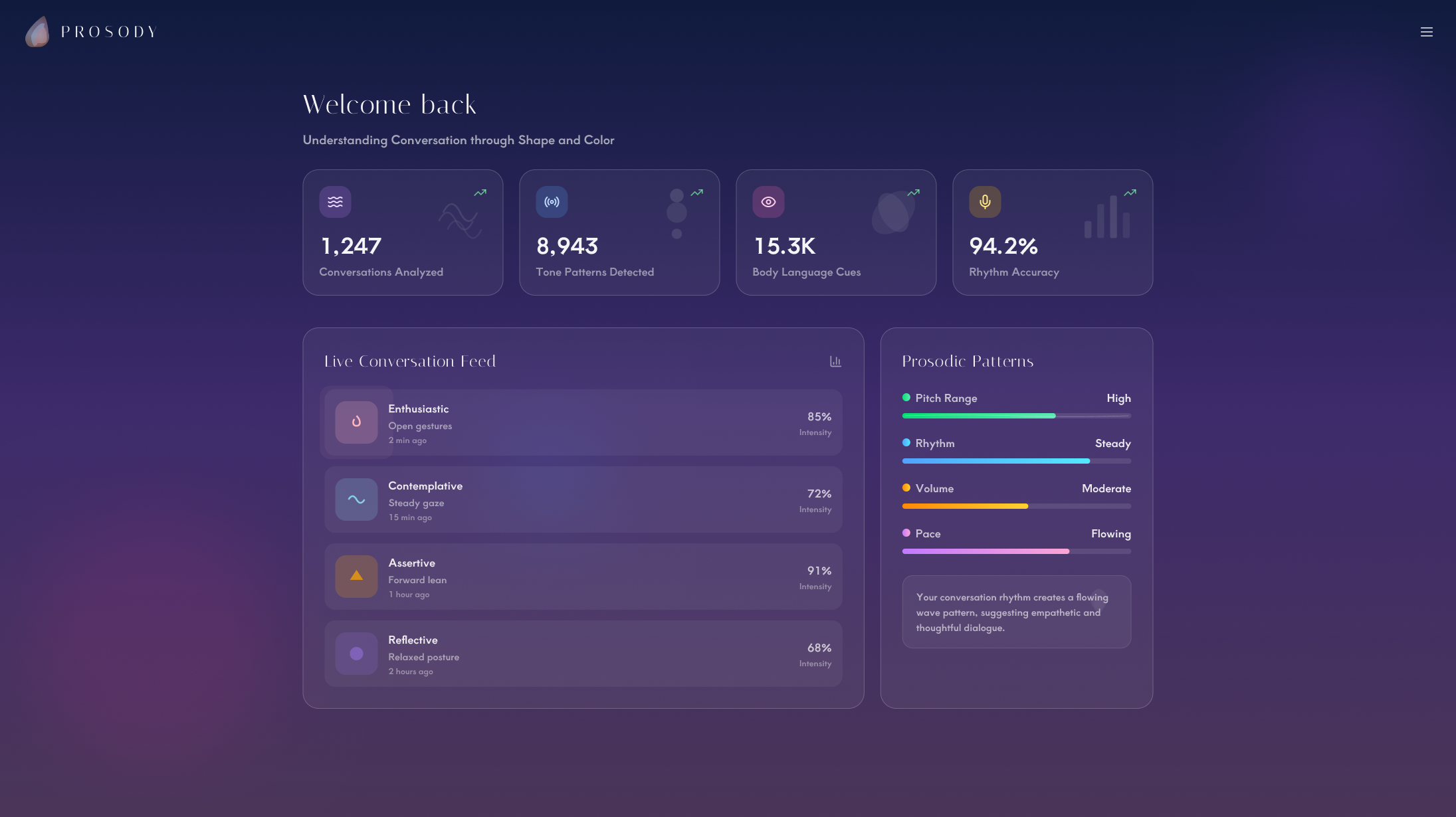
Prosody translates vocal tone into real-time visual feedback. By analyzing the four dimensions of prosody—pitch, volume, rhythm, and tone quality—the system detects emotional intent and displays corresponding colors and shapes to represent the mood of the conversation. This helps users understand how their tone may be perceived by others.
How we built it
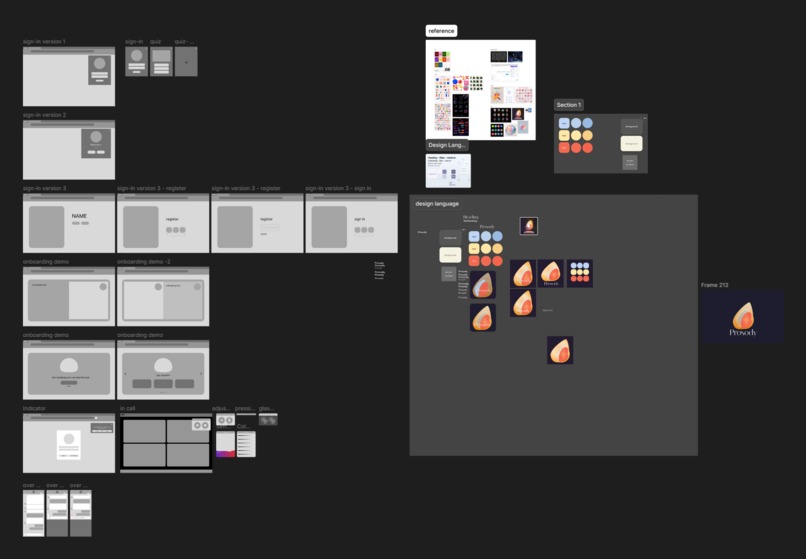
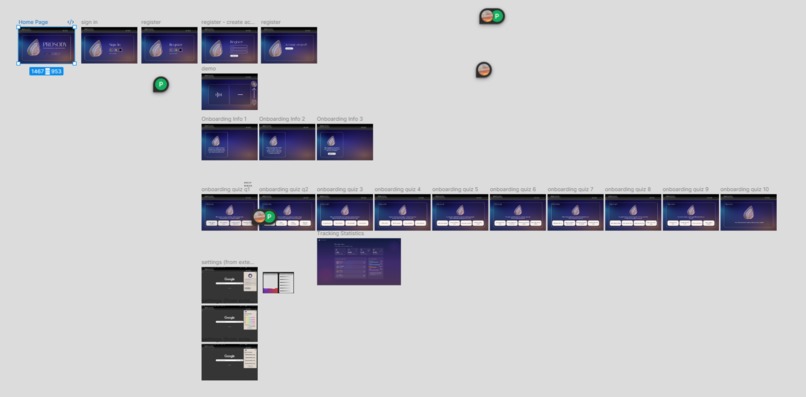
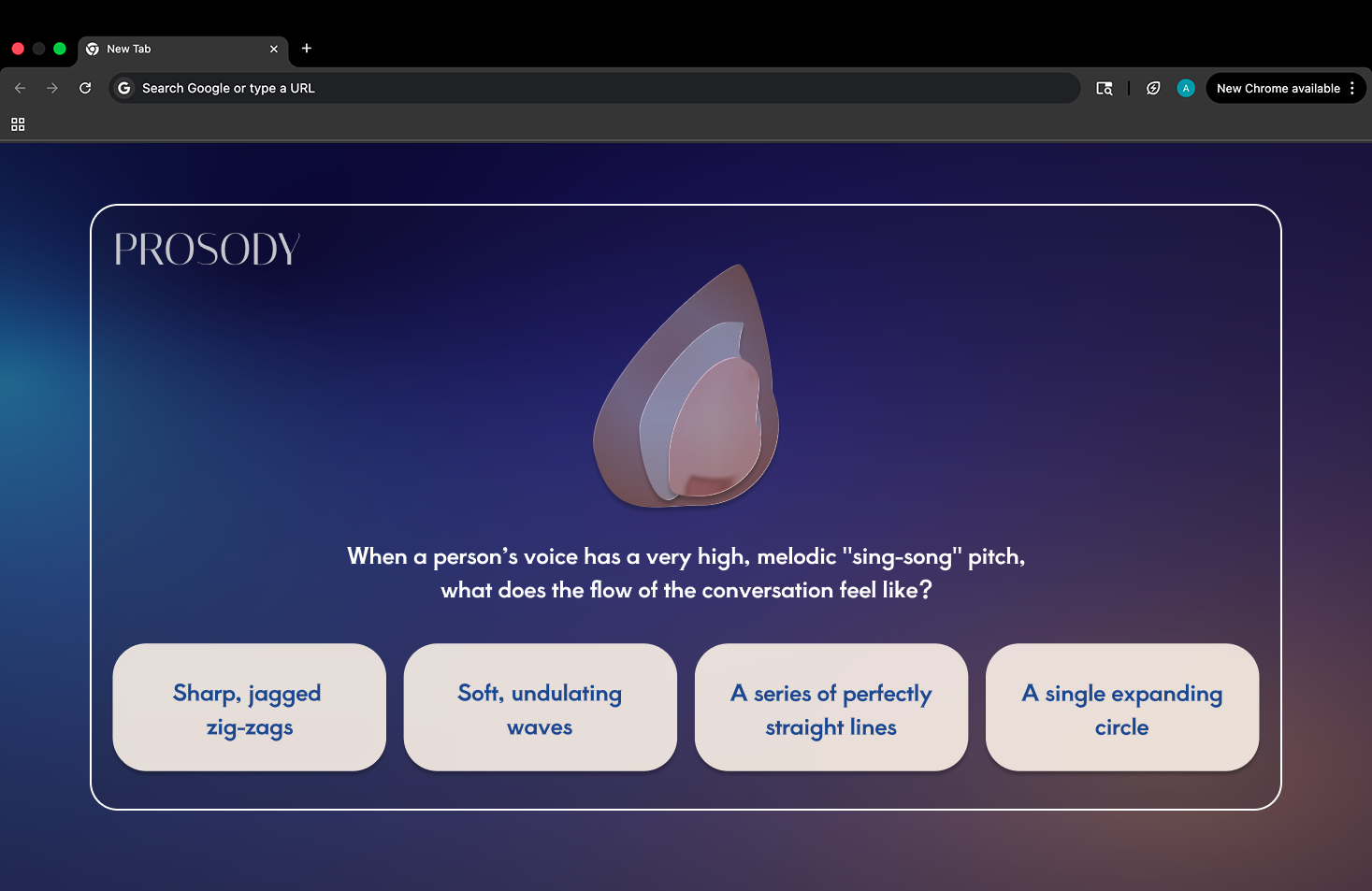
Prosody analyzes audio input to extract prosodic features such as pitch variation, loudness, rhythm, and tone quality. These signals are mapped to emotional patterns and visualized through shapes and colors. During onboarding, users complete a short calibration quiz that establishes personalized visual-emotion associations. The system then provides real-time feedback and tracks communication patterns over time.
Challenges we ran into
Interpreting emotional tone is highly subjective and influenced by culture and personal experience. To address this, we designed customizable association mappings through a short quiz during onboarding. We also accounted for edge cases such as silence, new speakers, and potentially harmful language while maintaining meaningful feedback.
Accomplishments that we're proud of
We built a system that visualizes something typically invisible in communication: tone and social intent. Prosody provides real-time emotional feedback and tracks conversation patterns over time, helping users build stronger social awareness and clearer communication.
What we learned
From conducting research and interviews, we learned that tone perception is complex and context-dependent, but visualizing emotional cues can make social signals easier to understand. Designing for social awareness also requires considering ambiguity, cultural differences, and personal interpretation.
What's next
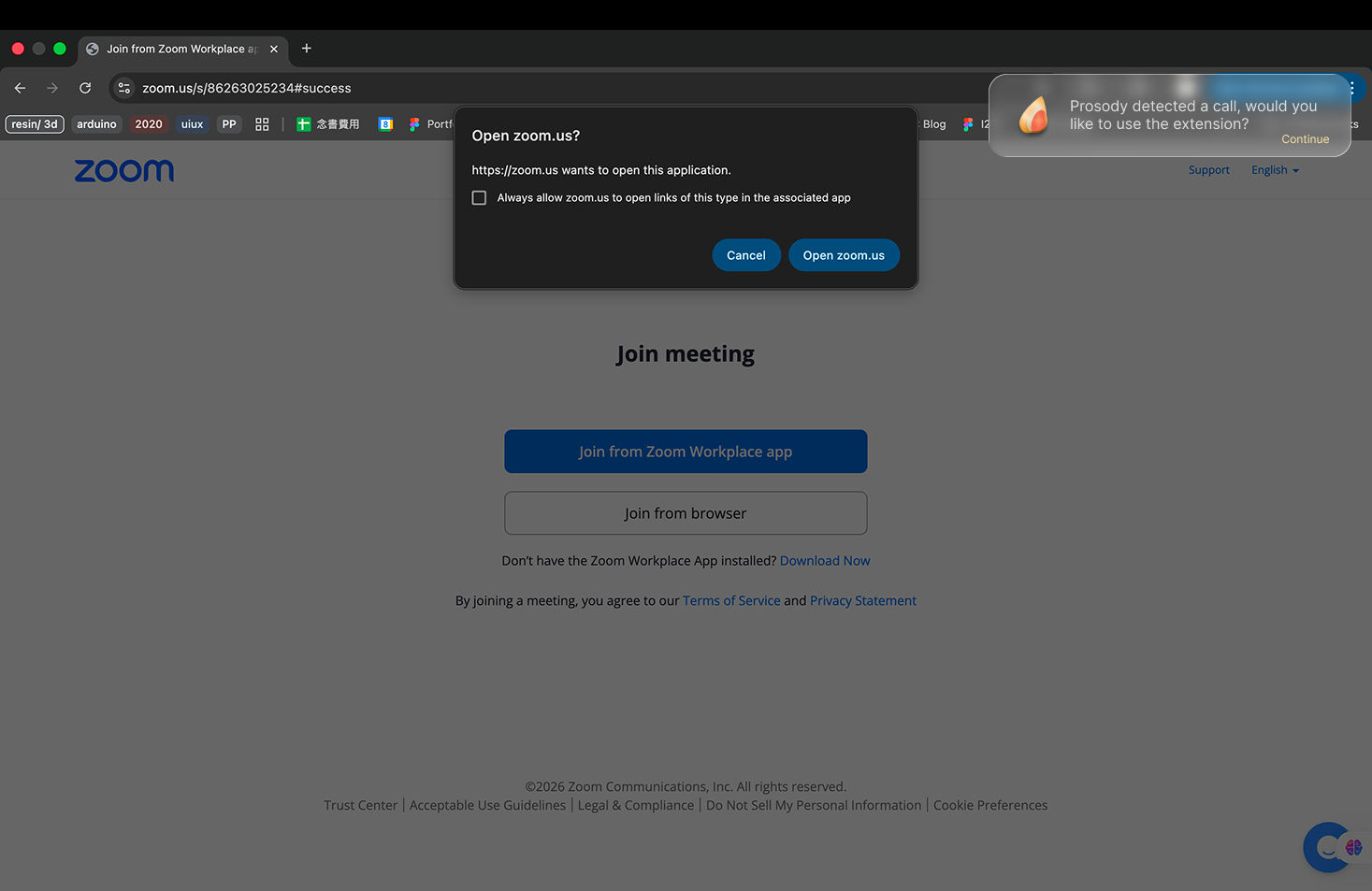
Next, we plan to improve Prosody by integrating facial expression analysis, adapting tone interpretation across cultural communication styles, and accounting for generational language patterns. We also aim to integrate Prosody with video calls, messaging platforms, and wearable devices to support communication in real-world settings.
Built With
- figma
- figmamake


Log in or sign up for Devpost to join the conversation.