-
Cover page
-
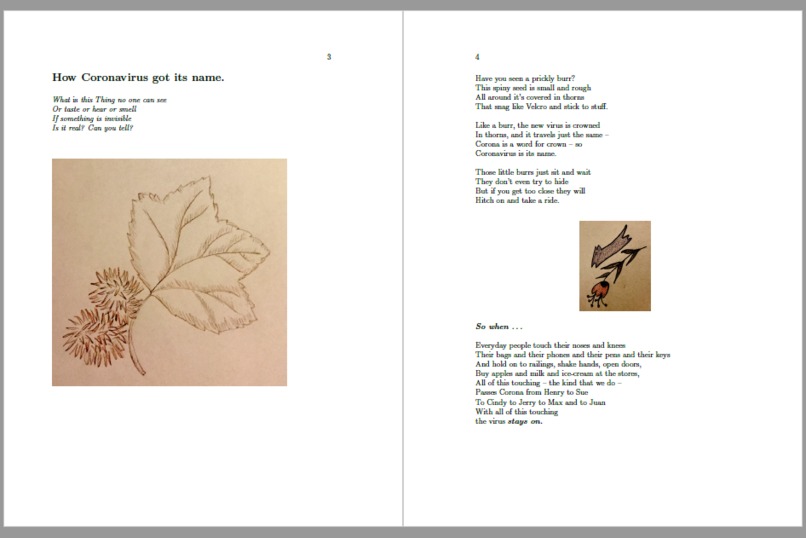
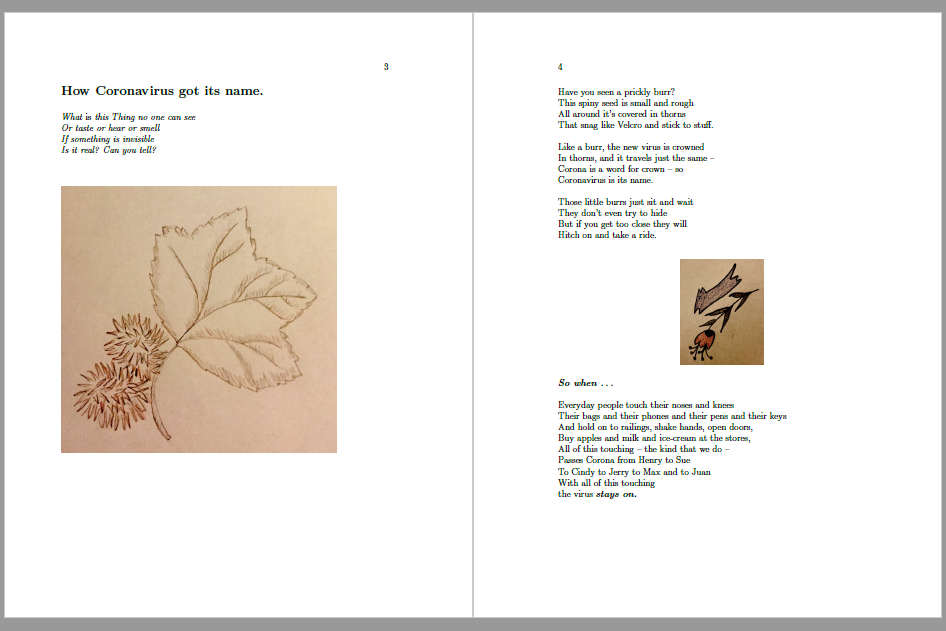
How Coronavirus got its name
-
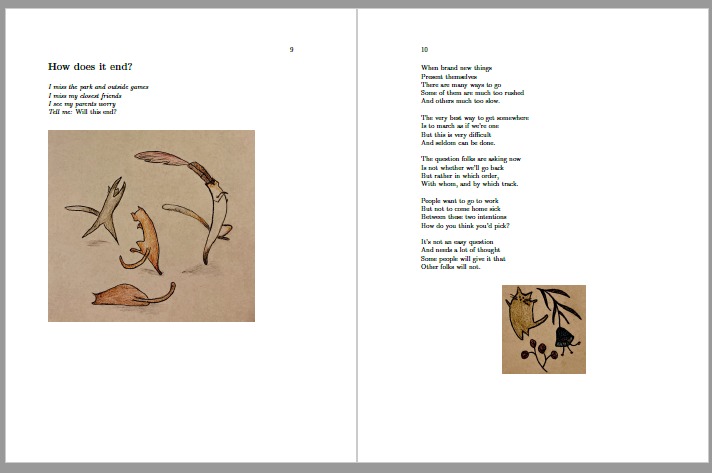
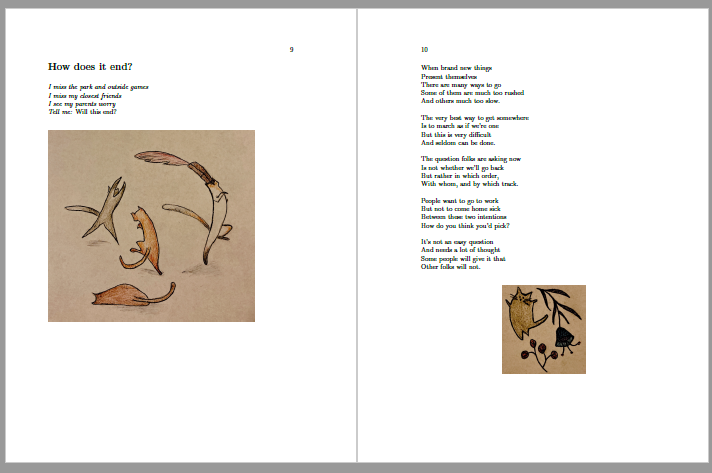
How does it end
-
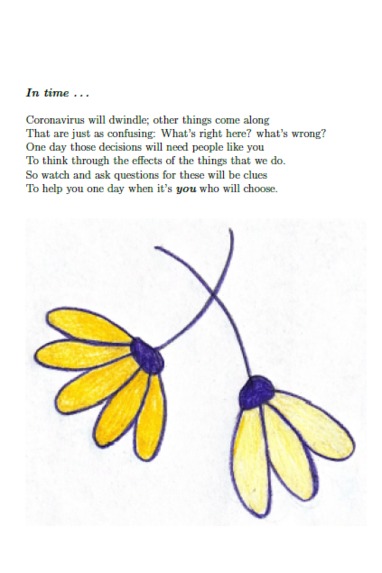
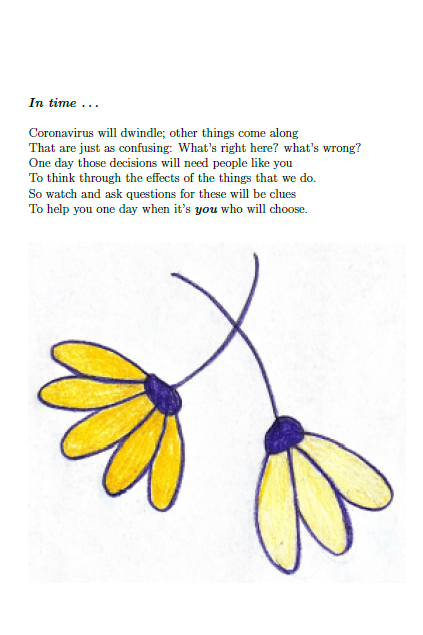
Final verse with dandelion
Upon learning of the EGHI contest, I was drawn to enter it because I loved teaching six- to nine-year-olds. Children at this age are becoming literate and exploring the world verbally. Words, text, cadence, and sounds become meaningful in the way that pictures and illustrations had been central just a short time earlier.
Six- to nine-year-olds are at a special place in cognitive and social development. They seek reassurance, but are very observant and are beginning to explore complicated themes. While too many details may confuse or distract them, overly simplistic representations will bore them. The right balance can be delicate to find, as the well-done renditions that appeal to them are simple, but rich. Such stories acknowledge more complex themes, but teach children that unresolved events do not have to overwhelm and that progress can happen through byways and side roads, as well as through direct routes.
Six- to nine-year-olds still have a sense of magic, whimsy, and intuition, are exploring thoughts through words and stories, still place themselves at the center of these stories, and recognize that some issues do not have simple yes/no and right/wrong answers. At the same time, they have a strong need to see 'fairness' and to feel reassured. This is the child for whom I built my story of the COVID-19 pandemic. I selected questions that I thought a child would most likely wonder about when overhearing adult conversations, and tried to create a sense of active connection between the child and each response. I did not give finality where none yet exists, but tried to give a sense of familiarity and reassurance throughout. Finally, I tried to create musicality and cadence in the poetry.

Log in or sign up for Devpost to join the conversation.