-
-
An overview
Inspiration
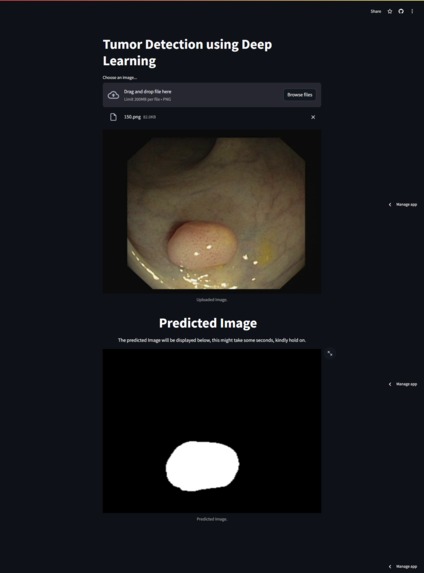
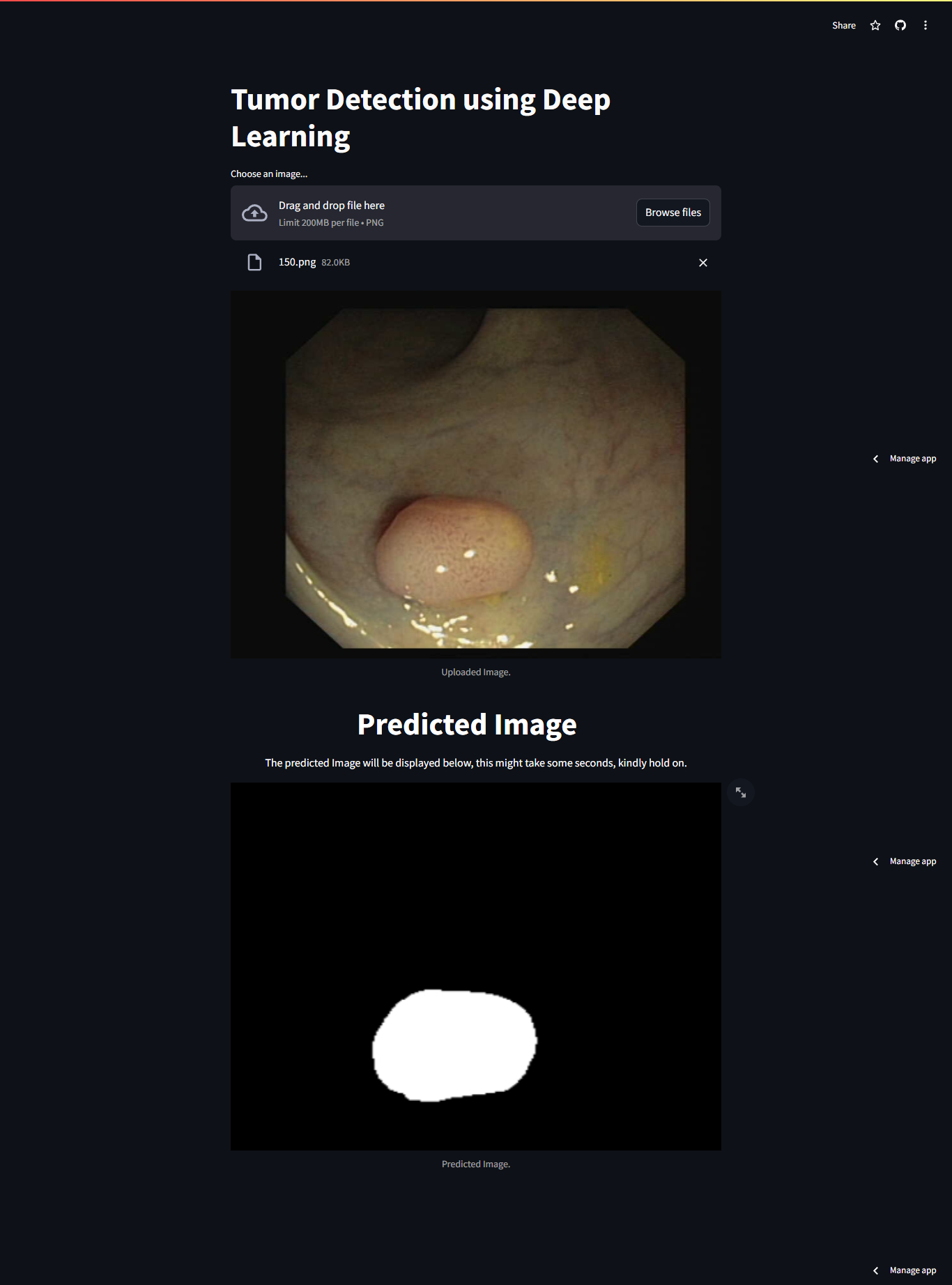
Machine learning and deep learning technologies are increasing at a fast pace with respect to the domain of healthcare and medical sciences. These technologies sometimes even out perform medical doctors by producing results that might not be easily notable to a human eye. Tumor (polyp) recognition and segmentation is one great technology which helps doctors identify tumors from colonoscopic images.
What it does
The core of the application is a deep learning model trained to detect tumors. The model was implemented using PyTorch, a powerful open-source machine learning library for Python.
How we built it
This application uses Deep Learning and Computer Vision techniques to detect cancerous & non-cancerous tumors in medical images.
Tech Stack; Language used : Python Deep learning library used : PyTorch Computer vision library used : OpenCV Other python libraries : Scikit-learn, pandas, numpy, albumentations etc. Deployment: Streamlit
Challenges we ran into
One interesting challenge faced during the project was Training the Model (A GPU was required since model training takes a really long time in CPUs). Also, a lot of issues occurred when pushing the codes to GitHub, which slowed down deployment. Apparently I wasn't supposed to push environment (.env) files, which was later understood.
Accomplishments that we're proud of
Accomplishing this project and a successful deployment.
What we learned
Learned a lot about Git/Github Usage and Image Processing using Opencv Libraries
What's next for A Tumor Detection Model/Application
Project Improvement and Advancement in a large-scale setting.


Log in or sign up for Devpost to join the conversation.