-
-
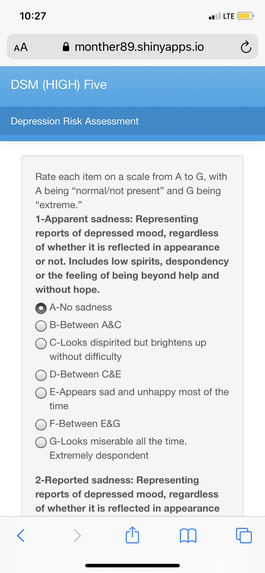
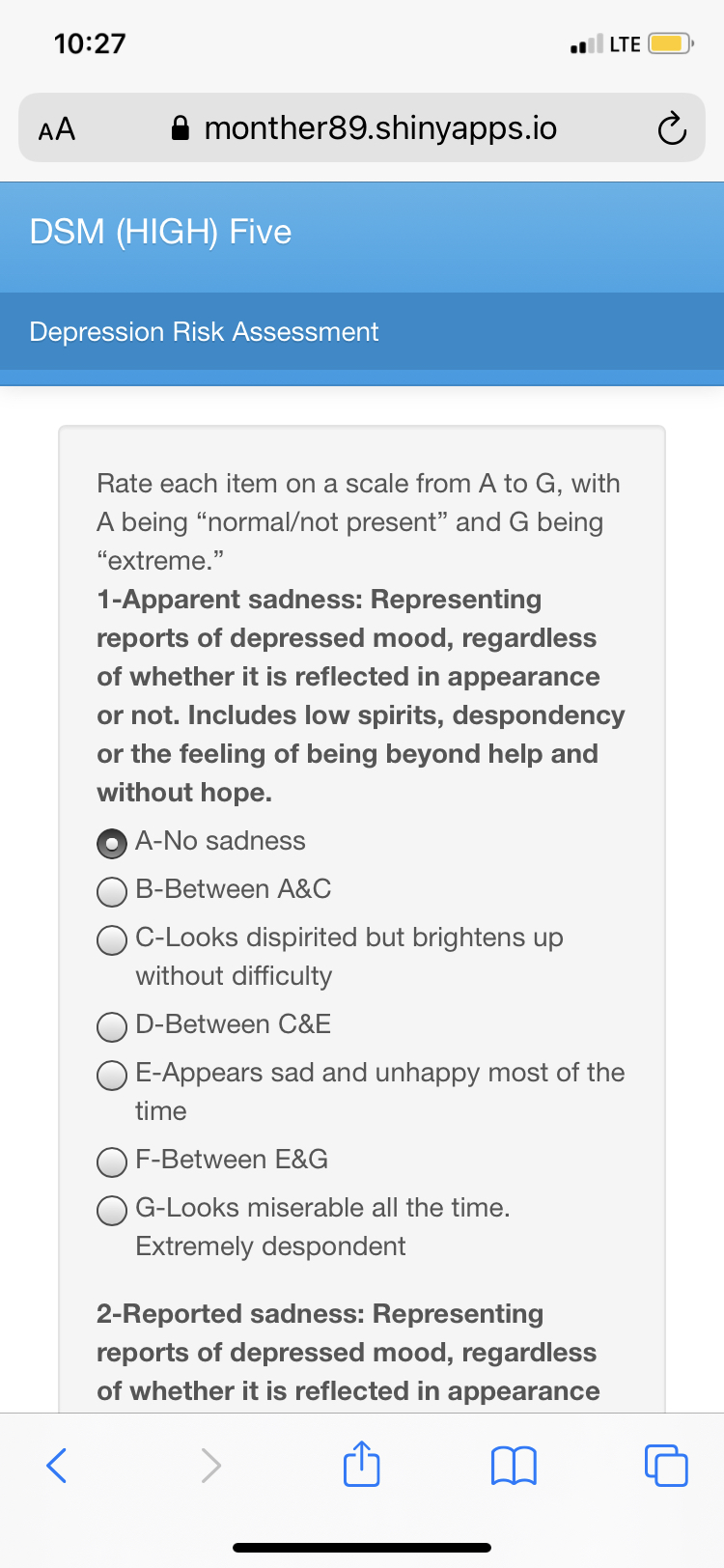
Screenshot of DSM(high)V on a phone browser
-
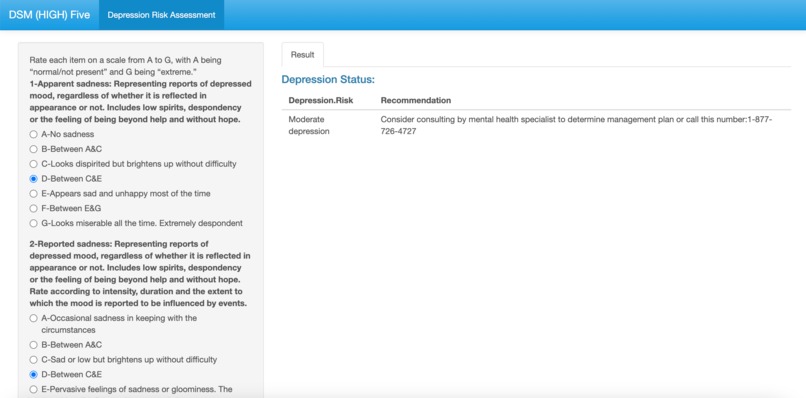
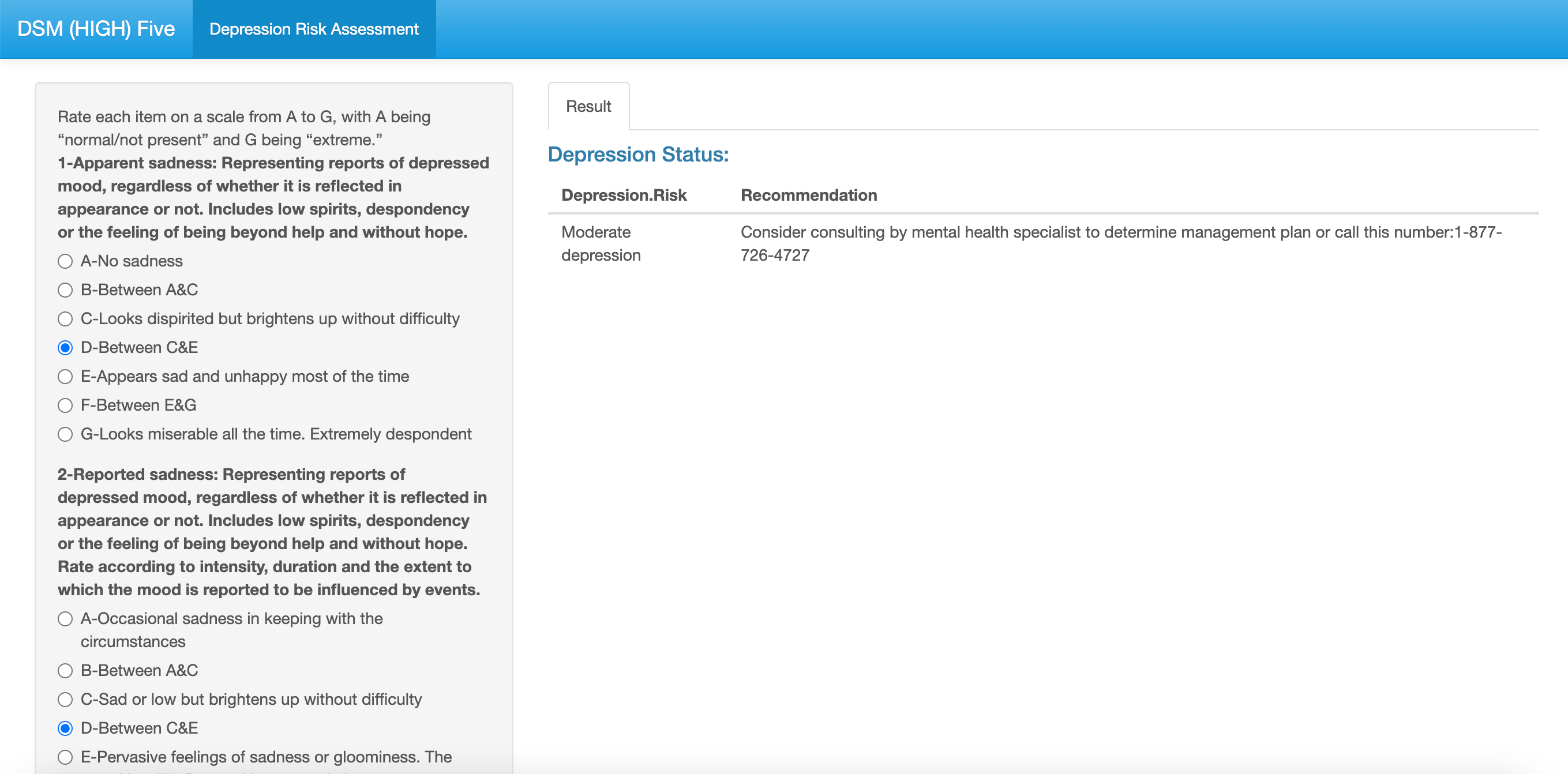
Screenshot of DSM(high)V on a computer browser
Inspiration
We all have either have known someone struggling with mental health, or have seen its effects within our greater community - especially for college students during the Covid-19 lockdowns last year. We were also disheartened to learn that due to the lockdowns and even still, college students who had incident / recently developed depression were incapable of accessing critical resources to receive a proper diagnosis and care. This inspired us to develop DSM(high)V.
What it does
DSM(high)V is a self-assessment that determines a user's risk of depression based on their responses to a short list of (10) questions. Each question is on the Montgomery-Asberg Depression Rating Scale (MADRS) scale of 0-6 and, upon answering all of the questions, the user receives a score in the form of their possible risk of depression status. There are 4 categories identified (no risk, mild risk, moderate risk, severe / high risk) for depression. This application is free to use, and depending on the risk assessment, currently provides the user with resources for self-management of depression.
How we built it
We programmed this application within Rstudio (version 4.1.0), and more specifically with the jquery (version 3.6.0) and shiny (version 1.7.1) R libraries. One of our team members had a background in psychology, so their knowledge on the topic confirmed the validity of the questions we asked in the app, informed by DSM-V diagnosing criteria for depression. While this app does not serve as a diagnostic tool, it is a first step in developing such precision diagnostic technologies.
Challenges we ran into
One of the original ideas for this application was to develop a machine learning algorithm (MLA) to assess a patient's risk for depression, based not only on their survey responses, but also on pre-supplied data for said hypothetical patient (i.e. age, gender identity, college year). Unfortunately, we had limited access to datasets that could provide us with the variables necessary to train and test such an algorithm. While this was the first hackathon that all team members have participated in, our excitement for the topic fueled us to keep going.
Accomplishments that we're proud of
We are proud of the fact that, within our allotted time, we were able to generate a minimal viable product and a user-friendly interface for college students who may be struggling to gain access to mental healthcare. And we were very proud of participating in our first hackathon.
What we learned
We learned how to determine which features were most important for a product, and this hackathon was a great exercise to get us thinking from the perspective of both the end users (college students) and customers (universities, insurance companies).
What's next for DSM(high)V
Should we be unable to obtain access to a dataset containing EHR data (i.e. patient demographics, biomarkers), the next steps would be to create the MLA. Also, we intend to create collaborations with vetted clinical psychologists, and their services would be offered through additional material (hyperlinks) provided through the app for patients to receive affordable mental health care. We also will seek partnerships with university health services , where we will connect directly to college students and test future iterations of this app; we may also utilize email and other virtual channels to reach out to isolated college students.
Built With
- r
- shiny

Log in or sign up for Devpost to join the conversation.