-
-
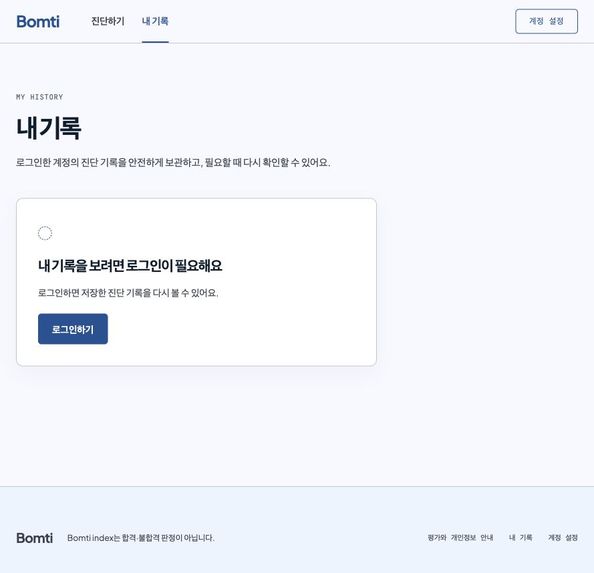
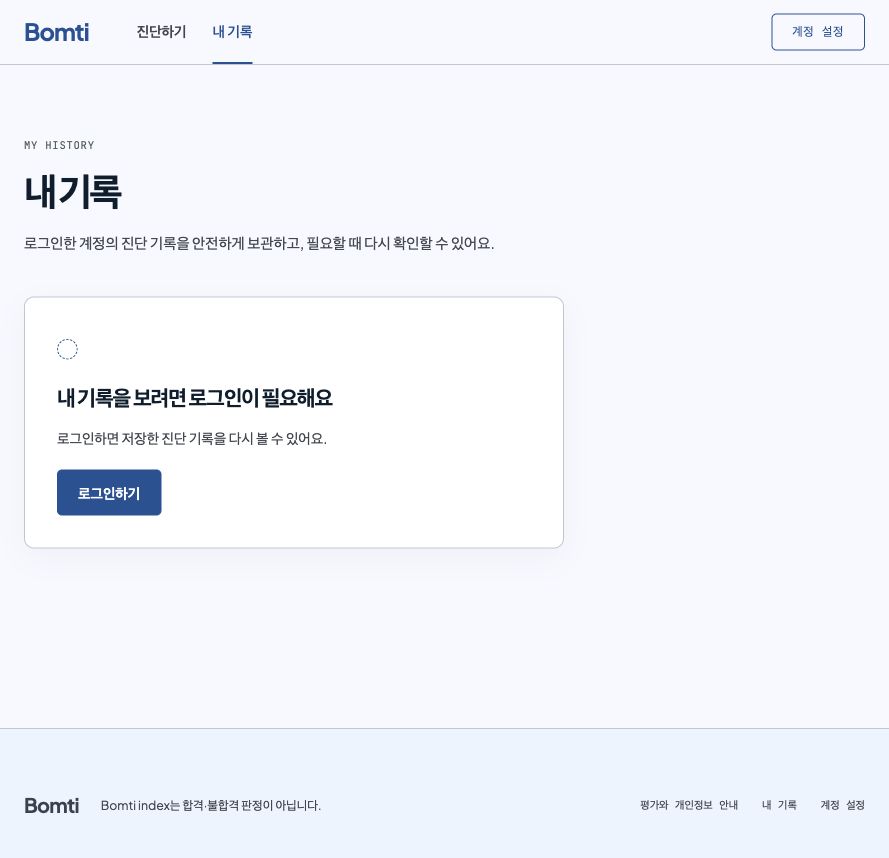
Assessment history is visible only to the authenticated account owner, with a clear sign-in path for visitors.
-
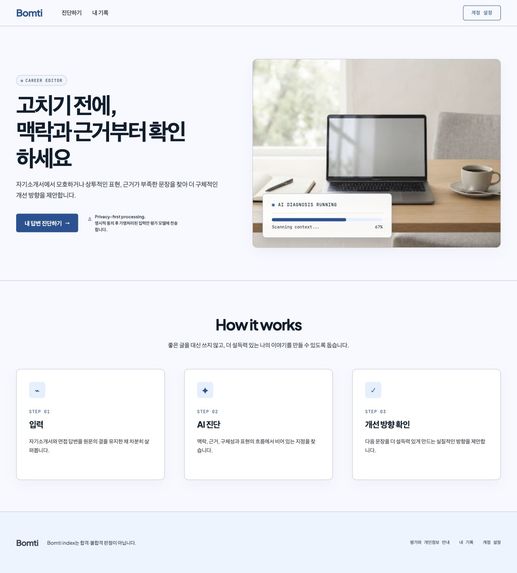
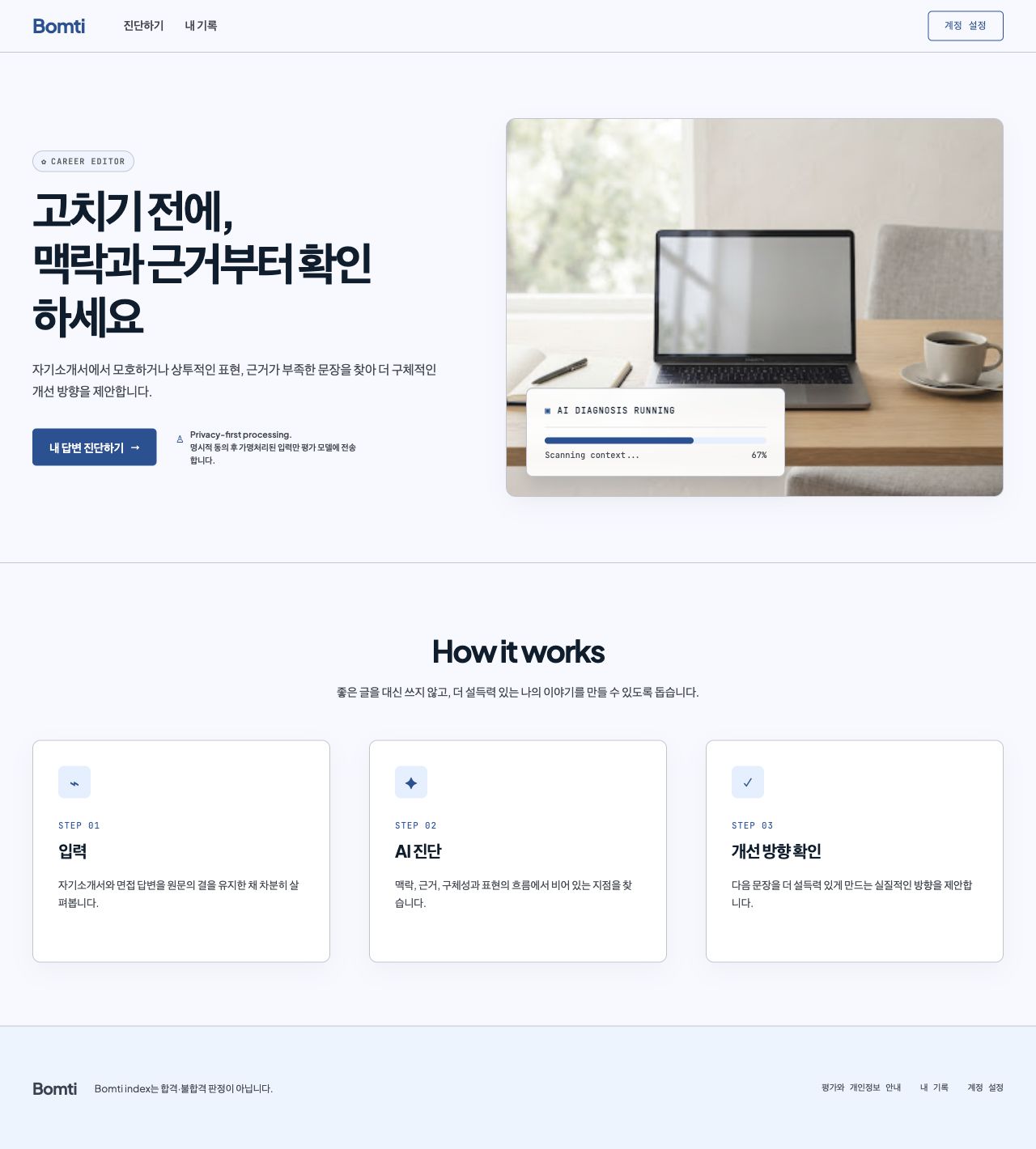
Bomti is an AI career editor that helps applicants check the context, evidence, and specificity of self-introduction and interview answers.
-
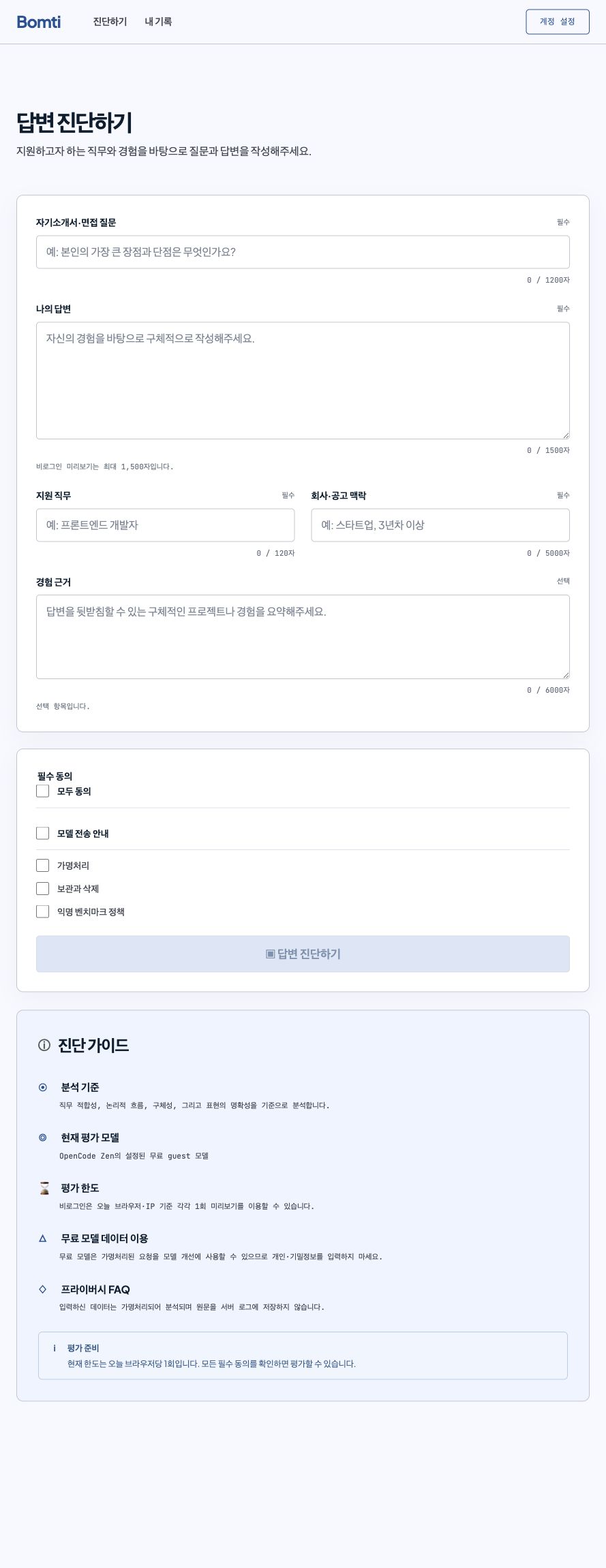
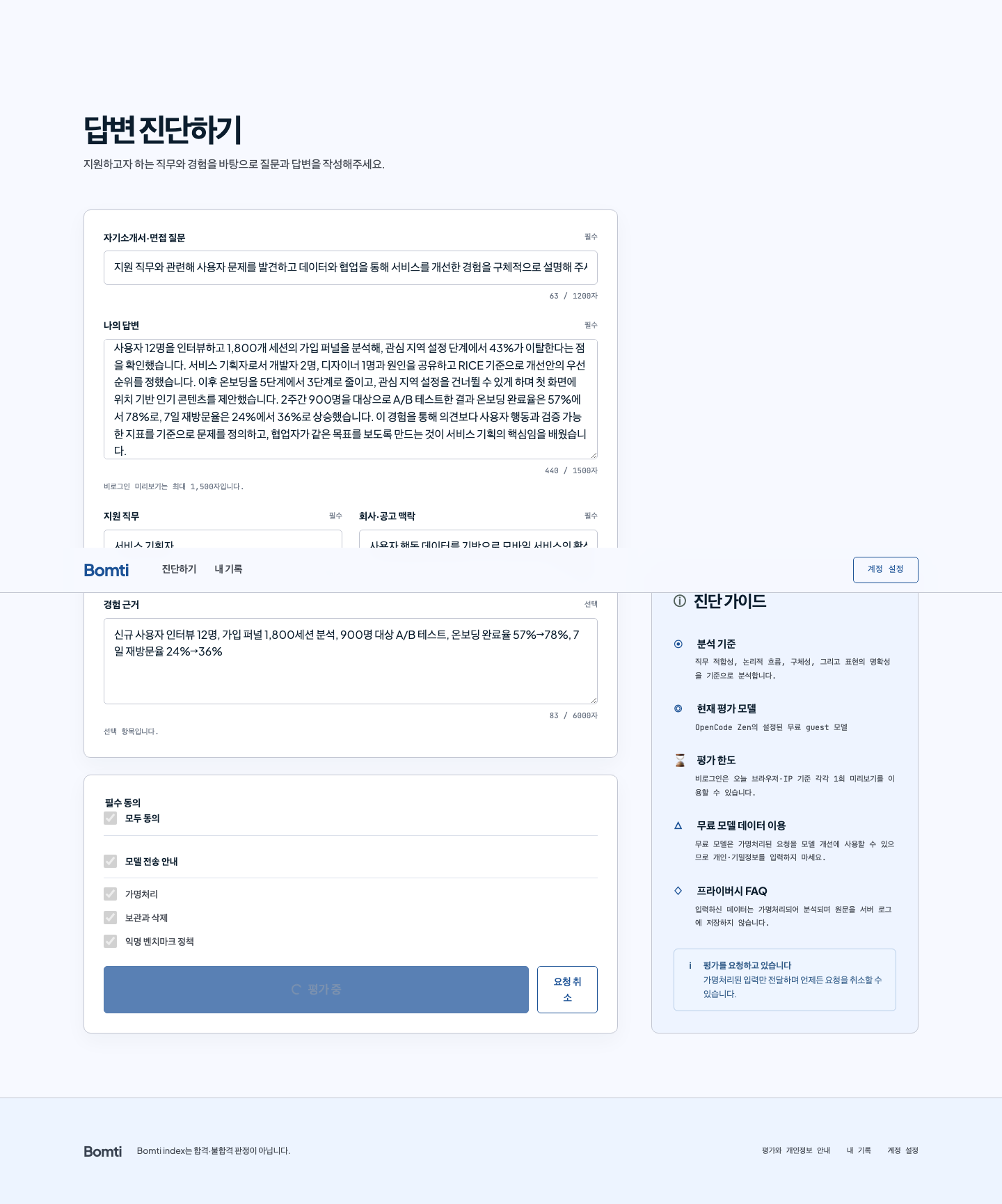
The responsive form supports answer writing, consent confirmation, and evaluation guidance on smaller screens.
-
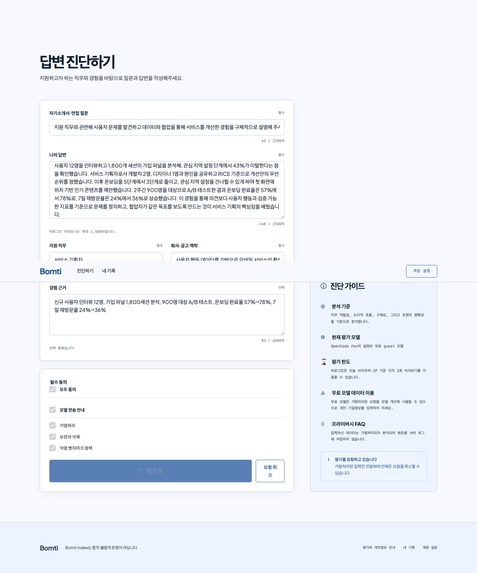
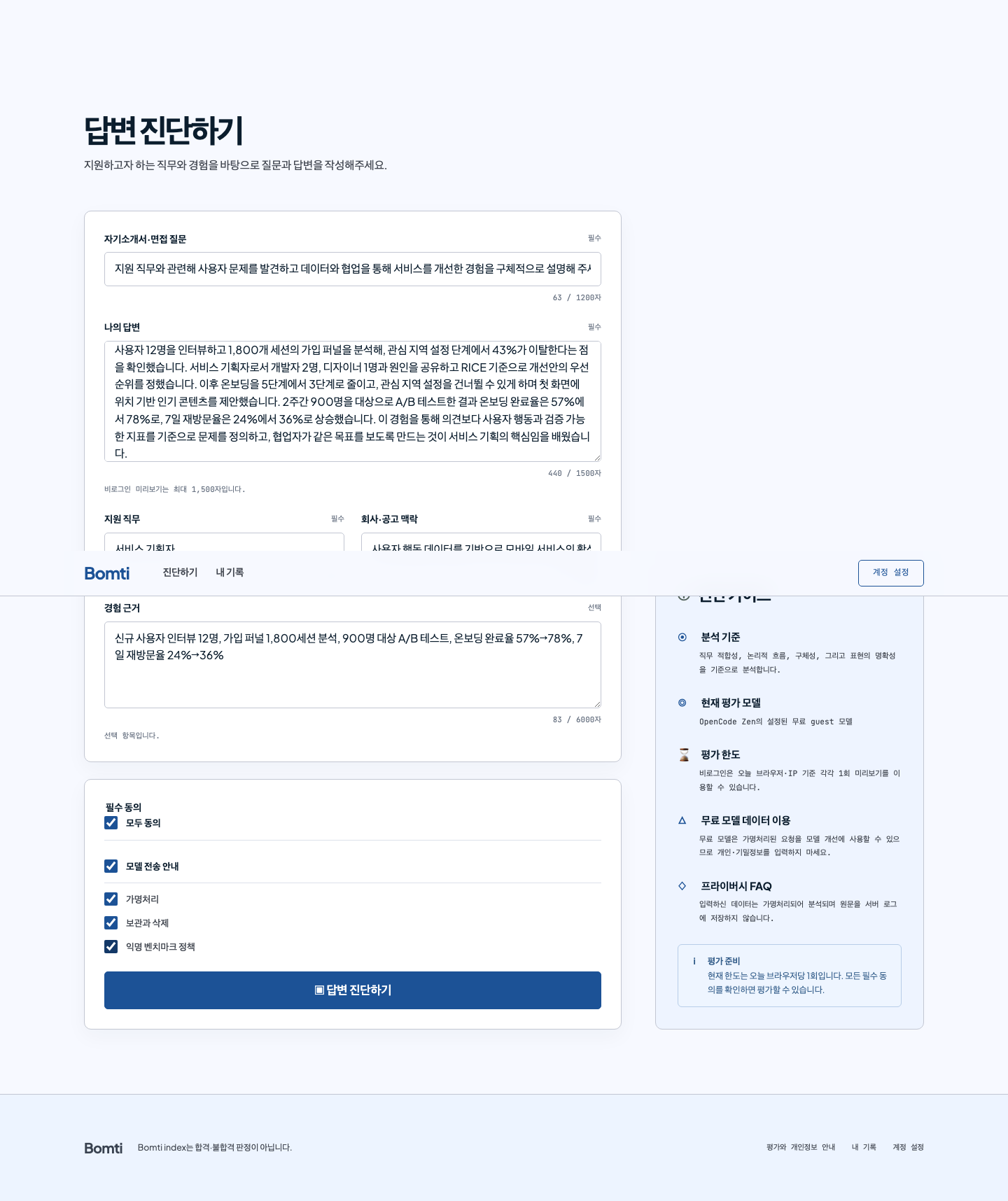
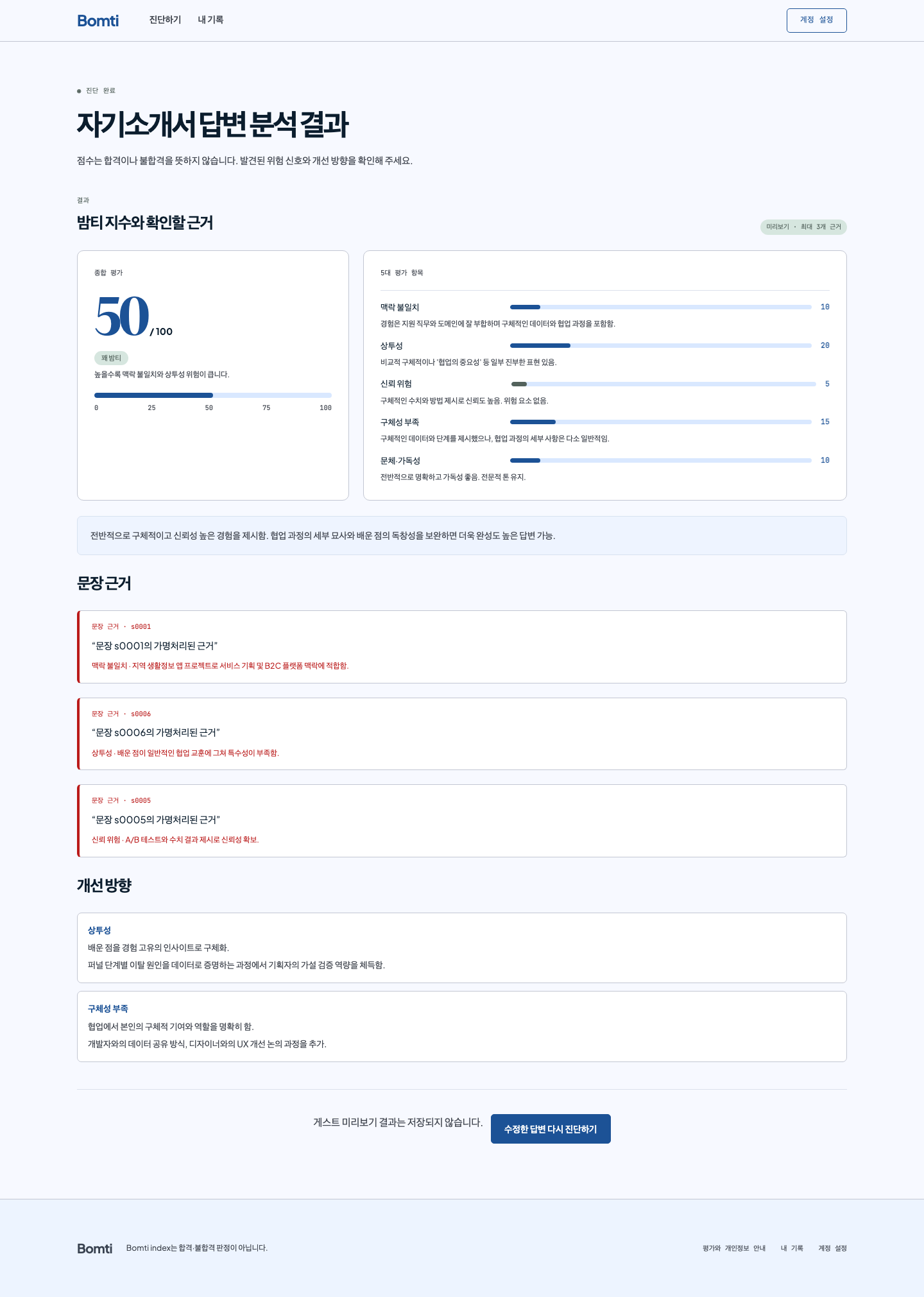
Bomti analyzes a submitted, evidence-rich answer and shows the live evaluation state.
-
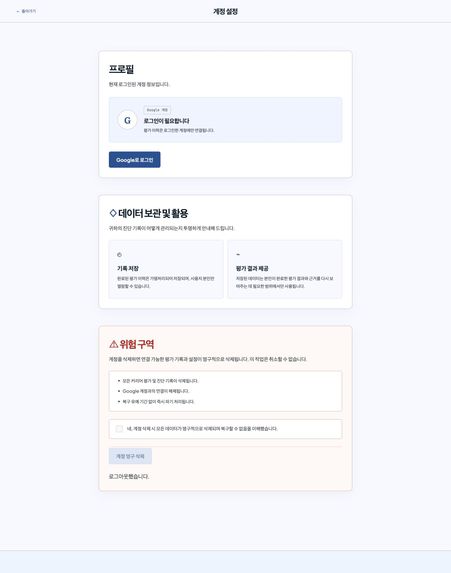
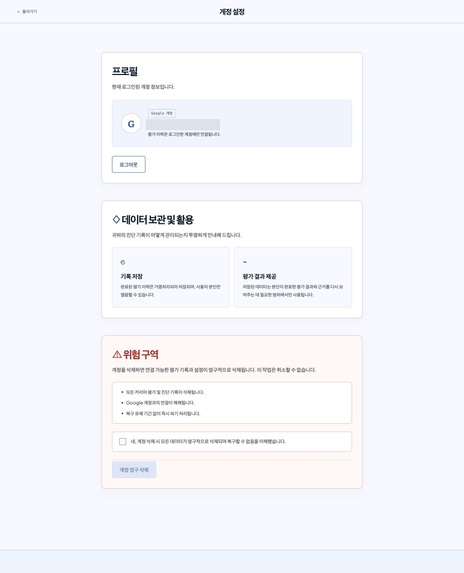
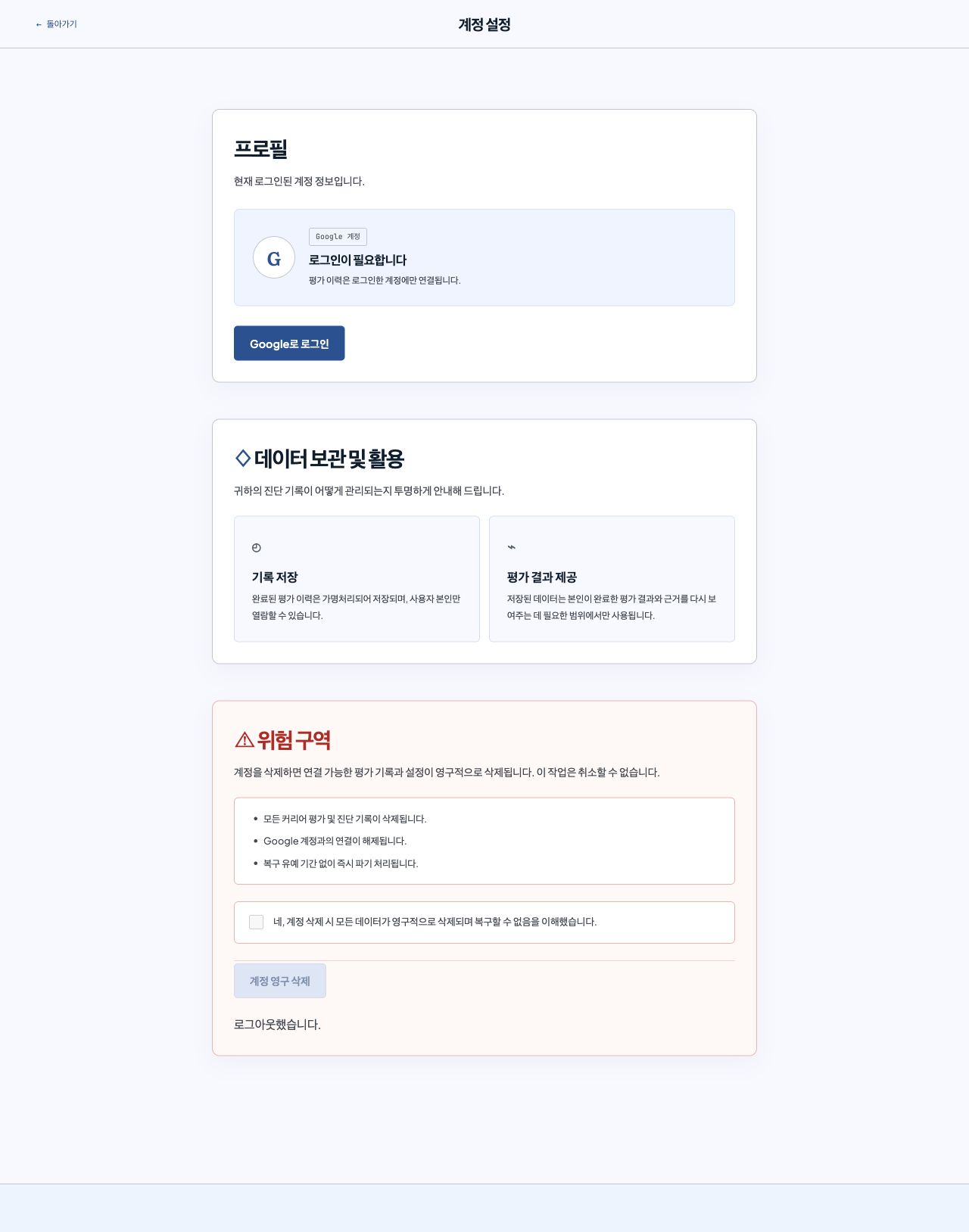
Visitors can review data practices and account-deletion policy before signing in with Google.
-
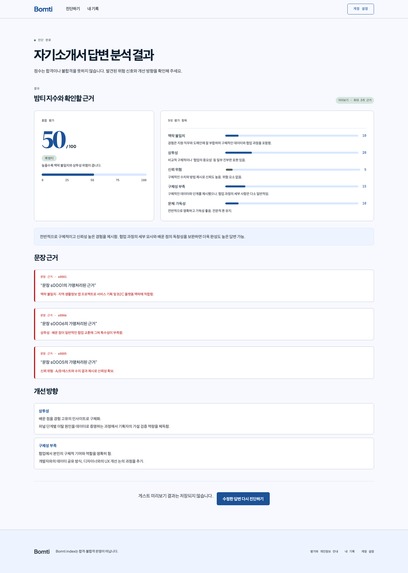
Bomti presents an overall index, five evaluation dimensions, sentence-level evidence, and actionable improvement suggestions.
-
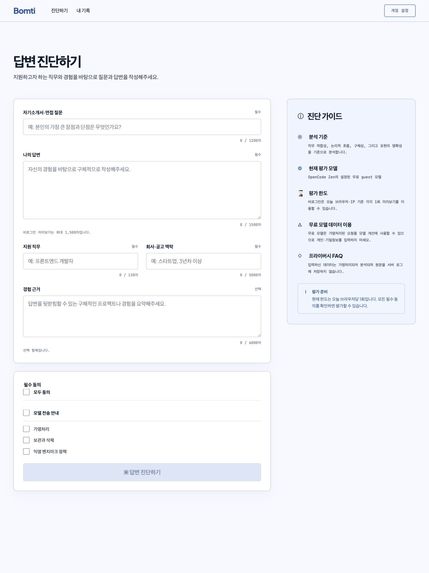
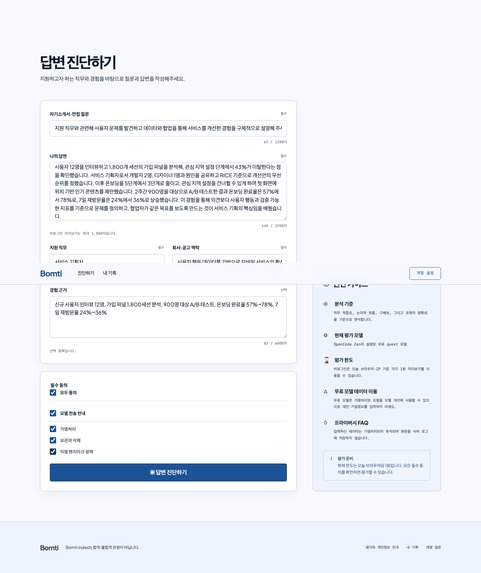
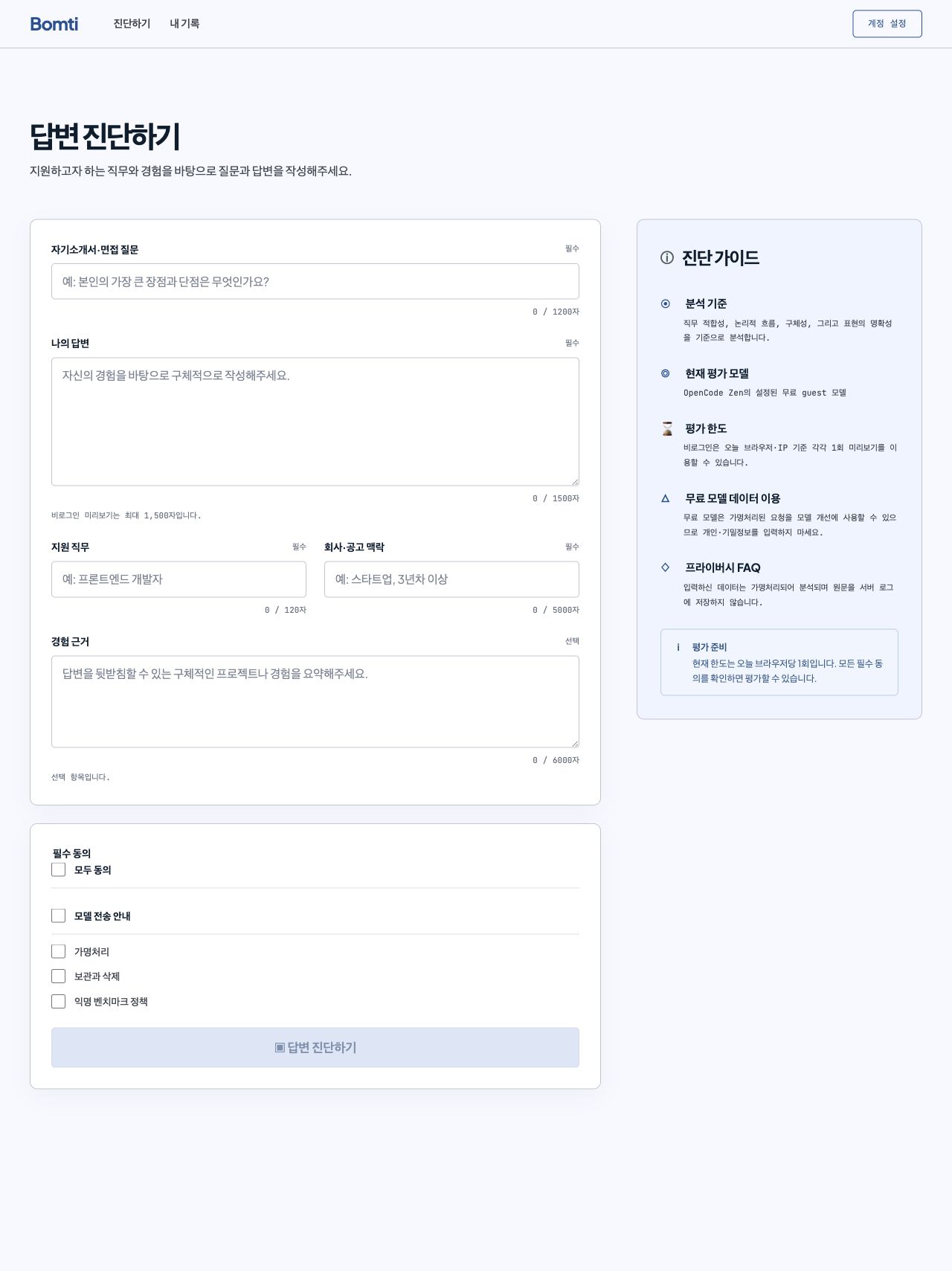
Users provide their interview question, answer, target role, company context, and supporting experience before confirming privacy
-
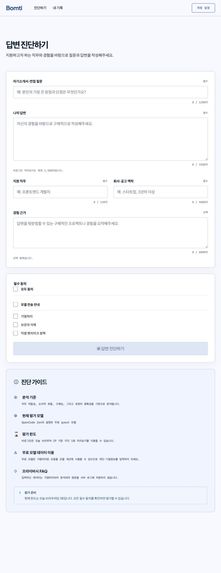
Once all required consent items are confirmed, users can securely submit their answer for AI evaluation.
-
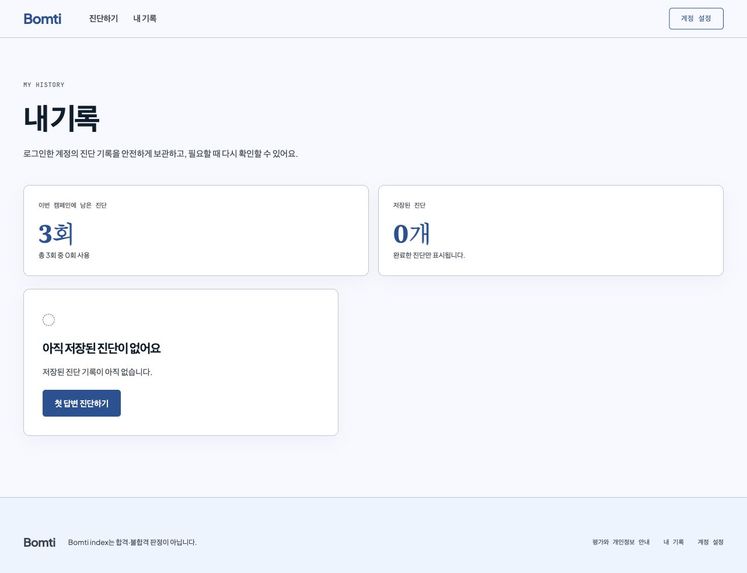
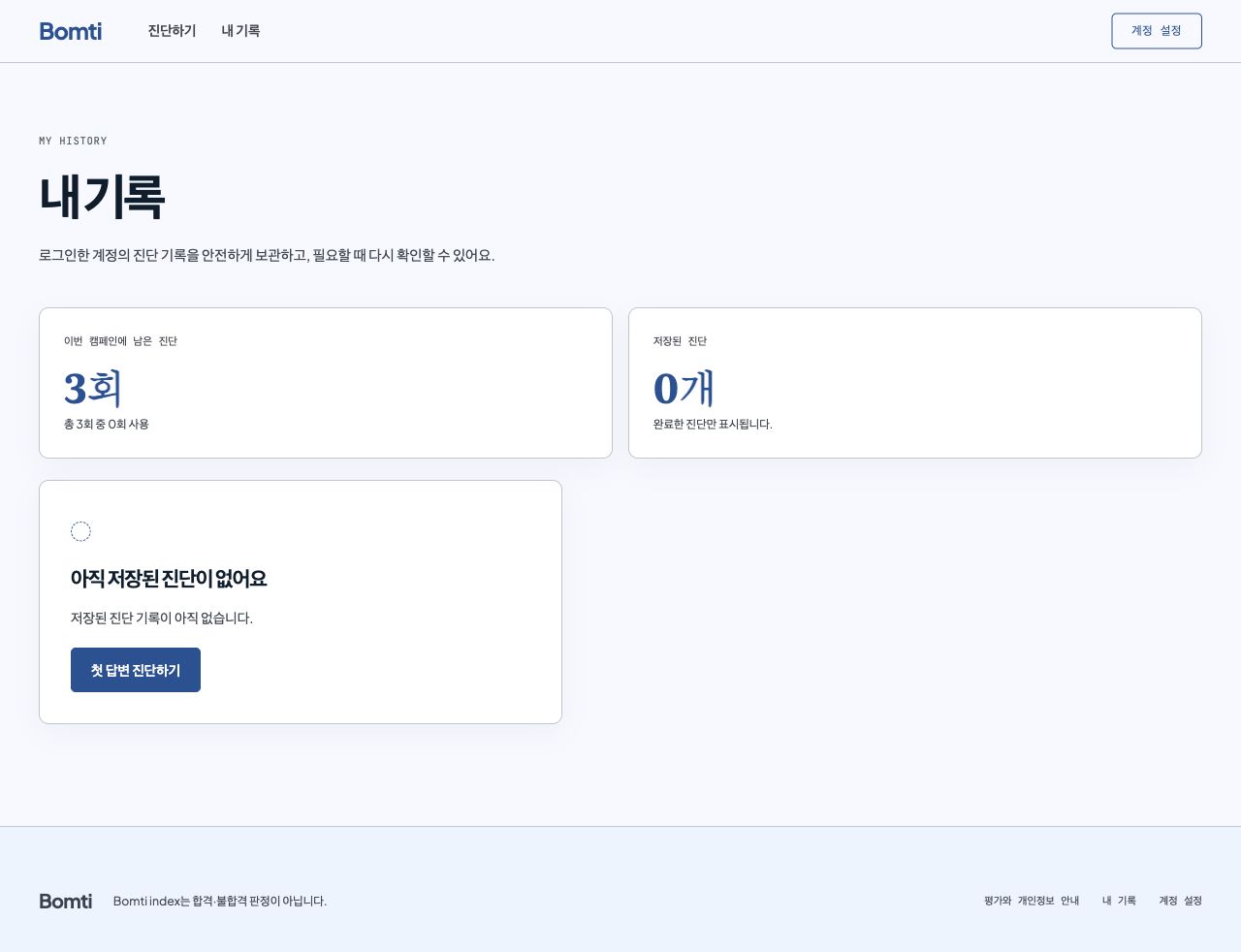
Logged-in users can review their remaining evaluations and saved assessment history.
-
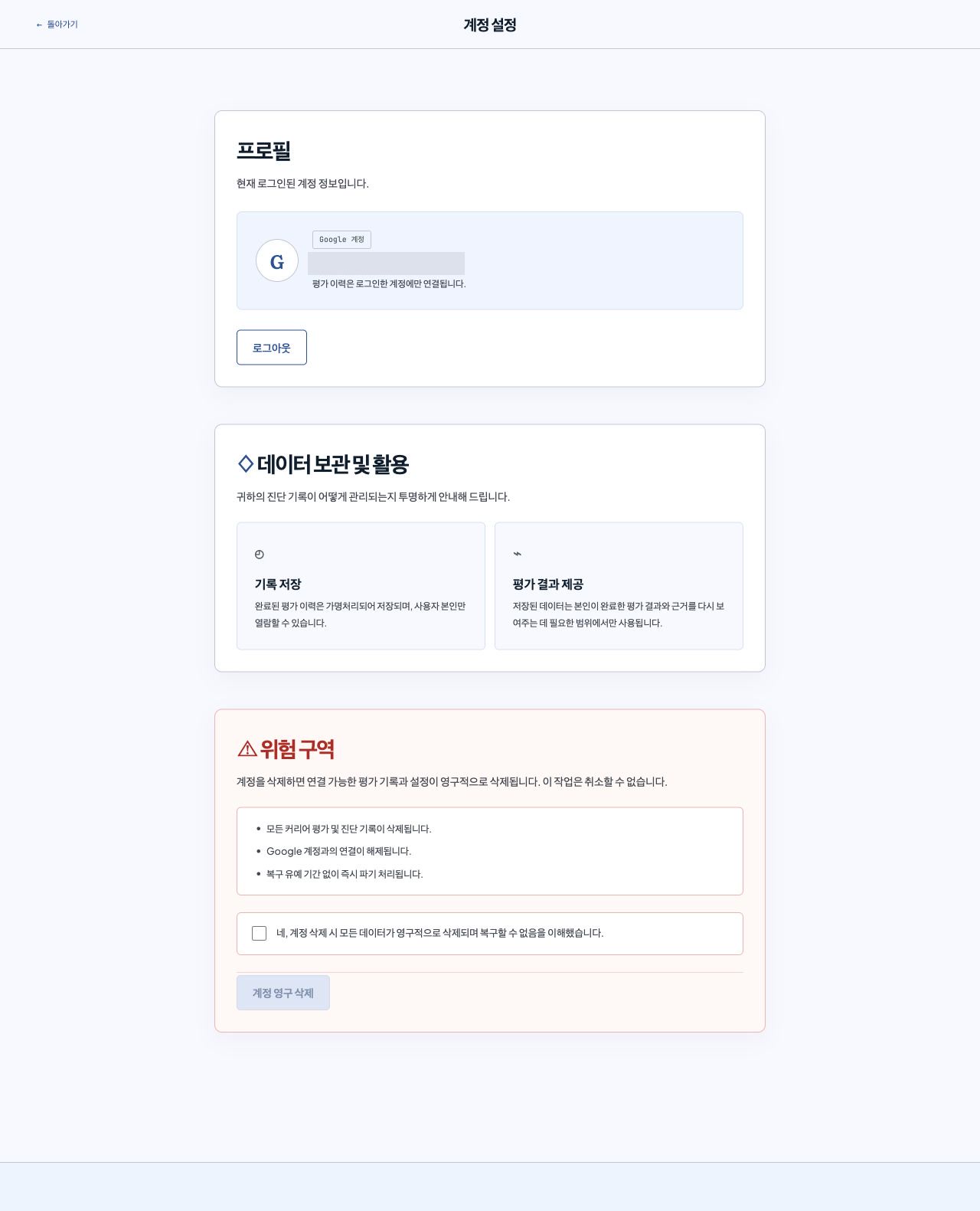
Users can manage Google sign-in, review data-retention practices, and permanently delete their account and evaluation data.
-
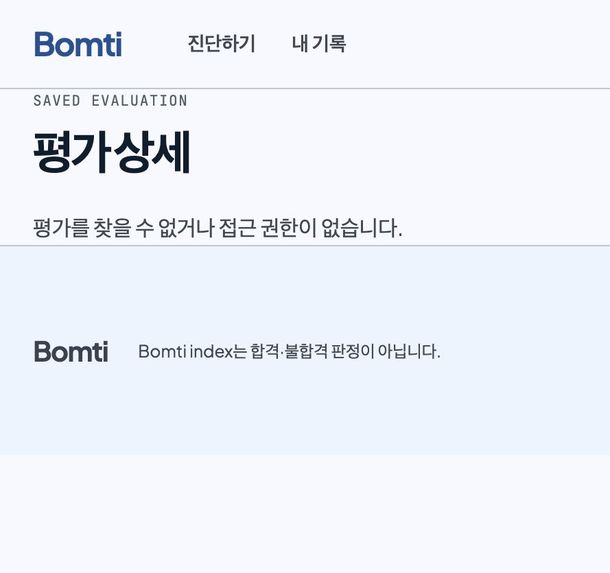
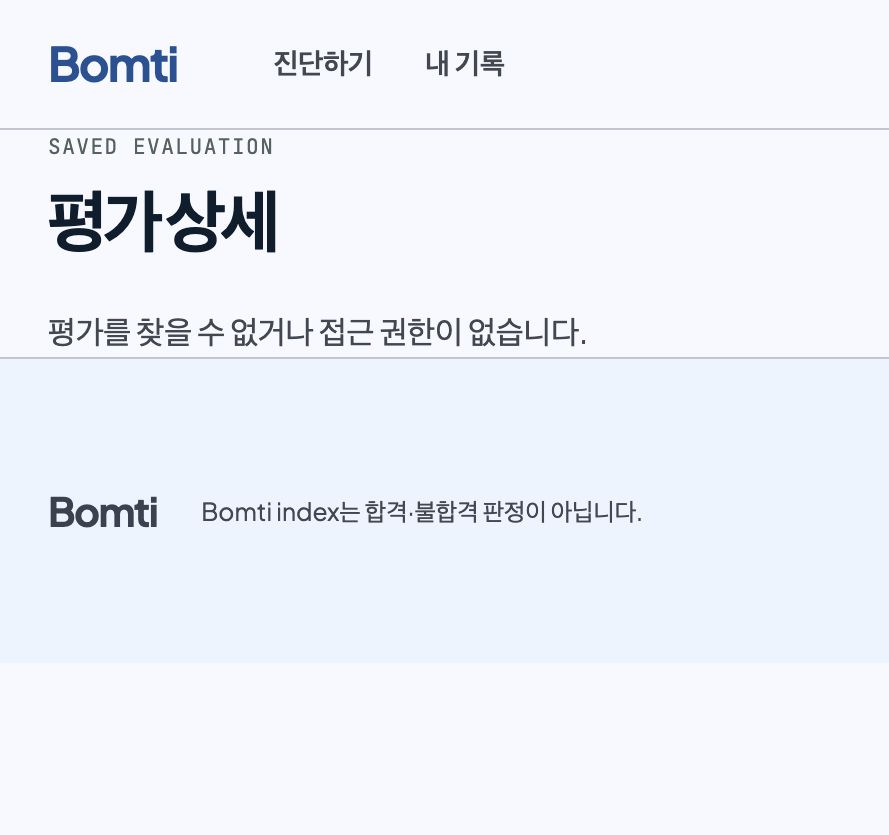
Users are notified when an evaluation cannot be found or they do not have permission to access it.
Inspiration
Writing a strong self-introduction or interview answer is difficult because people often know what they did, but struggle to explain the context, evidence, and impact clearly. We wanted to create a career-writing tool that helps applicants improve their own stories without replacing their voice with generic AI text.
Bomti was inspired by the idea of an AI career editor: a tool that points out vague claims, missing evidence, and weak connections between actions and results, then gives practical directions for revision.
What it does
Bomti analyzes self-introduction and interview answers against five dimensions:
- Context fit
- Specificity
- Evidence and credibility
- Generic or cliché expressions
- Tone and readability
Users enter a question, their answer, target role, and optional company context. Bomti returns an overall score, dimension-level feedback, supporting sentence evidence, and concrete improvement directions.
Guest users can try the diagnostic flow with limited usage. Logged-in users can save, review, and delete their evaluation history.
How we built it
We built Bomti with Next.js, React, and TypeScript. The interface is designed as a calm editorial workspace, with a dedicated landing page, diagnostic form, results dashboard, history page, and account settings page.
For persistence and privacy-sensitive data handling, we designed the project around Supabase and PostgreSQL with row-level security policies. The project includes database migrations, generated database types, fixtures, and integration checks for tenant isolation and account deletion behavior.
We also built automated checks for:
- Input validation and consent requirements
- Guest limits and provider failure states
- XSS-safe evidence rendering
- Saved evaluation history and deletion flows
- Account deletion lifecycle behavior
- Responsive layouts and accessibility
- Score boundaries from 0 to 100
Challenges we ran into
The biggest challenge was balancing useful feedback with privacy and user control. Career answers can contain personal experiences, employer information, and sensitive context, so we designed the flow to avoid treating the user’s original answer as disposable training data.
Another challenge was making the interface feel helpful rather than judgmental. A score alone is not actionable, so we paired every result with dimension-level explanations, evidence references, and revision directions.
We also had to keep the UI redesign aligned with the product’s existing behavioral contracts. As the experience evolved from a single evaluation form into separate landing, diagnosis, result, history, and account screens, we updated browser tests to verify submissions, cancellations, XSS protection, deletion, and responsive behavior end to end.
What we learned
We learned that trustworthy AI writing tools need more than a polished result screen. They need clear consent, transparent limits, safe failure states, and a way for users to control their data.
We also learned how valuable automated visual and accessibility checks are during UI iteration. They helped us preserve keyboard access, score-meter semantics, responsive layouts, and user-facing flows while making large design changes.
What's next for Bomti
Next, we want to add more role-specific feedback, richer revision workflows, and a production deployment with a fully configured authentication and Supabase environment. Our goal is to make career writing feel less like guessing what recruiters want and more like clearly communicating real experience.
Built With
- css
- eslint
- github
- html
- level
- next.js
- node.js
- playwright
- postgresql
- react
- row
- security
- supabase
- typescript
- vitest

Log in or sign up for Devpost to join the conversation.