-
-
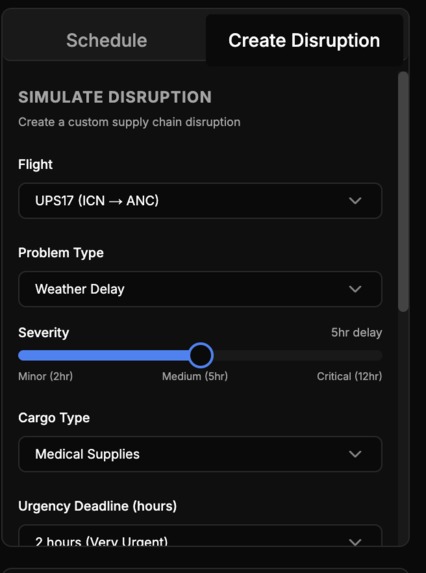
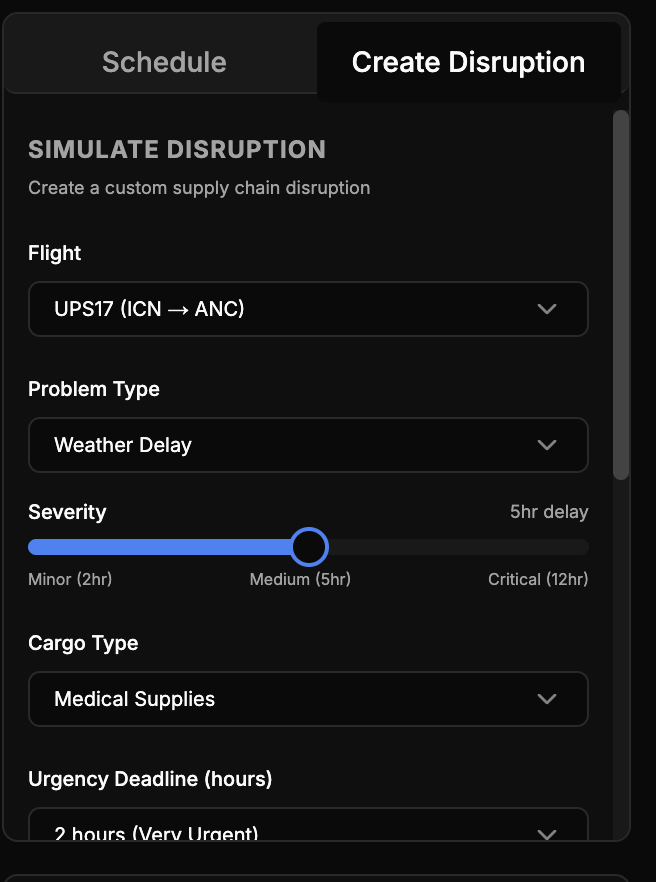
Simulation
-
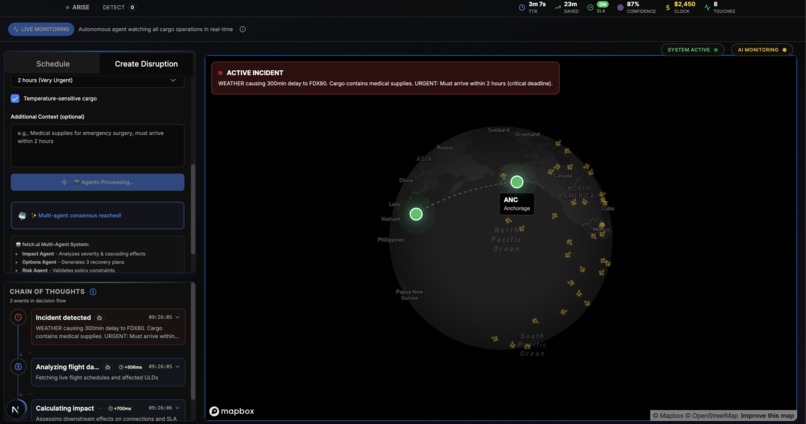
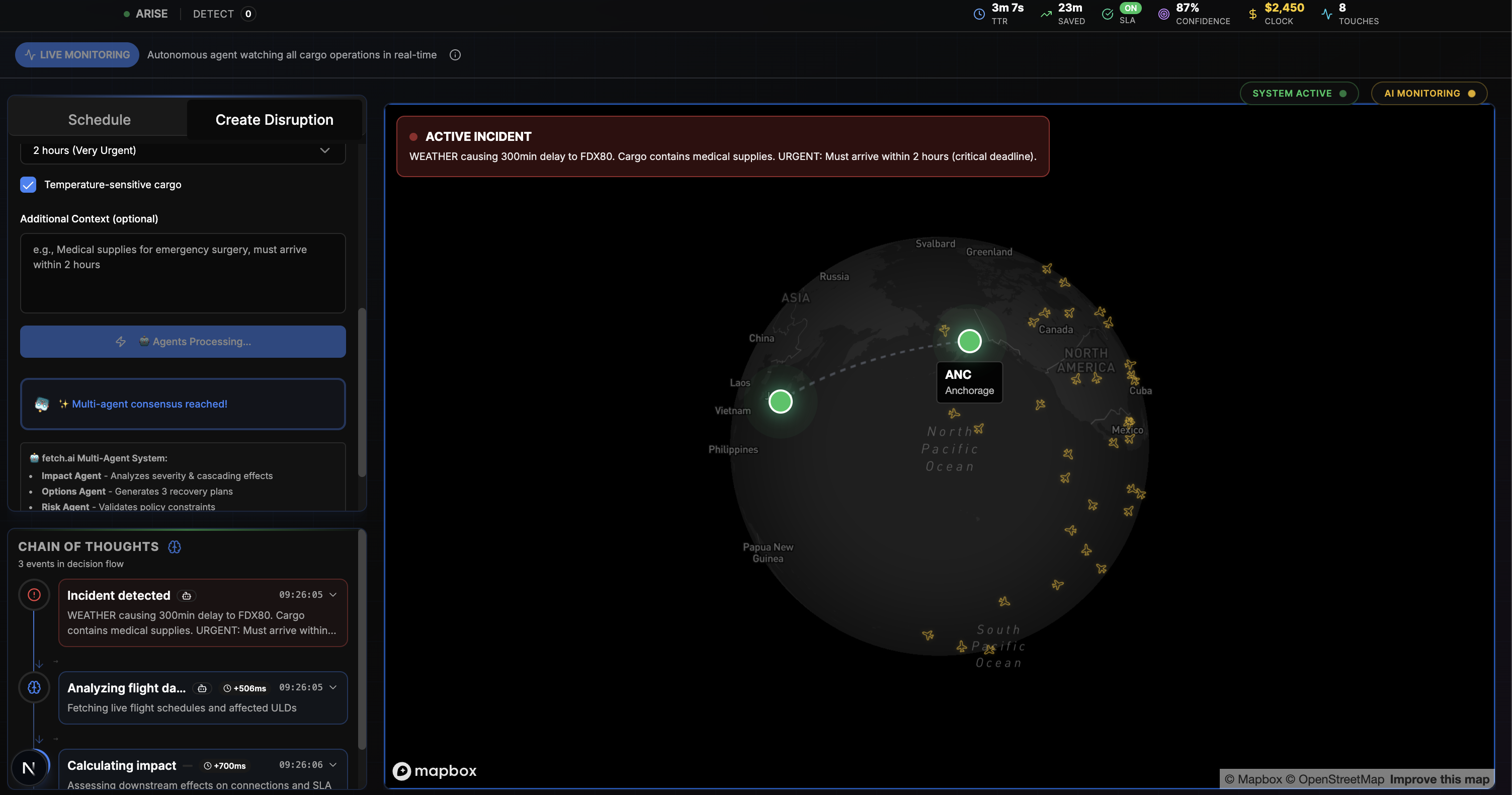
main dashboard
-
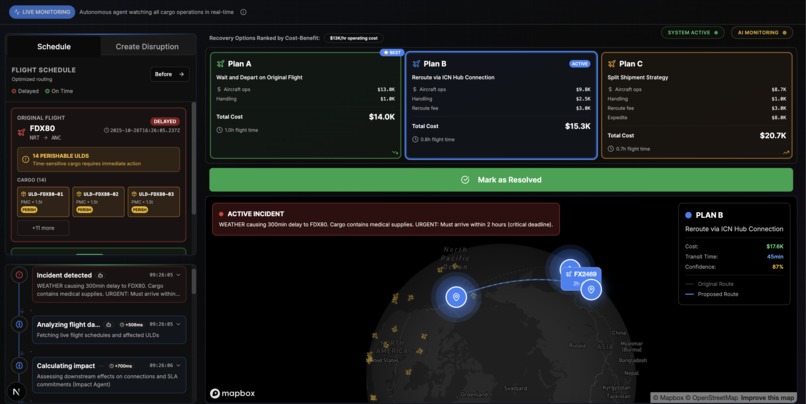
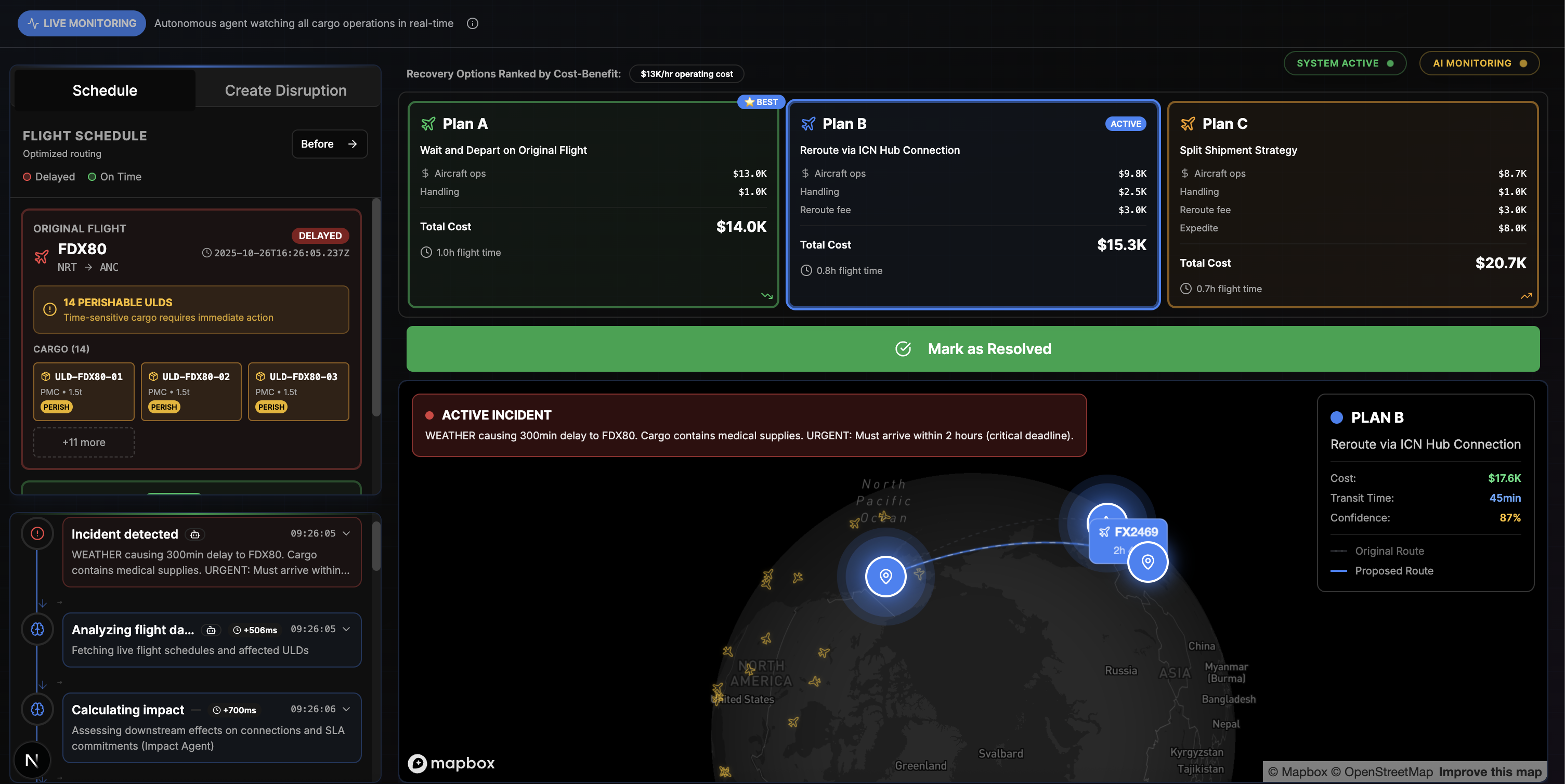
reroute
-
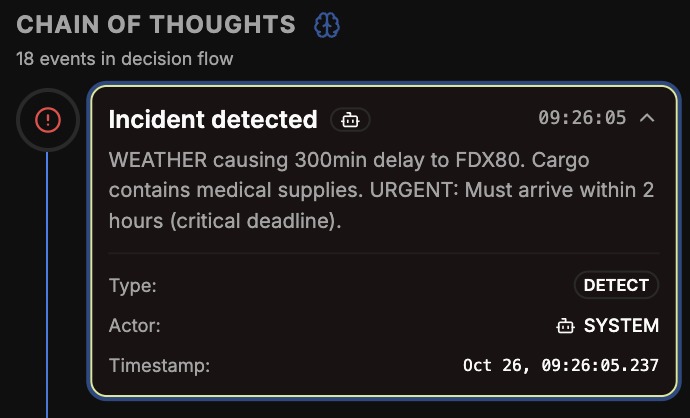
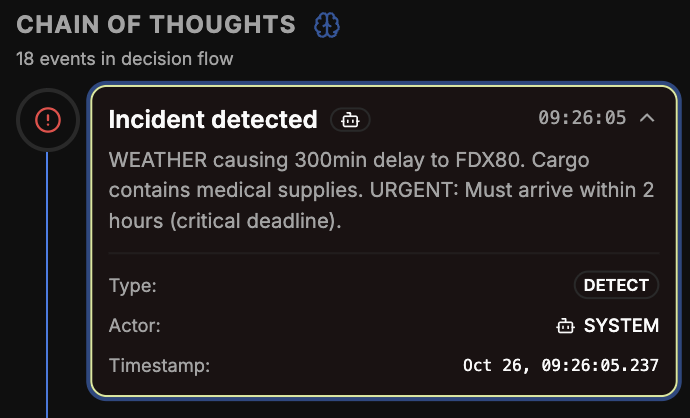
Incident
Inspiration
Despite massive automation in aviation, most air-cargo operations still rely on manual triage — people scanning dashboards, making phone calls, and sending emails whenever disruptions occur.
During severe weather or ATC congestion, it can take 15–30 minutes for a single reroute or gate reassignment to be approved and executed, costing tens of thousands per delay and jeopardizing SLA-critical freight and perishables.
By the time humans piece together the situation and coordinate a response, valuable minutes are lost. Automated Routing & Inventory for Shipping Efficiency (A.R.I.S.E.) changes that by autonomously monitoring airspace, reasoning through alternatives, and orchestrating coordinated responses in real time.
What it does
A.R.I.S.E. is an autonomous “watchtower” for air cargo operations. It continuously monitors airspace and airport conditions, pulling data from FAA advisories, ADS-B streams, and scraped operational feeds via Bright Data.
When it detects a potential disruption (e.g., weather risk, reduced ATC capacity, or runway change), it triggers a Fetch.AI multi-agent reasoning loop to generate a decision plan with reroute options and risk scores.
Then, using our agent MCP, A.R.I.S.E. automatically sends messages or calls on-duty handlers through Vapi, presenting a short, human-readable summary (“Flight DL104 facing +60m delay due to IFR — move ULDs 4A–4D to Gate 6?”).
The result is a closed-loop, explainable AI assistant that handles disruptions in real time, no dashboards, no emails, just autonomous coordination.
How we built it
Fetch.AI Agents - reason over multimodal data and produce ranked response plans (reroute, hold, transfer). Bright Data - scrapes FAA ATCSCC advisories, airport capacity reports, and weather data into normalized JSON feeds. Claude API - condenses decision context into a natural-language “speak plan” for voice delivery. Vapi - delivers outbound voice calls to real humans (simulated in demo) and collects DTMF acknowledgments. ChromaDB - stores past incidents and responses for retrieval-augmented learning.
Challenges we ran into
Multi-agent state coordination — Getting 5 Fetch.ai uAgents to pass structured data sequentially without losing context required building a bureau coordinator that manages workflow execution and validates outputs at each stage. Real-time scraping reliability — Public flight plan data doesn't exist in accessible APIs—airlines and airports don't expose operational details. We used Bright Data to scrape live airport status pages, built custom HTML parsers to normalize tables into JSON, and implemented 5-minute caching with stale-data fallback when scraping fails.
Accomplishments that we're proud of
Built a complete closed-loop system (detection → reasoning → action → acknowledgment) that runs in 2-5 seconds with live data integration (Bright Data scraping SFO flights), true multi-agent coordination (Fetch.AI), and voice interface (Vapi with DTMF). ChromaDB learning makes it smarter over time.
What we learned
AI agents need structure: free-form communication was chaos. Strict JSON schemas with AS1 LLM made the workflow reliable. Real-time data integration taught us that context matters more than speed; ChromaDB's case-based retrieval improved decisions more than faster inference.
What's next for A.R.I.S.E.
Multi-airport cascade analysis, crew/gate resource optimization, and what-if simulation engine


Log in or sign up for Devpost to join the conversation.