-
-
-
-
-
-
-
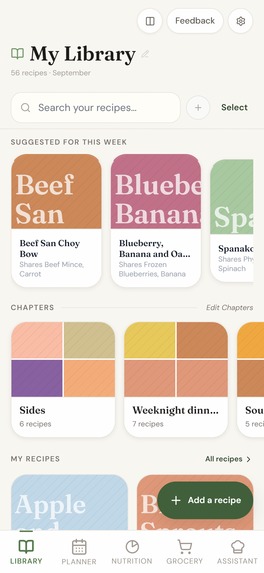
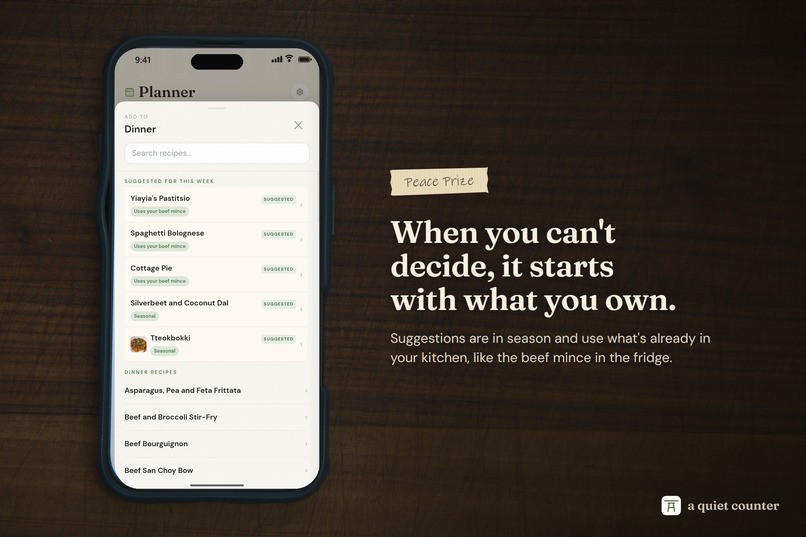
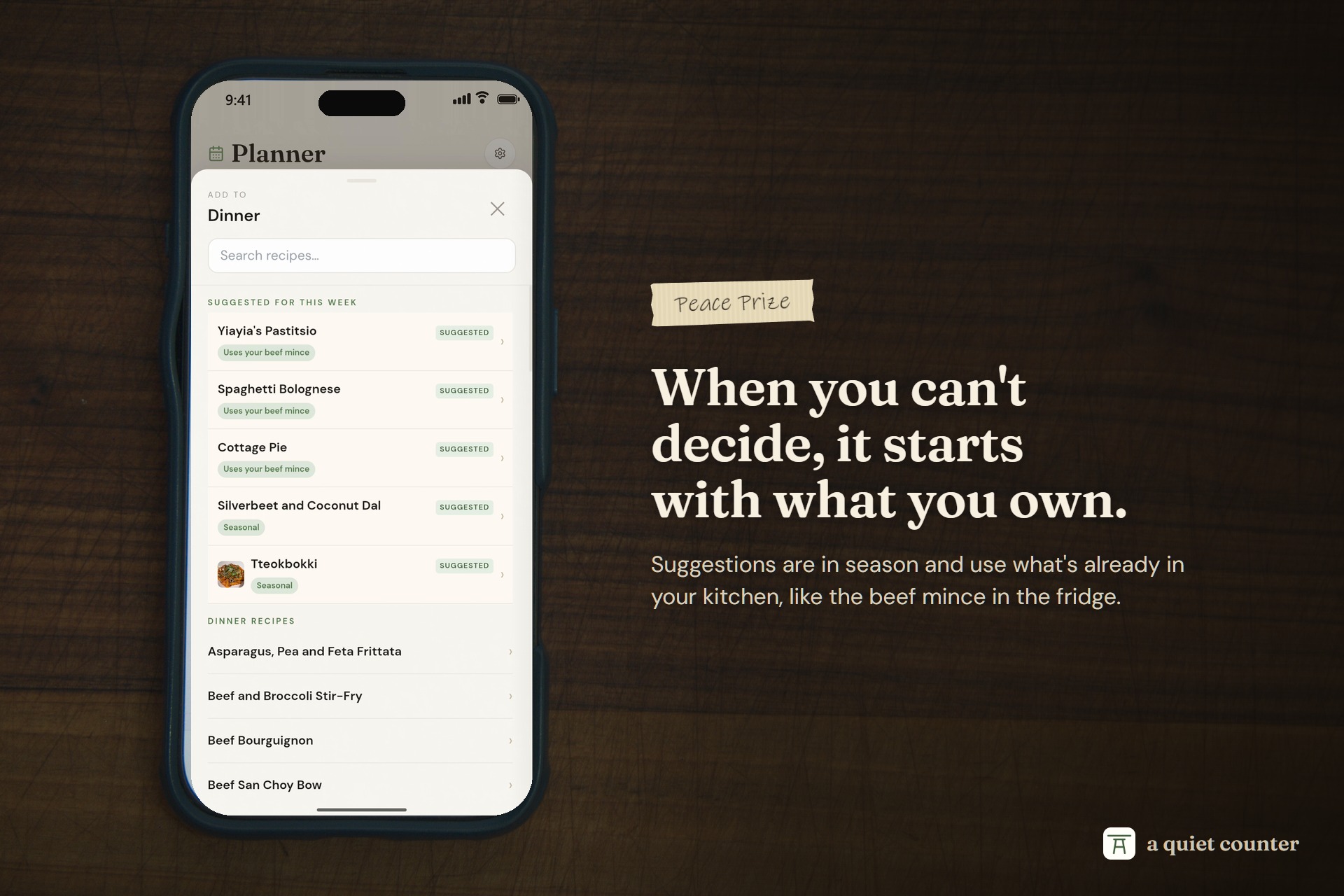
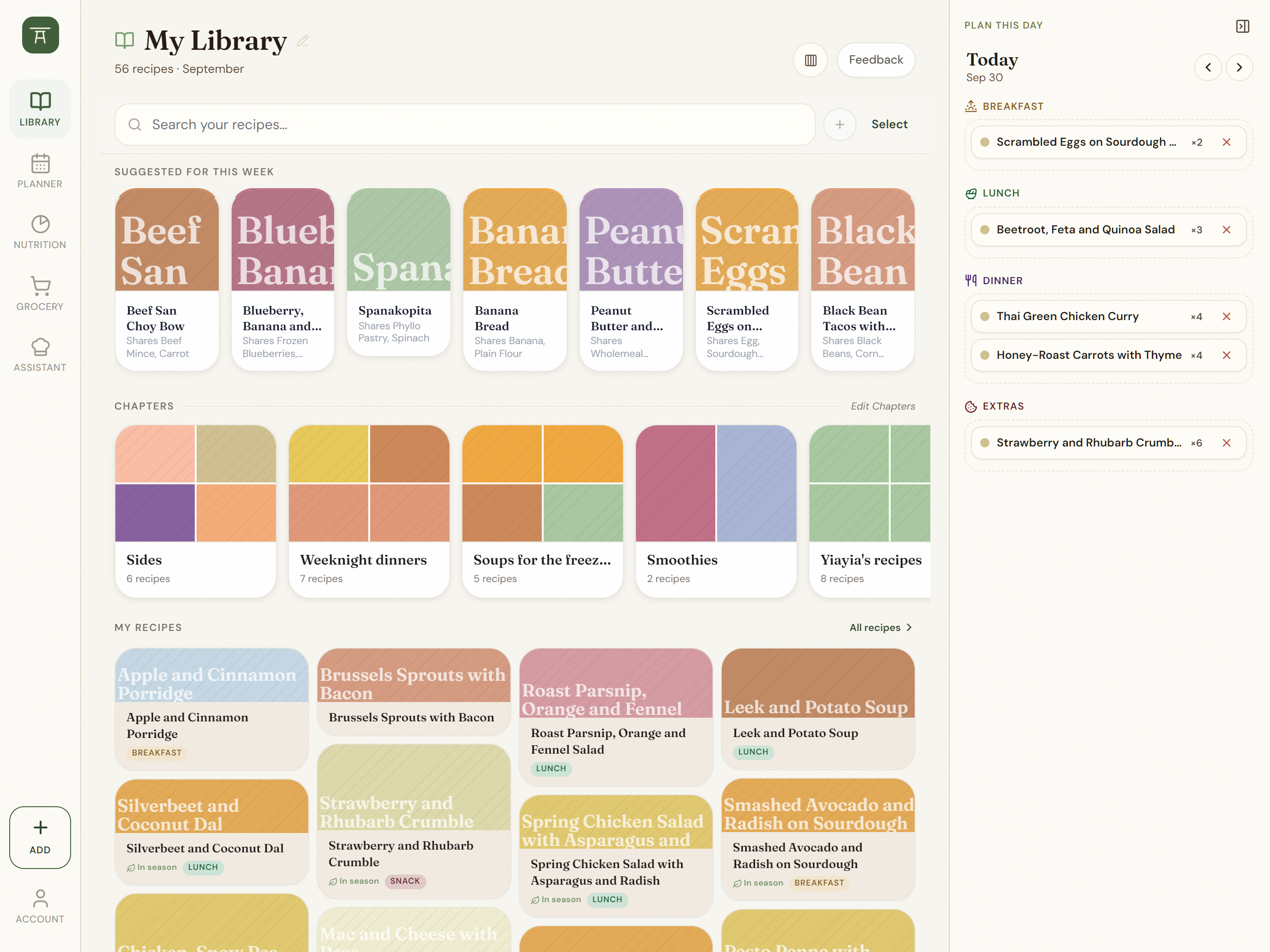
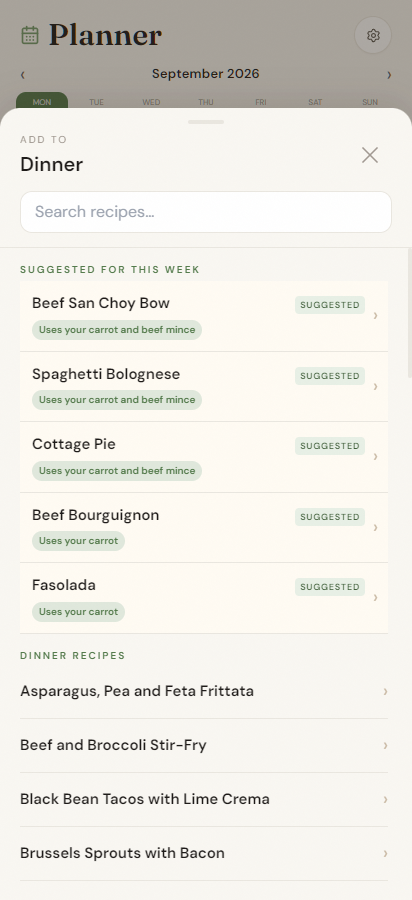
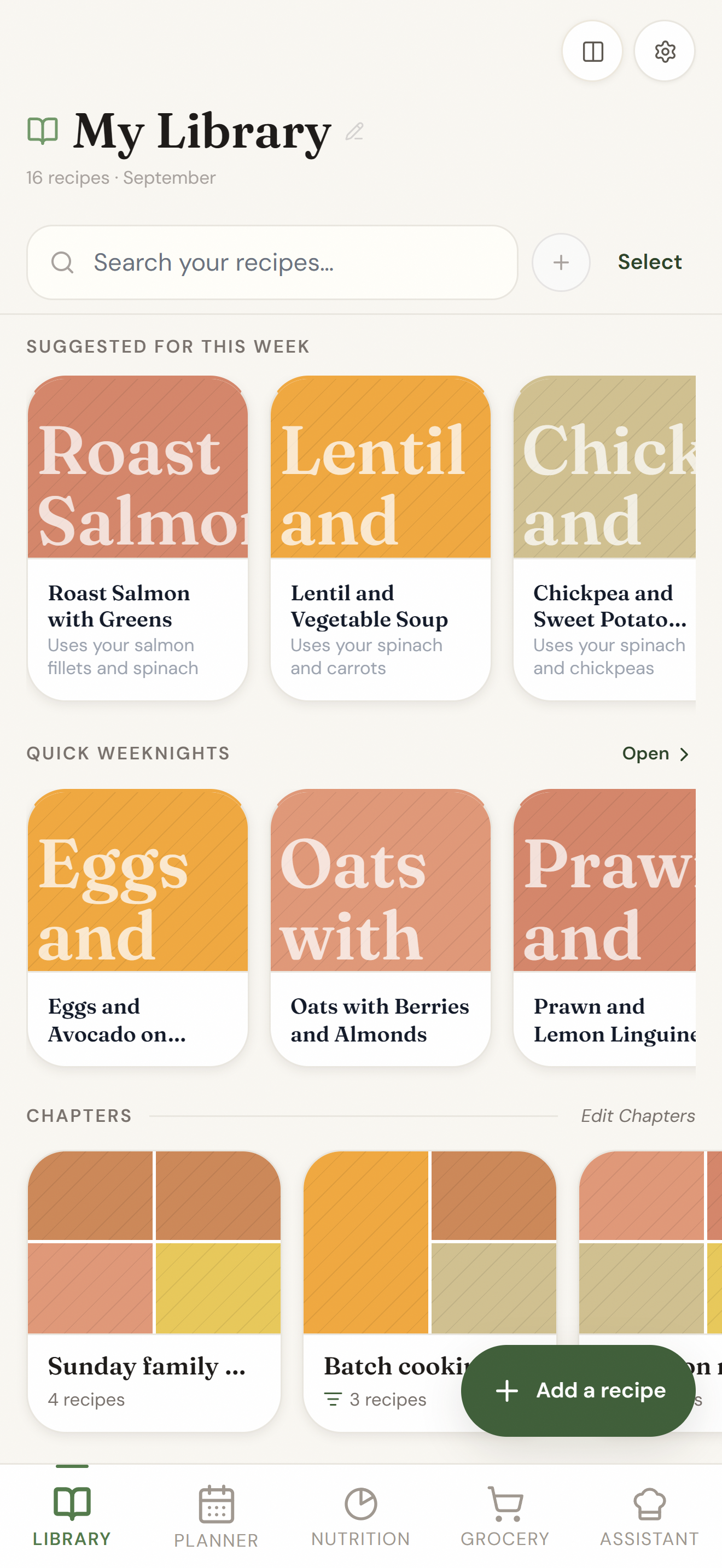
Recipe suggestions use up your existing ingredients, and encourage seasonal eating
-
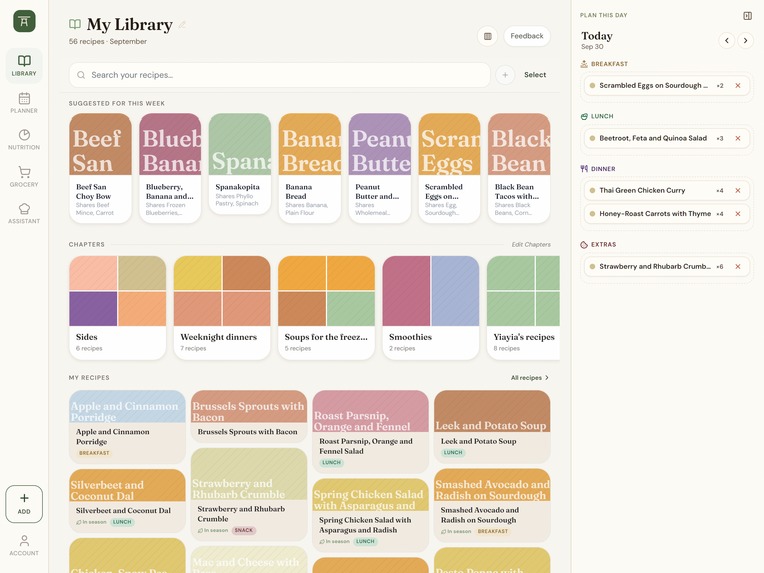
Available in both mobile and tablet/web versions
-
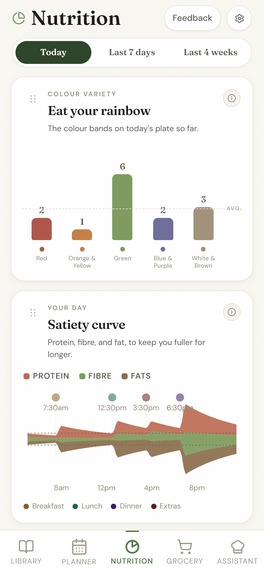
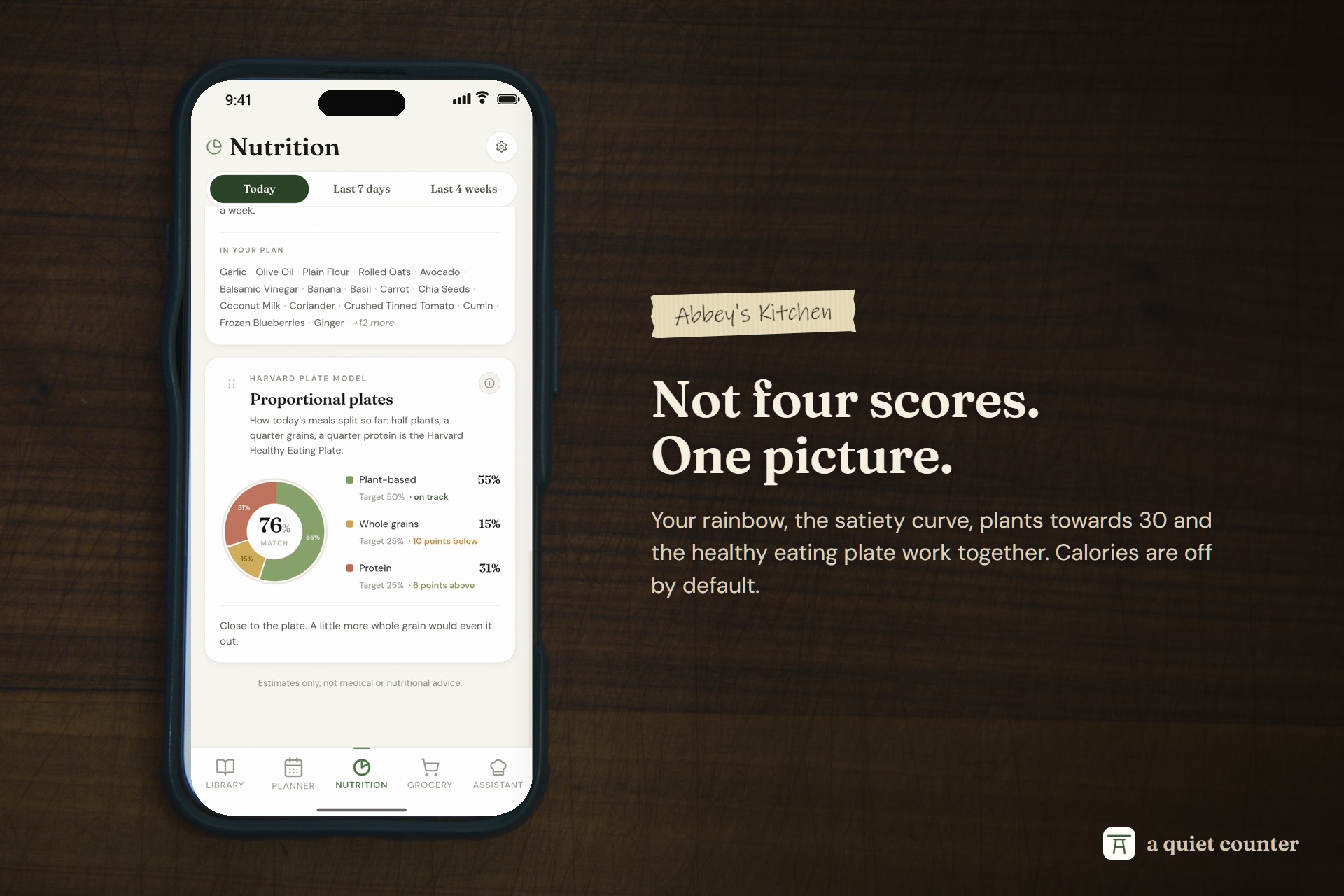
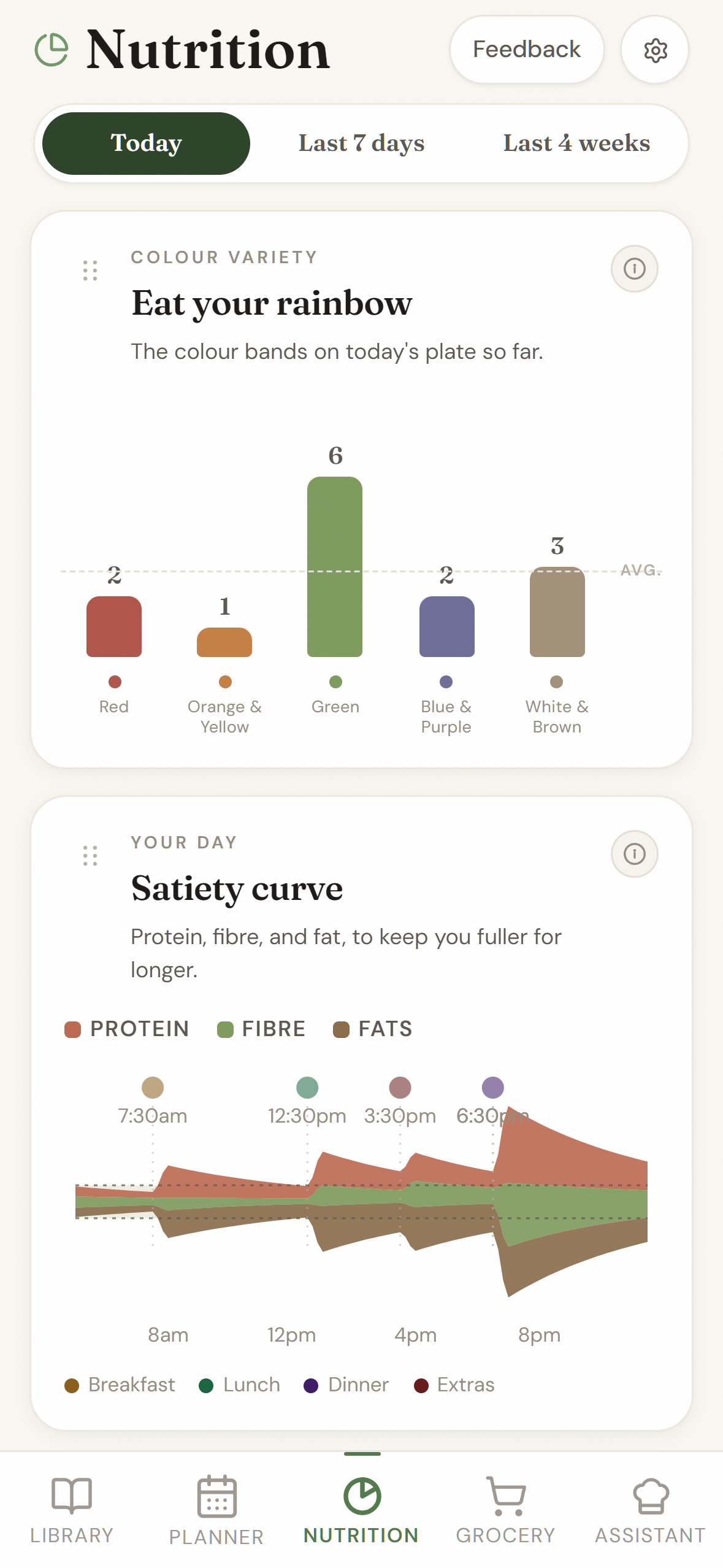
Highly visual nutrition tracking that is a joy to fill, encouraging variety and reducing food noise
-
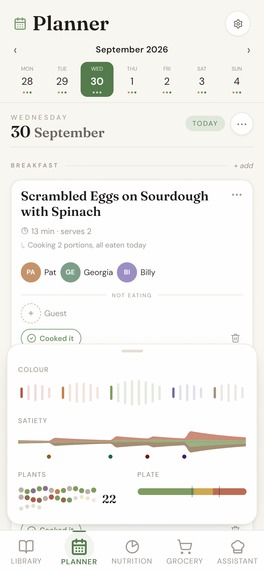
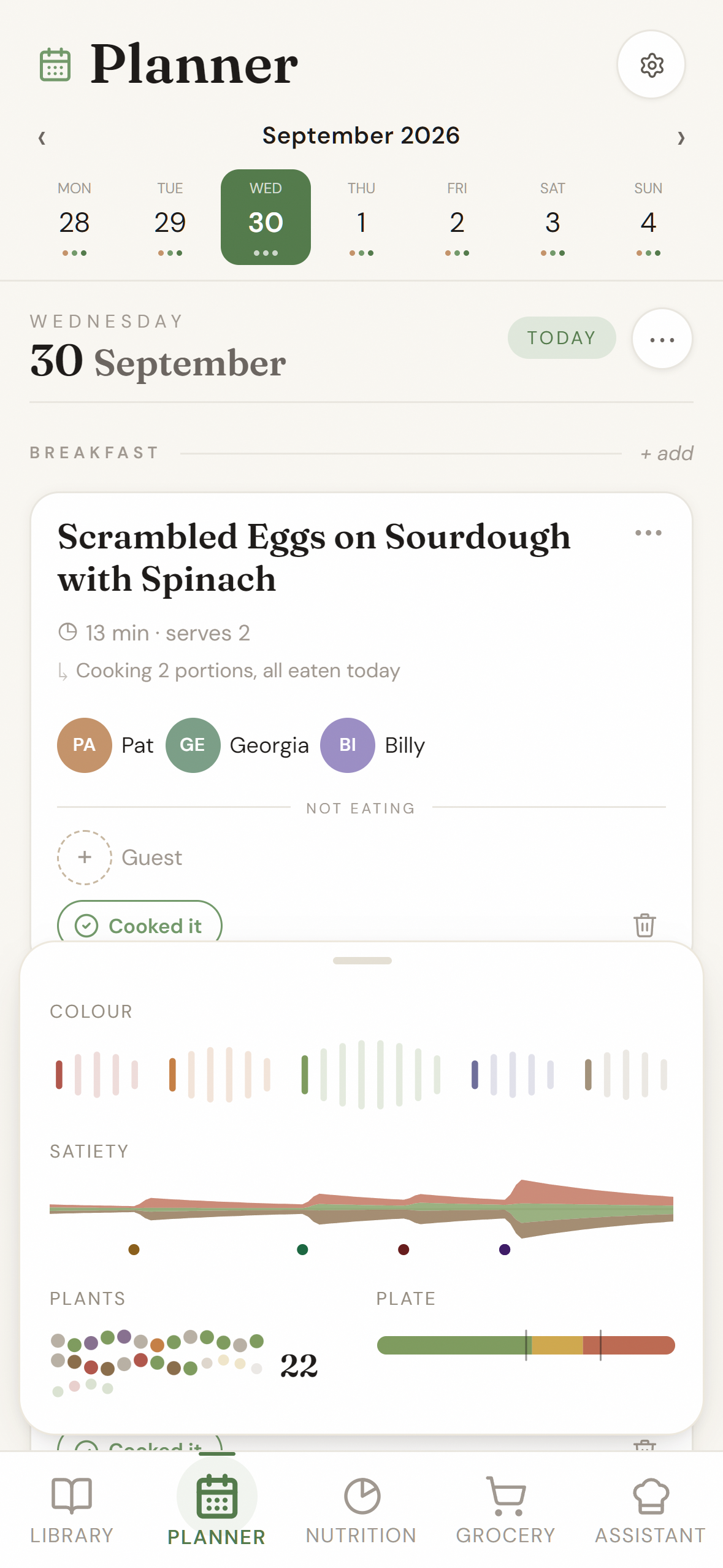
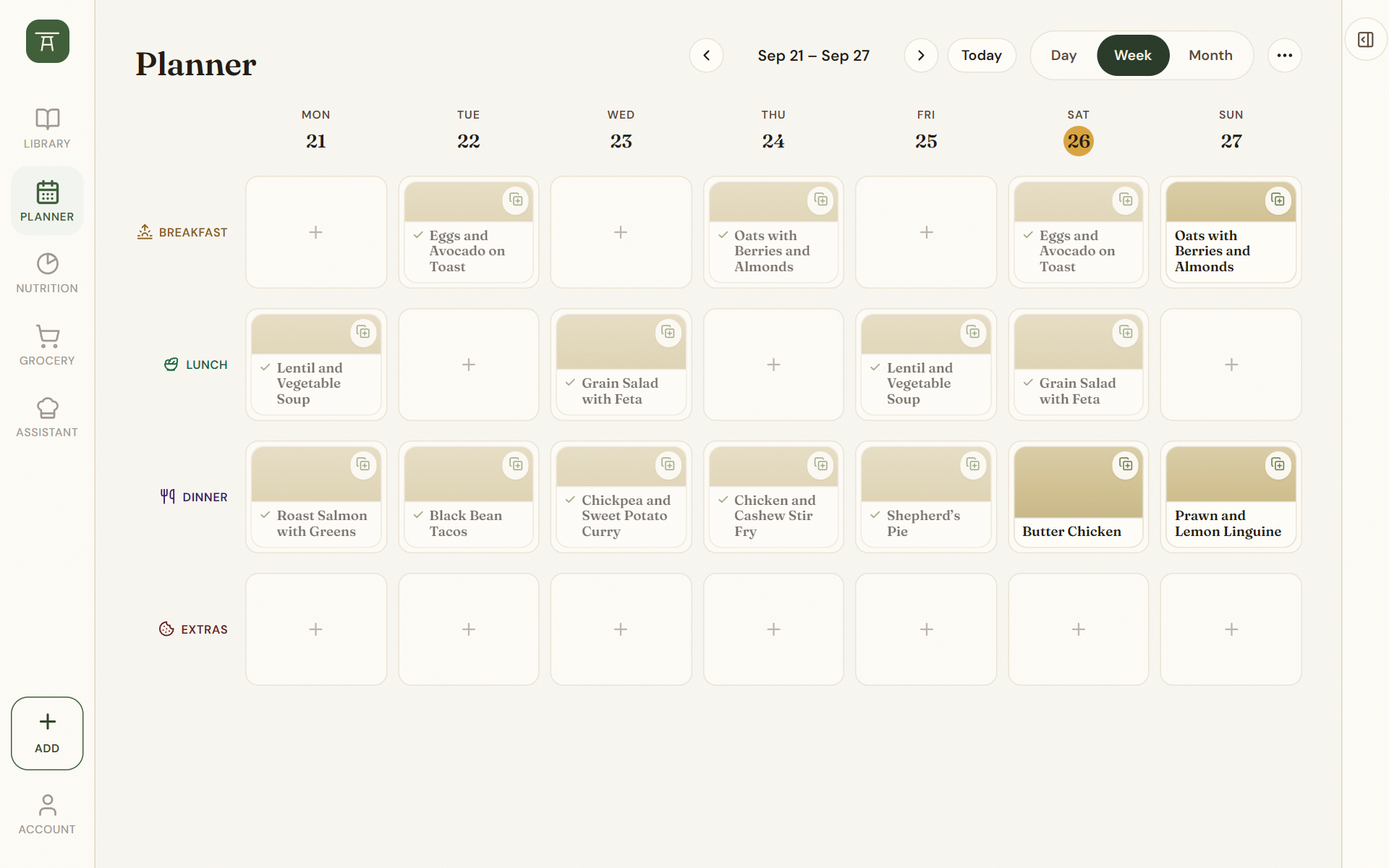
With smaller nutrition summaries shown in the planner, to make it easier to schedule meals with intention
-
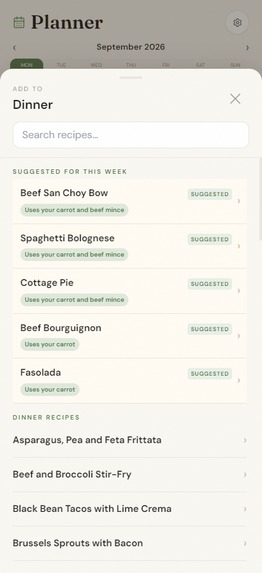
Suggestions help to prevent food waste, offering items that are about to go off first
-
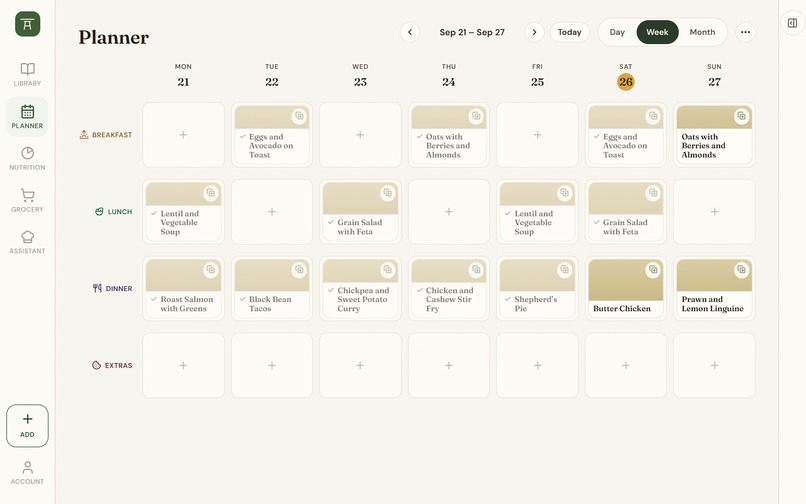
Planning meals and leftovers for the week becomes as simple as dragging tiles around
-
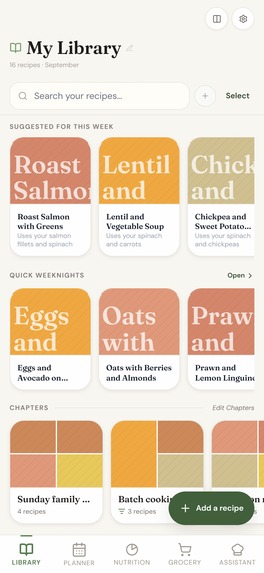
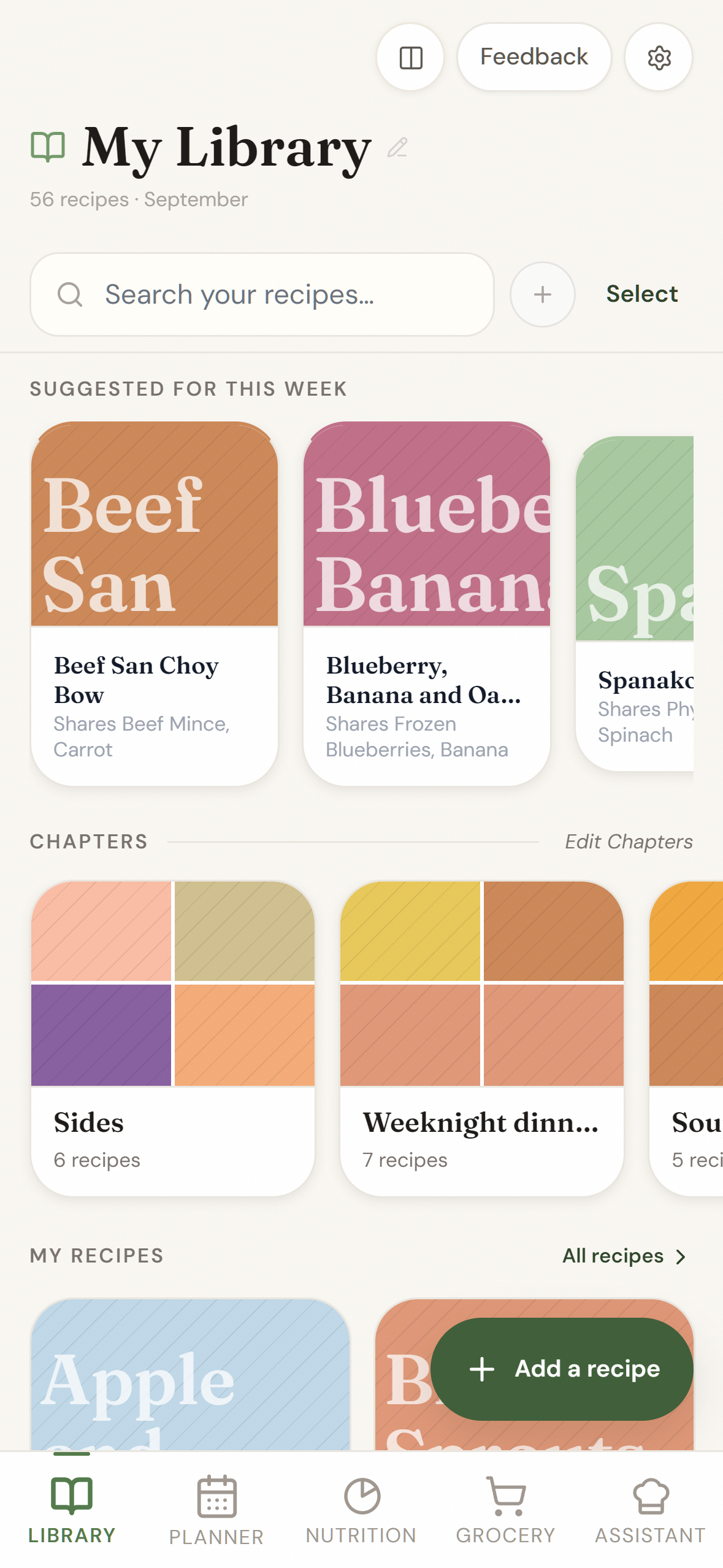
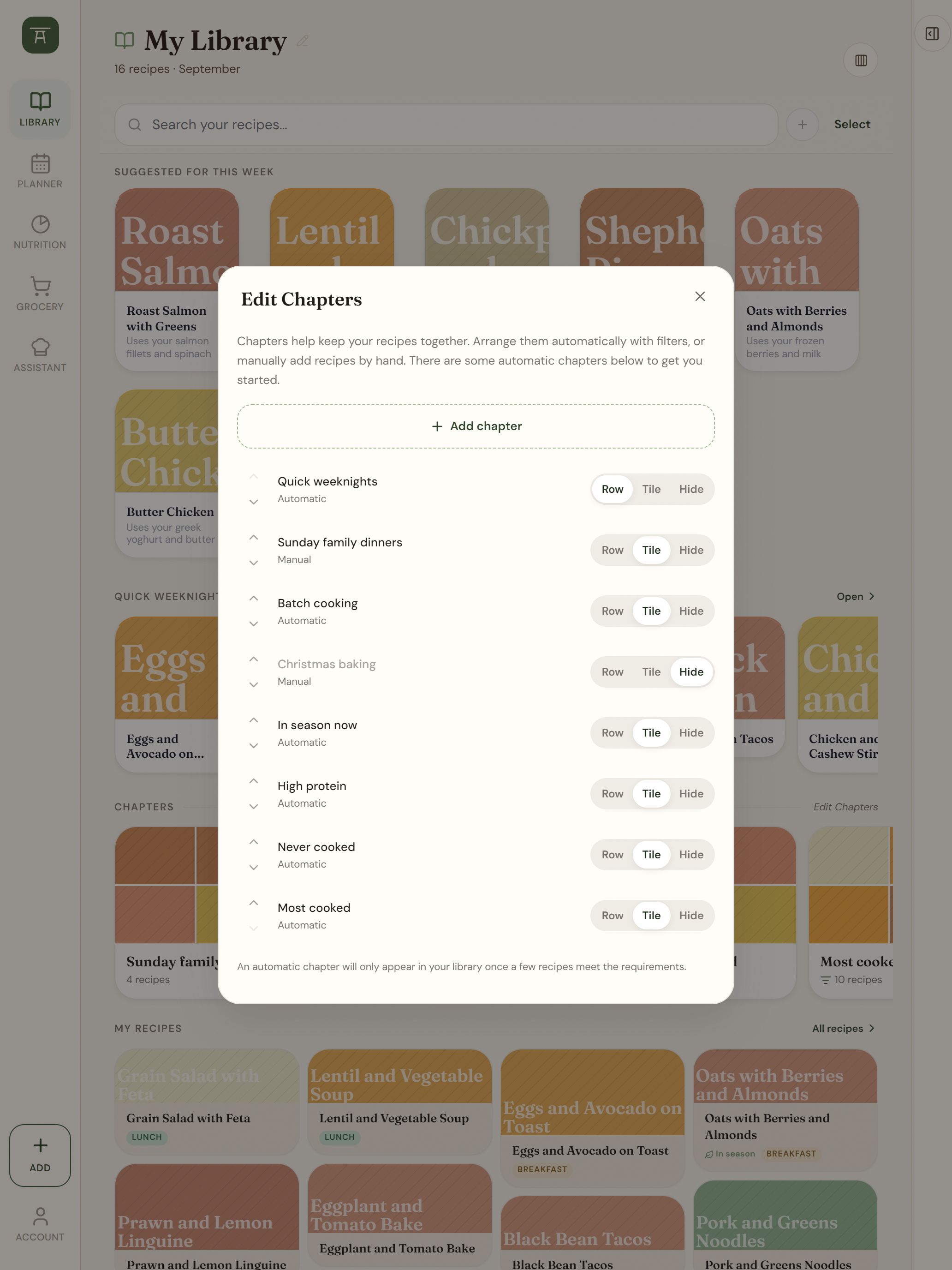
Add Chapters to your library to organise your meals automatically
-
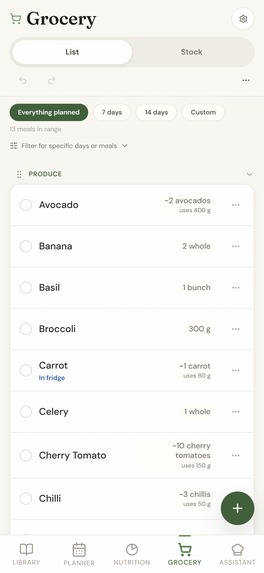
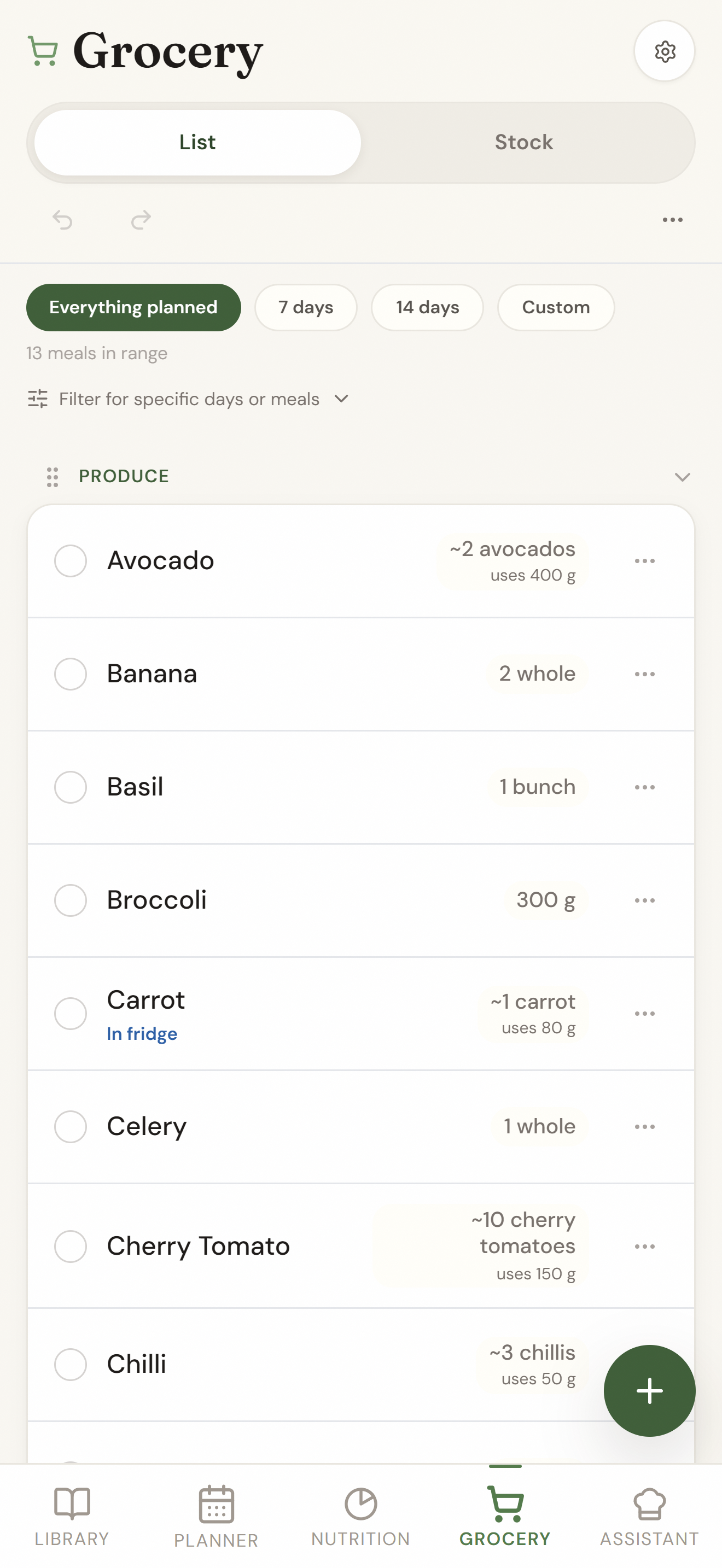
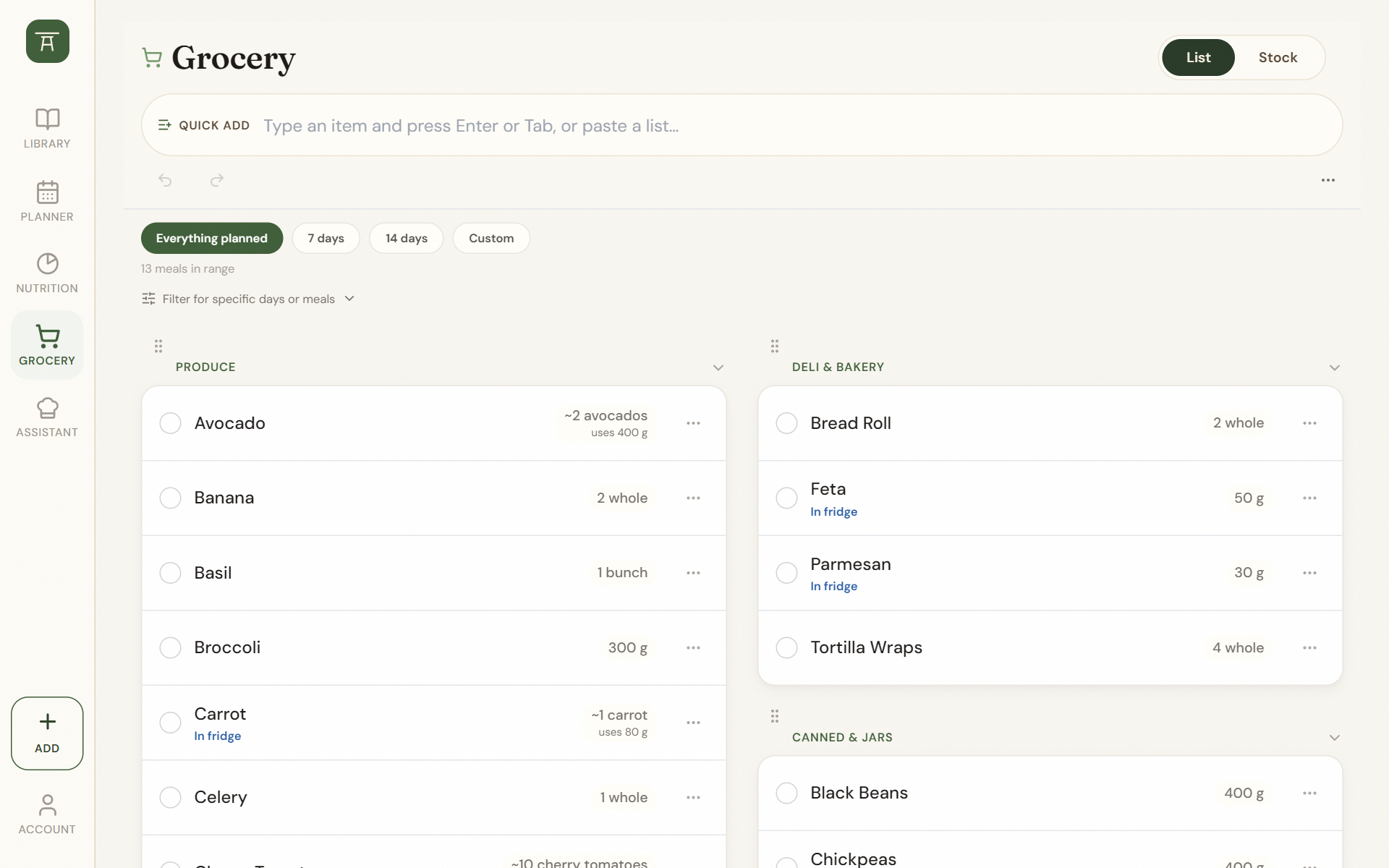
Your grocery list builds itself, combines duplicated ingredients, remembers which meals they're for, and sorts it by aisle
-
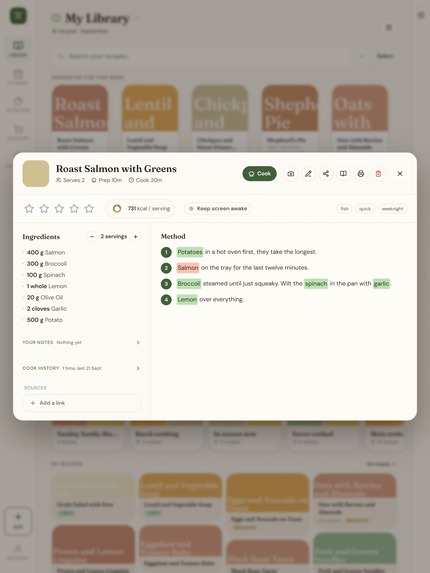
Recipe cards are a beautiful, functional experience on both mobile and tablets
-
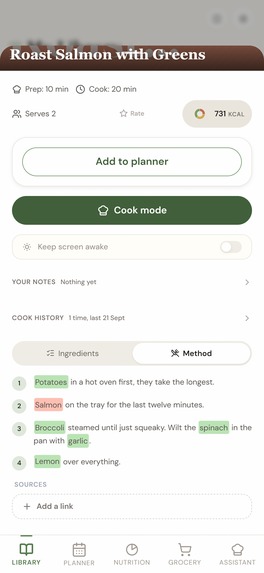
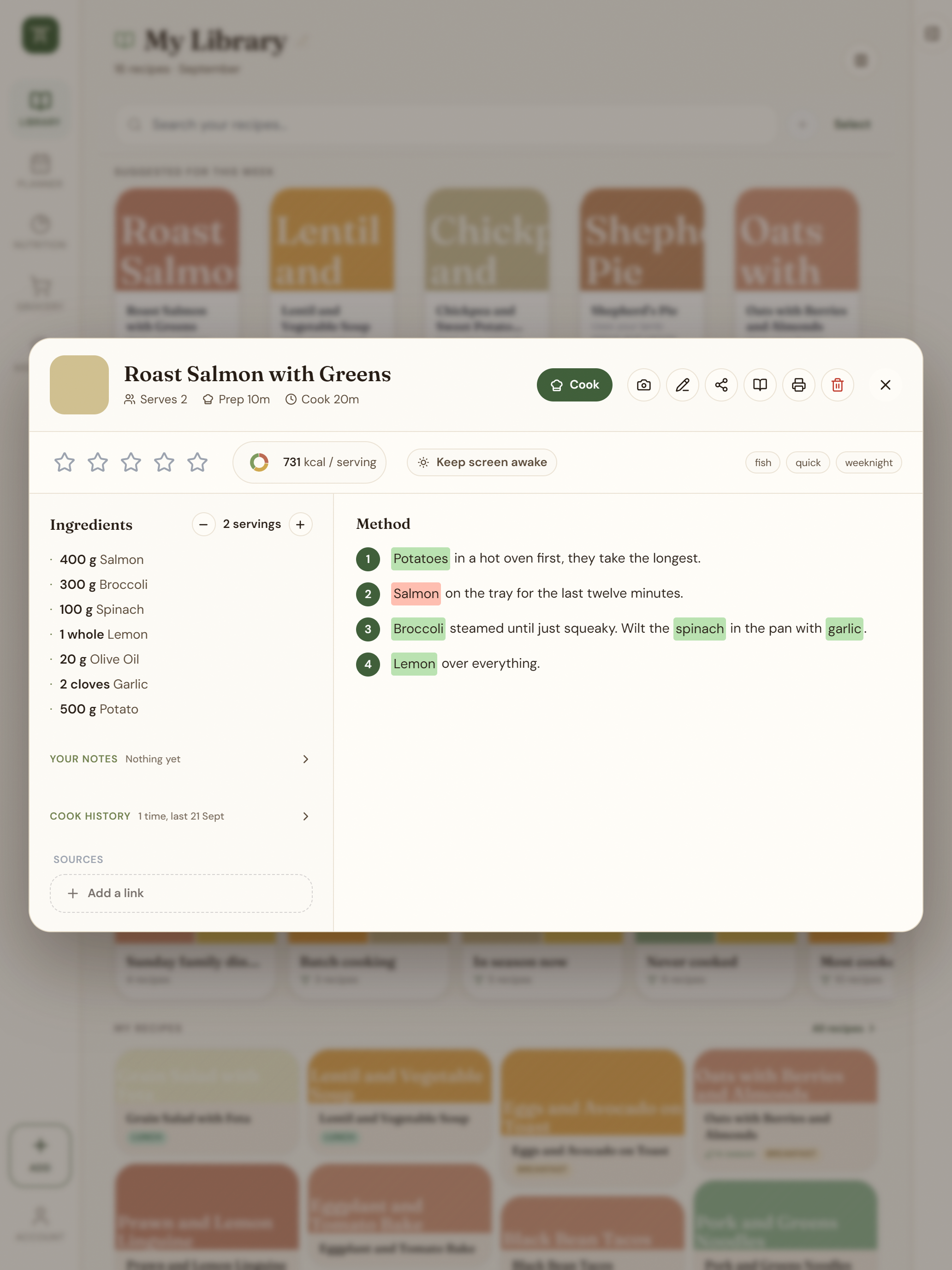
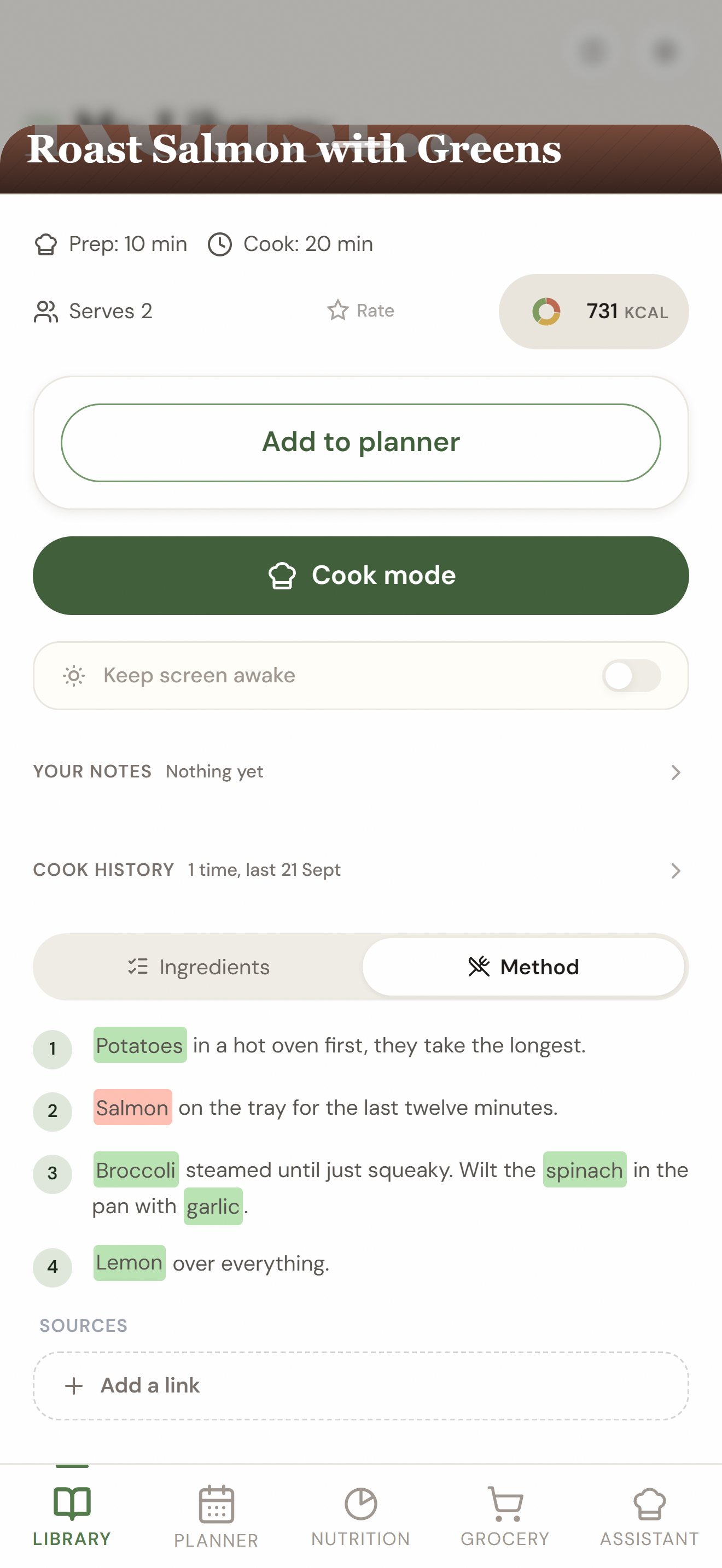
Recipes come with a number of features to improve your quality of life as you cook
-
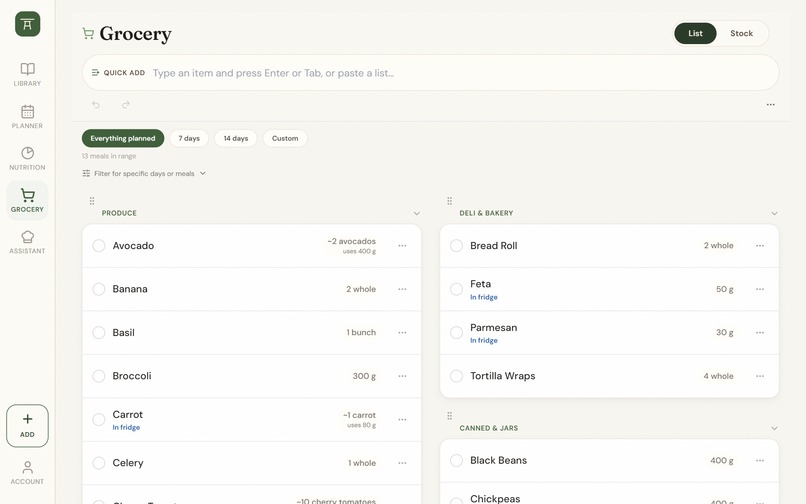
Tablet and desktop mode utilises the extra screen real estate to provide more management tools
-
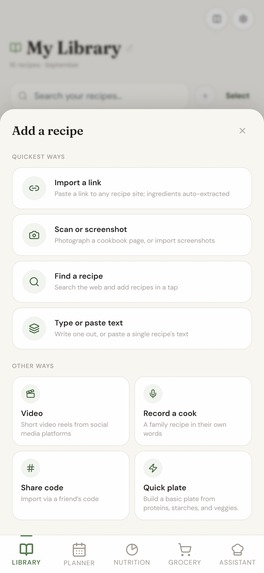
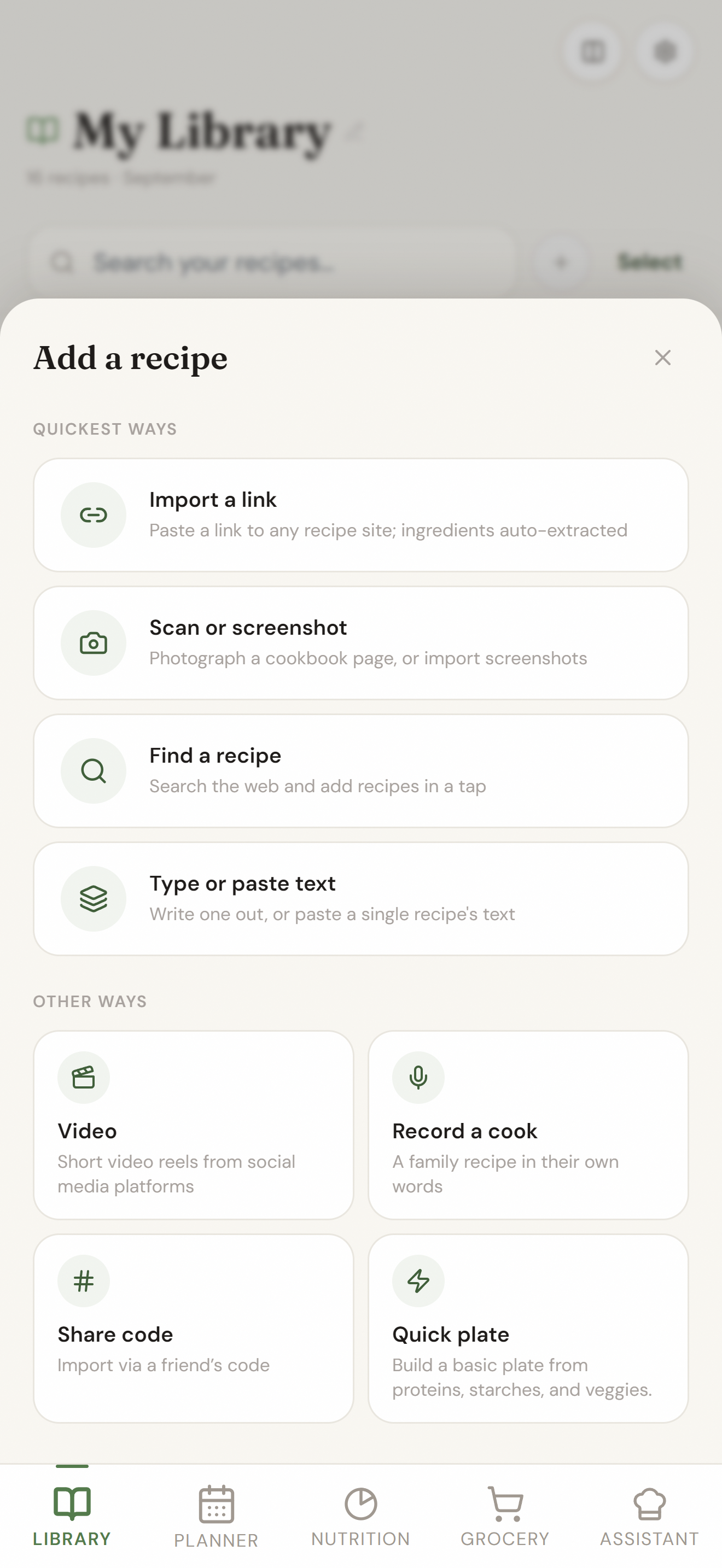
Never lose a recipe again, with 8 different ways to import
-
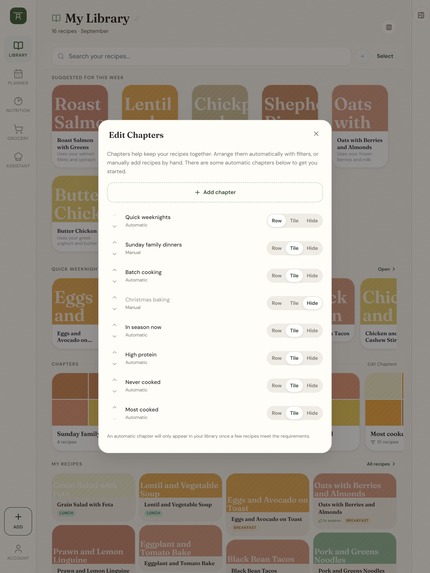
Automatic and manual Chapters make organising your library a joy
-

a quiet counter logo - a kitchen stool under the countertop, the perfect place to plan your meals

Why I made it
I've always been an avid cook, and my interest in nutrition only grew once my partner fell pregnant. I needed to become the ultimate support team, since she was doing all the heavy lifting. But what I ended up with was recipes all over the place. Screenshots, four different notes apps, some AI chats, and a messy bookmarks folder. I bought way too much produce that went off, because I was overwhelmed with expiry dates, how much I really needed, and "what meal did I even buy this stuff for anyway??"
I created a quiet counter because we needed it, and I figured somebody else would too.
What it does
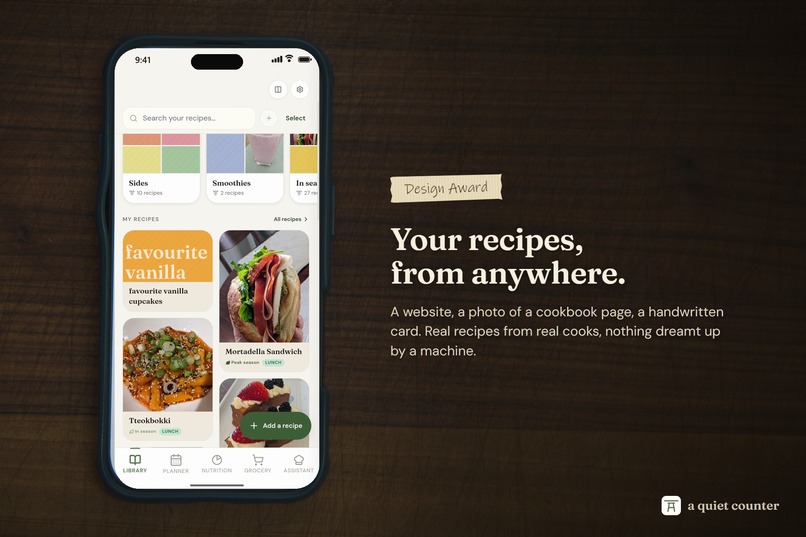
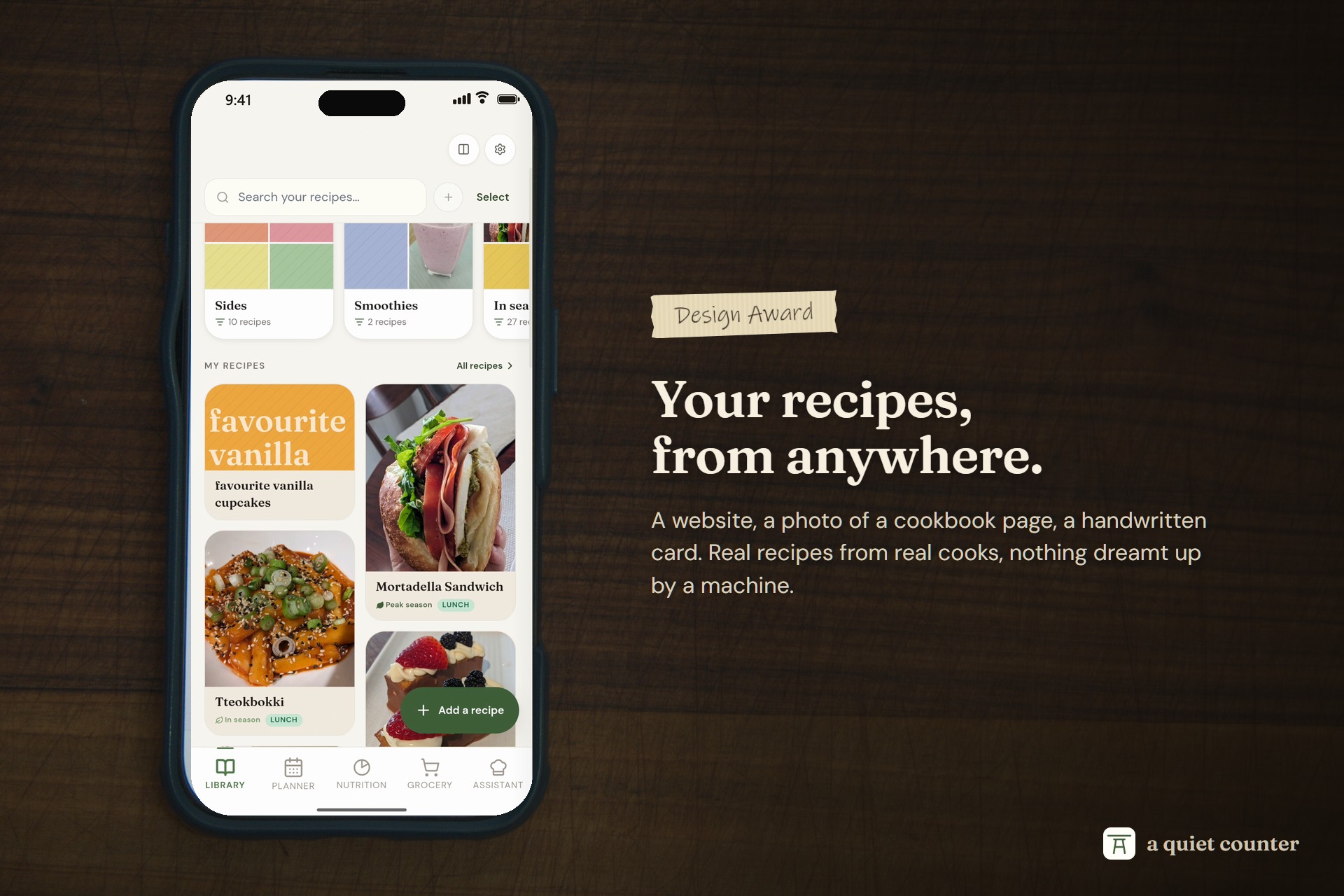
Recipes from anywhere.
A website, a social media video, a cookbook page, a handwritten card, or you can record nonna talking about it as she cooks.
Thoughtful meal suggestions.
Suggestions weigh what's in season where you live and what's already in your fridge.
The world's smartest shopping list.
Sorted into aisles and shared with the household. It shows you which meal each ingredient is for, and allows for ingredient swaps and notes, so your partner stops calling from the store.
Nutrition done differently.
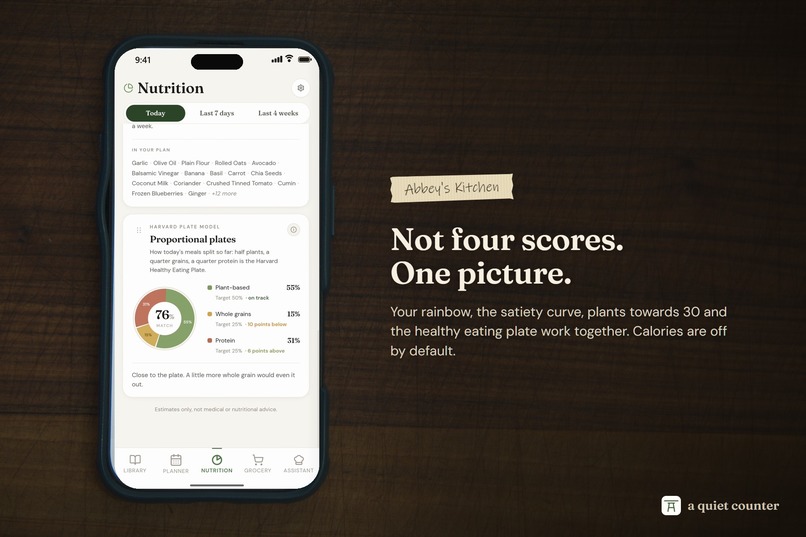
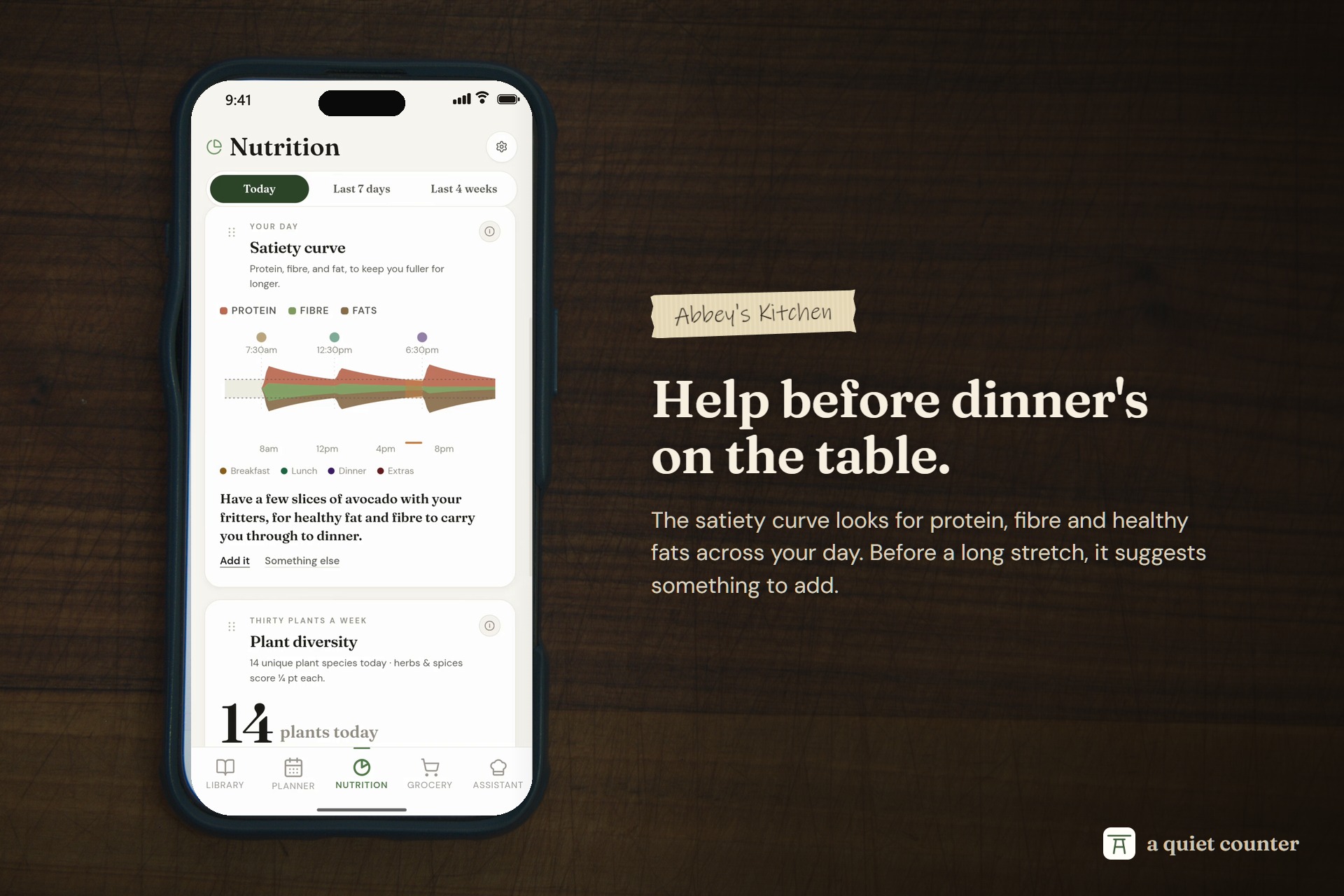
A satiety curve, "eat the rainbow", 30 plants a week, and the balance of your plate. No streaks, no scores, nothing to fail. It asks nothing about your body, and calories and macros stay off unless you turn them on.
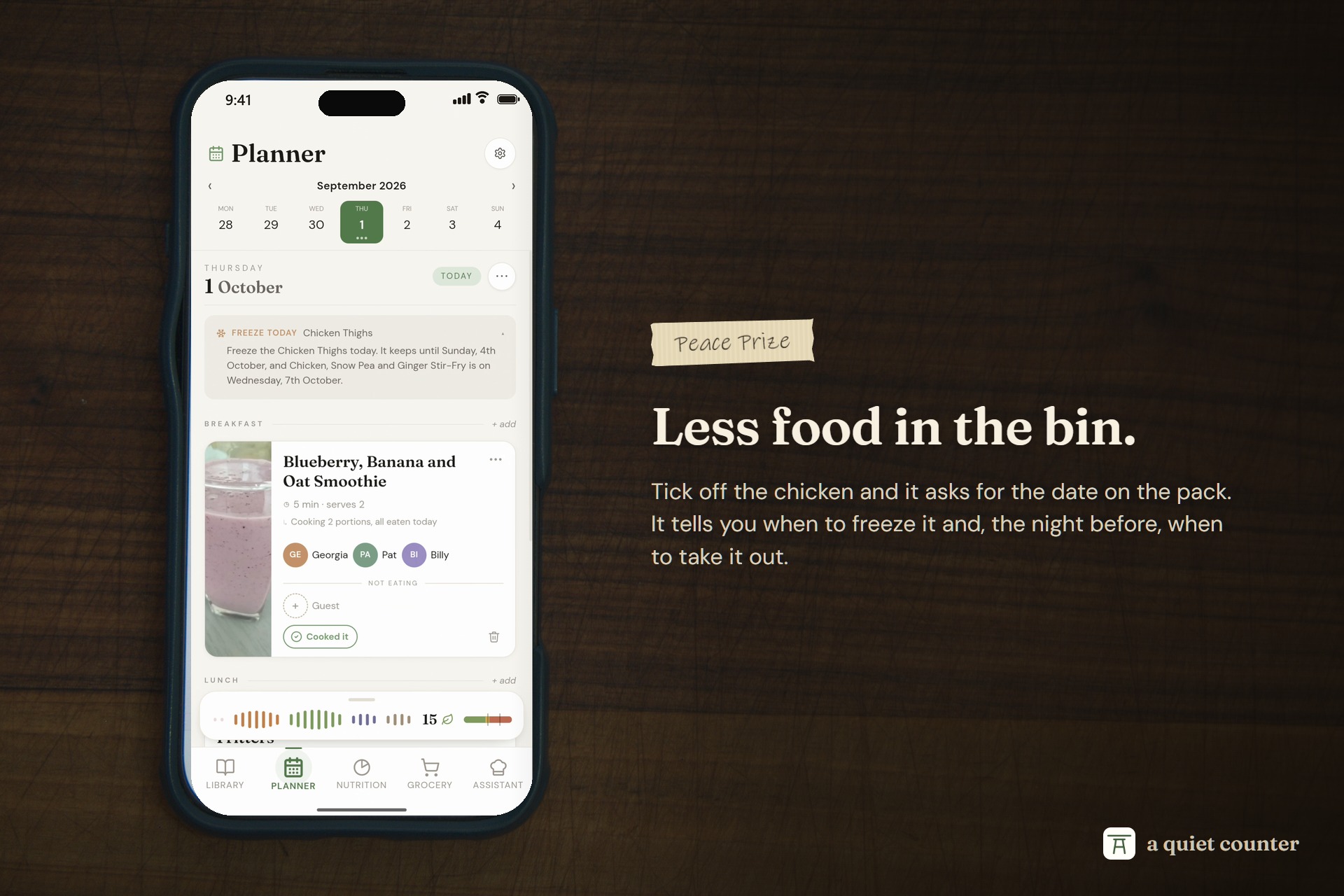
Less food in the bin.
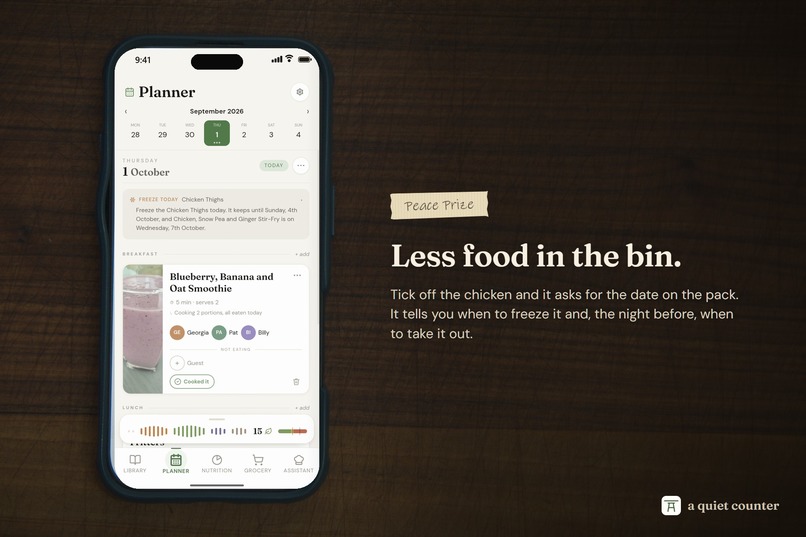
Expiry dates for your fridge, freezer and leftovers, with freeze and defrost reminders timed to your plan.
Why it fits each category
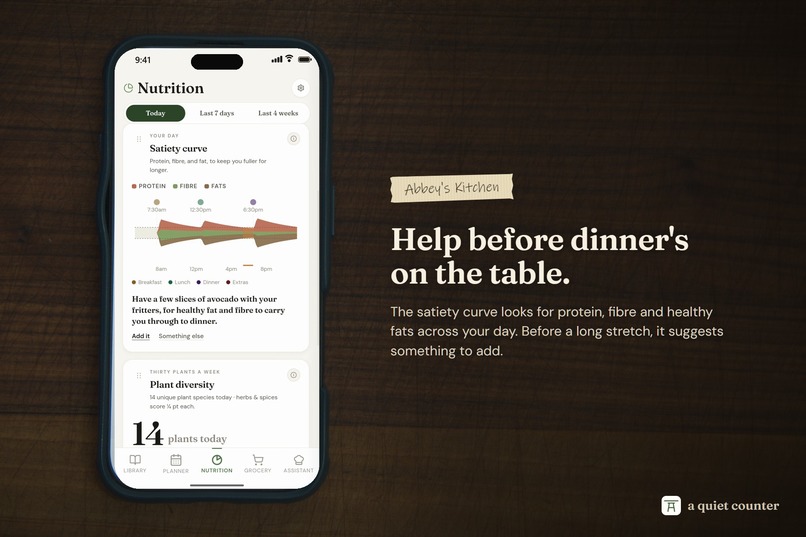
- Abbey's Kitchen Every planned meal is read for protein, fibre and fat. Where the day leaves a long stretch before the next meal, the app suggests a way to enhance the satiety of your existing meals. Inspired by Abbey Sharp's Hunger Crushing Combo.
- Peace Prize Households waste more food than any other part of the supply chain. The app asks for the date on the pack as you tick it off, puts the soonest-to-expire food first, and reminds you to freeze and defrost. It's built for people who are busy, exhausted, or with impaired executive function.
- Design Award The whole app is modelled after a quiet kitchen counter, with paper, sticky notes and highlighters, and it's full of small moments that help without asking for attention.
The small things
- In a recipe's method, the ingredients are highlighted. Tap one and "Butter" becomes "Butter, melted (40 g)". No more scrolling up to the list.
- Hold anything on the shopping list to see which meal it's for, so you can decide in the aisle if you really need it.
- Tick off meat and the row asks for the date on the pack. The app keeps track from there.
- Food already in the freezer is marked on the list rather than bought again.
- On a tablet, pull the corner of a meal and its leftovers spill into the following days.
- Suggestions respect flavour. Nobody gets told to add a poached egg to their spaghetti.
How it makes money
The planner, library, shopping list and food-waste tools are free. PLUS (USD 49.99 a year, or 5.20 a month) adds the Nutrition tab, household sharing, unlimited imports and the Assistant, and one subscription covers the whole household. Subscriptions run through RevenueCat on Google Play, the App Store and the web. No ads, and no data sold.
What's next
A Discover feed where food creators can share recipes and meal plans in one tap. Widgets for upcoming meals. A reminder that fires when it's time to start cooking to get dinner on the table on time.
Built With
- capacitor
- cloud-functions
- firebase
- firestore
- fooddata
- google-cloud-vision
- google-gemini
- javascript
- model-context-protocol
- open-food-facts
- react
- revenuecat
- sentry
- stripe
- typescript
- usda
- vite

Log in or sign up for Devpost to join the conversation.