-
-
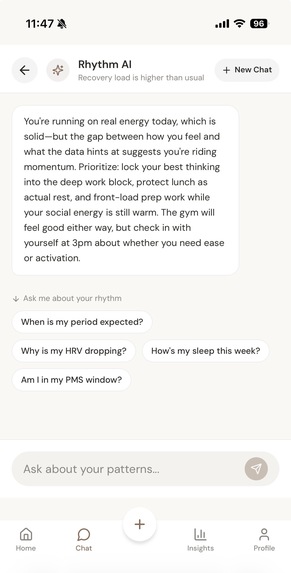
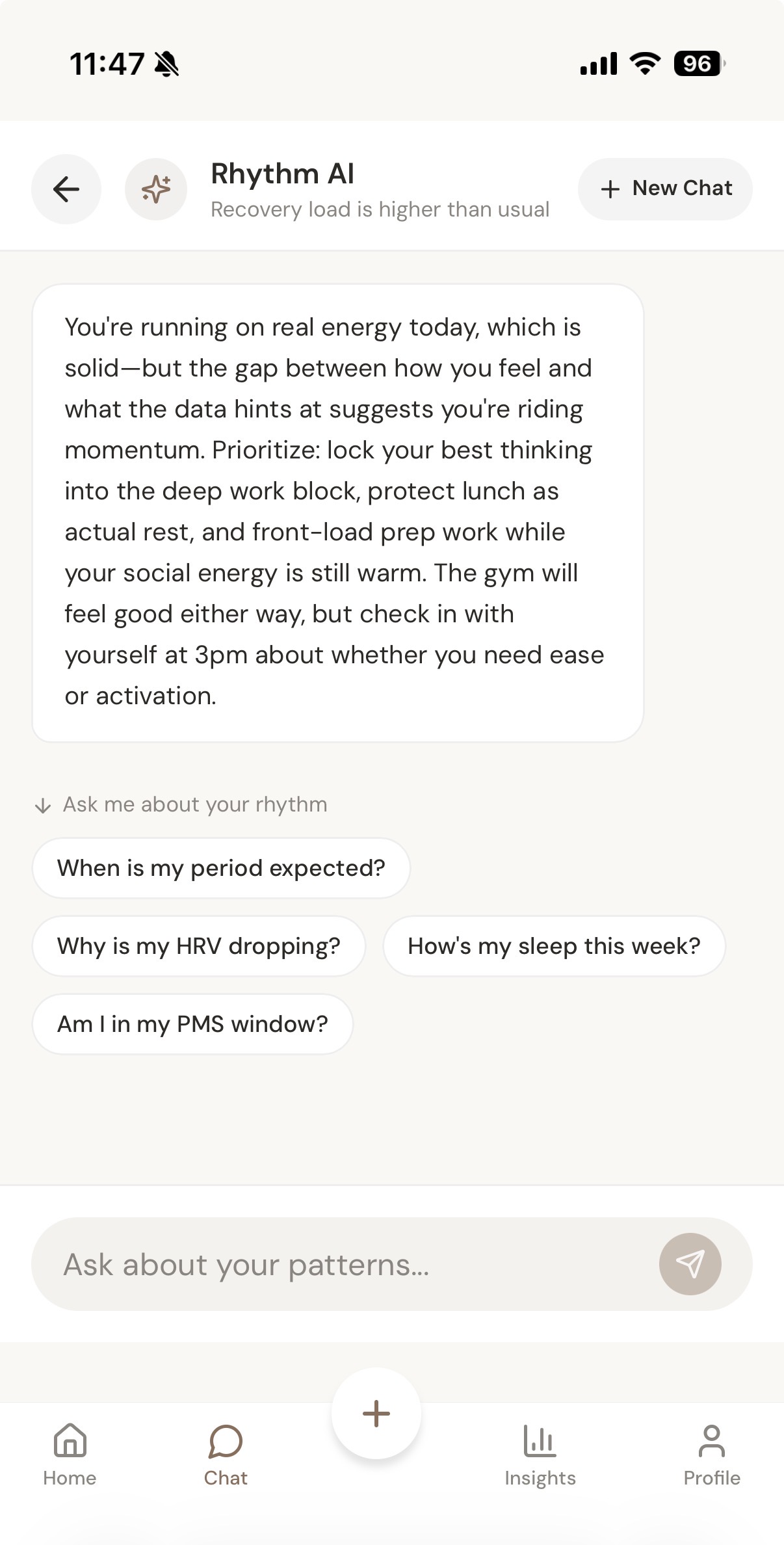
the predict and prepare chatbot for your day
-
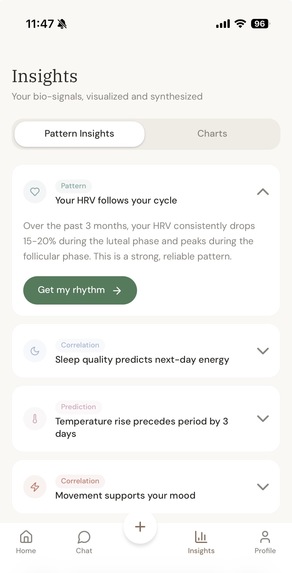
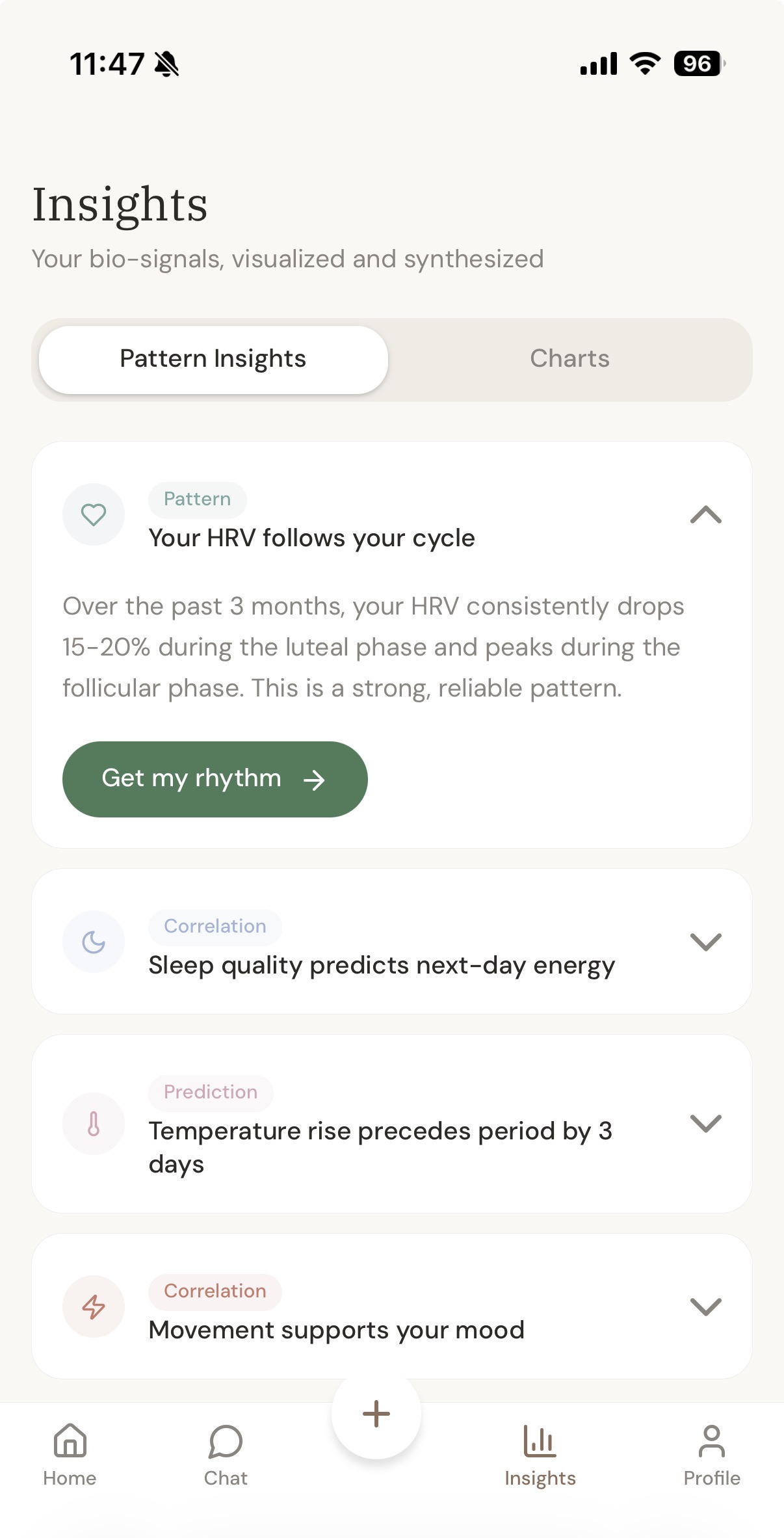
key insights to know more about your health prediction
-
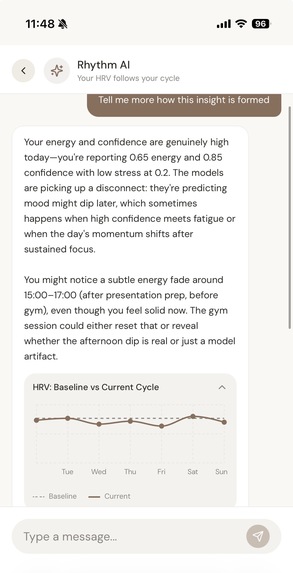
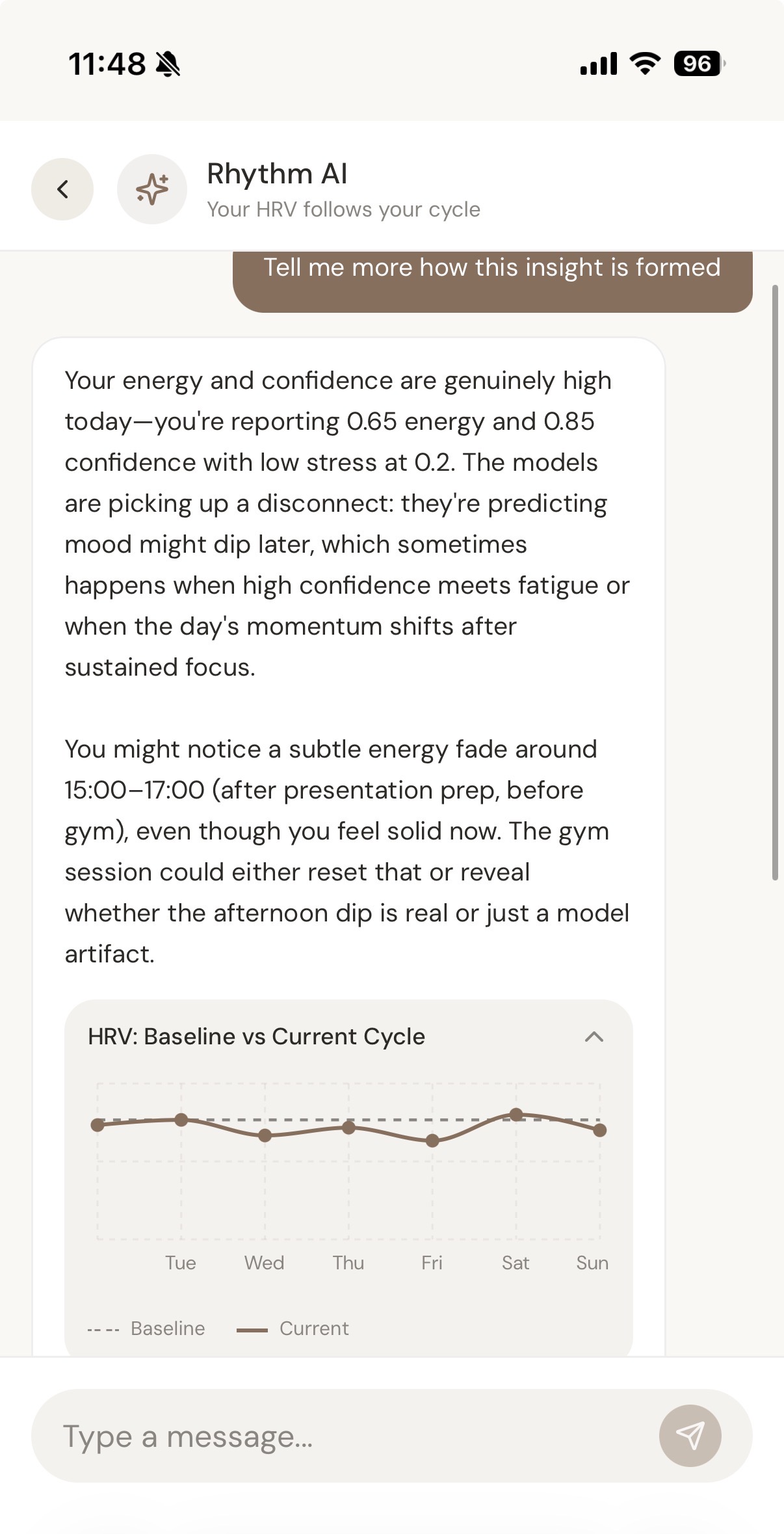
details of key insights
-
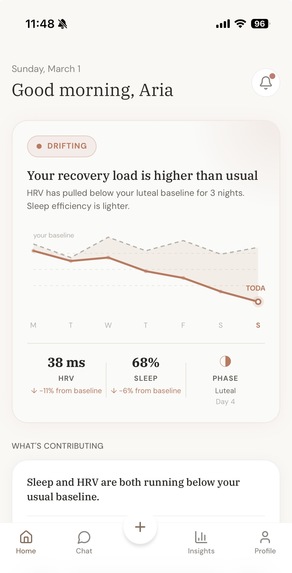
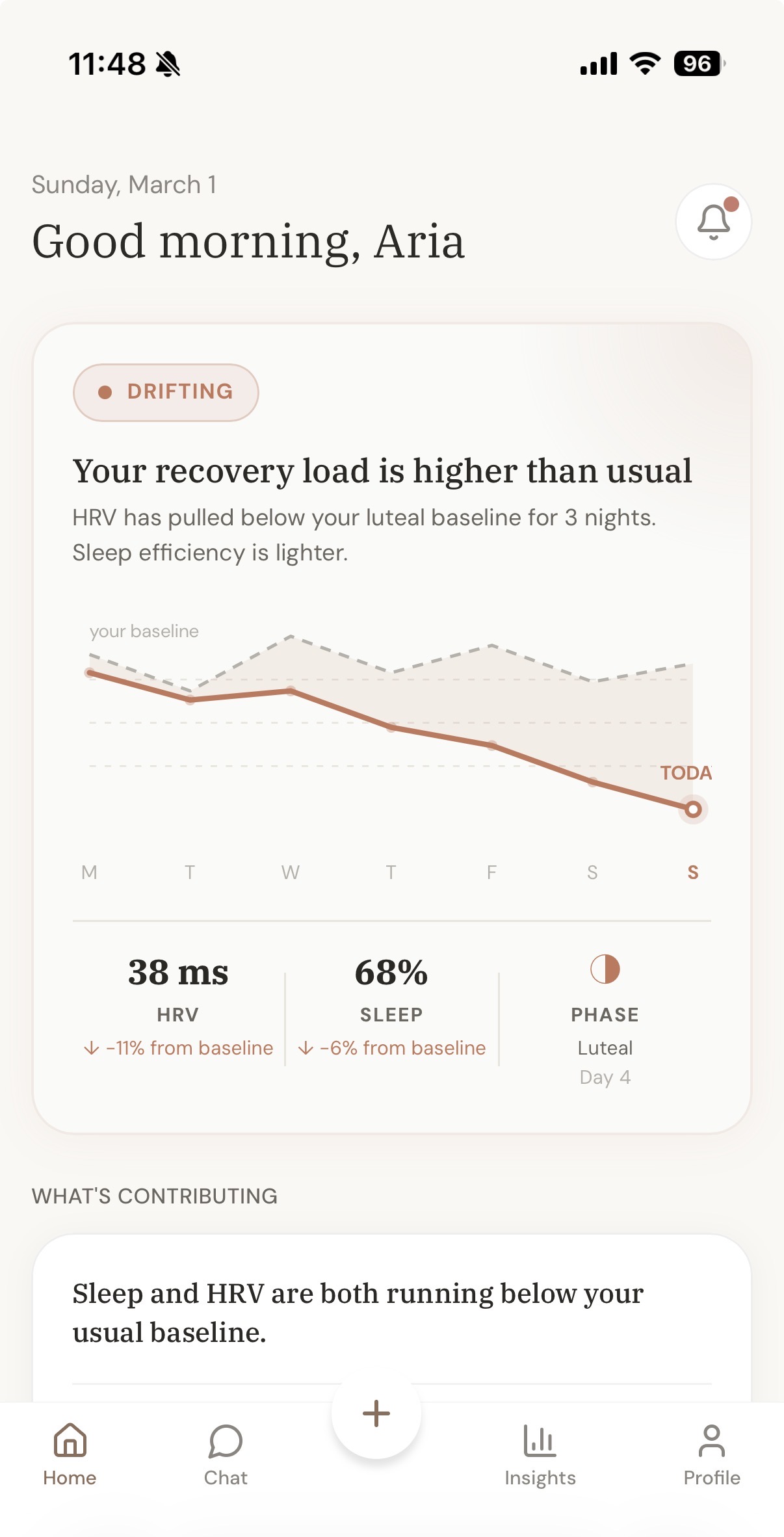
Home page - the most important suggestion
-
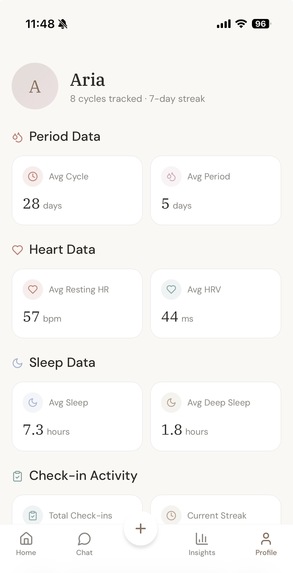
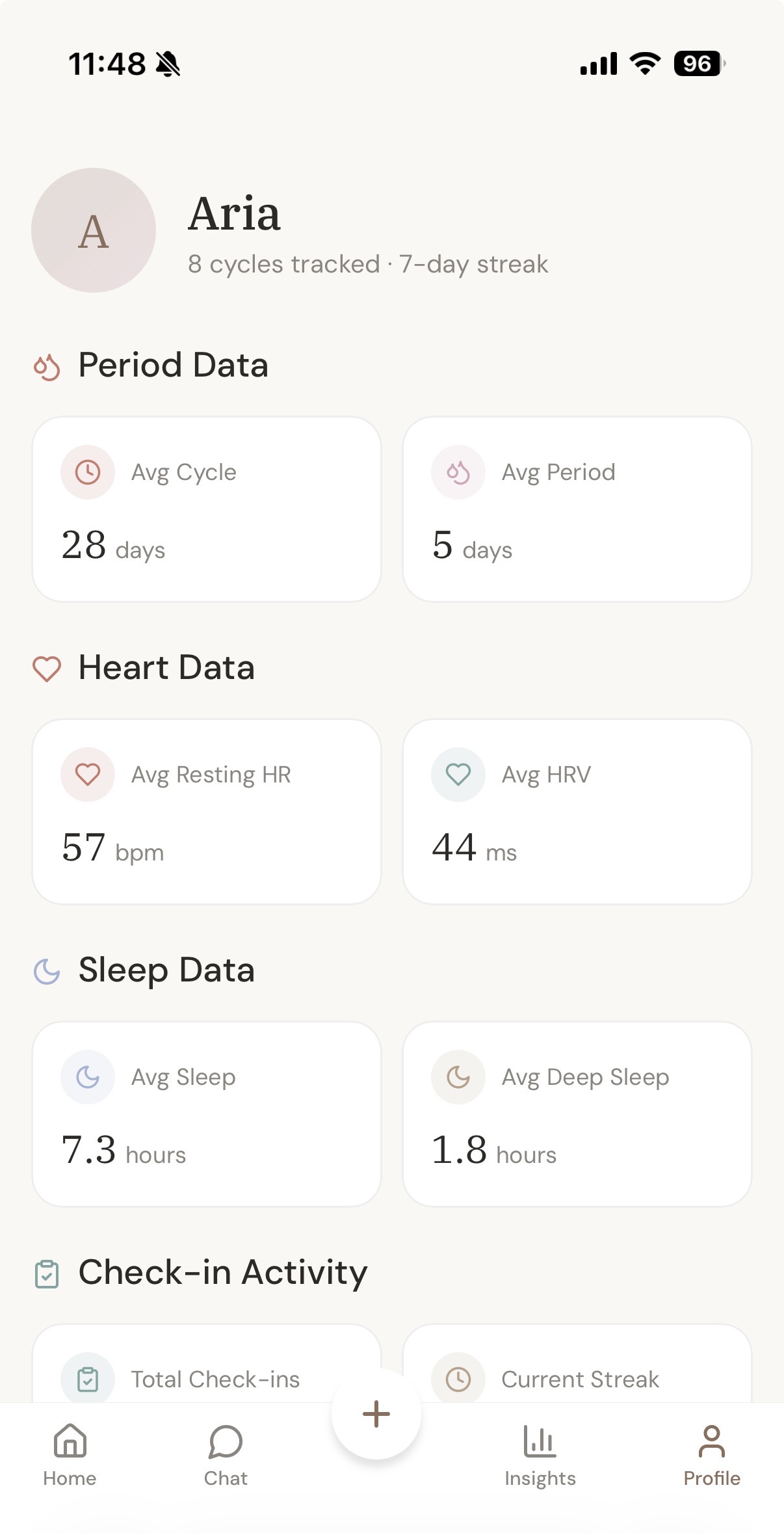
profile
Own Your Rhythm
Inspiration
The data already exists.
Millions of women wear Apple Watches every day. HRV, resting heart rate, sleep quality. The signals are already there. Yet most health platforms interpret this data through a male baseline, with cycle tracking added as an afterthought.
Normal luteal phase biology gets labeled as an anomaly. Dashboards create anxiety instead of understanding.
We watched high performing women hit invisible walls. The signals appeared days earlier. No system was translating those signals into preparation.
Rhythm exists to close that gap.
What It Does
Rhythm detects emotional drift 2 to 3 days before you consciously feel it, then delivers one warm, actionable sentence each morning.
It operates through three layers.
Prediction
A machine learning model trained on real physiological data uses XGBoost to detect compound drift across HRV, resting heart rate, and sleep, with cycle phase as context.
A static rule such as “HRV below 40 ms equals stress” is wrong most of the time. In the luteal phase, 38 ms is biology, not burnout. A trained model learns that difference.
Prevention
Claude Sonnet translates the prediction into one specific, low effort suggestion. Not a score. Not a warning. Something you can actually do today.
Personalization
The longer you use Rhythm, the more accurate it becomes about you specifically, not the population average.
Rhythm never diagnoses. A low HRV reading in your luteal phase is not a problem to fix. It is context to understand.
How We Built It
| Layer | Tool | Role |
|---|---|---|
| Drift Detection | XGBoost | Multivariate physiological prediction with cycle phase context |
| Language Layer | Claude Sonnet | Converts model output into natural language insight |
| Backend Logic | OpenAI Codex | Rapid integration and system scaffolding |
| Frontend | Figma Make | Fast UI prototyping with generated production ready code |
The architecture is intentional.
The ML model detects what is happening.
Claude explains what it means.
Neither replaces the other.
Challenges We Faced
Scope
Rhythm could have done much more. Phase portraits. Recovery scores. Horizon alerts. Full subjective logging.
We chose discipline instead of complexity. One prediction. One sentence. One nudge.
Responsible AI Under Time Pressure
It would have been easy to make the language more urgent or more diagnostic. We intentionally constrained the system.
The principle became clear: we do not profit from your anxiety.
Accomplishments We Are Proud Of
As a team of designers and researchers rather than engineers, we shipped a working ML model and deployable product within a single hackathon.
The system integrates three models working together.
The prediction model is trained on real physiological signals using XGBoost.
Claude generates context specific language each day because the signals feeding it change each day.
We demonstrated that a designer led team, leveraging AI deliberately, can move from concept to working product faster than expected.
What We Learned
You can move from concept to logic to interaction to visual to deployed code and still feel cohesive, if everyone understands the entire system.
In AI health products, the most important design decisions are not visual. They live inside the prompt. The constraints on what the model will not say matter as much as what it will say.
What’s Next
Usability Study
Recruit 20 beta users. Run for one full cycle. Validate whether predictions align with lived experience.
System Refine
Launch on TestFlight. Retrain the personal model on real user data. Refine the language layer based on real world responses.
Long Term
A personal baseline model that grows more accurate about one individual over months becomes fundamentally different from anything in the femtech market today.
That is the moat worth building.
Support your success by helping you find and own your rhythm.

Log in or sign up for Devpost to join the conversation.