-
-
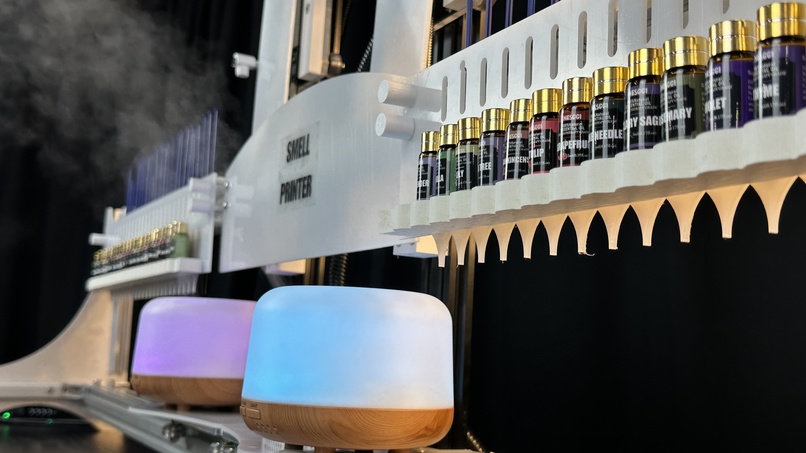
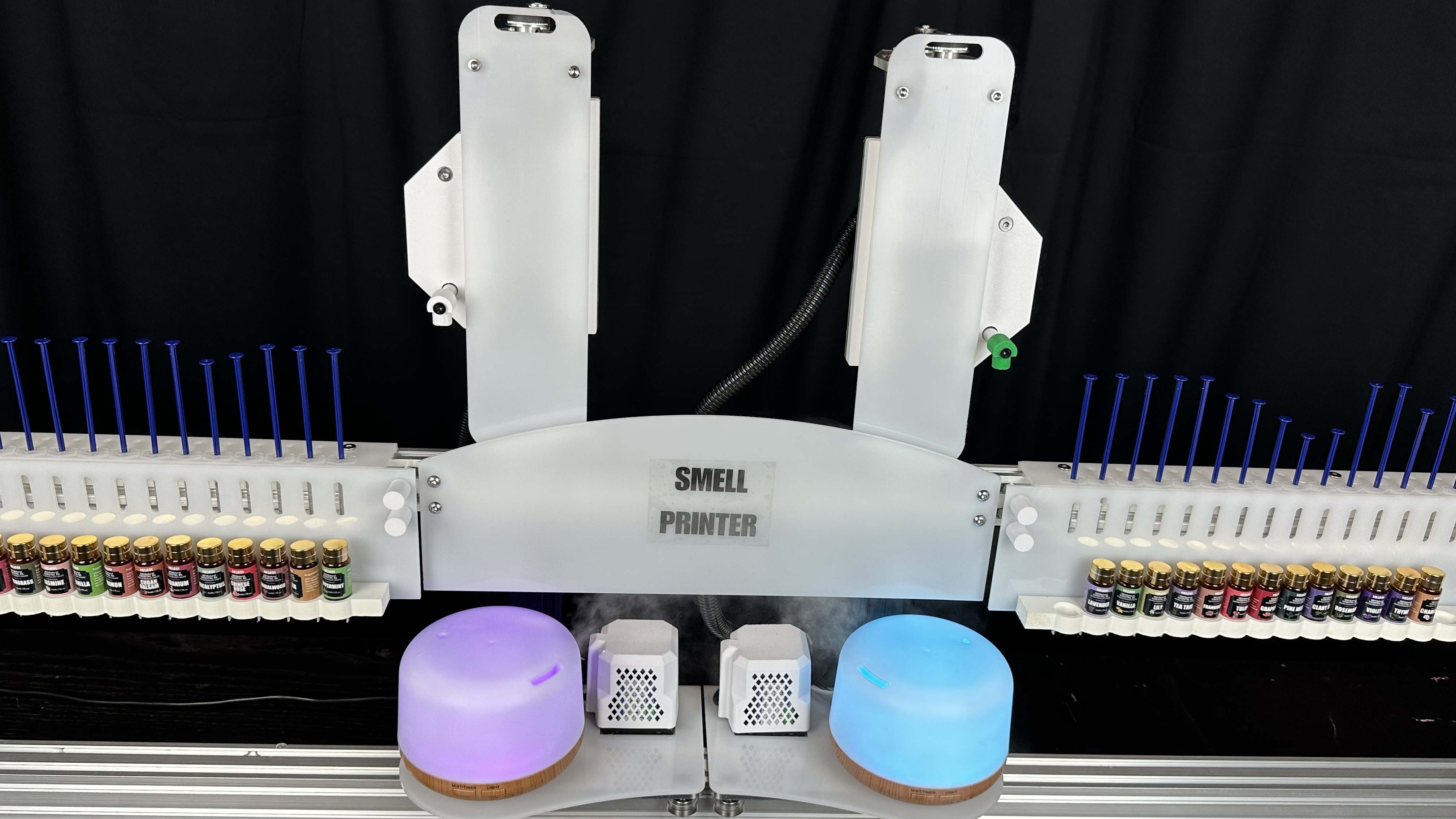
2 diffusers and ~100 essential oil selection
-
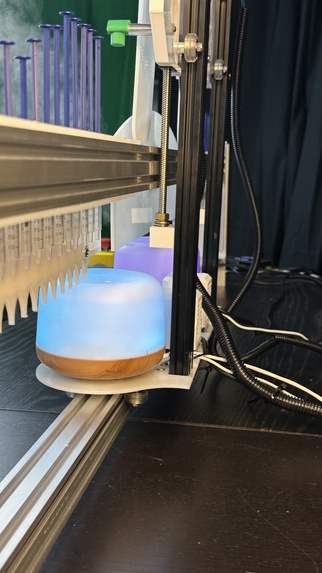
Precision dosing
-
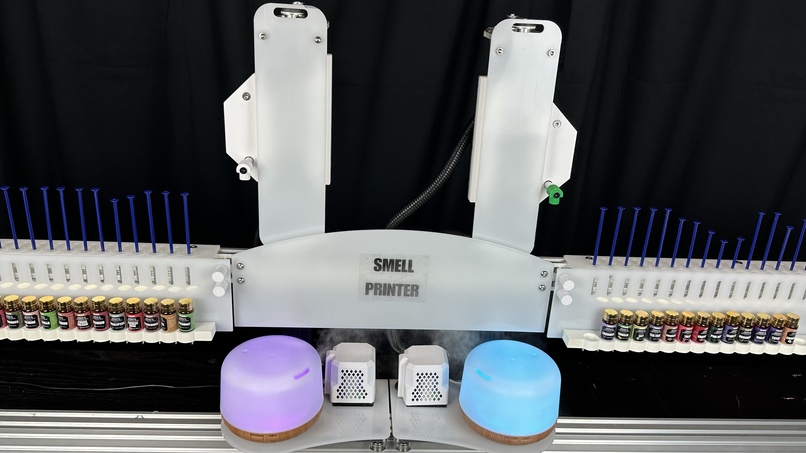
3 Axis Motion control system
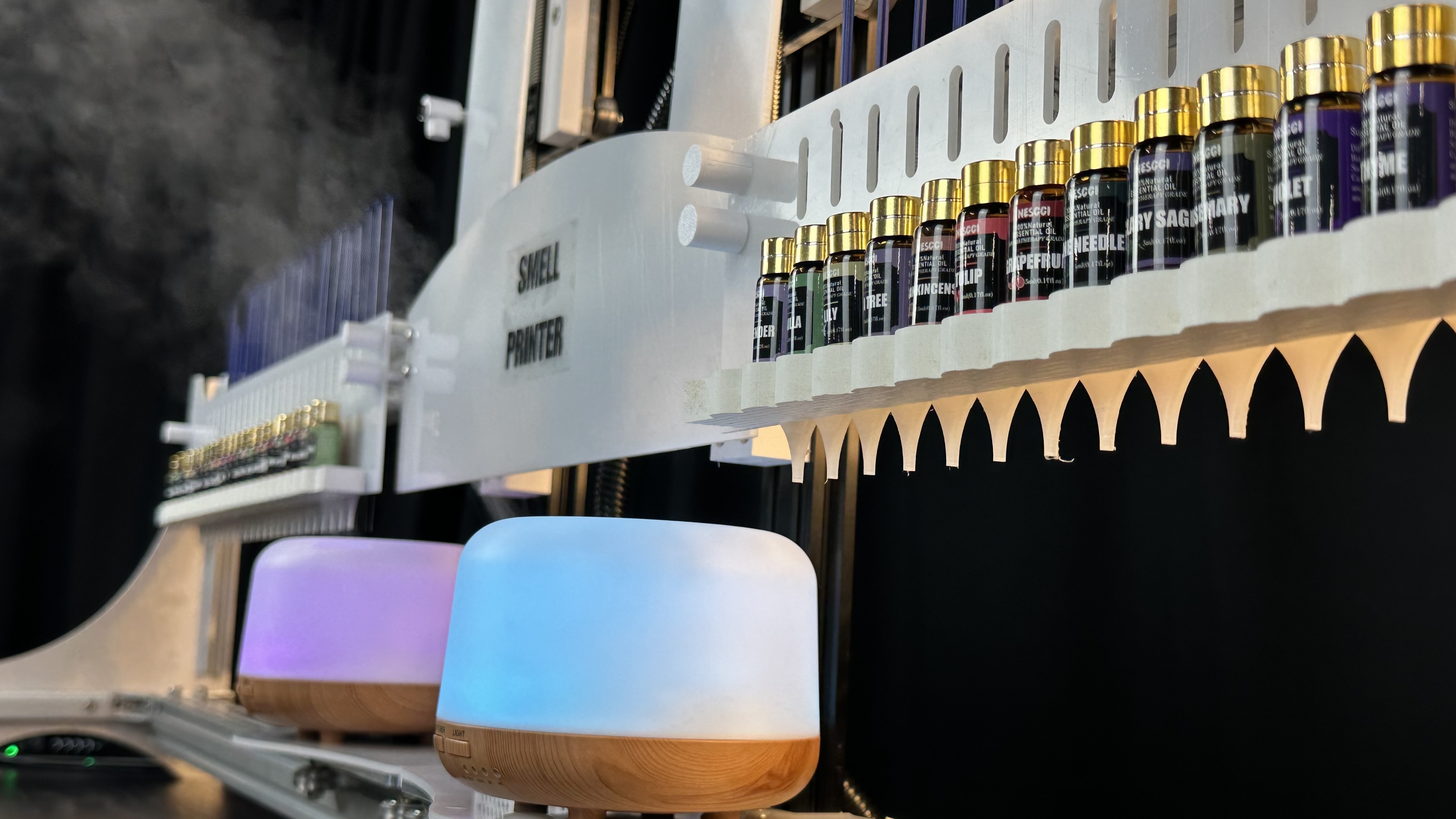
Inspiration
Most diffusers are “one-note”: add drops by hand, turn on, hope for the best. We wanted an instrument—a printer for smell—that performs a scent like music: build, crossfade, end cleanly, repeat on command. At the same time, LLMs now turn words into code, images, even audio. But what about smell? If a model can compile text into structured plans, could it compile a scent? That question set our north star: treat air like a medium you can program. The printer metaphor gave us a concrete playbook (test page, recipe, duty cycle), and the “duet” idea—two coordinated atomizers—unlocked layered, evolving scents instead of a flat room smell.
What it does
Prompt-to-Scent Printer turns natural language into a single plan file and then performs it with hardware. Prompt → plan.json (gpt-oss-120b): The model compiles your intent (preferences, duration, strength, sensitivities) into one JSON:
- Recipe: which essential oils, volumes (µL), and which atomizer (A = fresh/bright, B = warm/grounded).
- Timeline: minute-by-minute power for A/B (duty cycles) and stage labels (intro → crossfade → finish).
Precision dispensing: A syringe array doses essential oils with microliter precision into each atomizer—no manual mixing. Duet playback: Two water-based atomizers crossfade and layer according to the timeline, creating “scent songs.” Clean cutoffs: Automatic purge cycle between blends to prevent carry-over. Safety by default: Allergy/avoid list in the compiler, intensity caps, ventilation reminder, and a physical EMERGENCY STOP. Use cases: focus, sleep, yoga, gaming ambience, wake-up alarm; plus business installs (wellness, galleries, retail demos, R&D labs).
How we built it
Software Model: gpt-oss-120b (open weights), served on our hosted GPU. We designed a strict JSON schema so the model emits a single plan.json that drives both dosing and playback. Compiler UX: Web app with presets and a two-track timeline (A/B). “Generate” shows the JSON + the graph. Runtime: A controller daemon parses plan.json and orchestrates pumps, gantry moves, and A/B duty cycles in real time (1 s tick), with a state machine for Start / Pause / Stop / Purge.
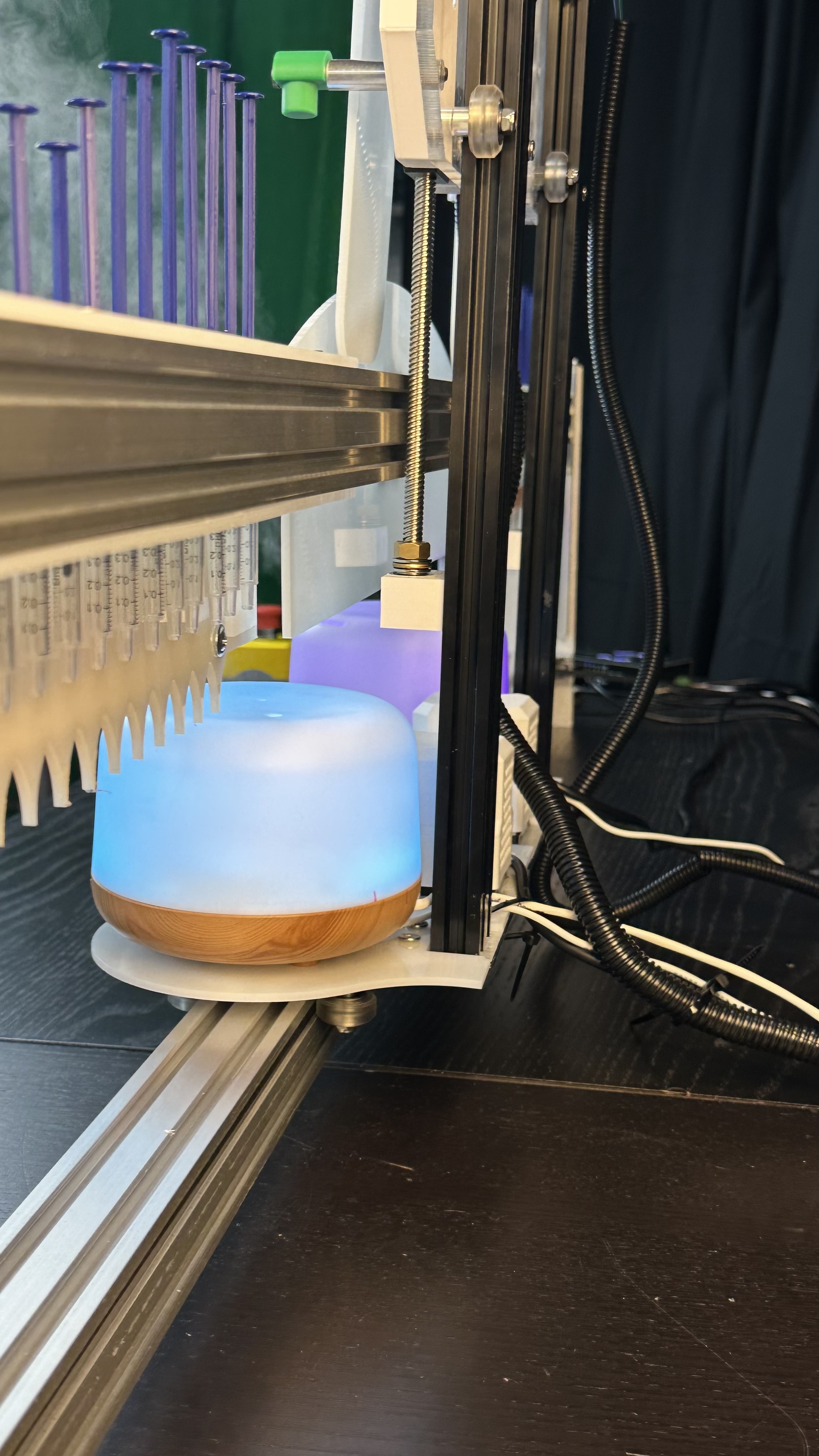
Hardware Syringe array (~100 slots): pre-loaded 2.5 ml syringes on micro linear actuators / syringe pumps; gravity-safe 5 mm input ports; ~5 cm drop height. 3-axis motion: shared linear rail/gantry positions each atomizer under assigned syringes, then returns to center for diffusion. Dual atomizers: large water tanks, independent duty cycles, LED status; run in parallel for crossfades. Water management: shared pump to base-fill and execute purge cycles (pre/post-flush volumes in the plan). Controls & IO: stepper drivers, endstops, flow timing, physical E-STOP wired to cut motors and pumps. Key design choice: one plan file. It simplifies reproducibility, debugging, and testing: if you can render the JSON and the timeline, you can reason about the performance.
Challenges we ran into
Drop repeatability: Oil viscosity and temperature made early dosing inconsistent. We switched to microliter units, shortened tubing, tuned actuator speeds, and added pre/post-flush in the plan. Cross-contamination: Even tiny residue ruins the next blend. We added a purge-then-diffuse cycle and guarded it in the state machine. Time sync: Keeping A/B in lockstep required a centralized scheduler with drift checks and a ±1 s correction window. Explaining A vs B: People don’t intuit “two atomizers.” The timeline visualization (A=blue, B=amber) and short stage labels fixed comprehension.
Accomplishments that we're proud of
A working duet rig that reads a prompt and performs a 20–60 min scent with clean start and finish. The single-file compiler (plan.json) that covers both recipe and playback. Precision microliter dosing and reliable purge → fresh blend. A safety-first UX (allergy filter, intensity cap, E-STOP) baked into both software and hardware.
What we learned
Smell is slow but powerful—designing evolutions (intro → build → finish) matters more than raw intensity. Mechanical tolerances dominate user experience; 1–2 µL errors are noticeable over time. LLMs shine when you give them tight schemas and constraints; “one plan” beats multiple partial outputs. Visualizing the plan (the A/B timeline) is the fastest path to user trust.
What's next for A Printer… for Smell — (AI “Scent Songs”)
Local/offline path: package the compiler for edge devices once memory is available (Ollama/LM Studio configs in the repo). Closed-loop control: add VOC/airflow sensing to auto-adjust duty cycles for room size and ventilation. More voices: quartet mode (A/B/C/D) and spatial choreography across multiple atomizers. Creators’ API: OSC/MIDI/WebSocket so musicians and game engines can “play the air.” Cartridges & maintenance: quick-swap oil trays and automated cleaning reports. Mini user studies: comfort, alertness, and preference scores across presets (focus, calm, sleep).
Built With
- chatgpt-oss
- fast-api
- javascript
- nextjs
- python
- react


Log in or sign up for Devpost to join the conversation.