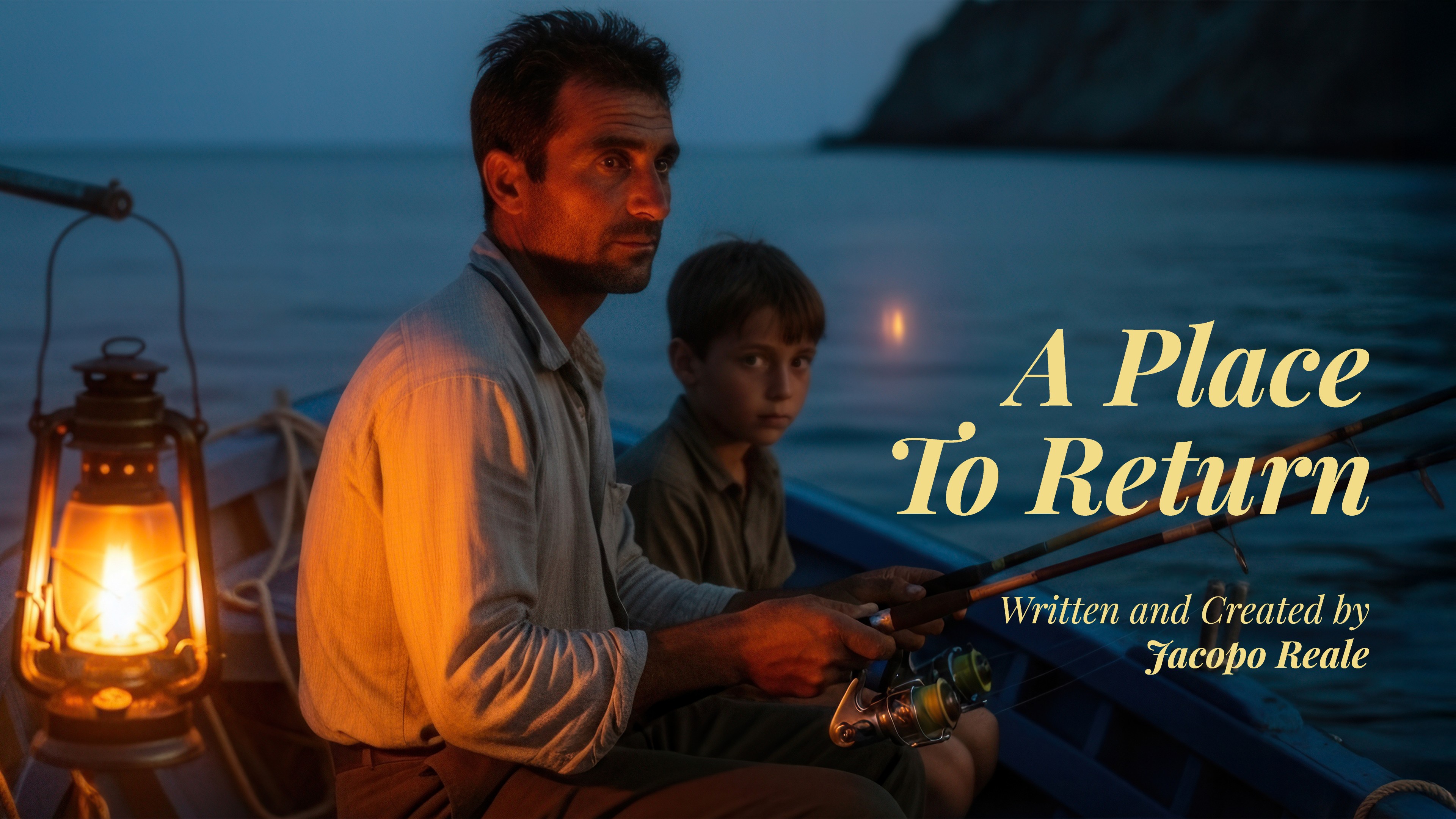
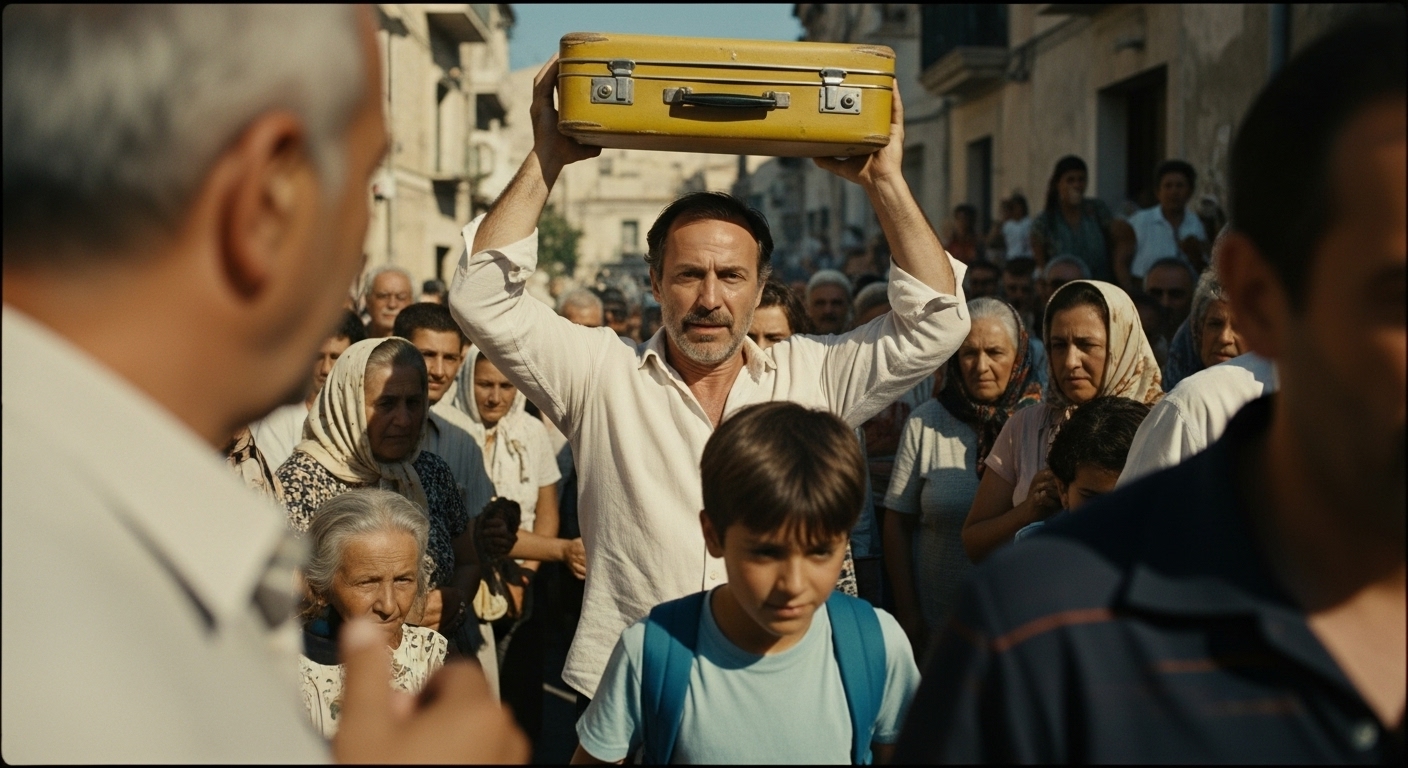
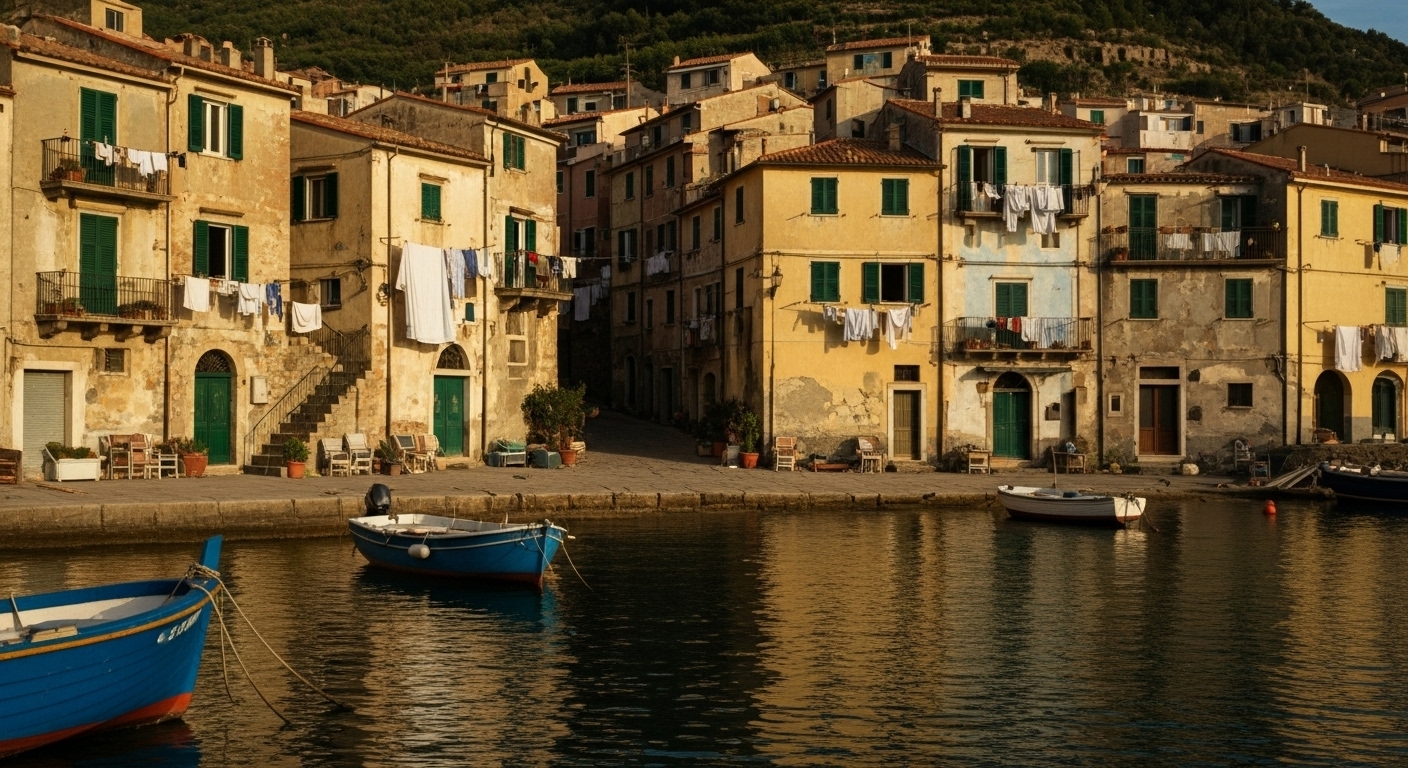
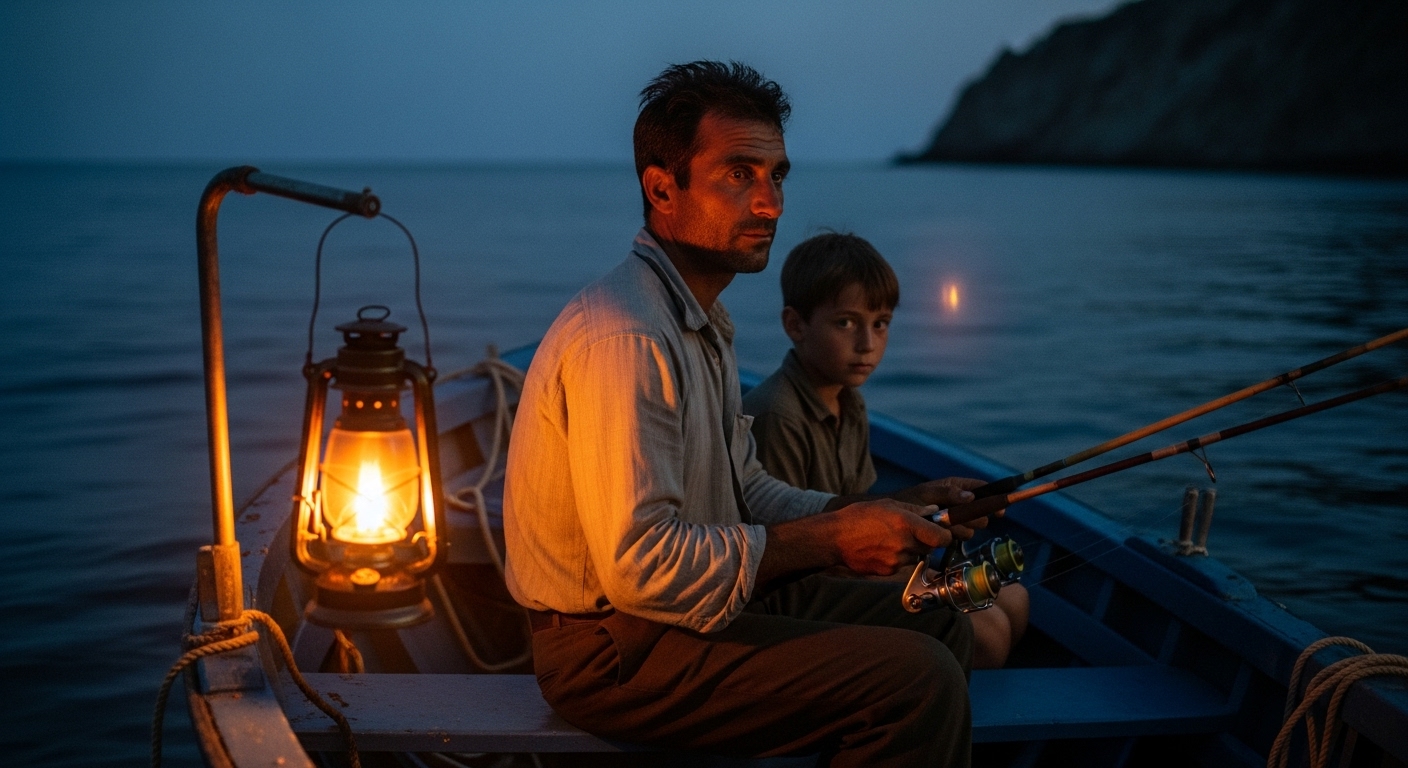
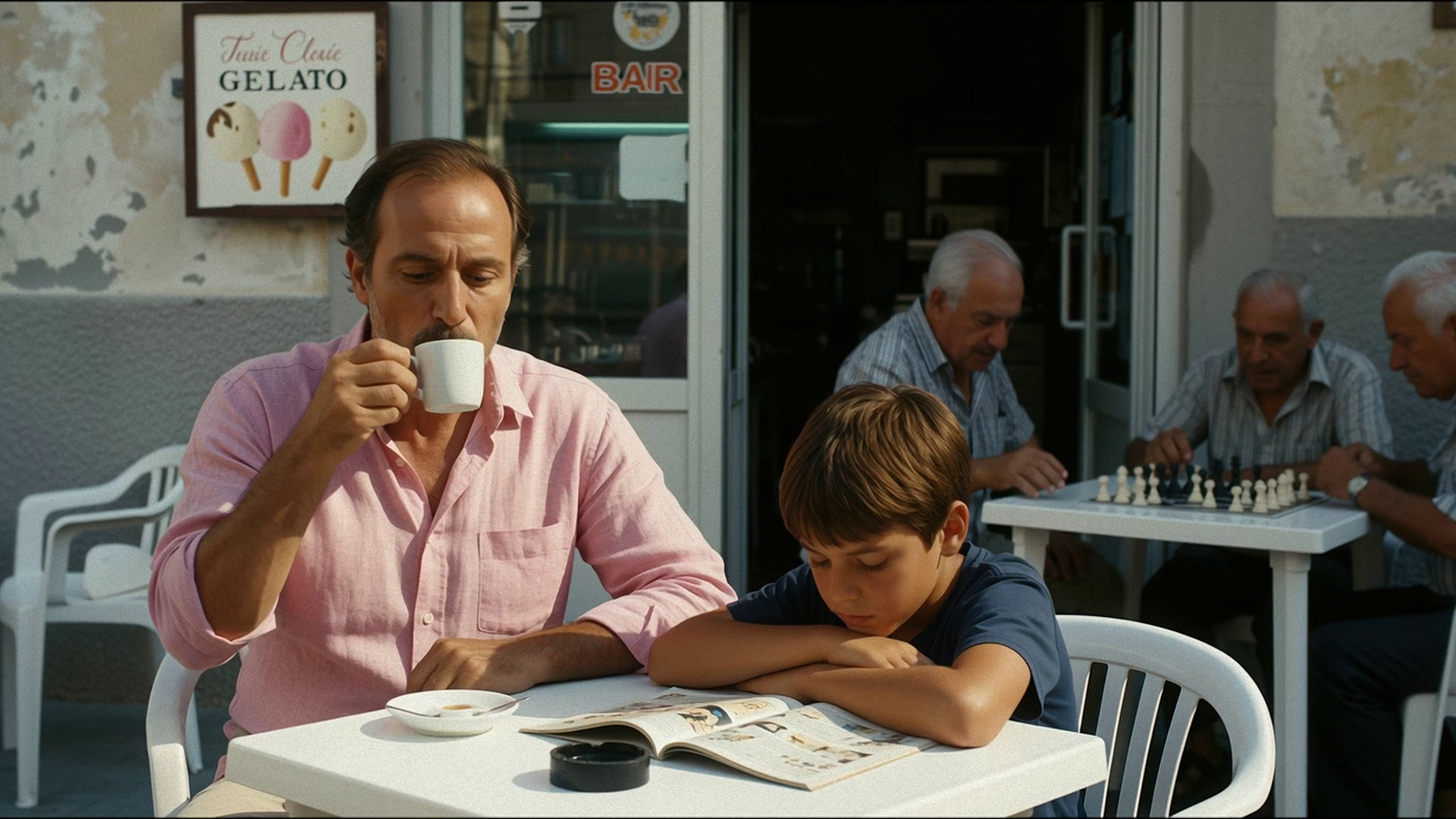
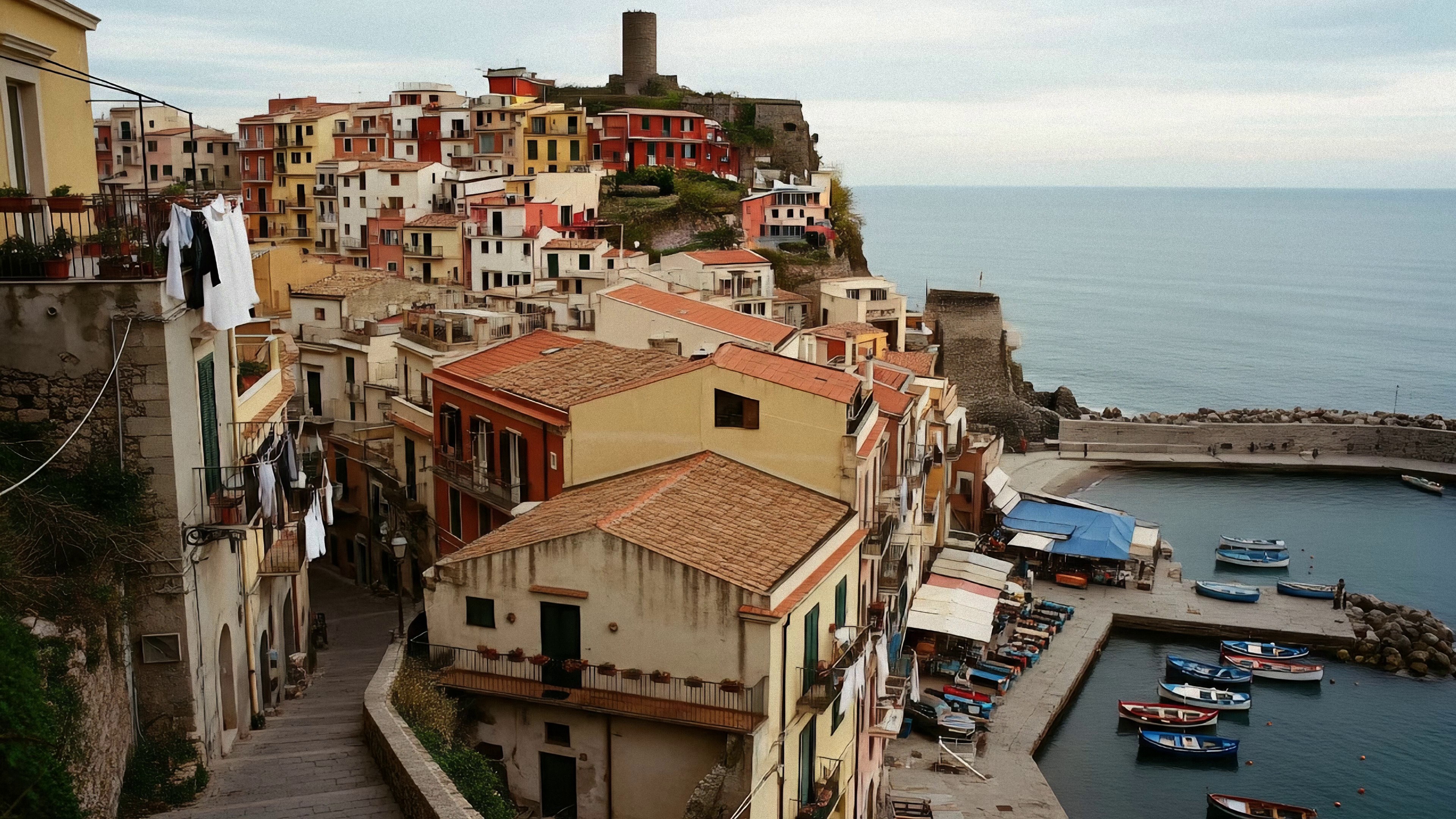
A Place to Return was born from the desire to slow down the gaze. It is a film that asks the viewer to pause, to observe each shot without rushing. The camera remains still, and the movement comes from the characters and, above all, from the places themselves. Through this stillness, an Italy that no longer exists is rebuilt, divided into two temporal layers: the first part set in the 1990s, the second in the early 2000s.
Within this visual framework, the “place” of the title becomes a true protagonist. The locations preserve what the characters have lost, they hold their memories, they act as emotional archives. In the second part, when the son returns to his father’s hometown, we encounter the same spaces seen earlier through the father’s perspective. These recurring places are fragments of memory resurfacing, sites that remember on their behalf.
This idea anchors the deeper theme of the film: memory is not an archive, it is a place. An emotional landscape where father and son continue to meet even after time has reshaped them. The story explores how a single memory can contain an entire relationship, and how time alters people and places without ever fully erasing the bond that ties them together.
At its core lies the fragile intimacy between two generations. There is no spectacular conflict, only a quiet melancholy made of small misunderstandings, unspoken guilt, and restrained affection. The father carries the weight of his past, the son the weight of the choices he never voiced. The film does not judge, it observes: it lets the bond emerge for what it is, without embellishment.
Built With
- fal
- ltx
- midjourney
- replicate
- whisk


Log in or sign up for Devpost to join the conversation.