-
-

Platforming
-
-
-

Outline of the game
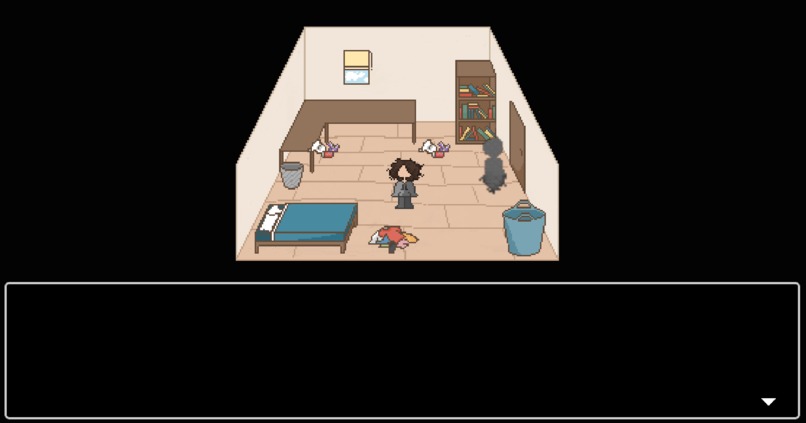
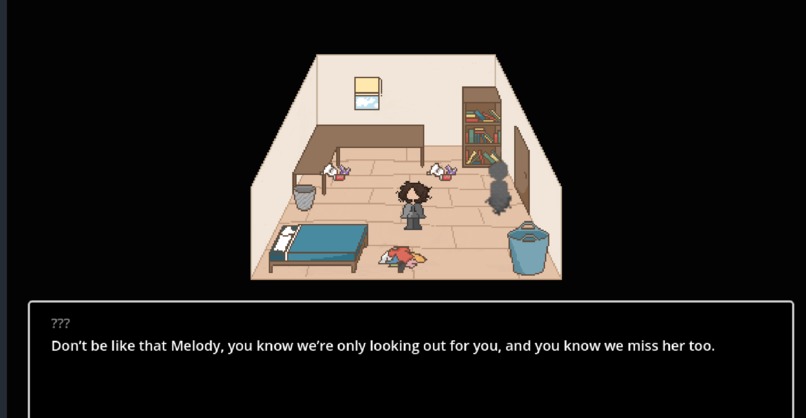
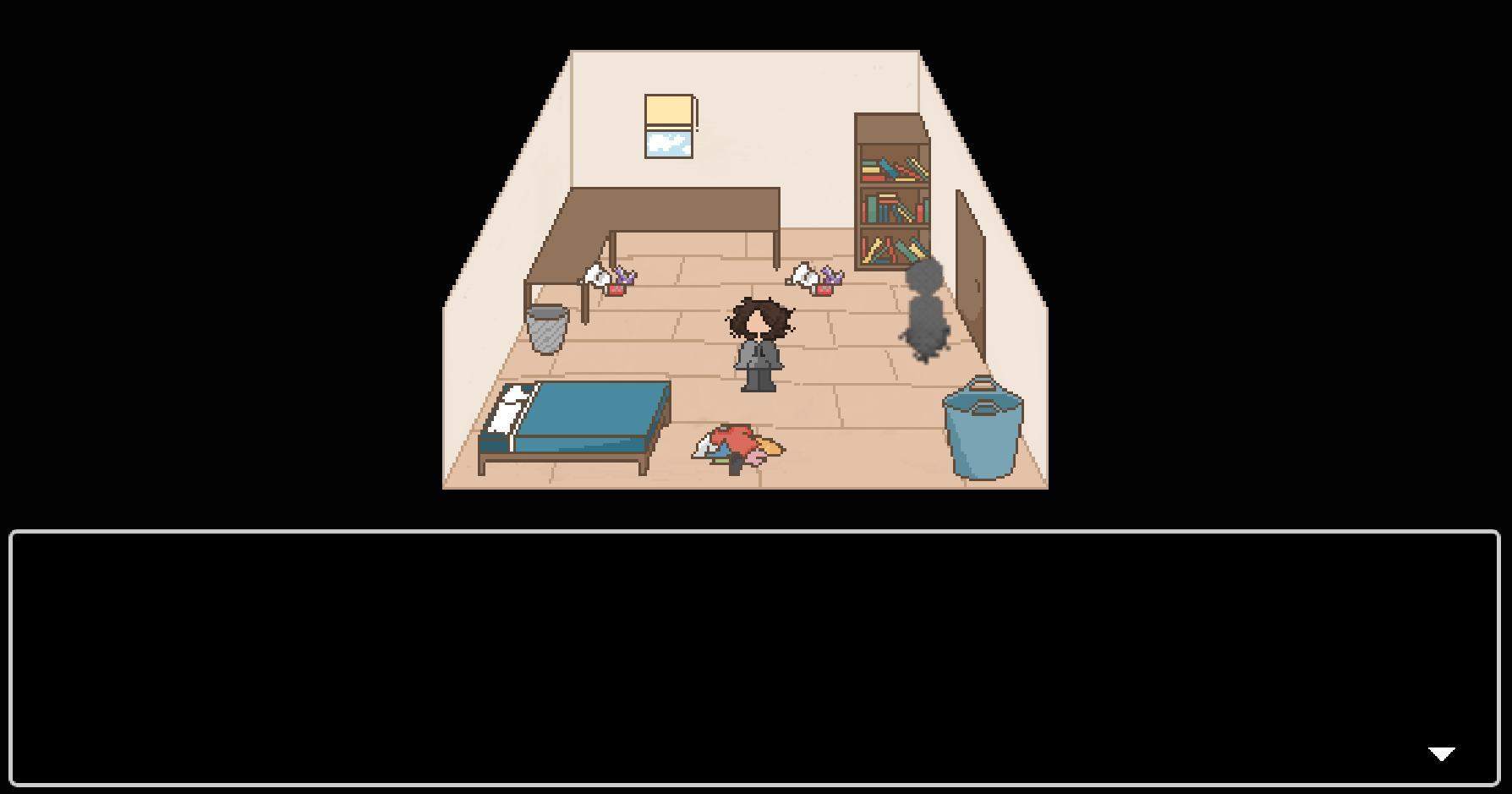
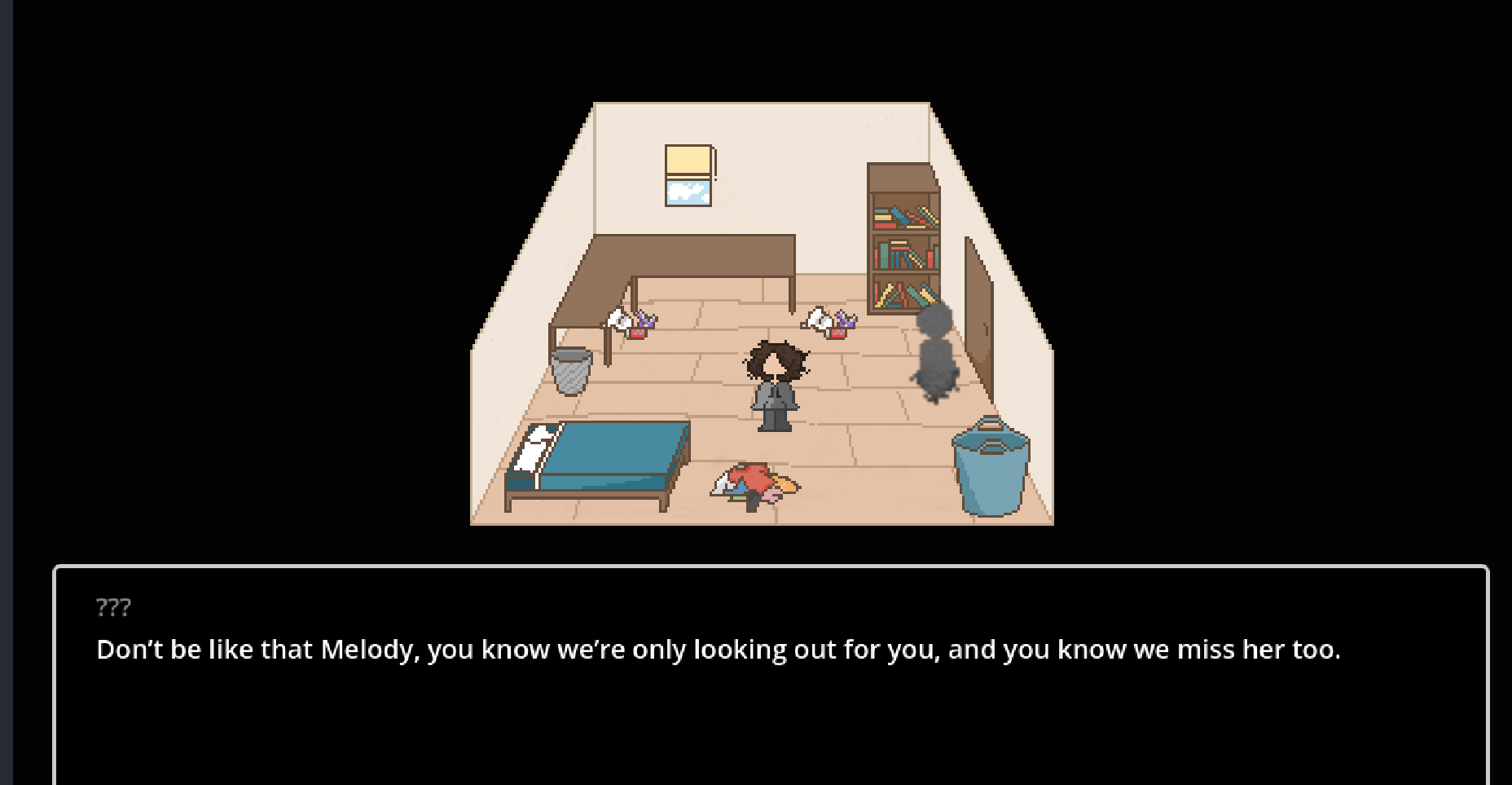
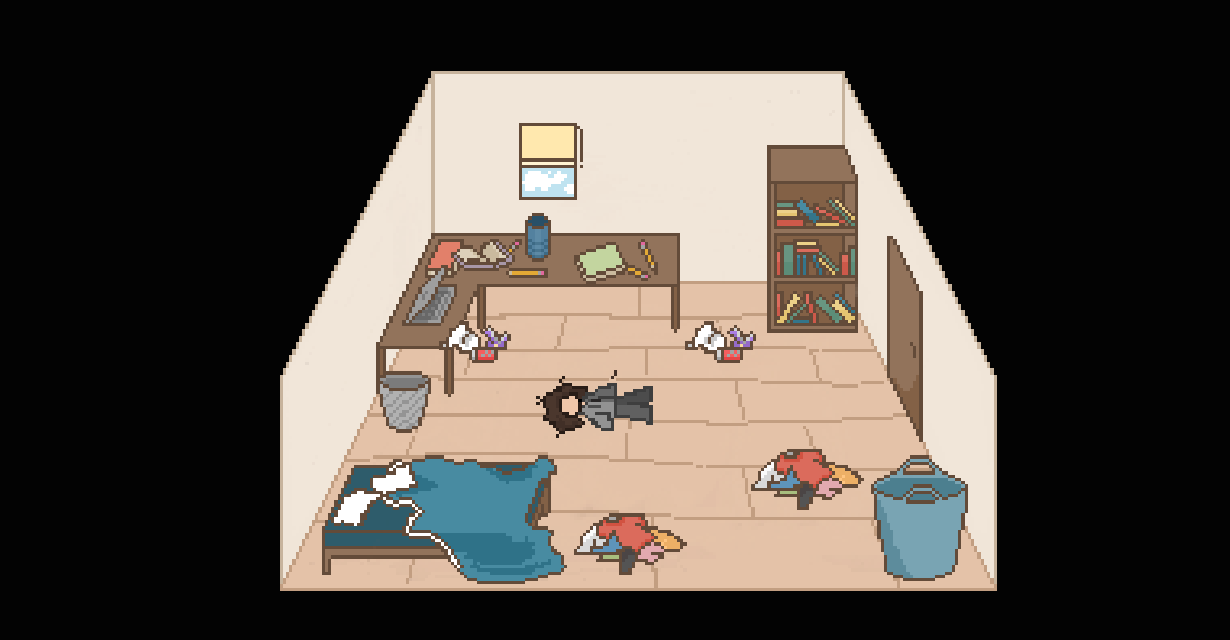
The game consists of Melody (the protagonist) and her journey through the five stages of grief as she recovers from the loss of a loved one. As the player progresses through the game, they learn more about Melody’s past with Elise as she succumbs to her own grief for their loss. Gameplay is split into three parts: dialogue, platforming and interacting with the world. Whilst the interactions between Melody and other characters are key to understanding the story, we included a repeating minigame called ‘Lucidity’ in order to break up the potentially repetitive cutscenes. The player must overcome a vertical platforming level that gets progressively more difficult as they progress through their journey of grief, each one relating in some way to a particular stage. After doing so, they have the chance to complete a series of daily tasks such as making their bed and clearing the dishes, which will impact how the game itself ends. You can achieve one of three endings – the Good ending and the Bad ending, which are determined by a set of choices you make during the game. This game is designed to be a short but emotional ride through the stages of grief whilst still providing enjoyment through the minigames and story
How we built the game
This game was built from the ground-up with pixel drawings of the backgrounds, decorations and characters using apps such as Procreate and Krita, as well as our own original soundtrack composed on the piano. In terms of coding, we used Godot.
The Story
Although this may be a short game, the story itself took some time to decide and has great potential to be developed in the future. It begins with the death of Melody’s lover Elise, who passes away in a hospital due to an unknown illness. After a fade to black, time advances around one week to her funeral, where Melody takes some time in the graveyard to mourn her loss. After that, time advances once more and the denial chapter begins. Melody wakes up in her room and attempts to go about her daily life, notably by doing some household chores. However, after a set amount of time, Elise will appear in the doorway, much to Melody’s surprise, although she does not know that this is a figment of her mourning mind, overcome with denial. Melody is comforted by this, believing that it was all just a bad dream, and she goes to bed feeling calm and at peace.
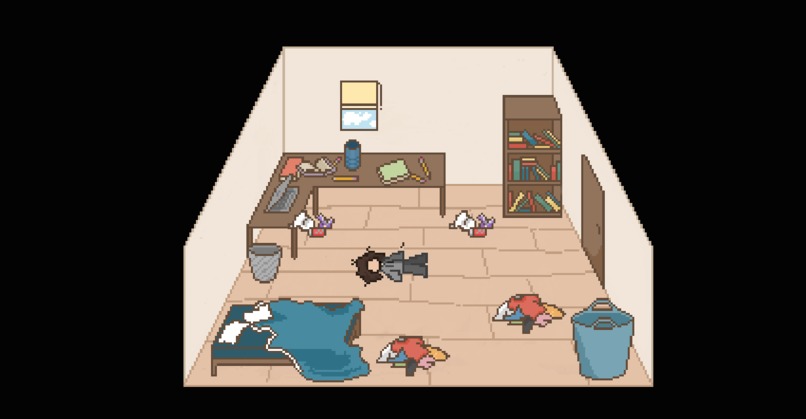
Dawn arrives, Melody wakes and finds that she is alone once again, sending her into the second stage of grief – anger. Now, she does her chores with aggression and lashes out at her loved ones, believing that they wish to harm her and seeing them as ‘evil’ when they are only trying to look out for her. Eventually, an interaction with one of them causes her to lash out and lapse into a state of bargaining, caused by a combination of intense stress and mourning for Elise. Her mind is now plagued by incessant thoughts about what she could have done to save Elise, or at least to improve the little time she had left. The cascade of questions eventually overwhelms Melody, and she arrives at the fourth stage of grief – depression. By this point, her room is incredibly disorganised, and she has not interacted with anyone else in some time. Additionally, doing basic chores takes significantly more effort, leading her to just lay on the floor and stare at the ceiling, periodically disassociating from the world around her.
From this point onwards, her story is determined by the actions that led her to this point. If Melody worked hard to counteract the stages of grief and genuinely accepts Elise’s death, she will reach a happy ending by living a long and healthy life, visiting the graveyard every so often just to see her beloved Elise once more. However, succumbing to her feelings and refusing to live without Elise will result in a more negative destiny, where the scene of her death haunts her, replaying every so often to remind her of what she has lost, as if her own mind was playing a cruel trick on her.
Challenges
One notable challenge we faced were the time constraints. 48 hours is a very short time to develop a game, and we may have been overambitious in places, leading to some cuts during the process. Additionally, it took us a lot more effort than expected to record, edit and properly implement the music, but we believe that the ambience that it created was definitely worth it.
Another setback that arose during the creative process was a series of miscommunications caused by a misalignment in the perception of the gameplay, resulting in minor delays in the asset creation and level design.
Achievements
Some key achievements that we attained thanks to this project include the successful creation of a captivating story that evokes a mixture of complex emotions, accompanied by our own soundtrack in only 48 hours, as well as coming up with a variety of gameplay modes that ensure the enjoyment of the player. Moreover, our dedication to this project has given us the desire to continue to develop it after the end of the GameJam and potentially preserve this game as a long-term project.
Future plans
In the future, we aim to employ the meanings of different colours in order to further convey emotion in our scenes by covering them in a ‘tint’. For example, the colour red is often associated with anger and therefore was a perfect choice for the second stage of grief, whereas blue was useful for building a good atmosphere for the depression stage.
Our original intent for the true ending of Melody’s story is much darker than it may seem. Indeed, the death of Elise was completely false, given that Elise does not exist. Instead, the story that plays is a metaphorical grief that Melody feels for herself, as she is currently in a coma. Elise represents her conscious or ‘alive’ self that she believes has been lost ever since she has entered the coma, acting as a coping mechanism. Eventually, we would like to implement this as a ‘secret’ ending.
Moreover, we would like to flesh out the dialogue so that it may become even more emotional and profound, constructing an elaborate story about Melody’s past and how she must cope with it.
What we learned
This project has taught a variety of valuable lessons and skills, such as an improved proficiency in art design and coding, accompanied by an improvement to our teamworking and organisational skills. Furthermore,
Additionally, we also learned how to adequately communicate with our peers in order to convey our ideas in a clear and effective manner, ensuring that we avoid any miscommunications or misinterpretations that may lead to potential setbacks.
By researching the topic of grief, we learned a variety of information about how the stages progress and are displayed in other people, allowing us to replicate this in our protagonist Melody.
Built With
- c#
- godot


Log in or sign up for Devpost to join the conversation.