-
-
-
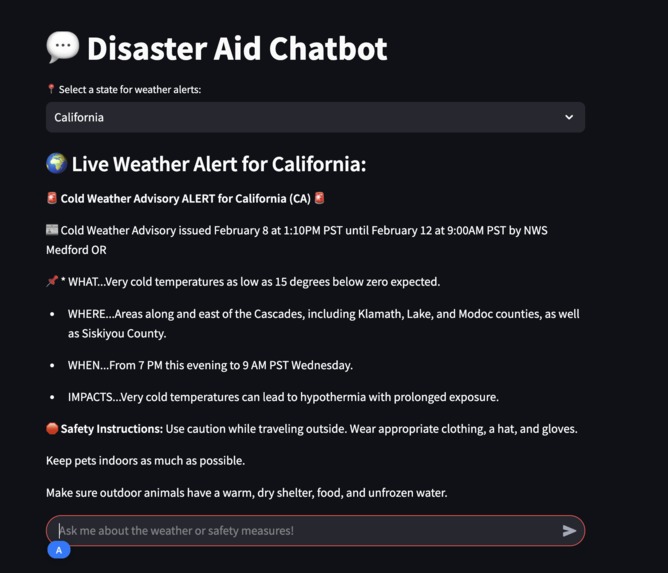
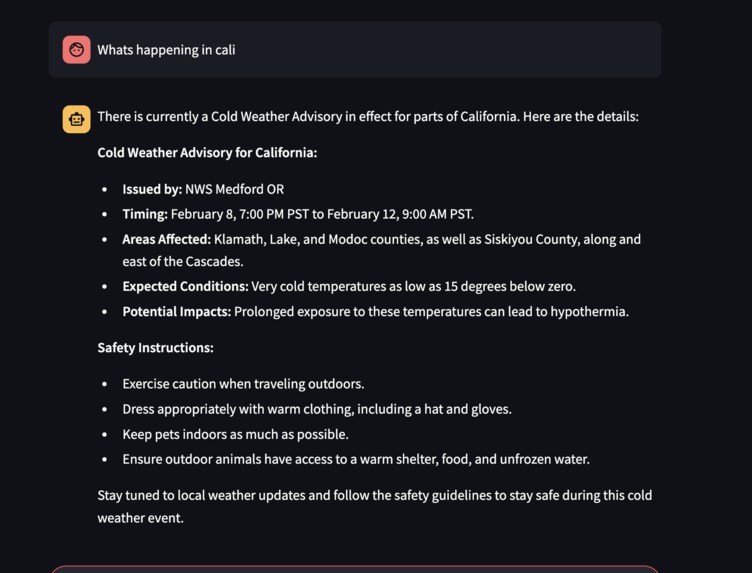
The model is context aware and can speak about current weather
# Group Information
Group Number: 75 Group Members: Labib Rahman, Martin Truong, Sohaila Ali, Omer Ali
# Inspiration
Our inspiration for this project comes from a shared passion for helping rural communities that are often the most vulnerable to natural disasters. With team members from Bangladesh, Vietnam, and Pakistan, we have seen firsthand how limited access to timely information can make disaster situations even worse. We wanted to create a tool that could empower people with real-time alerts and safety measures, helping them stay prepared and protected.
# What It Does
The chatbot provides real-time alerts about disasters, particularly floods, to rural communities. It pulls data from weather alert services and uses AI-powered responses to deliver context-aware safety instructions. Users can ask questions about safety precautions, evacuation procedures, and disaster preparedness, and receive relevant, up-to-date guidance.
# How We Built It
We integrated weather APIs to fetch real-time disaster alerts. AI-powered chatbot (using Cohere AI) provides instant responses to user queries. Built a web-based interface using Streamlit for ease of access. Designed it to be lightweight and accessible, even on low-bandwidth networks.
# Challenges We Ran Into
One of the biggest challenges was finding a suitable API that provided real-time, location-based alerts for flooding and other natural disasters. Many services either lacked granular data or had access restrictions, making integration difficult. We also faced technical hurdles in ensuring the chatbot remains context-aware while handling multiple types of disaster-related queries.
# Accomplishments That We're Proud Of
The chatbot works in real-time, fetching and displaying the latest disaster updates. It is context-aware, meaning users get relevant responses based on the latest alerts. Successfully created a tool that could be life-saving for rural communities. Designed a simple, intuitive interface that can be used by non-tech-savvy individuals.
# What We Learned
AI can be incredibly useful in disaster management, helping communities stay informed and prepared. Accessibility matters, technology must be designed keeping in mind rural areas with limited resources and connectivity. Collaboration across diverse backgrounds brings powerful perspectives in solving global challenges.
# What's Next for A.lert
Expand to other communities beyond the initial focus areas. Include multi-language support to reach a wider audience.
Enhance disaster coverage beyond floods—support for earthquakes, wildfires, and storms.
Integrate voice support for those with limited literacy or access to smartphones.
Partnerships with local governments to ensure the tool reaches those who need it most.
Built With
- api
- cohere
- streamlit

Log in or sign up for Devpost to join the conversation.