
Inspiration
Traditional audiobook management is fragmented across multiple apps and platforms. I wanted to create a unified solution that could handle local audiobooks, generate audiobooks from text documents using TTS, and provide access to free public domain content. More importantly, I wanted to showcase how Kiro's structured spec-to-code approach could accelerate the development of a complex desktop application.
What it does
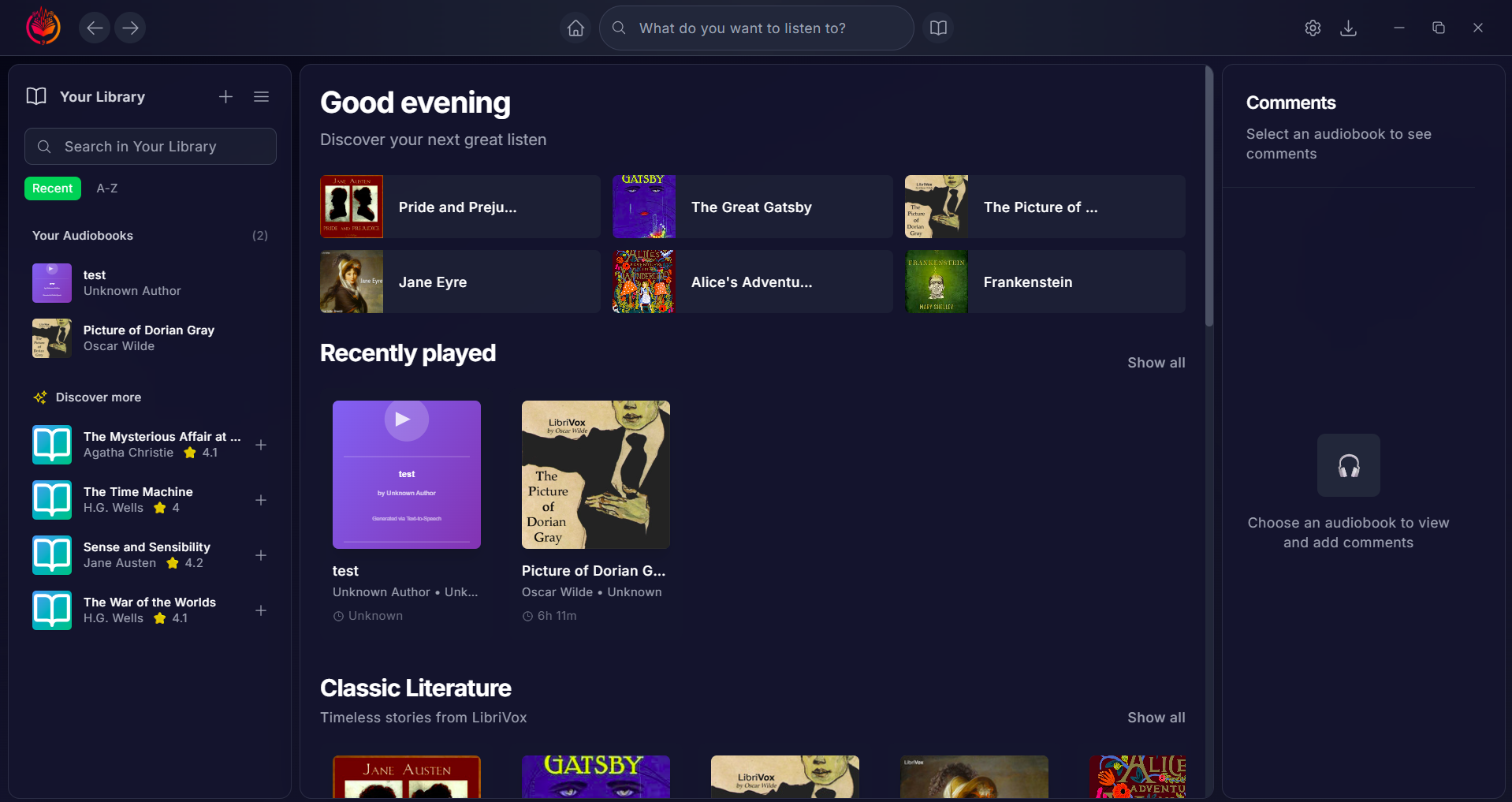
AudioVibe Desktop is a comprehensive audiobook management and playback solution that:
- Manages local audiobook libraries with automatic file scanning and metadata extraction
- Plays audio with smooth controls, chapter navigation, and progress tracking
- Generates TTS audiobooks from text documents with automatic chapter detection
- Integrates with LibriVox to browse and stream thousands of free public domain audiobooks
- Organizes content into custom collections with search functionality
- Provides cross-platform support for Windows, macOS, and Linux
The application features a modern React interface backed by a high-performance Rust audio engine, all built using Tauri for native desktop performance.
How we built it
This project showcases Kiro's spec-to-code methodology through a structured development cycle:
Kiro's Spec-to-Code Workflow:
- requirements.md - Documented the complete vision: desktop audiobook player with local library management, TTS capabilities, LibriVox integration, and cross-platform support
- design.md - Kiro helped architect the technical design, choosing optimal technologies:
- Rust + Tauri for cross-platform desktop performance
- React + TypeScript for modern UI development
- SQLite + SQLx for efficient data management
- Rodio for cross-platform audio playback
- tasks.md - Generated specific, actionable implementation tasks that could be tackled systematically
Development Process:
Rather than random AI conversations, Kiro's structured approach ensured:
- Clear documentation at every stage
- Thoughtful architecture decisions based on requirements
- Organized task breakdown for systematic implementation
- Living documentation that evolved with the project
Technical Implementation:
- Backend: Rust with Tauri framework for native performance
- Frontend: React with TypeScript and Tailwind CSS
- Database: SQLite with SQLx for audiobook metadata and progress tracking
- Audio Engine: Custom Rust implementation using Rodio and Symphonia
- TTS Integration: Text-to-speech processing with chapter detection
- API Integration: LibriVox REST API for public domain audiobooks
Challenges we ran into
Audio Threading Complexity - Managing audio playback across different threads while maintaining UI responsiveness required careful synchronization. Kiro helped debug complex threading issues and memory management challenges.
Cross-Platform File Handling - Different operating systems handle file paths and audio formats differently. Kiro's design phase anticipated these challenges and provided platform-specific solutions.
TTS Chapter Detection - Automatically breaking text documents into logical chapters required natural language processing. Kiro helped implement algorithms to detect chapter boundaries and create meaningful audio segments.
Database Schema Evolution - As requirements evolved, the database schema needed updates. Kiro's structured approach made it easy to update the design documents and implement schema migrations.
Real-time Audio Controls - Implementing smooth seeking, chapter navigation, and progress tracking required careful coordination between the Rust backend and React frontend.
Accomplishments that we're proud of
Complete Desktop Application - Built a production-ready audiobook player with professional-grade features using Kiro's guidance
Kiro's Spec-to-Code Success - Demonstrated the power of structured AI-assisted development through the requirements → design → tasks cycle
Cross-Platform Performance - Achieved native performance on Windows, macOS, and Linux using Rust and Tauri
Advanced TTS Pipeline - Created a complete text-to-speech processing system that converts documents to navigable audiobooks
Seamless Integration - Successfully integrated multiple external services (LibriVox API, TTS engines) into a cohesive user experience
Modern Architecture - Implemented best practices for desktop application development with clean separation between backend and frontend
What we learned
About Kiro's Spec-to-Code Approach:
- Structured development eliminates the chaos of ad-hoc coding conversations
- Living documentation maintains project clarity throughout development
- Iterative refinement allows requirements to evolve while maintaining implementation quality
- Clear task breakdown makes complex projects manageable
Technical Insights:
- Rust + Tauri provides excellent performance for desktop applications
- Cross-platform audio requires careful consideration of OS-specific behaviors
- React state management with Zustand scales well for complex applications
- SQLite is perfect for local application data storage
- Text-to-speech integration opens up exciting possibilities for content creation
Development Process:
- AI-assisted development can accelerate complex projects when properly structured
- Clear requirements upfront prevent costly architectural changes later
- Incremental implementation based on spec documents ensures steady progress
What's next for AudioVibe Desktop
Immediate Enhancements:
- Enhanced TTS voices with more natural-sounding options
- Podcast integration for managing audio content beyond audiobooks
- Cloud synchronization for progress tracking across devices
- Advanced audio processing with equalizer and audio enhancement features
Future Vision:
- Mobile companion app for synchronized listening across devices
- Community features for sharing audiobook recommendations and reviews
- AI-powered recommendations based on listening history and preferences
- Plugin architecture for extending functionality with community contributions
Kiro Integration Expansion:
- Continuous development using Kiro's spec-to-code methodology for new features
- Documentation as code maintaining living specs for the evolving application
- Community contribution guides using Kiro's structured approach for open-source development
This project demonstrates that Kiro's spec-to-code methodology can successfully guide the development of complex, production-ready applications while maintaining code quality and architectural integrity throughout the development process.
Built With
- react
- tauri

Log in or sign up for Devpost to join the conversation.