-
-
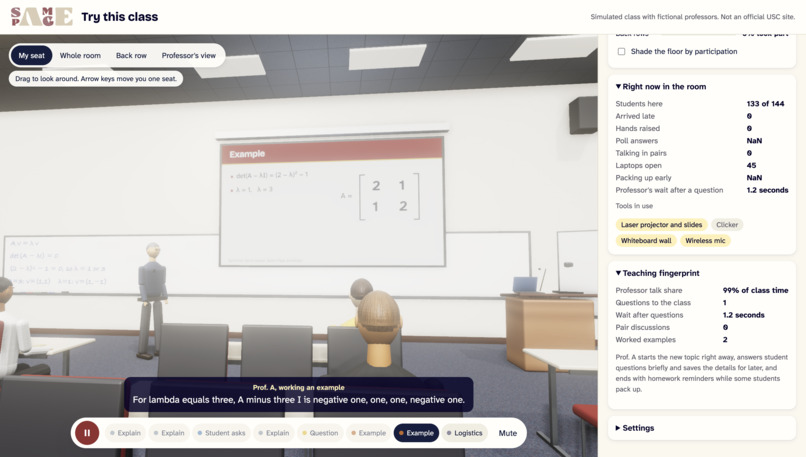
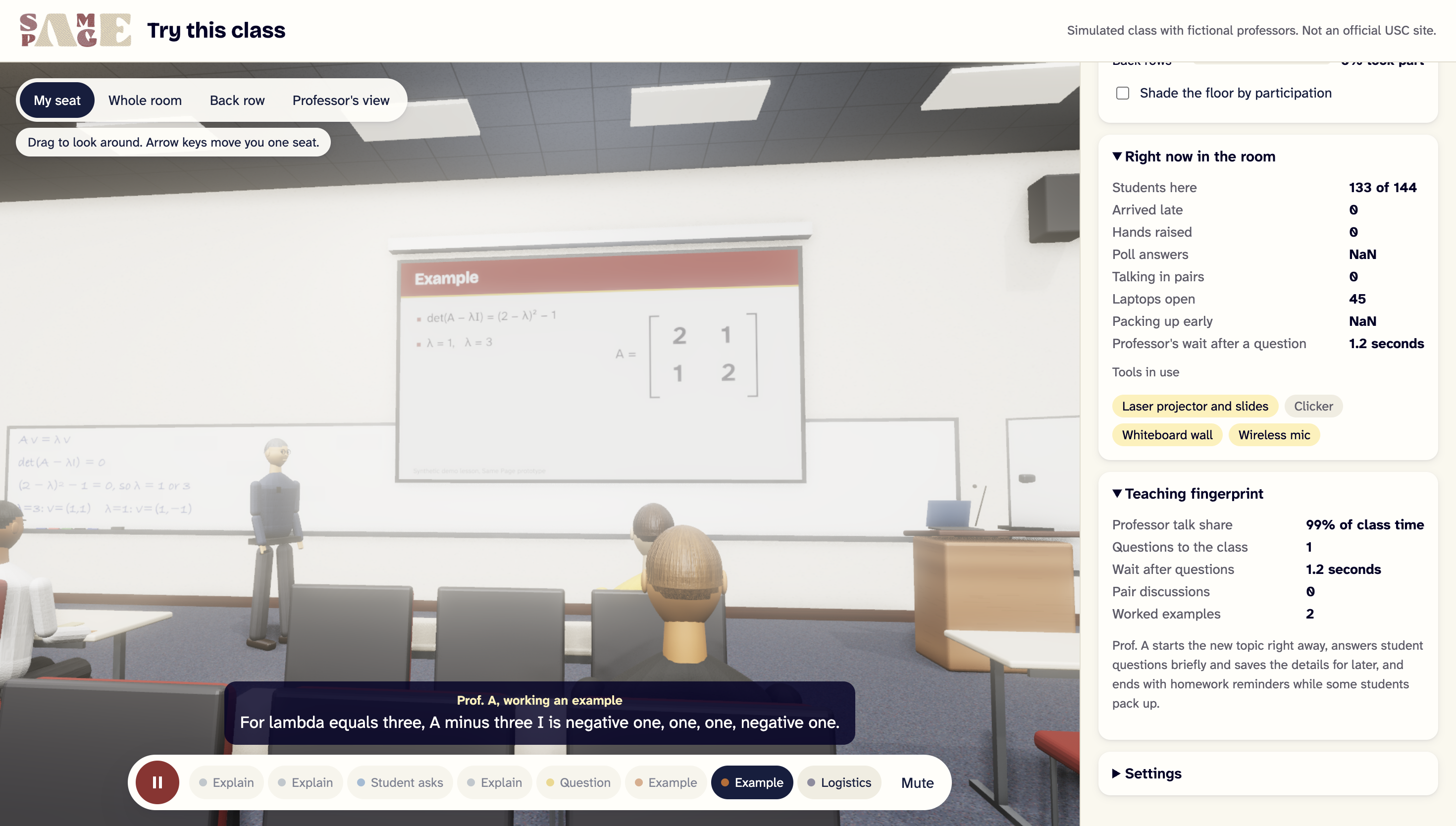
Snapshot of the front classroom view in Try This Class feature
-
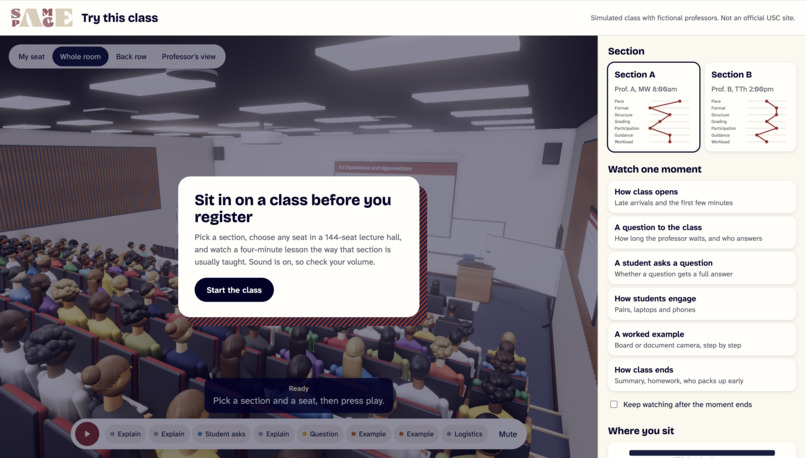
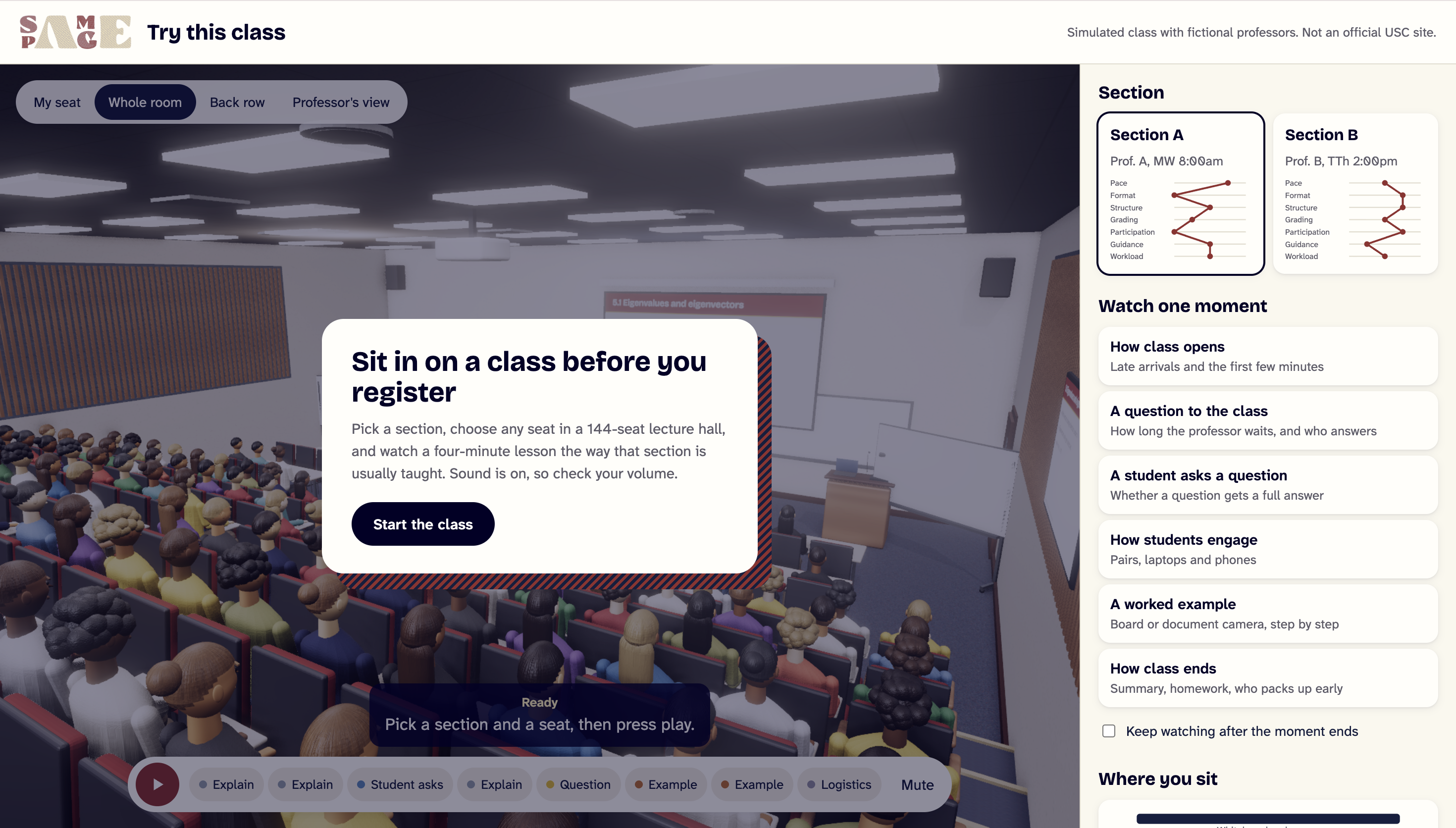
Snapshot of the loading screen of Try This Class feature
-
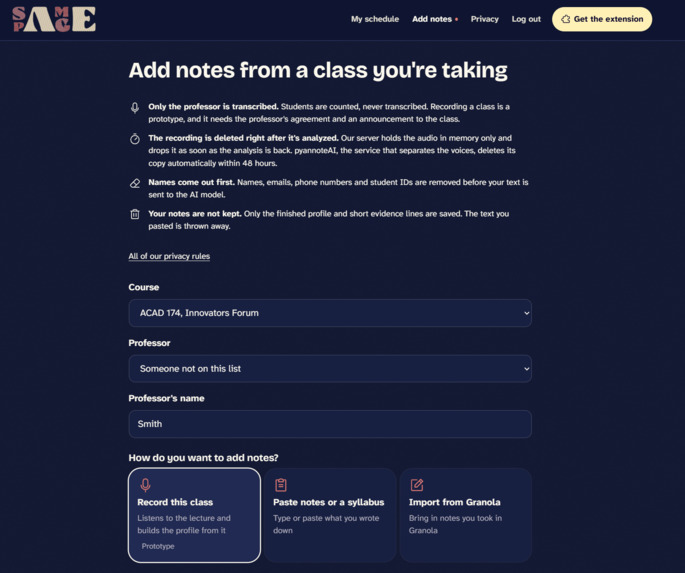
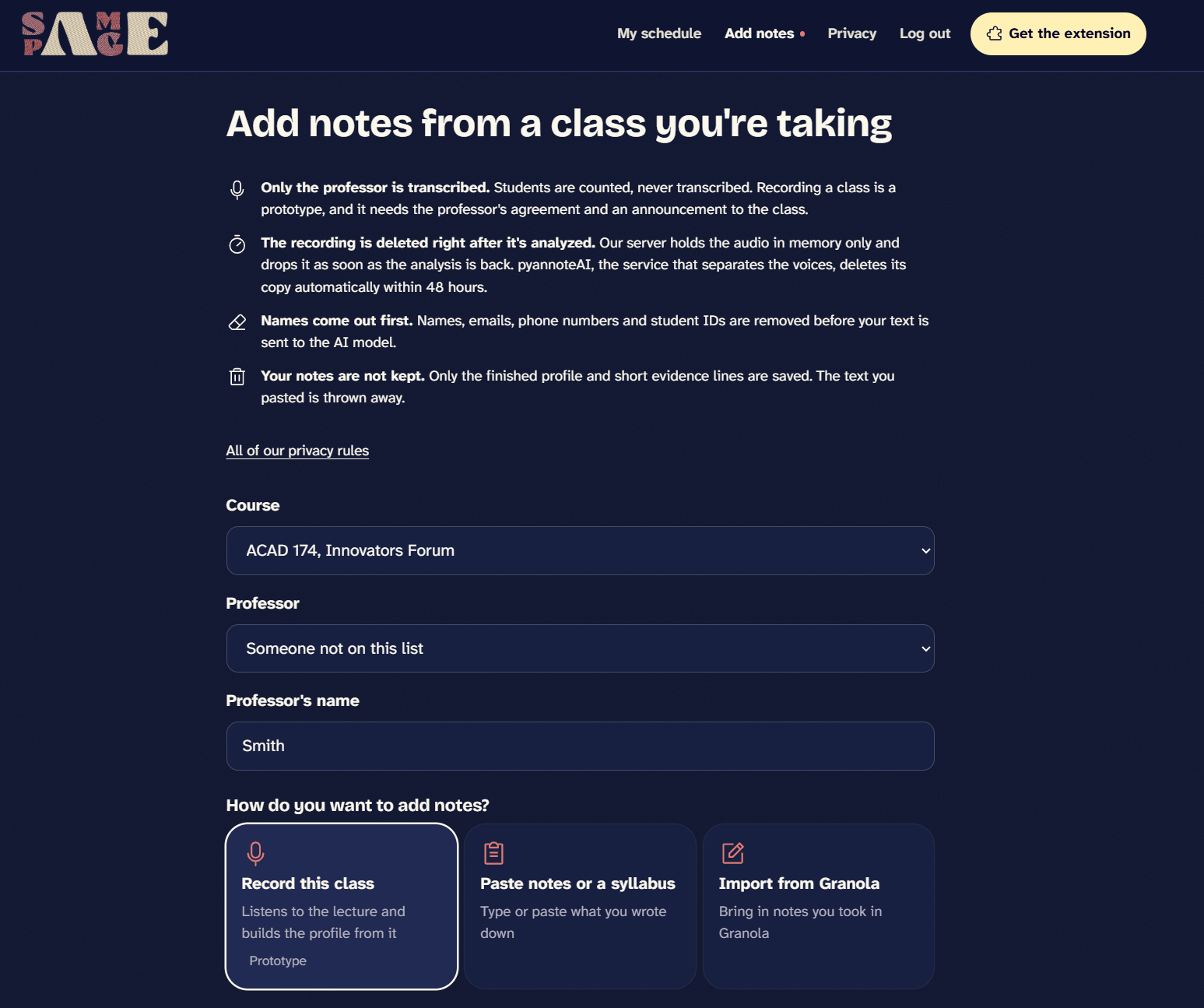
Snapshot of the initial Add Notes feature
-
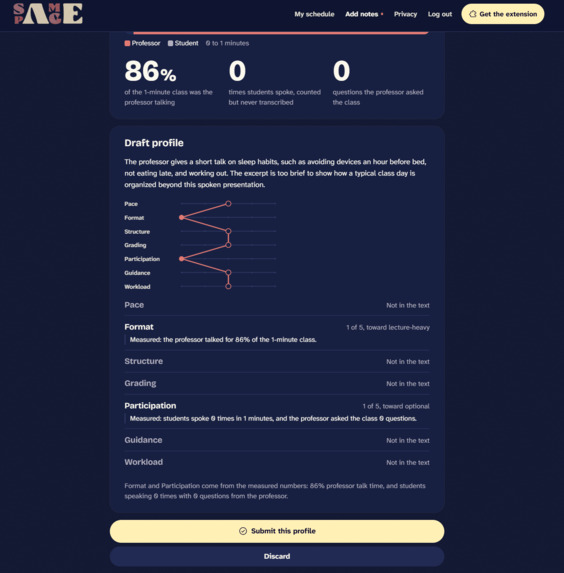
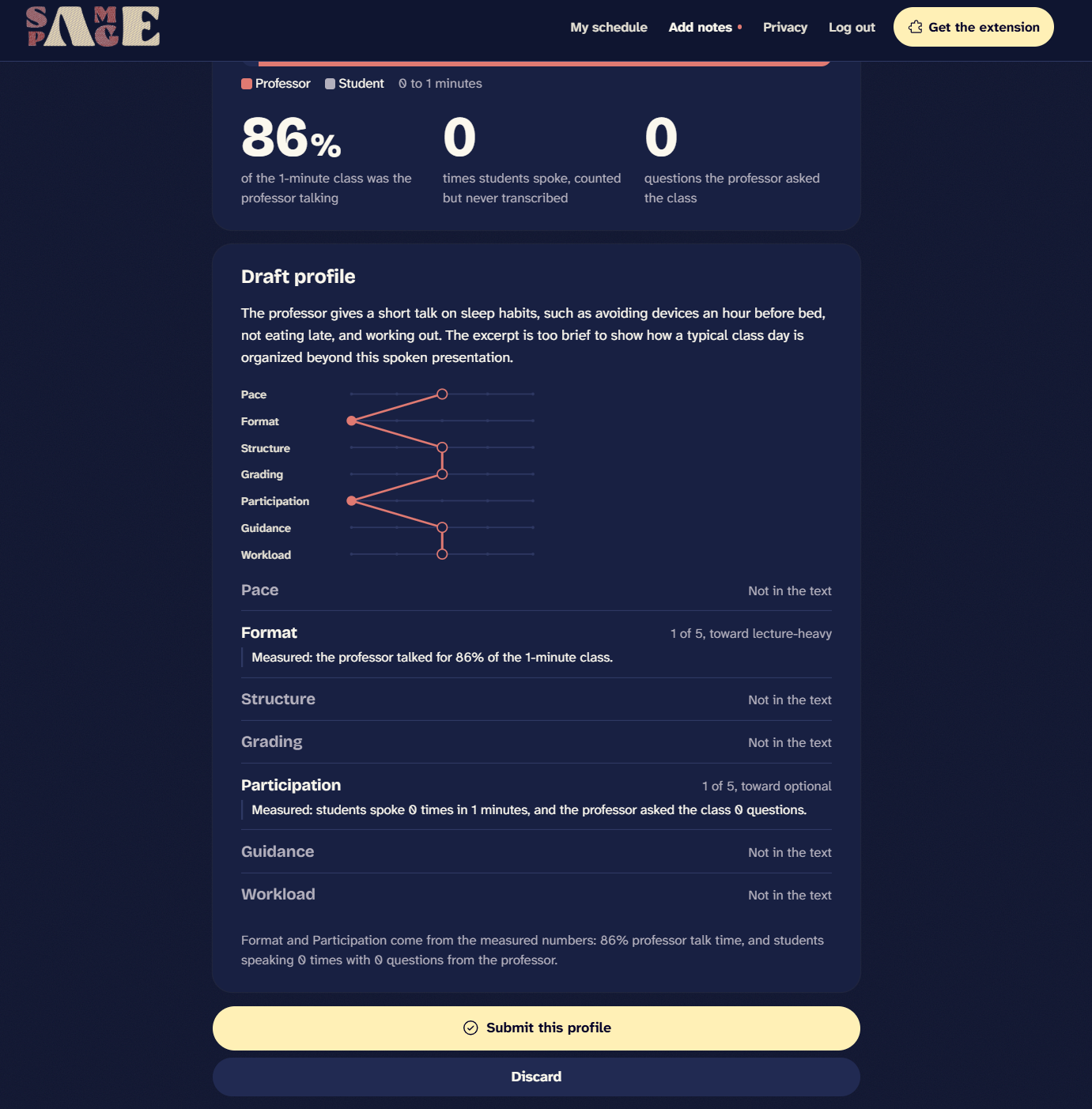
Snapshot of the analysis of a sample audio taken with the Add Notes feature
-
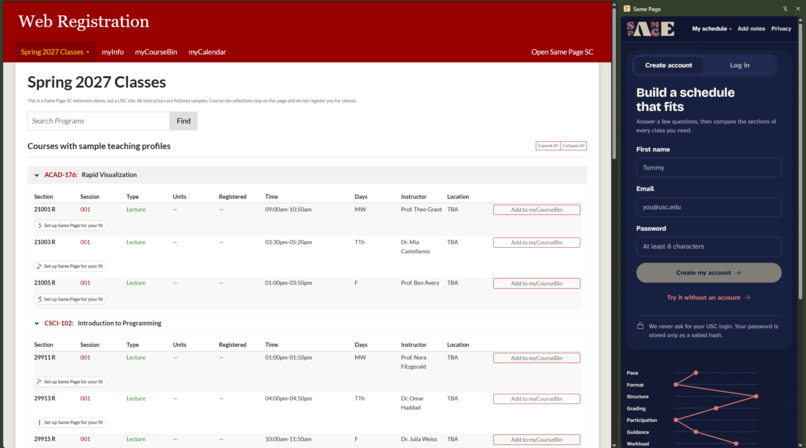
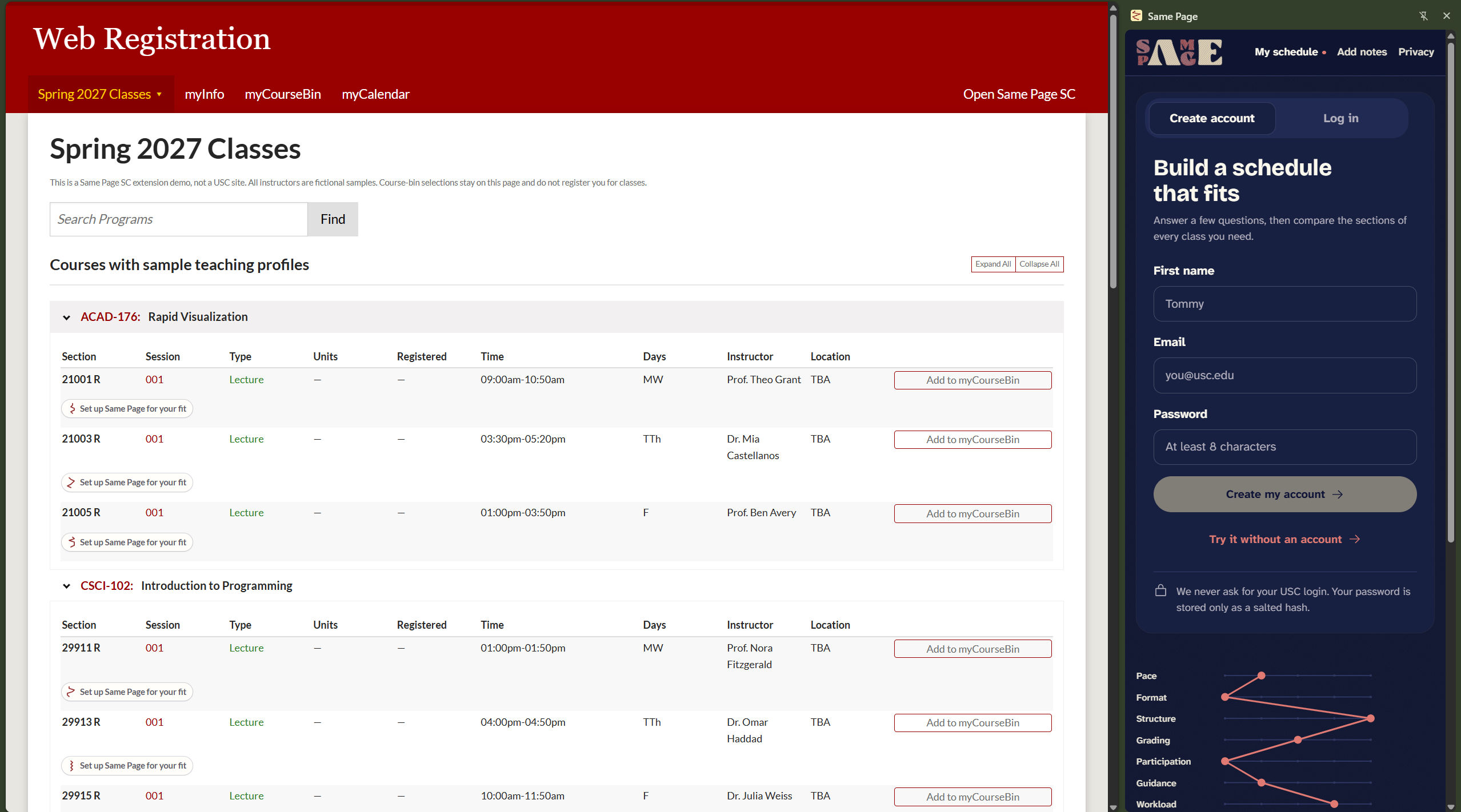
Snapshot of the Same Page browser extension working with our mock Web Registration
-
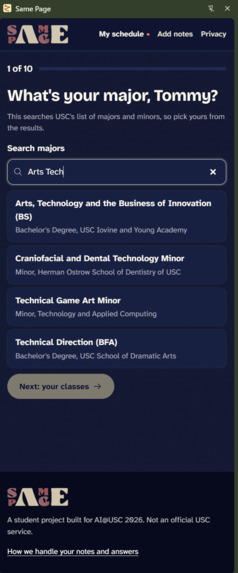
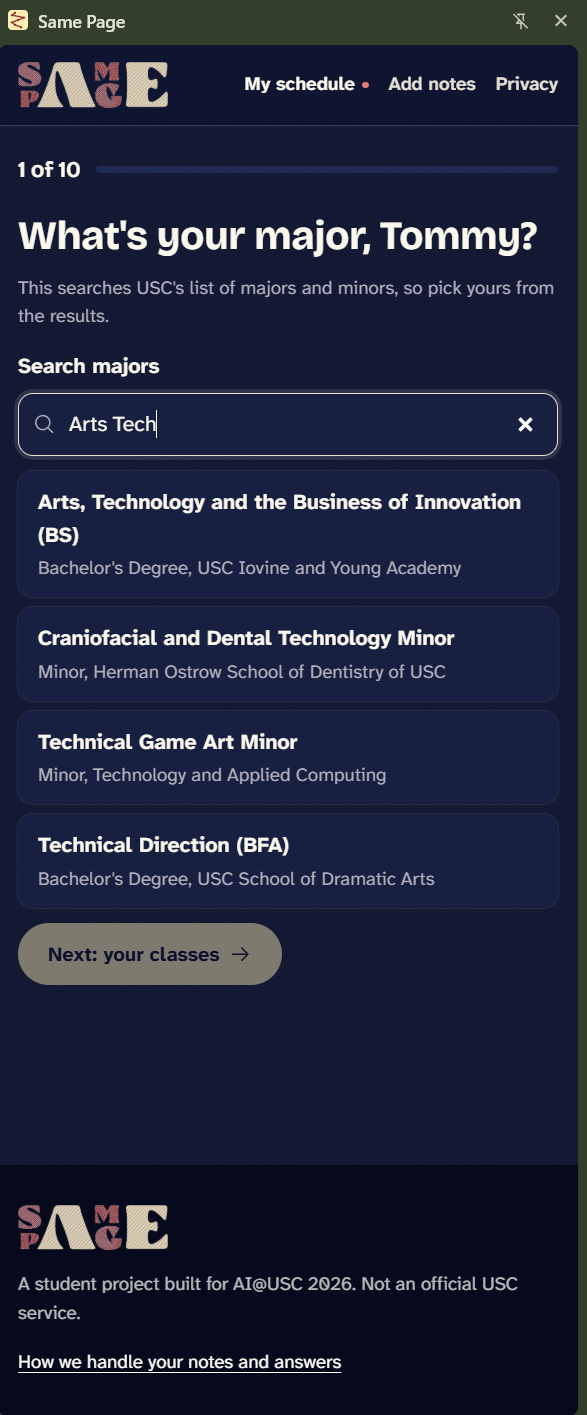
Snapshot of user data setup page (major) within the browser extension
-
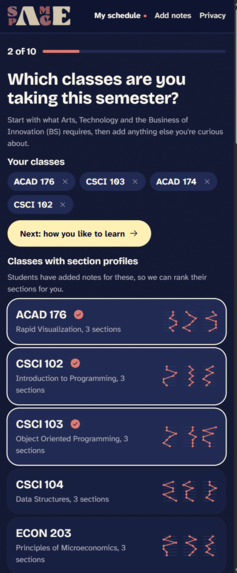
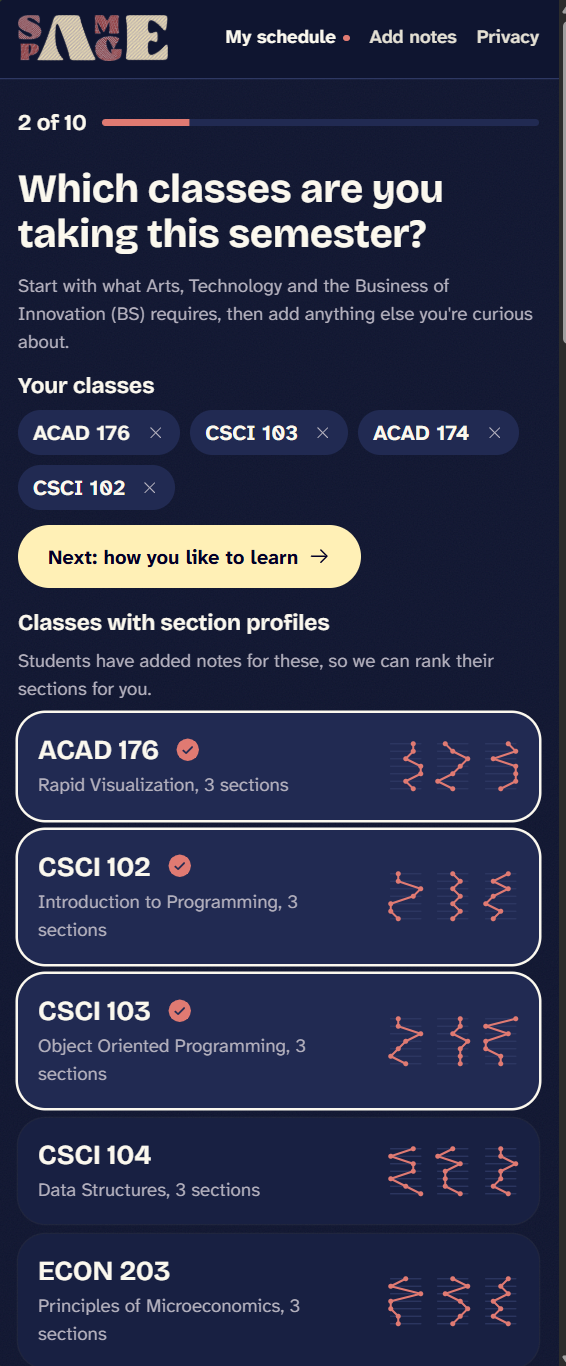
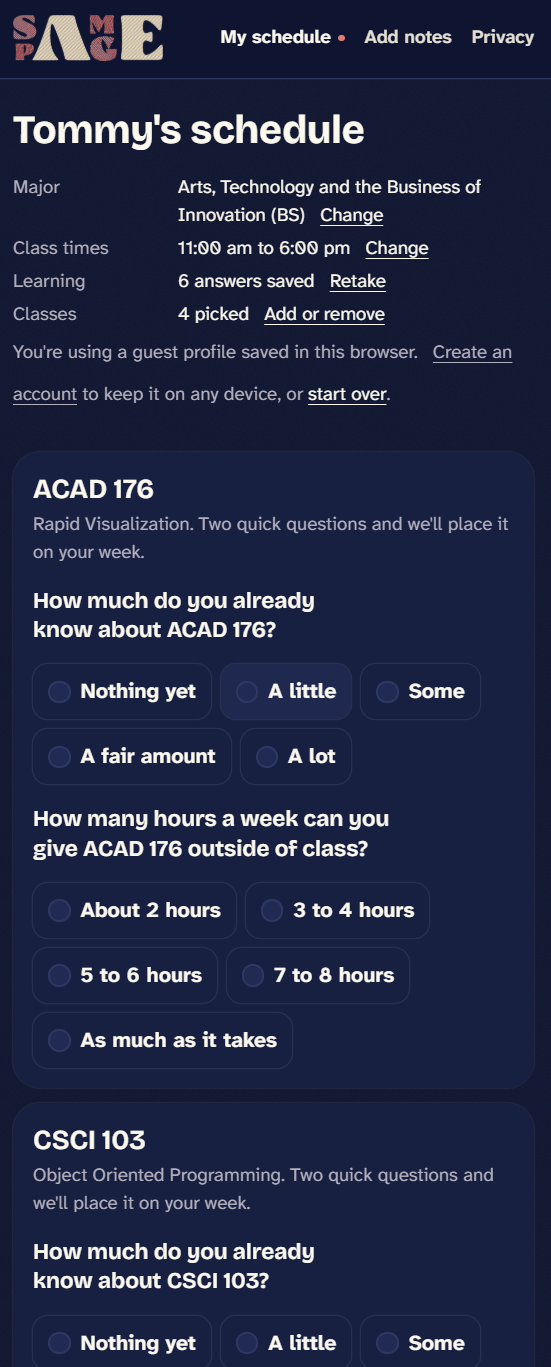
Snapshot of course setup page within the browser extension
-
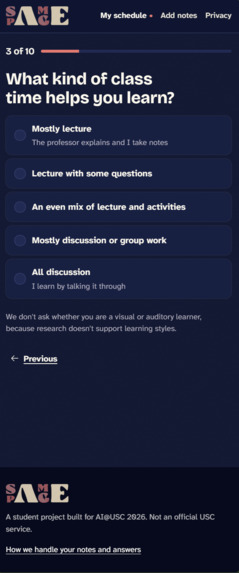
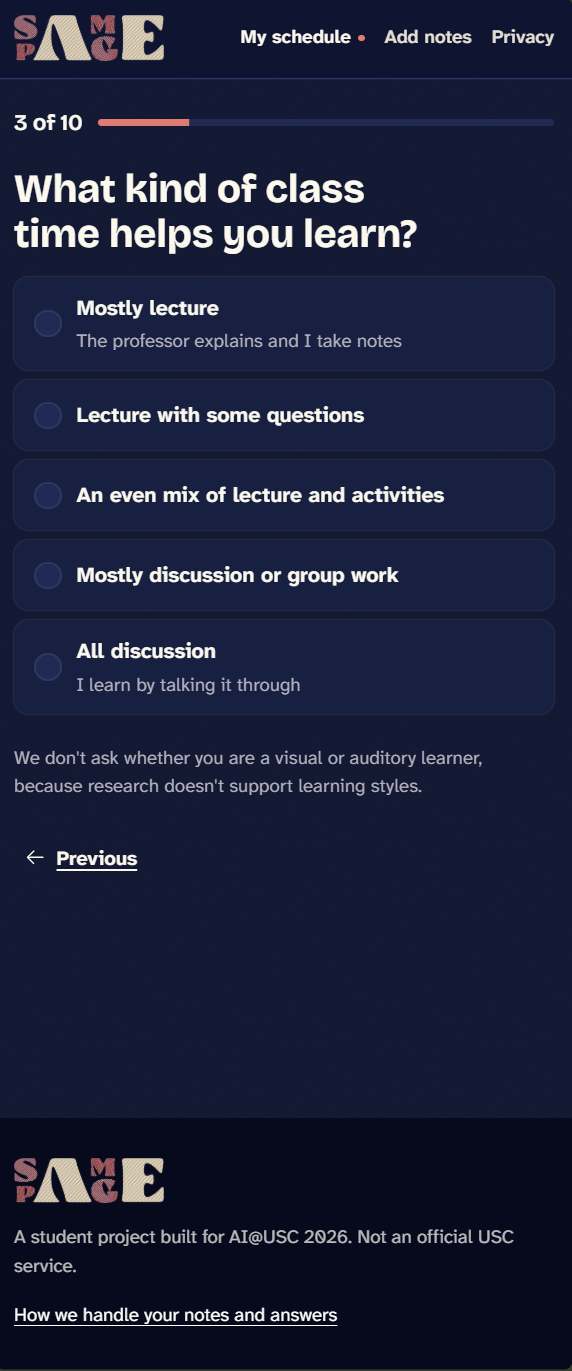
Snapshot of user data setup page within the browser extension
-
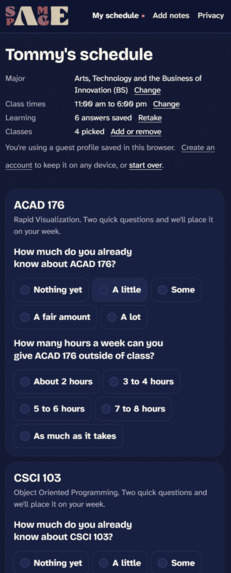
Snapshot of user data setup page (familiarity with coursework) within the browser extension
The Problem
Every semester, every Trojan registers for class. Course registration presents high-stakes decisions for students, who often lack essential information to make informed choices. While academic advisors can outline major requirements, they cannot recommend professors who align with students’ learning styles. Current platforms like Rate My Professor are flawed, suffering from self-selection bias, documented discrimination against female and minority educators, and a negative correlation between professor ratings and course rigor. This results in unreliable reviews that waste students’ time and can falsely damage professors’ reputations. Just four days ago, we were notified that a USC professor drew no enrollment because students confused them with a same-named professor rated ⅕ stars on the website. The consequences of this issue reach the whole academic community through disengagement and strained relationships between students and instructors. When registration runs on unreliable narratives, students lose, professors lose, and so does the academic environment that depends on engaged learners meeting the right courses and the right teachers.
Our Solution
Same Page SC helps USC students choose classes based on how they learn best and how professors actually teach. Built for Trojans, by Trojans, the platform starts before the actual onboarding. With appropriate permissions, real classes are recorded at the level the professor is comfortable with, creating authentic lecture previews. AI then analyzes these recordings alongside transcripts and syllabi to build a visual "Classroom DNA" profile highlighting teaching structure, participation opportunities, collaborative activities, and grading expectations.
One data stream, three uses: Lecture audio is transcribed and sorted by speaker (professor, the student, or classmates) right on the student's laptop. Only anonymous, class-level summaries ever leave the device.
- For professors: their speech becomes their Classroom DNA, measuring pace, questions asked, and how long they wait for answers.
- For students: their own questions and Web Registration history (completed courses and credits) update a model of what they've mastered.
- For future Trojans: every session makes both profiles more accurate, so one student's data helps the next group choose that class.
Students gain:
- A 10-question evaluation that shows how they learn best and what classroom environment suits them.
- Personalized professor recommendations, each with a clear reason it fits.
- A preview of the real experience, through an actual lecture excerpt, before they register.
Professors gain:
- A profile based on how they teach, not a single star rating.
- Control over what gets recorded, at the level they're comfortable with.
- Students who chose their class knowing what to expect, and arrive ready to engage.
Instead of relying solely on reputation scores, students gain the context to make informed choices, while professors are represented through relevant teaching characteristics. Optional student feedback completes the cycle, helping future Trojans find classes that better match their needs.
By putting students and professors on the same page before the first lecture, Same Page SC aims to turn mismatched expectations into mutual understanding. We aim to help students arrive ready to engage, professors feel fairly represented, and stronger classroom relationships strengthen the wider academic community.
Let's get on the same page.
Challenges
- Obtaining recording permissions: Building an authentic lecture database required addressing professor consent and student privacy.
- Defining what AI can measure: We had to distinguish observable activities, such as group discussions, from conclusions video cannot establish, such as whether students are learning.
- Designing meaningful matches: Translating student preferences and teaching characteristics into useful recommendations required balancing multiple factors without oversimplifying either profile.
- Building the initial database: The platform needs representative recordings before students can receive useful recommendations, creating an early challenge in recruiting contributors.
- Keeping the project focused: We narrowed the initial experience to teaching profiles, a short quiz, and real lecture previews, leaving integrations and advanced feedback features for future development.
What's next
- Pilot with participating professors: Collect permitted recordings, transcripts, and syllabi to build our initial database.
- Validate classroom metrics: Check AI-generated observations against human review to understand their accuracy and limitations.
- Test with USC students: Gather feedback on the onboarding quiz, teaching profiles, and recommendation explanations.
Built With
- bayesian-knowledge-tracing
- claude-opus-5.5
- express.js
- kokoro
- manifest-v3
- node.js
- pyannoteai
- python
- react
- replit
- three.js
- typescript
- vite
- webgl
