-
-
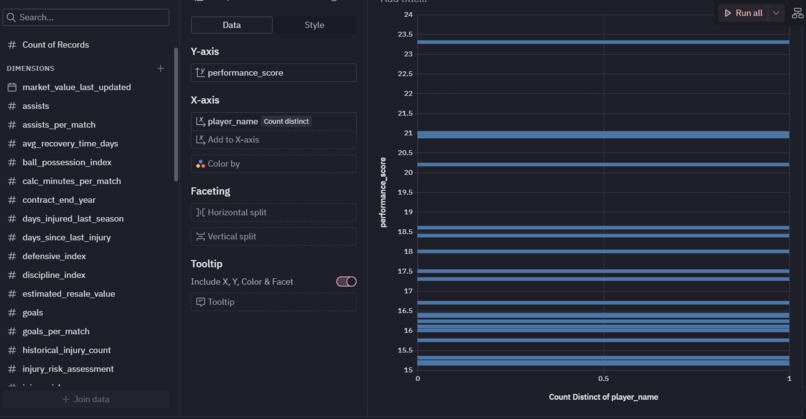
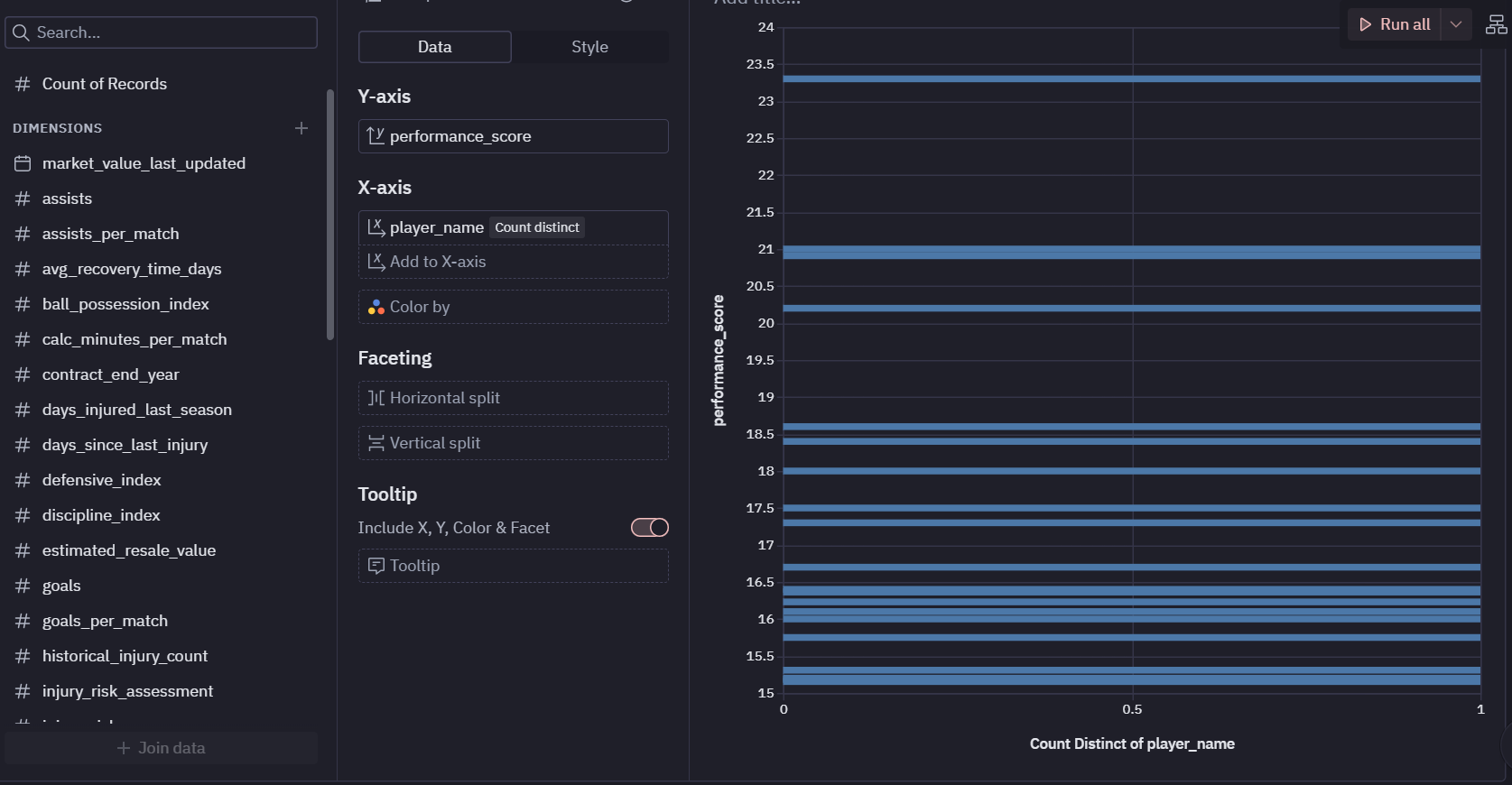
TOP PERFORMING PLAYERS
-
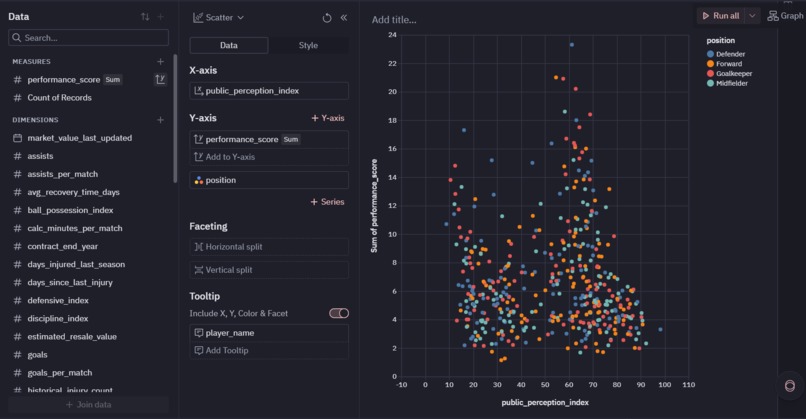
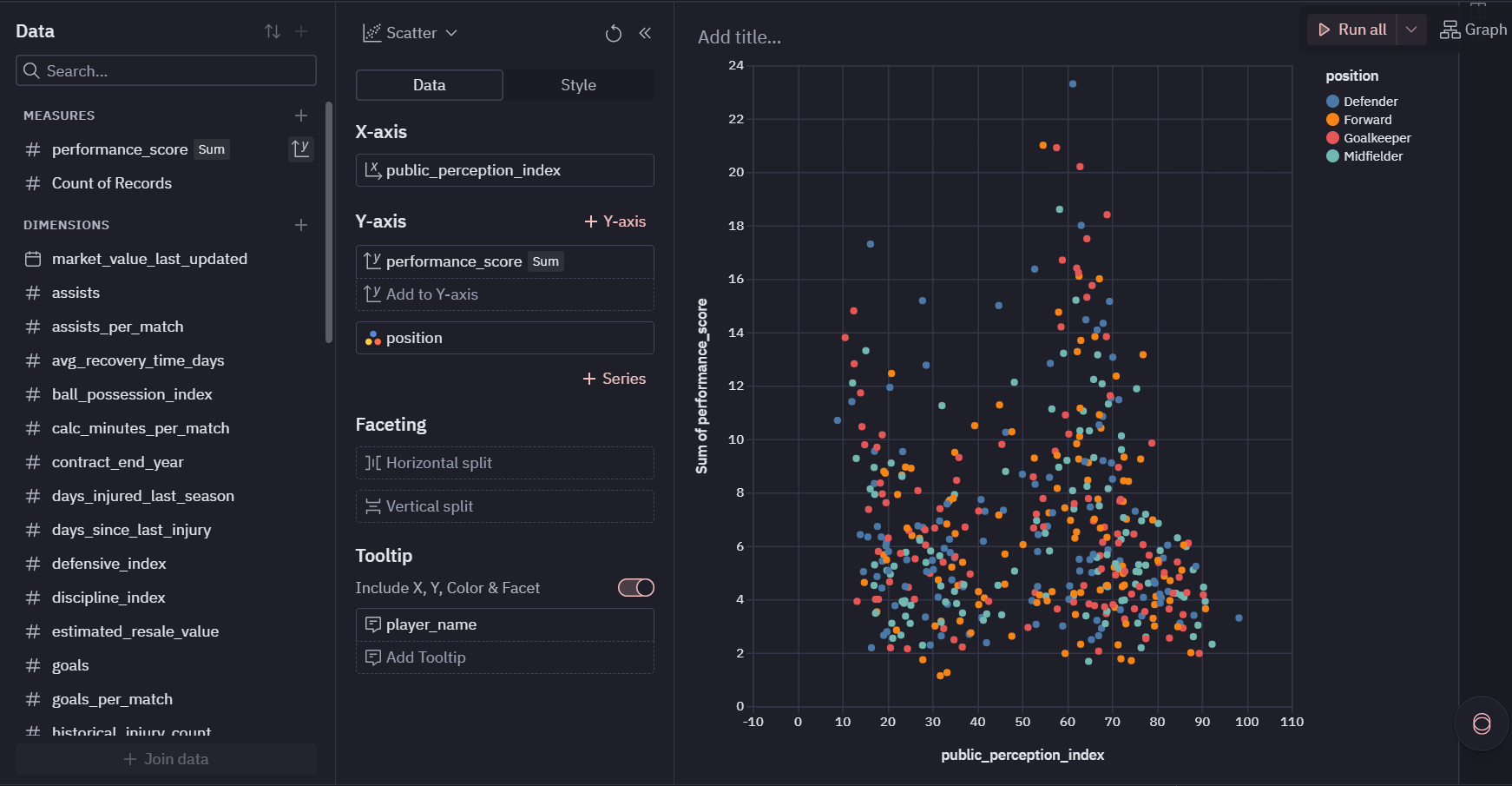
PUBLIC PERCEPTION VS PERFORMANCE
-
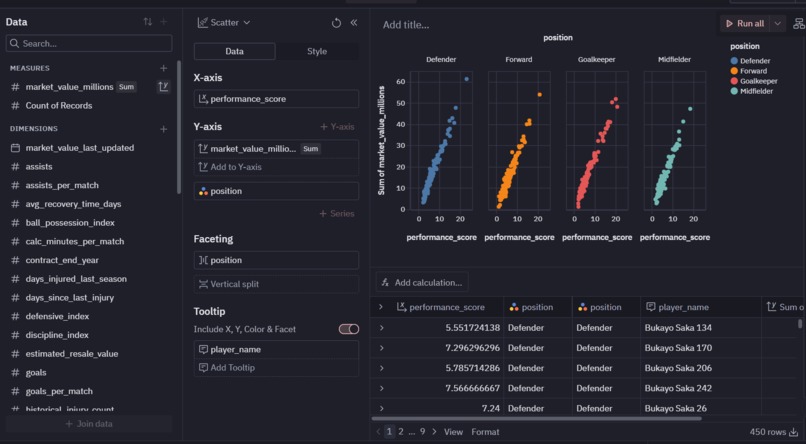
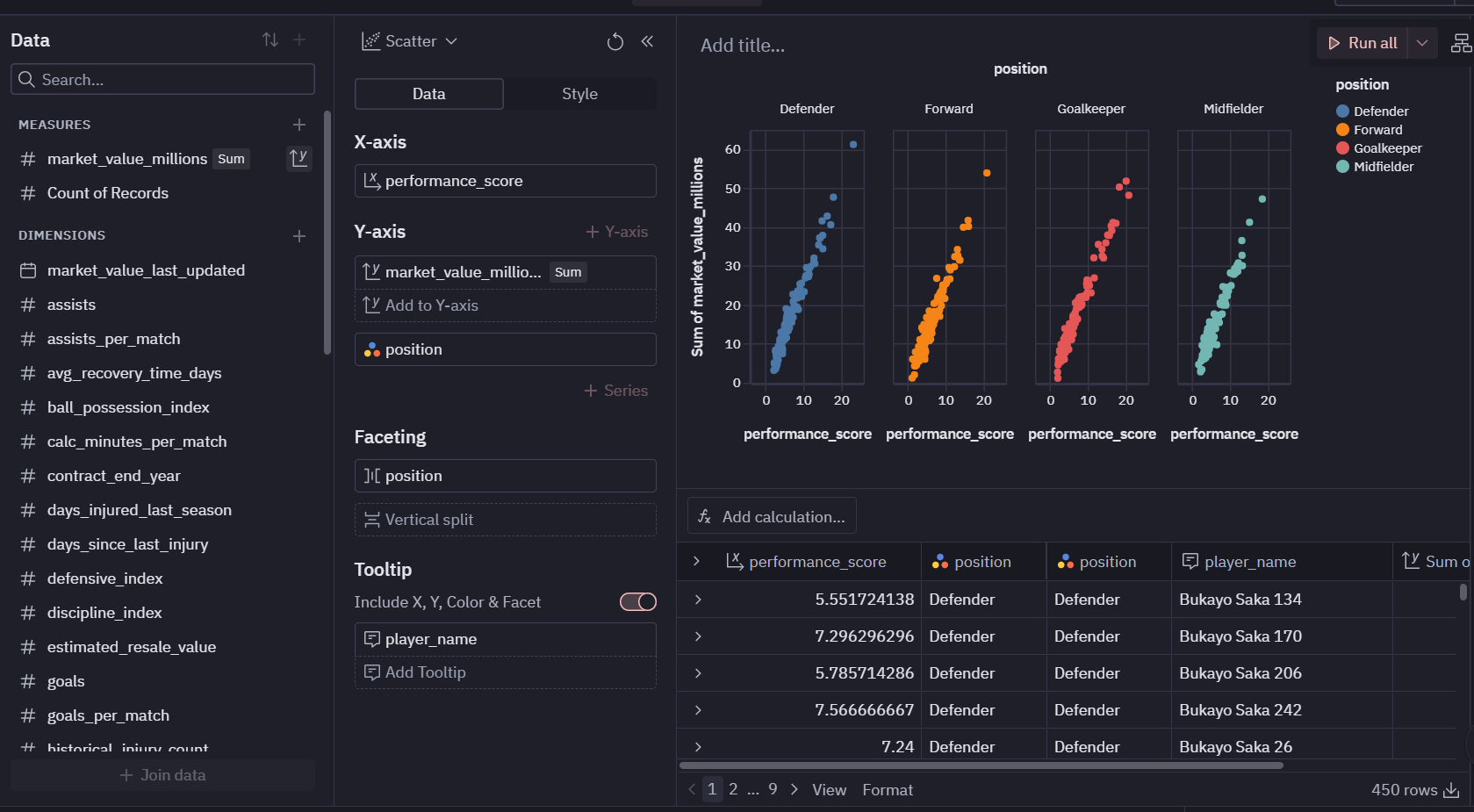
MARKET VALUE VS PERFORMANCE
-
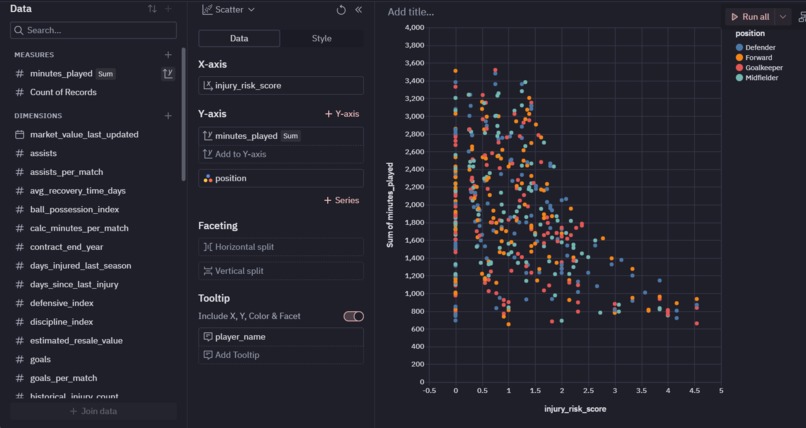
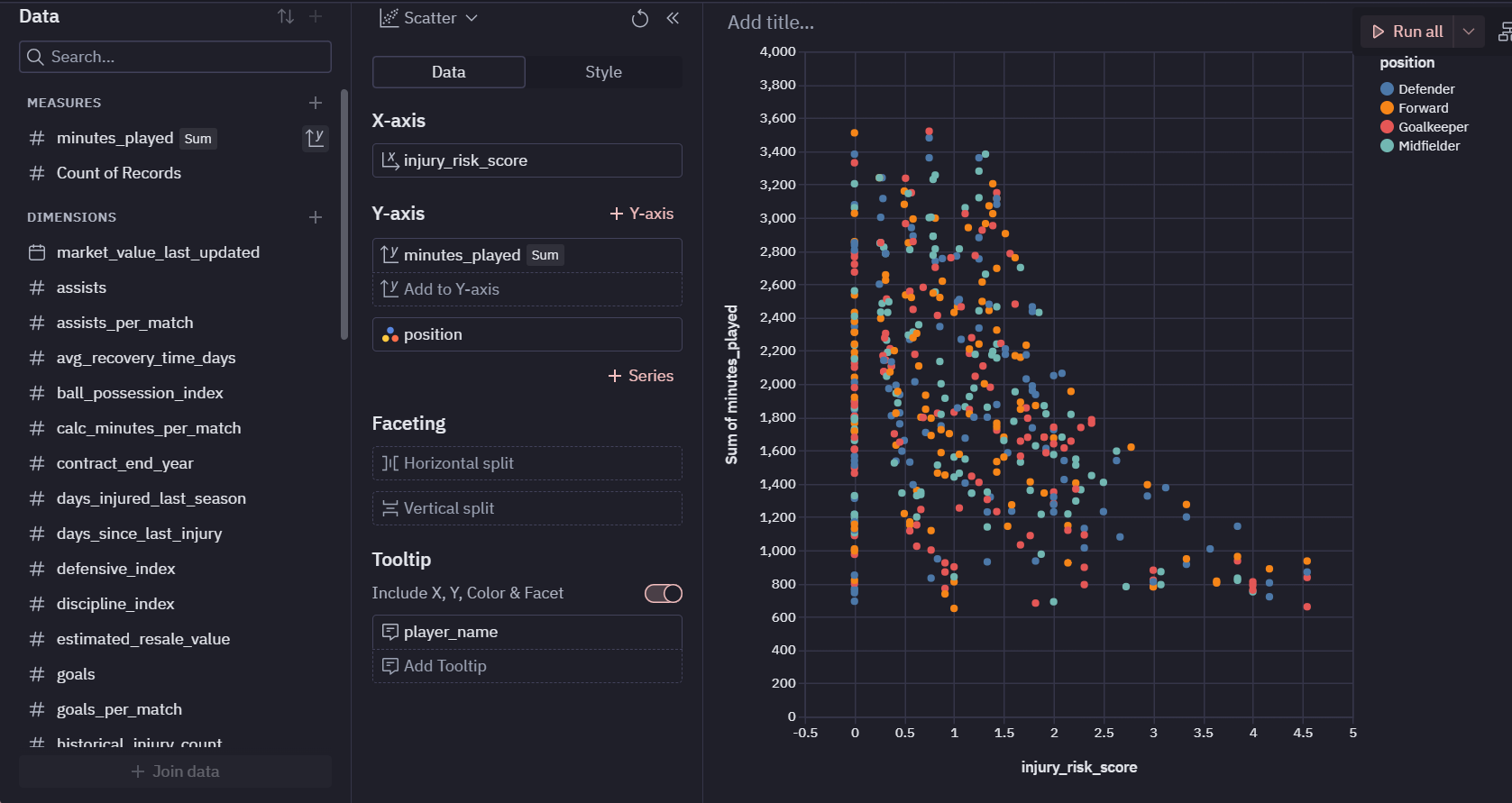
INJURY RISK VS MINUTES PLAYED
-->💡 Inspiration
Football player evaluation is often reduced to goals, assists, and popularity. However, critical factors such as injury risk, workload, market valuation efficiency, and public perception are frequently overlooked. We were inspired to explore how combining multiple dimensions of football data could provide a more holistic and realistic understanding of player value and risk, beyond traditional statistics.
-->🛠️ How We Built the Project
We built this project using Hex as an end-to-end data analysis and visualization platform.
The dataset contains 450 professional football players with 43 features, including performance metrics, market value, injury history, and social media perception.
Our approach included:
- Exploring and validating the dataset to ensure cleanliness and reliability
- Creating interactive visualizations to study relationships between performance, value, risk, and perception
- Using Python-based analysis inside Hex to extract meaningful patterns
- Structuring the project to clearly communicate insights through data storytelling
All visualizations and analysis were designed to be intuitive and easy to interpret.
-->📊 What We Learned
Through this project, we learned that:
- Player market values generally align with on-field performance, indicating efficient valuation at the top level
- Elite players are often overused, continuing to play heavy minutes despite elevated injury risk
- Public perception and social sentiment do not always match actual performance, revealing both overhyped and underrated players
- Honest analysis is just as important as advanced modeling when drawing conclusions from real-world data
This reinforced the importance of data-driven decision-making in sports analytics.
--> ⚠️ Challenges We Faced
One key challenge was interpreting results that did not immediately produce extreme outcomes, such as the absence of clearly undervalued players. Instead of forcing conclusions, we focused on explaining what the data truly indicated — market efficiency rather than missing opportunities. Balancing multiple dimensions of data while keeping insights simple and understandable was another challenge that required careful visualization and storytelling choices.
--> 🚀 Conclusion
This project demonstrates how combining performance, market, health, and perception data can support smarter scouting, transfer, and squad management decisions. By going beyond goals, the analysis highlights risks and insights that are often hidden in traditional football evaluation methods.


Log in or sign up for Devpost to join the conversation.