Inspiration
A sidewalk can look fine on a campus map and still interrupt someone's trip. A facilities team might have a photo of the problem and a limited repair budget, but it still has to decide what to inspect, what to fix first, and what can wait. We built Curb to connect the evidence to those decisions.
Start the live demo · Compare plans · 116-second walkthrough (silent MP4)
What it does
- Review a real finding. Open the 14-second Robertson Hall video and jump to the surface breakup at six seconds. A reviewer can inspect the original frame and close-up, then accept, correct, or reject the finding. The review records what is visible and keeps route impact marked unknown.
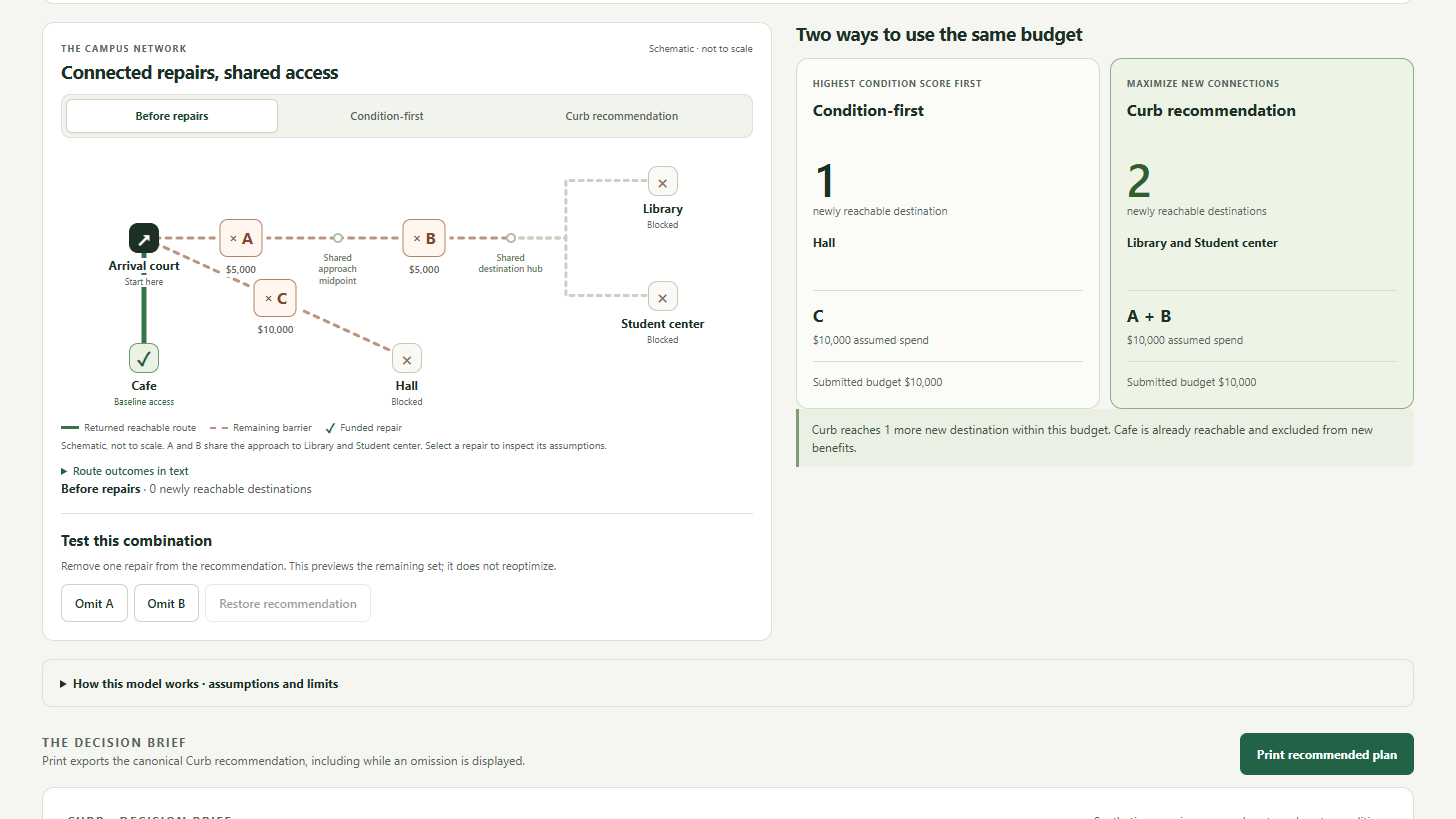
- Compare two plans at the same budget. On a separate synthetic campus, set a $10,000 budget. Fixing the worst condition first makes Hall newly reachable. Curb picks two linked repairs for the same assumed spend and makes Library and Student center newly reachable.
- Test the recommendation. Omit either linked repair and both new trips disappear. Restore the recommendation and print the decision brief. At $20,000, both plans reach the same three new destinations.
The full survey exports PDF, HTML, and CSV reports. The Route Explorer lets you inspect archive sources, and the robot CAD concept shows a possible approach to gathering more consistent footage.
How we built it
We built the app with Next.js, React, TypeScript, and Zod. An offline AI vision workflow and CLIP helped evaluate five sidewalk findings, and OpenCV and FFmpeg helped track and prepare the video evidence. The public demo replays that prepared analysis. A separate planner compares affordable repair combinations by recomputing reachability on the scenario graph.
What we're proud of
An independent rerun checked 30 authored synthetic networks at four budgets each. At the same assumed budget, Curb averaged 0.81 more newly reachable destinations than condition-first. It led in 58 of 120 cases and tied the other 62. Benchmark methods and results
What we learned
A real inventory can still leave a funding question unanswered. In the Cañada College case, four proposed ramp assemblies total $23,500 in 2020 estimates. Curb shows the source inventory and the missing crossing and approach evidence needed before it can compare plans.
What's next for Curb
Walk the crossings with disabled campus users and facilities staff, measure the conditions and repair scope, and get current quotes. Then test whether the decision brief helps teams choose which work to fund.
Built With
- next.js
- typescript
- vercel
- zod
