-

Menu and Splash Screen
-
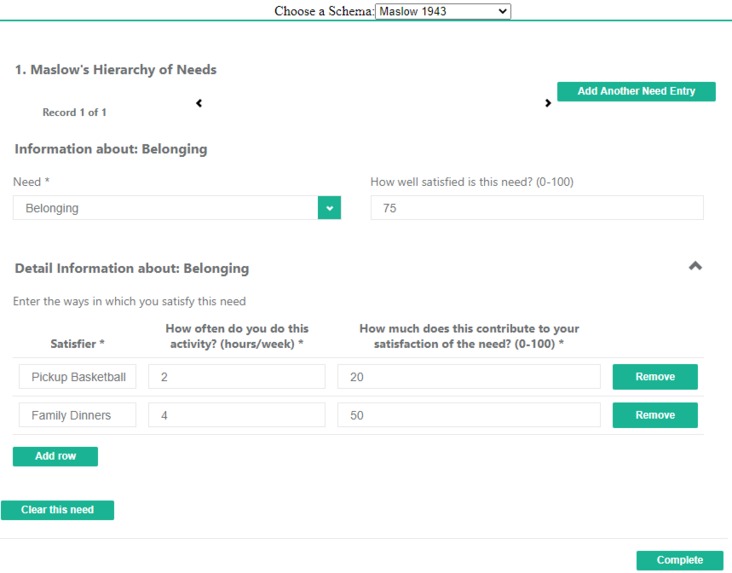
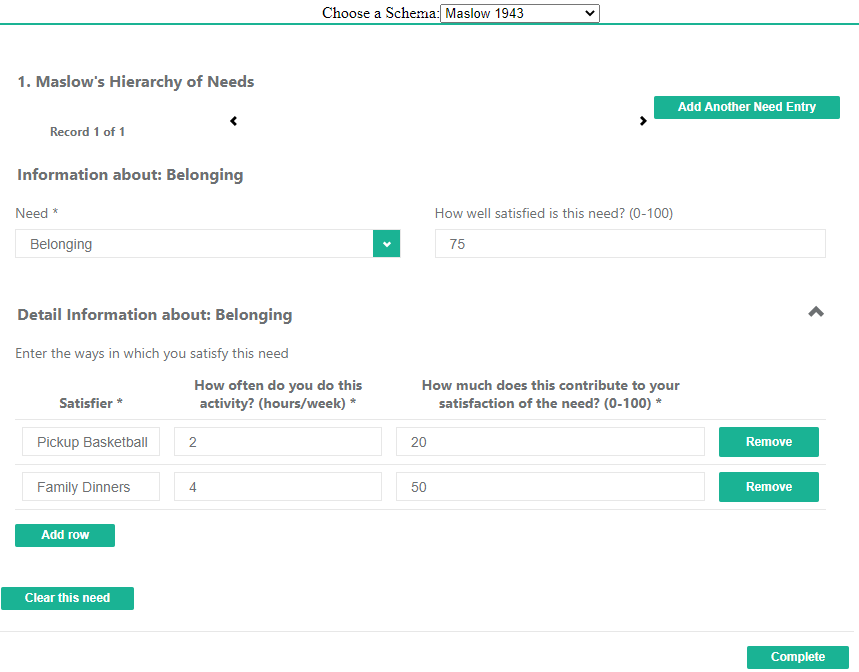
A dynamic survey for systematically reflecting on needs
-
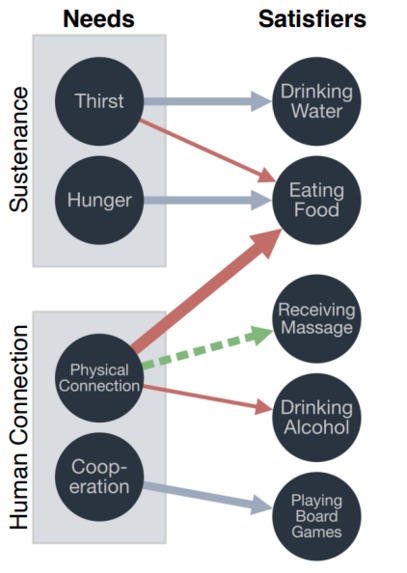
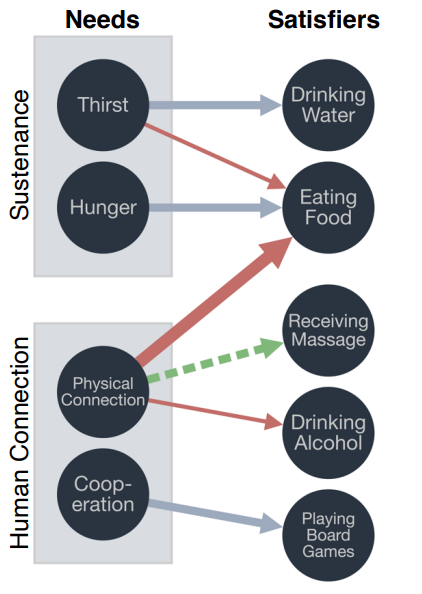
Visualize your own need network
-
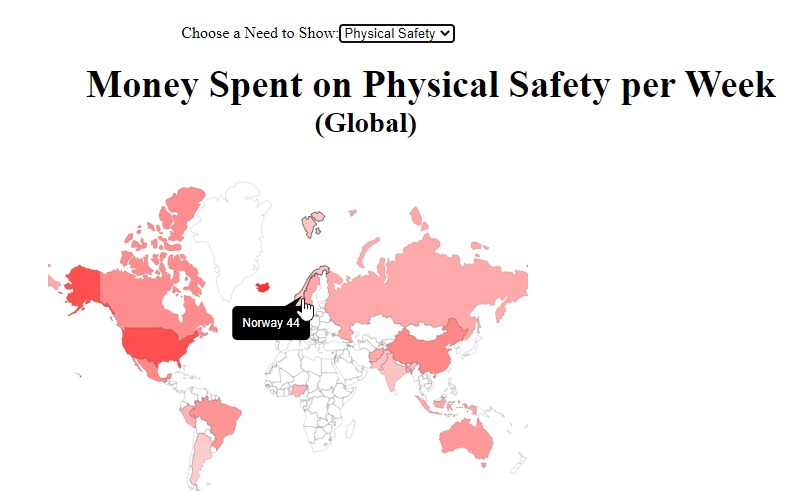
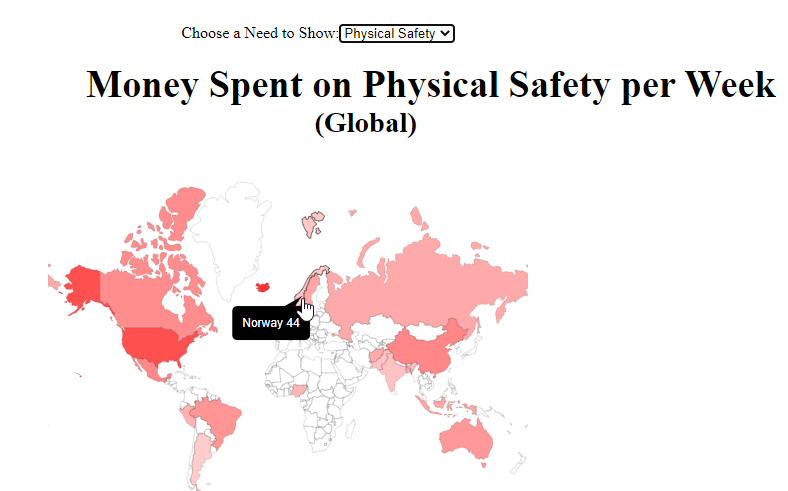
Explore need satisfaction across the globe

Inspiration
Collectively, we lack an effective method for systematically assessing the needs of a population. We currently optimize measures of human progress that fail to address the human condition (such as GDP), or that inappropriately quantify tradeoffs between different aspects of the lived experience (such as gross national happiness). Creating these aggregate indices always implies a reduction of a rich human life into a coarse-grained number, and has led to environmental destruction, a loneliness epidemic, and other large scale social problems. More challenging, there is little agreement on what even constitutes a set of basic human needs. Theories have been proposed in psychology (Maslow's Hierarchy), philosophy (the capabilities approach), and economics (Max-Neef's fundamental needs), but no consensus has been reached.
In this project, we seek to address these issues by creating a participatory, data-driven approach to assessing human need in a population. By using a network structure to capture the needs and satisfaction of an individual, rich information about a lifestyle can be maintained as needs are aggregated across groups of a population (using multi-layer networks). This will provide leaders with new insights into the lives of those in their communities, and lead to better policy solutions to better satisfy human need.
What it does
Resatisfy is meant to be a tool for assisted introspection - providing a quantitative view into one's need landscape. The application includes a survey allowing individuals to systematically reflect on all of their needs, based on different theories of need (schemas) that have been proposed. Individuals can provide information about needs, the way in which the needs are met (satisfiers), and the relationships between the two.
While the process of reflecting on needs is expected to be individually beneficial, the tool also includes a network visualization feature to view the need-network resulting from the survey. This provides a visual representation of an individual's lifestyle, which may be useful for facilitating empathy and reflection.
Lastly, the tool has a global analysis "Explore" feature, to view information about need satisfaction across the globe, potentially enabling cross-cultural sharing of how to satisfy needs with less cost and environmental impact.
How we built it
The app was built with Javascript and the React framework. We utilized the survey.js package to create the dynamic survey with different need schema. For the network visualization, we utilized cytoscape.js to create an interactive canvas based display. For the world map data exploration, we used D3. The database was created in SQlite, and designed with dbdiagram.io. Integrating the different packages with React was the biggest challenge. We both learned a significant amount about front-end development, and the importance of deeply understanding frameworks before using them.
What's next for A Census for Human Need and Satisfaction
The hackathon provided a great way to start on the infrastructure necessary for supporting a needs assessment informatics platform. However, we still have work to do to integrate the different components of the application, and ensure data flows smoothly between the front end and back end. After finishing a second draft of the prototype, we would like to begin user studies to explore the experience of systematically reflecting on needs. It may be a novel experience to have a computer ask you about your different needs like social belonging or self-actualization, and the capability for this kind of reflection may require training and development. Lastly, the current method relies on introspection, and it would be useful to merge objective data sources in with needs, such as classifying every transaction on a credit card statement based on the need it satisfied.
In the long run, we imagine this evolving into a social and community based platform, where individuals can share their need networks, and help communicate their needs to others, facilitating greater satisfaction. We imagine that organizational and political leaders will utilize the aggregated networks to better understand unmet needs across the population, and craft policy solutions to address those needs.
Built With
- cytoscape.js
- express.js
- javascript
- react
- sqlite
- survey.js

Log in or sign up for Devpost to join the conversation.