-
-
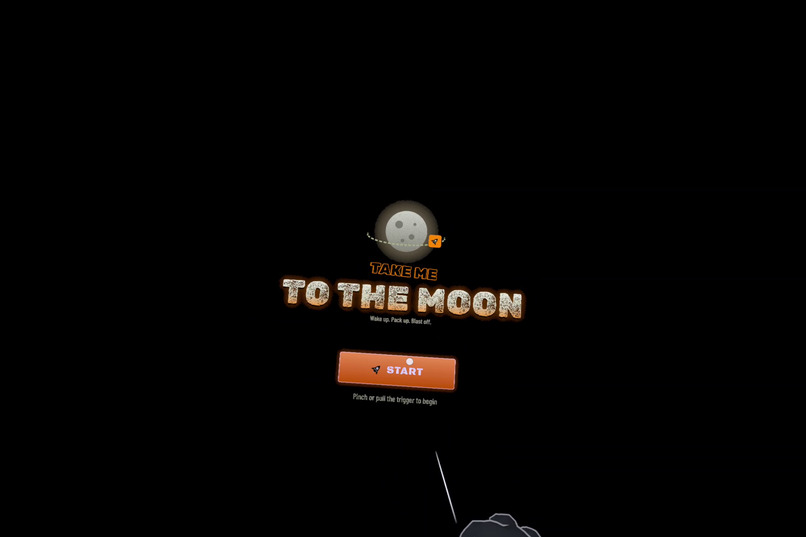
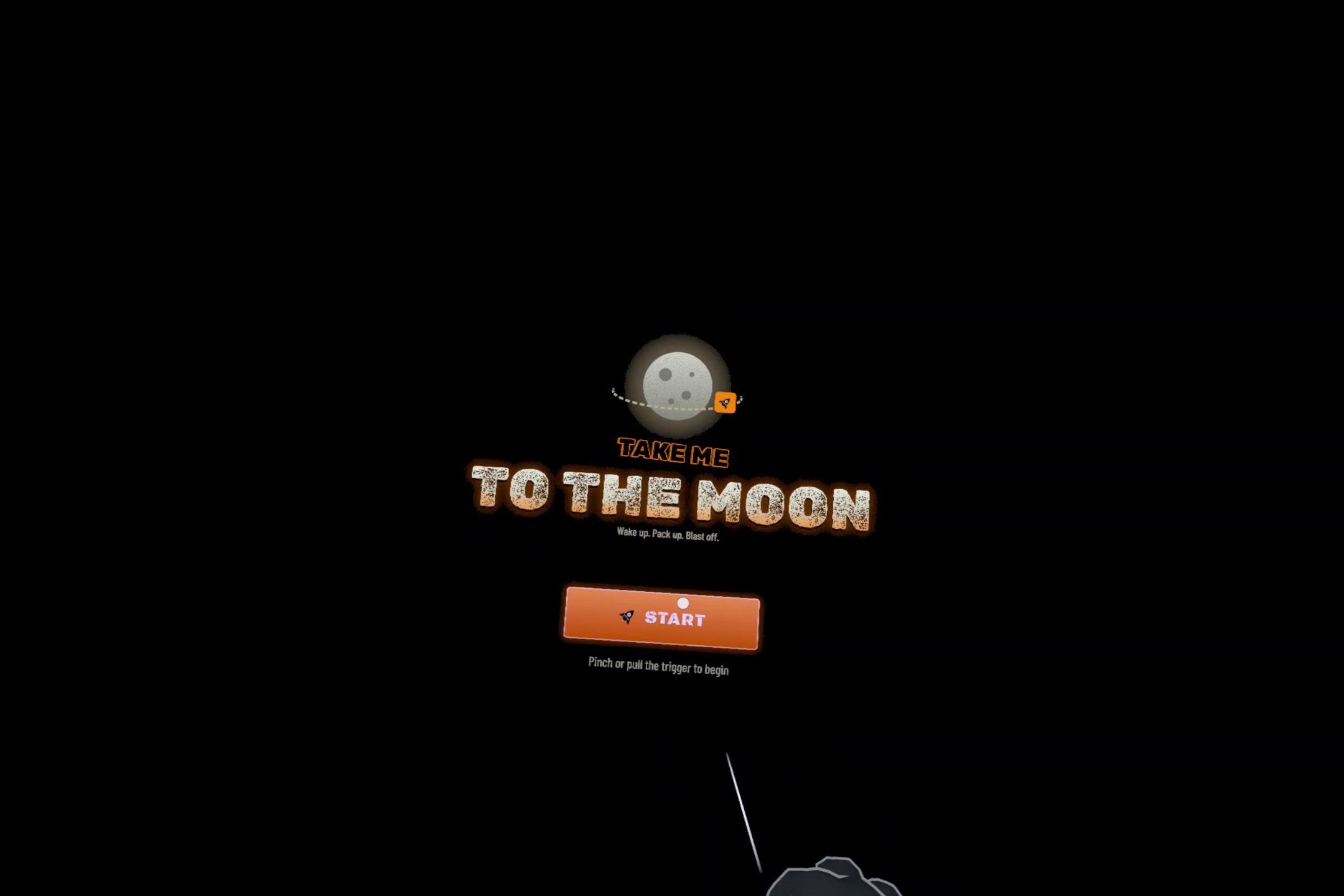
01_Logo with a Starting Point
-
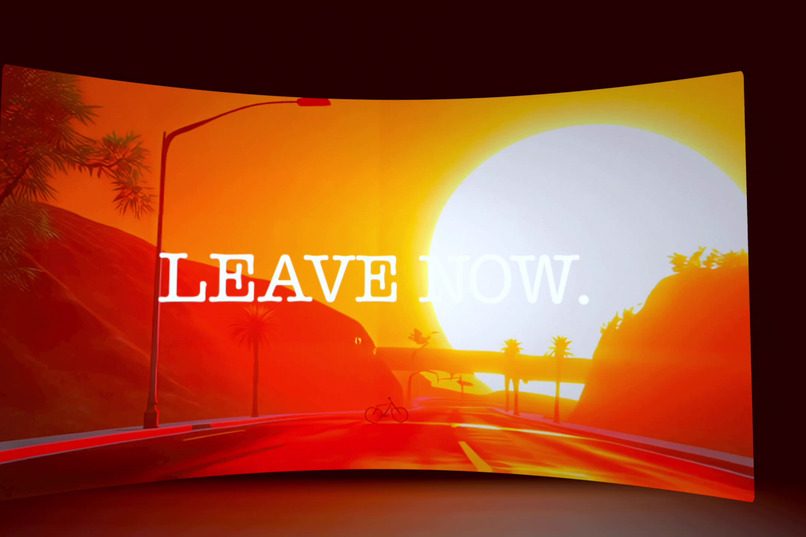
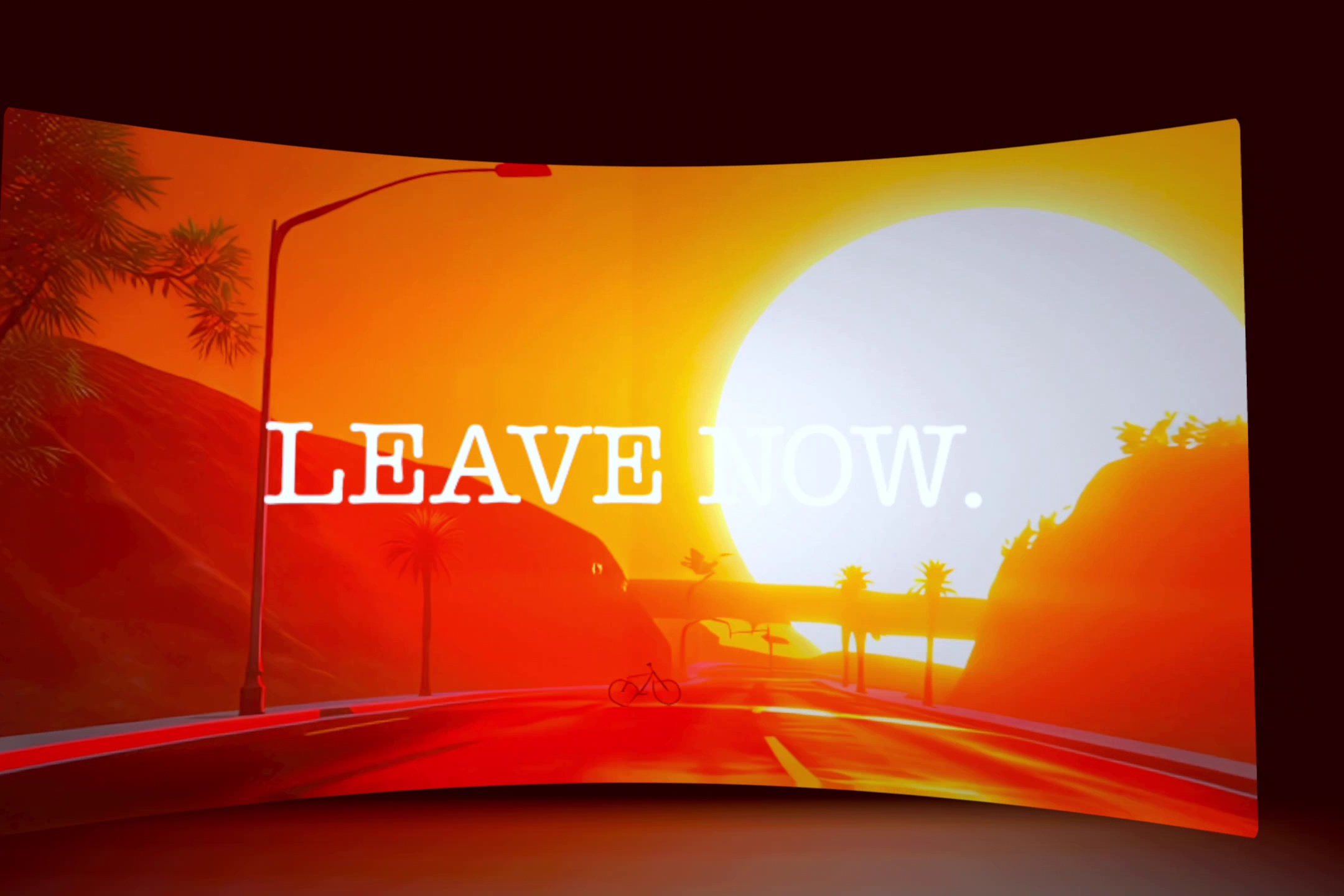
02_Intro Warning Screen
-
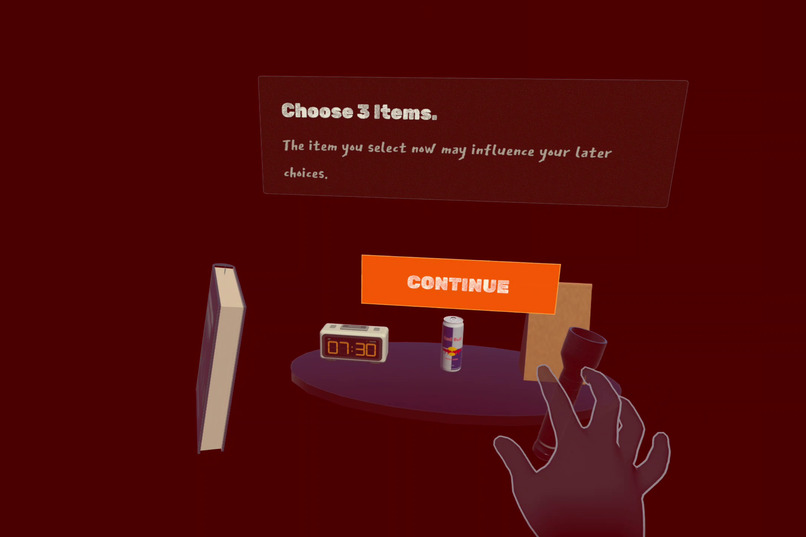
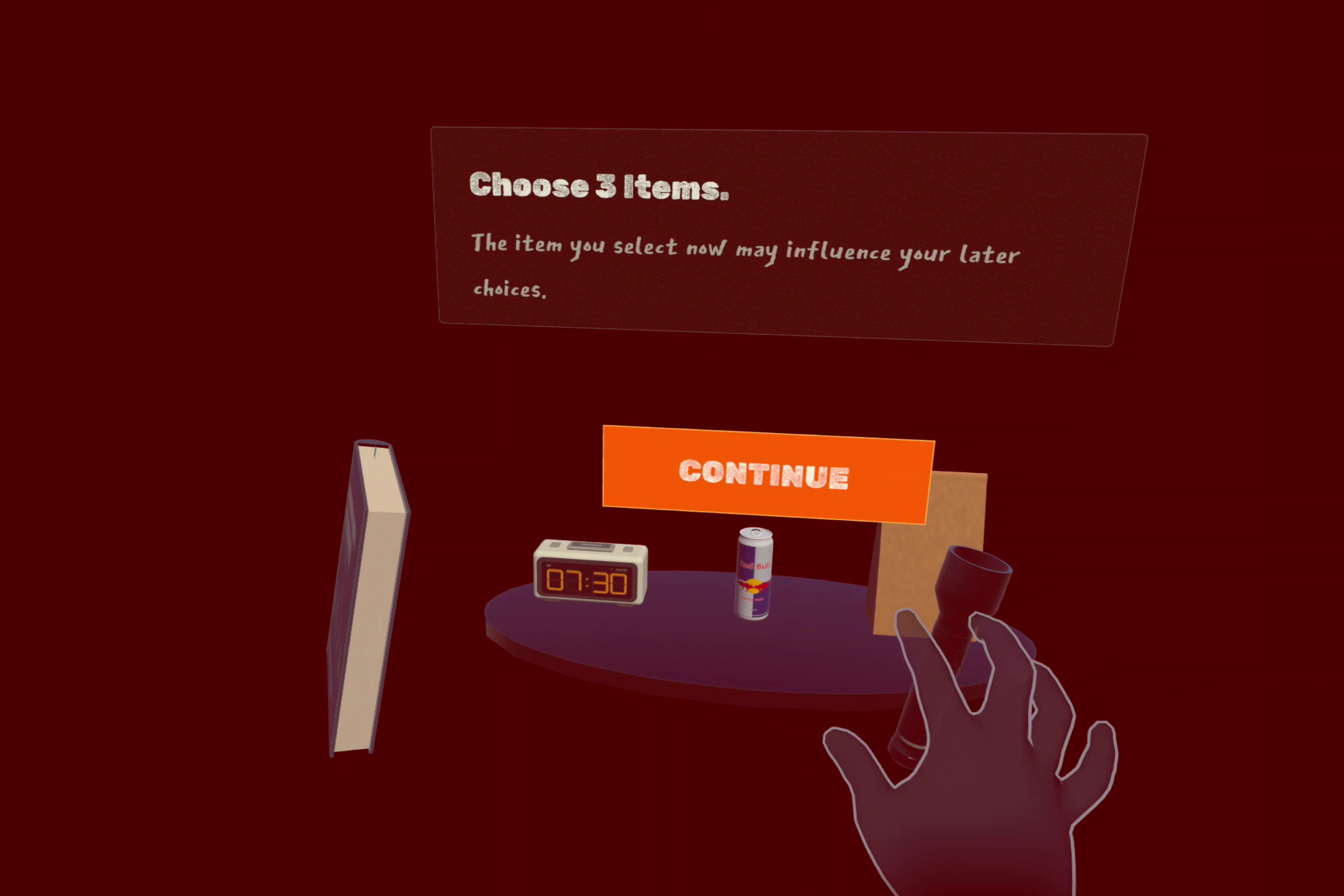
03_Selecting 3 Items
-
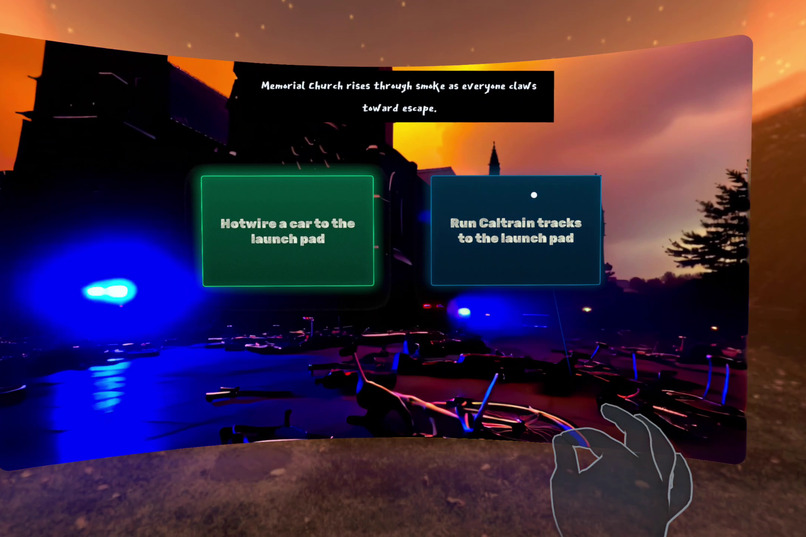
04_Selecting an Option
-
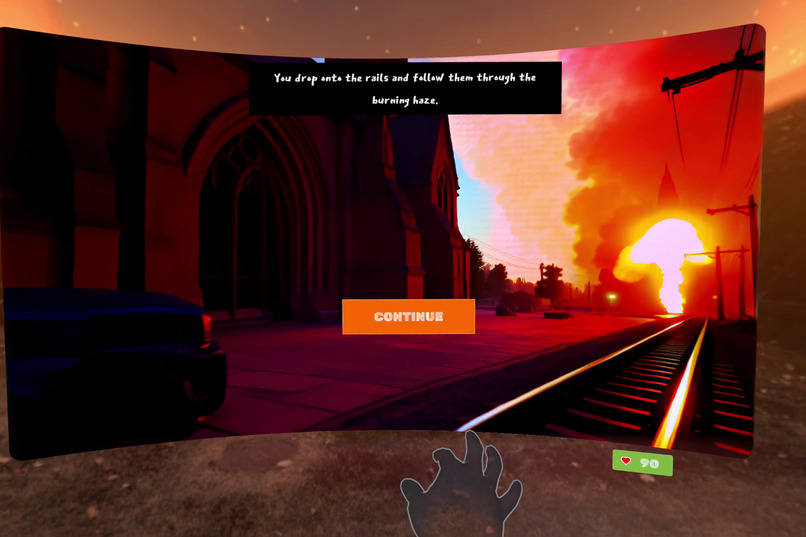
05_Displaying a Live Screen Based on Your Decision
-
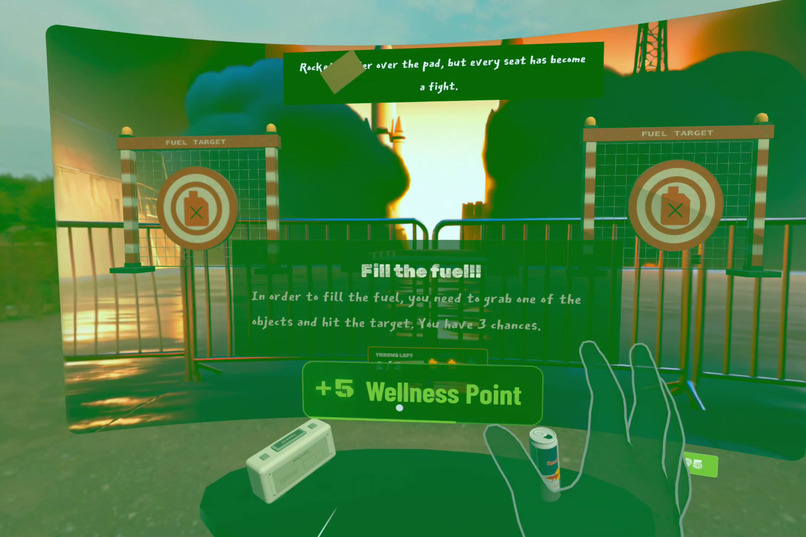
06_Throwing Items at the Target
-
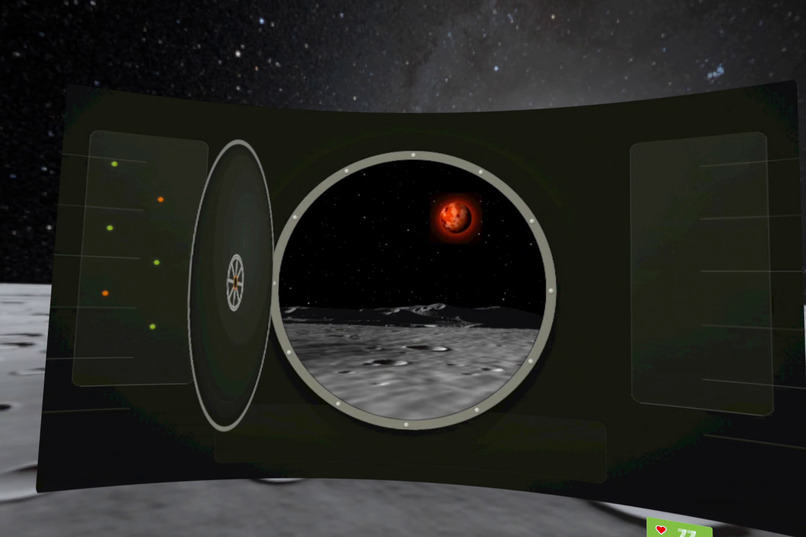
07_Leaving the Space Shuttle
-
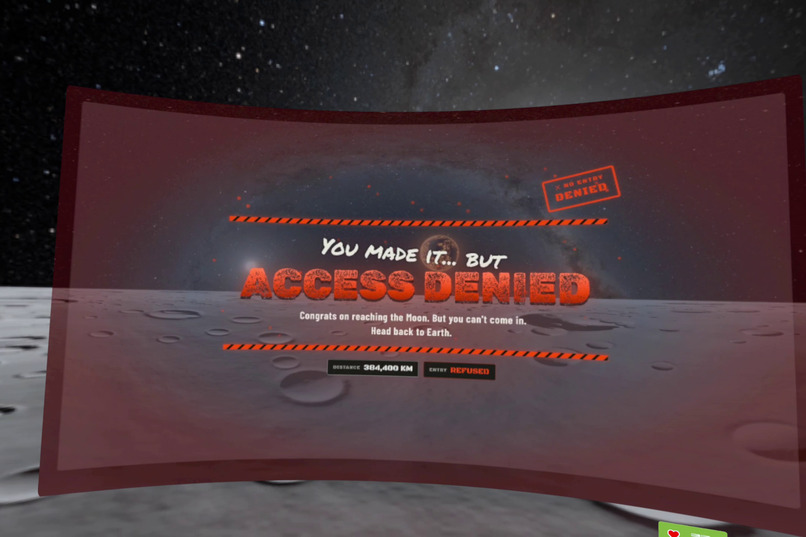
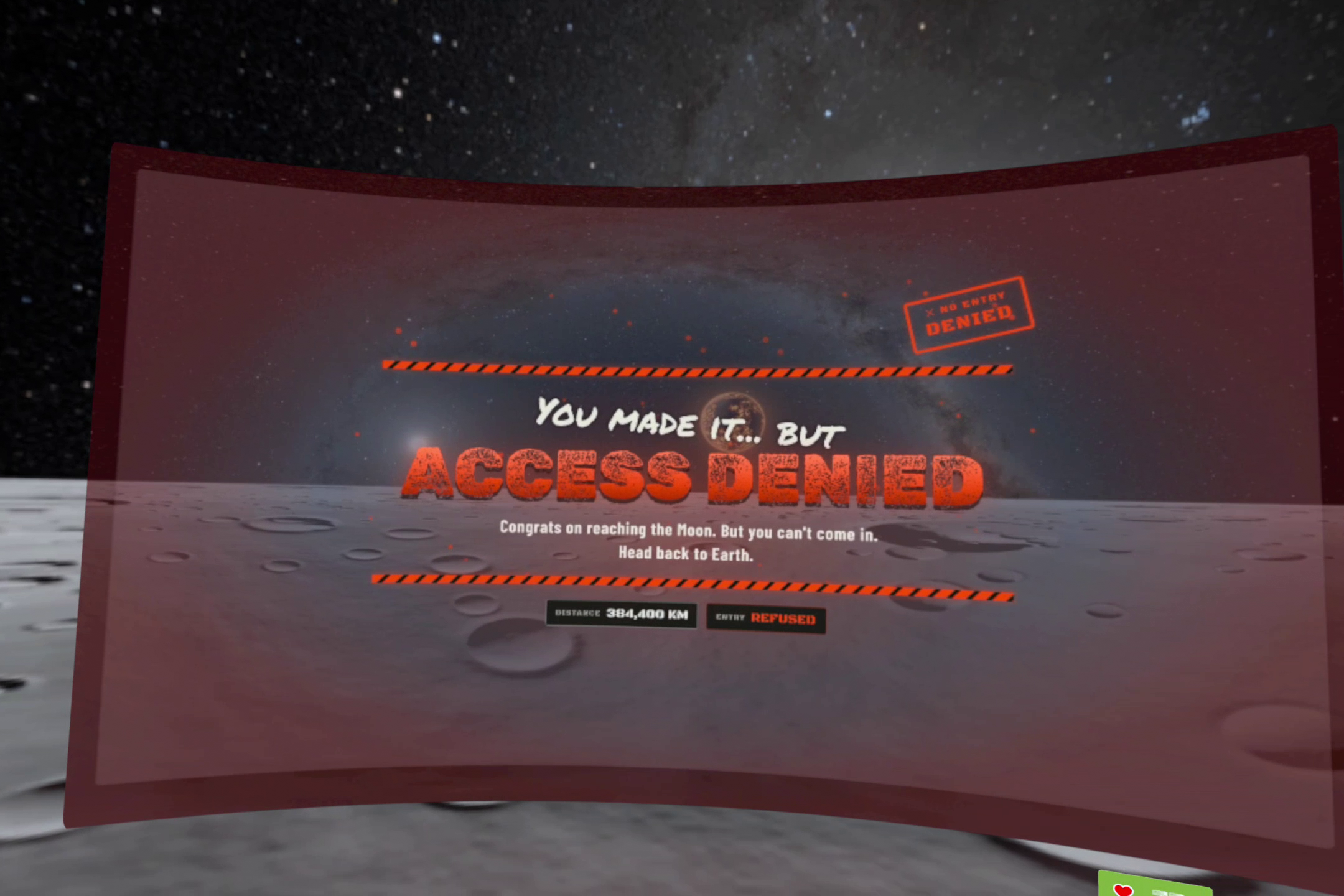
08_The Game Result
-
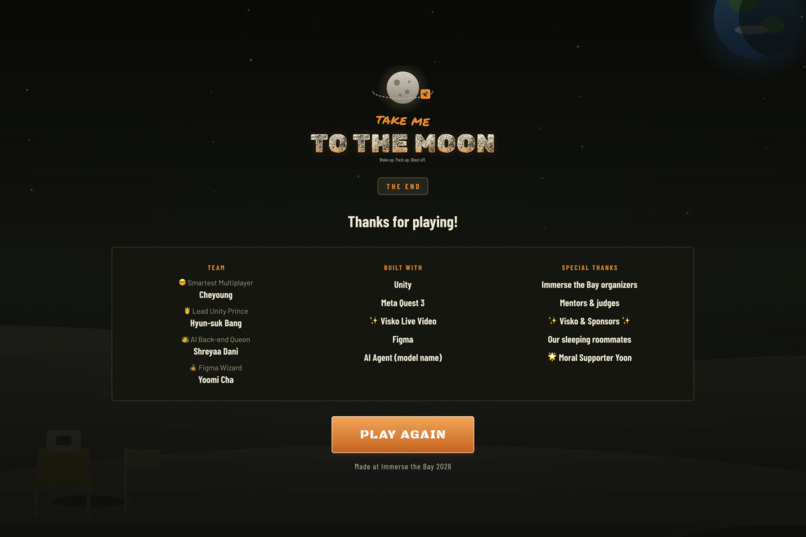
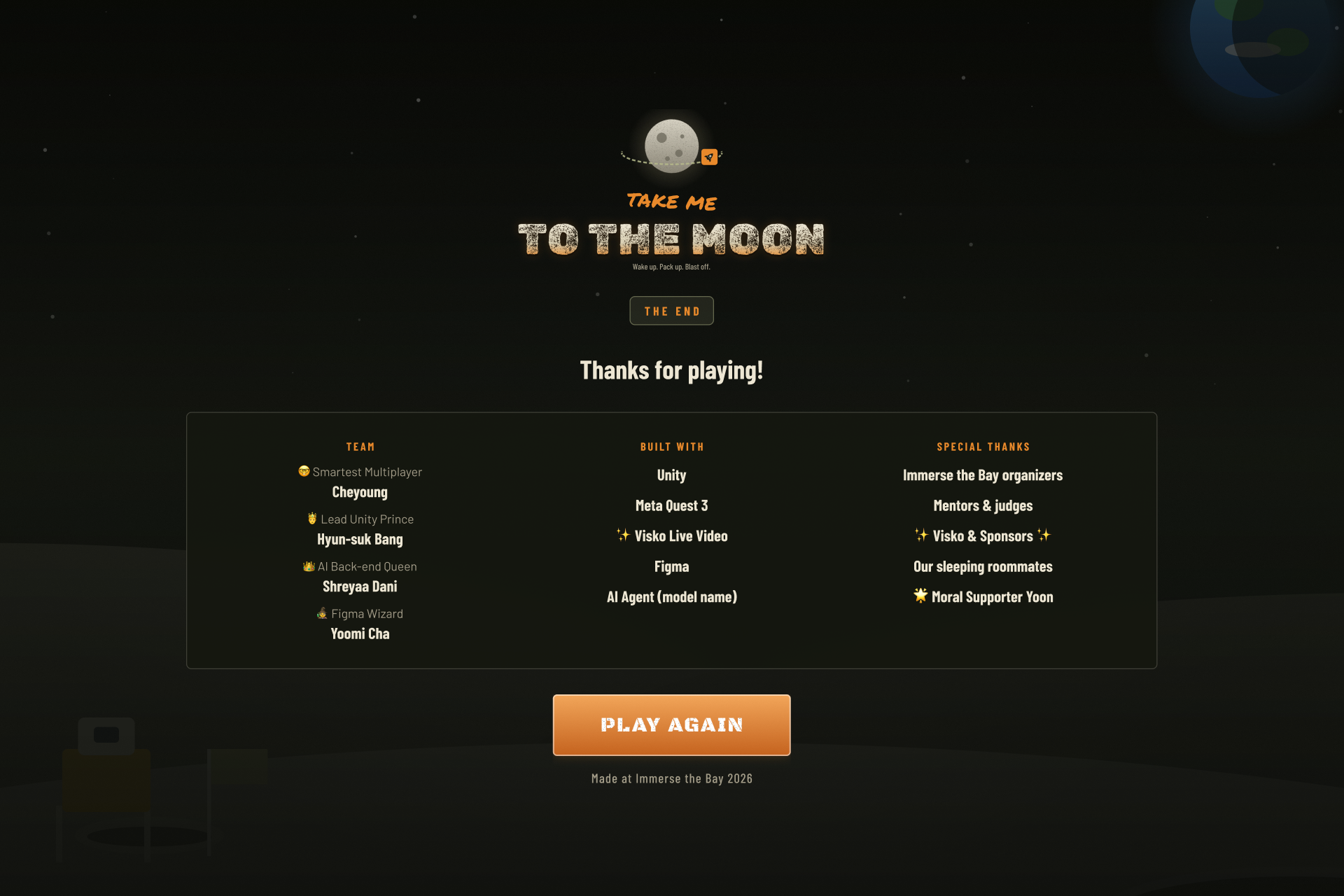
10_Ending Credits
Inspiration 💡
This year’s Immerse the Bay theme is “Take Me to the Moon,” and we interpreted the theme in our own unique way. We thought about what that journey would look like if it started right here, in a Stanford dorm room, to the moon.
Storytelling was one thing our team cared a lot about, and we wanted to make a game that anyone could pick up and see themselves in. Most games about escaping ask whether you survive. We were more interested in how. When there is one seat left and two people who need it, what do you do? Through an interactive story where every decision changes what happens next, we wanted players to find out who they are when it counts, and to arrive at the Moon as someone they chose to become along the way. The destination is the same for everyone. The person who gets there is not.
What it does ✨
You wake up at 2 a.m. in your Stanford dorm room to an emergency broadcast. The planet is overheating, the last rockets to the Moon leave within the hour, and there are not enough seats. You have [15] seconds to grab three items from your room and get out.
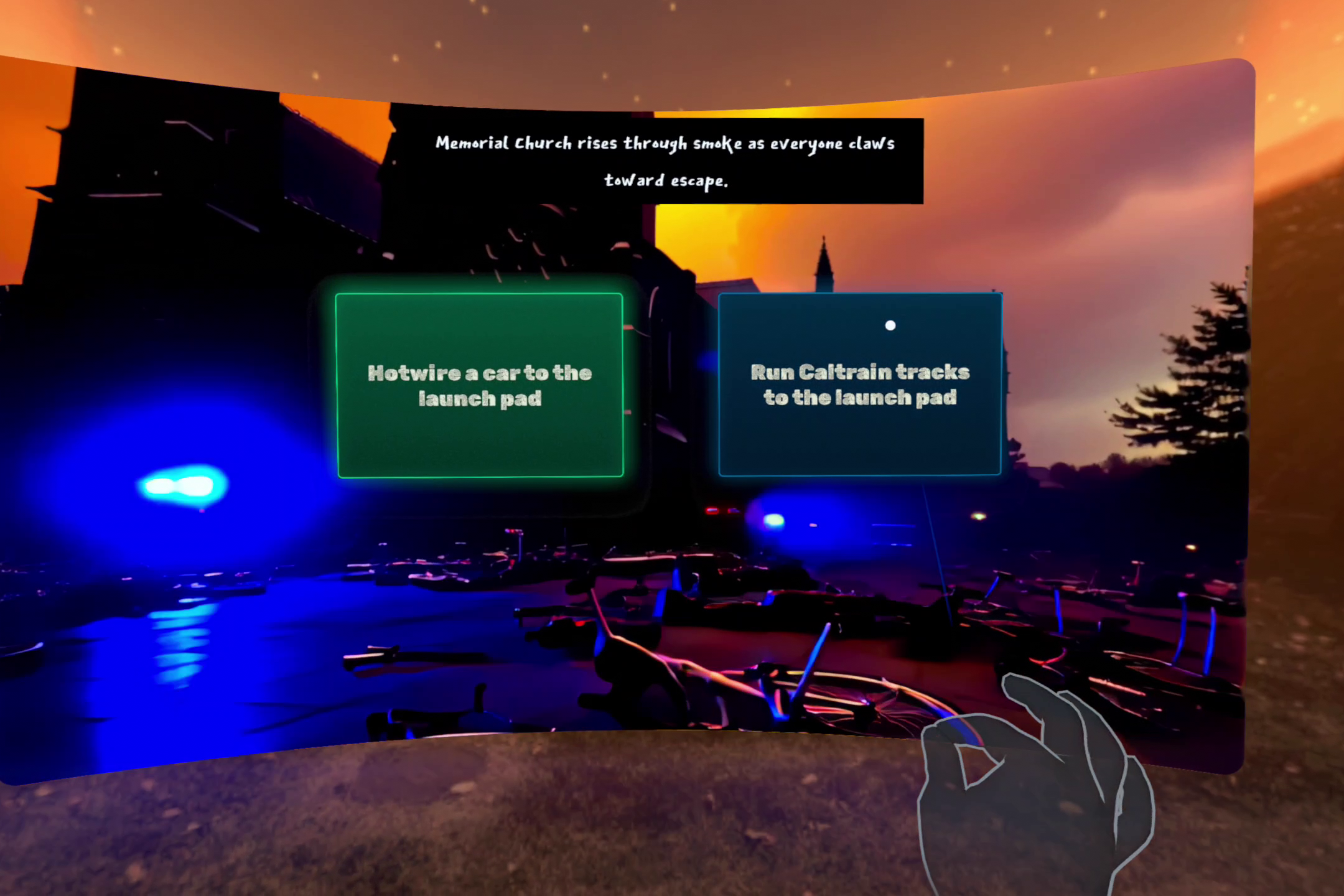
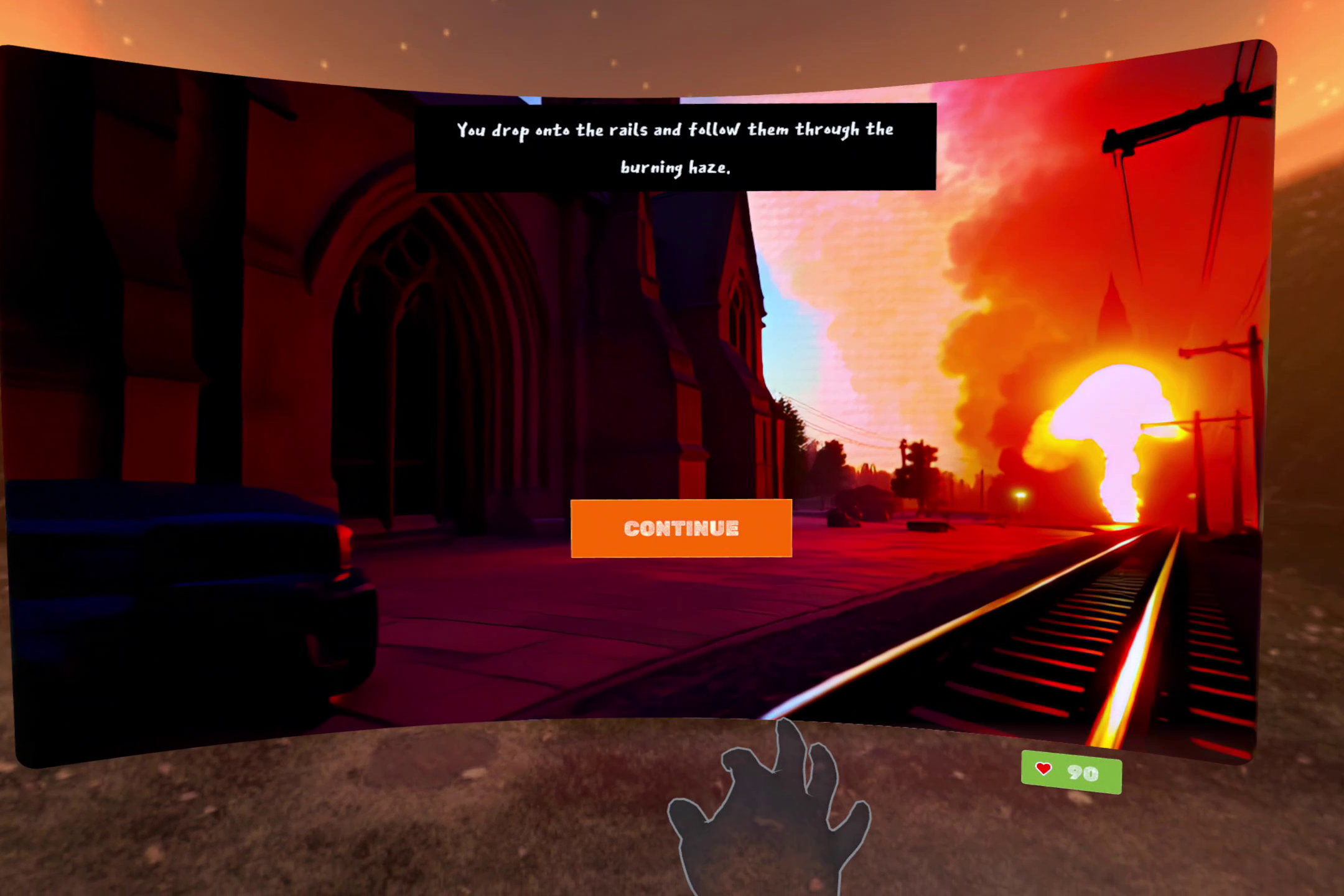
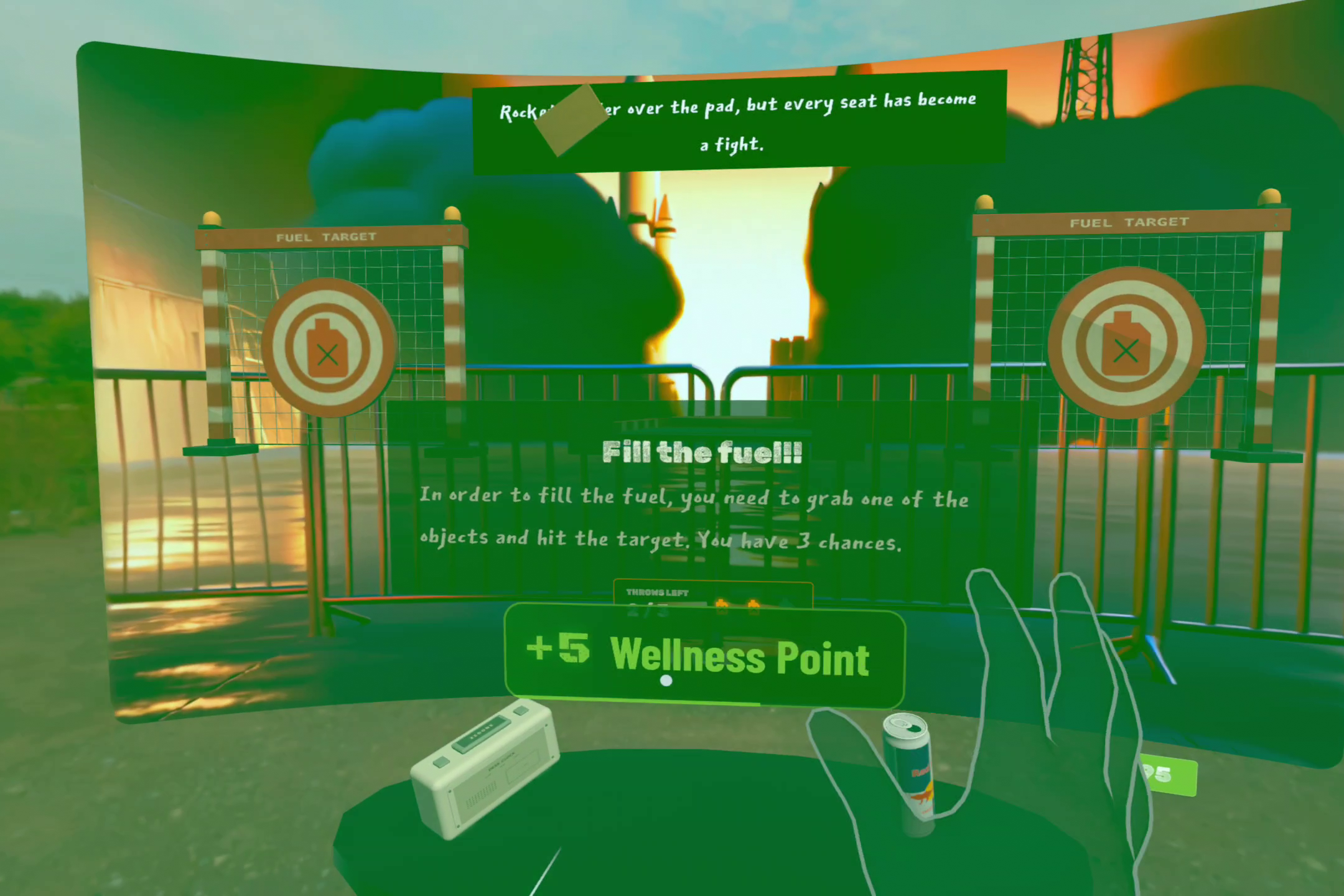
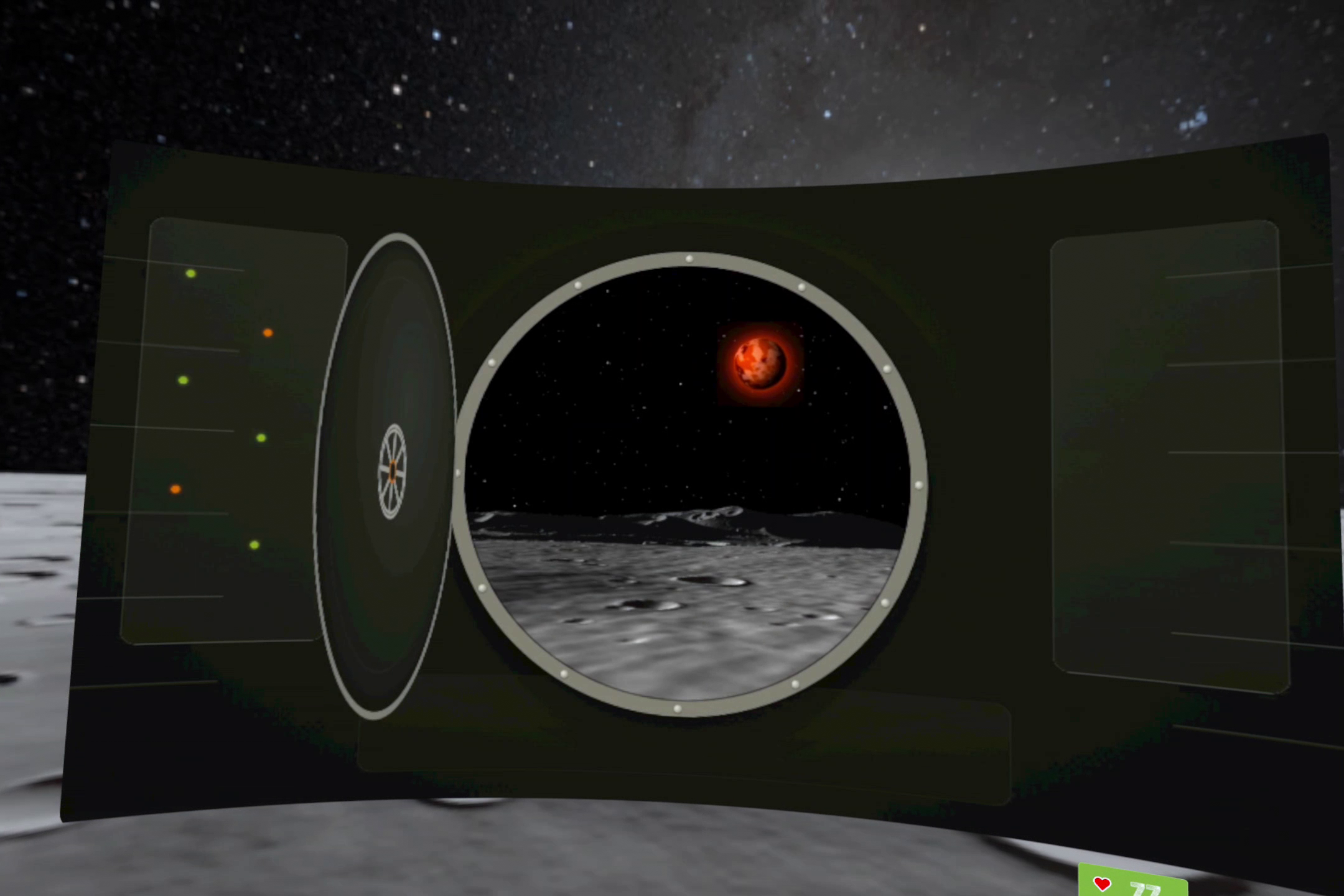
From there, the journey runs through six checkpoints: your dorm room, Memorial Church on a burning campus, the launch pad, low orbit, the approach to the Moon, and the Moon itself. It starts with a question with no right answer: do you wake your roommate, or slip out the door? On campus, you choose how to escape: steal a motorbike, run the Caltrain tracks, flag down an ambulance. At the launch pad, you fuel your rocket by hand, throwing the items you grabbed into the tank. In orbit, the rocket is too heavy, and you decide who pays for it: cut loose the strangers clinging to your ladder, or pull them in and risk everything. As the Moon fills the window, your roommate comes back into the story, beside you or calling from the Earth you left behind.
Every choice changes your wellness score out of 100 and shows what kind of person you are being under pressure. Kindness is cheap; recklessness costs you.
No two playthroughs are the same. After the first choice, every scene and its two choices are written in real time by AI, based on everything you've done so far. Each one is then generated as live video through Visko and streamed onto a curved screen in front of you, surrounded by 360° environments.
At the end, the Moon gives its verdict. Score 85 or more and you become a Moon Citizen; anything less and you are a Moon Reject, turned away at the colony gate. Citizens also learn what kind of traveler they turned out to be: The Guardian, The Redeemed, The Loyal One, The Ace Pilot, or The Survivor.
How we built it 🧠
Unity: We built the VR experience for Meta Quest 3 in Unity, connecting interactive objects, mini-games, video playback, and game progression.
Figma: We designed the game flow and UI in Figma, then brought those designs into Unity as readable, easy-to-use VR panels.
OpenAI API: The headset calls OpenAI directly. The AI acts as a story director: given the player's previous choices, it writes each scene, its two choices, their wellness costs, and the video prompts, as structured data Unity can read every time.
Visko: We sent those prompts to Visko and streamed the generated live video onto a curved screen in Unity, with 360° skyboxes surrounding the player.
Immersive 360° Environments: To ensure players felt fully surrounded in VR beyond Visko's live curved-screen video feed, we sourced and integrated 360-degree skybox images as background environments in Unity.
Demo Production: We captured in-game footage, generated supplementary visual assets, and edited the final showcase video using VLLO and Figma-
Challenges we ran into 🧗
Setting up Visko as a live background. We had to get video that is generated on the fly to play on a curved screen inside Unity, and keep the scene feeling continuous while the next clip was on its way.
Storyboarding a story that writes itself. It’s hard to storyboard a game where every playthrough is different. We settled on six fixed locations and left what happens at each one open.
Building 3D components. Every asset had to look good in VR and still be light enough to run smoothly on a standalone Quest.
Designing UI for 3D space. Flat screen designs don’t translate directly to VR. We had to rethink panel size, viewing distance, tilt, and contrast so text stayed readable over a moving video background.
Unpredictable AI output. Since the options change every time, our UI had to handle text of any length without breaking the layout.
Making interactions feel natural. We wanted players to do more than point and click, but every new interaction had to be easy to understand without a tutorial.
Keeping the story coherent. We needed the AI to remember the player’s earlier choices so the journey felt connected, not random.
Deciding what to keep and what to cut. We designed far more than we could build in a weekend, and had to keep cutting until one clear idea was left.
Accomplishments that we're proud of 🎉
We closed the full real-time loop from start to finish. A player grabs a choice in the headset, AI writes what happens next, turns it into a prompt for Visko, and streams the video back into Unity. That carries the player from an opening broadcast through six checkpoints to a final verdict on what kind of traveler they were. Getting all three systems to talk to each other across a complete playthrough in one weekend was the hardest part of the build and the part we’re proudest of.
Consistent UI and theme integration from start to finish. We built a cohesive look and feel with seamless UI components and layouts across all scenes, ensuring players could navigate the entire game intuitively without confusion.
A story that stays coherent while being generated. Fixing the journey to six locations while leaving what happens there open kept the AI’s writing on track without making every run the same.
Every scene is generated in real time. Nothing in the journey is pre-rendered. The story and the video are made for each player as they play, based on the choices they’ve made so far. Mini games that tie back to your first decision. The three items you grab in the opening seconds decide how you handle the emergencies later, so the first thing you do matters at the end.
A wellness score that means something. The AI judges each choice by how it treats other people, and the score carries through to whether the Moon accepts you. It took several rounds of live testing to make the scoring feel fair and the outcome hard to predict.
What we learned 📚
Efficient communication drove our execution. Throughout the project, we maintained active collaboration, frequently sharing updates and checking our progress to develop the game together. This kept us on track to finish within our tight timeframe—something that would have been impossible without seamless communication.
Test the idea with a storyboard before building. When we tried to build without a solid storyboard, we ran into mental blocks. So we put everything down, mapped out the game's scenarios on a whiteboard, and aligned on them one by one. This allowed us to quickly spot missing pieces and build a consistent storyline from start to finish.
Creativity needs a tight scope to strike the right balance. Brainstorming without constraints made it hard to check feasibility, and ideas that sounded great in discussion often fell flat during actual play. By narrowing our journey down to six checkpoints and strict scopes, we were able to spark even more creative and diverse ideas within those boundaries.
What's next for us 🚀
What we built this weekend is one story on top of an engine: AI that writes a scenario from your past choices, video generated live to show the outcome, and decisions you make with your hands. The Moon is the first place we’ve pointed it at.
A classroom edition on climate. The same engine can put students inside real decisions about land planning and water conservation, where they choose and then watch the consequences play out in front of them. For children, we would replace the survival tone with a hopeful one, where the choices are about what to protect and build, and teachers pick the topic.
More journeys. New starting points and destinations beyond Stanford and the Moon, so anyone can play a version that begins somewhere they recognise. One continuous world. As live video generation gets faster, the journey becomes a single unbroken scene that reacts as you move through it, with no cuts between clips.
Built With
- claude
- figma
- metaquest
- openai
- skybox
- unity
- visko


