-
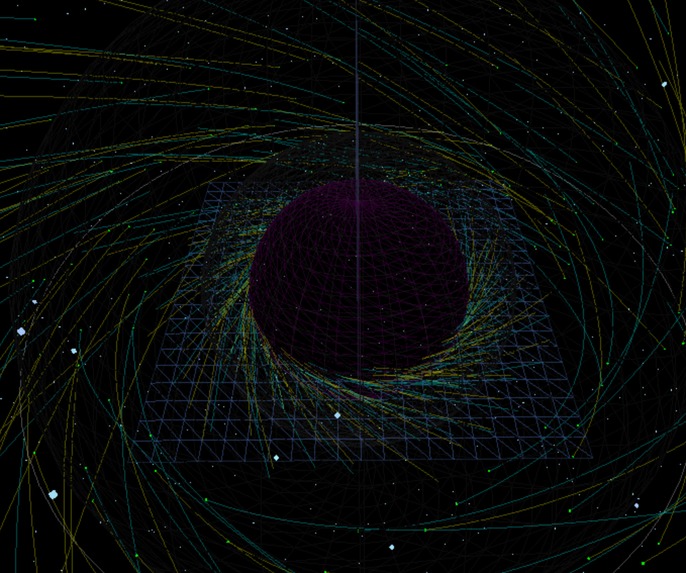
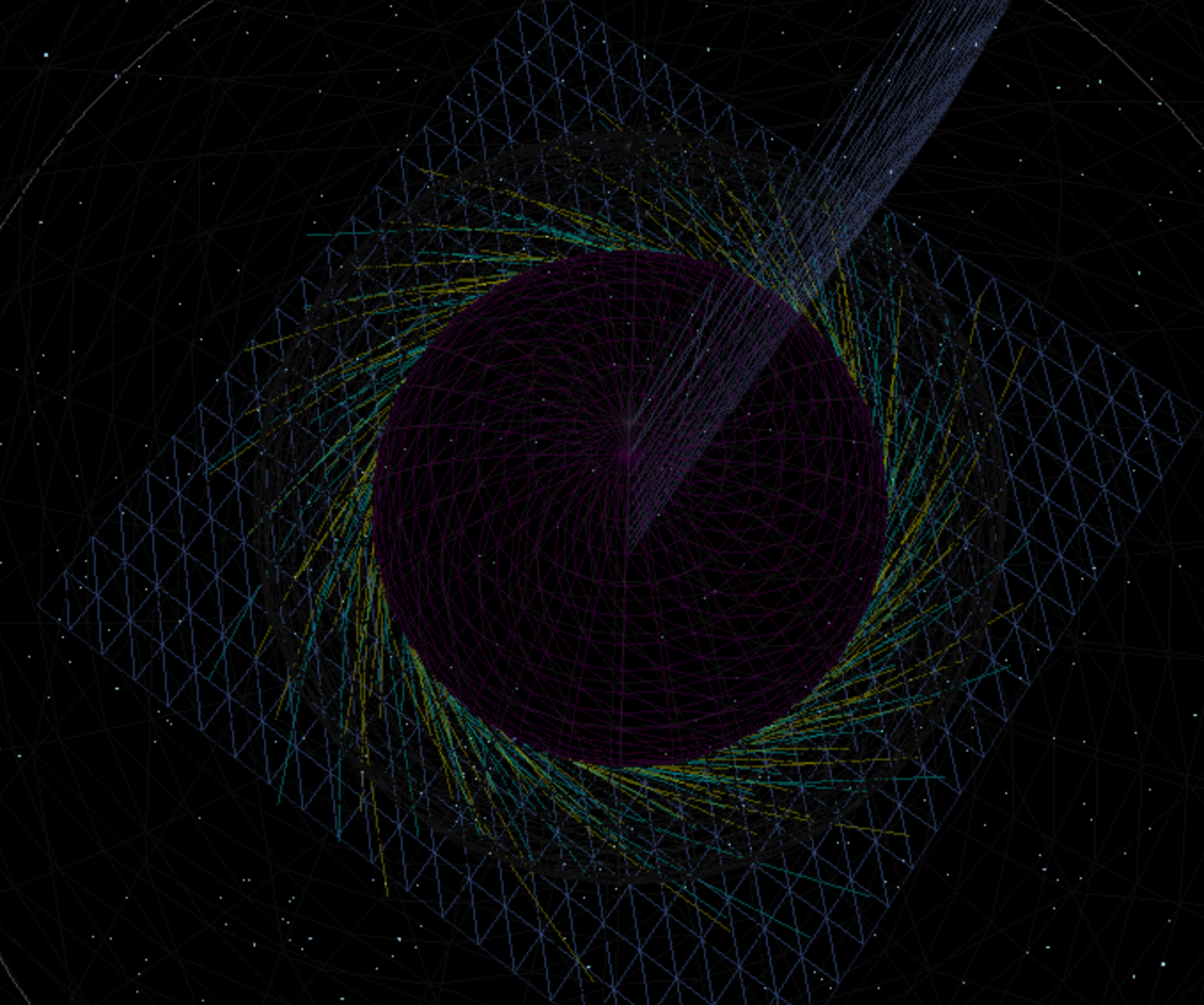
3d interactive model (1)
-
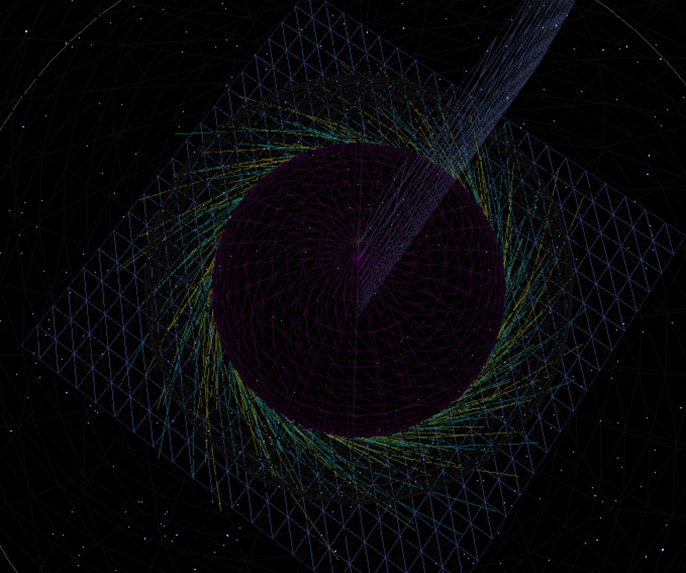
3d interactive model (2)
-
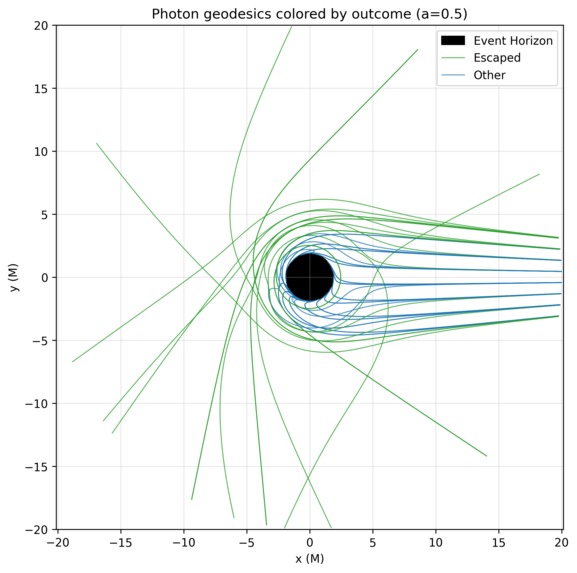
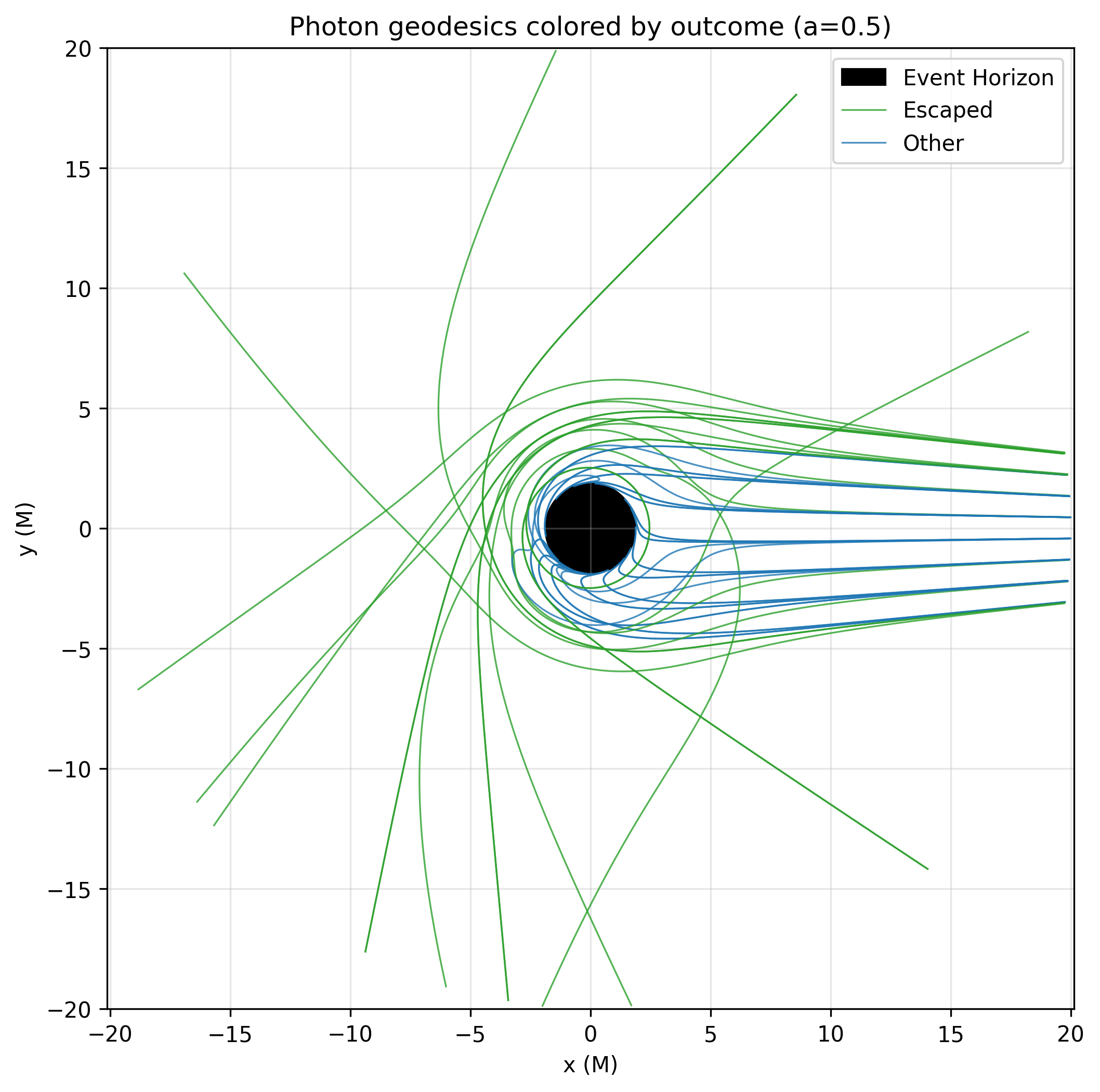
50 Photons
-
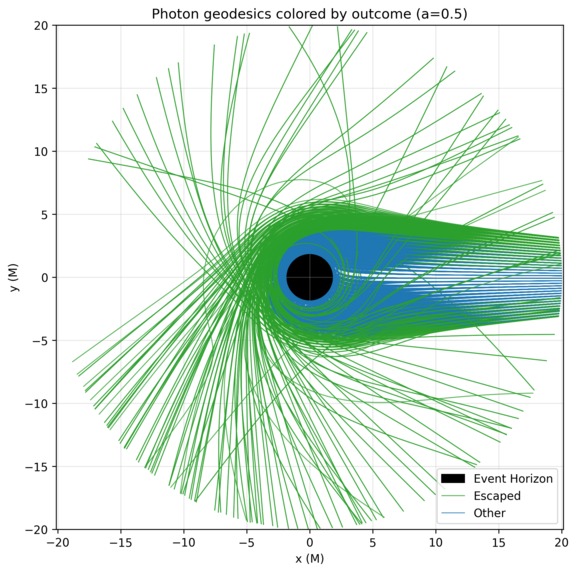
1000 Photons
-
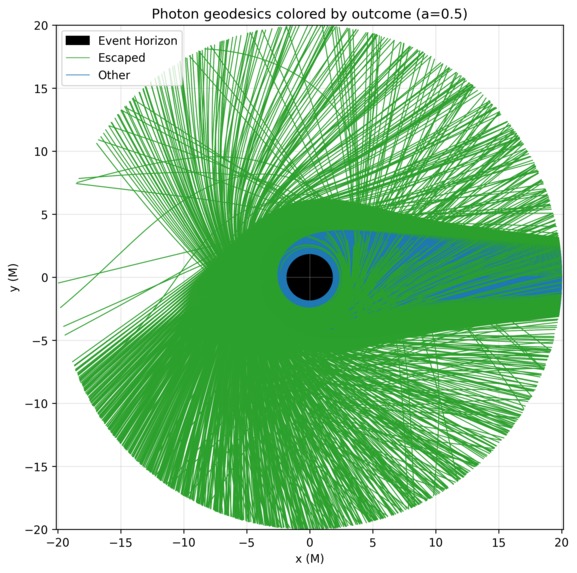
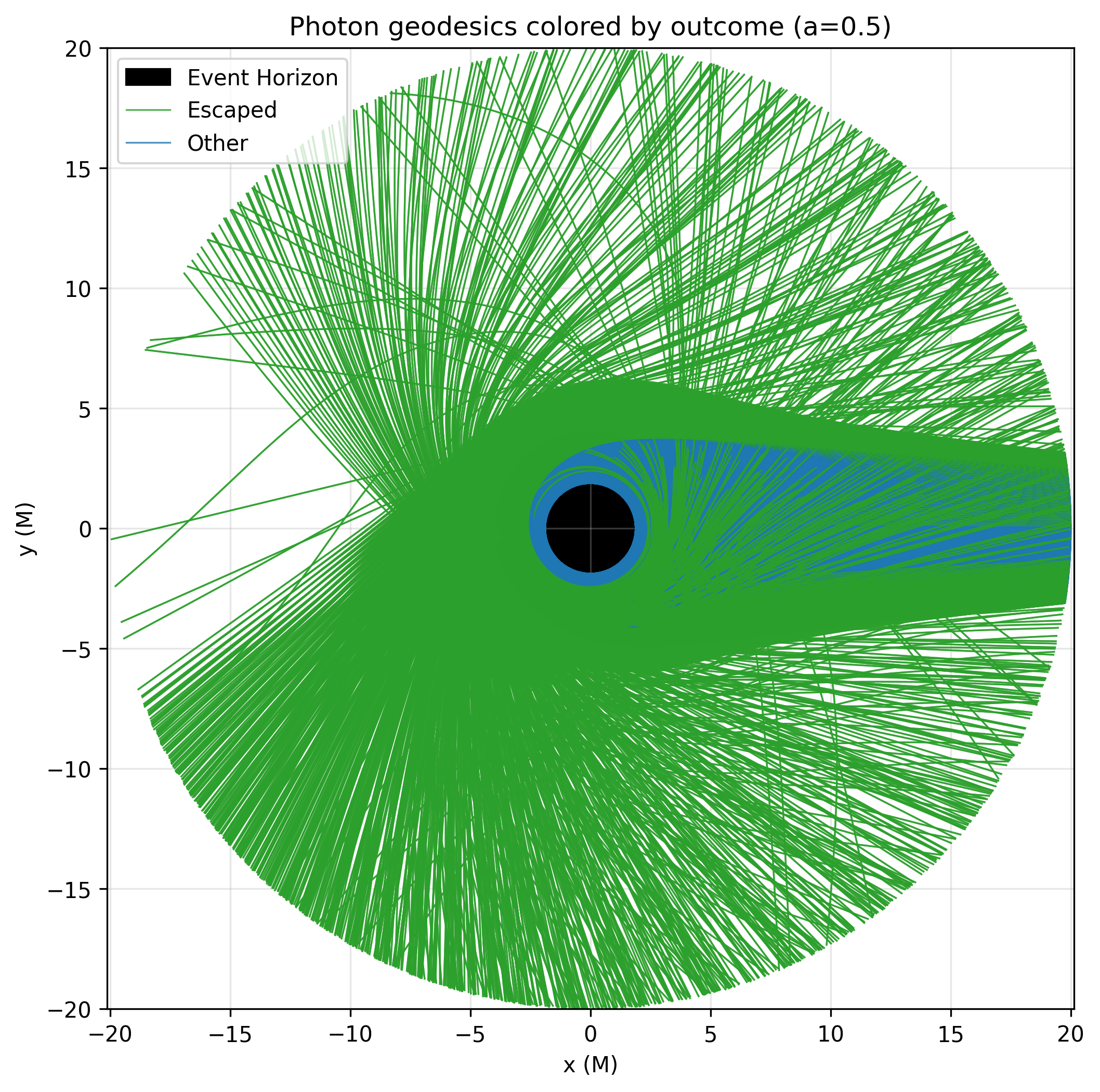
10000 Photons


Inspiration
We we're inspired by the Interstellar render of the Gargantuan Blackhole. We also wanted to write our own accurate physics model.
What it does
Uses a relativistic physics accurate model to simulate photon interactions with a black hole. The model was used to create a graphical representation, 3d interactive model.
How we built it
We wrote our own physics model in Python using numpy, matplotlib, and mpi4y (library for performing parallel processing). The 3d interactive model was built using three.js.
Challenges we ran into
We ran into lots of numerical computational errors in the model that took a lot of time to debug and fix. We also had trouble making the 3d interactive model look good because we tried a relativistic raytracing approach that wasn't performant so we settled with a more simplified model. Additionally, the model was very computationally expensive to run (which was expected), so we had to parallelize it and run the model on the Bridges-2 Supercomputer.
Accomplishments that we're proud of
We're proud that we were able to create a physics accurate blackhole model and be able to render it.
What we learned
We learned 3d rendering, raytracing, and parallel computing in a cluster environment.
What's next for A Blackhole
If we had more time we would've created a much more realistic rendering of a blackhole simulation by parallelizing our relativistic raytracer to leverage gpu compute and write shader code for the 3d model.

Log in or sign up for Devpost to join the conversation.