-
-
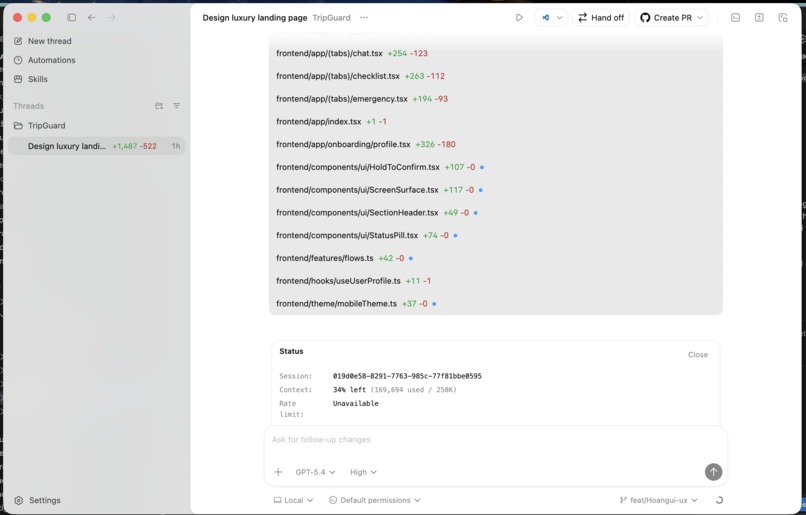
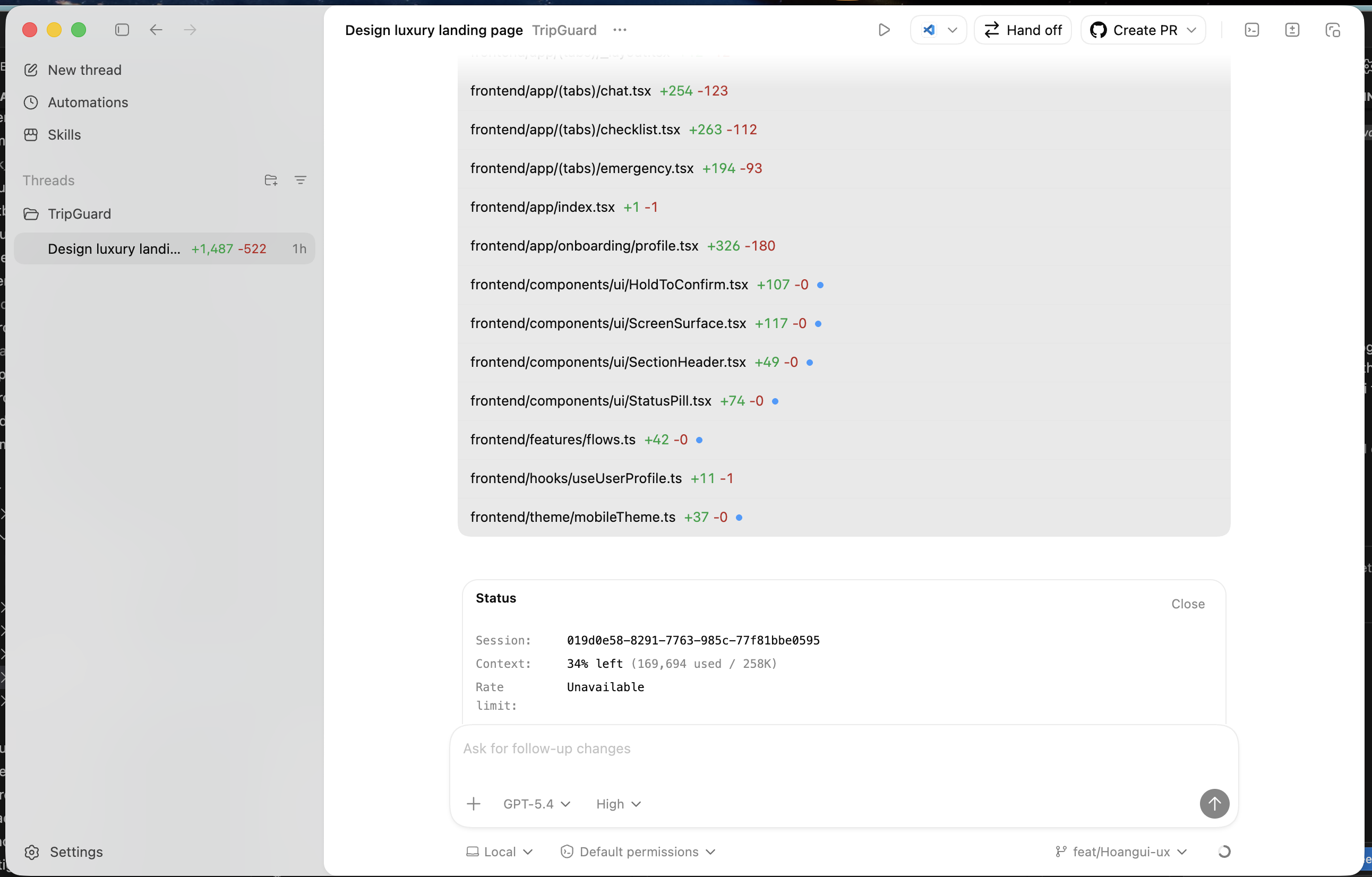
We used Codex
-
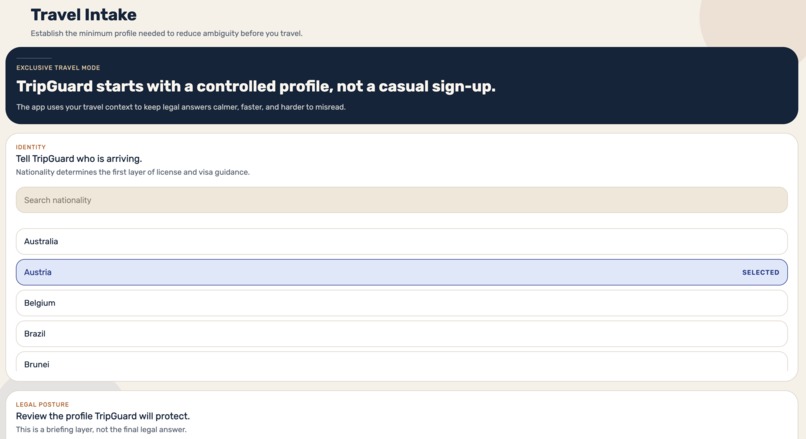
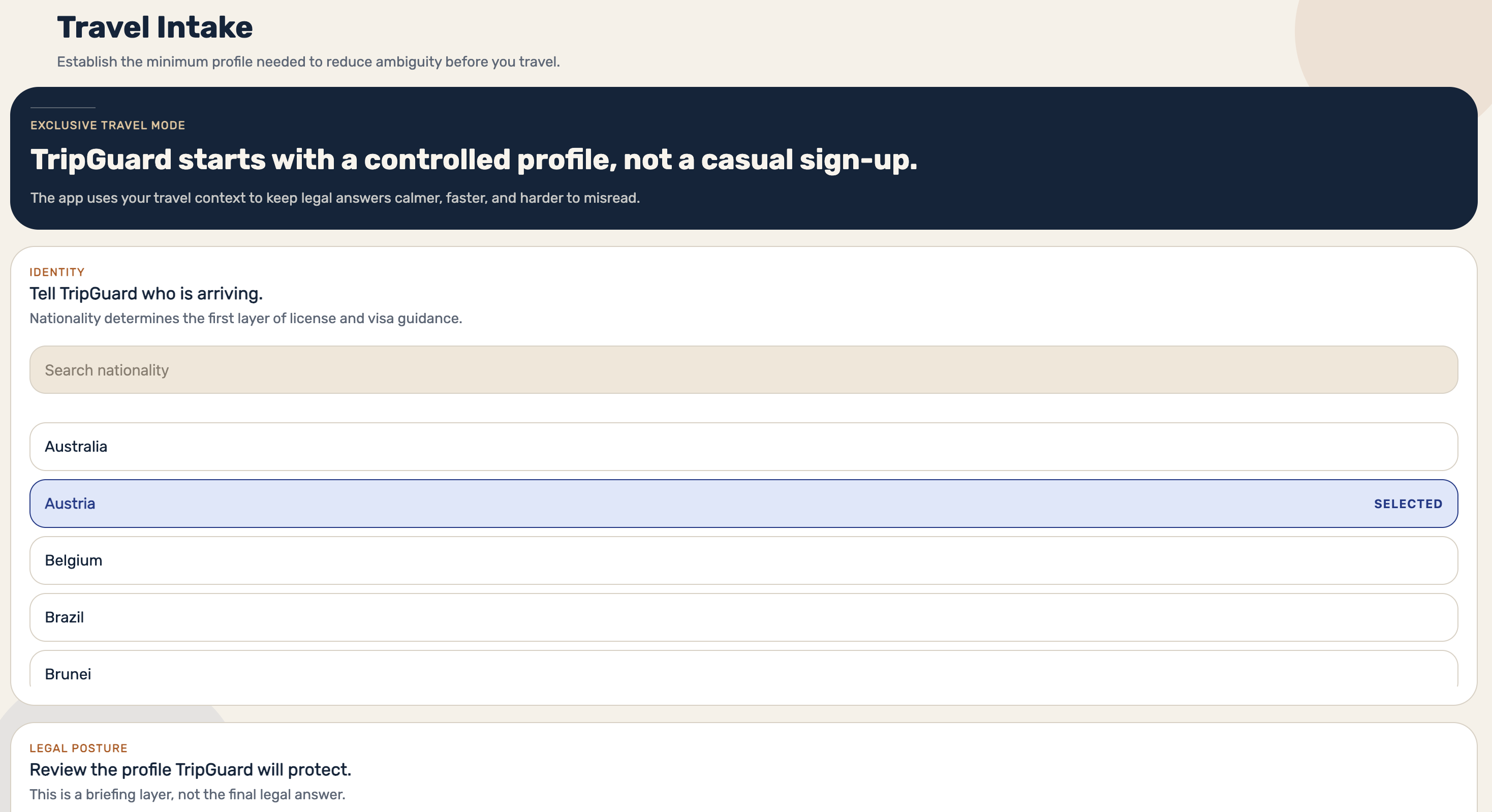
Travel Intake
-
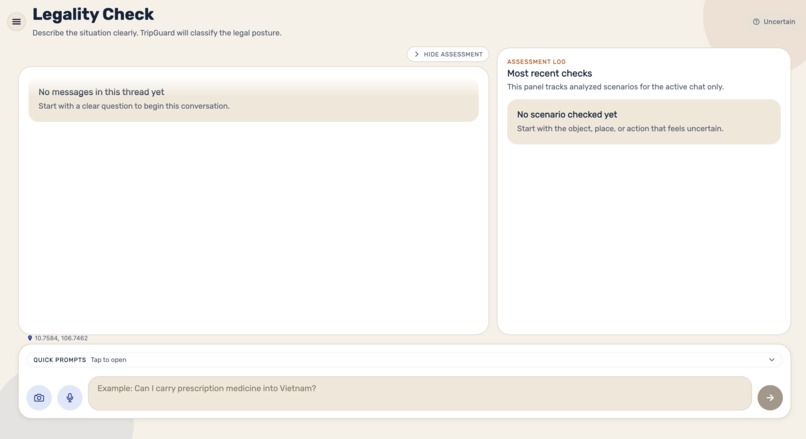
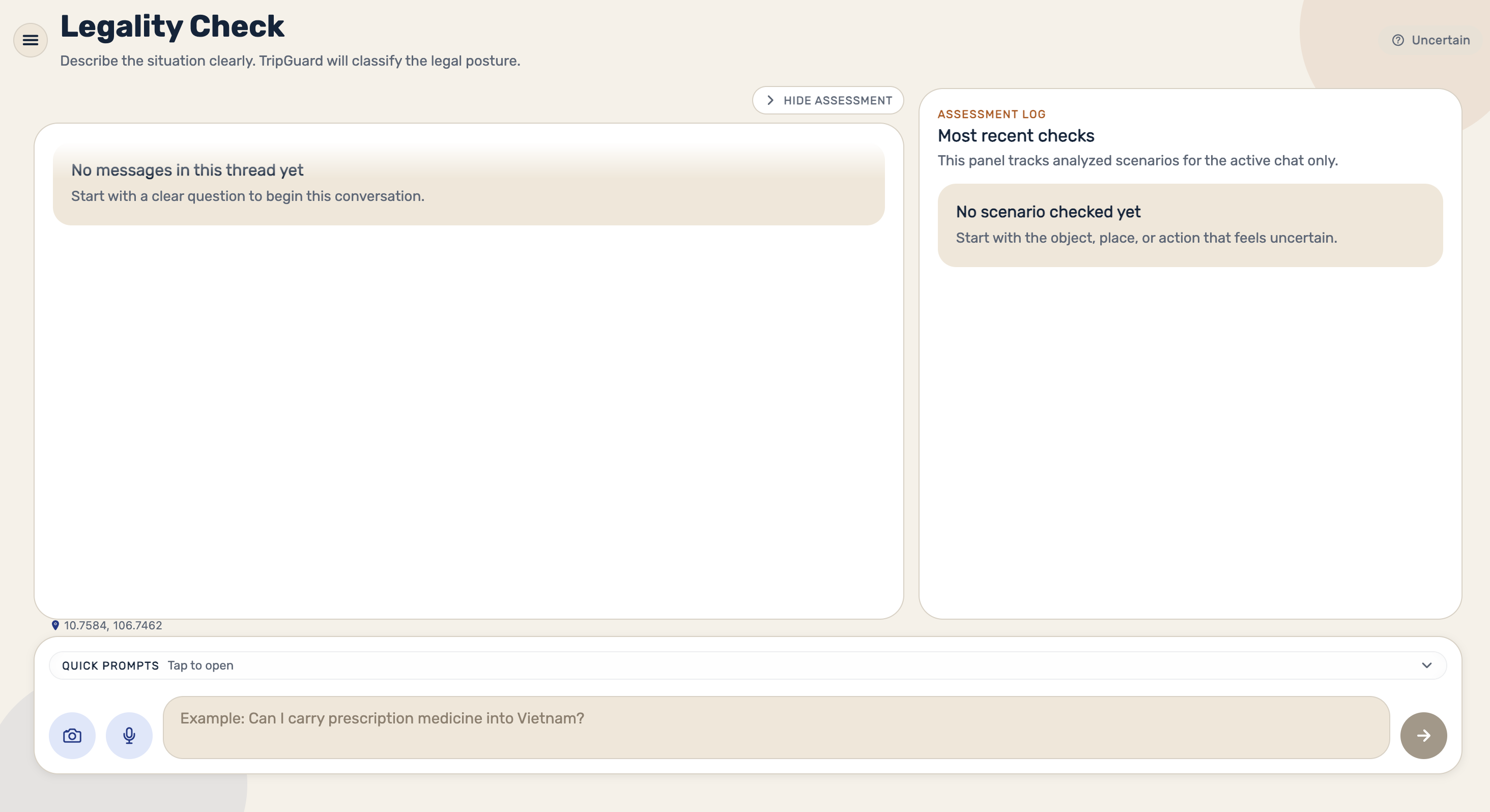
Main chatbot UI
-
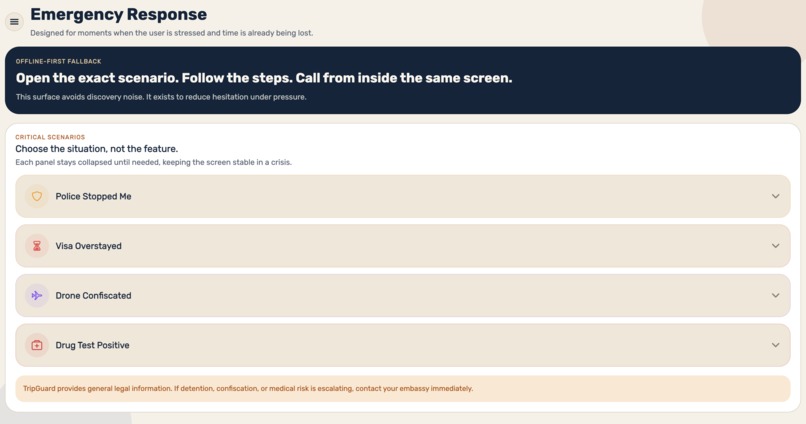
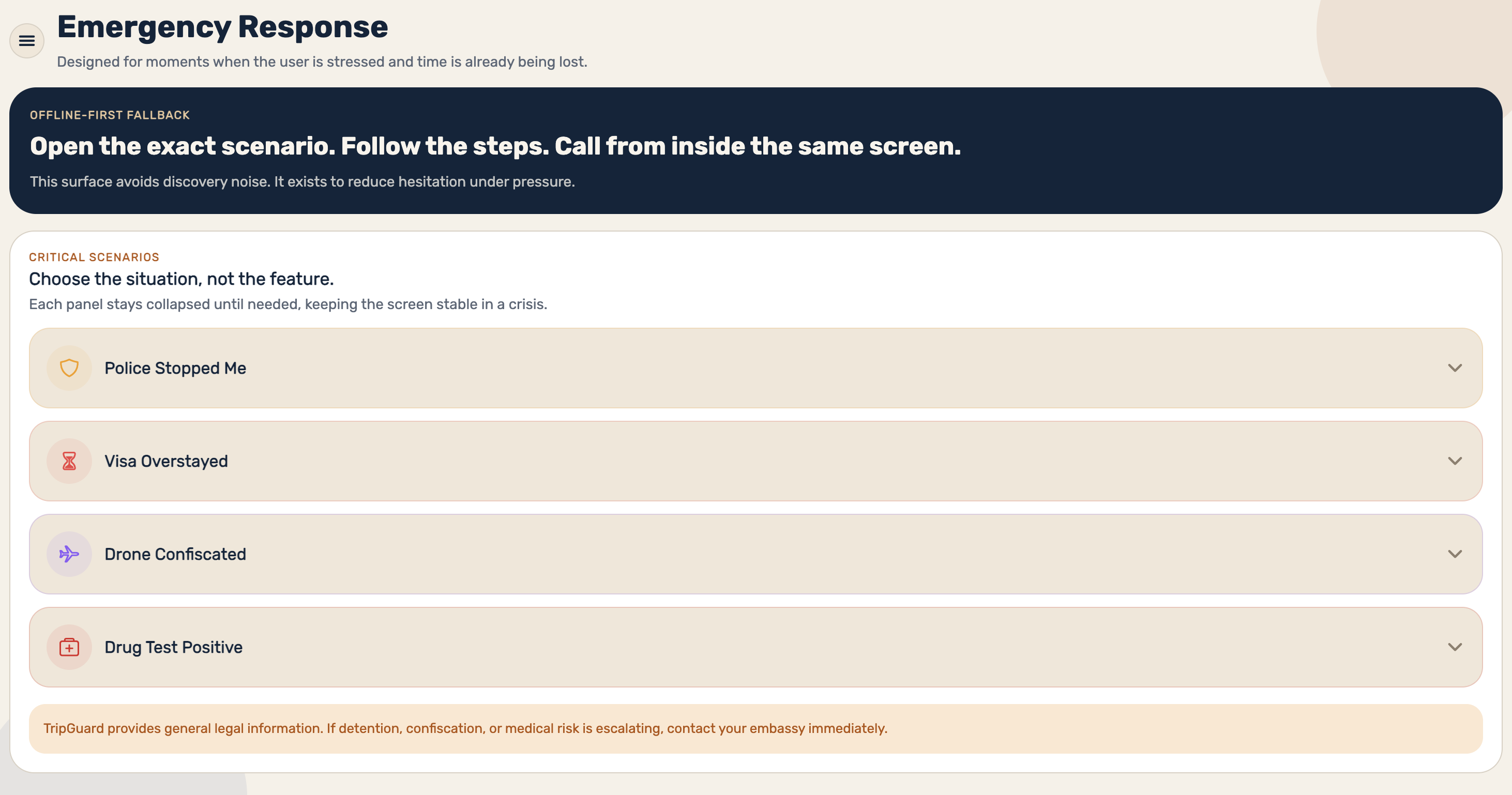
Emergency Response feature
-
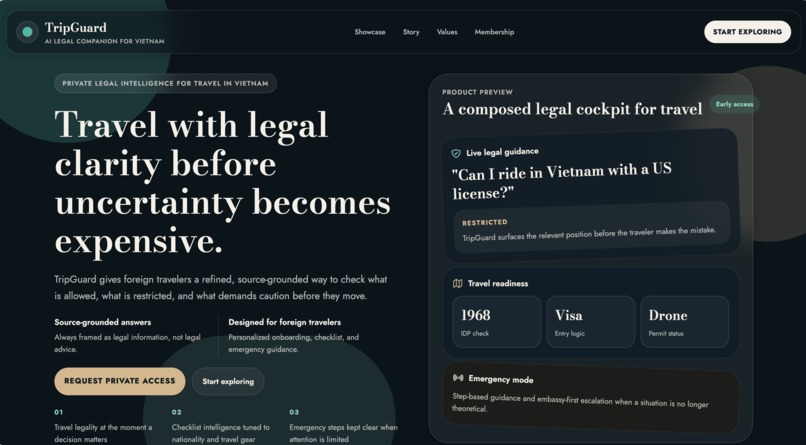
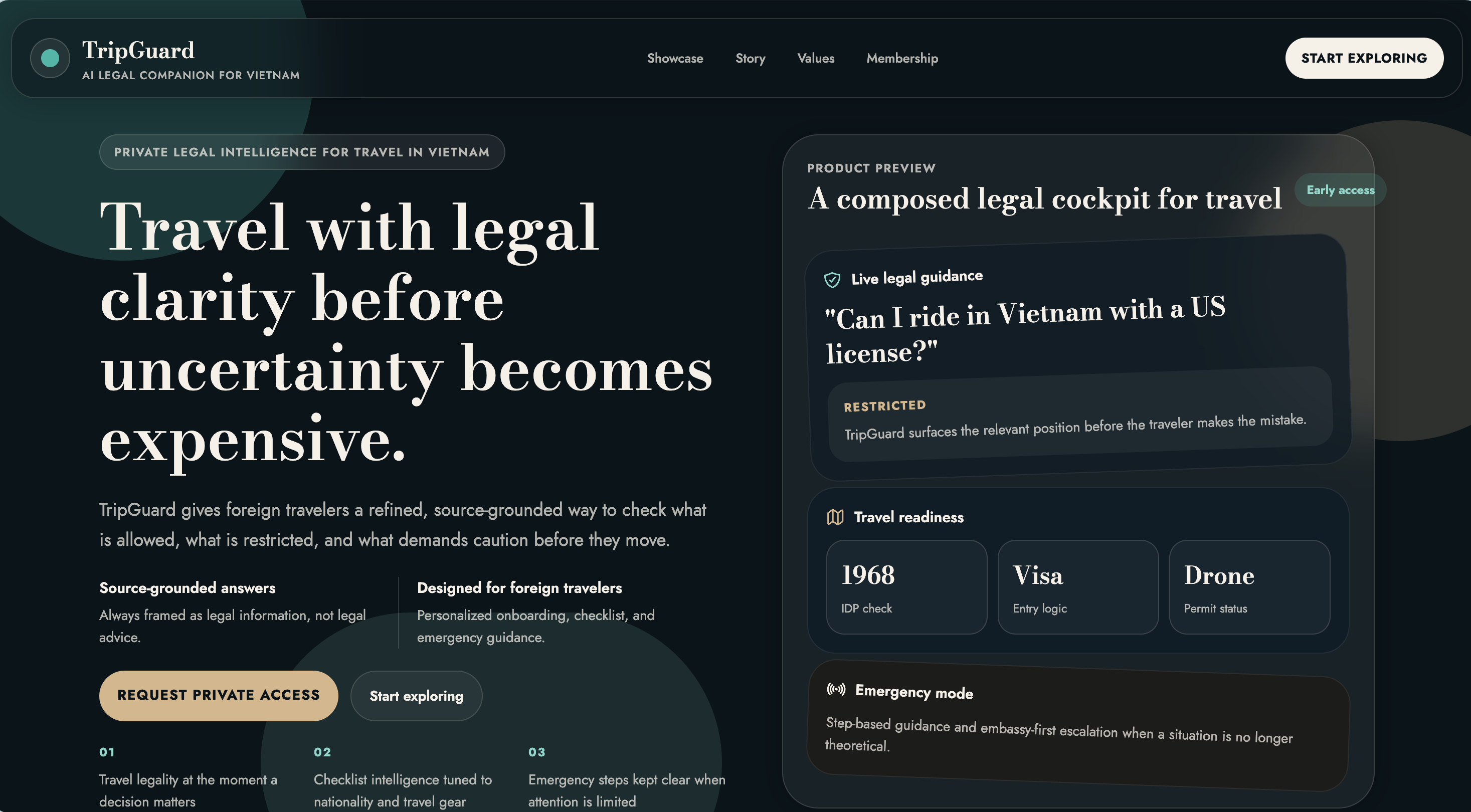
TripGuard Landing Page
TripGuard
Your AI legal co-pilot for traveling Vietnam. Know the law before it knows you.
Inspiration
Every year, thousands of tourists in Vietnam unknowingly break the law — riding a motorbike with an invalid international license, flying a drone over a restricted zone, carrying undeclared cash through customs, or overstaying a visa by a few days. The information exists, but it's buried in Vietnamese legal documents, scattered across outdated blog posts, and impossible to access in a moment of stress.
We built TripGuard because we believe no traveler should face a 4,000,000 VND fine — or worse — simply because they didn't know the rules.
What it does
TripGuard is a mobile AI assistant that gives foreign tourists in Vietnam instant, accurate answers about local laws and regulations — in plain English.
- Ask anything: "Can I ride a motorbike with my US license?" "Is my drone allowed near Hội An?" "What happens if I overstay my visa?"
- Emergency scripts: Step-by-step guidance for high-stress situations — police stops, drone confiscations, visa overstays, drug tests — with exact fine amounts and emergency hotlines
- Personalized by nationality: Responses adapt based on your country (IDP convention, visa-free days, driving rules)
- RAG-powered legal accuracy: Answers are grounded in official Vietnamese legislation — traffic fines (NĐ 168/2024), drone regulations (NĐ 288/2025), immigration law (NĐ 07/2023), customs, heritage protection, and drug laws
- Live web search: Augments static knowledge with real-time updates from trusted Vietnamese government sources
- Voice responses: ElevenLabs TTS for hands-free audio answers
- Vision input: Upload a sign, document, or notice for instant interpretation
How we built it
Backend (Python / FastAPI)
- Multilingual embedding model for semantic search across Vietnamese legal texts
- ChromaDB vector database with 6 separate collections — one per legal domain (traffic, drone, immigration, customs, drug, cultural heritage)
- Keyword-based category classifier + cosine similarity threshold for retrieval precision
- Agentic reasoning loop with tool use: RAG retrieval, web search (Tavily), web crawl (TinyFish), emergency scripts, vision analysis
- OpenAI GPT-4o for generation; ElevenLabs for TTS audio
Frontend (React Native / Expo)
- Cross-platform: Android and Web from a single codebase
- Streaming chat UI with markdown rendering
- Nationality onboarding to personalize legal context
- Emergency mode with one-tap scripts and hotlines
Data pipeline
- Raw
.docVietnamese legal files parsed via Word Binary Format piece table (CLX structure) - Mixed encoding handling (UTF-16LE + CP1252) to eliminate extraction artifacts
- CSV chunk logs per collection for full traceability
Challenges we ran into
- Vietnamese legal document extraction: Legacy
.docfiles store text in non-contiguous "pieces" with mixed encodings. Naive extraction produced CJK garbage characters. We had to implement a full Word Binary Format parser to correctly reconstruct the text. - Retrieval quality for Vietnamese law: General-purpose embeddings performed poorly on legal Vietnamese.
BAAI/bge-m3gave the best balance of multilingual accuracy without requiring fine-tuning. - Android build complexity: Gradle plugin version conflicts, Java toolchain incompatibilities, and Expo SDK version mismatches required systematic debugging to resolve end-to-end.
- Keeping answers legally accurate: LLMs hallucinate fine amounts. We solved this by injecting authoritative law references directly into the system prompt and grounding every answer through RAG before generation.
Accomplishments that we're proud of
- Built a full RAG pipeline over real Vietnamese government legislation — not summaries, not blog posts, the actual law
- Emergency scripts that give tourists the exact words to say, the exact fine to expect, and the exact hotline to call — in seconds
- Nationality-aware legal reasoning: the same question gets a different answer for a German tourist vs. an American tourist, because the law treats them differently
- End-to-end mobile app running natively on Android with voice output
What we learned
- Legal RAG requires much stricter retrieval thresholds than general-purpose Q&A — a wrong answer about the law is worse than no answer
- Chunking strategy matters enormously: preserving the "Điều" (article) header as context in sub-chunks was critical for retrieval coherence
- Agentic tool routing (classifier → targeted collection → fallback to all collections) dramatically outperforms naive full-corpus search for domain-specific legal queries
- Mobile deployment has a long tail of environment issues; scripting the entire dev setup (
run-android.sh) saved significant iteration time
What's next for TripGuard
- Expand to Southeast Asia: Thailand, Indonesia, Bali — same architecture, new legal corpora
- Offline mode: Bundle a compressed vector index for use without internet in remote areas
- Push alerts: Notify users of regulation changes that affect their trip (visa policy updates, new drone rules)
- Embassy integration: Direct links to consular emergency contacts by nationality
- Community Q&A: Verified traveler reports layered on top of official legal data
Built With
- codex
- copilot
- elevenlab
- fastapi
- node.js
- openrouter
- python
- qwen
- tinyfish
- typescript


Log in or sign up for Devpost to join the conversation.