Inspiration
We think energy efficiency and sustainable solutions using technology are the way to the future. Today’s smart thermostats are not really smart, they only collect simple environmental data and operate HVAC systems based on a temperature offset. In reality, the air quality in a room reveals a lot about human activity and can be used to do a lot more. EcoSense aims to collect advanced environmental data & air quality indicators and identify human activity with machine learning, dynamically adjusting room temperature and air quality to increase energy efficiency while being as easy as possible to integrate into a traditional HVAC system.
What it does
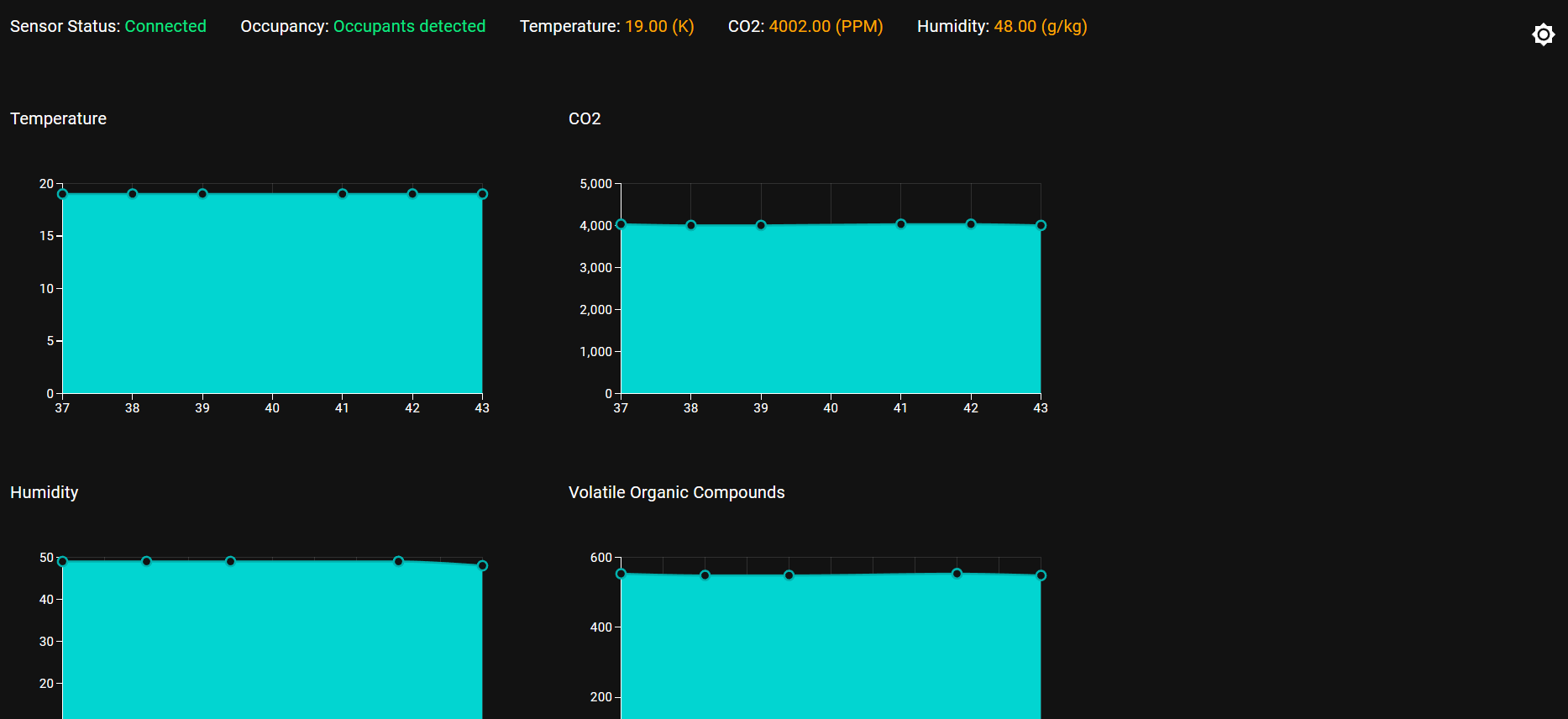
EcoSense replaces your traditional thermostat and room temperature sensors while collecting data about VOCs CO2, Humidity, and Temperature. Our server software polls data from our IOT sensor and analyzes the environmental data & air quality indicators. The web UI displays the sensor data and room activity determined, showing the consumer important information about their homes.
How we built it
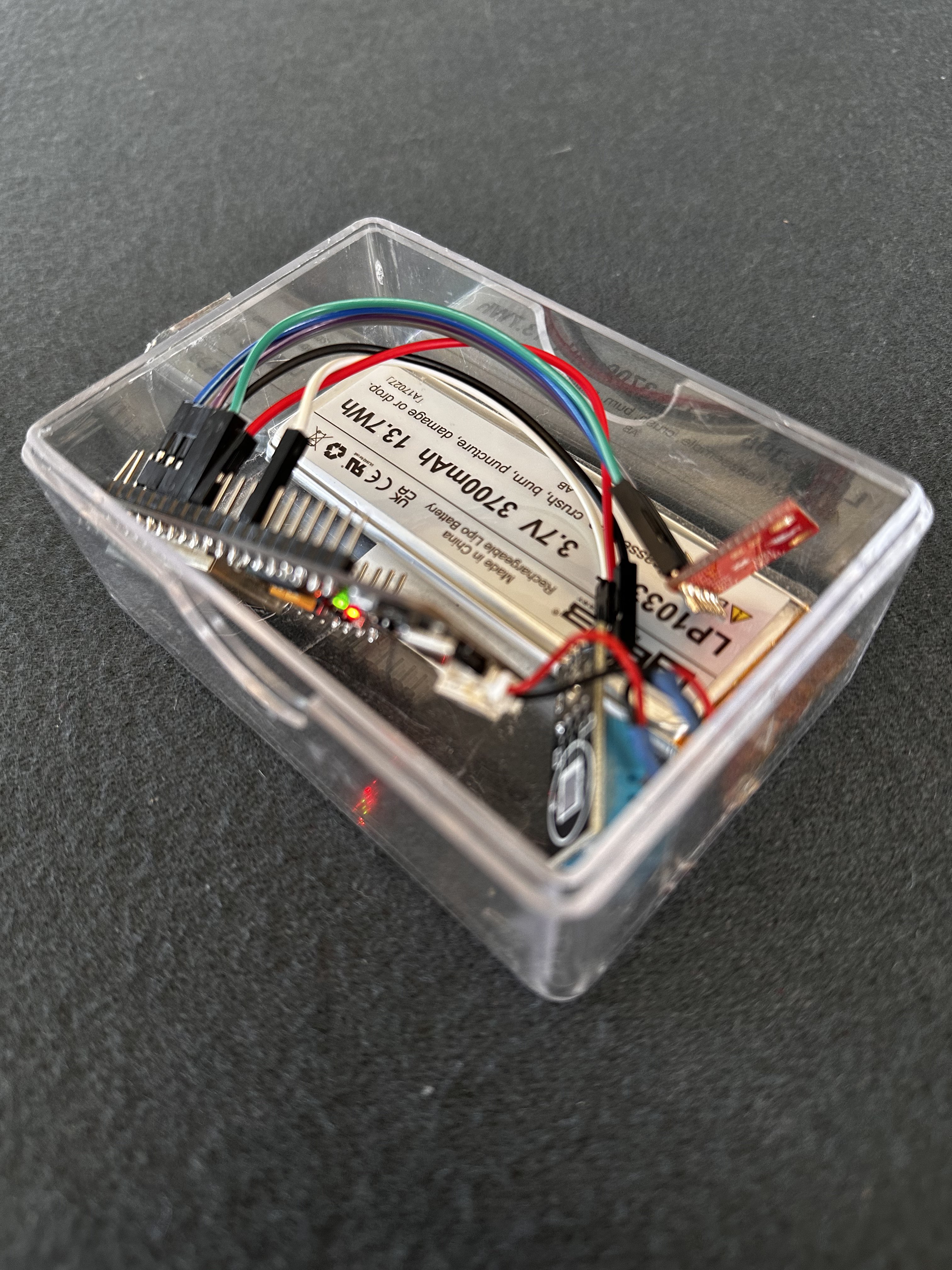
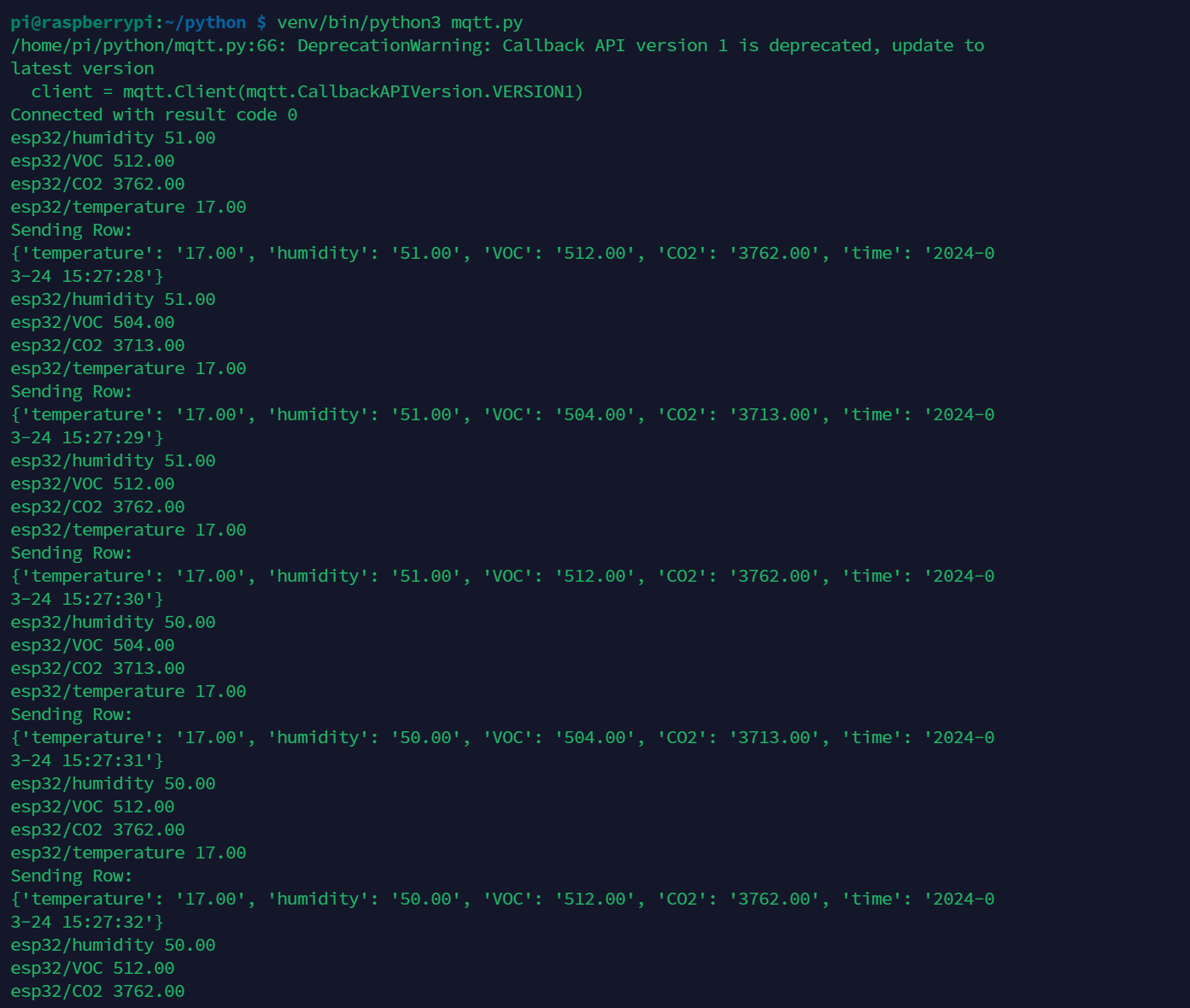
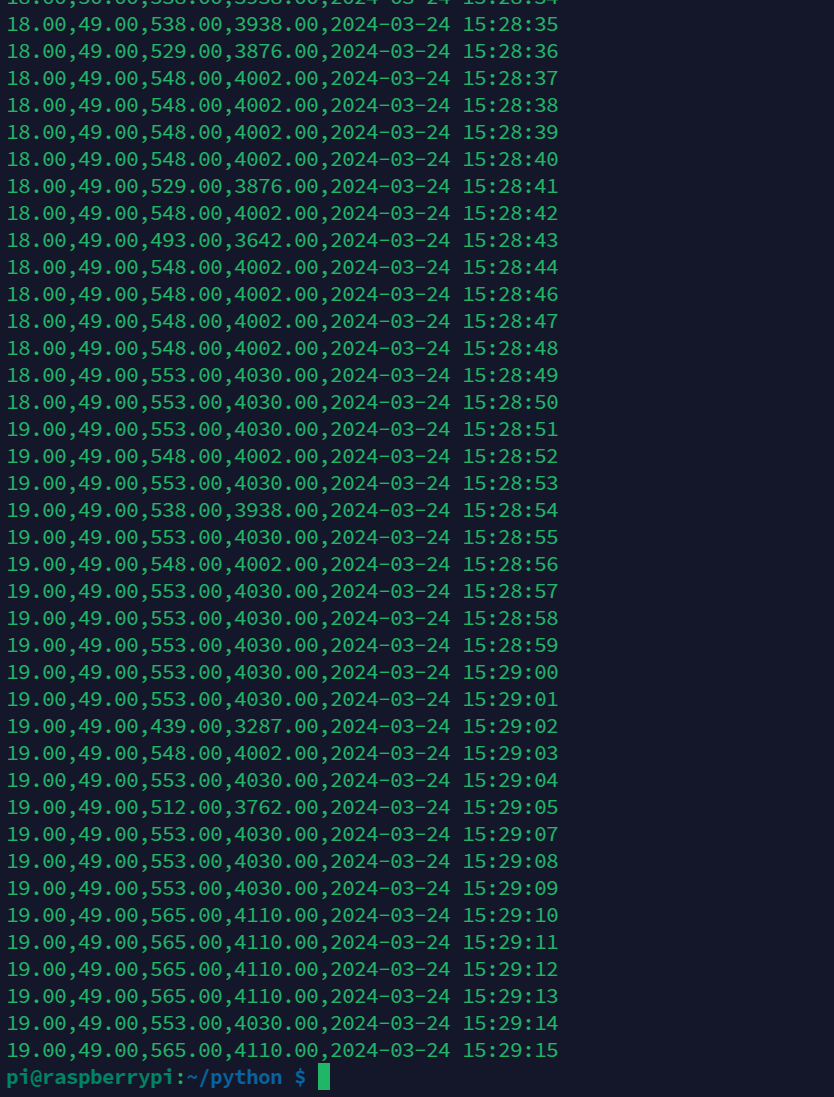
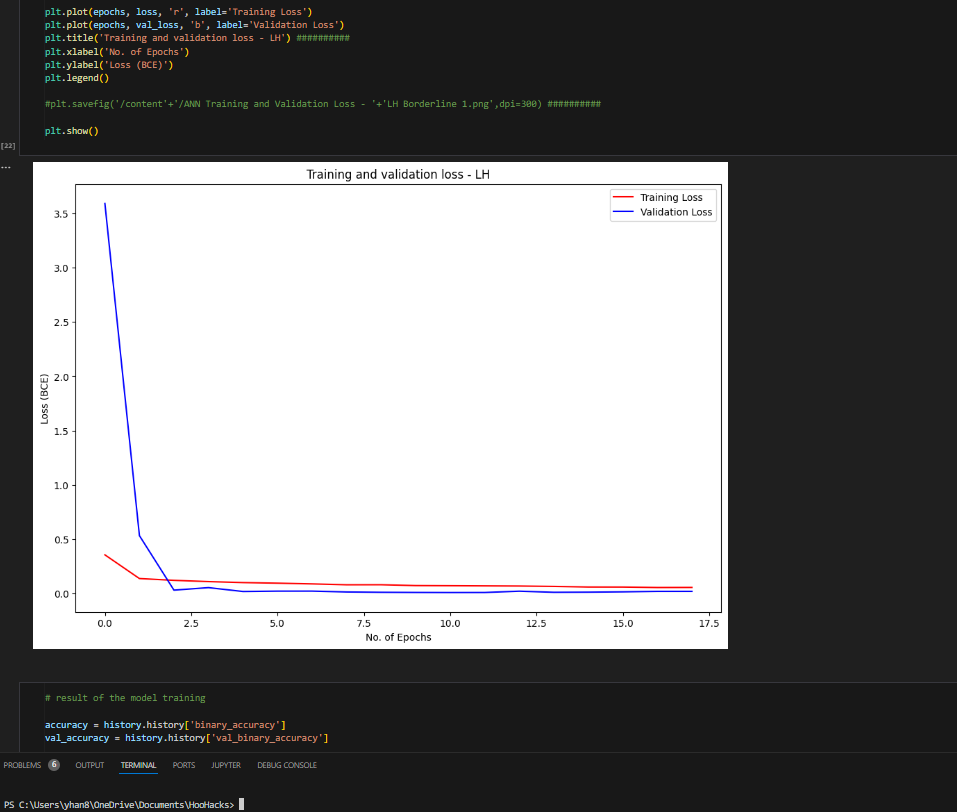
A wireless sensor built on the ESP32 platform periodically polls environmental data and air quality indicators. The sensor then reports back to our central server via MQTT. We tried other wireless protocols and determined that MQTT is the most reliable and secure protocol. For this demonstration, the central server runs on a Raspberry Pi that acts as a WiFi access point. The Raspberry Pi then runs our server software that stores MQTT data in a nicely formatted CSV file. The occupancy is then predicted by a binary classification model. For this demonstration, we will only determine human presence based on the sensor values. The UI is made using React, Vite, and MUI. Flask handles the back end on the central server.
Challenges we ran into
Managing BLE connections is less reliable than we imagined, so after a day of troubleshooting, we made a workaround using MQTT. Since it's not possible to use a small networking environment on campus itself, we had to create a new WiFi access point on the Raspberry Pi
Intel Developer Cloud was extremely foreign to all of us and it was quite difficult to work with, we could not spend a lot of time training our machine-learning model.
This was also the first time our team put together something so big in 24 hours. We built a full solution from front to back, and although difficult at times, we are proud of our product.
Accomplishments that we're proud of
This is our first venture into a hardware-based hackathon and we ran into many challenges with integrating the hardware with software. We feel very proud of our project concept and hope to continue its development in the future. Our group came into this hackathon as complete strangers, we now plan to stick together for more MLH events in the future!
What we learned
In just a short span of 24 hours, we learned a lot about I2C, BLE, MQTT, and ML. We are happy to see our concept proven to work.
What's next for the project?
In terms of the hardware, we wish to build something that has full thermostat features such as a display, control interface, and trigger signals for HVAC units.
Our server software is flexible enough to accept data from many more sensors, which can be used to gather even more accurate data from buildings.
Ultimately, we wish to continue to develop our machine-learning model to be able to adapt to all sorts of room environments and baseline conditions. We hope to make our model more accurate to better understand room occupancy. It is also possible to detect the number of occupants based on the same sensor values, but this requires a much more complicated model and data set unavailable to us in the scope of this event.


Log in or sign up for Devpost to join the conversation.