-
-

u l w a z i
-
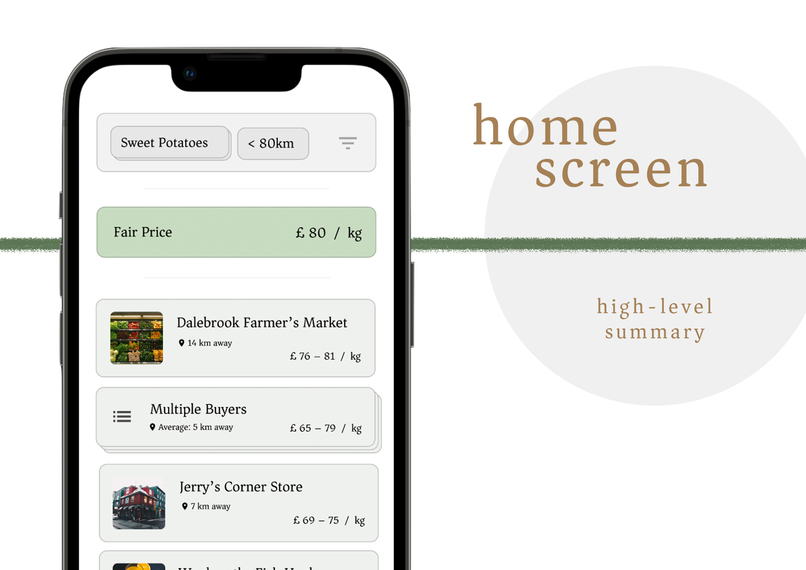
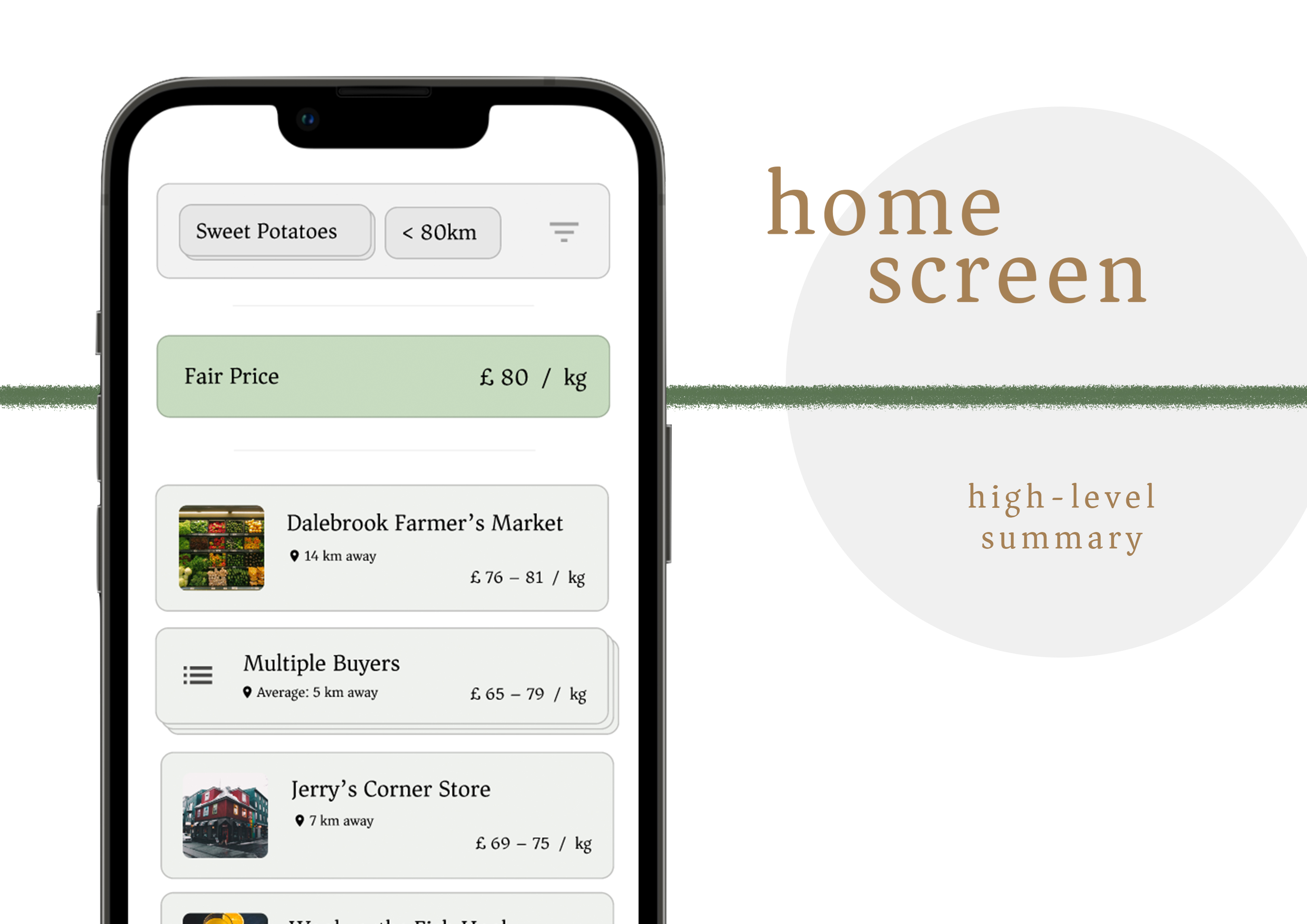
home screen
-
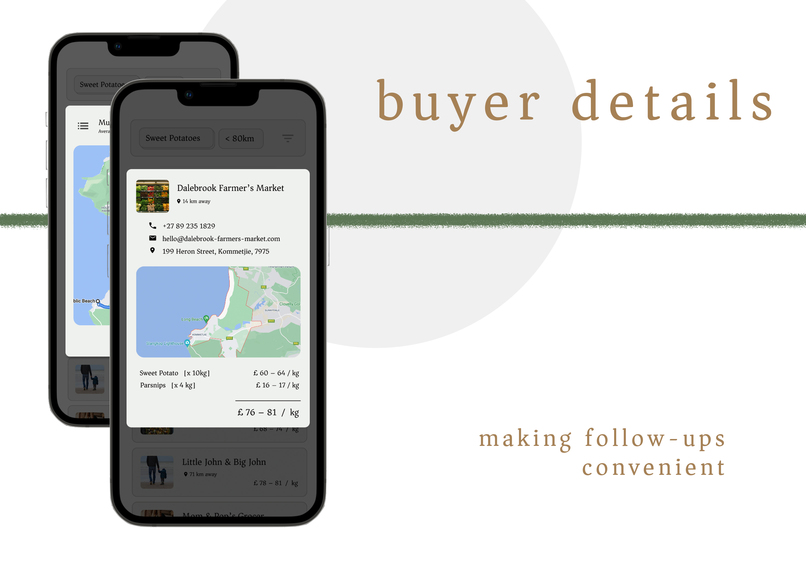
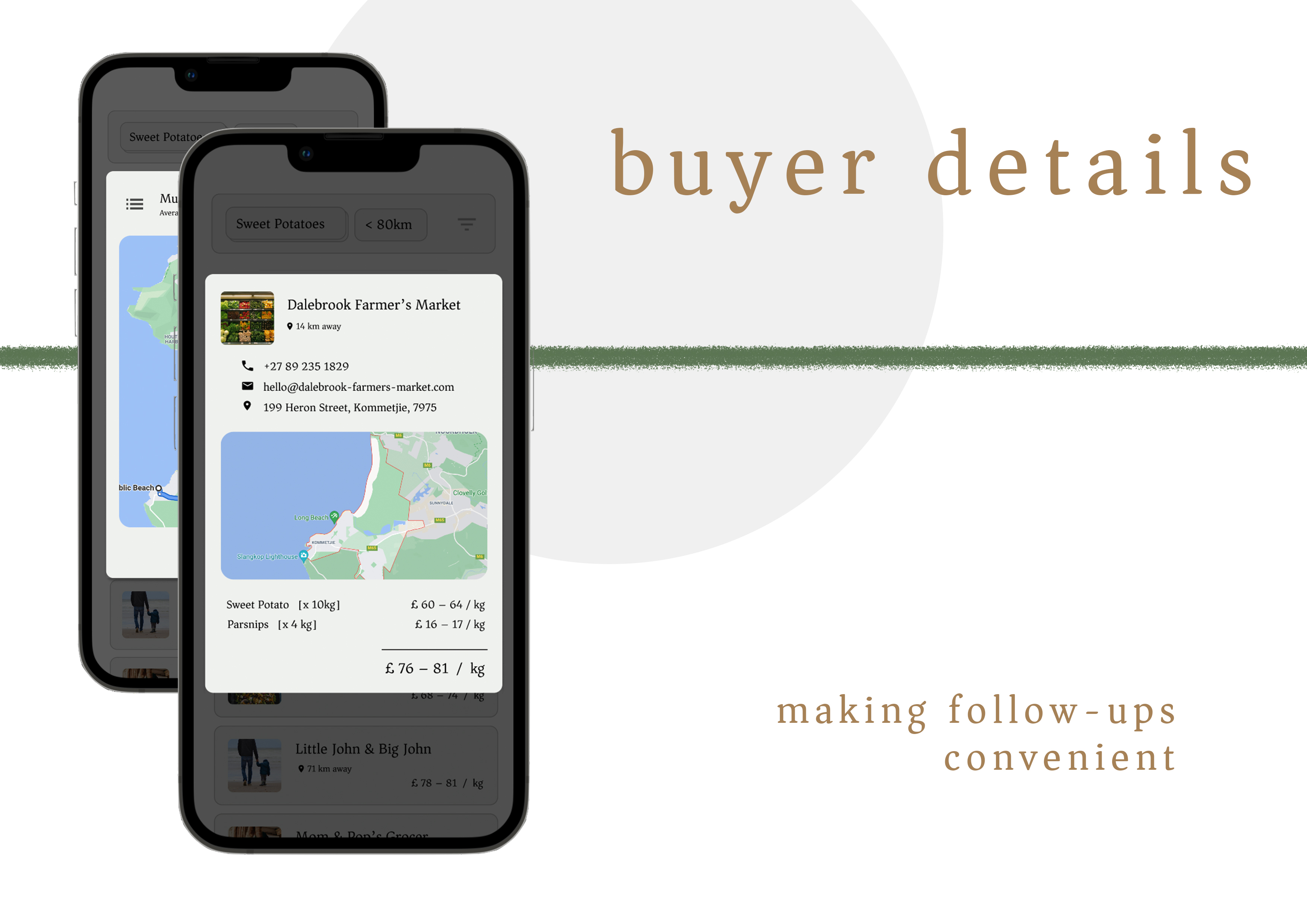
buyer details
-
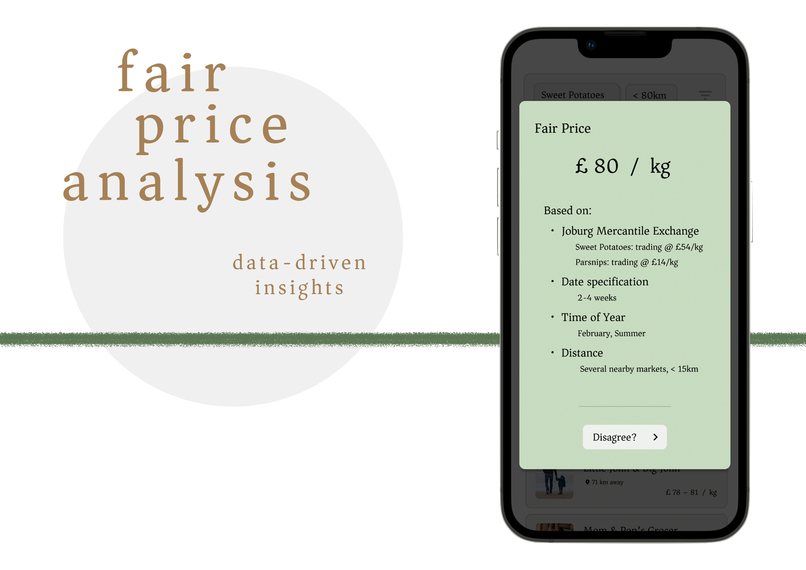
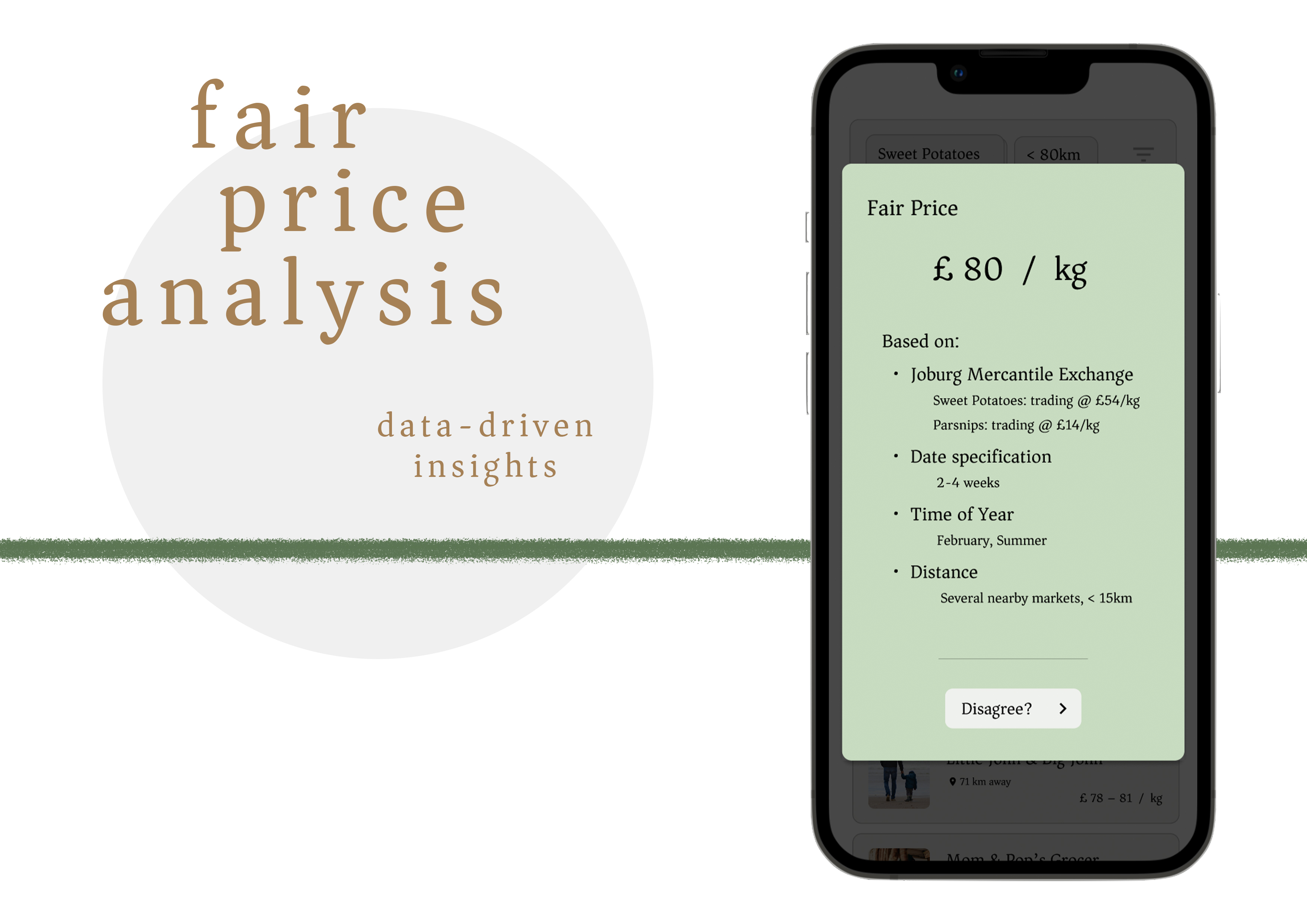
fair price analysis
-
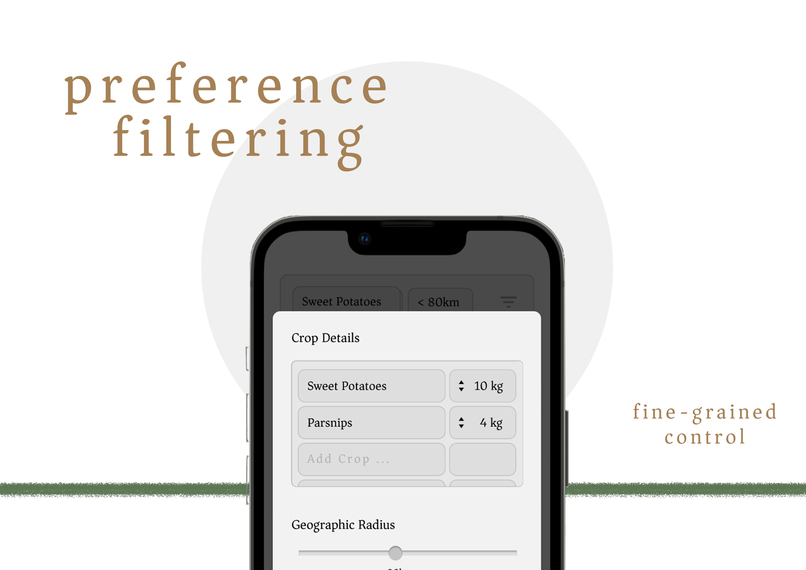
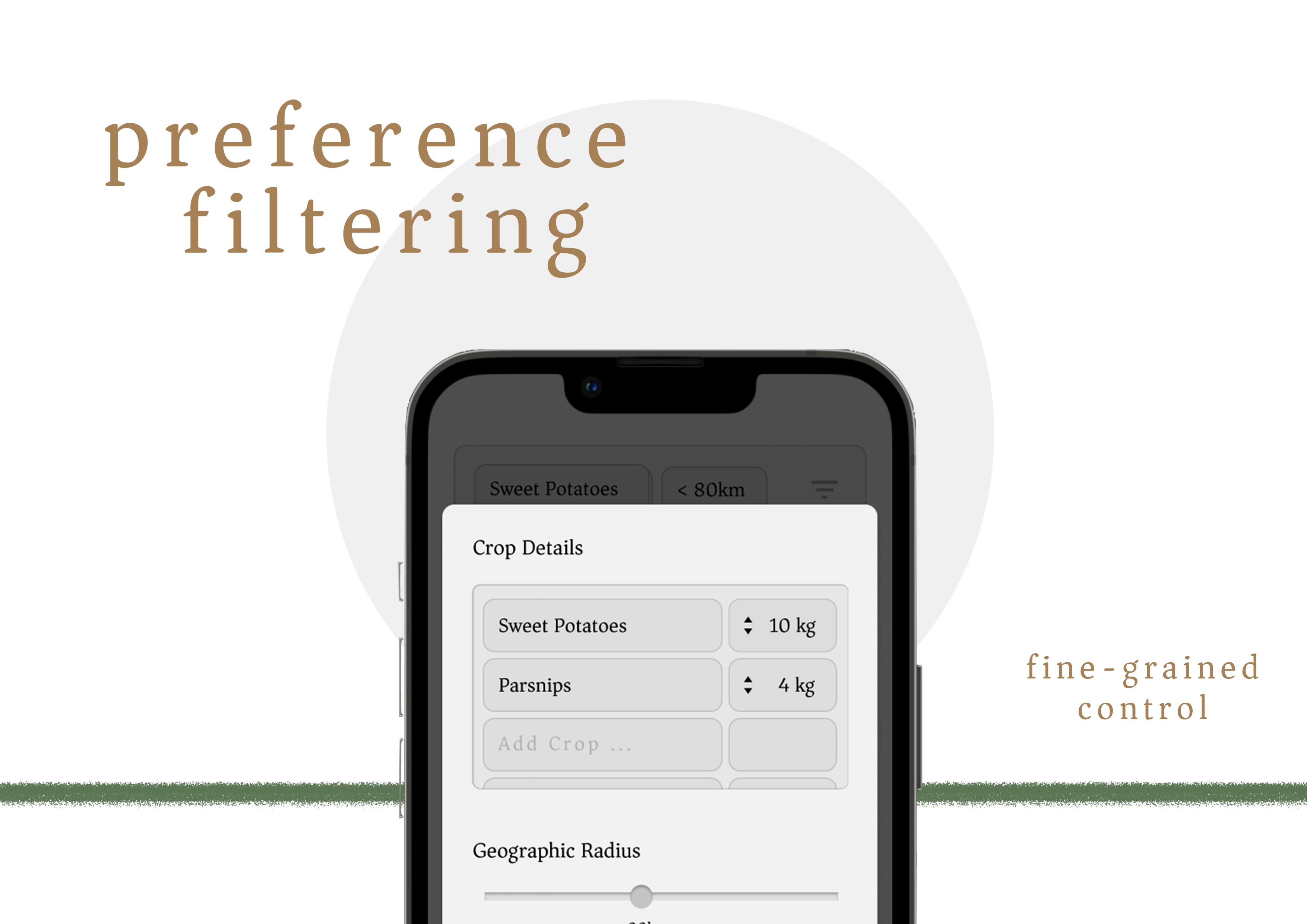
preference filtering
-

design specification
-
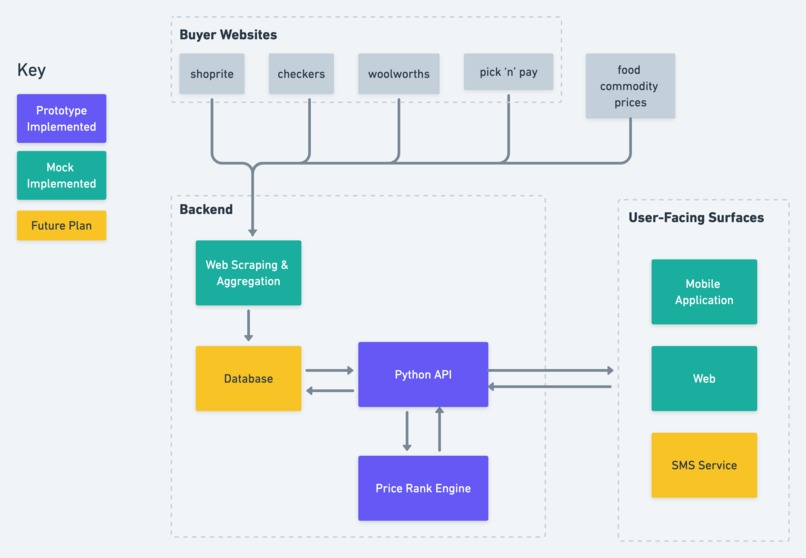
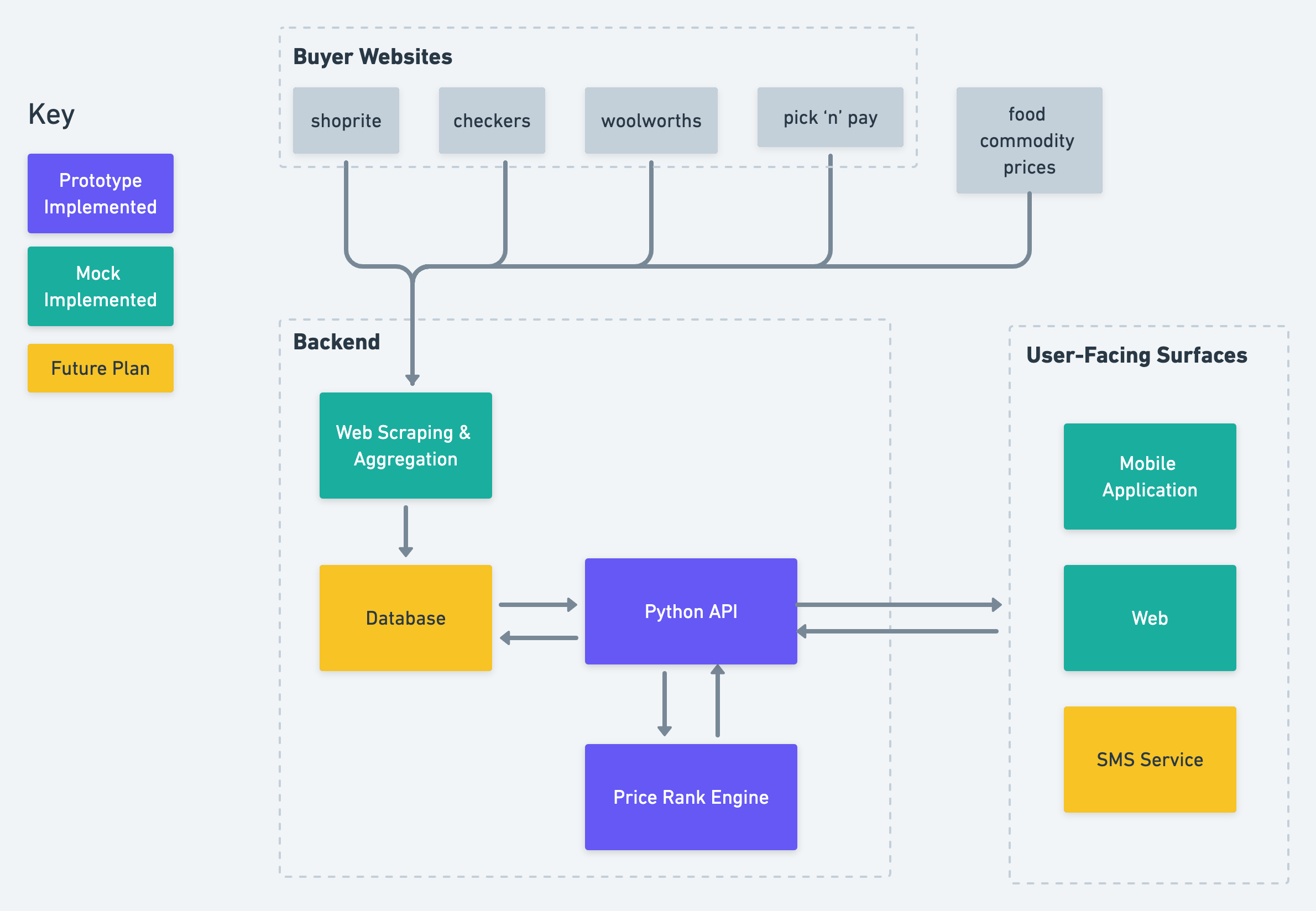
System Overview


Inspiration
- Small-holder farmers are often subject to unfair commodity pricing by larger, better informed, buyers.
- A study by Masuki et al. [1] found that a major problem in many rural regions is that farmers and small entrepreneurs generally have no way of knowing prices before they travel to the market due to poor communication facilities, resulting in a reliance on middlemen who take advantage of this lack of knowledge.
- This is fundamentally due to a lack of information: local farmers cannot afford personal financial consulting, or the time investment required to learn to interpret financial data [2].
[1] https://www.mak.ac.ug/documents/IFIP/RoleofMobilePhonesAgriculture.pdf [2] https://catalog.extension.oregonstate.edu/sites/catalog/files/project/pdf/em9149.pdf
What it does
- Aggregate pricing information from multiple sources (e.g. supermarket retail prices, commodity market data) to derive an estimated fair value for the farm produce.
- Provide a farmer with a list of possible buyers with estimated selling price for each crop. Buyers are sorted by the potential profit.
- In order to do this, we optimize the distribution of produce across multiple potential buyers. This is performed by our price rank engine, which provides a list of distribution patterns for the farmer’s produce, ranked according to price fairness, estimated transportation costs, market development, and the type and amount of produce to be sold.
- For example, a local farmer named Tom wants to sell 40kg of potatoes and 20kg of leeks tomorrow in the radius of 50 km. Our application will advice Tom that he can achieve a profit of £20-25 by selling the potatoes at shoprite and leeks for £15-20 at checkers. Tom can now make a better-informed data-driver decision.
[3] https://onlinelibrary.wiley.com/doi/full/10.1111/japp.12459
How we built it
- We formalised the problem as an integer linear programming problem, using the branch-and-bround algorithm to compute the optimal distribution pattern across buyers.
- We identified sources of live pricing data from commodity markets and local South African supermarkets.
- We built a frontend prototype with a streamlined user interface, designed to enable farmers to input their product details with ease, and receive optimal distribution patterns in a user-friendly interface. This could be deployed to both mobile and web.
Challenges we ran into
- Data sources could be extended -- ideally, further data would be acquired from local businesses to provide more options to farmers.
Accomplishments that we're proud of
- Identifying a real problem and a feasible solution, with high potential impact.
- Formalising the problem mathematically, implementing it in python, and serving it as a REST API.
- Designing a user-interface that streamlines user experience while maintaining a beautiful, minimal aesthetic.
What we learned
- We learned about market inefficiencies that are hurting small farming businesses in developing countries.
- We learned that aggregating information in a centralised way can help avoid repeated work by farmers, and increase labour productivity.
What's next for Ulwazi - Pricing assistant for local farm produce
- Implementing the price data retrieval from already identified sources (probably using scrapy to crawl many pages in parallel).
- Enhancing the price rank engine.
- Creating a service for the buyers to send us their price offers to promote their shop to potential customers
- Possible monetization possibilities include data analytis for the buyers or advertisement


Log in or sign up for Devpost to join the conversation.