-
-
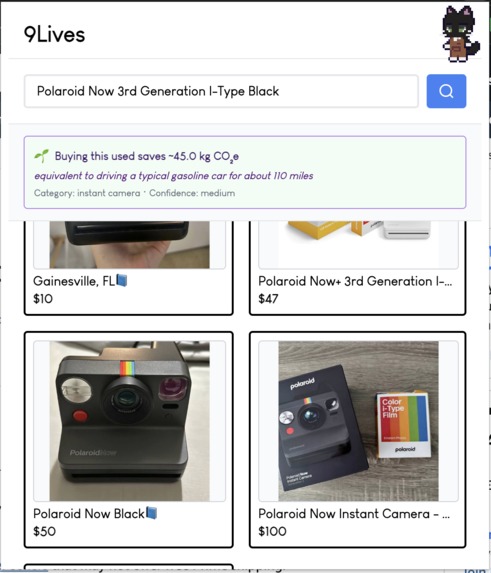
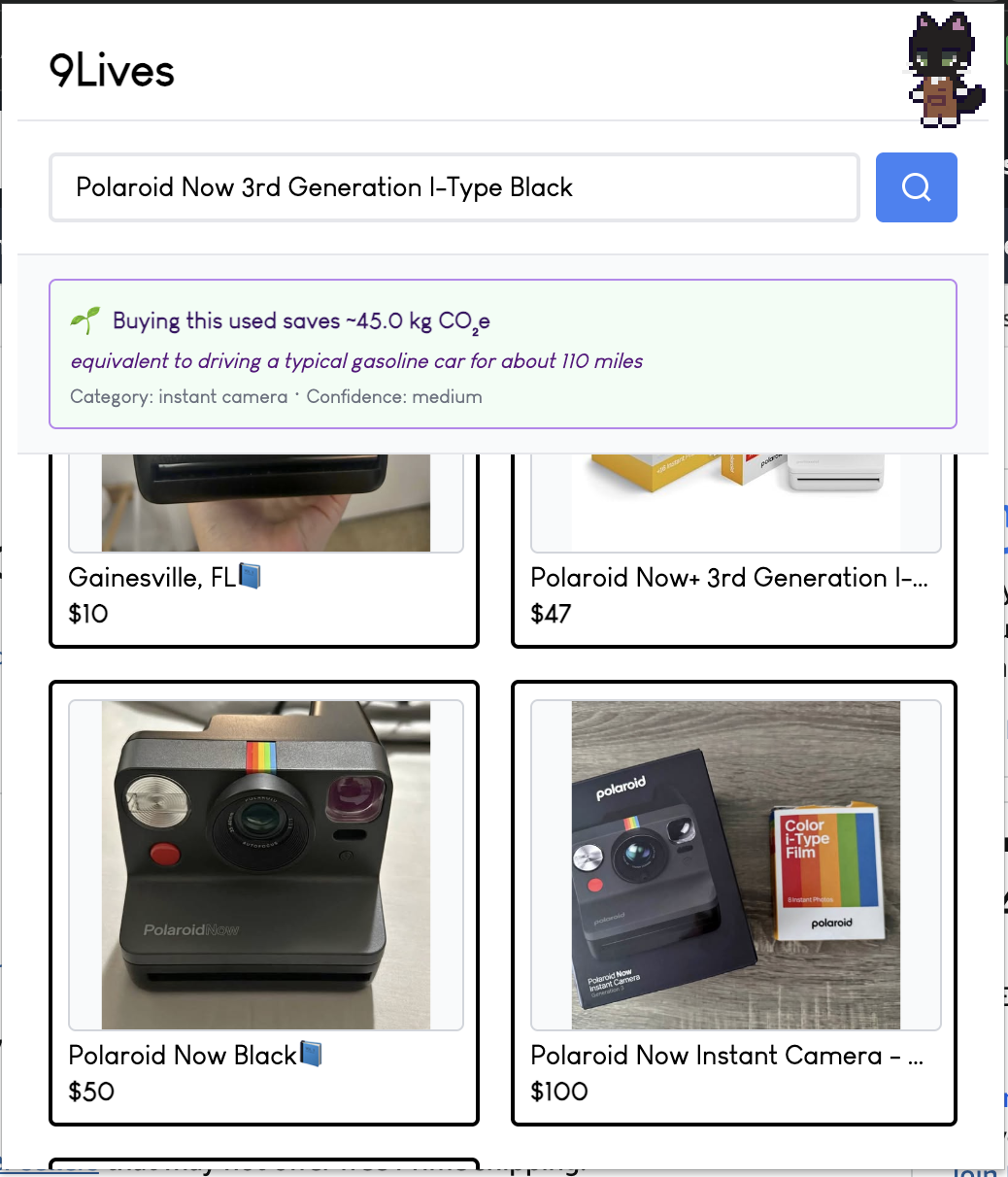
Screen-only local Polaroid options
-
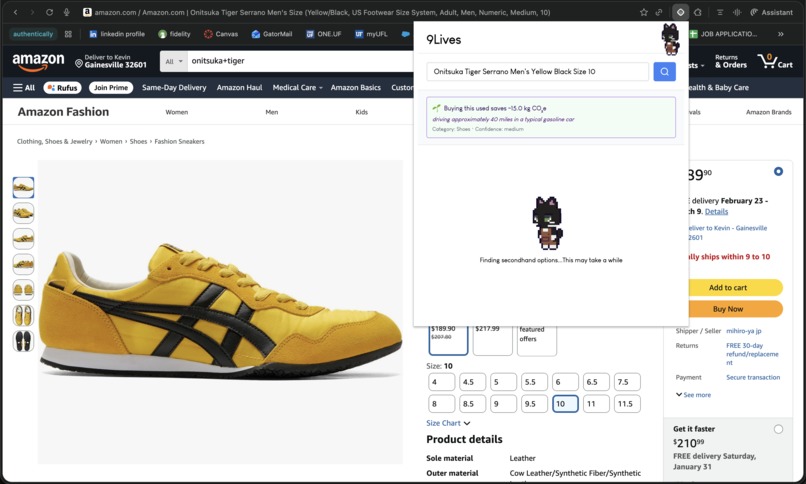
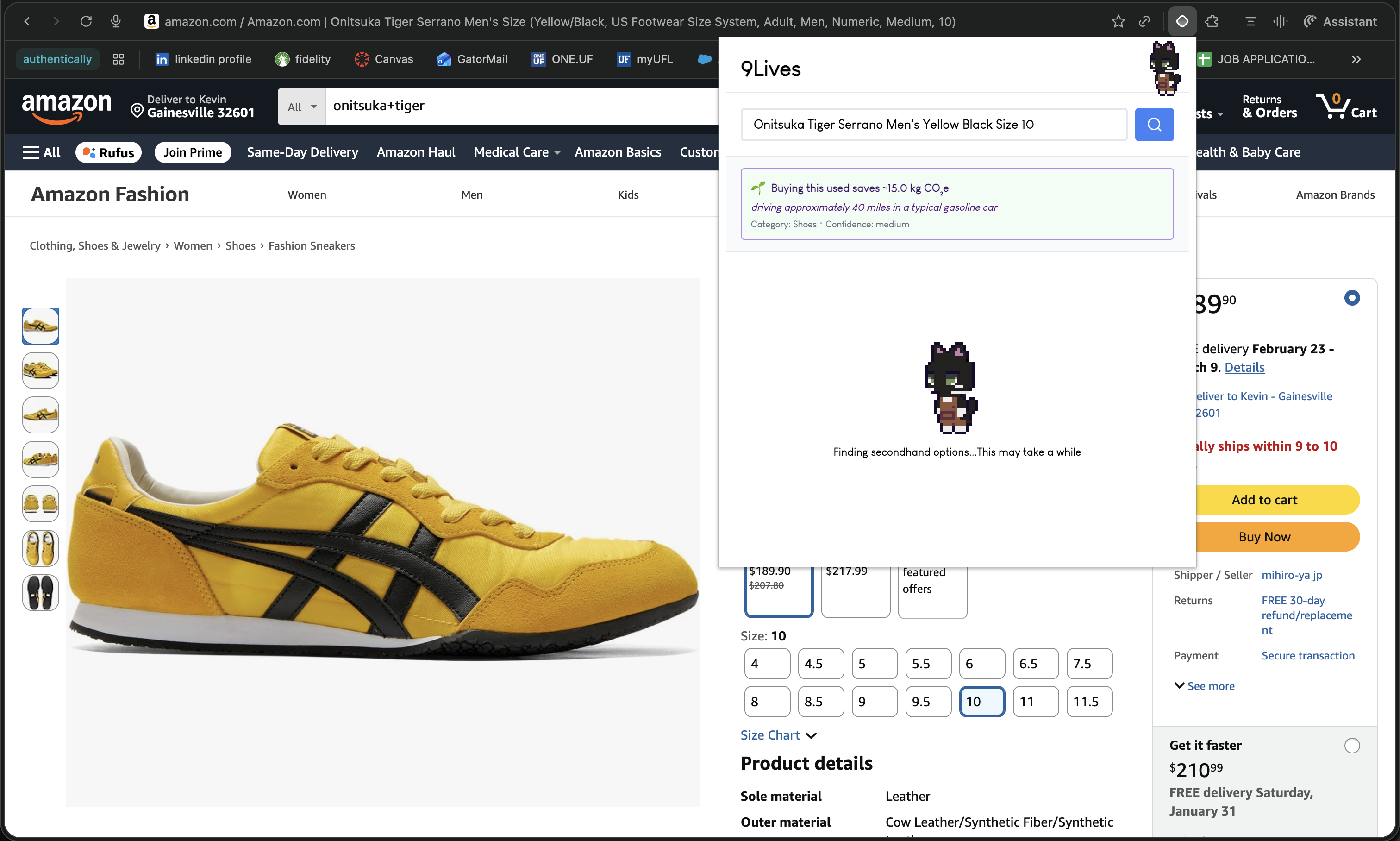
Loading screen for a query of mens shoes on Amazon
-
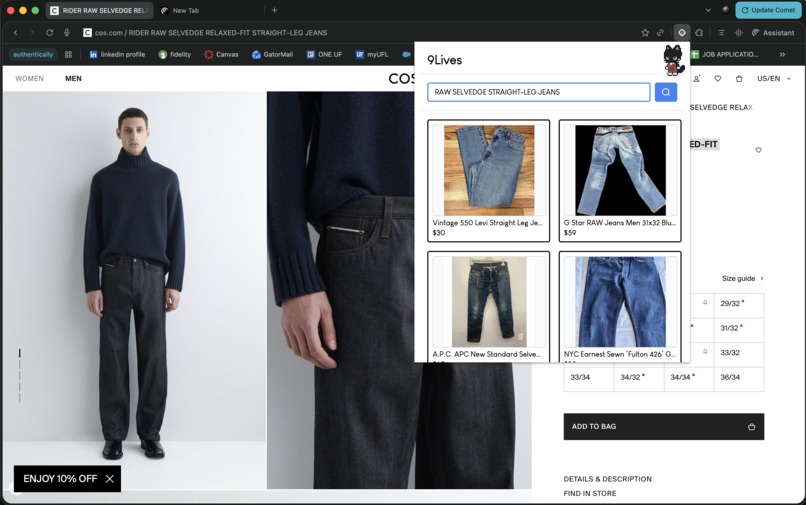
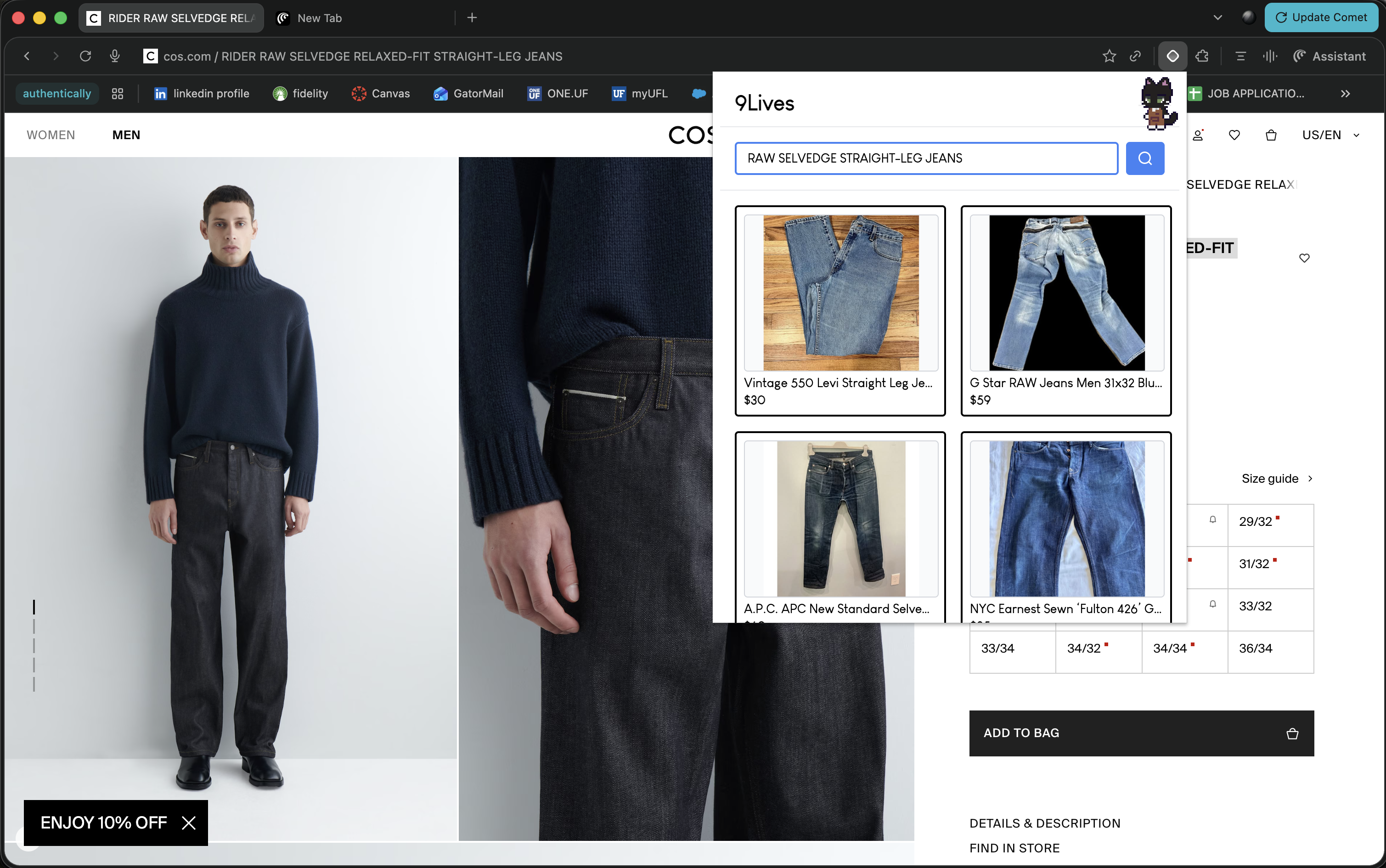
Query of some cool jeans on a clothing site
-
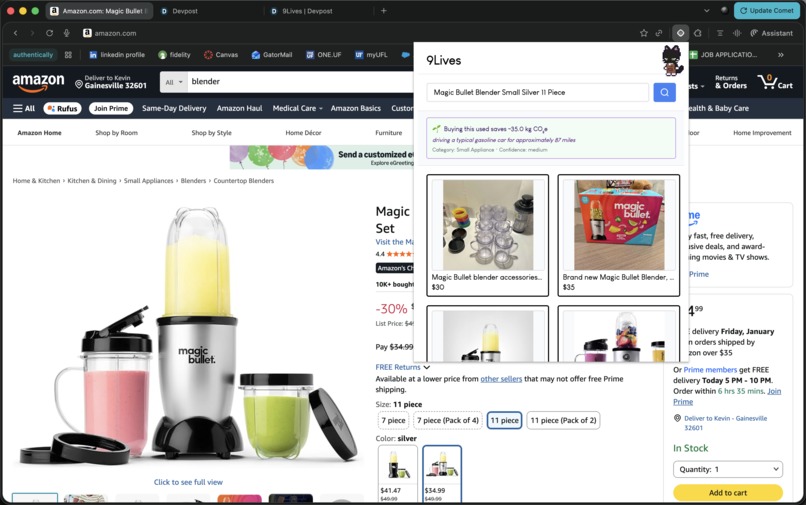
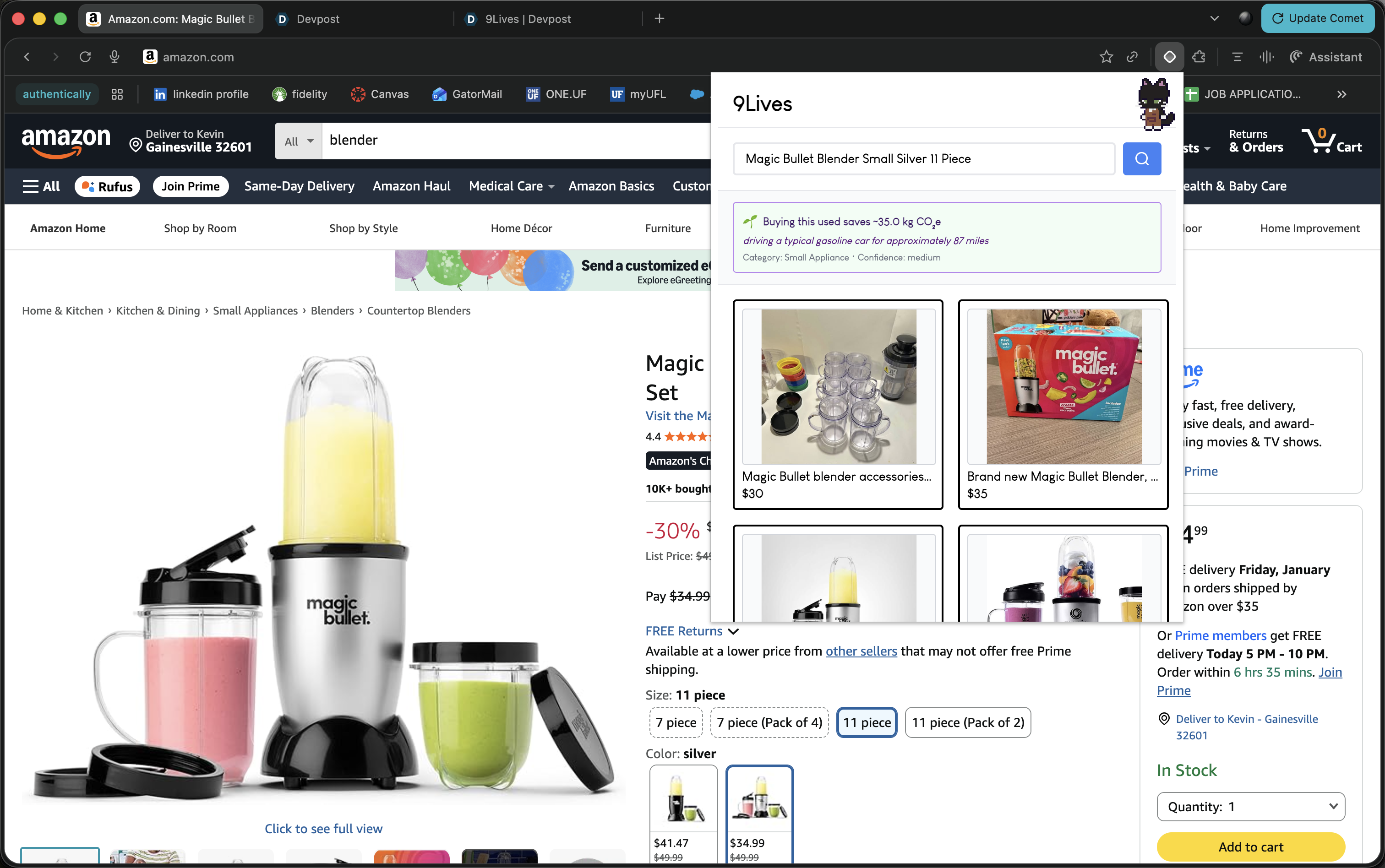
Query of a personal blender on Amazon
-
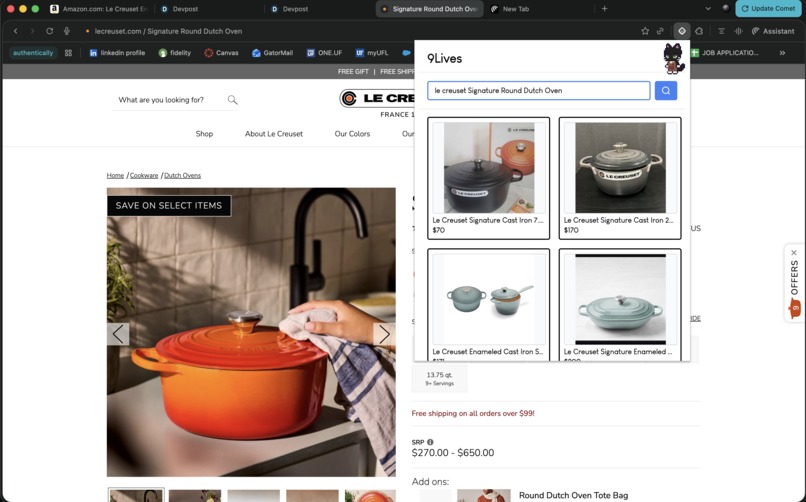
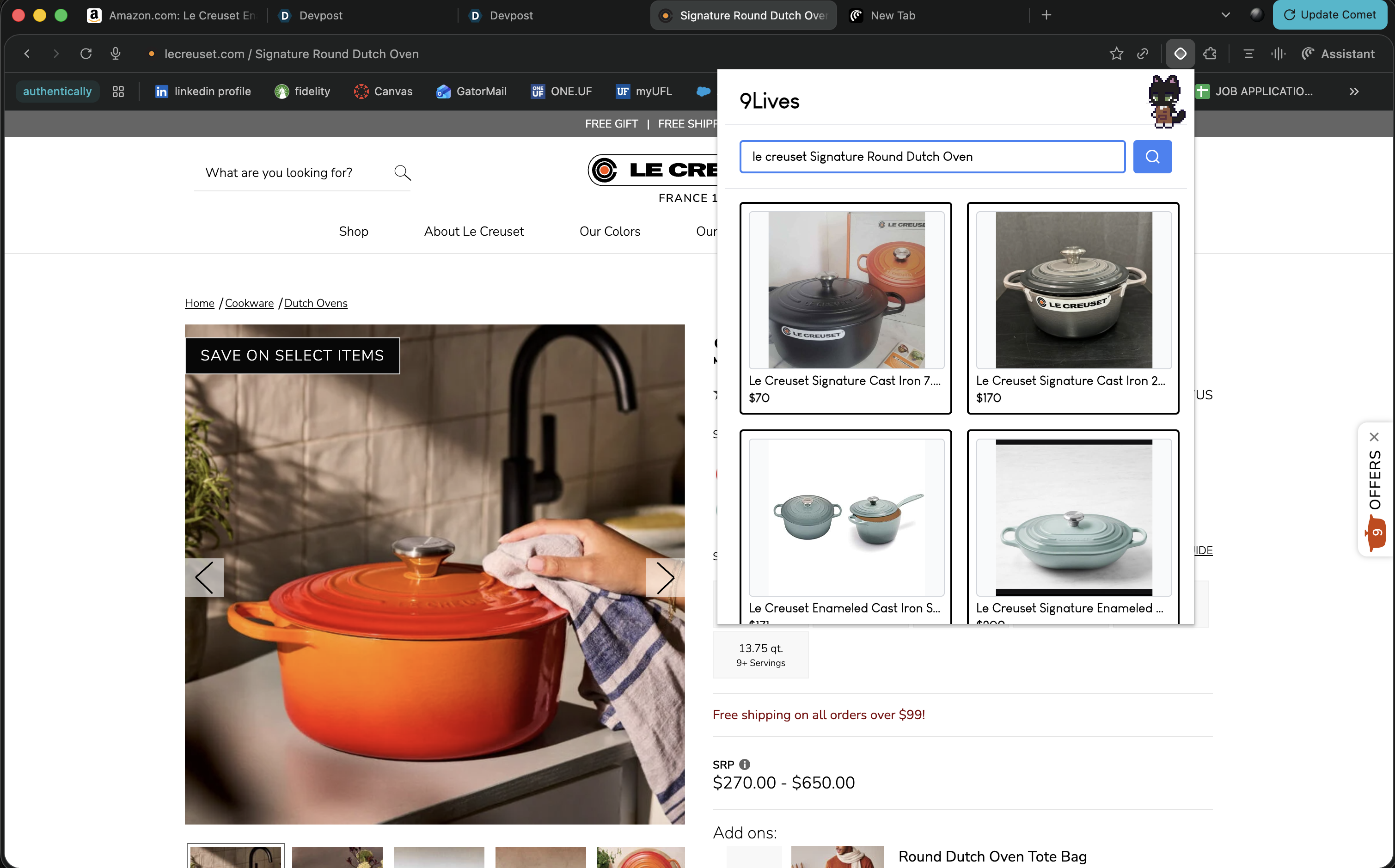
Query of an expensive dutch oven on a French kitchenware retailer (wow, look at the savings from buying locally)
Inspiration
Every purchase has an environmental cost, yet buying secondhand reduces our footprint while saving money and uncovering unique items. With millions of tons of goods ending up in landfills each year, secondhand shopping is a direct way to keep items in use and reduce waste. Globally, an estimated $2.6 trillion of material value in fast‑moving consumer goods is thrown away and never recovered every year, where roughly 80% of their material value is lost. Yet many people still default to buying new, held back by worries about item quality, hygiene, and trust in online sellers, along with the extra effort of searching across scattered resale platforms.
We believe secondhand shopping should be celebrated as a smart, sustainable choice, not just an alternative. By making it effortless to find quality secondhand items locally, we can shift the narrative from used goods to pre-loved treasures and empower more people to make environmentally conscious decisions. Our mission is to break down barriers, reduce stigma, and make sustainable shopping so accessible that choosing secondhand becomes the natural first choice.
What it does
9Lives scans the product page you're viewing and finds similar secondhand items available locally on eBay, Facebook Marketplace, and OfferUp. We chose these platforms because they represent a high market share of local secondhand items, making them ideal for finding nearby alternatives. While browsing new items, the extension automatically searches these platforms to show nearby alternatives. It displays results in one place, so you can compare prices and options without switching tabs. The extension also calculates the environmental impact of buying secondhand using Life Cycle Assessment principles to establish a CO₂ range, then uses Gemini AI to refine the estimate for the specific product, showing how much CO₂ you save with a realistic comparison that makes the impact tangible. With a single click, you can explore local secondhand options and make more sustainable purchasing decisions without leaving your current shopping page.
How we built it
We built 9Lives using the Plasmo browser extension framework, which runs entirely in the user's browser. When you visit a product page, the extension extracts the raw HTML directly from your browser session and sends it to Google's Gemini AI to generate an optimized search query. For eBay, we use their official Browse API to fetch results, while for Facebook Marketplace and OfferUp, we leverage your browser to access and parse the marketplace pages you're already viewing. All scraping happens client-side through your browser, making it a user-assisted tool that works with the content you're already accessing. The results are then displayed through a React frontend that efficiently manages state and presents all your secondhand options in one unified interface.
Challenges we ran into
A challenge was gathering marketplace data from multiple sources with different structures. Facebook Marketplace and OfferUp don't have public APIs, so we built client-side scrapers that handle their unique HTML layouts and dynamic content loading. Another challenge was getting Gemini to consistently generate useful search queries from messy, unstructured HTML. We refined our prompts and preprocessing to extract meaningful product information and produce reliable search terms.
Accomplishments that we're proud of
- Built a fully automated workflow that scrapes product pages, generates optimized search queries with Gemini AI, and searches across three marketplaces automatically
- Implemented robust client-side scraping for Facebook Marketplace and OfferUp, handling dynamic content loading and varying HTML structures
- Created a unified data pipeline that merges results from eBay's REST API and two scraped marketplaces into a consistent interface
- Developed an AI-powered sustainability feature that uses Gemini to calculate CO₂ savings with relatable comparisons
- Designed a clean, intuitive UI with smooth animations, real-time loading states, and a unified grid that displays results from all marketplaces in one place
What we learned
- LLMs like Gemini can turn messy HTML into useful search queries, making AI practical for real product discovery
- Combining data from different sources needs solid transformation logic to handle varying formats
- Efficient API usage means managing parallel requests, caching, and error handling across REST APIs and web scraping
What's next
- Build a user account system with customizable preferences: item count limits, platform selection, price ranges, and an ML model that suggests products based on viewing history
- Expand marketplace support to include Poshmark, Craigslist, and other secondhand platforms
- Add image recognition to extract product details from images and generate more accurate search keywords
- Create platform-specific search query optimization, adapting keyword complexity for each marketplace (e.g., simpler queries for OfferUp, more detailed for eBay)
- Implement saved items functionality and wishlist tracking
- Build a scam detection system that analyzes listings for red flags (suspicious pricing, image quality, seller history) and assigns a trust score to each item
Built With
- axios
- gemini
- plasmo
- react
- typescript


Log in or sign up for Devpost to join the conversation.