-
-
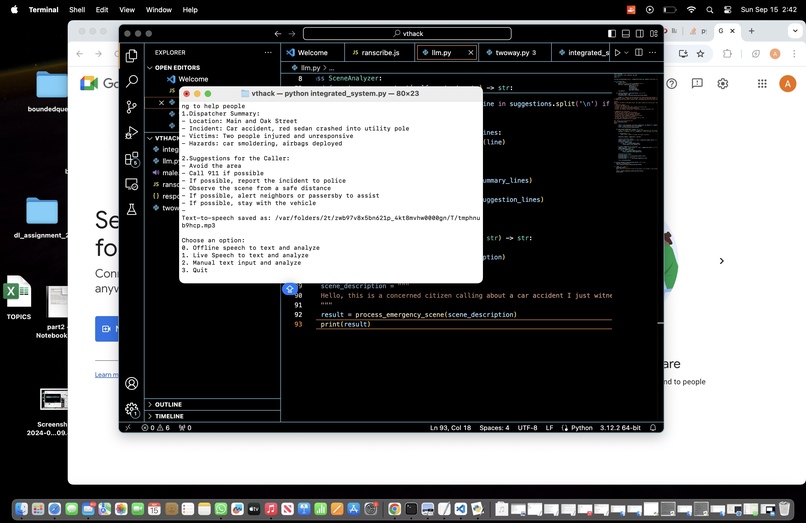
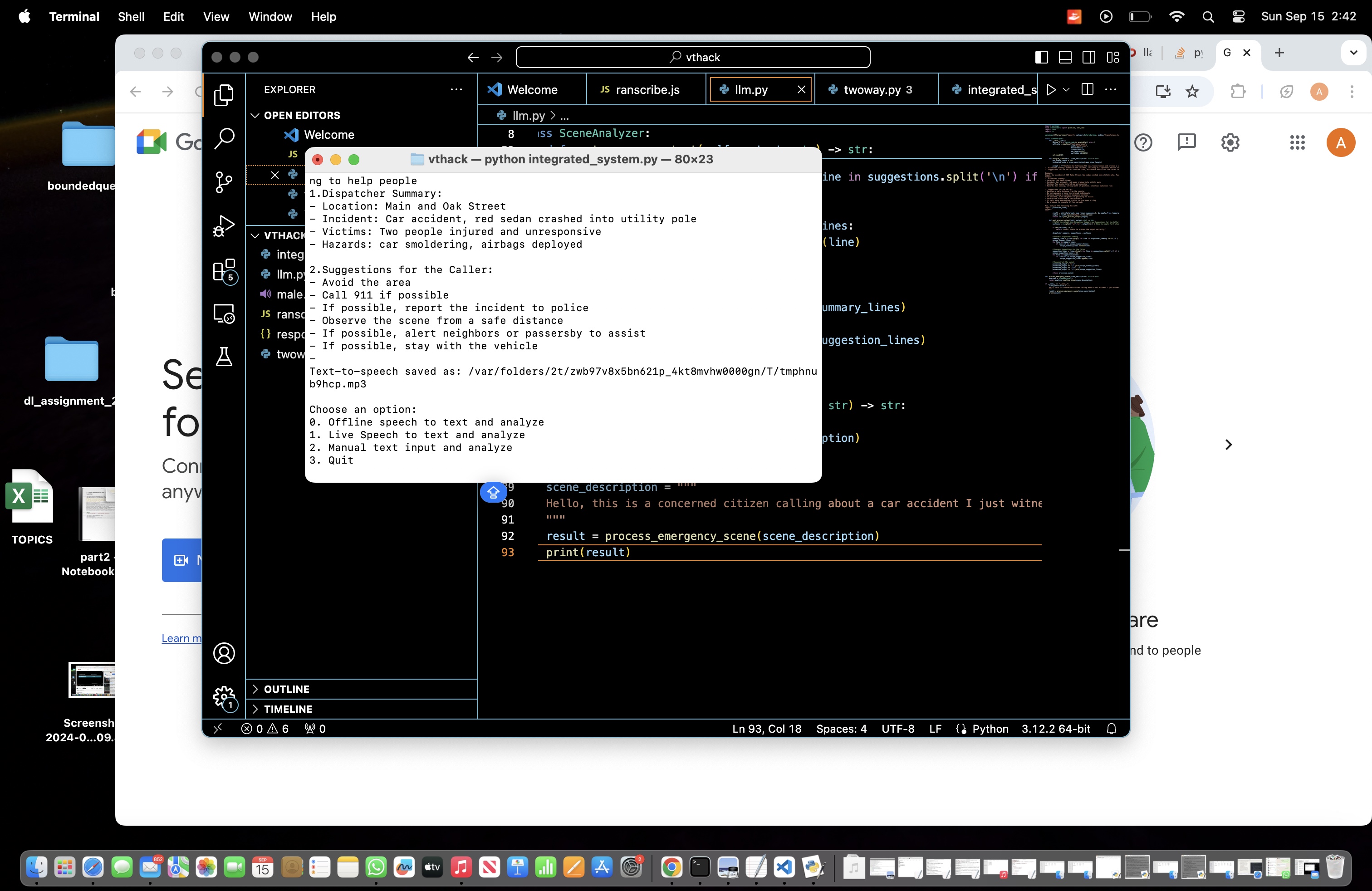
just the backend
Inspiration
We were inspired by the need for more efficient and effective emergency response systems. We wanted to leverage AI and natural language processing to create a tool that could quickly and accurately assess emergency situations and provide critical information to responders.
What it does
Our project, 911 Emergency AI Assistant (EmAA), is a web-based application that uses speech recognition and AI analysis to process emergency calls and provide responders with vital information. It can: Transcribe spoken language in real-time Identify key details such as location, incident type, and severity Provide suggested responses and protocols for responders Offer language translation for non-English speakers
How we built it
We built EmAA using a combination of technologies, including: React for the frontend UI Node.js and Express for the backend API Google Cloud Speech-to-Text for speech recognition Natural language processing libraries for AI analysis
Challenges we ran into
Integrating speech recognition with AI analysis Ensuring accuracy and reliability in emergency situations Handling multi-language support Designing an intuitive and user-friendly interface Accomplishments that we're proud of Successfully integrating speech recognition and AI analysis Achieving high accuracy rates in testing Creating a user-friendly and intuitive interface Implementing multi-language support
What we learned
The importance of testing and iteration in AI development The challenges of integrating multiple technologies The value of user-centered design in emergency response systems
What's next for 911 Emergency AI Assistant (EmAA)
Further testing and refinement Integration with existing emergency response systems Expansion to support additional languages and incident types Exploration of potential applications in other fields, such as healthcare or customer service
Built With
- gpt2-large
- llm
- natural-language-processing
- python
- react

Log in or sign up for Devpost to join the conversation.