-
-
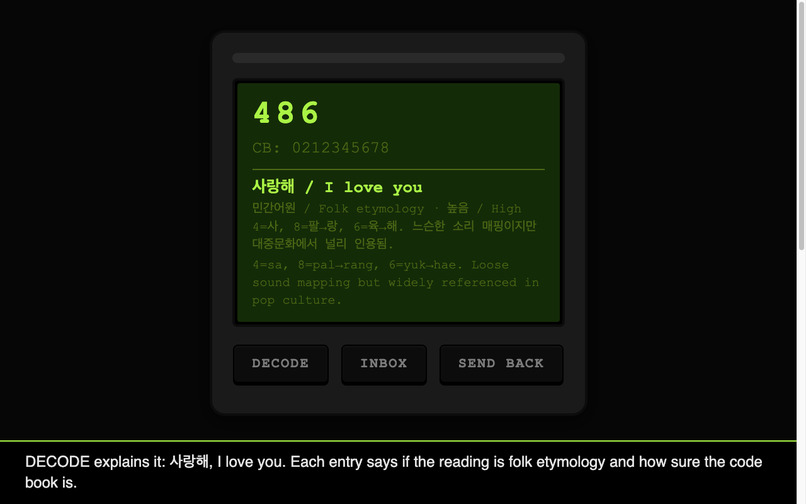
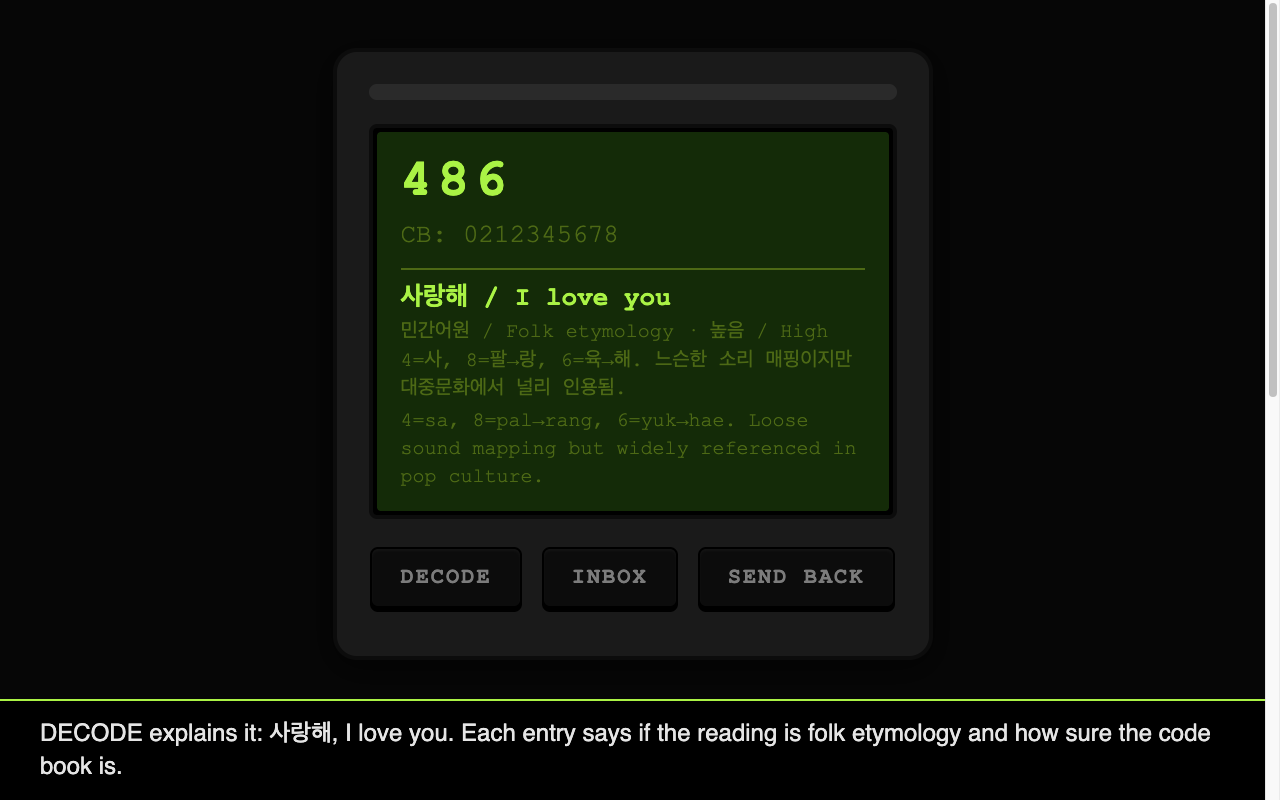
DECODE: 486 means 사랑해, I love you, with the folk etymology note
-
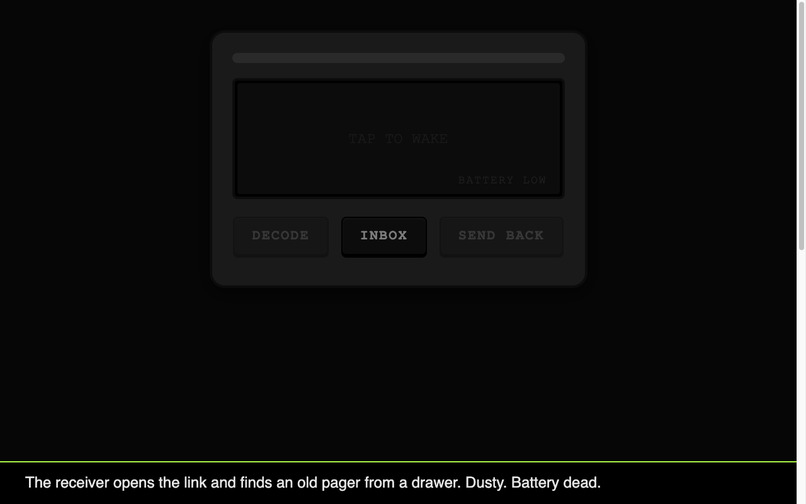
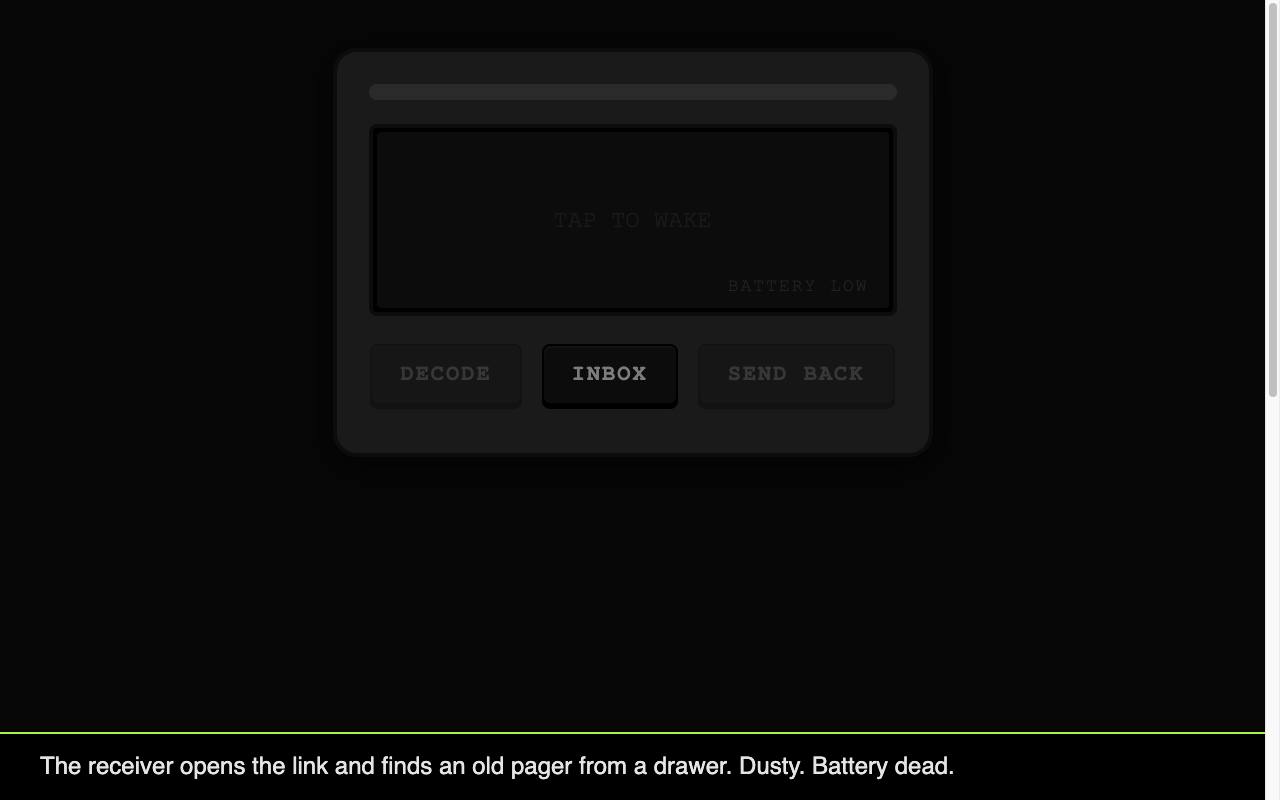
The dead pager from the drawer, before the first tap
-
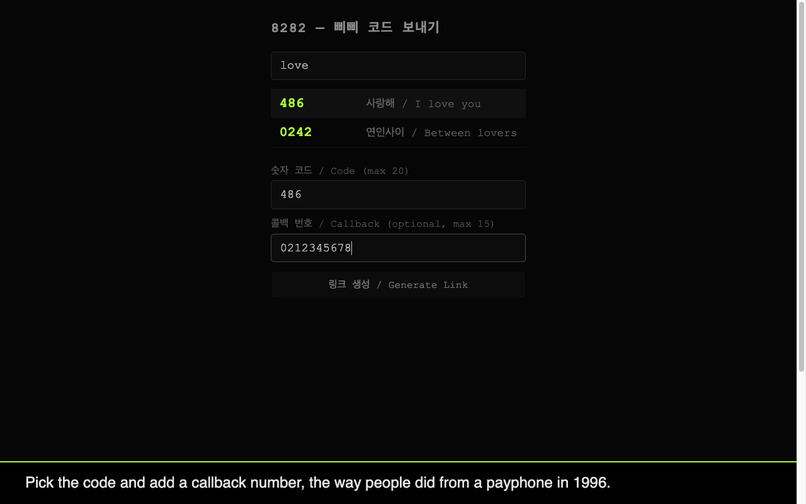
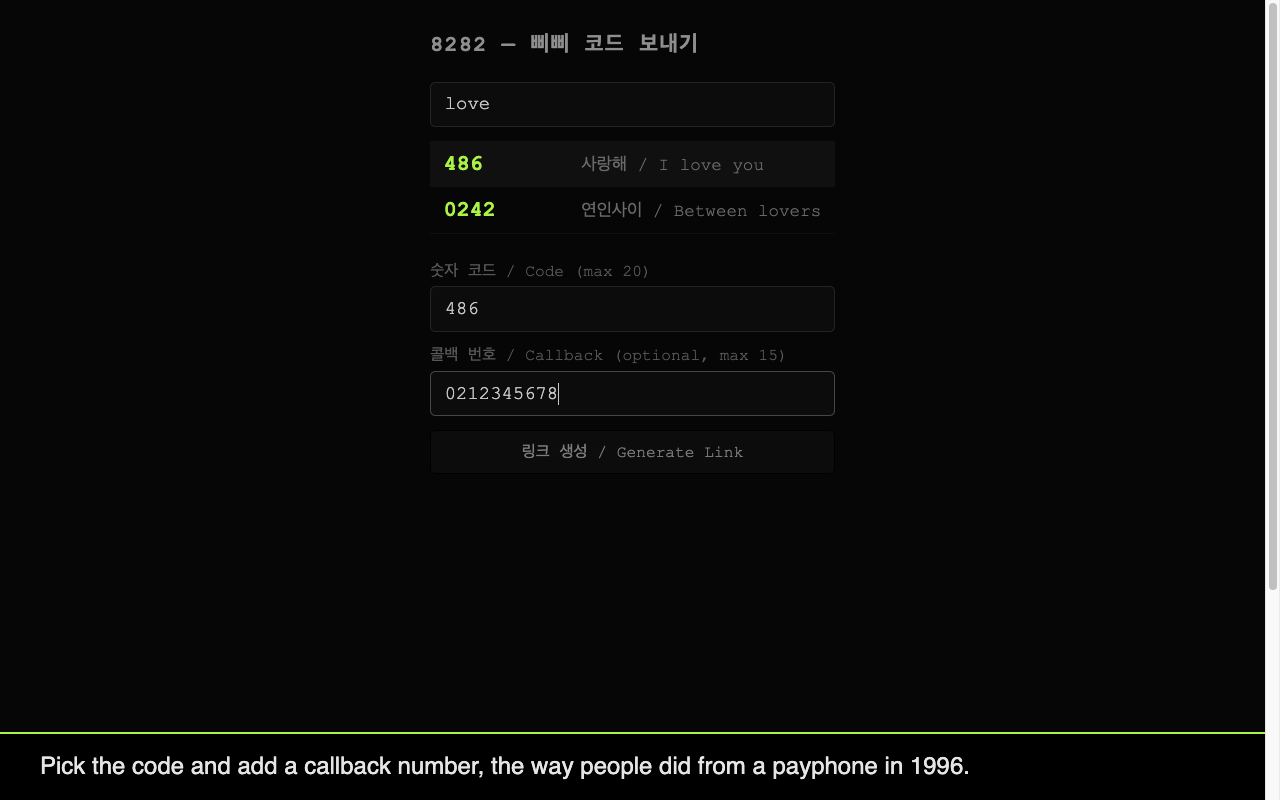
Composer: pick a code and add a callback number
Inspiration
In Korea in the 1990s, a pager could only show numbers. So people wrote in numbers: 8282 for 빨리빨리 (hurry), 486 for 사랑해 (I love you), 1004 for 천사 (angel), with a callback number after it. Then mobile phones arrived and the whole language went into a drawer with the pagers. Most people under 30 cannot read it any more.
What it does
- Send: search a meaning in Korean or English, pick a code from the code book or type raw digits, add a callback number, get a link.
- Receive: the link opens a dead pager pulled out of a drawer, dusty, BATTERY LOW. One tap and it wakes up, beeps with a WebAudio square wave (only after the tap) and scrolls the digits on a green LCD. DECODE shows the meaning and where the reading comes from.
- Inbox: received pages stay on the device in localStorage, up to 50. SEND BACK opens the composer with the sender's callback number.
The page lives entirely in the URL hash (#p=<digits>&cb=<digits>&t=<unix seconds>), strictly validated. No server, no account. It works through any messenger.
The code book has 18 entries and each one says whether the reading is folk etymology, a direct reading or a reference (112 is the police number), with a confidence level. Codes that could not be verified as real pager codes are marked low confidence instead of being shown as fact.
How we built it
Plain HTML, CSS and vanilla JS modules, no build step, deployed as static files on Vercel. Tests run on node:test with fast-check.
How Kiro was used
Everything was done with Kiro CLI 3.1.0 on the free plan, in non-interactive chat sessions. The .kiro directory is the record.
- Steering first. From one product brief Kiro wrote
steering/product.md,tech.mdandstructure.md. The design rules (a physical 1990s pager, no decorative gradients, no glow, no pill shapes) live in steering, so later runs kept to them without being told again. - Spec-driven development. Kiro wrote
specs/pager-8282/requirements.md(10 user stories with EARS acceptance criteria),design.md(code book data model, hash format and validation rules, error table, test plan) andtasks.md(8 tasks). It then worked through the tasks in order and ticked them off. Compared with prompting for "a pager app", the spec made the hash rules concrete before any code existed, and the tests came straight out of the design doc. - Hooks. Kiro created a PostToolUse hook that runs
npm testafter file writes and a SessionStart hook that printsgit status. - Custom agent. Kiro created
agents/pager-builder.json, which loads the steering docs and the spec as resources. - Property-based testing. The round-trip property (decoding an encoded page gives back the same page, for random valid pages) and the rejection properties for malformed hashes came from the design doc's test strategy. The first run caught a real problem: the test script passed a directory to
node --test, which Node 26 rejects. Kiro changed it totest/*.test.mjs.
Challenges, and what was done by hand
- The first run trusted only file read/write, so Kiro's web search was denied. It built the code book from its own knowledge and flagged what it was unsure of.
- The custom agent Kiro first wrote had no tools list. Two runs used that agent, and in both Kiro printed complete files in its chat output instead of saving them. Those files (sender, receiver and inbox modules, the inbox test, a CSS addition, the test script fix and the ticked tasks.md) were copied from Kiro's output into the repo unchanged, and the commit messages say so.
- Done by hand, not by Kiro: LICENSE, vercel.json, .gitignore, the README, the Vercel deploy and the demo video.
- The free plan has 50 credits a month. The whole build used about 27.
What's next
Let people propose codes for the book with a source, and a printable "pager phrasebook" card.
Built With
- css3
- fast-check
- html5
- javascript
- kiro
- node.js
- vercel
- web-audio-api
