-
-
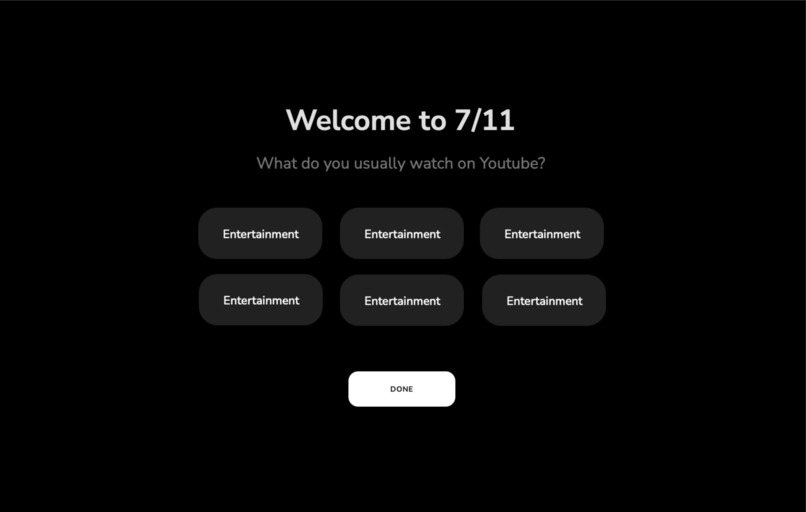
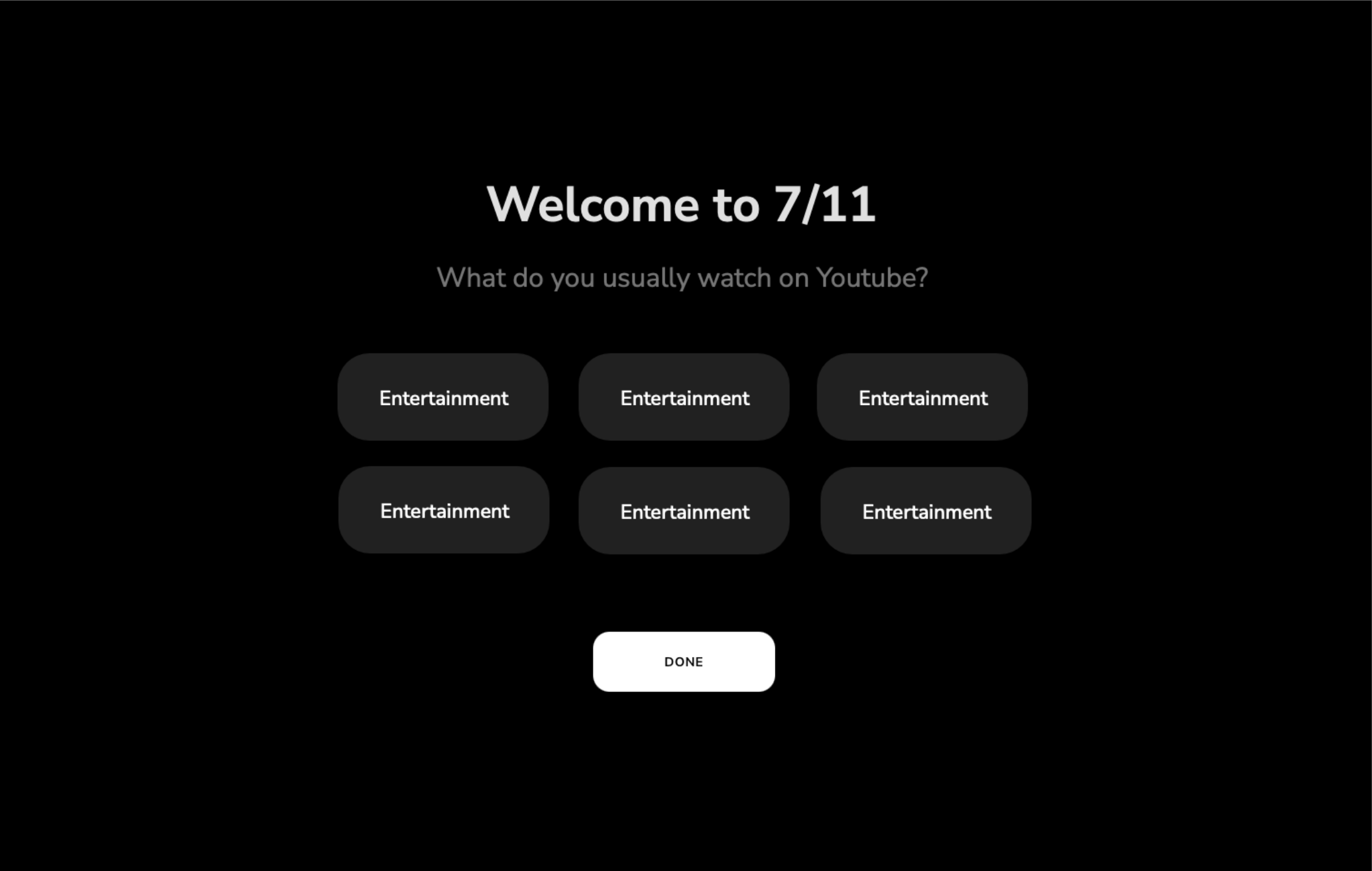
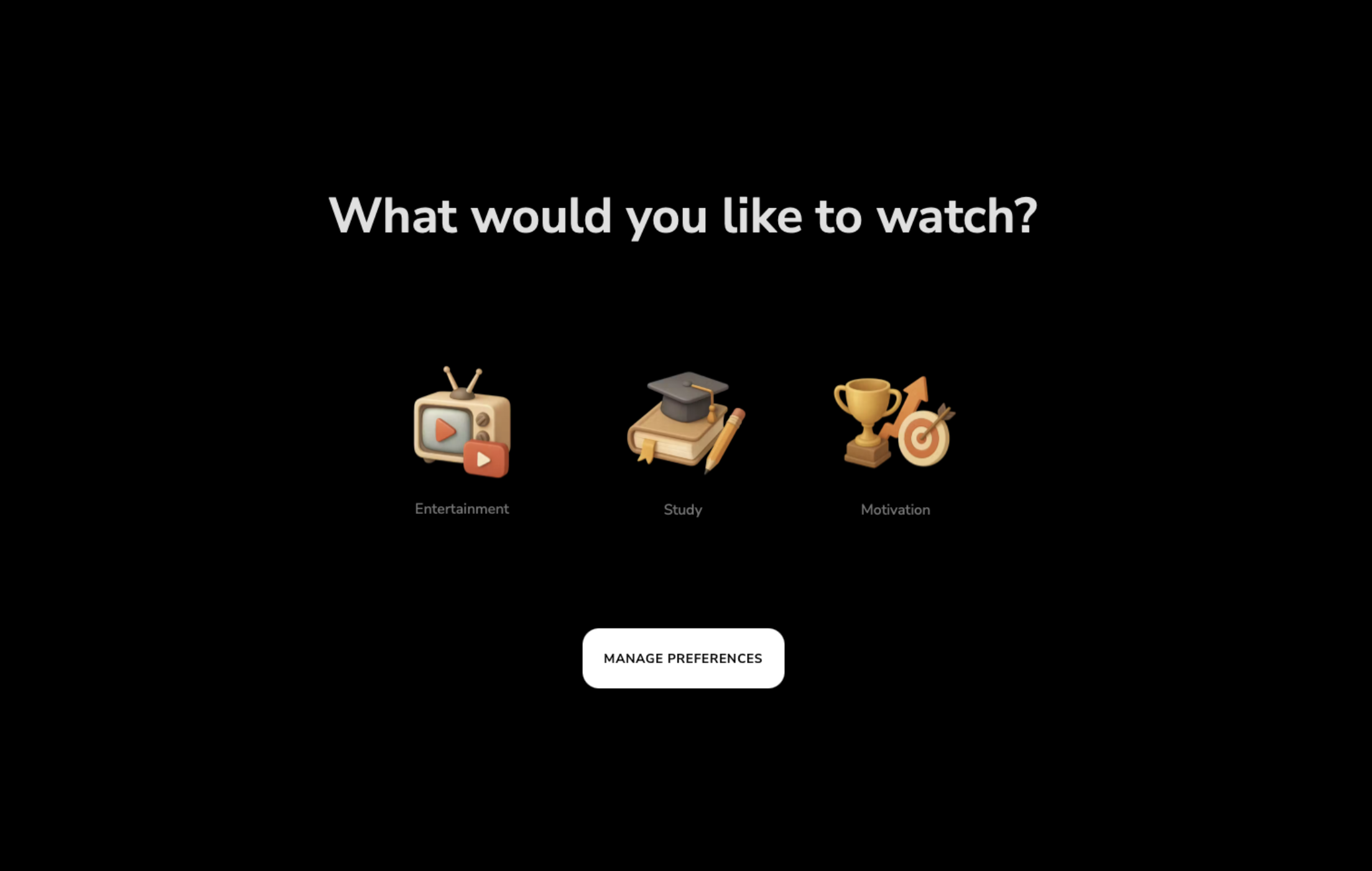
onboarding screen
-
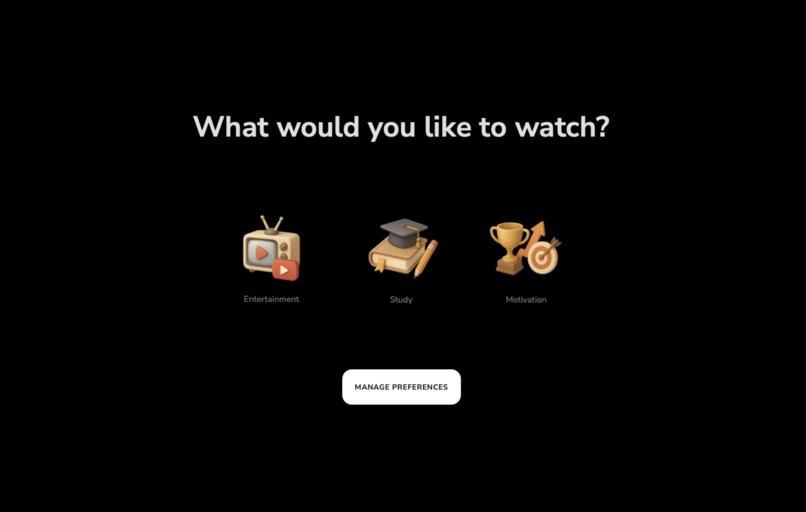
select your mode
-
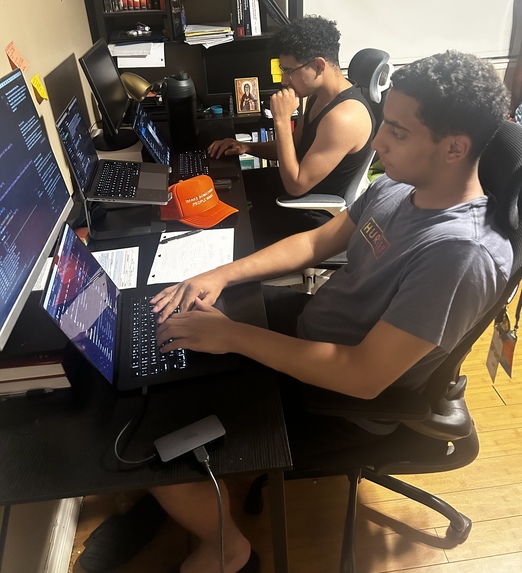
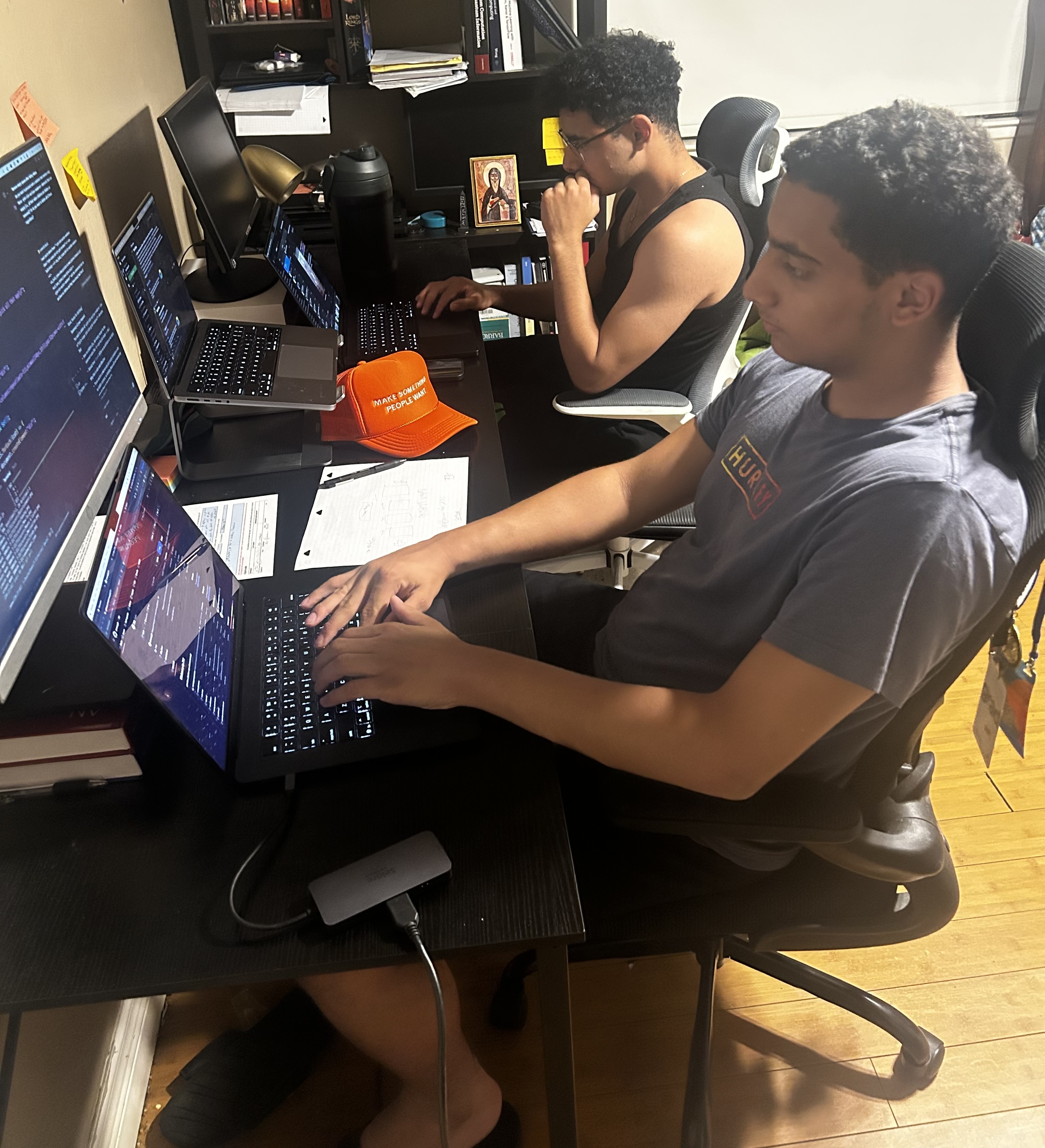
my brother and i working
Inspiration
My brother and I have several Google accounts, and we watch different YouTube content on each. Sometimes, I feel I go on one account just to relax and the other just to learn. We wanted a way to reduce the friction between maintaining several Google accounts, so we asked why not just add a focus mode that hides videos that you don't want to see.
What it does
It hides videos that are not relevant to the category you chose. It takes each video's title and description and passes it through either a transformer, SVM, or a simple word matcher (depending on what fails). Once the video is categorized, it is hidden or kept shown depending on the category.
How we built it
We first tried to brainstorm what problems we had in our life related to entertainment. Once we realized that we got lost in the amount of videos YouTube tried to show to us at once, we realized that we needed to build a tool that was similar to Apple’s “Focus mode”, but for YouTube. We then went straight to coding, building a very minimal version. We saw that building a tool like this was possible, so we doubled down and found a high speed API that could help us. Combined with the UI we put together in 2 hours and this API, we built 711.
Challenges we ran into
Our biggest problem was classifying videos with high accuracy while still using a lightweight model so that it wouldn't take forever. We started with non-ML solutions like simply matching the text to a category, which worked terribly. After that, we used a Support Vector Machine, but it needed a lot of data, and YouTube's data API wasn't the best at doing so. We ended up having to classify 2000 videos by hand to ensure accuracy, and even after that, it didn't work well. I finally realized near the end that using an API would be way easier, and combined with a transformer, could increase accuracy.
Accomplishments that we're proud of
We’re really really proud that we built it very fast because usually when we have no deadline over our heads we take really long times to do things and it's not good for progress. The fact that I was able to iterate the model we were using to categorize videos very quickly was crazy because usually I get pretty attached and never want to try something new.
What we learned
We learned that urgency is the best thing while building. If we didn’t build this product during this hackathon, I would bet that we would’ve never shown this product to the world. We would’ve procrastinated launching it and say “oh its not fast enough yet” or “oh the border radius on that button isn’t good”. This hackathon just helps us bring us out of our comfort zone by making us publish the most simple MVP out there. Get users, ship, get feedback, then repeat.
Mark here, another thing i learned was don’t be afraid to create a backend and use apis because they aren’t always slow. Coming in, I assumed that transformers would never work in this case because they were too slow, but once I ended up using a decent sized one it was actually way faster than our other solutions.
What's next for 711
Depending on the demand and feedback, we might publish this chrome extension and make it available for the public. We think that this can easily be a startup of its own.
Built With
- googleapiclient
- javascript
- python
- sklearn
- svm
- transformers


Log in or sign up for Devpost to join the conversation.