-
-
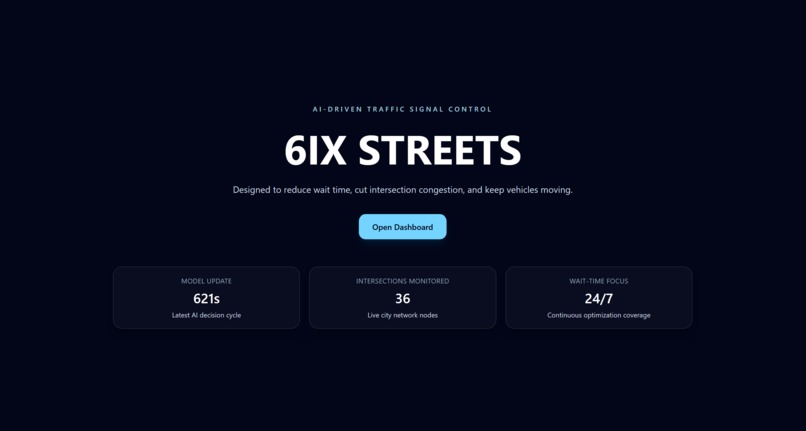
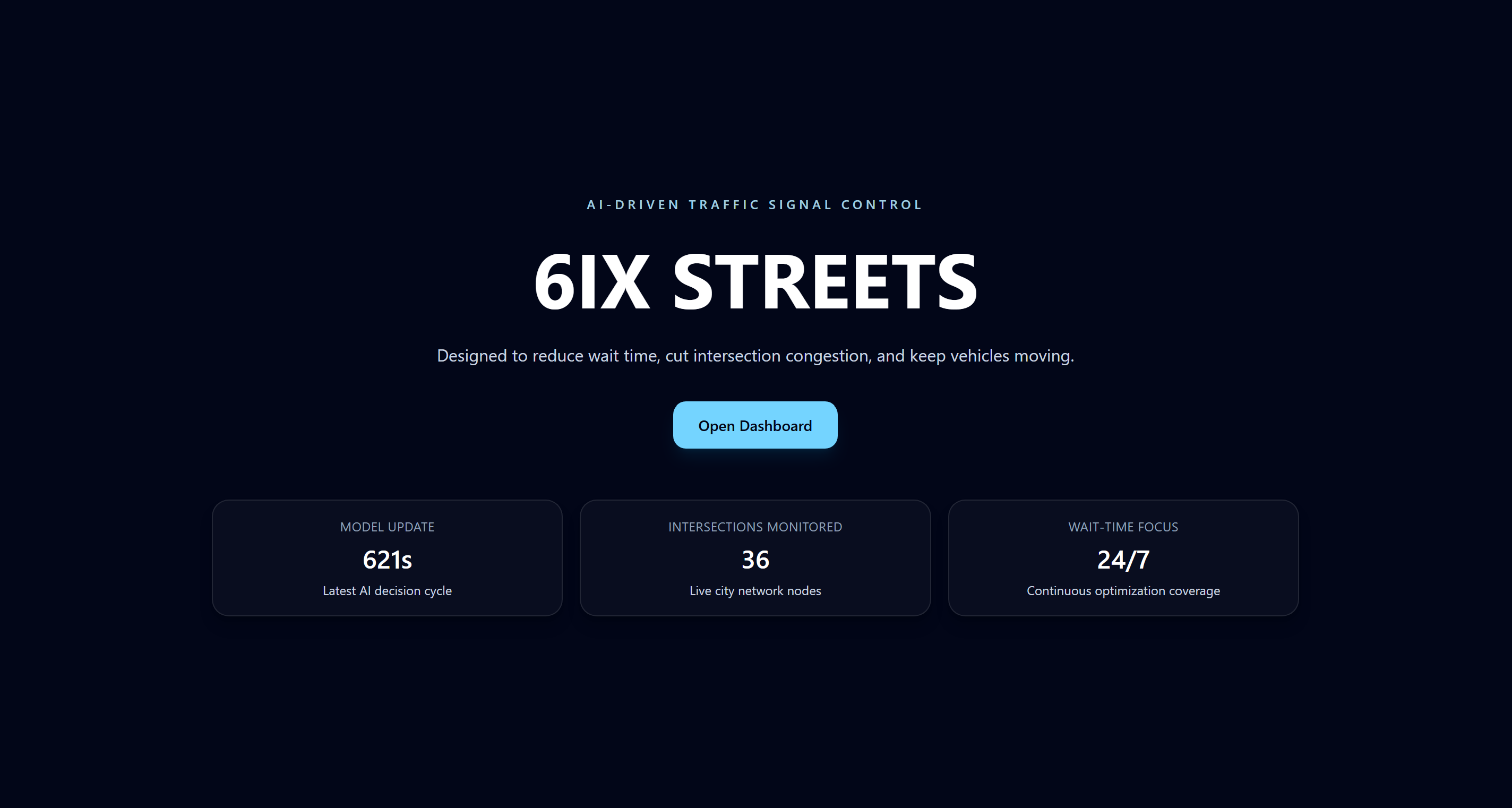
Landing Page
-
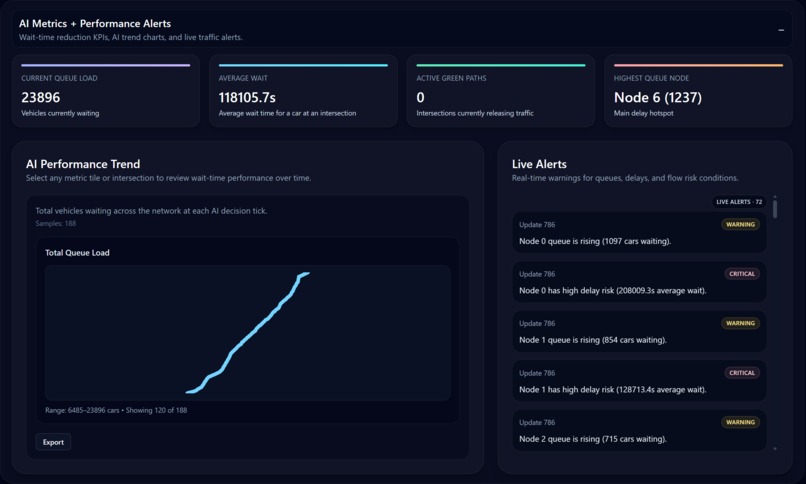
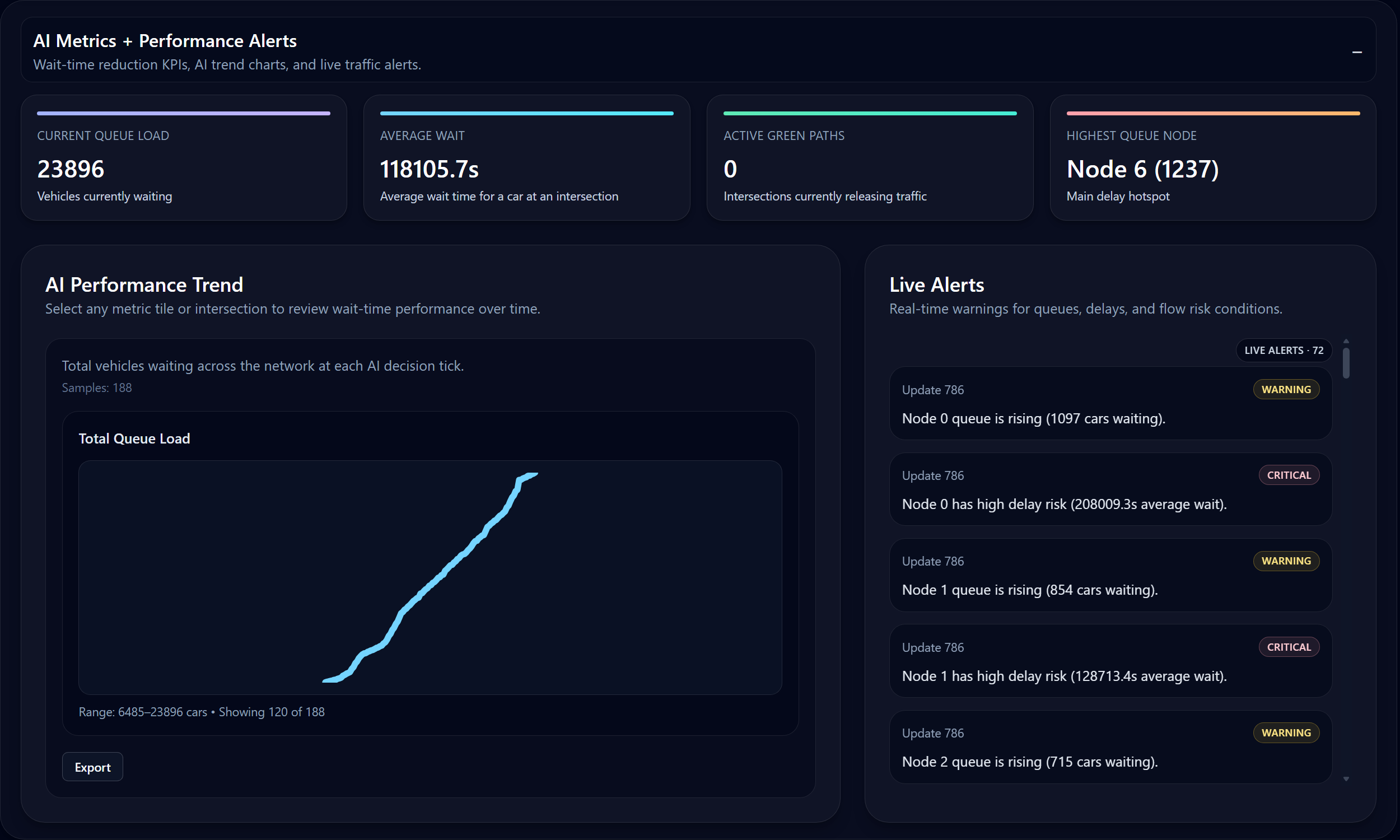
Metrics and Performance Alerts
-
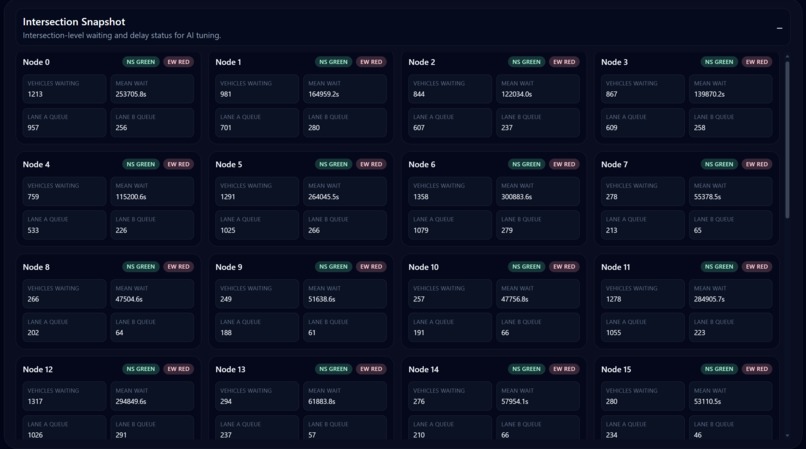
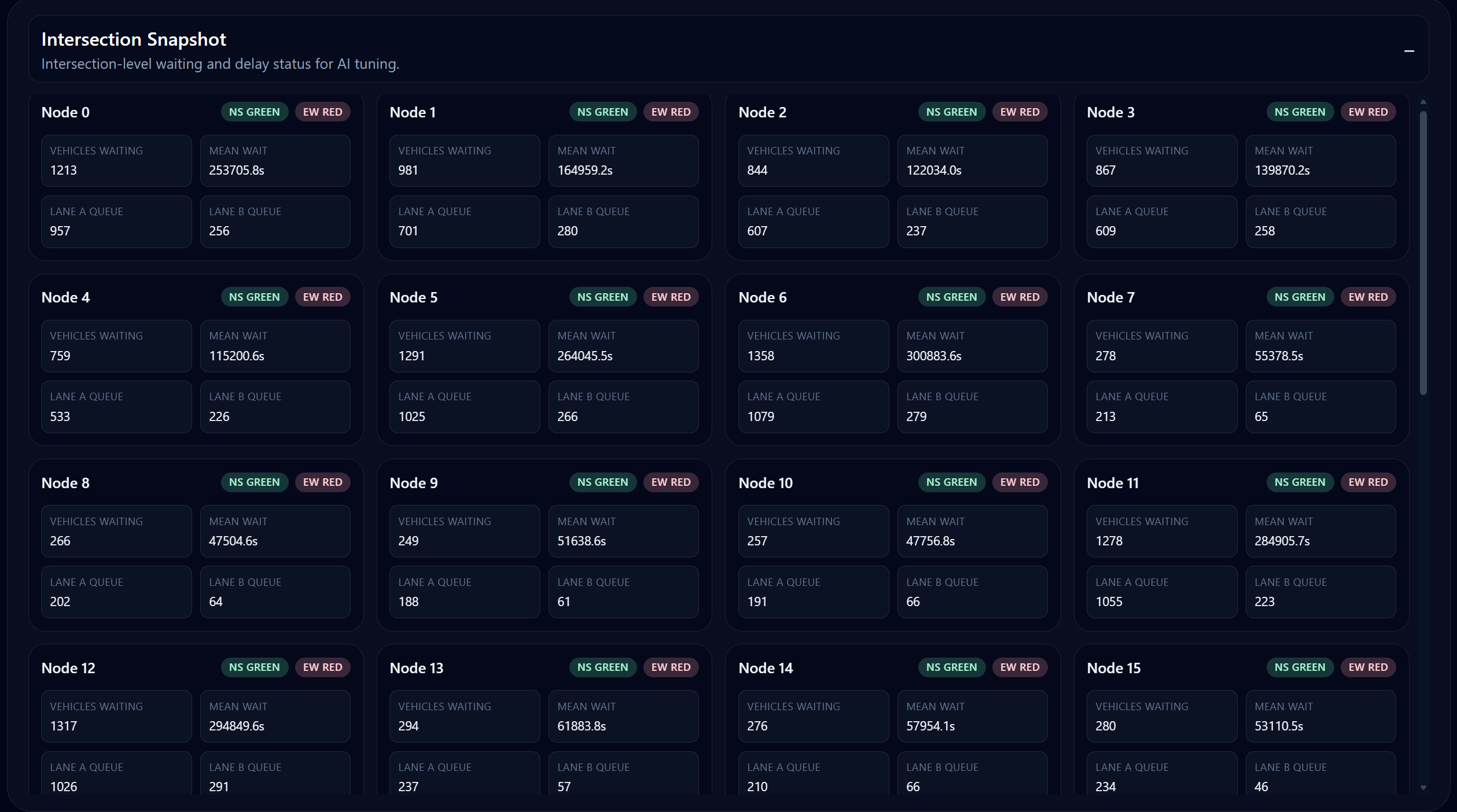
Intersection Snapshots
-
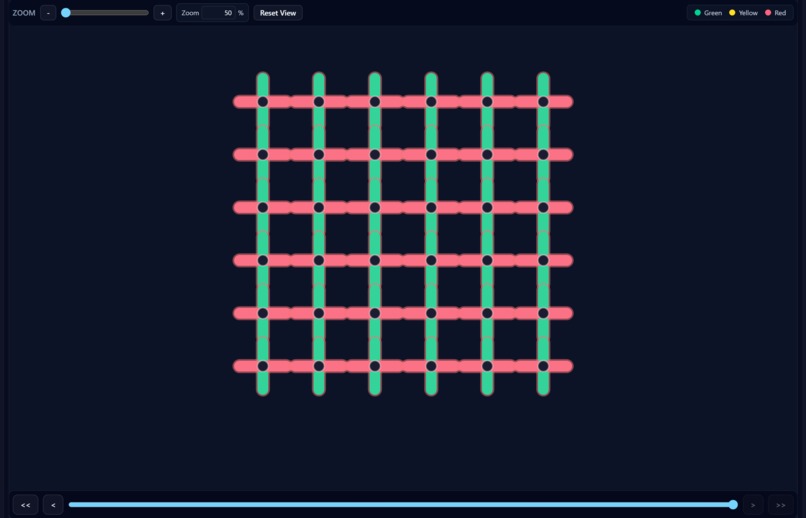
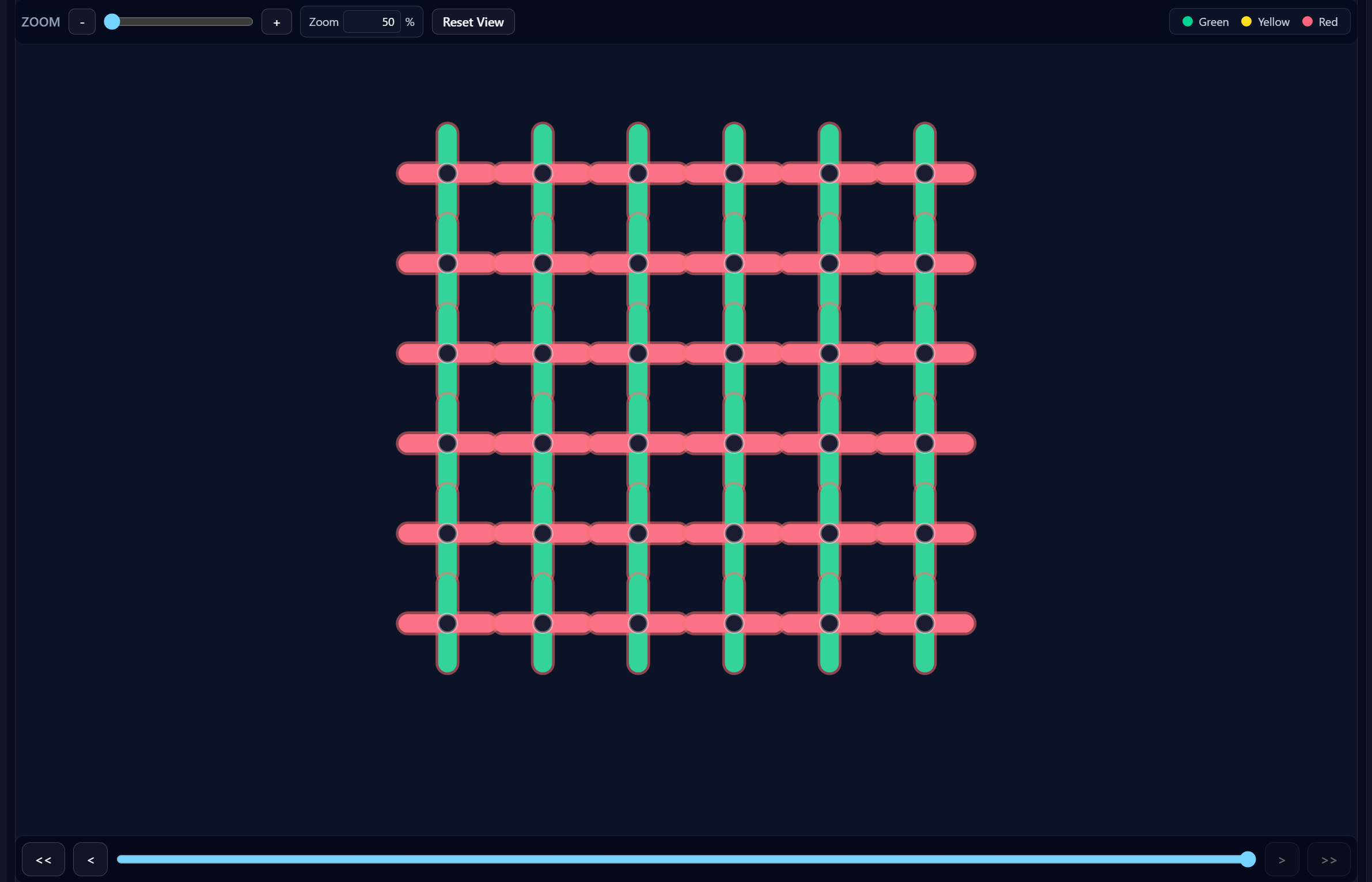
Top-Down City Simulation
6IX STREETS: Urban Traffic Optimization via Decision Transformers
🚦 Inspiration
The current landscape of AI is heavily saturated with LLM-based applications, but we wanted to push the boundaries of what machine learning can do for physical infrastructure. We were inspired by the challenge of Urban Optimization—specifically, the fact that traffic congestion isn't just a data problem, it’s a community problem. Every minute a car spends idling is time taken away from families and carbon added to our local environment. Our goal was to move away from text-generation and build a functional Decision Transformer capable of managing the fluid, high-stakes dynamics of a city grid to improve the daily lives of those in our community.
🏙️ What it does
6IX STREETS is a real-time traffic optimization engine designed currently for a 36-node (6x6) connected grid. Using an offline Reinforcement Learning approach, the system analyzes a high-dimensional state space—including queue lengths, wait times, and downstream road capacities—to optimize light phases across the entire network. The system aims to move beyond reactive, sensor-based timers and instead treat the city as a single, interconnected organism, prioritizing the "flushing" of high-density corridors to prevent gridlock before it starts.
🏗️ How we built it
We prioritized building a custom, high-fidelity environment to ensure our results were grounded in realistic physics:
- The Physics Engine: Developed a custom
GridEnvin Python that models 36 nodes. Unlike simple simulations, this environment accounts for backpressure (downstream congestion stopping upstream flow) and saturation flow rates. - The Brain: Implemented a Decision Transformer architecture using PyTorch. By treating Reinforcement Learning as a sequence-modeling problem, we utilized Returns-to-Go \((R_t)\) to allow the model to learn long-term strategies from complex datasets.
- The Data Pipeline: To train the model effectively, we generated a comprehensive dataset of 10,000 steps (360,000 data points) using a mathematical heuristic. This provided the necessary "expert trajectories" for the Transformer to learn the optimal relationship between traffic states and actions.
- The Tech Stack: Built with a Python/PyTorch backend for the heavy lifting, visualized through a modern React and Tailwind CSS dashboard that maps out the grid's density in real-time.
🚧 Challenges we ran into
The primary challenge was managing the Density Saturation of a 36-node network. We discovered that in a high-volume "Rush Hour" simulation, the roads often hit their physical capacity. Achieving a 22.3% improvement over our baseline was a significant technical hurdle; it required multiple iterations of our reward function to ensure the model didn't collapse when wait times grew exponentially. We had to balance the "local" needs of a single intersection with the "global" needs of the entire 6x6 grid, which often led to conflicting gradients during the training process.
🏆 Accomplishments that we're proud of
- Architectural Depth: We successfully moved beyond simple heuristics to implement a custom Decision Transformer, a sophisticated approach to offline Reinforcement Learning.
- Network Routing Logic: Engineering the logic for cars to "flow" through 36 nodes—where the exit of one node is the entrance of another—was a complex backend feat that we executed successfully.
- Problem Pivoting: We were proud of our ability to analyze our 22.3% improvement results and realize that in a saturated system, even small gains represent a massive shift in overall grid stability.
🎓 What we learned
Building 6IX STREETS gave us deep insights into Offline Reinforcement Learning and the intricacies of high-density traffic physics. We learned how to structure state vectors for a 36-node system and the importance of data normalization when dealing with large-scale rewards. Most importantly, we learned that true urban optimization requires a holistic view of the network; you cannot solve traffic at Node A without understanding the capacity at Node B.
🚀 What's next for 6IX STREETS
- Multi-Agent Scaling: Transitioning to a multi-agent transformer setup where each node functions as an autonomous agent communicating with its neighbors.
- Real-World Topographies: Porting the engine to support irregular grid layouts based on actual GIS data from major metropolitan areas.
- Multi-Modal Traffic: Integrating public transit and emergency vehicle prioritization into the AI’s decision-making matrix.

Log in or sign up for Devpost to join the conversation.