-
-
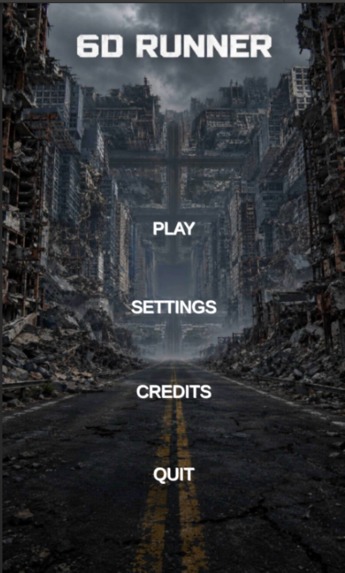
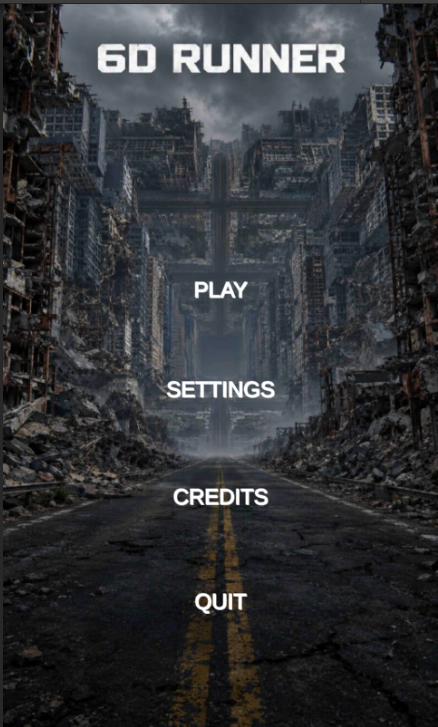
game menu
-
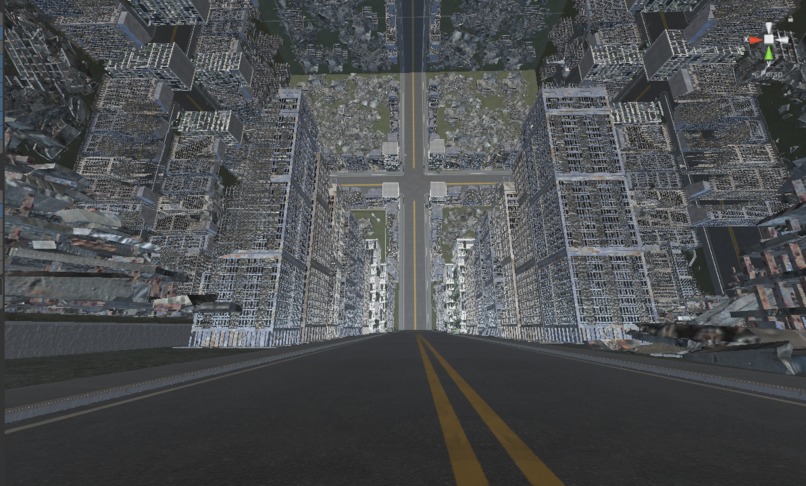
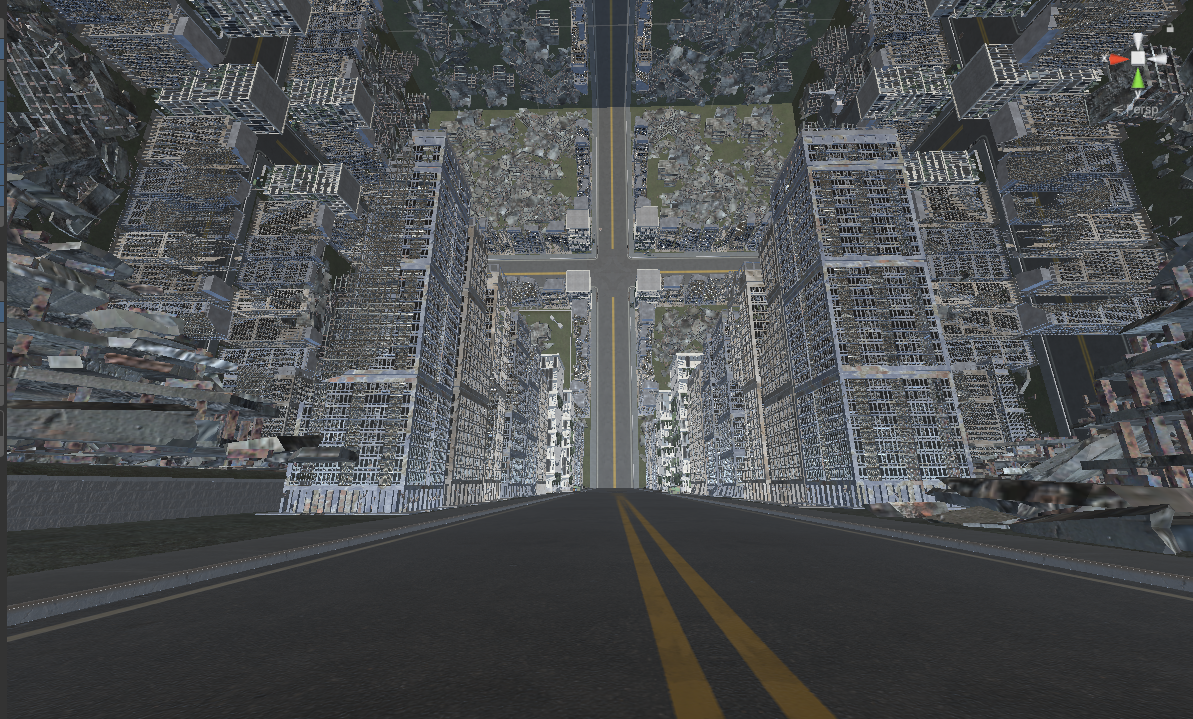
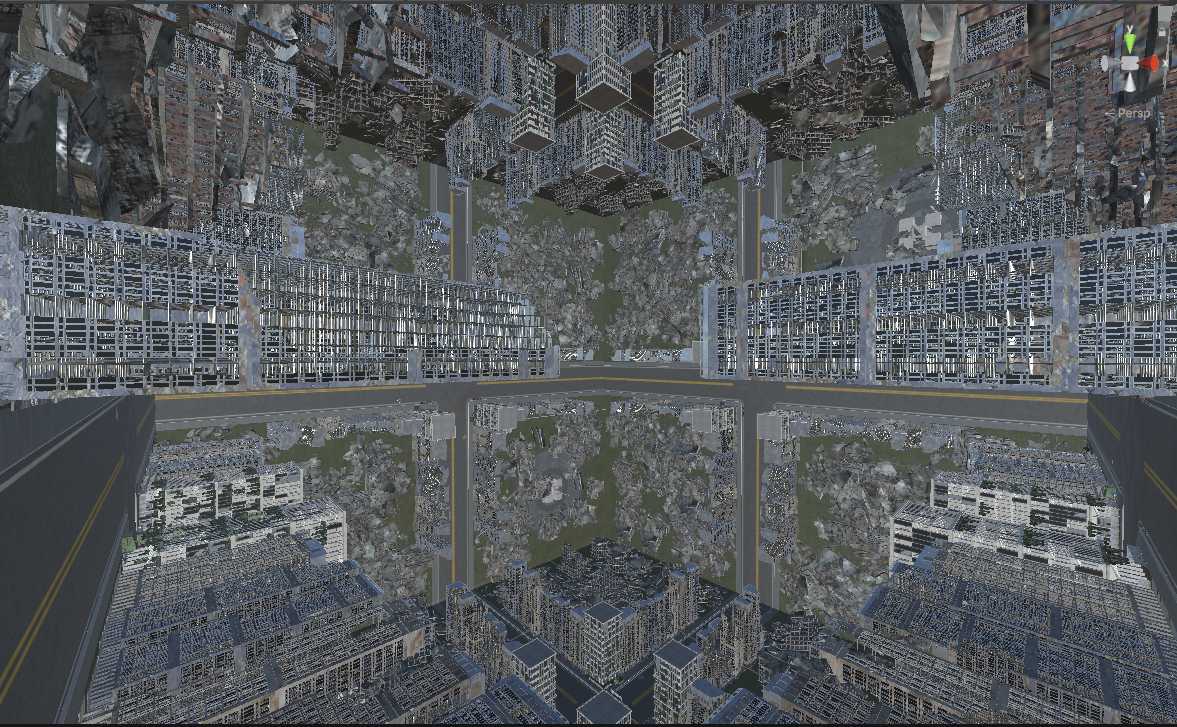
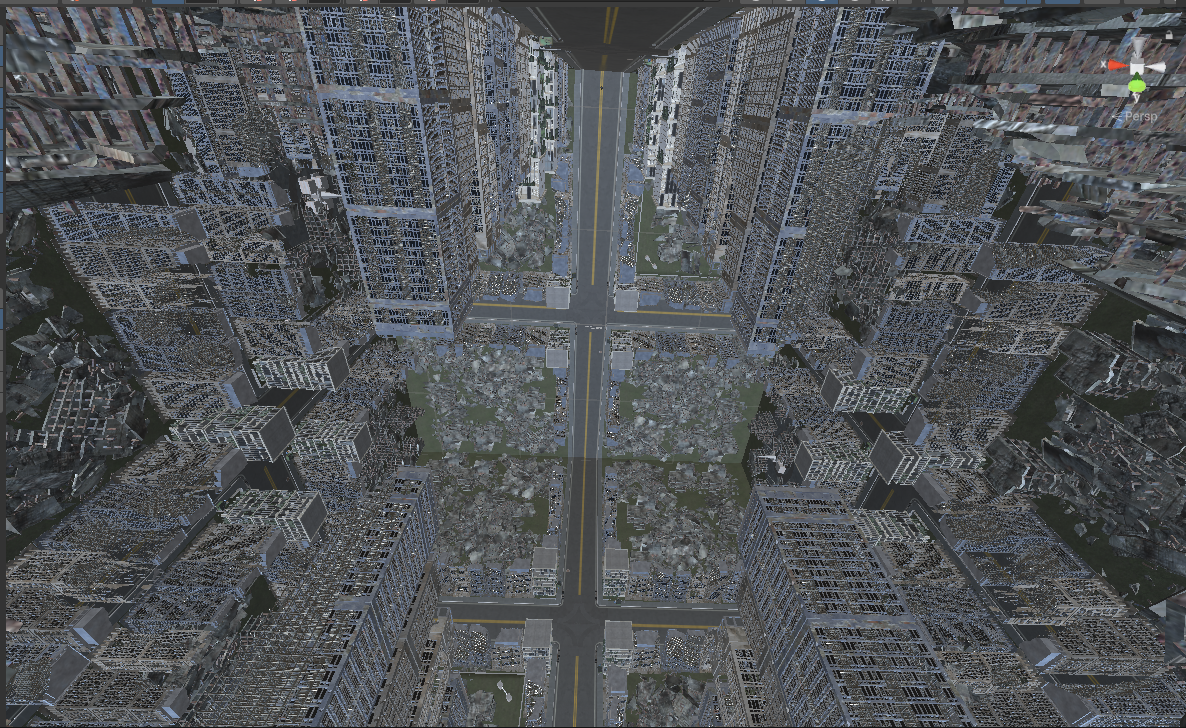
game view 1
-
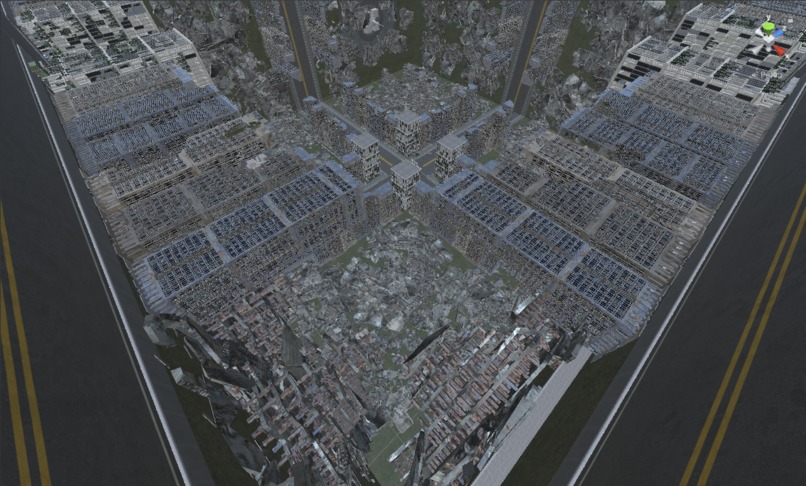
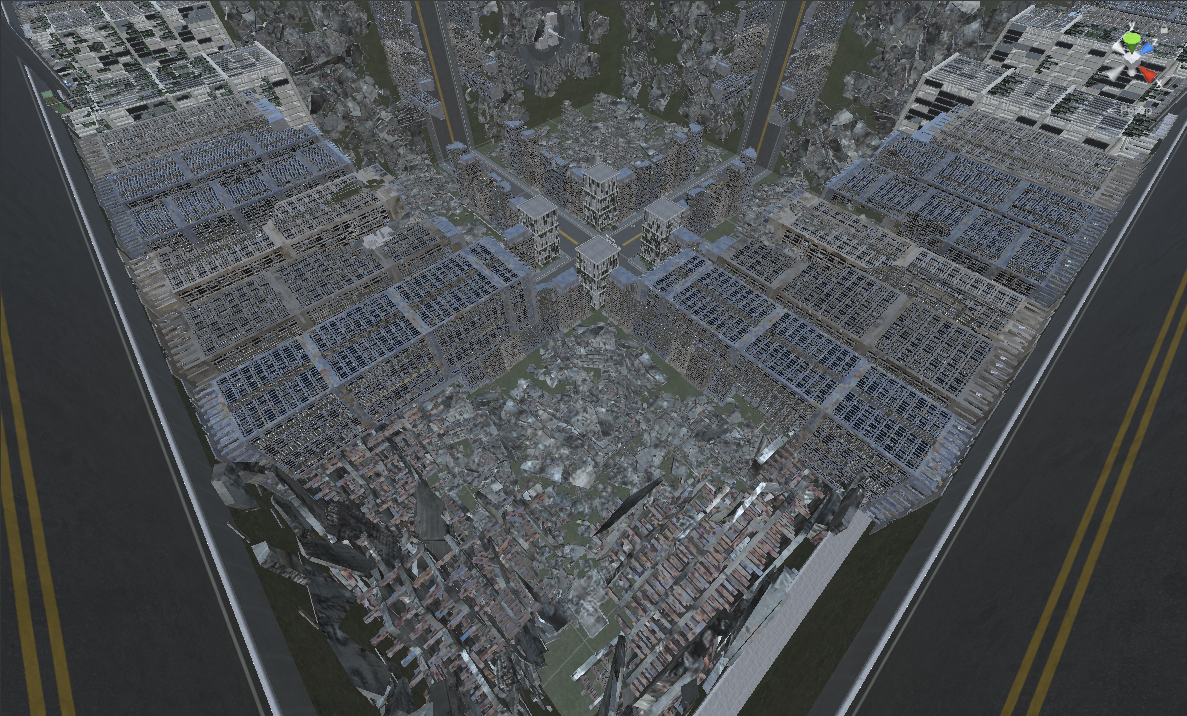
game view 3
-
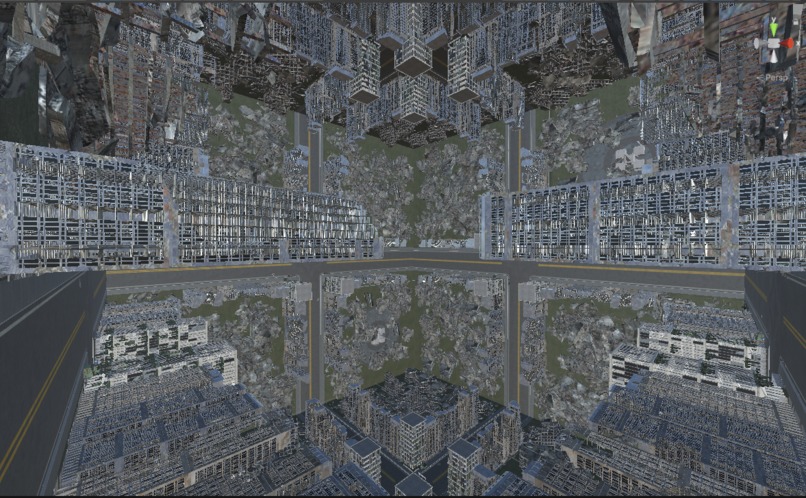
game view 4
-
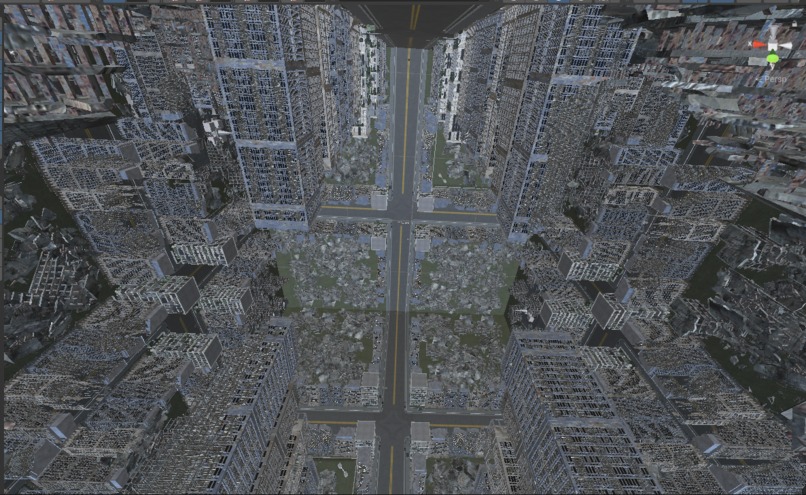
game view 2
Inspiration
Endless runners on mobile are often too simple and strictly horizontal. I wanted to push the boundaries of the genre by bringing the adrenaline of high-speed, vertical parkour to mobile touch screens. Inspired by the disorienting, gravity-bending architecture of movies like Inception and the fluid movement of modern parkour games, I set out to build a dystopian world where the floor isn't your only path—and where split-second vertical wall-running is the only way to survive.
What it does
6D Runner is a hyper-fast 3D endless runner built for Android. Players navigate a brutalist, ruined urban landscape at breakneck speeds. Instead of just switching lanes, players can transition seamlessly onto sheer vertical walls to dodge massive concrete obstacles. The game features a dynamic camera system that shifts FOV and tilt based on your gravity plane, alongside a custom MemoryTracker UI that calculates distance survived in real-time, instantly punishing mistakes and rewarding high-risk maneuvers.
How we built it
I developed the entire project from scratch in Unity 6, explicitly targeting the Android platform. The core mechanics, including high-speed physics, obstacle generation, and the custom WallRunner scripts, were coded purely in C#. For the environment, I used heavy 3D assets to build the ruined city aesthetic. The project was version-controlled via GitHub Desktop and compiled directly into an Android APK, ensuring the final build was fully standalone and mobile-ready for the Next Gen track.
Challenges we ran into
The biggest roadblock was extreme mobile optimization. Initially, the heavy PC-level PBR materials in the city environments caused massive shader variant compilation bottlenecks (spiking to over 140,000 variants!). This thermal-throttled the phone and blocked Gradle builds. I had to systematically strip the project down to custom, lightweight mobile diffuse shaders that kept the gritty aesthetic without killing the GPU.
Additionally, version control became a massive hurdle just hours before the deadline. A 100MB+ 1dcity.glb environment model nearly broke the GitHub push due to server limits, forcing a quick pivot to strict .gitignore rules and modular asset management to keep the repo clean and public for the judges. Lastly, fine-tuning the C# collision detection to prevent the player from clipping through geometry at terminal velocity required intense debugging.
Accomplishments that we're proud of
- Successfully taking a visually heavy 3D concept and optimizing it to hit stable frame rates on mobile hardware.
- Nailing the fluid transition of the wall-running mechanic—getting the camera and physics to snap cleanly to a 90-degree surface feels incredible.
- Overcoming deep technical build pipeline bottlenecks (shaders and Git binary limits) under the extreme pressure of a hackathon deadline.
- Designing, programming, and shipping a complete, compiled Android APK and open-source repository as a solo 17-year-old developer.
What we learned
I gained deep, hands-on experience with the Android Gradle build pipeline and Unity 6's shader stripping capabilities. I also learned a hard but valuable lesson about version control and file size limits, mastering how to properly manage large binaries in game development using .gitignore. Most importantly, I learned how to balance ambitious visual fidelity with strict mobile hardware constraints without sacrificing the core game feel.
What's next for 6D Runner
Currently, the track is a hand-crafted high-speed gauntlet. The next major technical step is implementing a fully procedural generation algorithm so the ruins truly become an infinite, unpredictable endless runner. I also plan to integrate online leaderboards, unlockable cosmetic runner skins, and advanced mobile haptic feedback to make every jump, wall-run, and near-miss feel physically impactful.


Log in or sign up for Devpost to join the conversation.