-
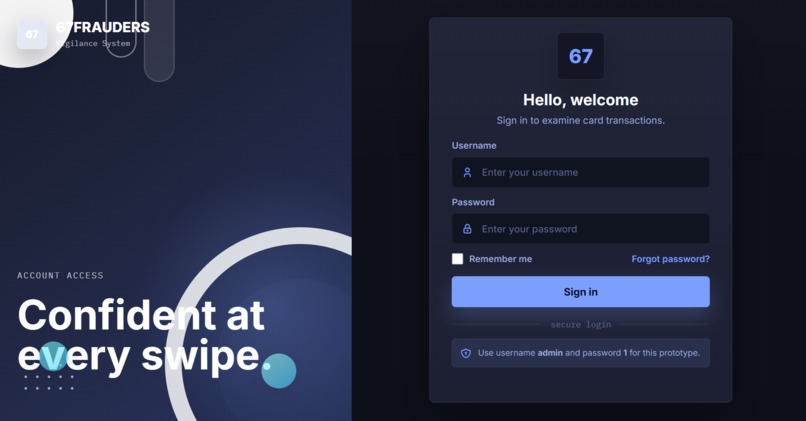
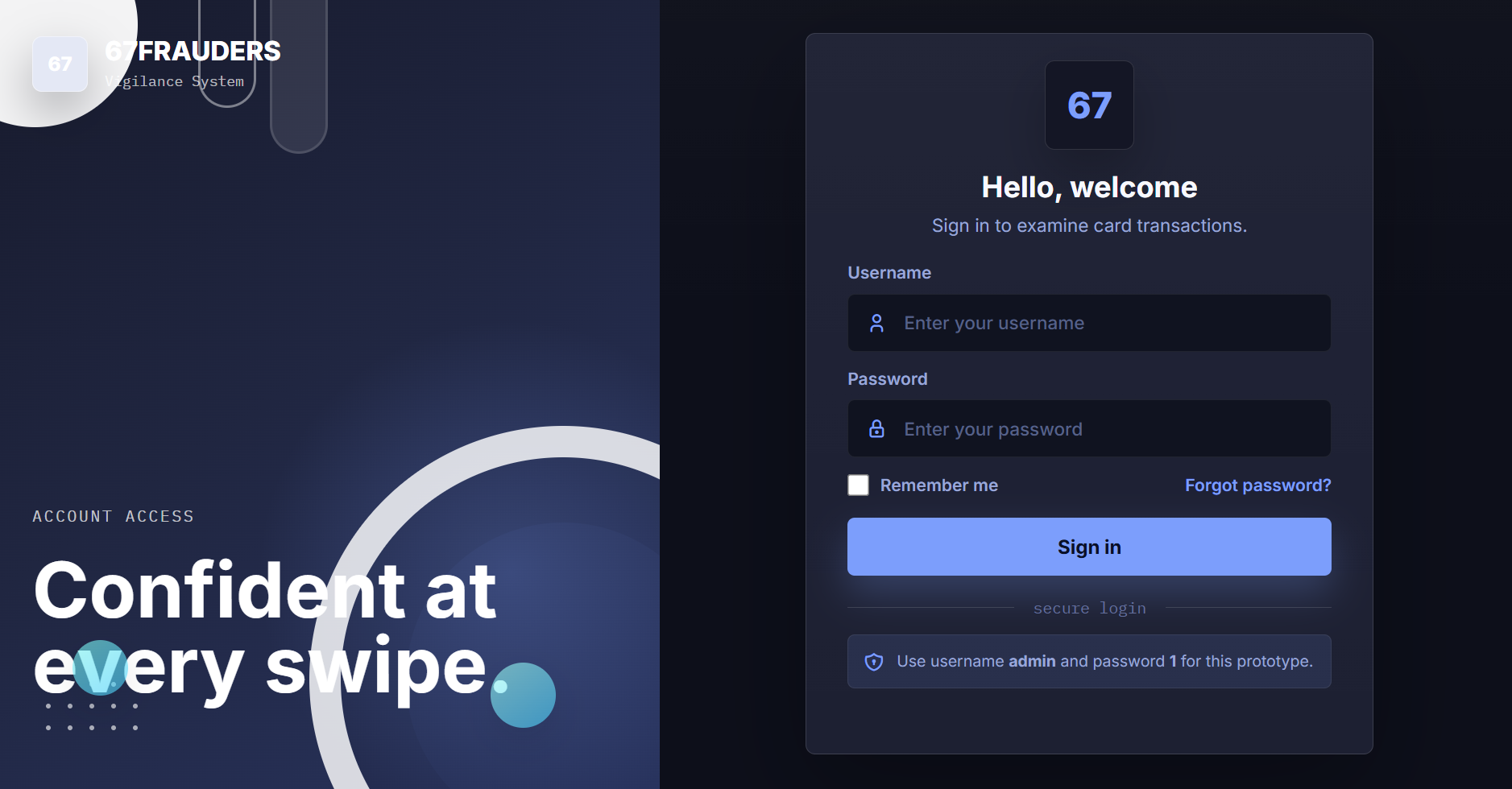
Login page
-
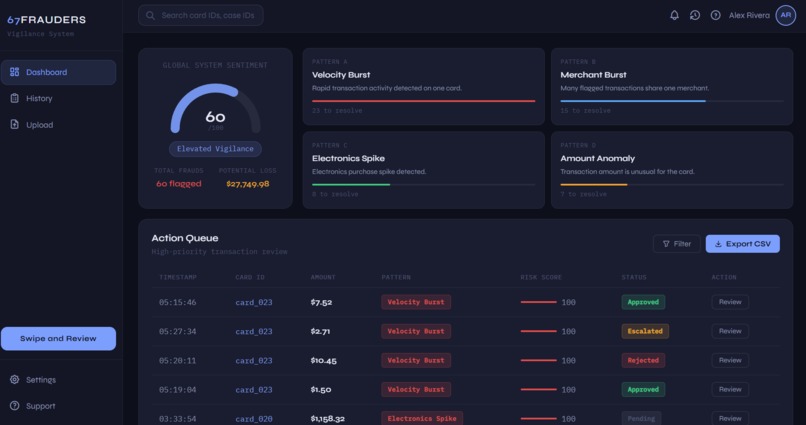
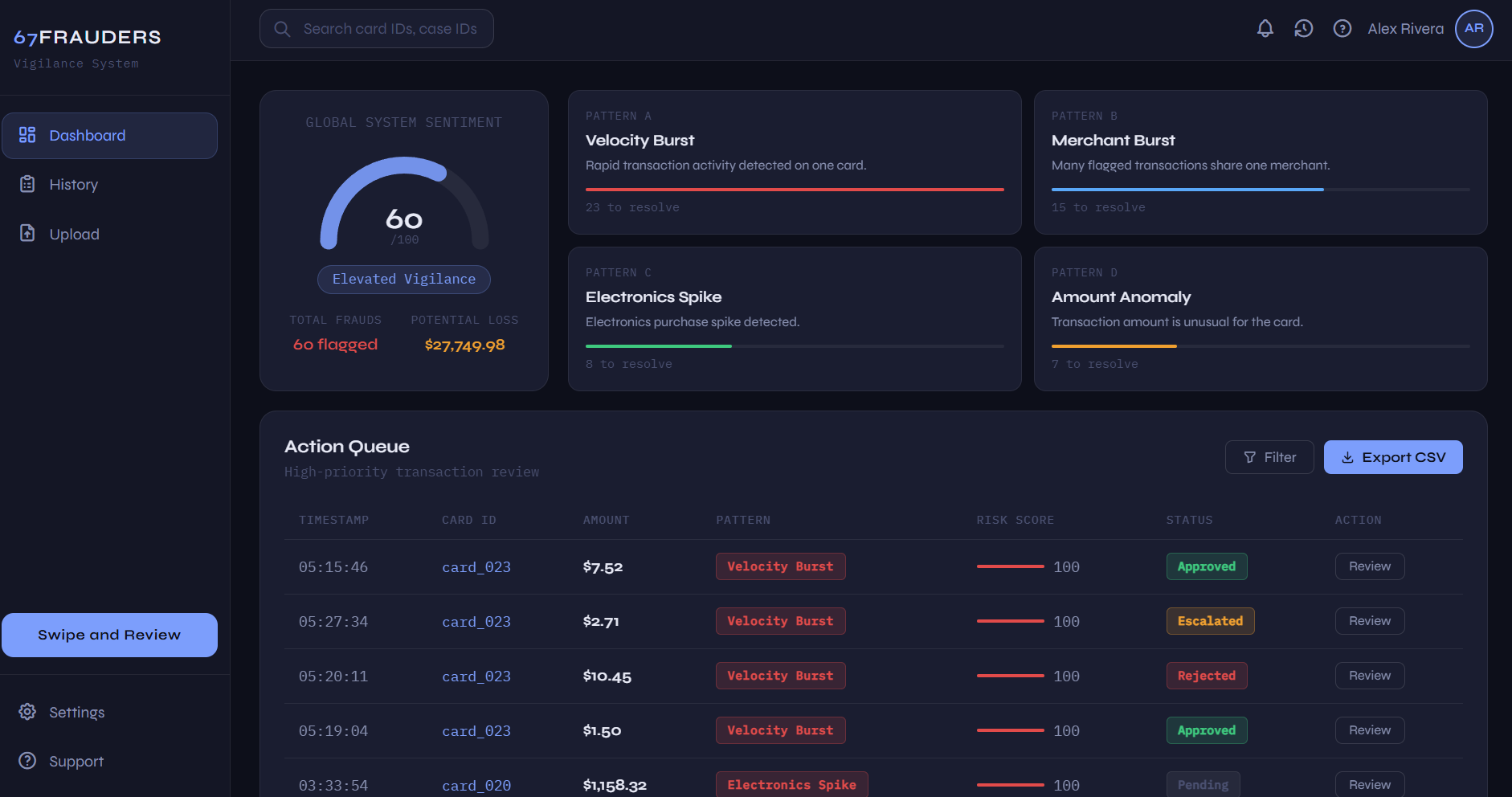
Dashboard
-
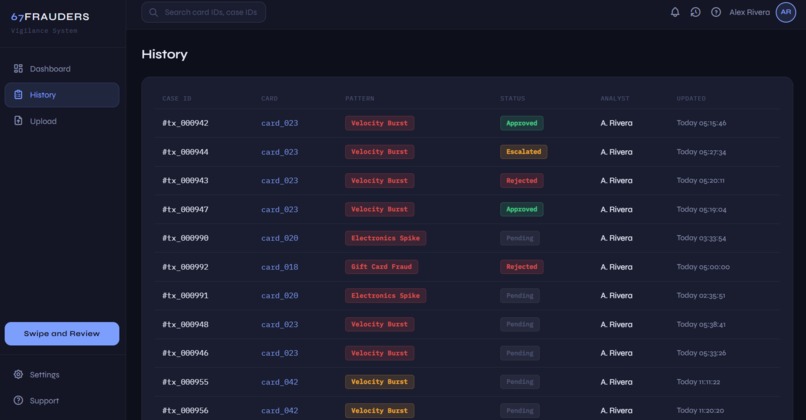
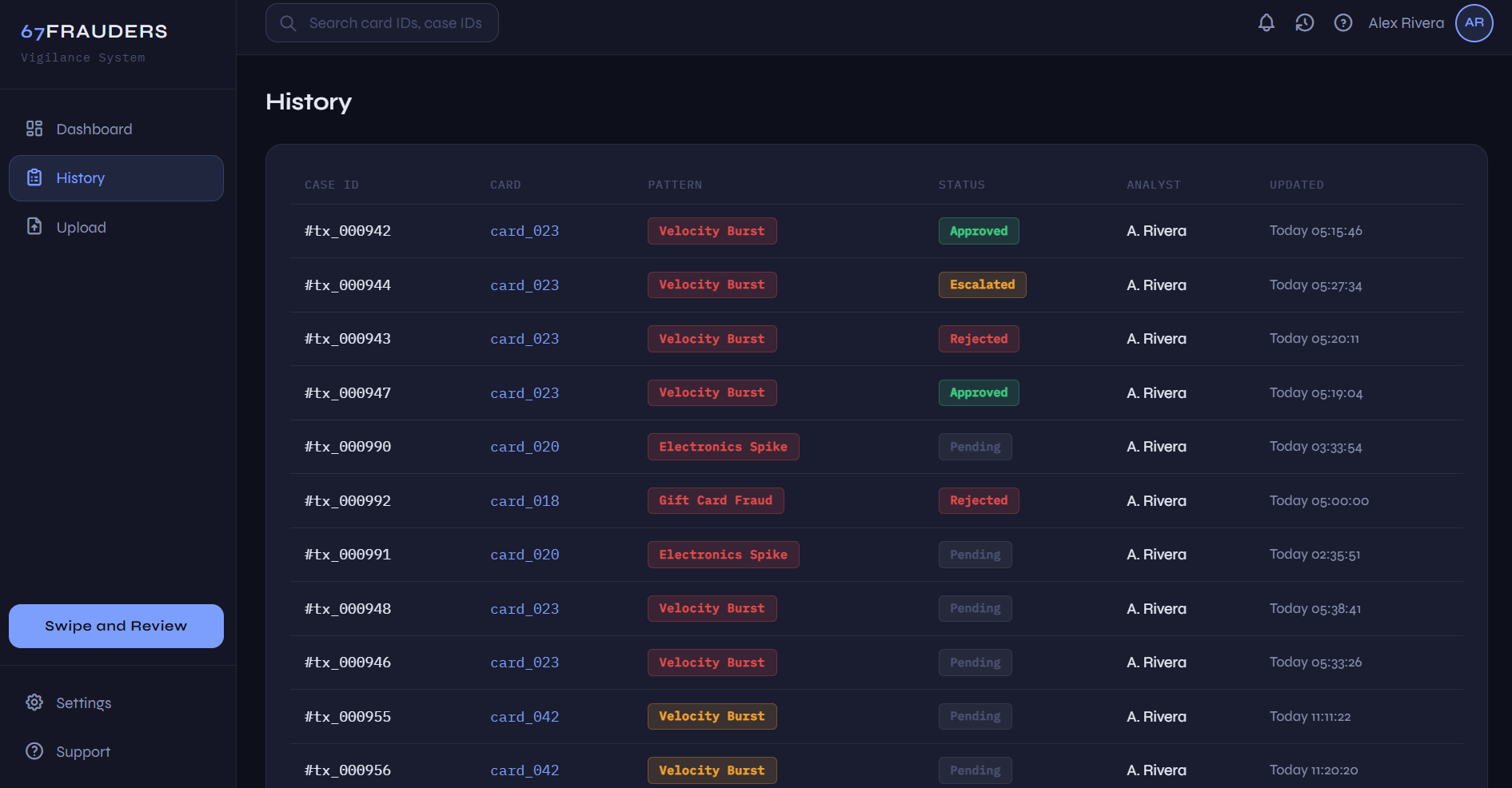
History
-
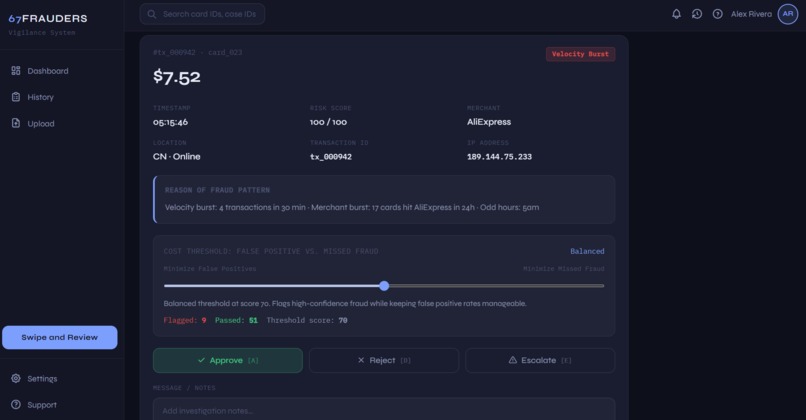
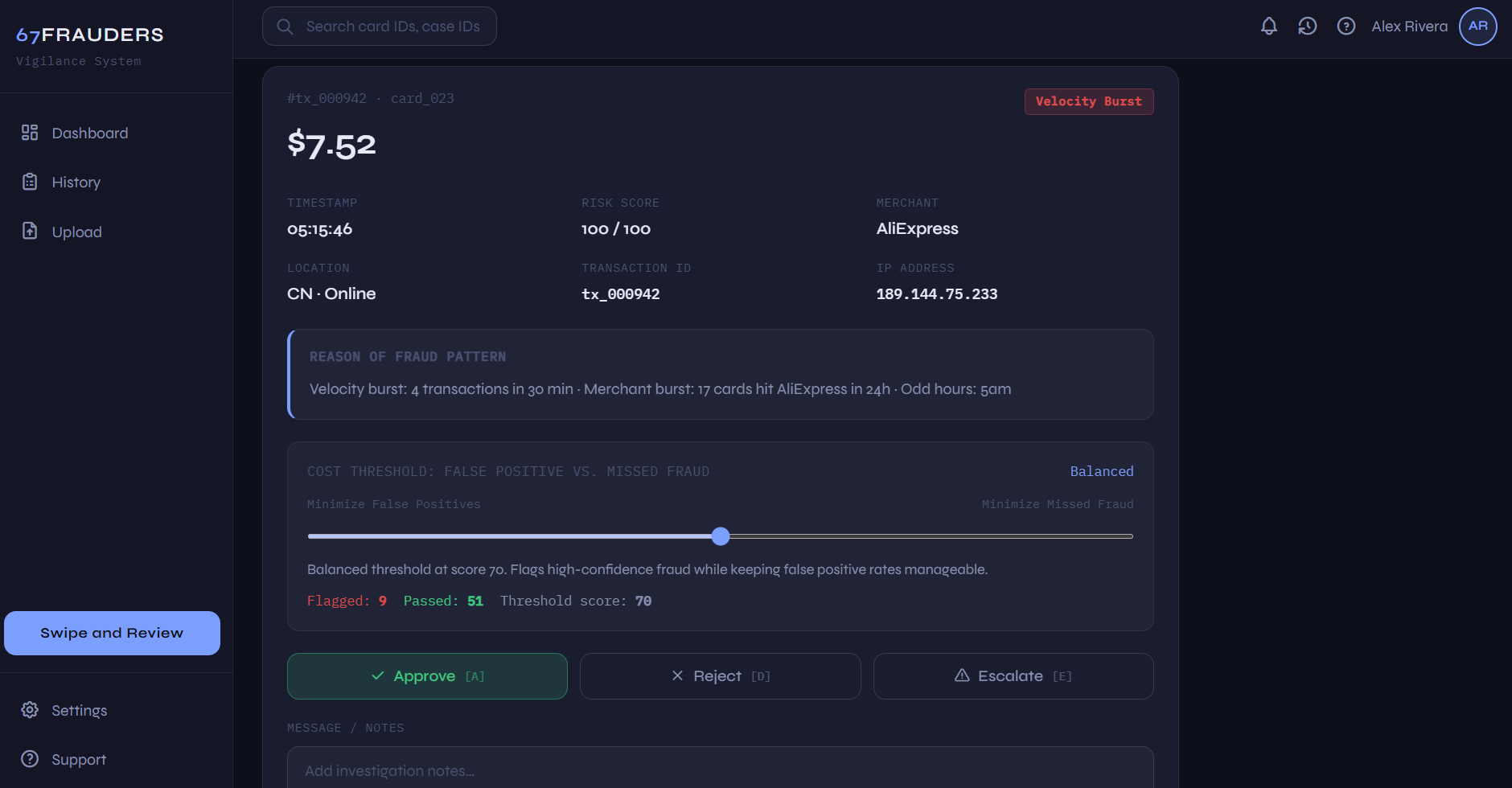
Swipe and Review
-
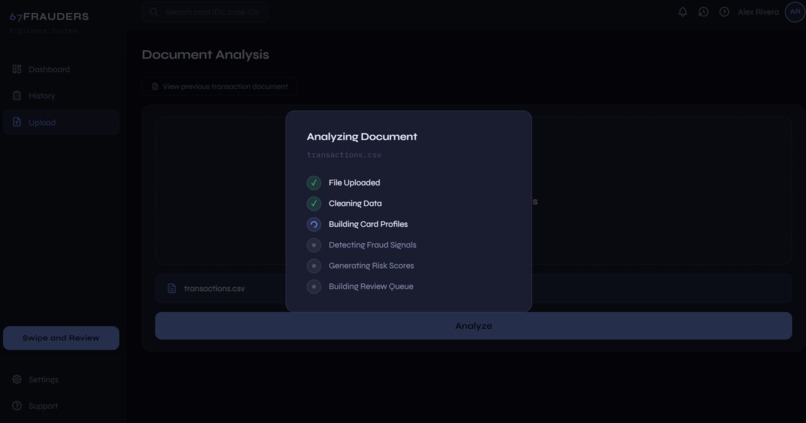
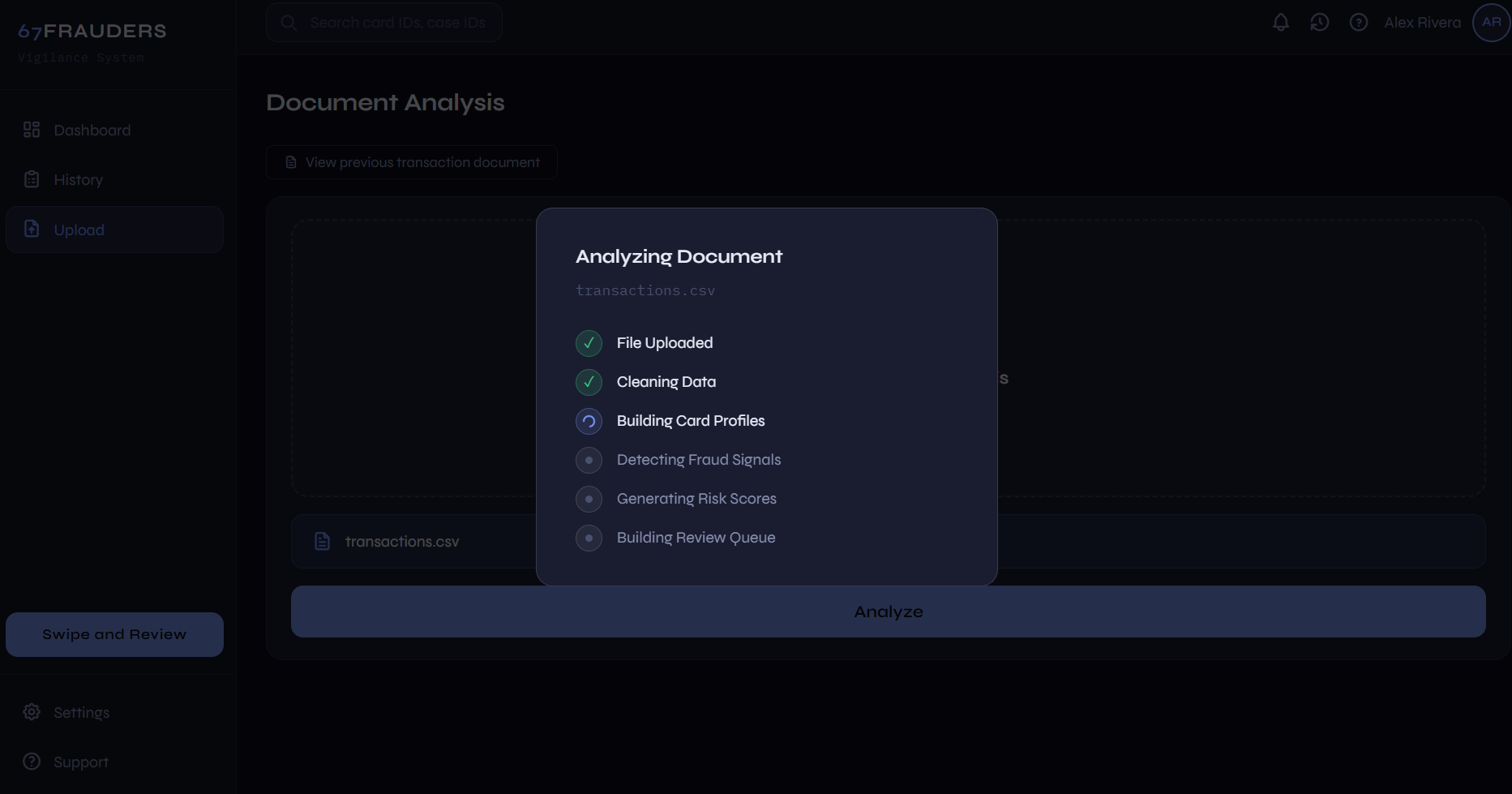
Downloading file in process
Inspiration
Fraud detection is often presented as a machine learning problem, but the challenge showed us that finding fraud is only half the battle. Human reviewers still need to understand why a transaction was flagged and decide what action to take.
We wanted to build a platform that does more than detect fraud. We wanted to create a tool that helps reviewers investigate suspicious activity quickly, understand fraud patterns, and make confident decisions.
Our goal was to make fraud analysis feel less like reading a spreadsheet and more like solving a case.
What it does
67Frauders is an interactive fraud investigation platform that analyzes transaction data and helps reviewers identify suspicious activity.
The platform:
- Uploads and analyzes transaction data
- Flags suspicious transactions with risk scores
- Explains why each transaction was flagged
- Supports review actions such as Approve, Reject, and Escalate
- Provides a keyboard-friendly review workflow
- Generates investigation summaries
- Visualizes fraud relationships through the Fraud Constellation network
- Helps reviewers discover connections between cards, devices, IP addresses, merchants, and transactions
The result is a faster and more intuitive fraud review experience.
How we built it
Frontend
- HTML
- Interactive dashboards and investigation views
Backend [ADD BACKEND DETAILS HERE]*******************************
Key Features
- Fraud review queue
- Explainable risk scoring
- Cost threshold simulator
- Investigation notes
- Audit workflow
- Fraud Constellation visualization
The platform was designed to feel like a real fraud operations tool rather than a simple analytics dashboard.
Challenges we ran into
One of our biggest challenges was balancing fraud detection with reviewer experience.
It was easy to display suspicious transactions, but much harder to present them in a way that helps a reviewer understand what is happening quickly.
Another challenge was transforming raw transaction data into meaningful relationships. We wanted users to see how transactions connect through devices, IP addresses, merchants, and cards rather than viewing each alert in isolation.
(BACKEND CHALLENGES)************************************
We also had to prioritize features carefully due to the limited hackathon timeframe.
Accomplishments that we're proud of
- Building a complete fraud review workflow
- Creating explainable fraud alerts instead of black-box decisions
- Designing the Fraud Constellation investigation network
- Making fraud patterns easy to understand visually
- Creating a polished and interactive user experience
- Focusing on reviewer productivity rather than only detection accuracy
Most importantly, we built a platform that helps users understand fraud, not just find it.
What we learned
This project taught us that fraud detection is not only a technical problem but also a user experience problem. Obviously, we learned so much about data engineering in this challenge as we needed to clean, analyze, and detect data. We have never done this before so it was very interesting learning about new concepts.
We learned how important explainability is when presenting risk scores and suspicious activity.
We also learned the value of visualization. Showing relationships between transactions often reveals patterns that are difficult to notice in tables alone.
Finally, we learned how much can be accomplished when design, engineering, and product thinking work together.
What's next for 67Frauders
With more time, we would like to:
- Add AI-powered investigation assistance
- Generate automated investigation reports
- Improve fraud pattern detection
- Support real-time transaction monitoring
- Add collaborative review workflows for teams
- Expand the Fraud Constellation into a full investigation workspace
- Introduce adaptive learning based on reviewer decisions
Our vision is to make 67Frauders a platform that helps trust and safety teams investigate fraud faster, understand risk more clearly, and make better decisions with confidence.
*VIDEO DEMO LINK: https://www.loom.com/share/2284ca933af646baad67f13cb274d009 *


Log in or sign up for Devpost to join the conversation.