-
-
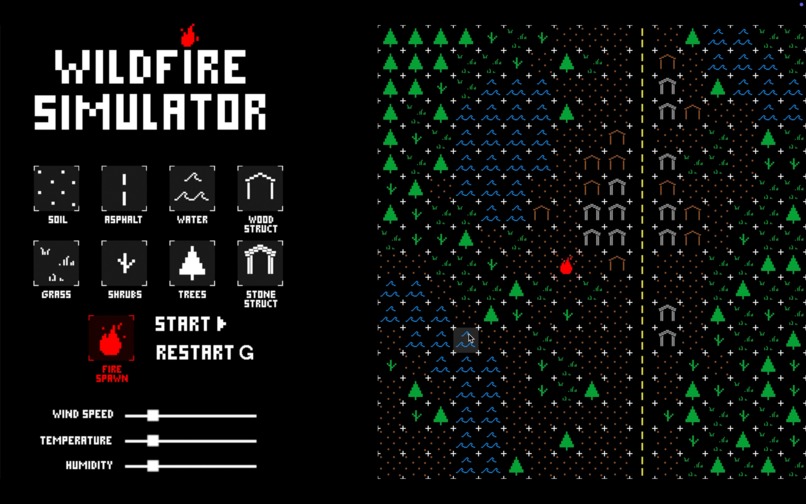
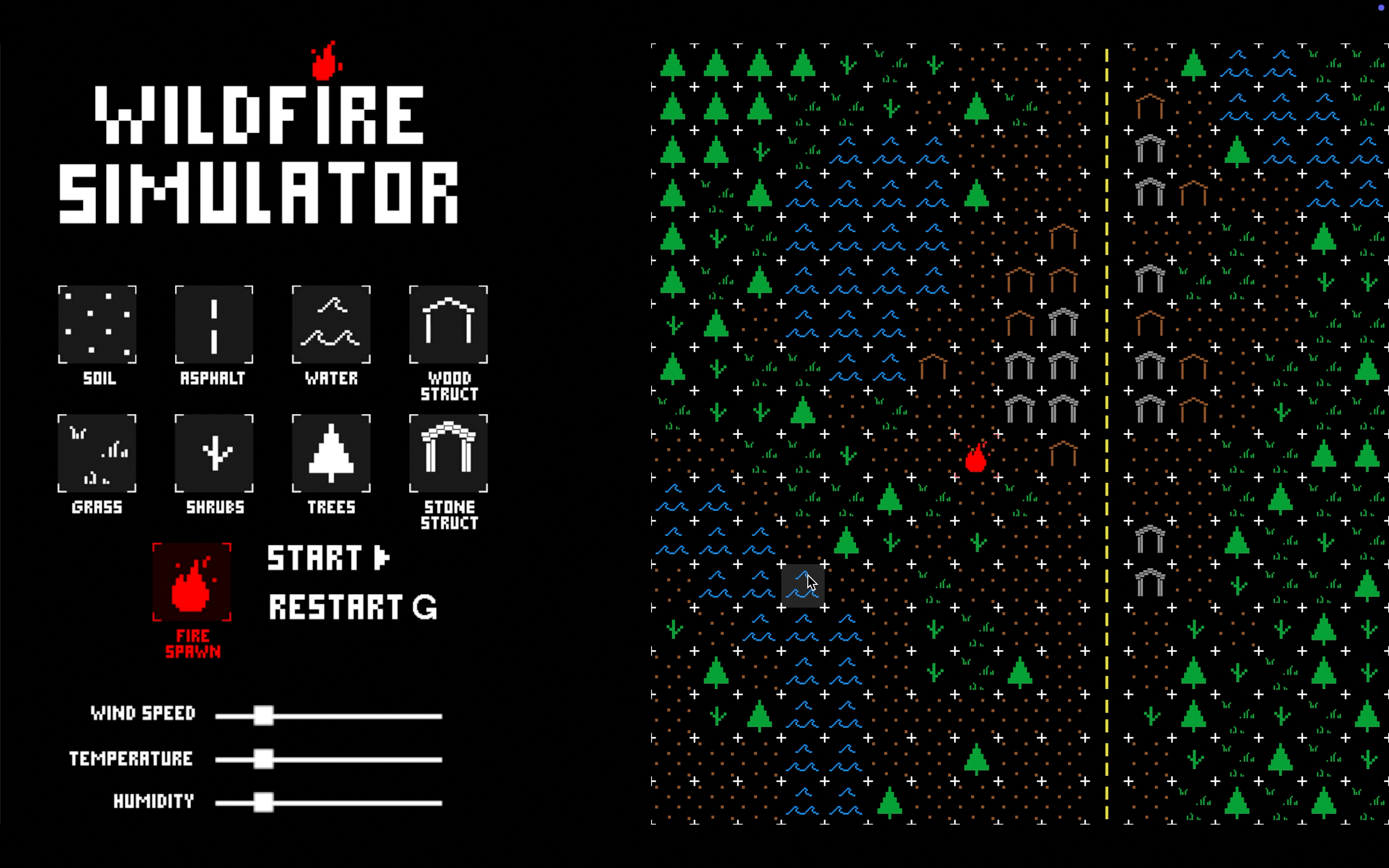
Our wildfire simulation in Unity, showing a grid of terrains with a fire starting point.
-
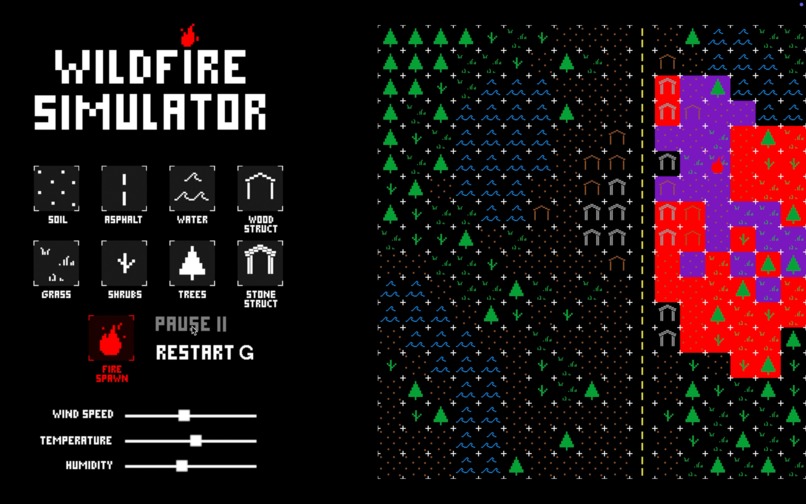
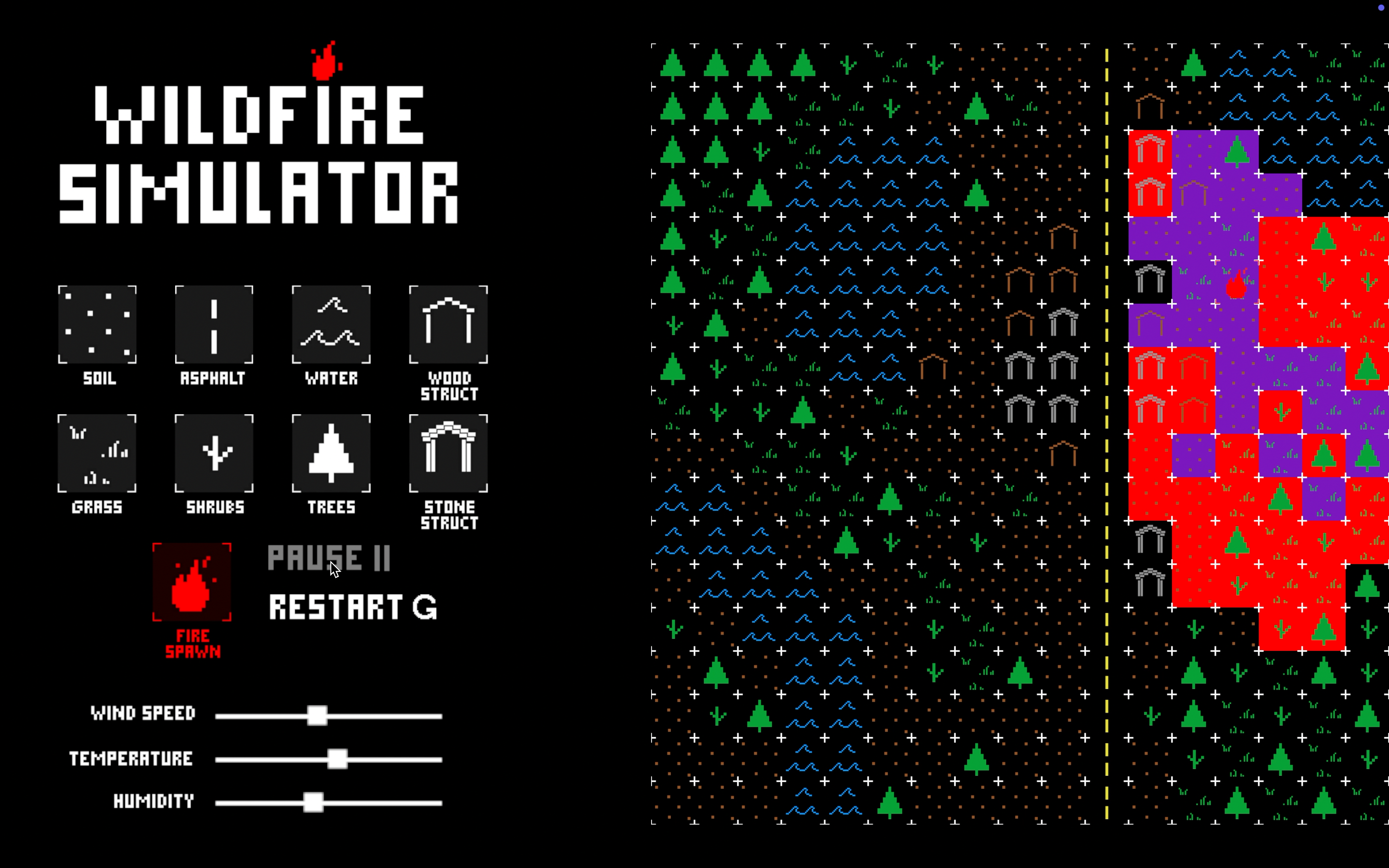
The grid now shows fire spreading across flammable tiles, with burned tiles marked and non-flammable tiles like water untouched.
-
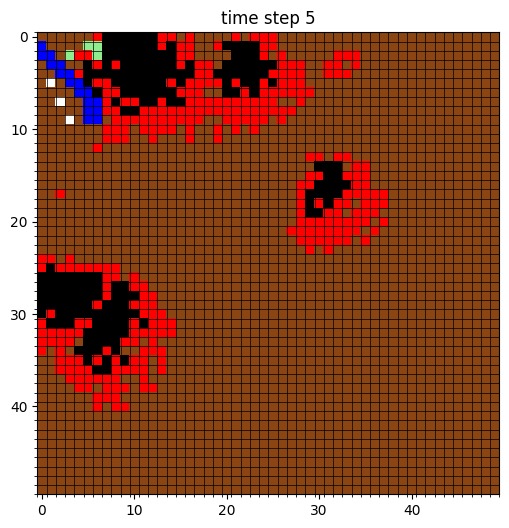
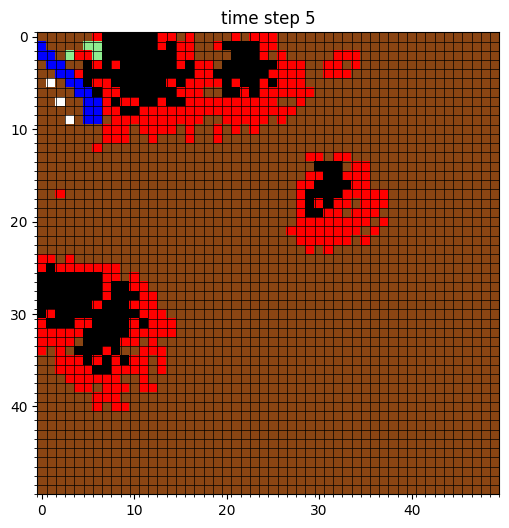
Early proof of concept of propagation model, showing fire spread in high risk conditions with spot fires, fingers, and stoppage by water.
-
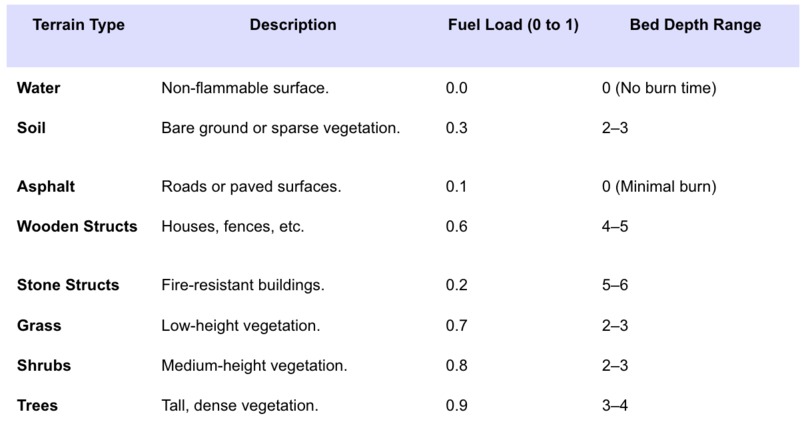
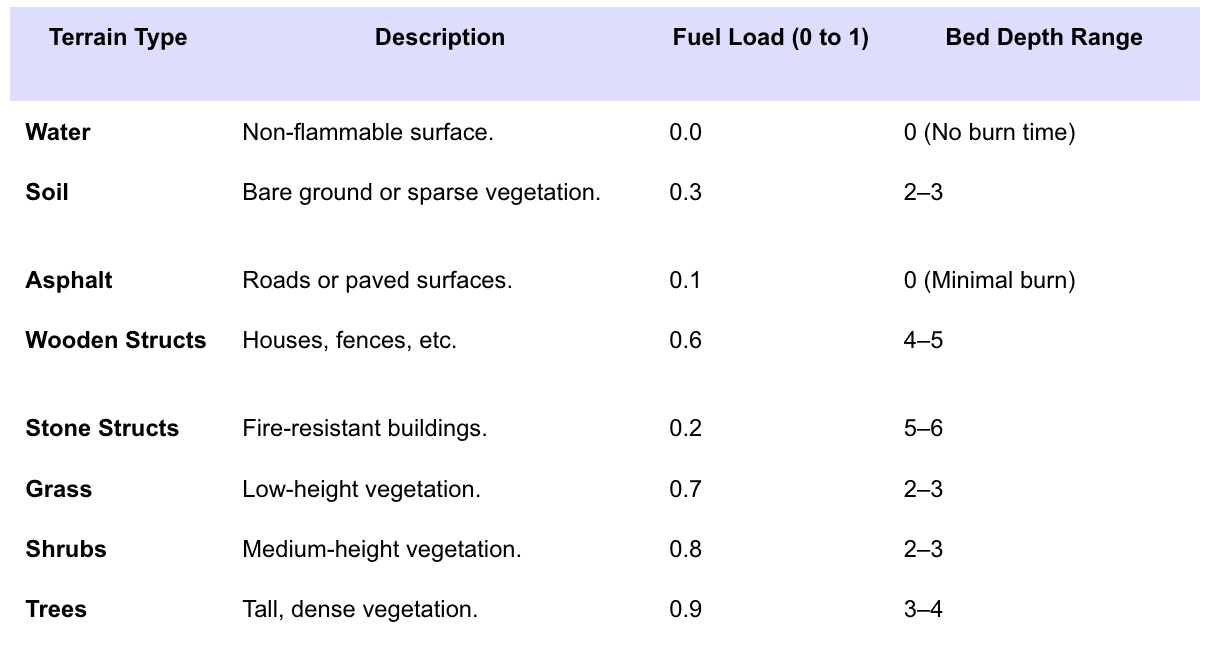
A table showing different terrain types, their flammability, and how long they burn.
Inspiration
Wildfires can spread rapidly, giving first responders and citizens little time to react. Advanced simulations can allow first responders and researchers to predict the spread of fire, but these programs are not meant for the general public. In addition, these programs are often constrained by static environments and conditions, without the ability to create your own unique area of operations.
What it does
Our Wildfire Simulator allows users to create custom landscape, including different types of surface fuels, manmade structures, and bodies of water. Using a simplified Rothermel equation to simulate wildfire spread based on fuel load, humidity, and wind conditions, a simulated fire will spread from the user-chosen initial burn point.
How we built it
Unity for the front-end/GUI, Python for the initial model development, and C# for implementation of the model into the Unity interface.
Challenges we ran into
Integrating the propagation model into Unity using C# was difficult, since it was written in Python first and under a different workflow than Unity's development engine. Developing a model that was realistic but also achievable within the 36-hour timeframe was also challenging, especially given the infinite levels of complexity we could have reached and the immense number of factors that affect wildfire propagation.
Accomplishments that we're proud of
Successfully integrating the model into Unity, and replicating the fire behavior that we wanted while keeping the relative complexity of the model low.
What we learned
That creating a mathematical model from scratch is hard, and wildfires are not simple to model realistically.
What's next for #66
Developing a more complex model that accounts for topography, since slope factor is extremely influential on burn speed and fire spread direction.

Log in or sign up for Devpost to join the conversation.