Inspiration
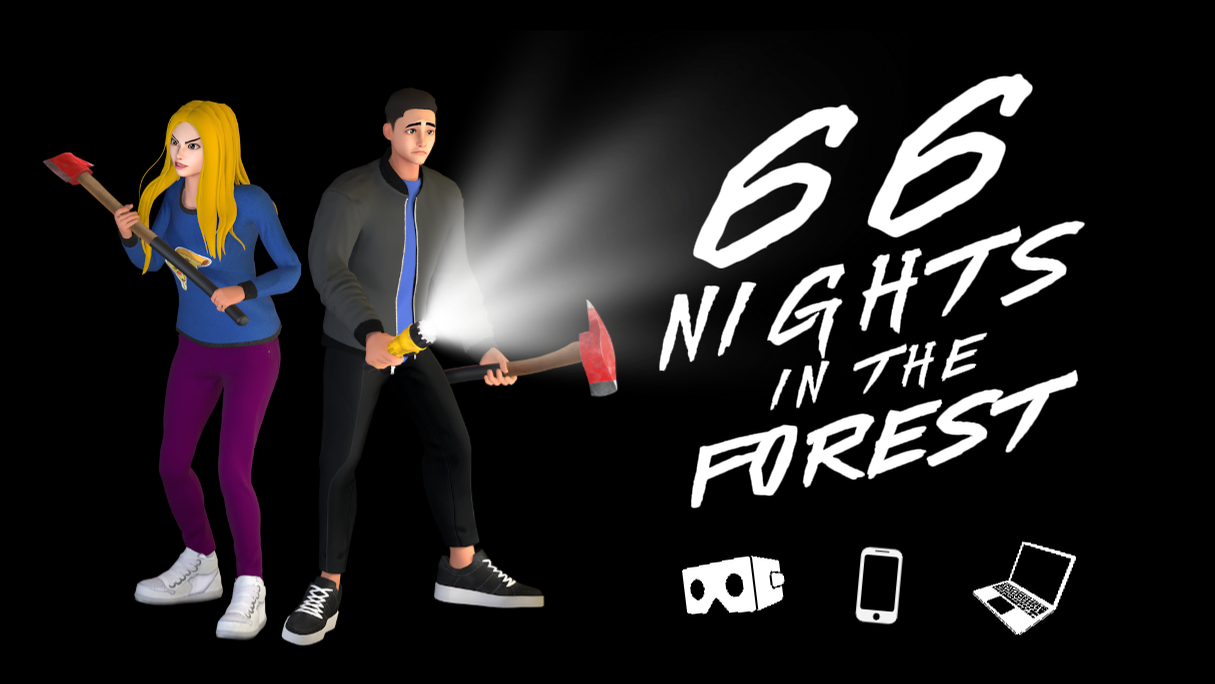
66 Nights in the Forest was inspired by the idea of survival and steady progress.
I wanted to build a world inside Meta Horizon Worlds where every day and night feels meaningful —
where the player doesn’t just survive, but grows stronger, unlocks new opportunities, and builds something of their own.
What the Game Does
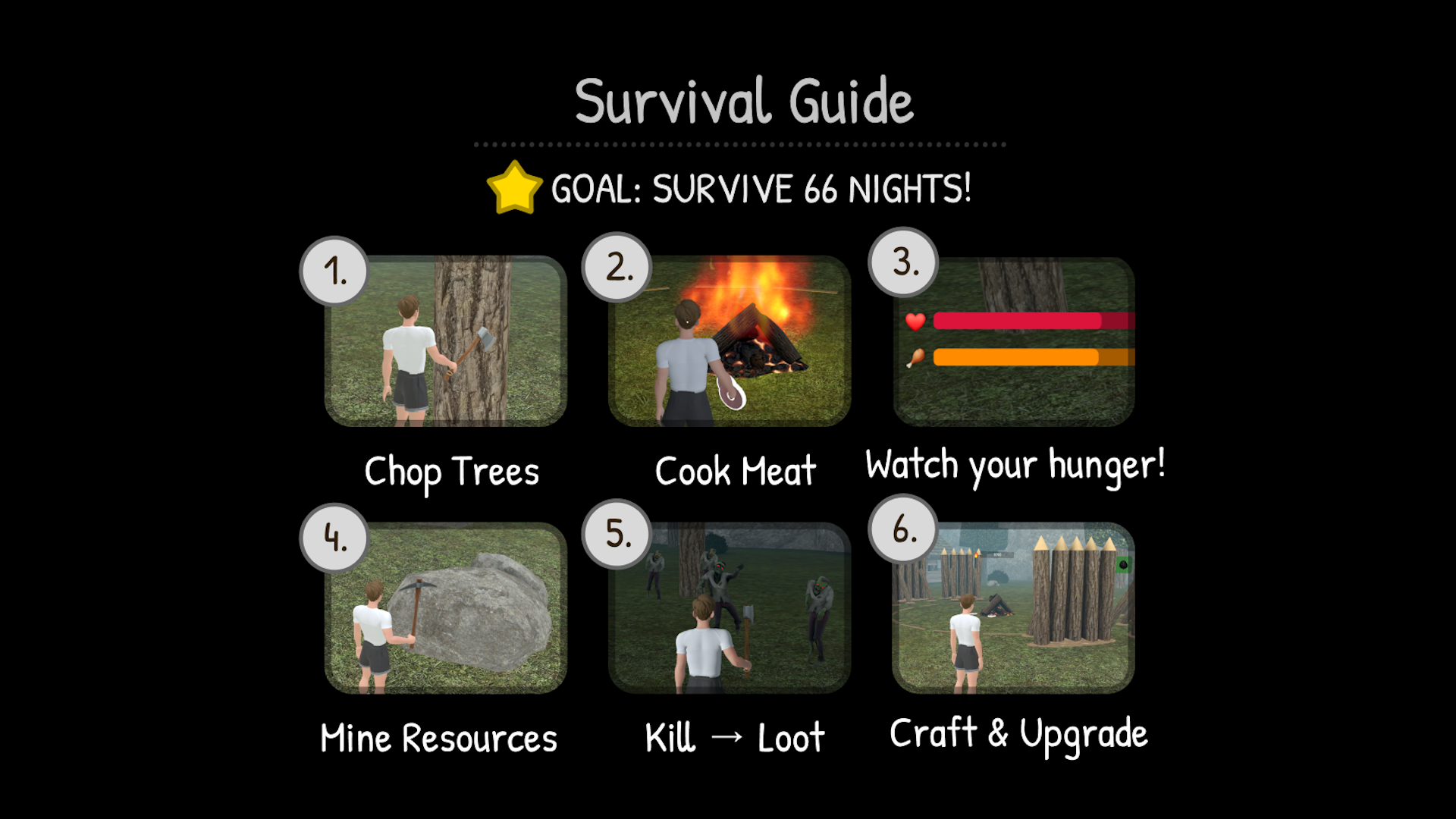
The goal is simple — survive 66 nights, build a boat, rescue the survivors, and escape the island.
Each night, monsters attack your camp.
They grow faster, stronger, and more numerous with every new night.
During the day, players gather food, wood, and materials to upgrade their camp and prepare for the next wave.
You must watch your hunger level, which constantly decreases.
Eating raw food can cause poisoning — you need to cook meat over the campfire to stay safe.
As you survive longer, new territories unlock — offering rare materials for crafting and upgrading your camp.
The game supports cross-play between VR and mobile, allowing players to survive solo or with a friend — no matter the platform.
How I Built It
The entire world was built from scratch in Meta Horizon Worlds.
I started with the terrain and basic assets, then added the key systems:
- Day/Night cycle
- Resource and tree spawning
- Campfire interactions
- Camp upgrades
- Hunger system
Later, I implemented enemy waves that increase in difficulty every night,
balancing the challenge to keep it tough but fair.
My focus was on simplicity and logic — even beginners should immediately understand what to do.
For example: pick up an axe, chop a tree, and use the wood to keep your campfire burning.
This natural logic makes the gameplay intuitive and immersive.
Use of AI
I used AI Meta Horizon to help generate assets and write parts of the code.
Challenges
Since this was my first project in Meta Horizon Worlds, I had to learn almost everything from scratch.
The editor is powerful but has its own quirks that take time to master.
The main challenges were:
- Balancing difficulty — keeping tension high without overwhelming players.
- Enemy behavior — making dynamic attacks within scripting limits.
- Progression system — motivating players to survive all 66 nights.
Each limitation pushed me to find creative solutions and improve the overall design.
What I’m Proud Of
I invested a lot of time and effort, and seeing real players try the game after publishing was incredibly rewarding.
Some shared feedback — they loved it and wanted more content.
It’s an amazing feeling to see people enjoying the world you created.
What I Learned
I discovered that simple systems — hunger, crafting, and time — can evoke real emotion and engagement when balanced well.
I also gained valuable experience in optimization and scripting within Horizon Worlds, especially for cross-platform gameplay.
The biggest lesson:
Minimalism and clarity often create a stronger, more enjoyable experience than complexity.
What’s Next for 66 Nights in the Forest
Next steps:
- Add new creatures and bosses on key nights (30, 50, 66)
- Expand crafting recipes and camp upgrade paths
- Introduce weather effects — rain, fog, and snow
- Add new biomes and secret locations
- Implement achievements and leaderboards for co-op mode
My goal is to make 66 Nights in the Forest a recognizable co-op survival experience in Horizon —
easy to start, exciting to master, and constantly evolving with new updates.
Built With
- ai
- built-with:-horizon-worlds
- collaborative-tools-(miro
- figma
- horizon-asset-library
- horizon-scripting-(visual-logic-system)
- horizon-ui-templates


Log in or sign up for Devpost to join the conversation.