-
-
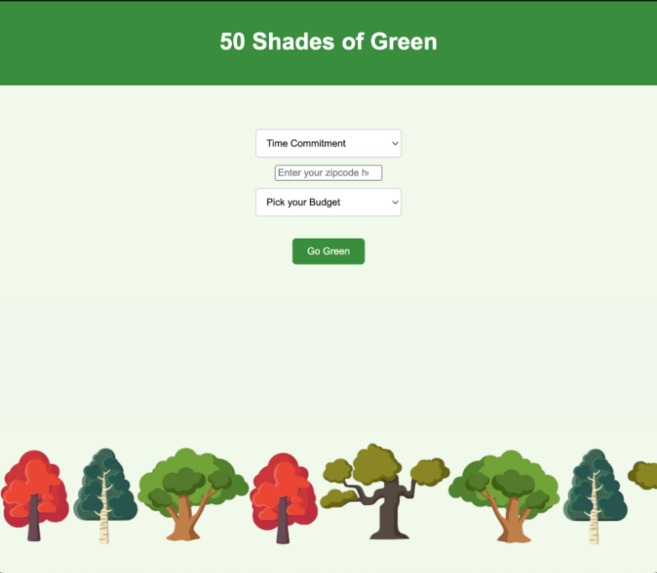
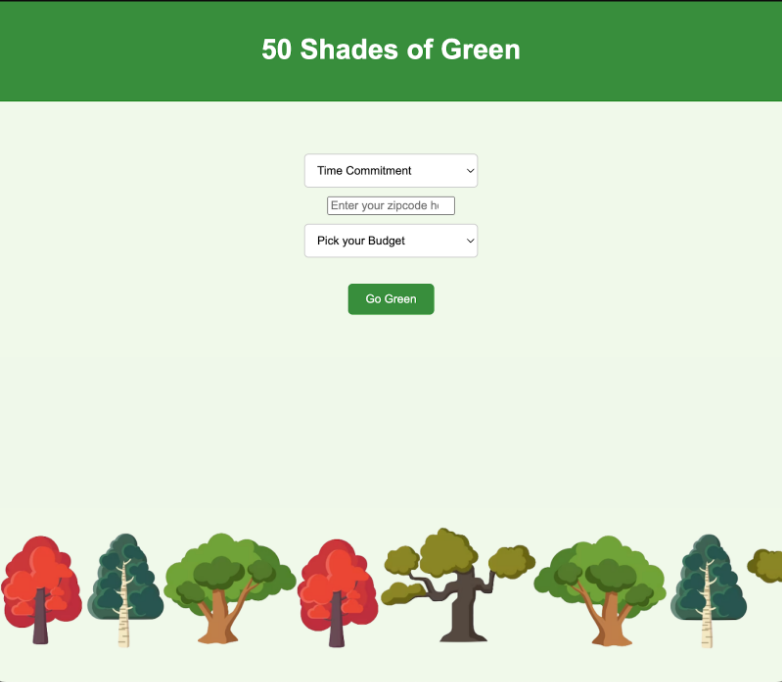
Home Page(with options for budget, maintenance time, zip code)
-
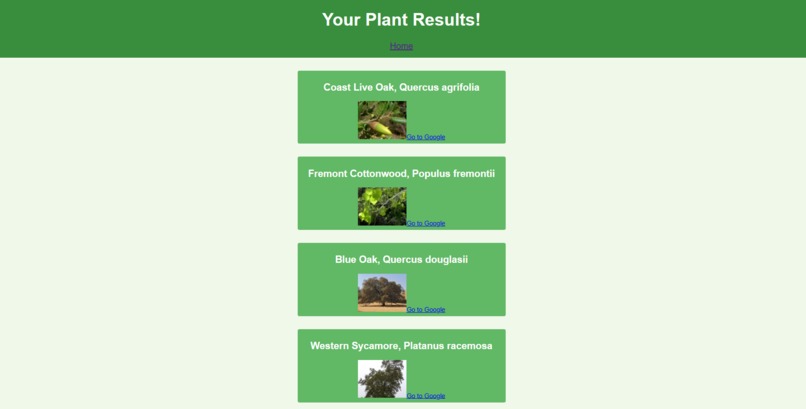
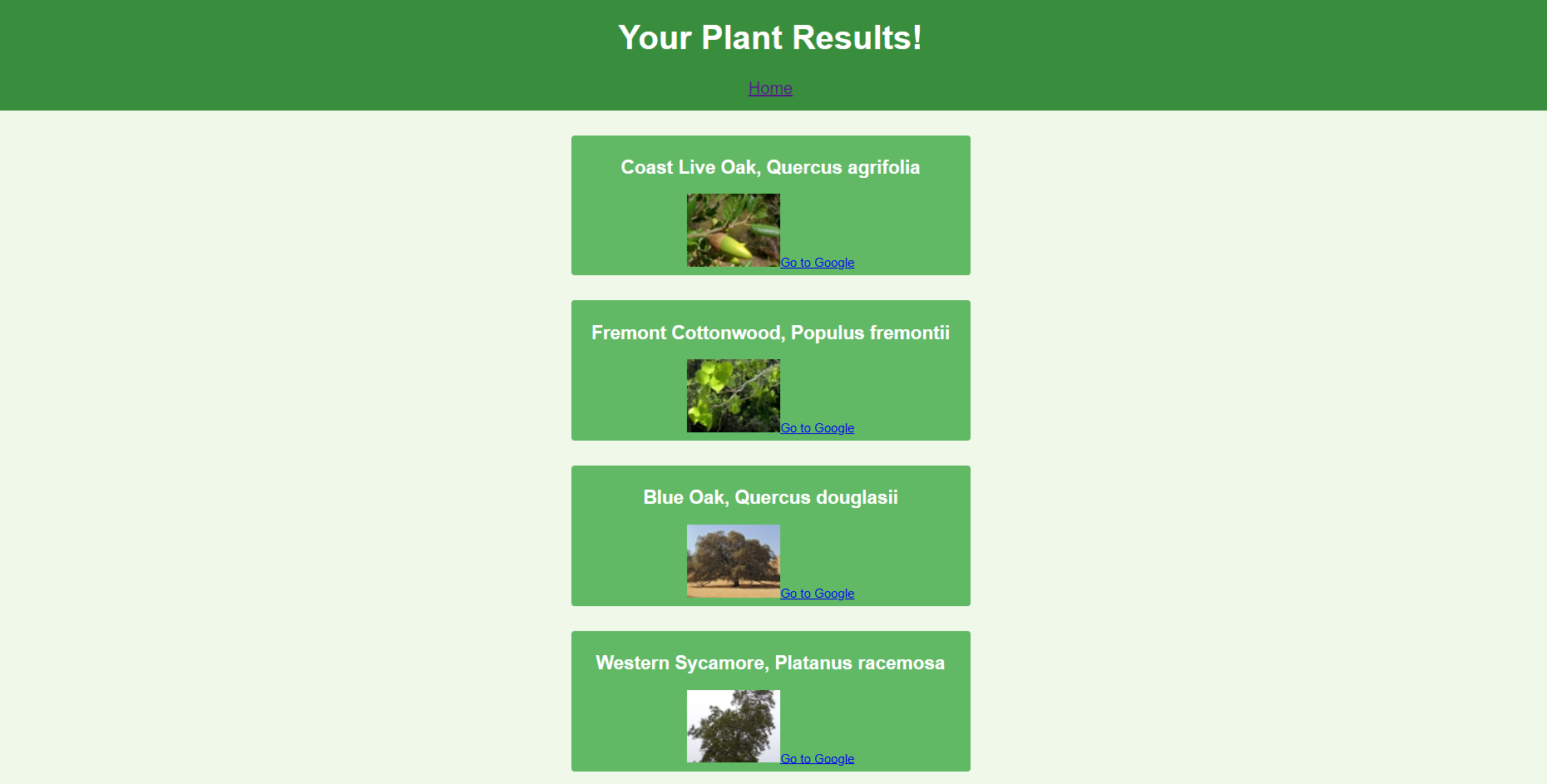
Personalized Results
      Monoculture lawns contribute to biodiversity loss and soil degradation. They limit the habitat for beneficial insects and wildlife and require excessive water and maintenance.  Growing native plants reduces water usage and supports local ecosystems. Thousands of homes across California feature the same grass lawn, contributing to pesticide runoff and using millions of gallons of water a year, accounting for more than 50% of household water usage. **50 Shades of Green** offers custom plant recommendations to diversify home gardens and fight against the dangers of monoculture.
      We built 50 Shades of Green using web scraping to calculate plant recommendations and React for the website.  We used a zip code to GPS converter to pinpoint the exact region the user entered and found recommendations from a California plant database. The hardest part was navigating React. From differentiating between useEffects and useStates, to preventing zip codes from creating other instances of zip codes, lots of unexpected problems popped up. Overcoming each obstacle, we completed a website where users can enter their zip codes and view a list of plants that will flourish.
      Looking towards the future, we hope to expand 50 Shades of Green so that it functions outside of California, considering the new biodiversity those regions hold. We also plan to implement a price sorter to help those with financial struggles find cheap alternatives to more popular greenery. By encouraging people to change the plants around them, the site promotes expanded biodiversity and better air quality.  As the dangers of global warming heighten, we must create new ways to protect the environment and our health.

Log in or sign up for Devpost to join the conversation.