-
-
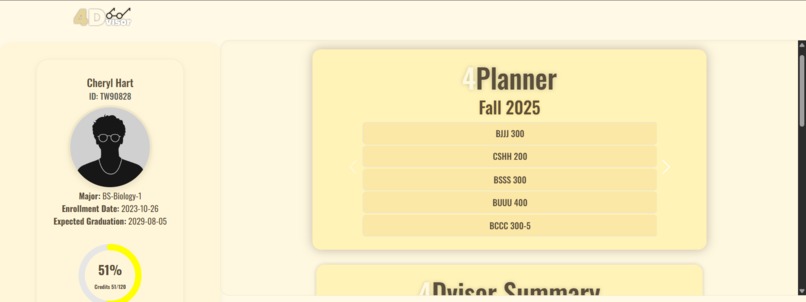
Information Page
-

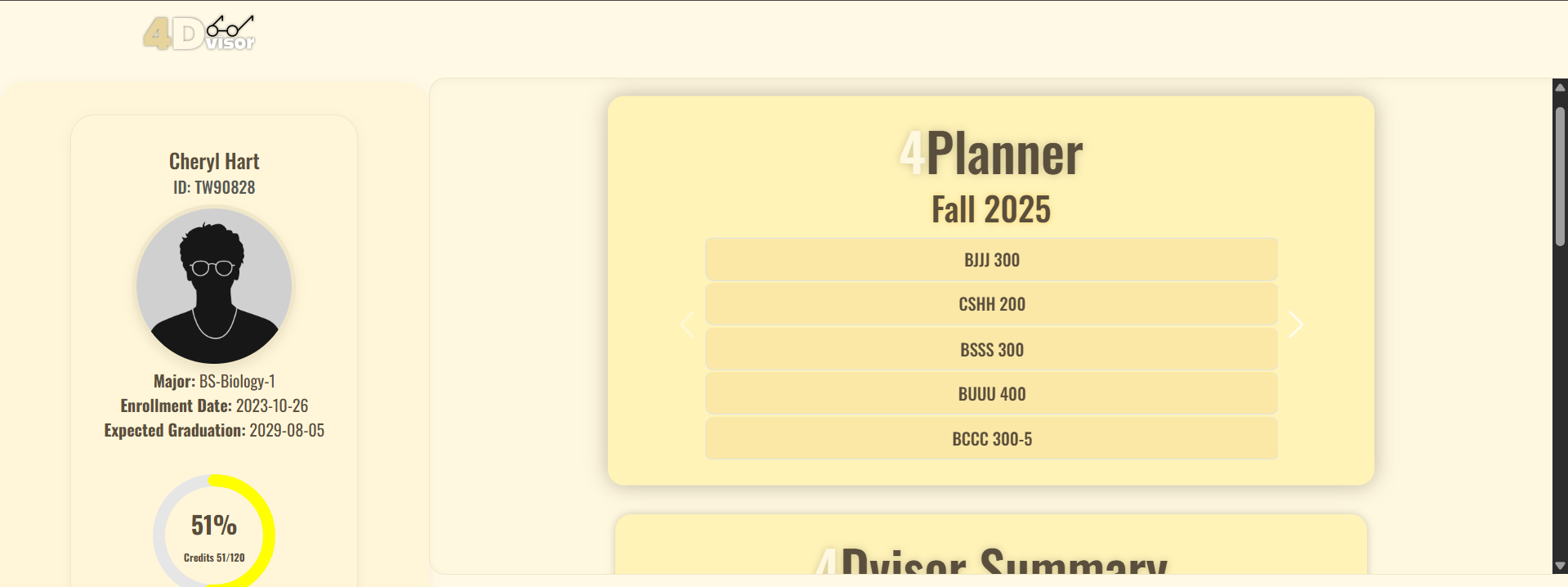
Home Screen

Inspiration
We were inspired to create this project due to our lack of experience with large-scale and synthetically generated data. With no prior experience, we wanted to explore this new field driven completely by curiosity and the opportunity to learn.
What it does
A software platform that leverages student academic data to generate AI-driven insights into their educational journey, build personalized graduation pathway plans and recommend internship opportunities aligned with their academic performance and skill sets.
How we built it
We structured our team into two groups. The backend team, consisting of three members, focused on developing the core features of the application. They used Python and Flask to interact with Neo4j, managing the database, performing analyses, and integrating AI functionalities. On the frontend, one member designed the user interface and overall look of the website, primarily using TypeScript and React. Additionally, we integrated Gemini for AI-driven capabilities within our student support summary.
Challenges we ran into
Having never worked with Neo4j before, we initially struggled to understand knowledge graphs and the complex relationships they represent. Combined with some issues in the generator script, it took several hours of troubleshooting before we could generate a functional database. Over time, we realized how powerful the knowledge graphs were and successfully leveraged them with much effort to enhance the capabilities of all our site’s support functions.
Accomplishments that we're proud of
As the project progressed, we realized the great utility of Neo4j, and it soon became the reason the project ran so fast. We thought that we would have to cut a lot of features due to time constraints, but we were able to get in a good 85% of the features we wanted to by the end of the hackathon.
What we learned
We gained substantial experience working with Neo4j, as well as with large datasets and synthetic data in general. Prior to this project, we had limited experience in web development and were new to this tech stack, which included a Python/Flask backend and a React/Vite/TypeScript frontend. This project allowed us to build both our technical skills and confidence in integrating these technologies effectively.
What's next for 4Dvisor
If time had allowed, we would have expanded the generator script to incorporate AP credits and account for coursework completed prior to college, further enhancing the accuracy of students’ academic pathways. We also began developing a feature to connect students with similar learning styles and academic performance for a study-buddy program, which users could opt into to foster collaborative learning and peer support. Looking ahead, 4DVisor has the potential to scale across multiple universities. Its ability to work with synthetic datasets makes it a highly efficient, scalable, and potentially profitable solution for enhancing student success on a larger scale.


Log in or sign up for Devpost to join the conversation.