-
-
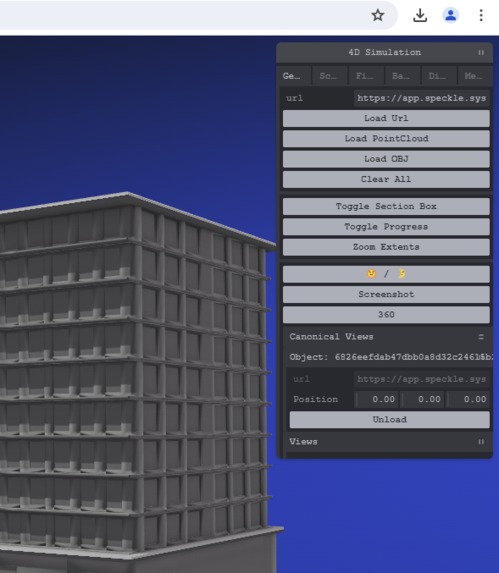
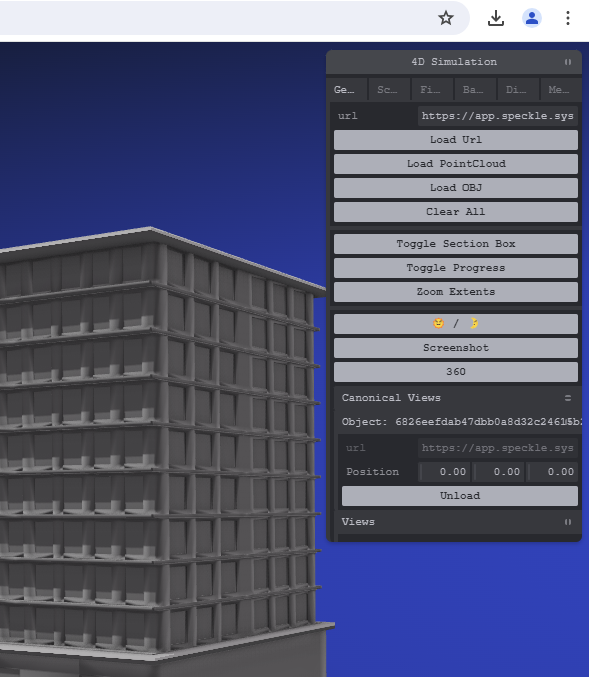
Menu for uploading point cloud data and IFC file for 3d models along with progress bar
-
-
-
Inspiration
The inspiration for our 4D simulation project came from the need to bridge the gap between static architectural models and the dynamic nature of real-world urban environments. We aimed to create a tool that not only visualizes spatial structures but also incorporates the dimension of time, providing a more comprehensive understanding of architectural designs and urban plans.
What it does
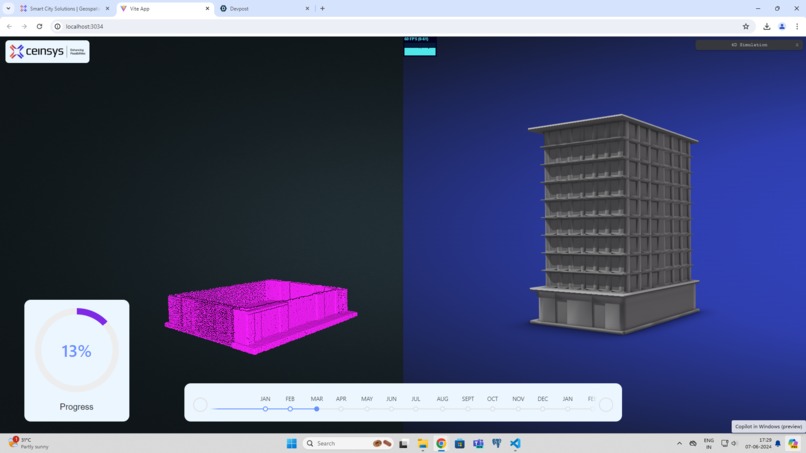
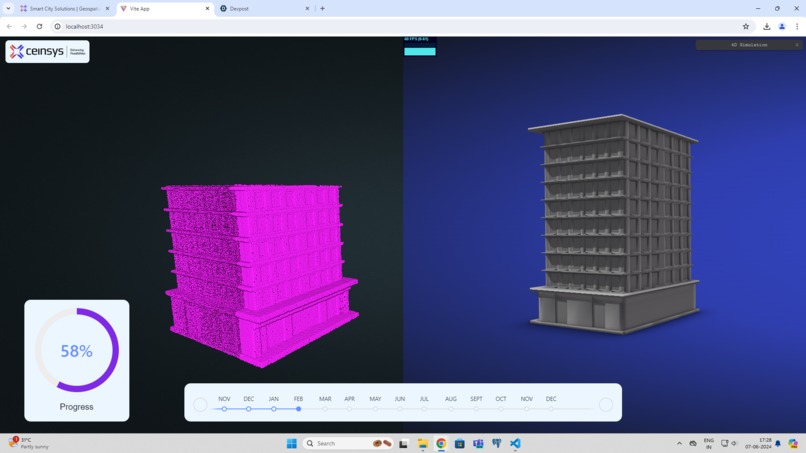
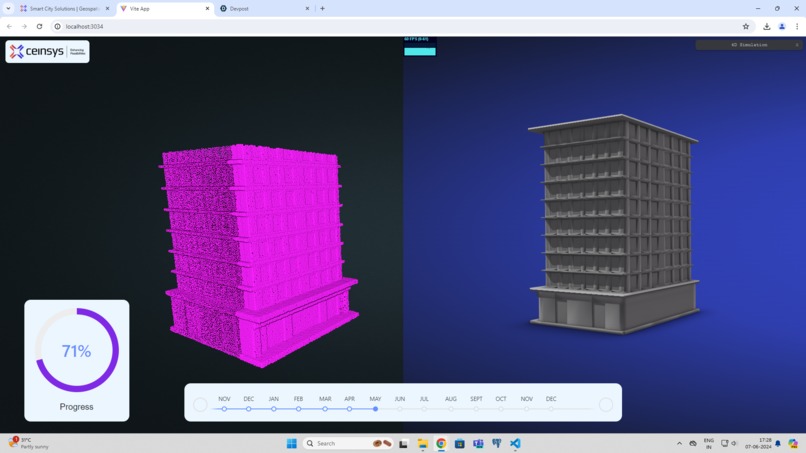
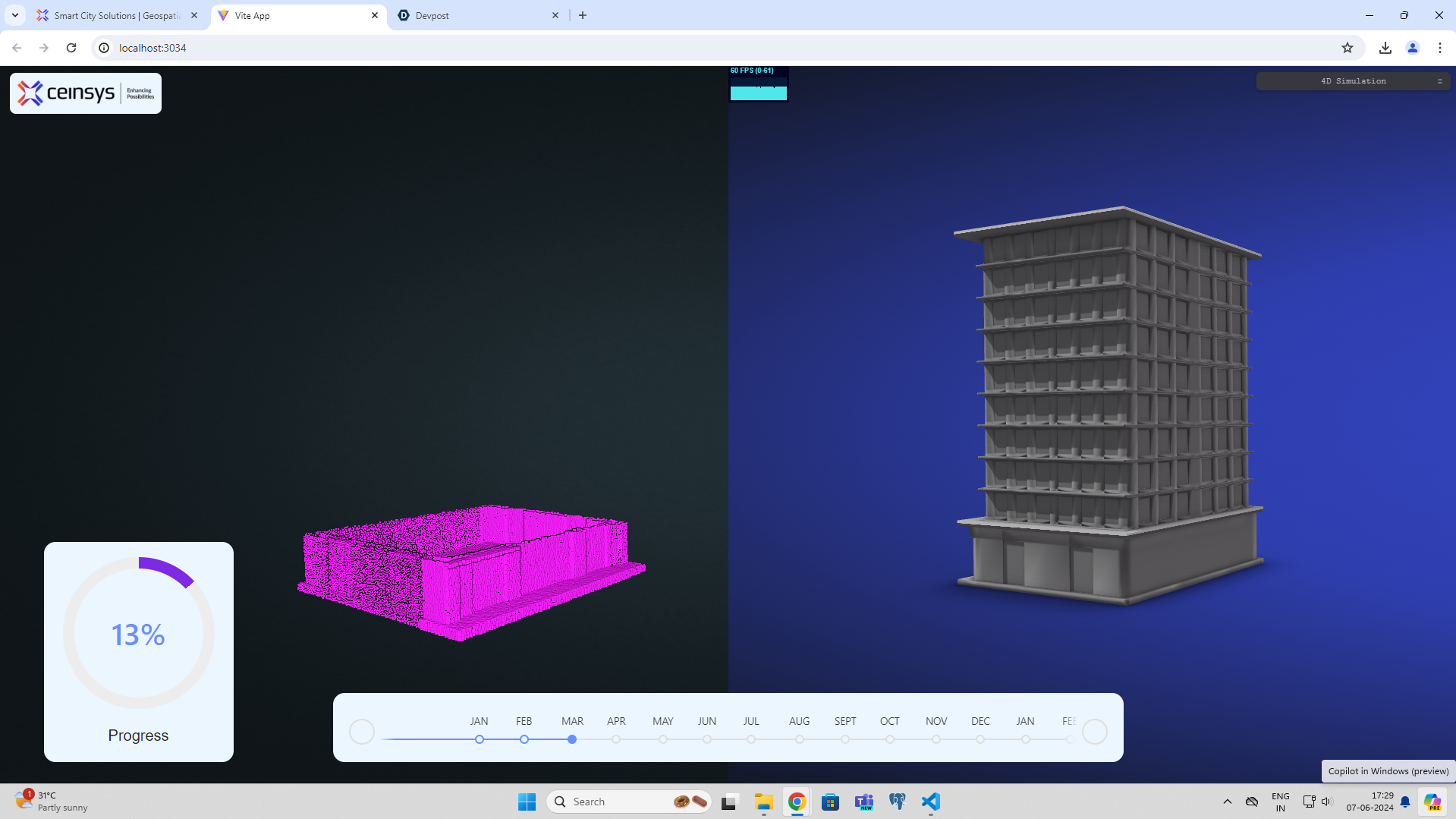
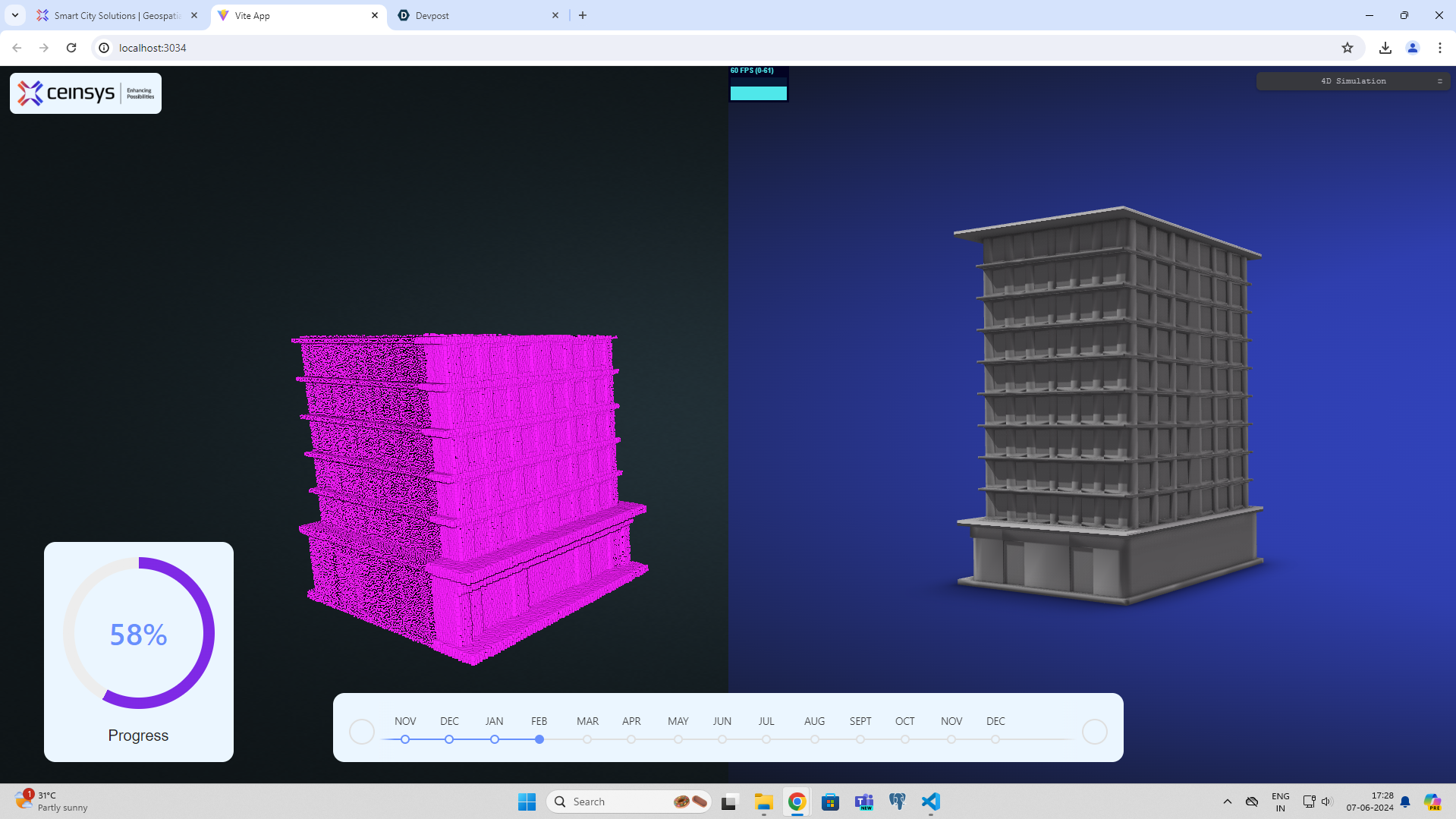
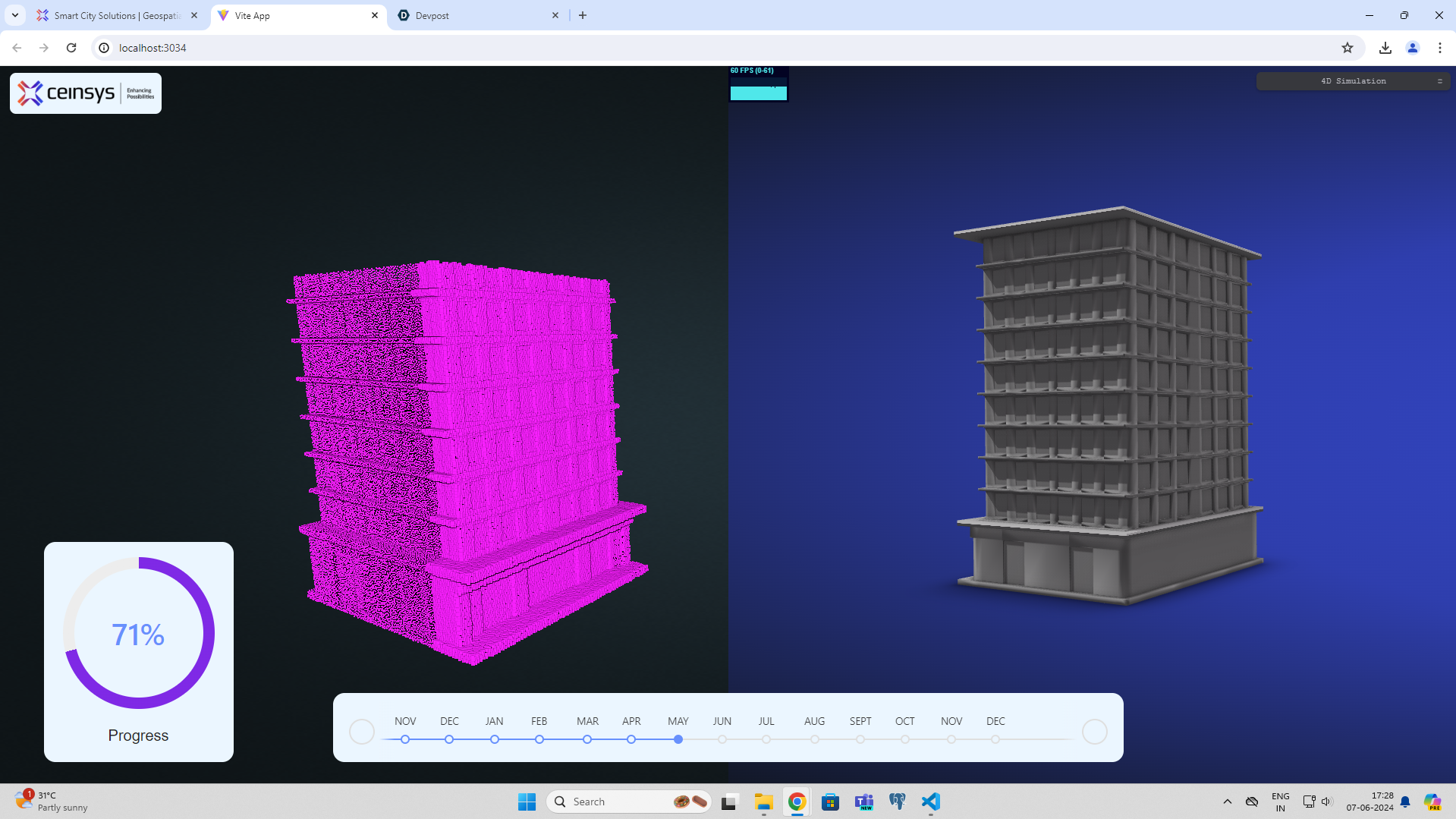
Our 4D simulation technology enhances traditional 3D models by integrating the fourth dimension—time. This allows users to visualize how buildings and urban spaces evolve over time, accommodating changes in environment, usage, and occupancy. It provides a dynamic and interactive way to foresee the impact of construction phases, seasonal variations, and long-term urban development.
What we learned
Throughout the development of this project, we learned: 1) The importance of interdisciplinary collaboration, combining expertise in architecture, urban planning, and software development. 2) How to handle and process large datasets efficiently to maintain performance. 3) The value of user feedback in refining our interface and functionality. 4) Advanced techniques in 3D modeling and temporal data integration.
What's next for 4D simulation
1) Enhance the accuracy and scope of our simulations by incorporating more diverse data sources and improving our algorithms. 2) Develop mobile and VR versions of our tool to make it more accessible and immersive. 3) Collaborate with more stakeholders to gather feedback and continuously improve the technology.
Built With
- javascript
- jquery
- node.js
- potree
- speckle
- three.js


Log in or sign up for Devpost to join the conversation.