Inspiration
As beginner programmers, we’ve all faced the dreaded "404: Page Not Found" of coding—those moments when bugs, syntax errors, and logic fails make you want to quit. Inspired by our own struggles and the statistic that over 60% of novice coders abandon programming due to frustration, we created 404: The Repair. We wanted to build a fun, gamified web platform that turns coding chaos into a learning adventure, helping beginners fix "broken" code through interactive puzzles and gain confidence along the way.
What it does
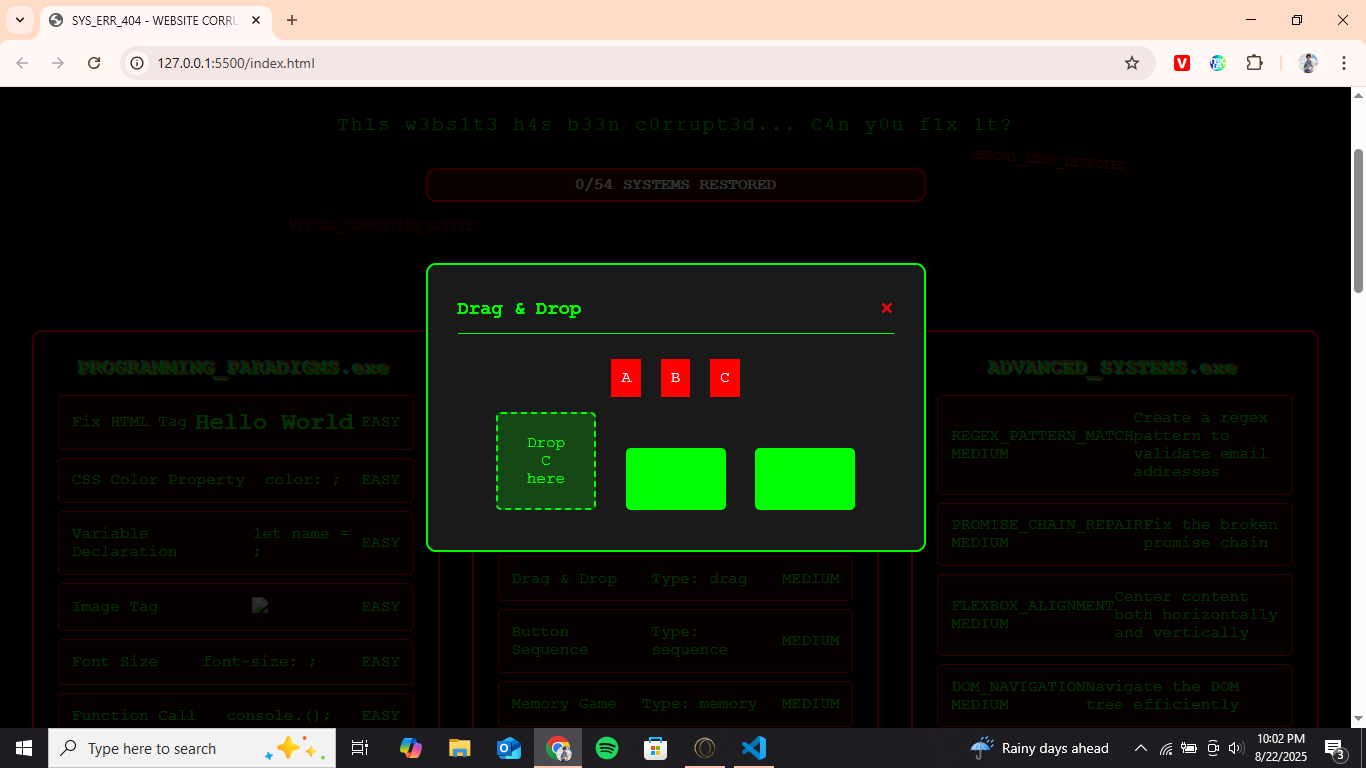
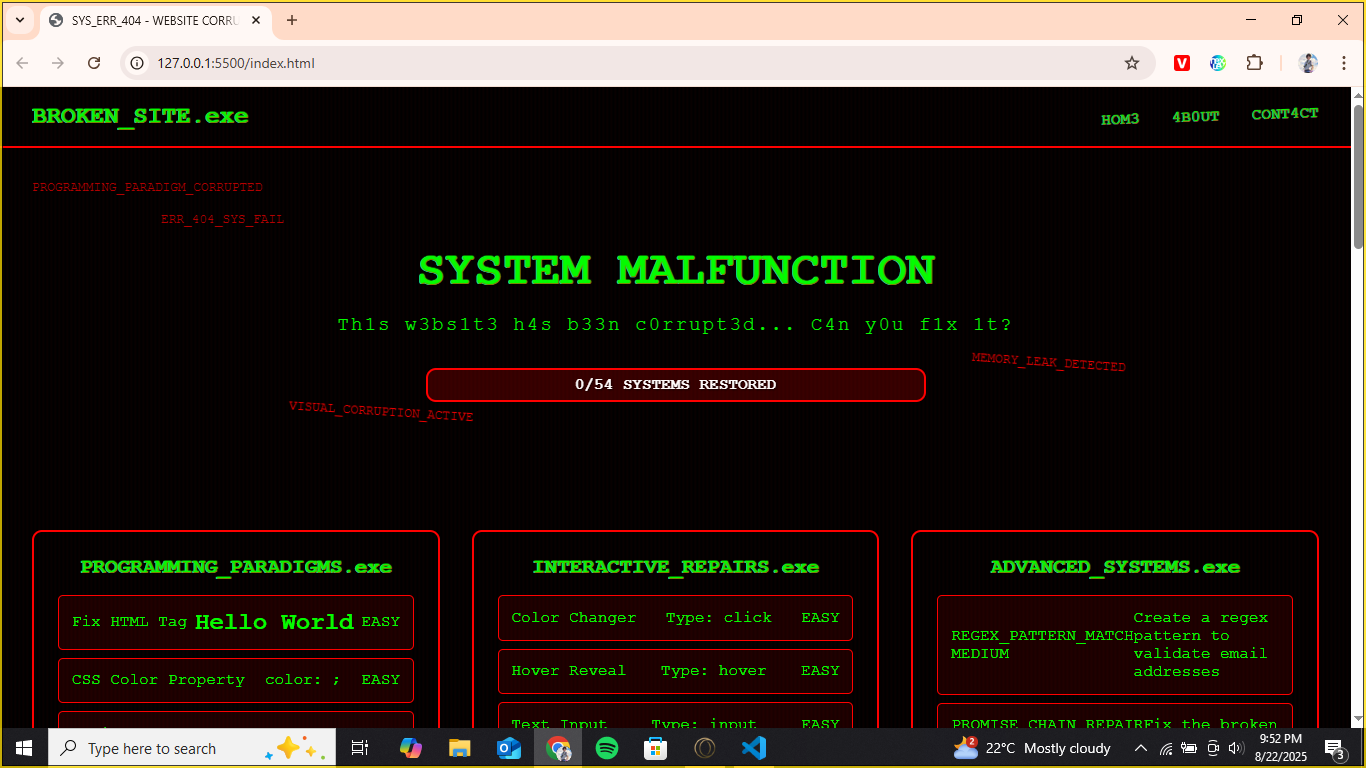
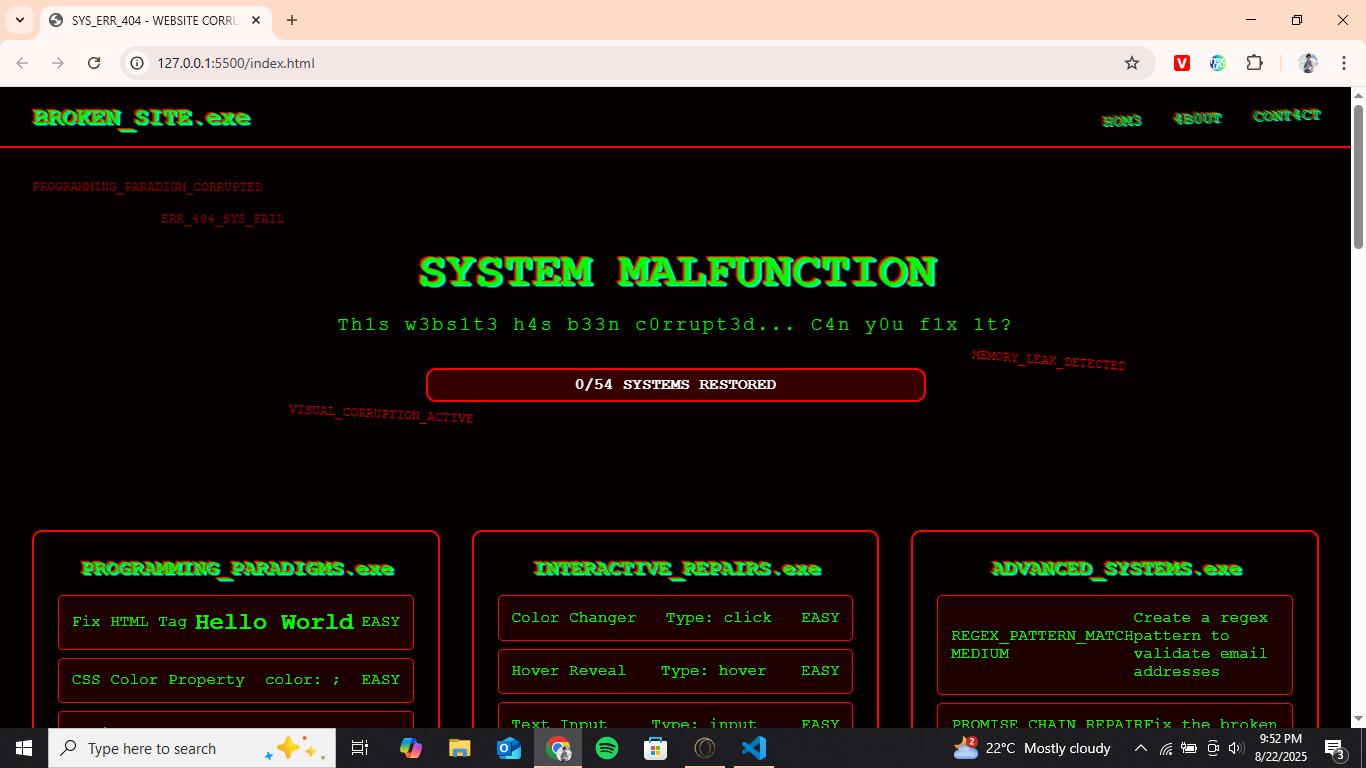
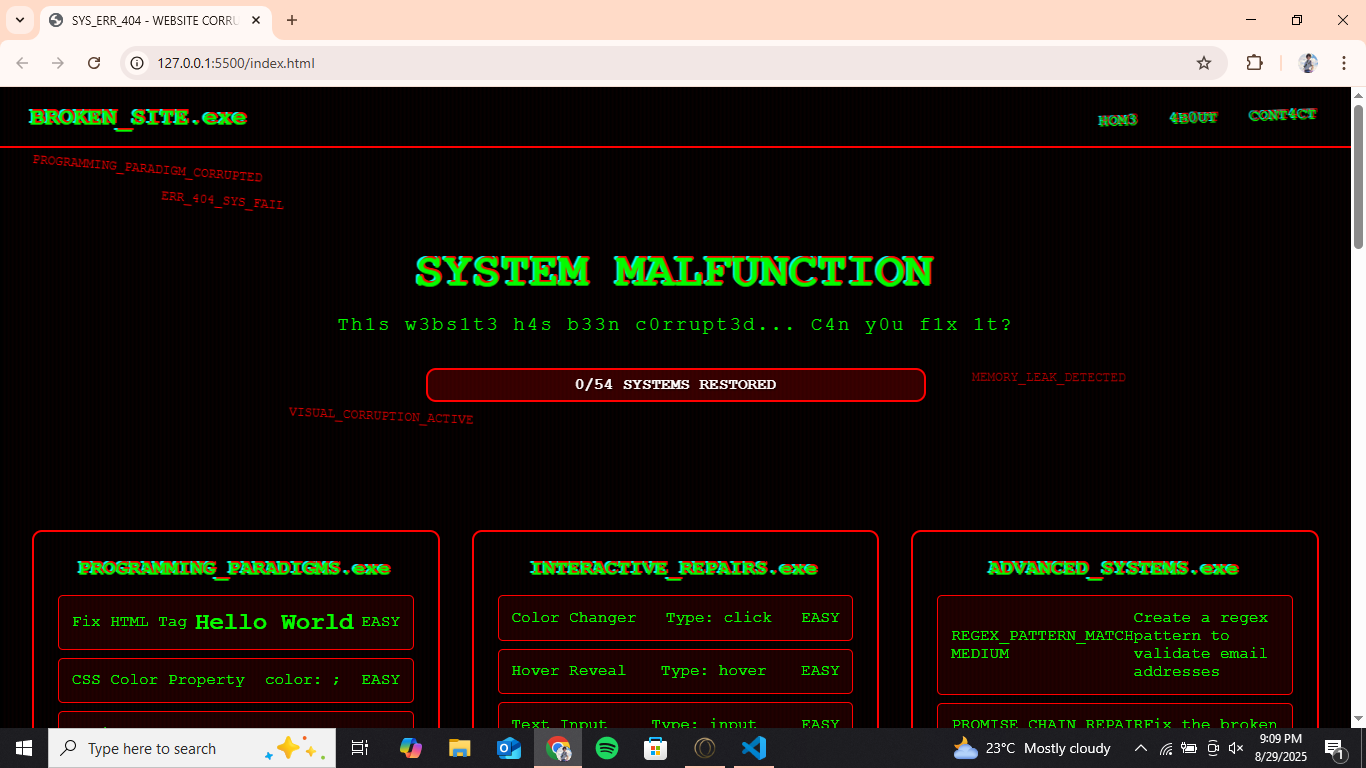
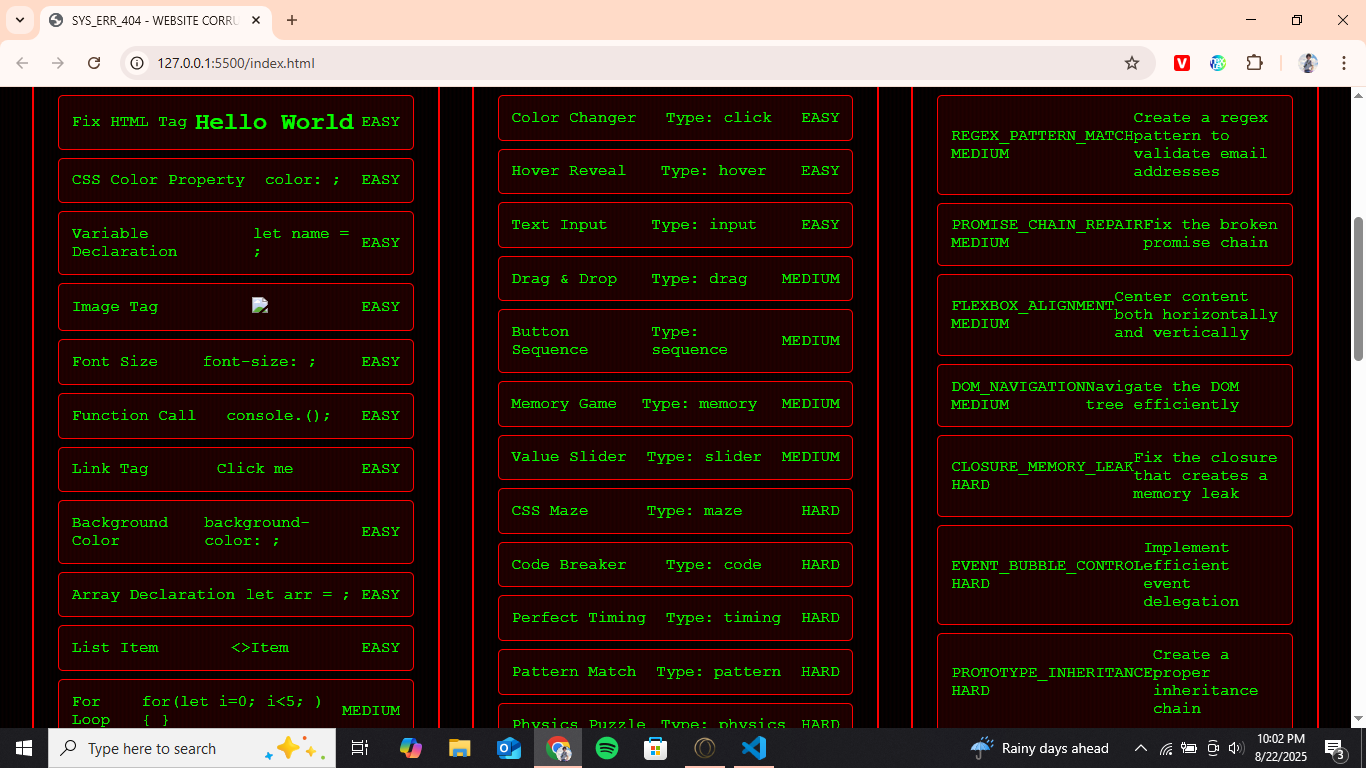
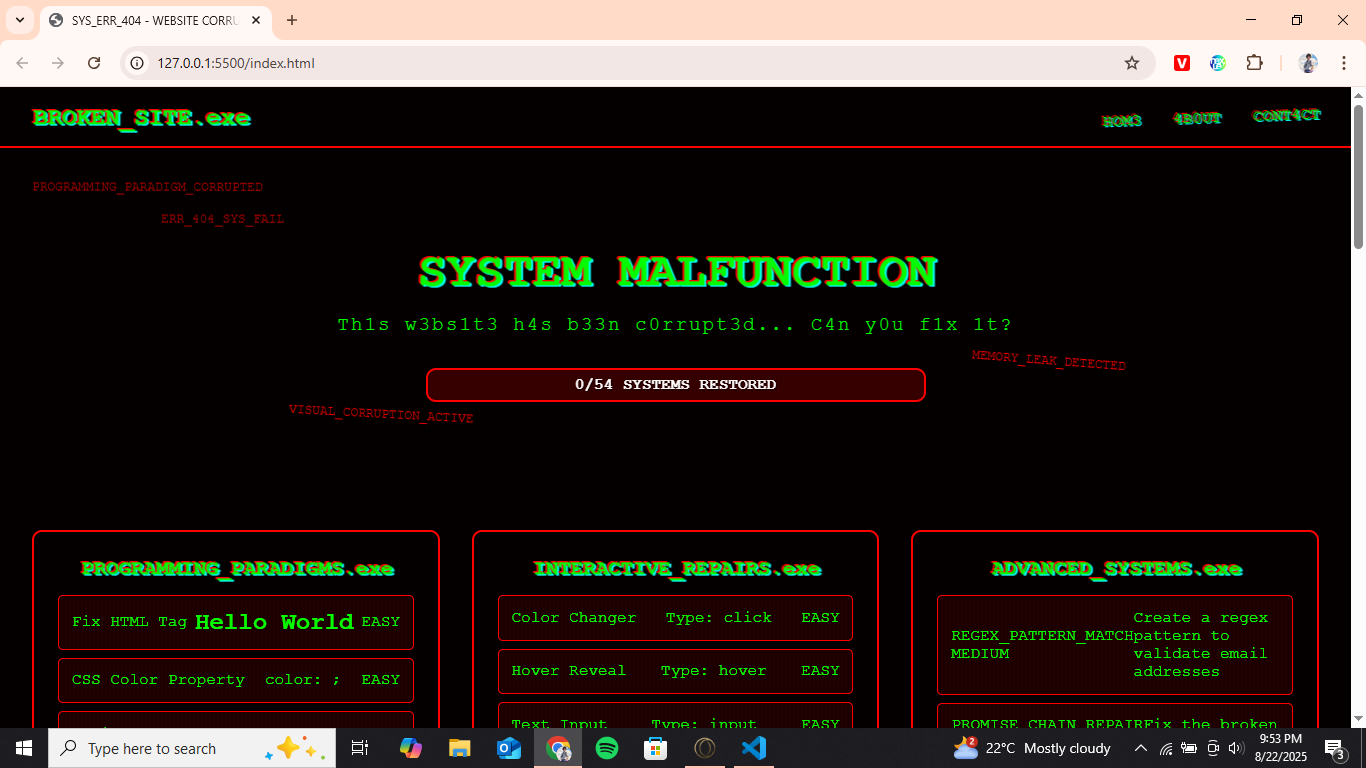
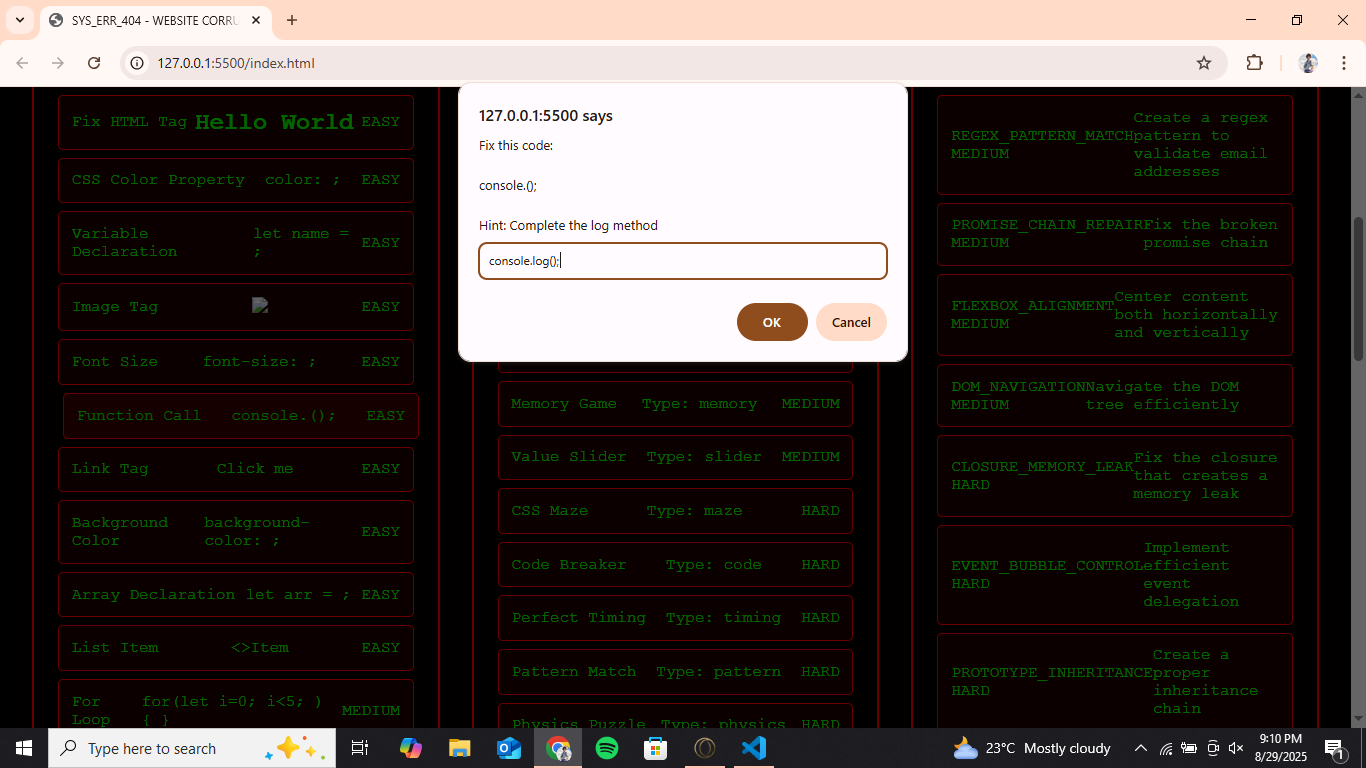
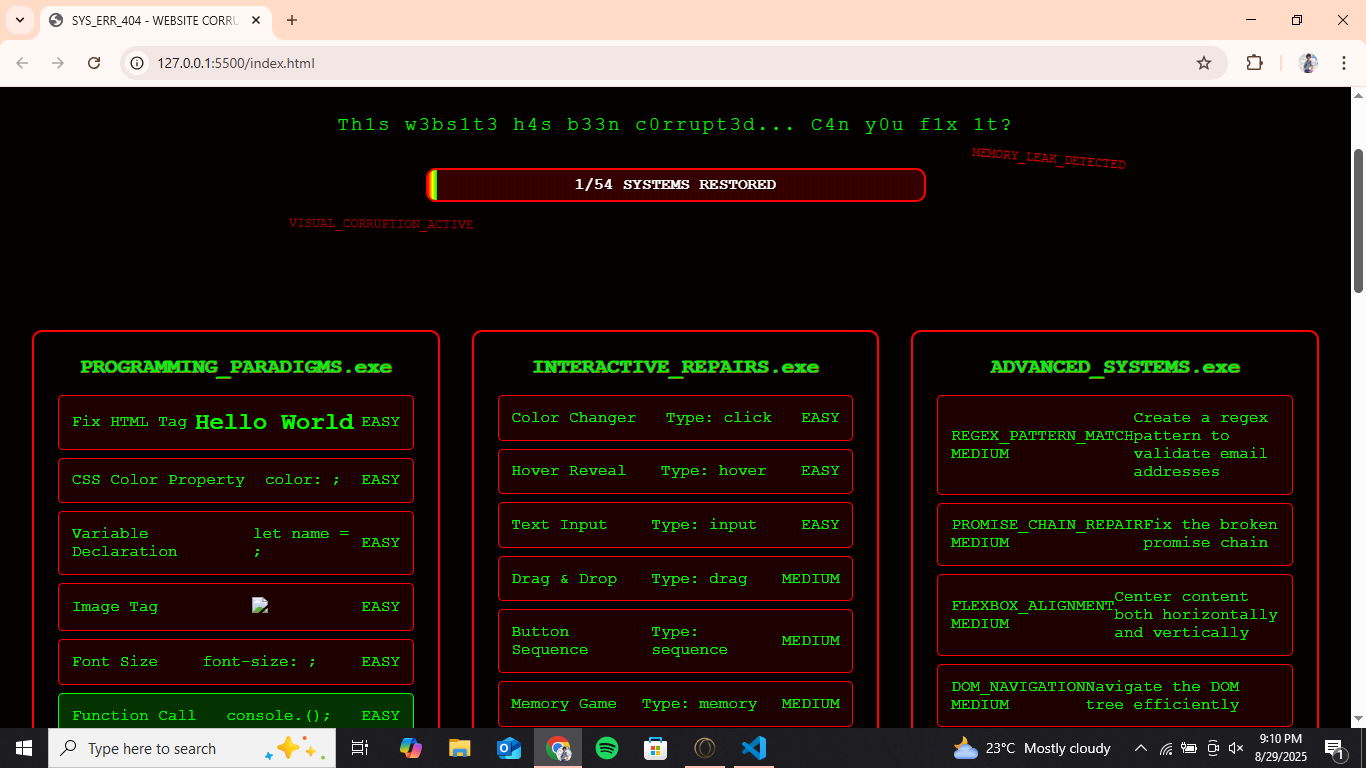
404: The Repair is a web platform that starts as a deliberately glitchy, broken website—think misaligned buttons, flickering text, and error messages. Users solve programming puzzles to "repair" the site, learning key concepts in the process. Puzzles range from fixing syntax errors (like correcting if(x = 5) to if(x == 5)) to optimizing logic, such as reducing a loop’s complexity from ( O(n^2) ) to ( O(n) ). As users complete challenges, the site transforms from chaotic to clean, with points and badges (e.g., “Bug Buster”) rewarding progress. It’s a playful way for beginners to master coding fundamentals.
How we built it
We built 404: The Repair using only HTML, CSS, and JavaScript to keep it lightweight and hackathon-friendly: HTML: Structured the glitchy homepage and puzzle interfaces, with dynamic elements updated via JavaScript. CSS: Crafted glitch effects like flickering text and shaky divs using @keyframes animations, ensuring the site looks intentionally broken but usable. JavaScript: Powered the puzzle logic, such as validating user inputs (e.g., checking if a code snippet fixes a bug) and updating the UI as puzzles are solved. We used local storage to track user progress and scores. We designed three core puzzle types: syntax fixes, logic challenges (e.g., drag-and-drop code blocks), and simulated real-world tasks like styling a broken layout. In 48 hours, we prototyped a functional site that starts chaotic and becomes polished as users solve puzzles.
Challenges we ran into
Building 404: The Repair in a 48-hour hackathon was no small feat, and we hit several roadblocks along the way: Time Crunch: With only two days, prioritizing features was tough. We initially wanted a leaderboard for competitive puzzle-solving, but had to cut it to focus on core puzzles like syntax fixes (e.g., correcting if(x = 5) to if(x == 5)). We overcame this by focusing on a minimum viable product that showcased our gamified learning concept. Glitchy UI Balance: Creating a deliberately "broken" website with flickering text and misaligned elements using CSS animations was tricky. Early versions were too chaotic, confusing testers. We iterated by toning down animations (e.g., reducing @keyframes flicker frequency) to ensure the site was usable yet still felt glitchy. Puzzle Logic in JavaScript: Validating user inputs for puzzles (e.g., checking if a code snippet fixed a bug) was complex. Our first attempts caused false positives, frustrating testers. We solved this by writing stricter validation functions and adding clear error messages as hints. Team Coordination: Some team members were less experienced with JavaScript, leading to uneven workloads. We tackled this by pair-programming, with stronger coders mentoring others, which boosted both our skills and team morale. Browser Compatibility: Our glitch effects looked great in Chrome but broke in Firefox due to CSS inconsistencies. We spent hours debugging vendor prefixes and testing across browsers to ensure a consistent experience. These challenges tested our resilience but made us stronger. They taught us to prioritize, iterate quickly, and embrace the "fix it" spirit of 404: The Repair—just like our users do when solving our puzzles!
Accomplishments that we're proud of
Functional Prototype: Delivered a working platform in 48 hours that users found engaging during early testing. Creative UI: Our glitchy aesthetic—flickering text, misaligned elements—nailed the "broken" vibe while staying user-friendly. Gamification: Implemented a point system and badges that testers loved, boosting motivation. Accessibility: Ensured puzzles were beginner-friendly with clear hints, making coding approachable for all.
What we learned
Technical Skills: Mastered CSS animations for glitch effects and JavaScript for dynamic puzzle validation. Design Balance: Learned to balance chaotic visuals with usability, ensuring the site was fun but not frustrating. Teamwork: Coordinated under pressure, dividing tasks (e.g., one teammate on UI, another on puzzle logic) and resolving conflicts quickly. User Focus: Discovered the power of gamification—badges and progress bars made learning addictive, based on tester feedback.
What's next for 404: The Repair
We’re just getting started! Next steps include: Adding more puzzles, like CSS styling challenges and JavaScript DOM manipulation tasks. Implementing a backend (e.g., Node.js) for user accounts and leaderboards. Expanding to mobile with responsive design for on-the-go learning. Partnering with coding bootcamps to integrate 404: The Repair into curriculums. Try 404: The Repair at [your-site-link] and help us turn coding glitches into growth!

Log in or sign up for Devpost to join the conversation.