-
-
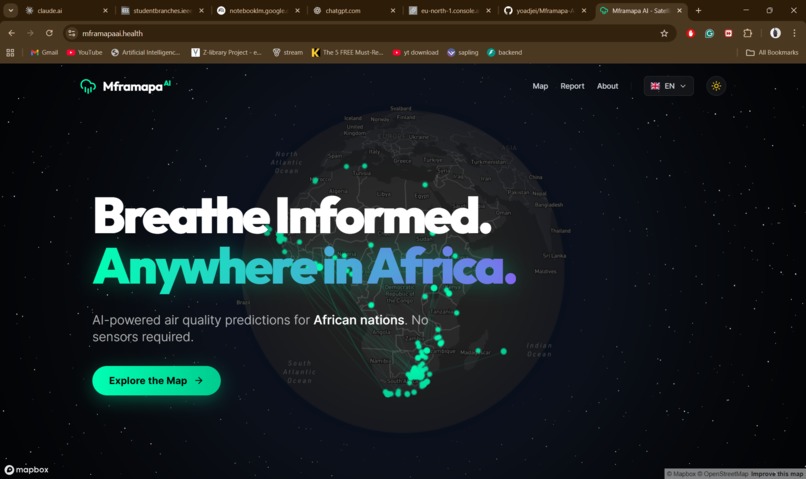
Landing Page
-
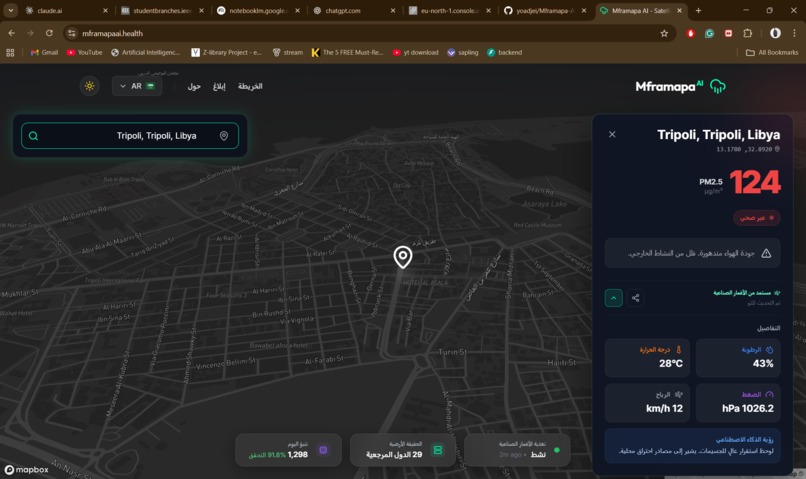
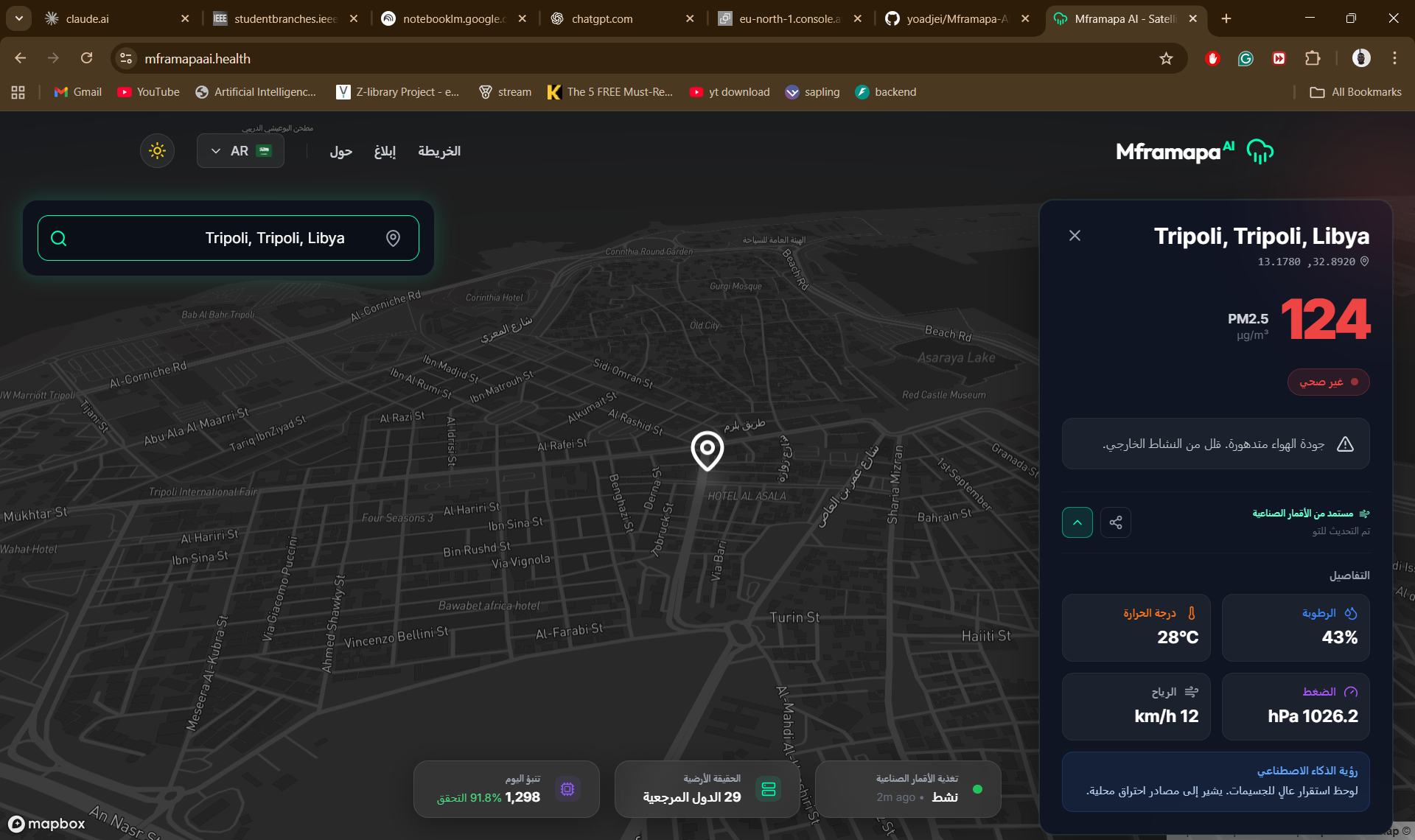
Interface
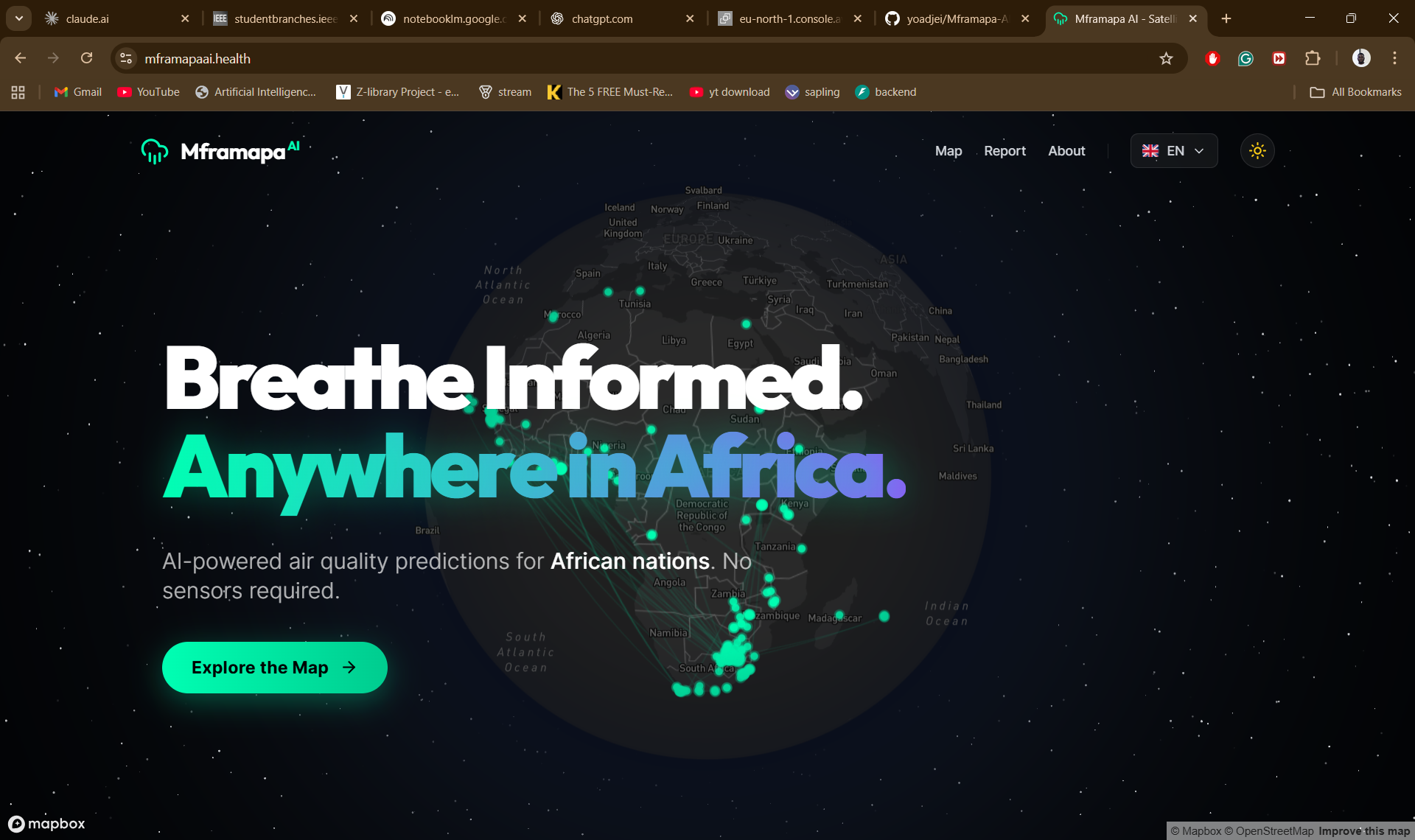
Inspiration
Air pollution kills more people in Africa than malaria, yet less than 1% of the continent has real-time PM2.5 monitoring. Ground stations cost $15,000+ each and need constant maintenance. I wanted to find out: can we predict air quality using satellite data instead of building expensive infrastructure?
What it does
Mframapa AI is a virtual air quality station. Enter any coordinates in Africa and get an instant PM2.5 prediction with health advice in 28 local languages. No hardware required.
How we built it
Data Pipeline:
- Pulled PM2.5 ground truth from OpenAQ (29 African countries)
- Downloaded satellite data from Copernicus ERA5: NO₂, aerosol optical thickness, planetary boundary layer height, humidity, wind vectors
- Aligned satellite observations with ground station timestamps
- Engineered 20 features including cyclical time encoding and Harmattan season flag (Dec-Feb dust events)
Model:
- XGBoost regressor trained on Google Colab T4 GPU
- 3000 boosting rounds with early stopping
- R² = 0.73, ~78% AQI category accuracy
Deployment:
- FastAPI backend on AWS EC2
- React + Vite frontend on Vercel
- SQLite for crowdsourced reports
- Gemini Flash 2.0 for 28 African language translations
Challenges we ran into
- Data alignment: Syncing sparse ground station readings with satellite overpasses was harder than training the model itself
- Memory constraints: The 465MB XGBoost model needed lazy loading to fit in memory
- Feature engineering: Finding satellite variables that correlate with PM2.5 took experimentation—planetary boundary layer height and wind vectors ended up being crucial
Accomplishments that we're proud of
- Trained ML model on satellite data from 29 African countries with R² = 0.73
- Deployed production system with 99%+ uptime
- 28 African languages so health advice is actually accessible
- Real-time predictions for any coordinate in Africa
What we learned
- Satellite data can fill monitoring gaps when ground infrastructure isn't feasible
- Feature engineering matters more than model architecture for tabular data
- Accessibility (multi-language support) is essential
What's next for 404
- Integrate live Sentinel-5P API for real-time NO₂
- Retrain model monthly with new ground truth data
- Add 7-day air quality forecasting
- Mobile app for offline access
- Partner with African health ministries for alerts

Log in or sign up for Devpost to join the conversation.