-
-
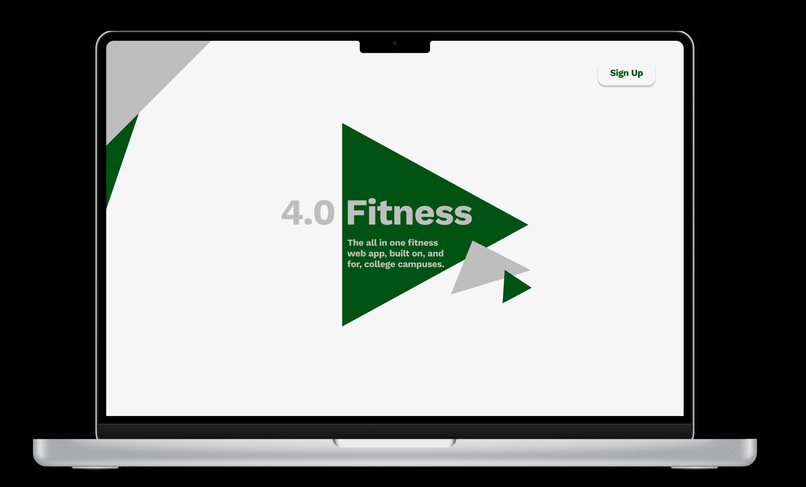
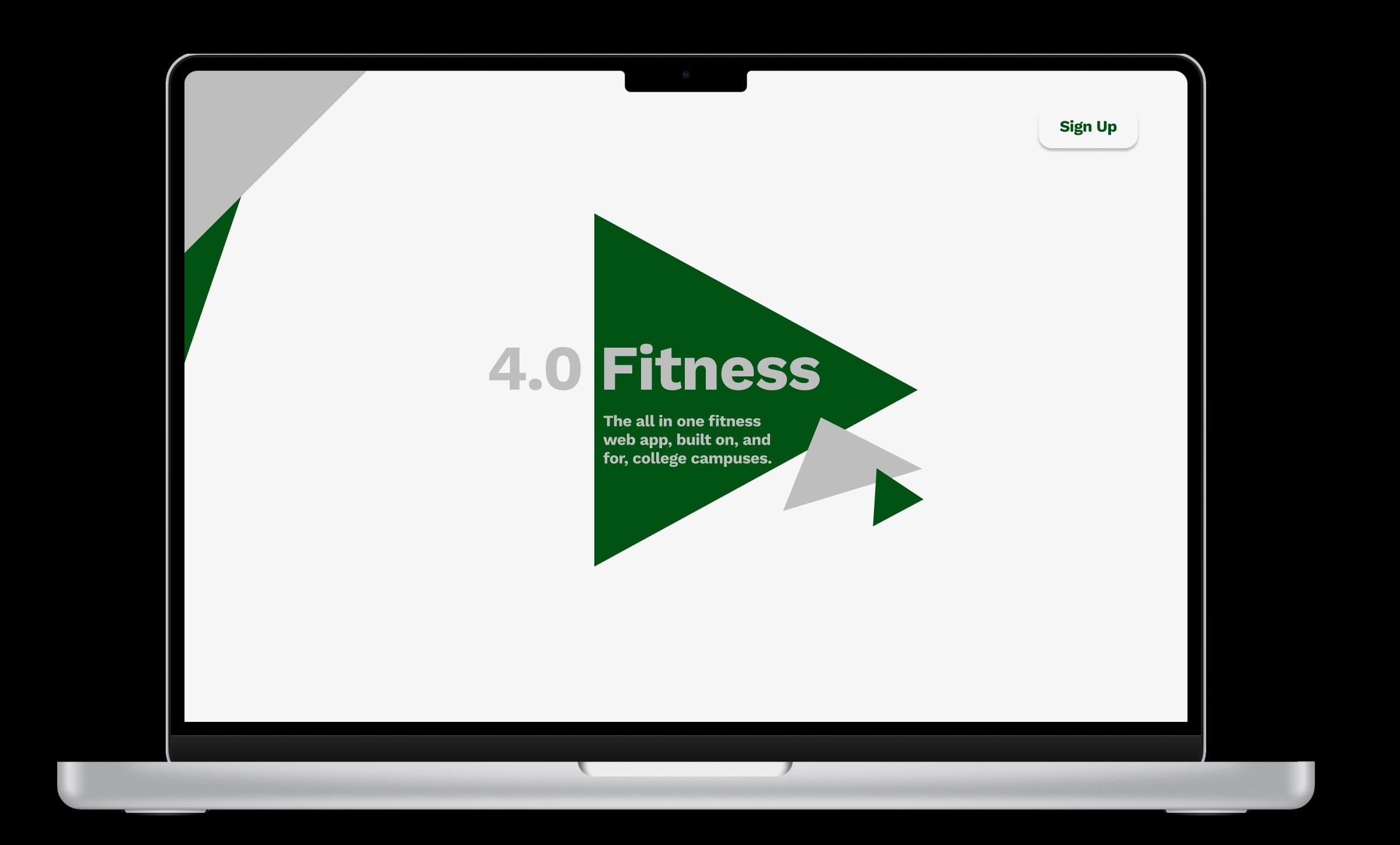
Home Page
-
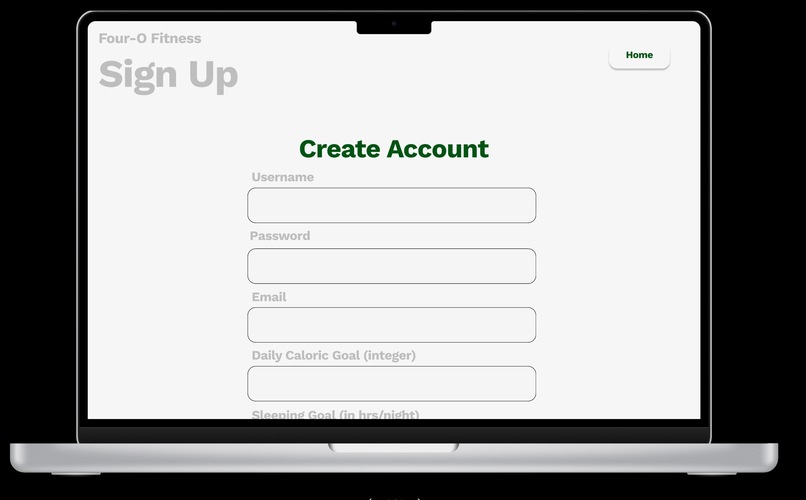
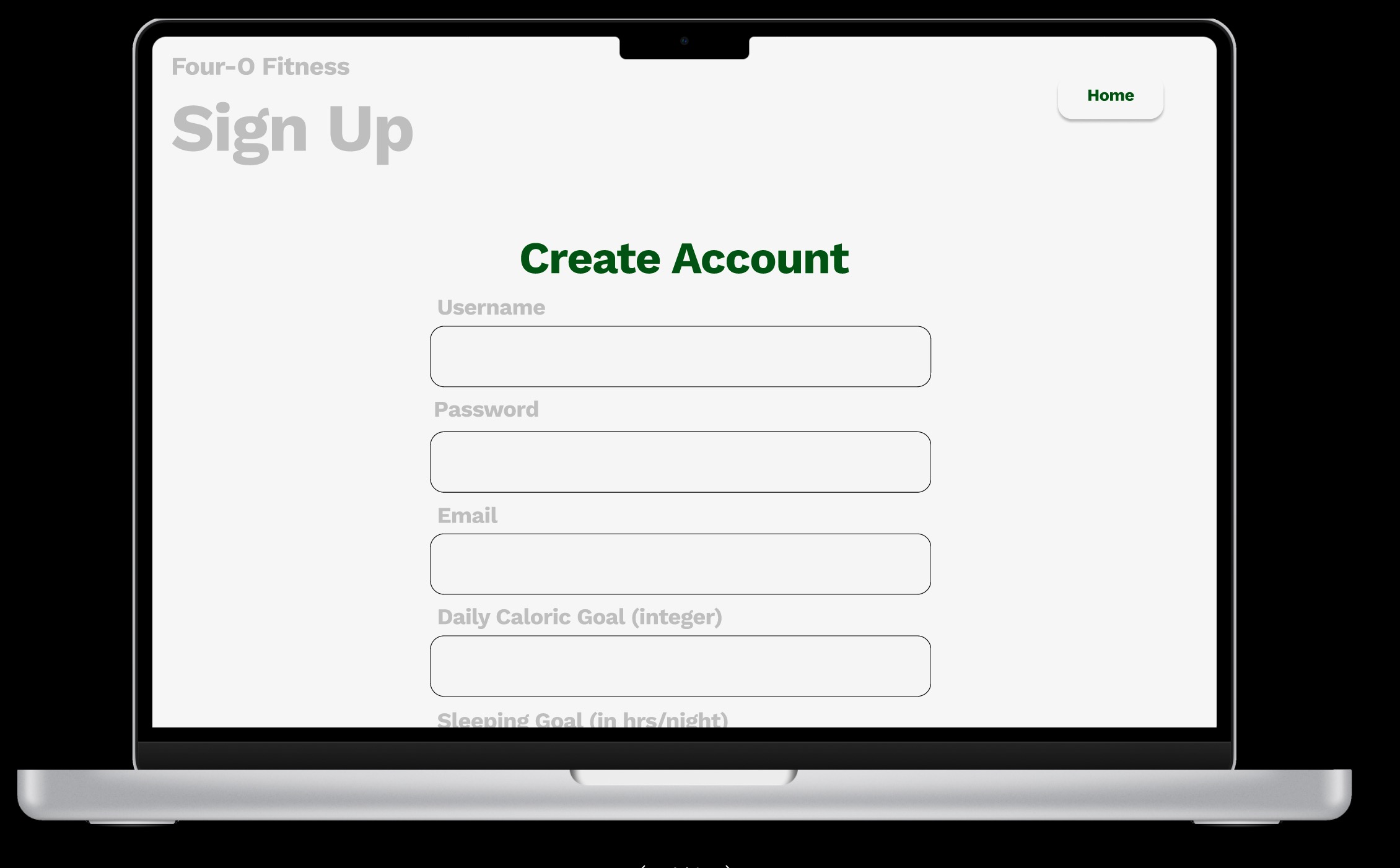
Sign Up Page
-
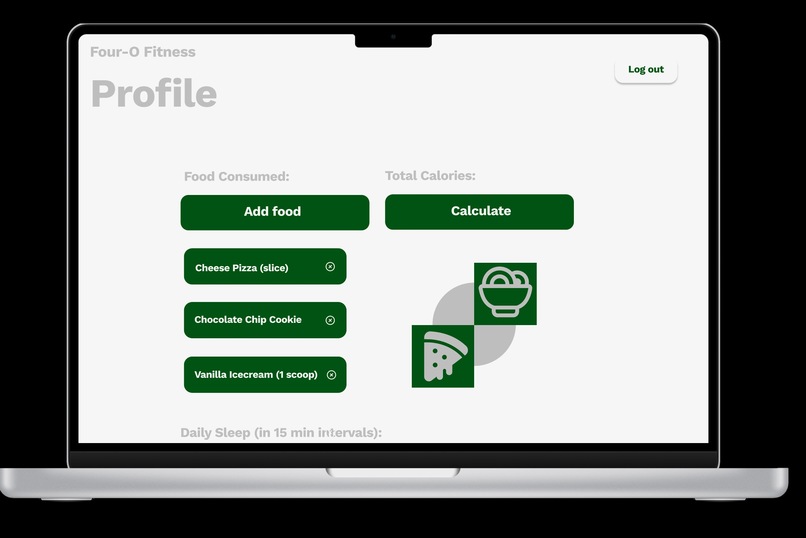
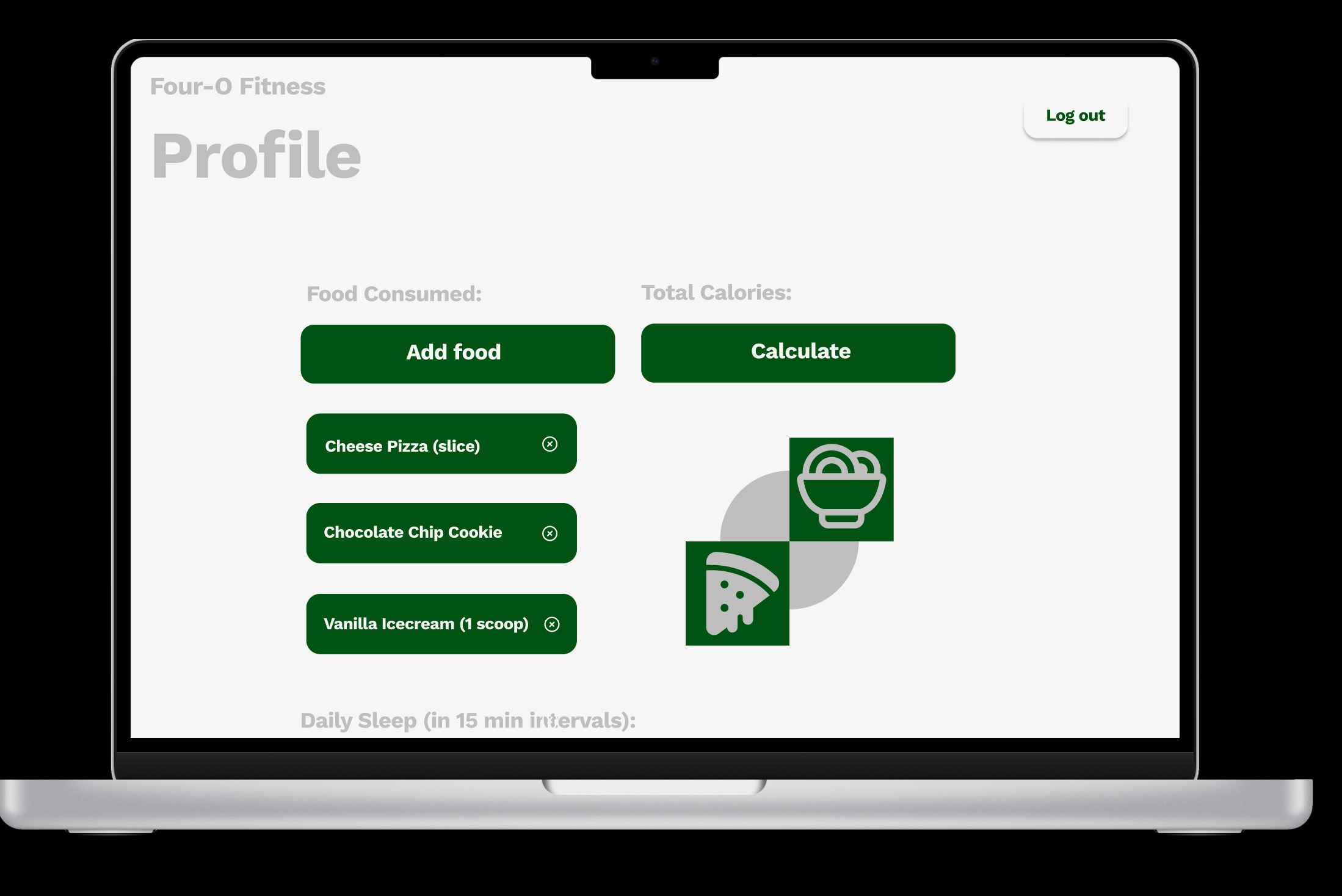
Profile Page
-
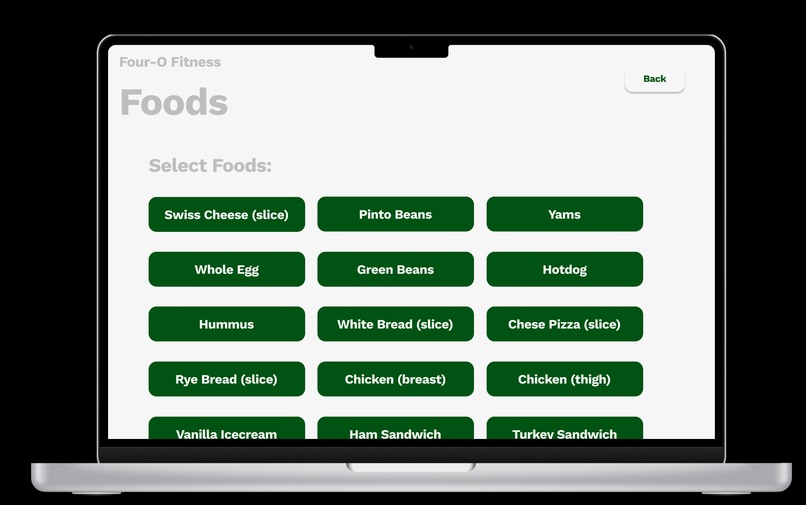
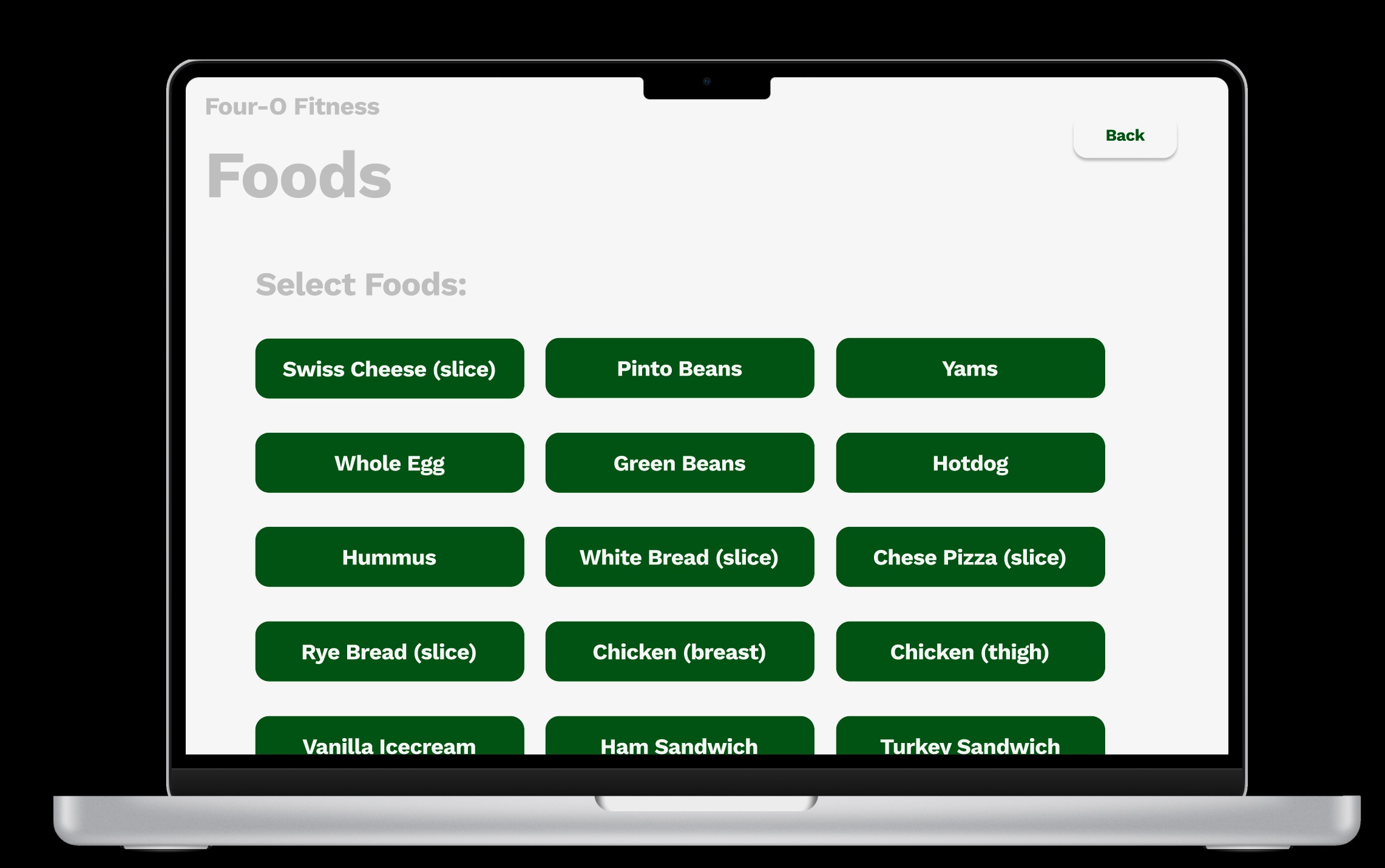
Foods Page
Inspiration
As Dartmouth students, our location in the Upper Valley provides ample proximity to beautiful hikes, forestry, and New England scenery. However, for individuals interested in fitness, body-building, or even just their overall physical and mental well-being, the resources can at times feel limited. Buffet-style dining halls, lack of nutritional information, and limited dining options on college campuses only serve to exacerbate these problems.
This is why we built Four-O Fitness. The all-in-one fitness web app, is built on, and for, college campuses.
What it does
Four-O has three main components, eating, fitness, and sleeping. All three are aimed at providing users the ability to build, and track, a balanced lifestyle as they navigate the complexity that is college life in the modern-day. This includes providing socially geared incentives to meet wellness goals, a comprehensive calorie calculator, personal sleep cycle tracking, and daily physical activity monitoring; all of these capabilities are presented in a user-friendly interface.
How We Built It
We built mock-ups of our design in Figma and produced a minimum viable product of our application using Flask, HTML, Javascript, CSS, and a Firebase backend for persistent storage. We also made heavy use of the Google Cloud Platforms for deployment.
For source control, we used git and Github. For scraping, we use Selenium and BeautifulSoup.
Challenges We Ran into
Our team comes from a very diverse background, with three of our team members being beginner programmers who have only taken COSC 1 or COSC 10. Coordinating this diversity of experience, and learning how to leverage our strengths and perspectives was definitely a learning process. However, we believe this process made our project all the more rewarding!
In order to properly get the Dartmouth Dining data necessary for our food data information, we had to parse Dartmouth Dining’s single-page application, a task that proved to be incredibly challenging. Because the menu is a dynamic website, the nutritional data was hidden behind clicks. Instead, in our MVP build, we parsed user text input about what they ate and made external API calls to collect nutritional information based on their input.
What We Learned
Because of our team’s diverse levels of experience, a majority of our team members had never used Figma, Flask, Firebase, HTML, Javascript, CSS, and Beautiful Soup. HackDartmouth, therefore, challenged our team to expand our tech literacy and pushed many of us out of our academic comfort zone.
Accomplishments We’re Proud Of
We’re extremely proud of our ability to both conceptualize, and put into reality, our idea in such a short time frame! Additionally, we were able to overcome many obstacles throughout the process and deliver. The majority of our team has never taken a CS class past CS10.
What’s Next
In future iterations, we plan on requesting access to the nutritional data on Dartmouth Dining’s various locations, in order to provide the most accurate calorie and macronutrient tracking capabilities for college students. Furthermore, considering a balanced lifestyle is something college students crave on campuses all around the country. Four-O Fitness has therefore huge potential to expand this process beyond the confines of Dartmouth, and provide wellness data and tracking specific to a variety of other institutions.
We also hope to further the social media aspects of the app, allowing students to add friends and lifting partners into groups to hold each other accountable. The scoring system is a preliminary method of measuring “experience points” for a user to measure their adherence to fitness goals.
Finally, we would hope to add resources that take into account wellness, such as meditation and a more developed sleep tracker, as well as provide resources for students with eating disorders.
Our application is visible here:
https://darthacks22.uk.r.appspot.com/


Log in or sign up for Devpost to join the conversation.