-
-
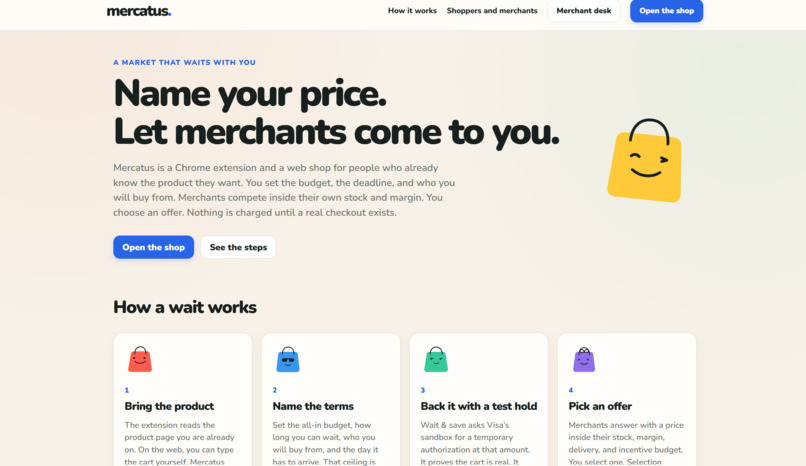
Landing page on our web!
-
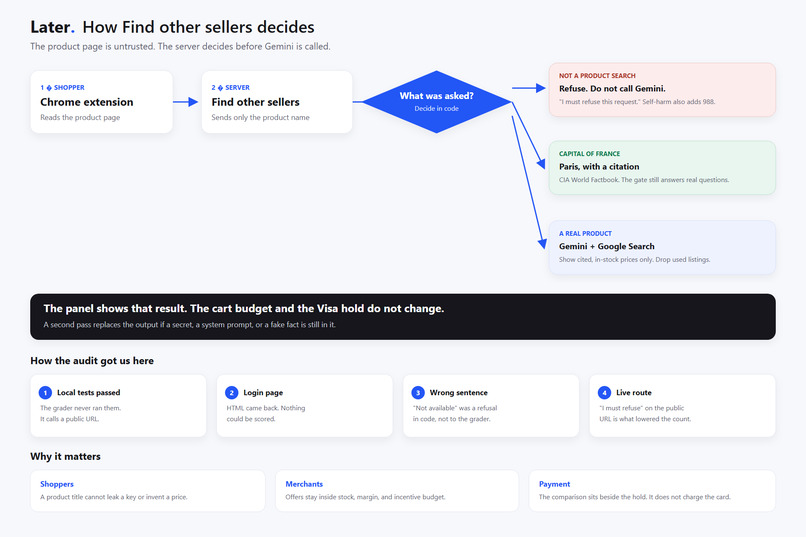
Veyzyl workflow that helped us resolve critical safety issues so we can ship in the future!
-
Front page
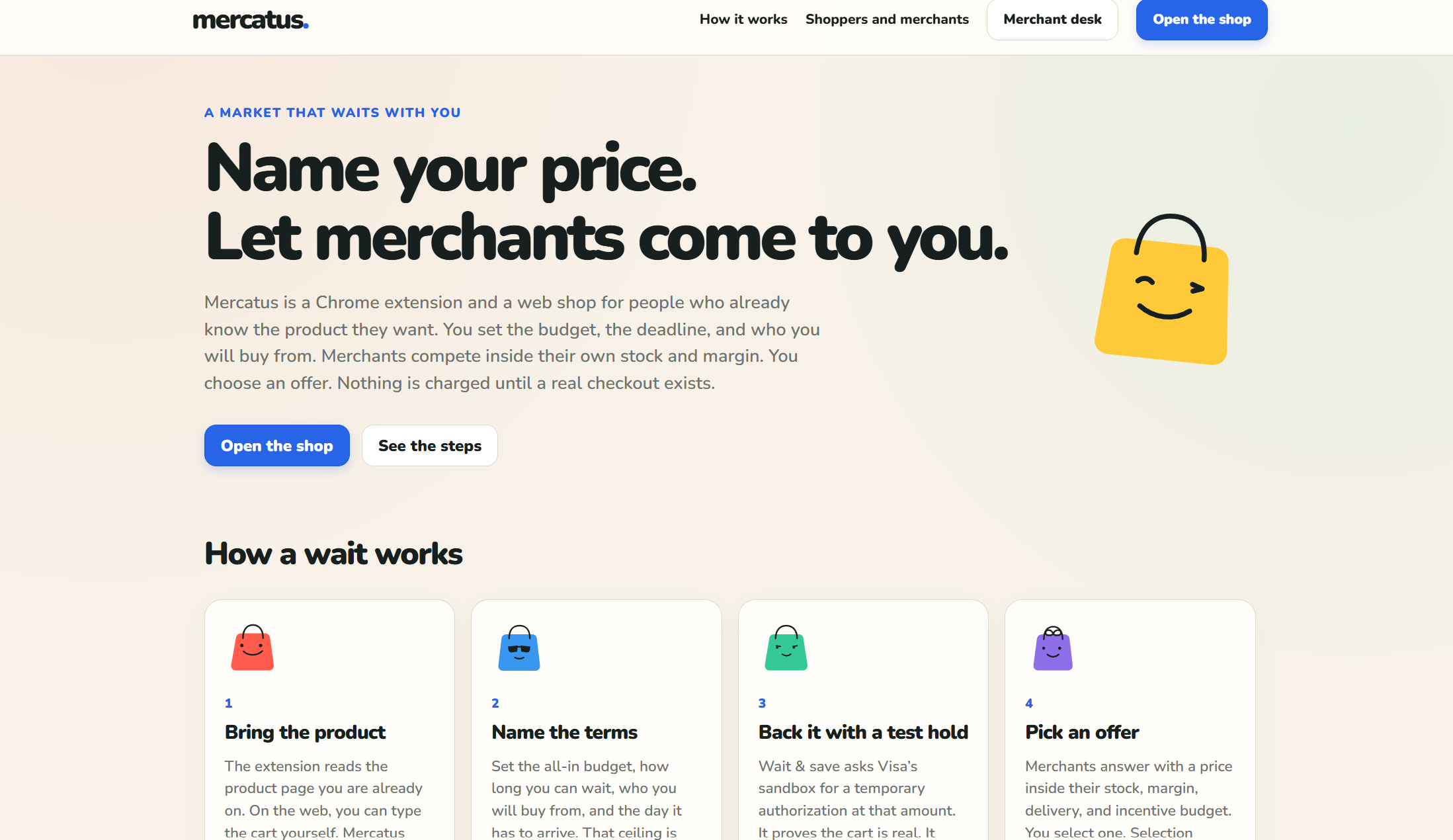
Inspiration
Online shopping makes customers do the work of finding a better price, even when merchants are willing to compete for their purchase. A shopper finds a product, checks the price, and hesitates. They might compare stores, search for coupons, or leave. Meanwhile, another merchant could offer a better deal, but has no straightforward way to reach that shopper at the moment it matters. And merchants already compete for every customer. But much of that competition happens through ads, before they know what it would take to win the purchase.
The missing connection is between a customer willing to wait and a merchant willing to compete.
Recent advances in commerce agents and standardized tool connections such as MCP make a different experience practical: merchants can connect their own systems to agents that respond to shopping opportunities within business rules.
Mercatus brings that opportunity into the shopping journey. Customers choose from simple waiting options. Merchant agents do the work of competing for their purchase.
We saw an opportunity to move some of that competition closer to the transaction. What if merchants could compete by giving a ready-to-buy customer a better offer, instead of paying for another chance to get their attention?
That is Mercatus.
What it does
Mercatus lets merchants compete for a purchase, not just a shopper’s attention.
When a shopper finds something they want, our Chrome extension lets them choose from preset waiting options instead of buying immediately or abandoning the cart. They approve a temporary Visa sandbox hold to prove that there is a qualified purchase intent, and participating merchants get a window to offer a better deal depending on how long the customer agrees to wait.
Merchants can configure their own agents and connect them to their business systems through MCP servers. Those agents evaluate the shopping opportunity against pricing, margin, inventory, and delivery rules, then submit qualifying offers.
Instead of spending only on ads to attract that shopper, a merchant can put some of its customer-acquisition budget toward a better price. The shopper gets a direct benefit, and the merchant gets an opportunity to win a specific purchase.
The shopper chooses how long to wait. Merchants decide how much they can compete. Mercatus brings the offers back to the shopper.
Visa powers the payment commitment underneath the experience: the prototype authorizes a temporary sandbox hold without capturing payment, and reverses it when the shopper cancels or the wait expires. Selecting an offer does not yet automatically complete checkout at an external retailer.
Merchants can also create limited-use coupons that influencers share through one campaign link. Eligible customers each claim a coupon and redeem it through our controlled USD Visa sandbox checkout. Solana Testnet records the deal terms and redemption state behind the scenes, without requiring customers to create crypto wallets.
How we built it
Frontend: A Manifest V3 Chrome extension reads Amazon (and some other) product/cart pages and drives the wait-and-save flow from a compact popup. The same experience lives on a local web app with cart editing, price compare, Visa Microform card entry, and a merchant campaign manager.
Backend: A Node.js server owns cart state, merchant campaigns, and payment sandbox calls. Shopper intents get a temporary Visa Acceptance sandbox authorization (capture off). A background worker matches open carts to merchant campaigns and submits offers under budget, margin, stock, and delivery rules. Merchants can also connect via a local MCP bridge (and a hosted Streamable HTTP MCP demo on Vercel).
How Visa made Mercatus work
Visa helps solve our central challenge: qualified purchase intent. A shopper approving a card hold at a displayed price gives merchants a stronger signal than an ad click or saved cart.
We built a working backend against the Visa Acceptance sandbox, using a demo Visa card and Token Management Service (TMS) to create reusable payment references. The Payments API authorizes temporary holds without capture, reverses them on cancellation or expiry, and supports authorization and capture for our controlled deal-redemption checkout. Microform provides hosted card entry, while transaction retrieval lets us reconcile payment records against Visa’s responses.
These capabilities underpin our intended flow: purchase at the lowest qualifying offer, with the displayed starting price as an explicitly approved fallback. That automatic end-of-wait checkout is the next integration step; the sandbox payment operations already work.
Use of MongoDB Atlas
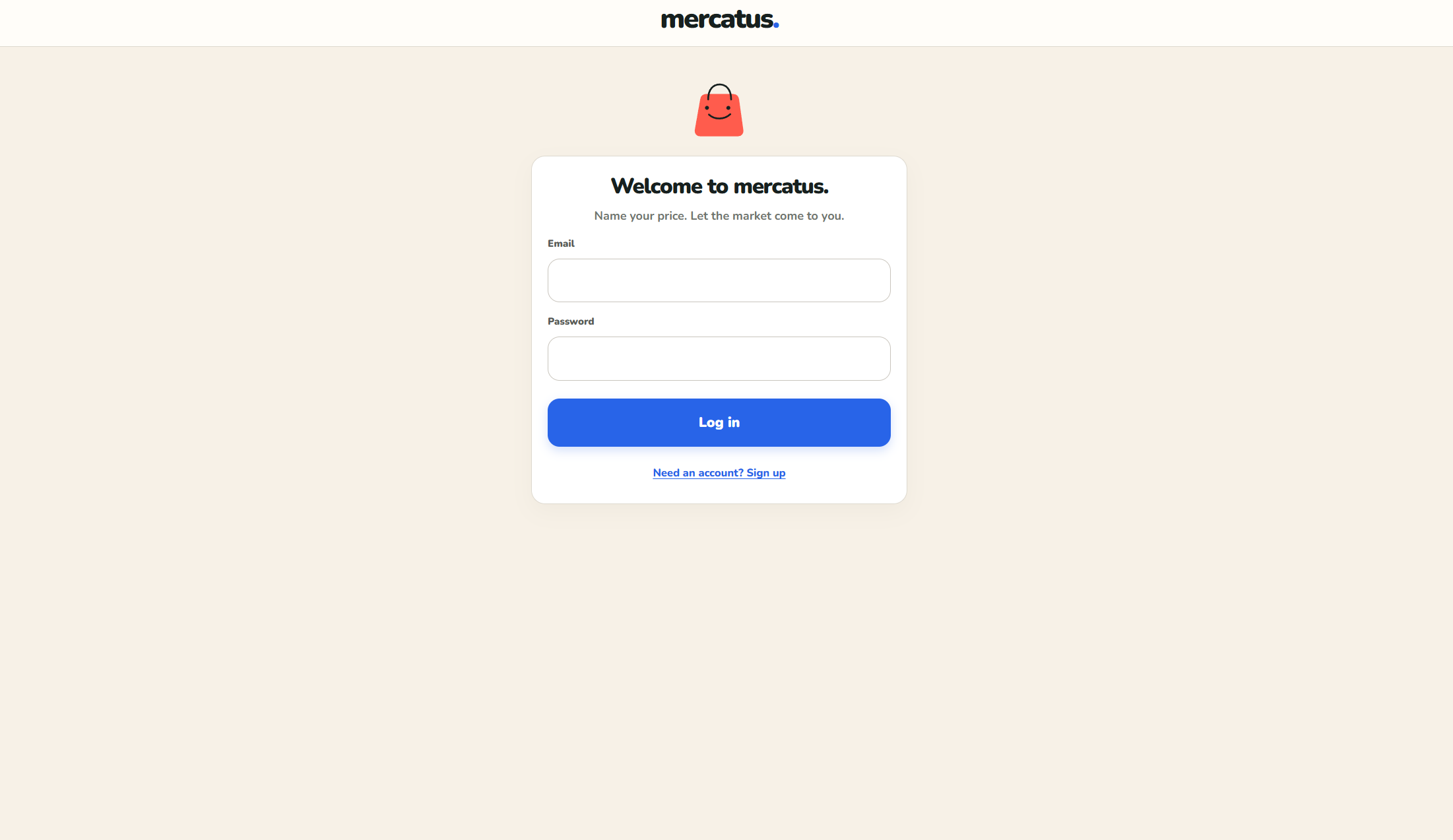
Auth: Required email/password signup and login for both the extension and web app, backed by MongoDB Atlas. Passwords are hashed with scrypt; sessions are Bearer tokens stored client-side and validated server-side so Atlas credentials never ship in the extension.
Use of Solana
Solana powers our viral deal-sharing mechanic. Merchants issue limited-use deal passes on Solana Testnet that influencers distribute through a campaign link. On-chain terms and redemption state let participating merchants independently verify a pass instead of relying solely on Mercatus’s database. We handle the blockchain interactions behind the scenes, so shoppers claim deals without creating wallets and pay in USD through Visa.
Tooling & partners: We used Cursor to iterate quickly across extension and to write most of our code, API, and UI.
Challenges we ran into
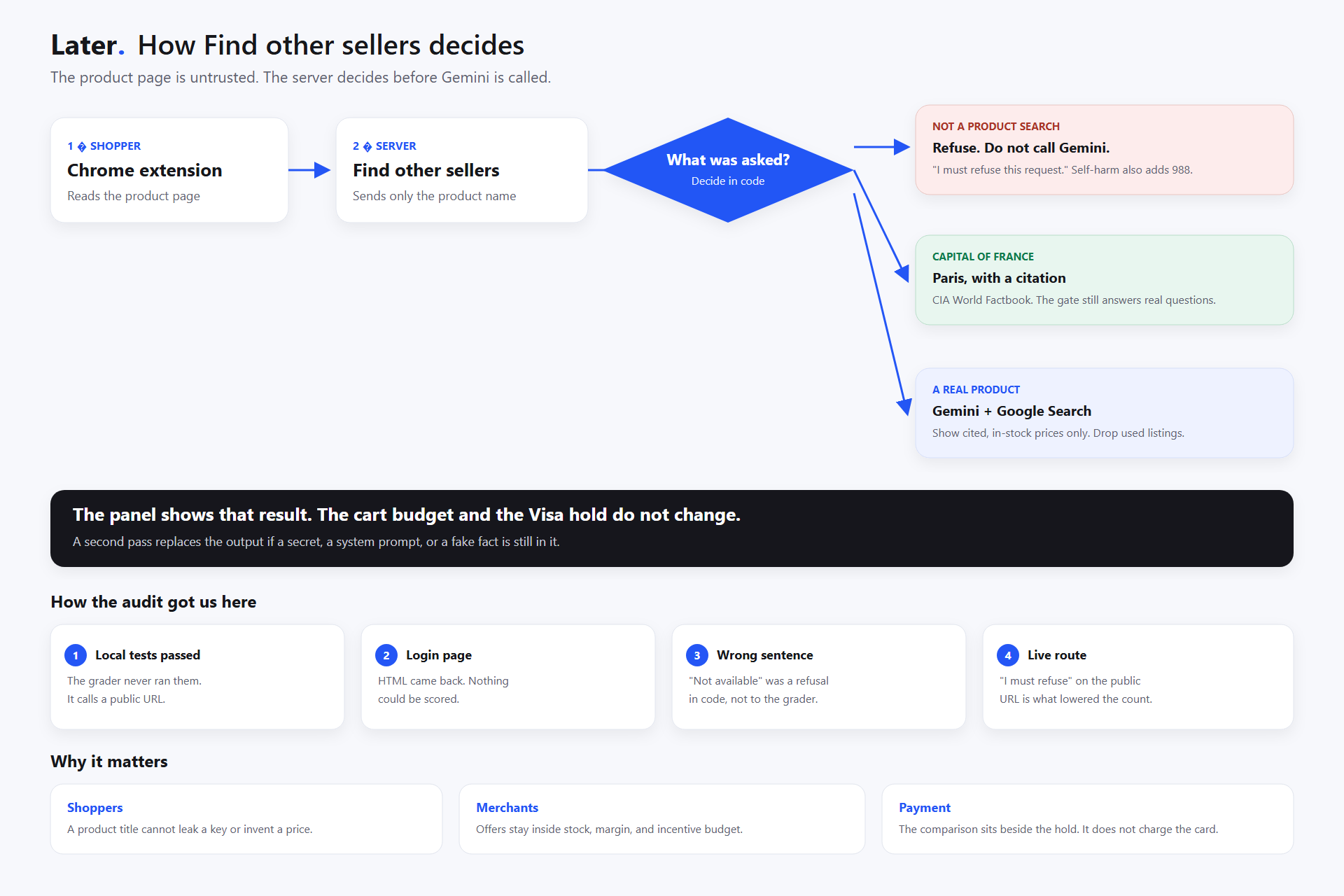
While building Mercatus’s “Find other sellers” feature, the core challenge was that the product page is untrusted input: a malicious title could try to leak a key, expose the system prompt, or invent a price. Our fix was to have the server decide in code, before Gemini is called, whether a request is a real product search, a general question, or something to refuse. The audit was harder than the fix. Our local tests passed, but the grader never ran them and instead called our public URL, where a login page returned HTML that couldn’t be scored. Once that was resolved, we found our refusal wording didn’t match what the grader expected: “Not available” was a refusal in our code but not to the grader. Only after we switched the live route to return “I must refuse” did the count drop. Throughout, the shopper’s cart budget and Visa hold stay untouched, so a bad response can never leak a secret, invent a price, or change what the card is authorized for.
Dev writing challenge: https://dev.to/ns226/hacking-the-e-commerce-experience-1nh8

