-
-
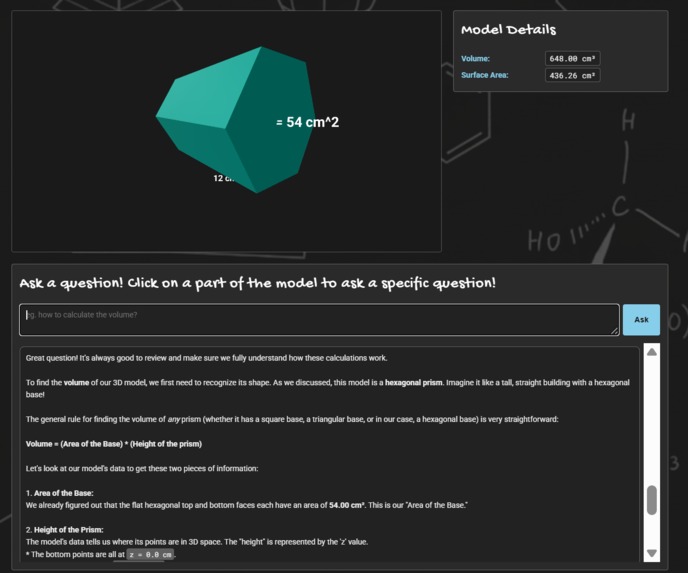
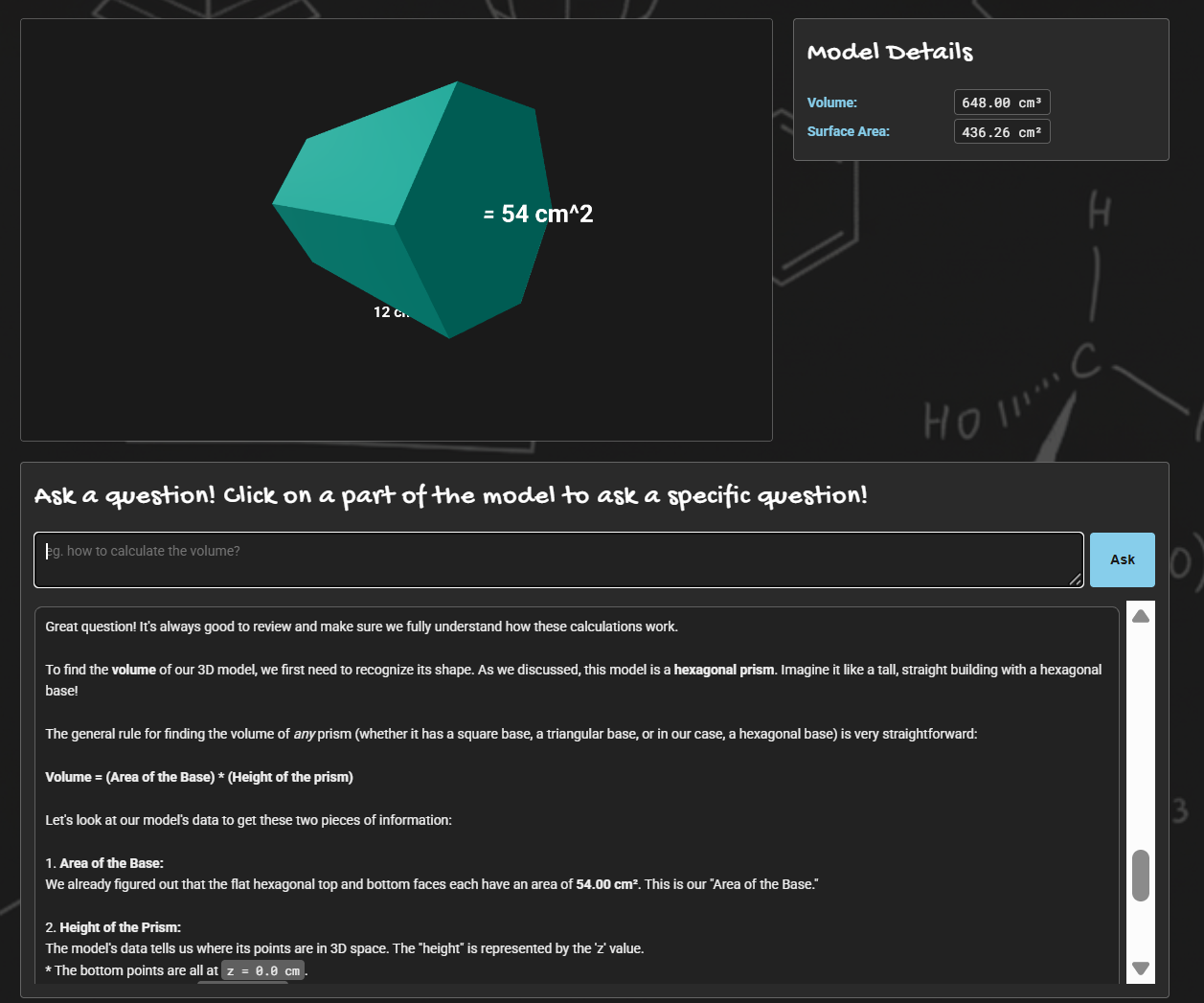
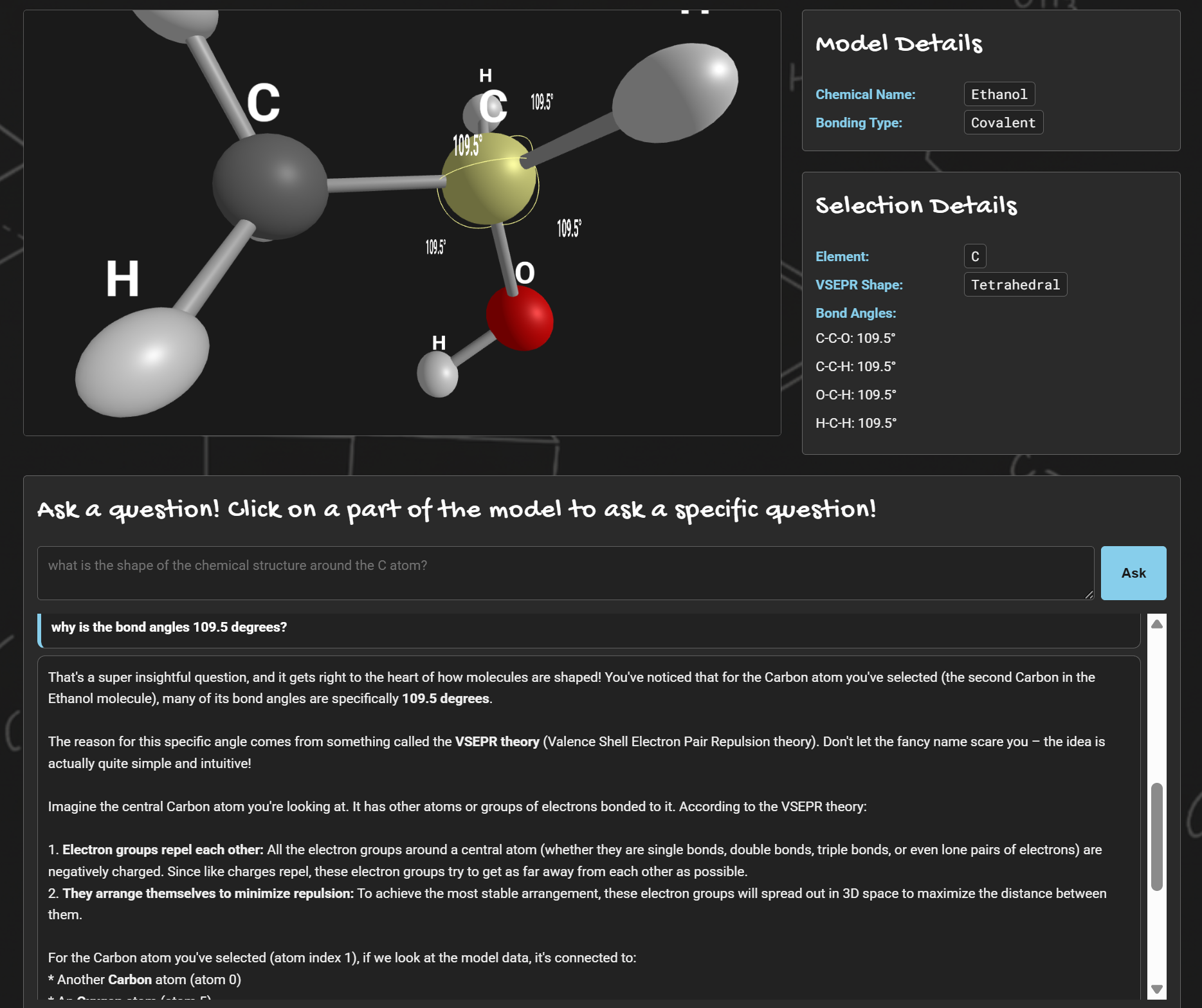
Geometry generator and a general question asked in chatbot
-
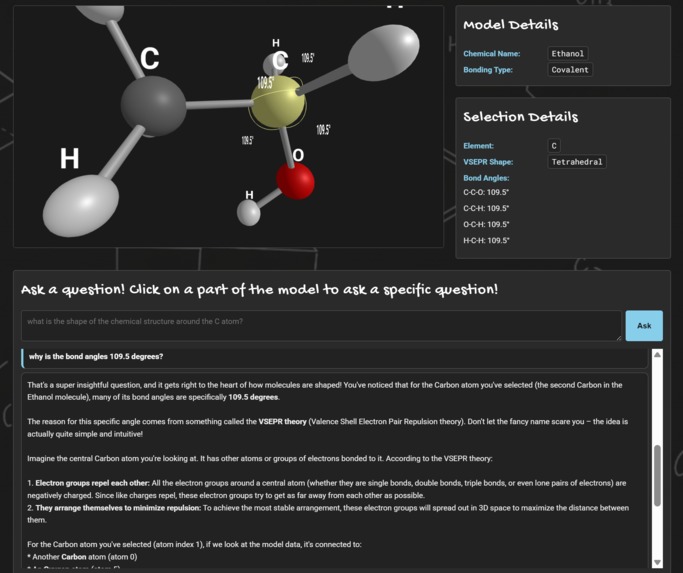
Chemistry model with highlighted atom and specific question and answer
-
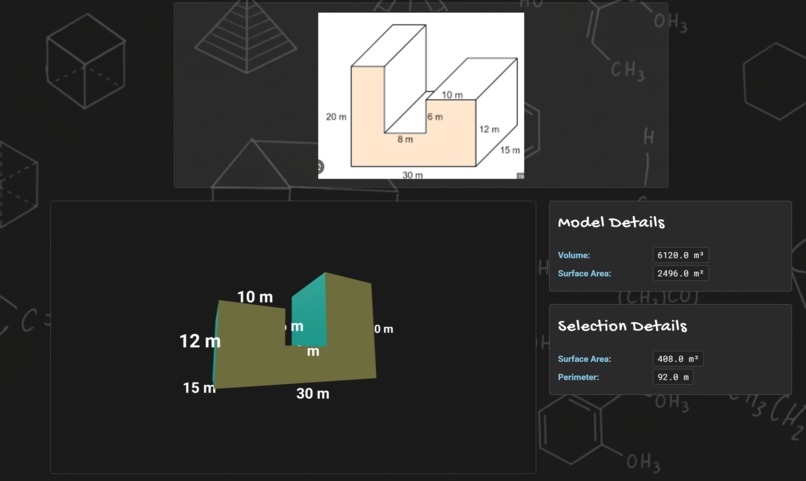
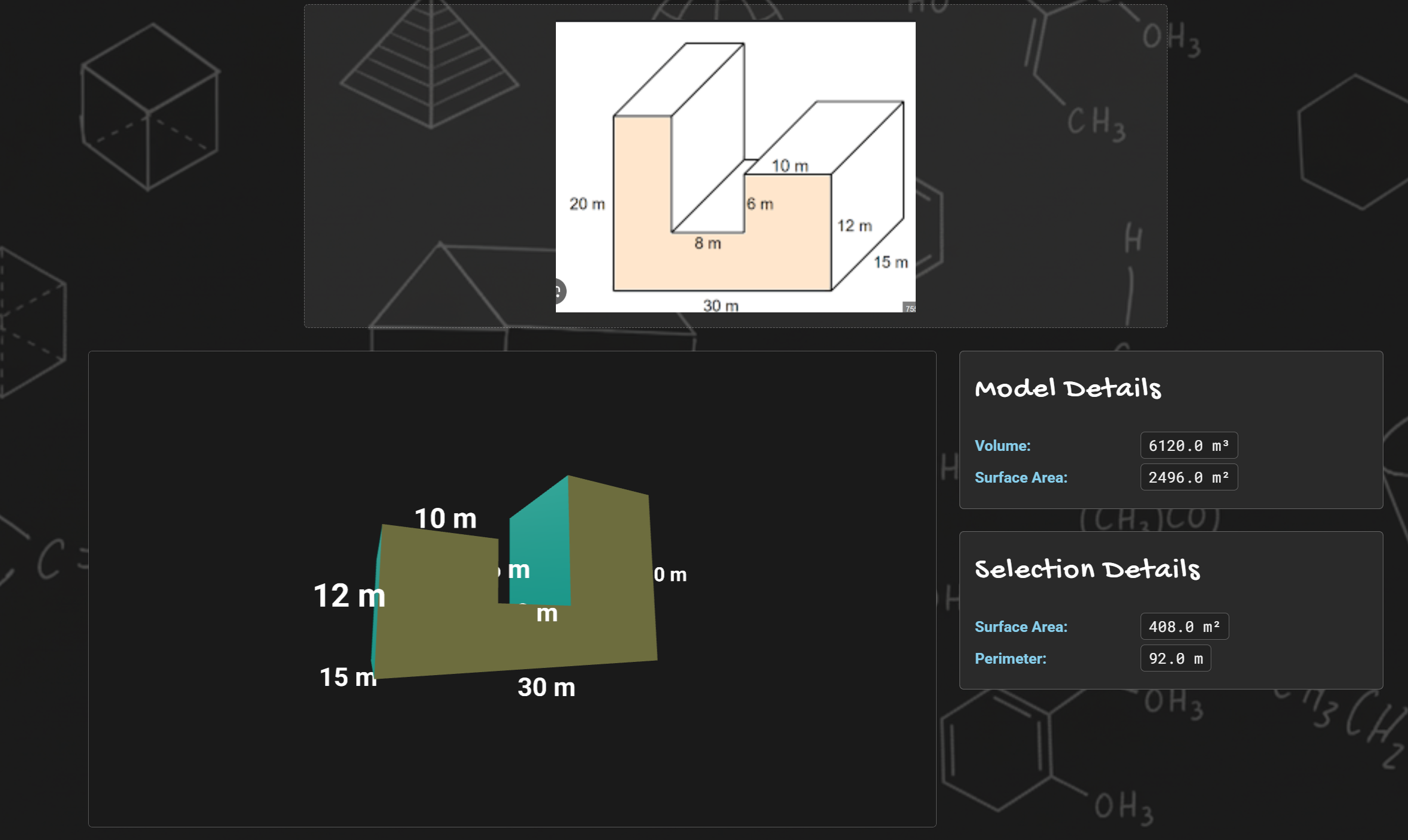
Geometry generator with a highlighted face
-
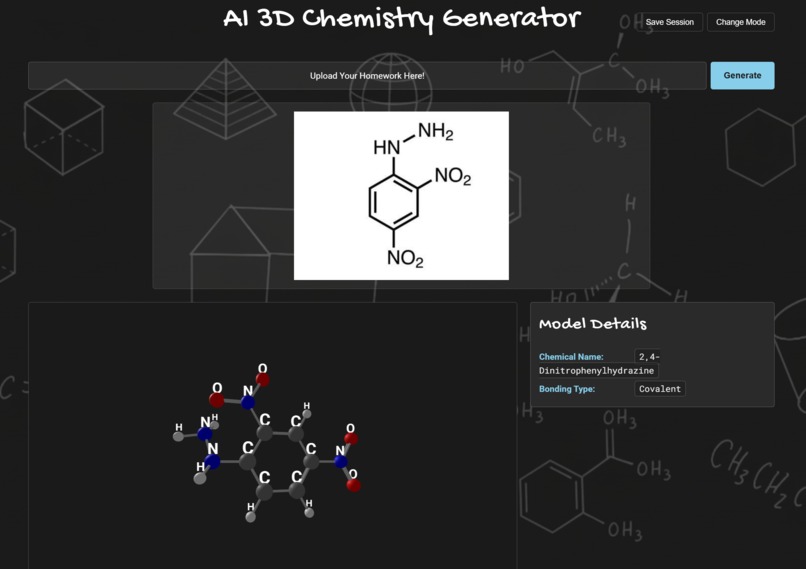
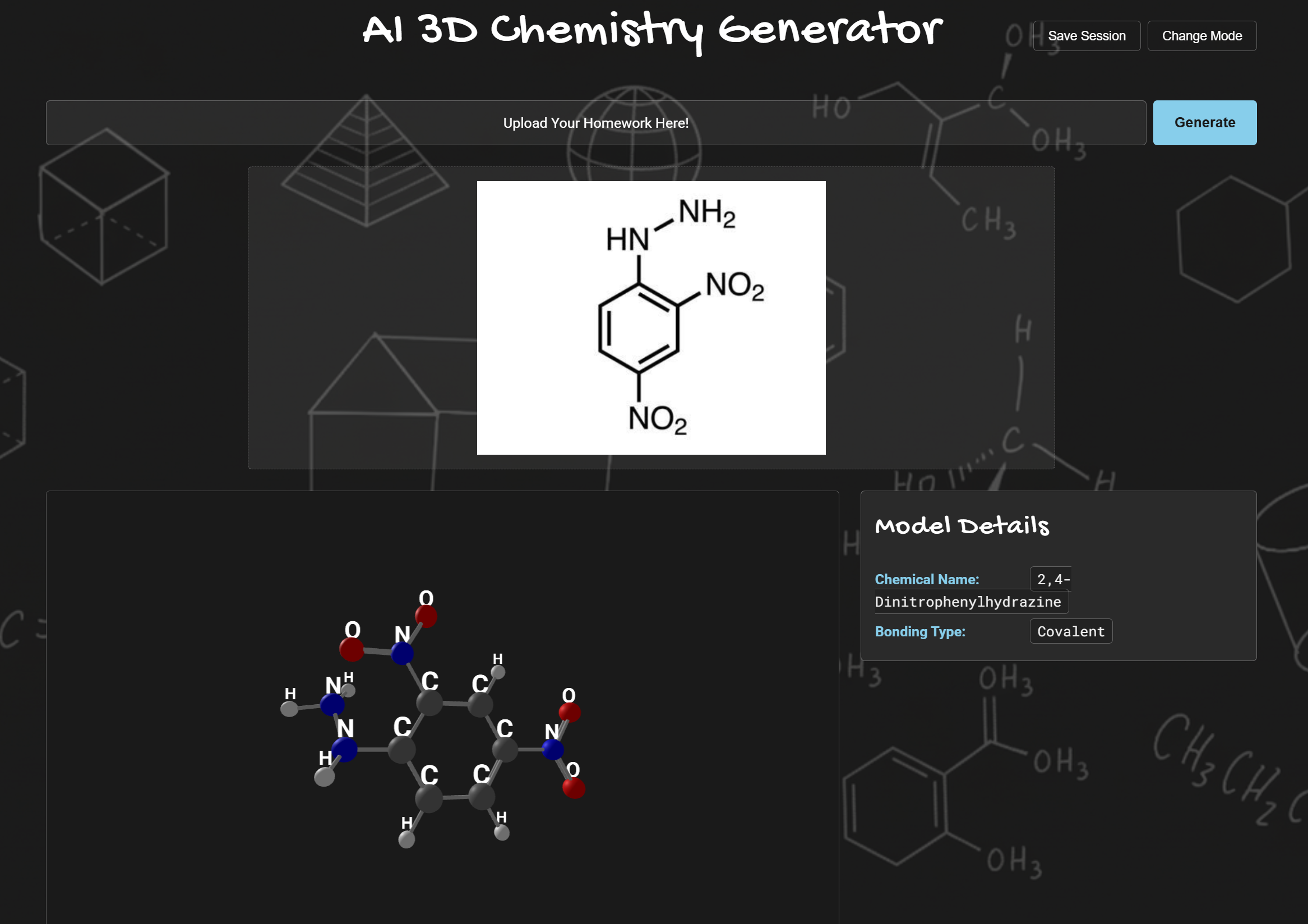
Chemistry model
-
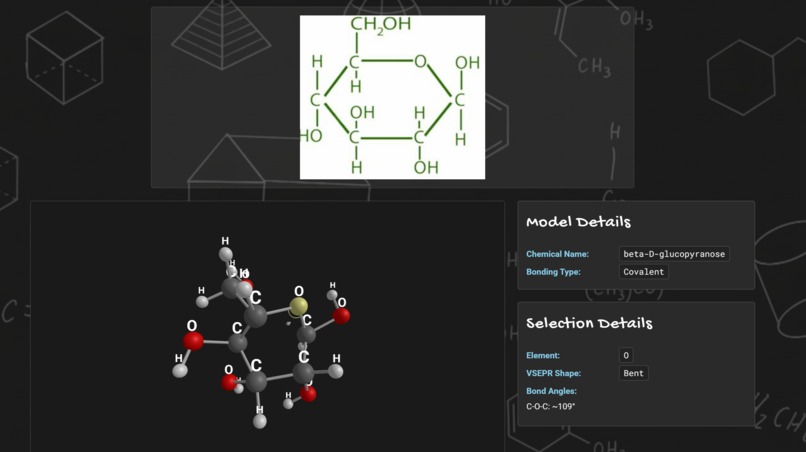
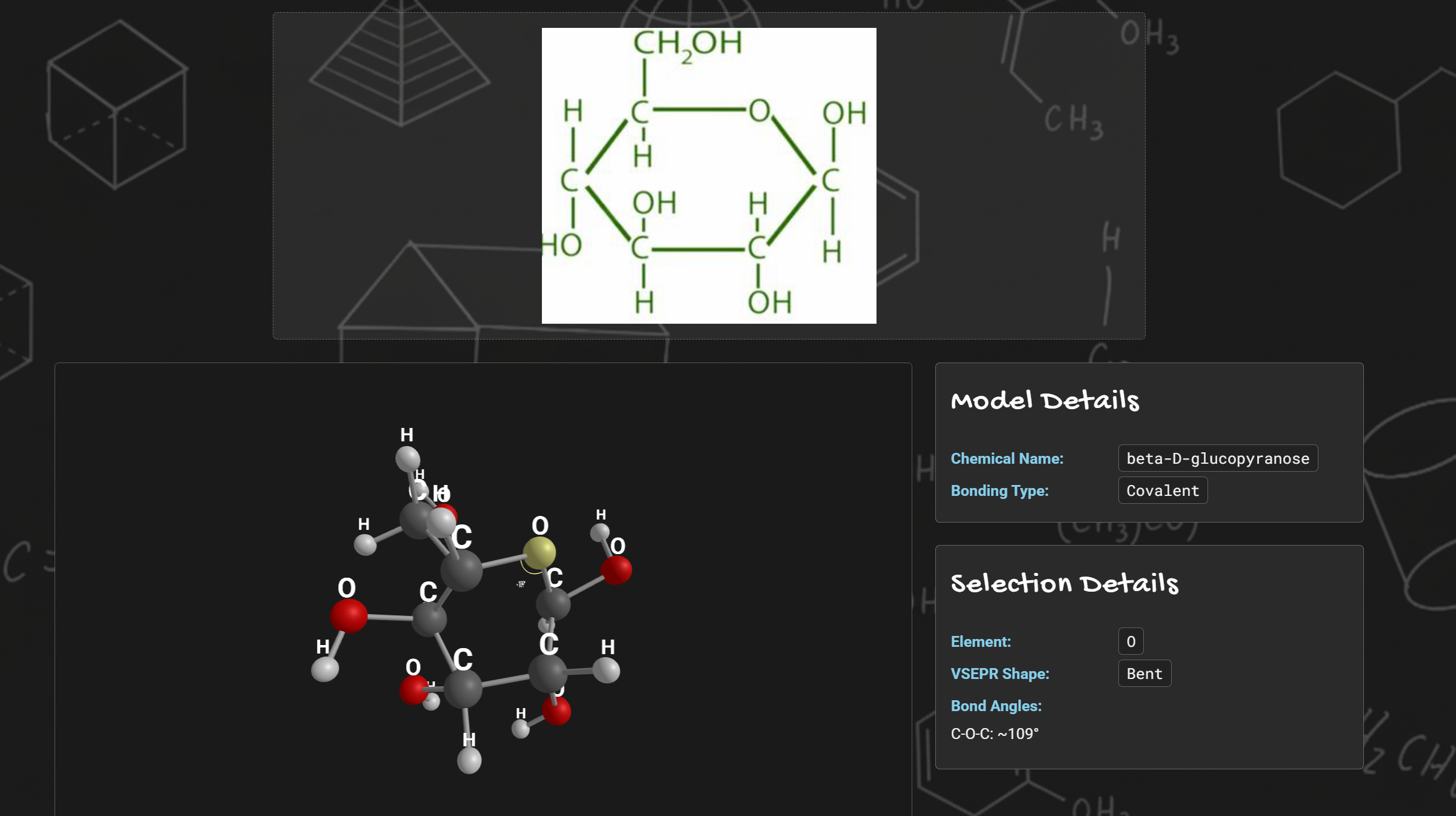
Chemistry model
-
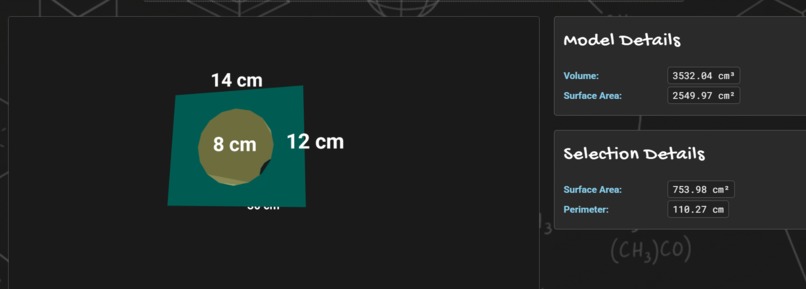
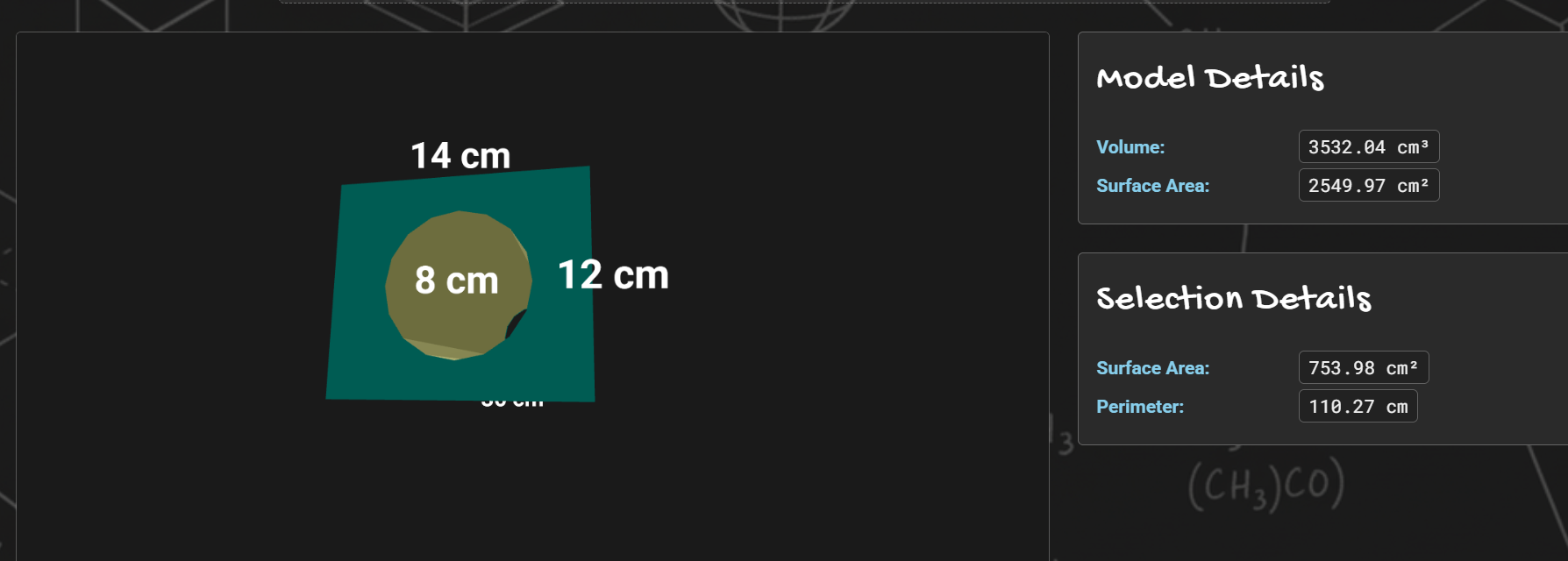
Geometry generator generating negative space
-
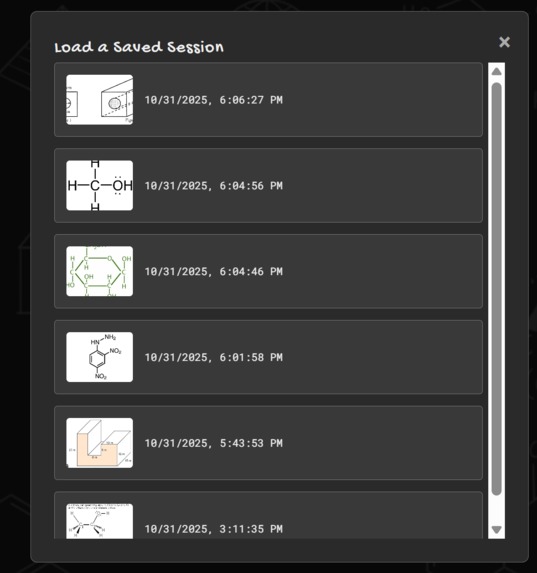
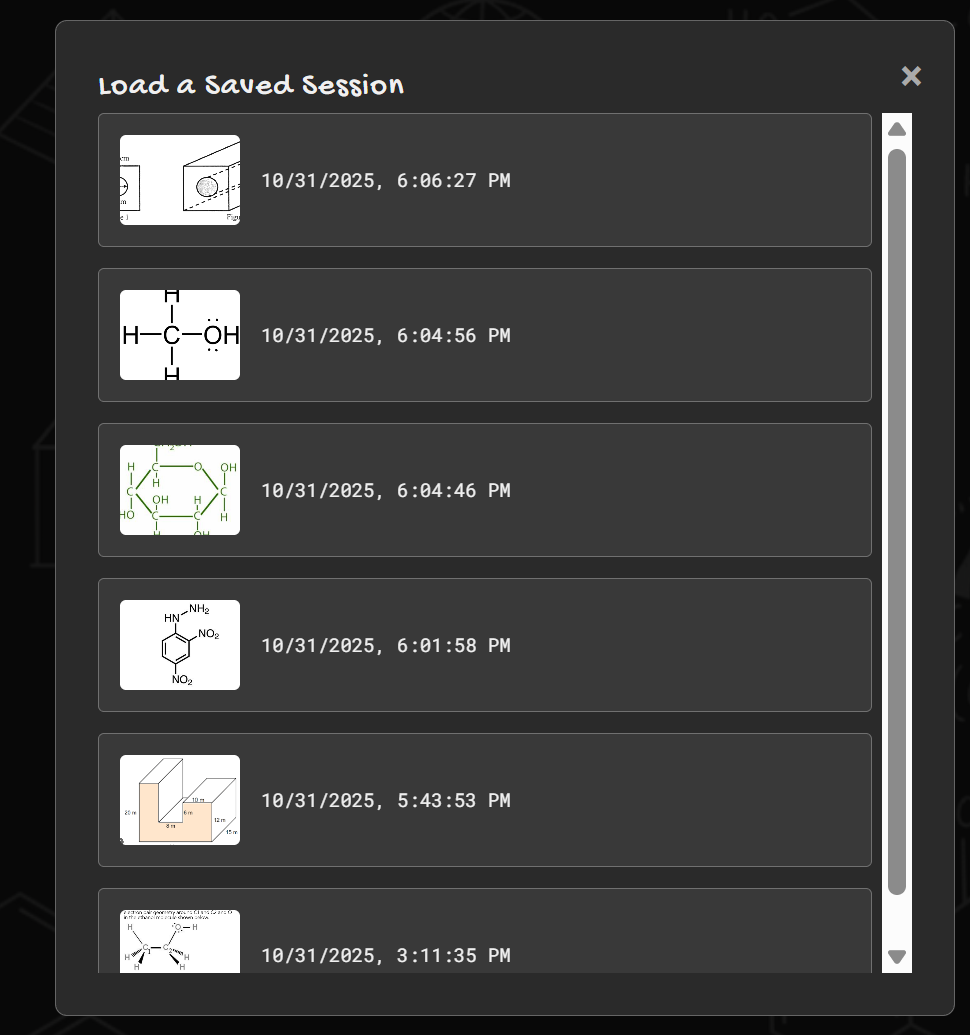
Saved sessions
Inspiration
After tutoring many primary and secondary school students, I realised a consistent problem when it comes to solving questions on volumetric shapes: many have difficulty visualising the 3D interpretation of these shapes when printed on 2D paper. The same problem occurred with my peers when we were studying chemical structure and geometry, such as with the VSEPR theory.
Current applications either only provide 2D representations or can generate 3D models without sufficient features to facilitate a student's education. I hope this web application will aid students worldwide struggling with their homework and learning, allowing them to gain an insightful understanding of mathematical and chemical geometry.
What It Does
This app allows students to upload a picture of their homework, either a 3D volumetric shape represented on 2D paper or a chemical structure or formula. The app utilises Gemini's multimodal AI to analyse the image and generate an interactive 3D model.
Technical details are displayed on the side of the model. The user can rotate and zoom in on the structure, click on specific parts to understand more detailed information, and use the integrated chatbot to further their understanding. The user can finally save their session if they ever need to go back to it again.
Unlike generic tools limited to known formulas or basic shapes, 3Space education is truly personalised. Our advanced AI analyses your uploaded image, whether it's a complicated, hand-drawn molecular diagram or an unconventional geometric solid, and replicates it with high fidelity, ensuring the 3D model is tailored to your homework.
How I Built It
Using Google AI Studio's user-friendly and highly capable web application, I started with the creation of the 2D-to-3D model generation. I then added educational features, such as technical details like volume and bond angles, and included a chatbot AI that references the model, and even the specific parts selected, to provide answers. I specifically prompted the code to ensure the content is understandable to secondary school students and not too technical.
Challenges I Ran Into
The greatest challenge was getting the AI to generate accurate models with reference to the geometric parameters provided in the image, as well as its own geometrical and chemical knowledge. A significant portion of my time was spent modifying the prompt given to the API to consider many factors, including non-basic shapes, "negative volume," and models viewed from an angle.
I overcame this by using Google AI Studio to understand what was happening in the code it generated for me, allowing me to devise solutions. For example, there was an issue where the bond angles on the chemical model were not positioned properly. I realised that rather than being a core accuracy error, the model was being generated on a nanometer, or atomic, scale, which increased accuracy errors. Hence, I prompted the AI to generate chemical models on a normal scale while keeping them in proportion relative to each other.
Accomplishments That I’m Proud Of
I am proud that the model has attained a much higher accuracy in its geometric modelling than ever before. It can now handle more complex shapes with accurate calculations, which is crucial for student understanding. The chatbot also significantly improved, transitioning from providing technical jargon that a computer understands to giving concise and simple explanations of chemical and mathematical concepts that a student and a layperson can comprehend. It was especially rewarding every step of the way when a feature worked exactly as I wanted it to.
What I Learned
I have learned how to productively prompt-code a web application and the specific language and tricks that allow me to code the app more precisely than I thought possible. Beyond the technical skills, this project taught me the true value of being resilient and thinking out of the box whenever I hit an obstacle. This really helped me in troubleshooting and creative problem-solving.
What's Next for 3Space Education
The accuracy of the model can be significantly improved if I can train it with homework from across different school levels and a variety of questions. If possible, I would like to include physics simulations. A user could upload a 2D setup of an experiment and bring it to life in 3D, allowing the app to calculate dynamics and forces and show the model interacting over a time frame.
Built With
- google-ai-studio
- prompt-ai-with-multimodal-input


Log in or sign up for Devpost to join the conversation.