-
-
3SCheck Product Thumnail
-
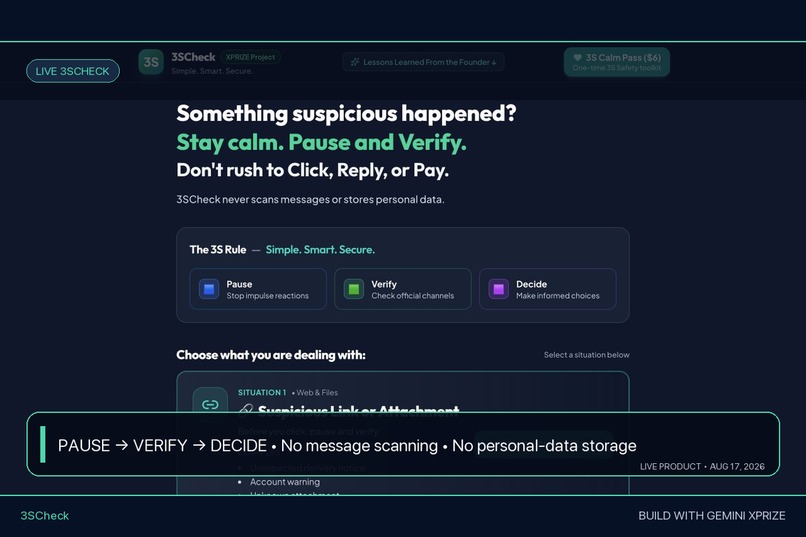
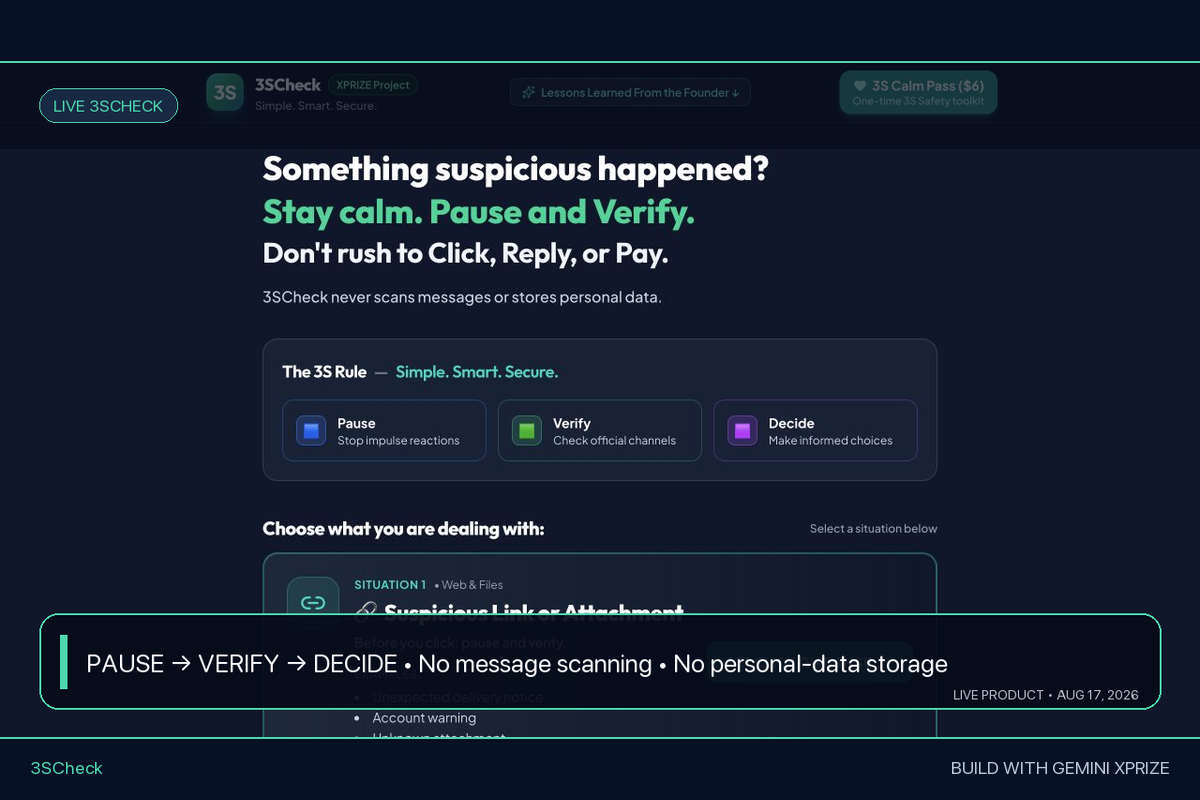
3SCheck Homepage
-
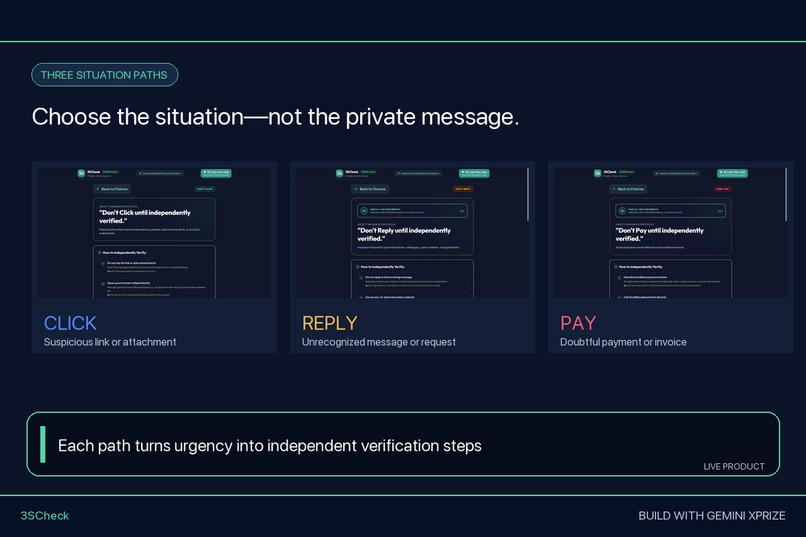
3 Suspicious Situations Homepaths
-
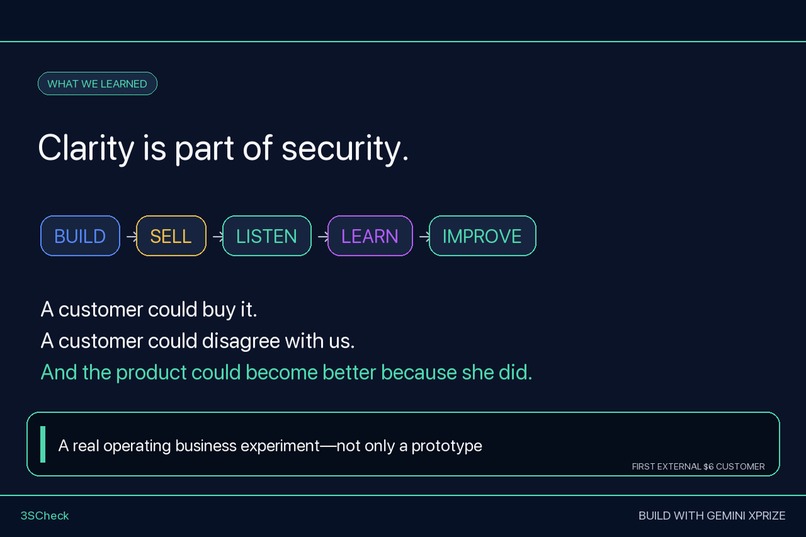
Clarity Is Part of Security
-
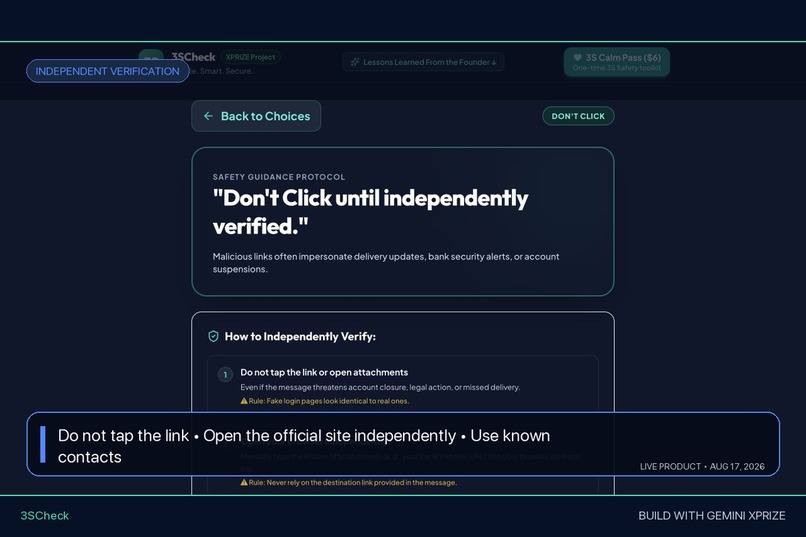
Independent Verification Guidance
-
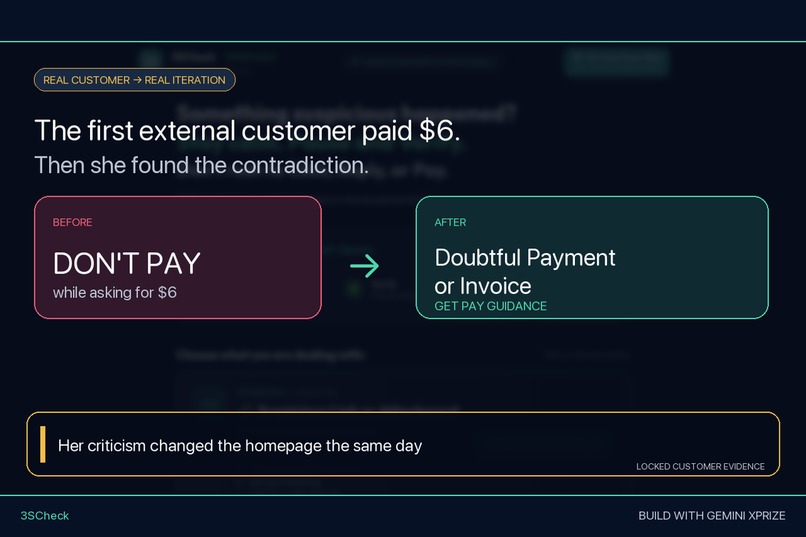
Customer Led Iteration
-
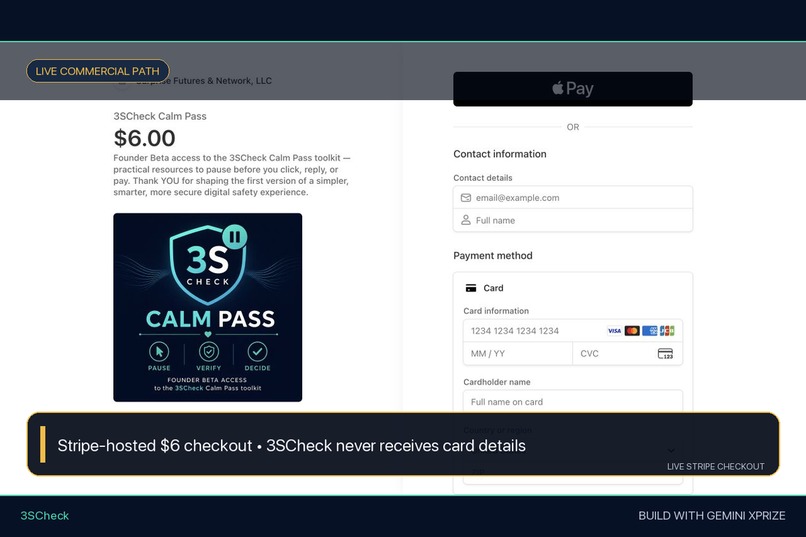
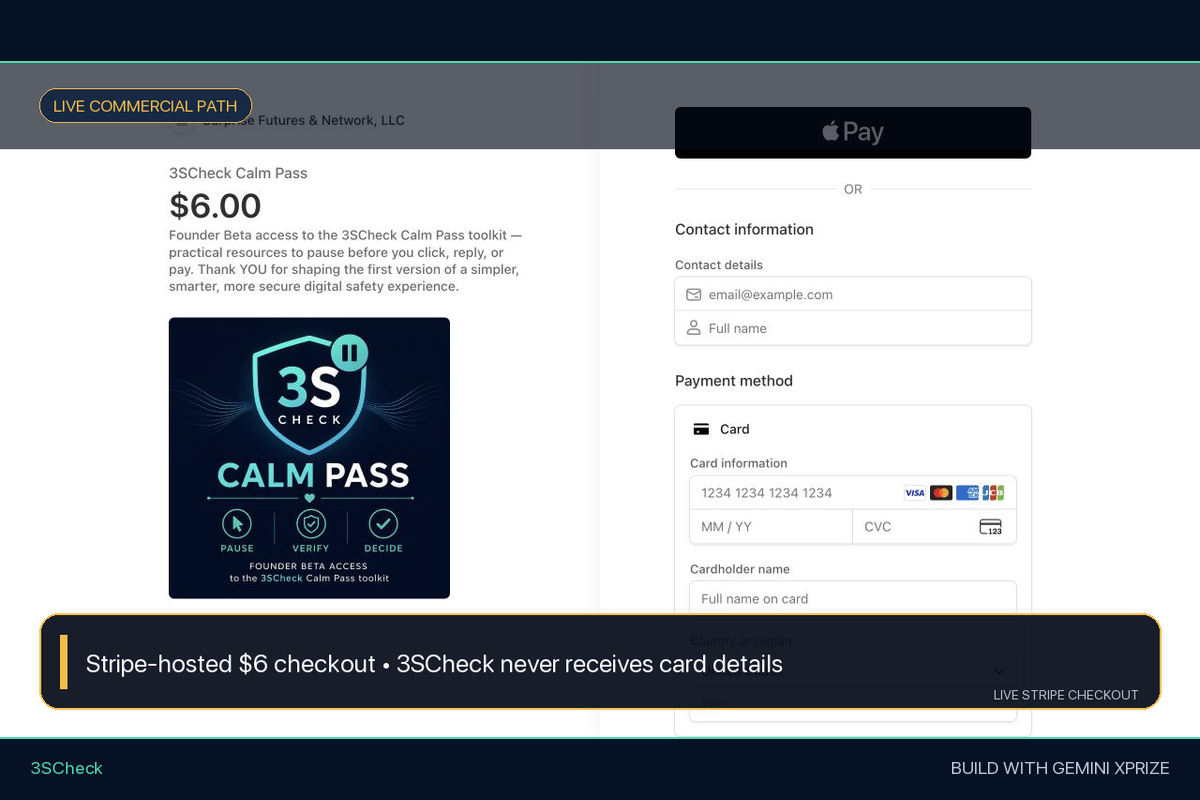
Live Stripe Checkout
-
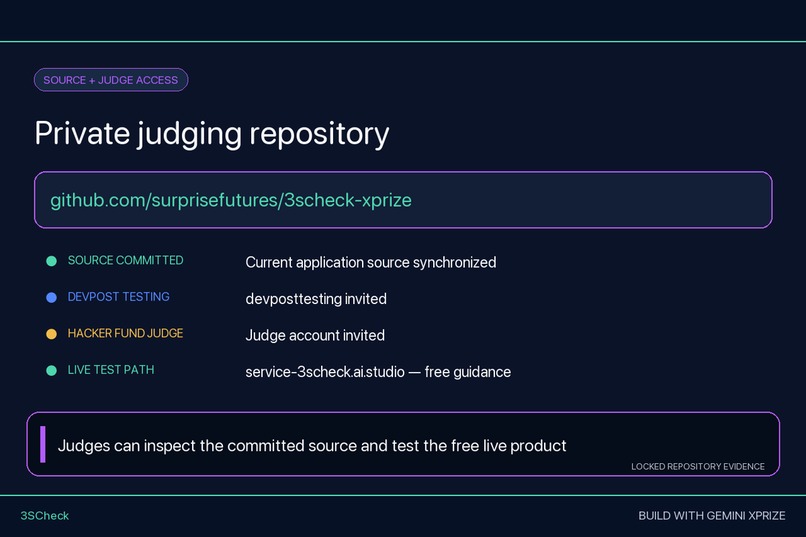
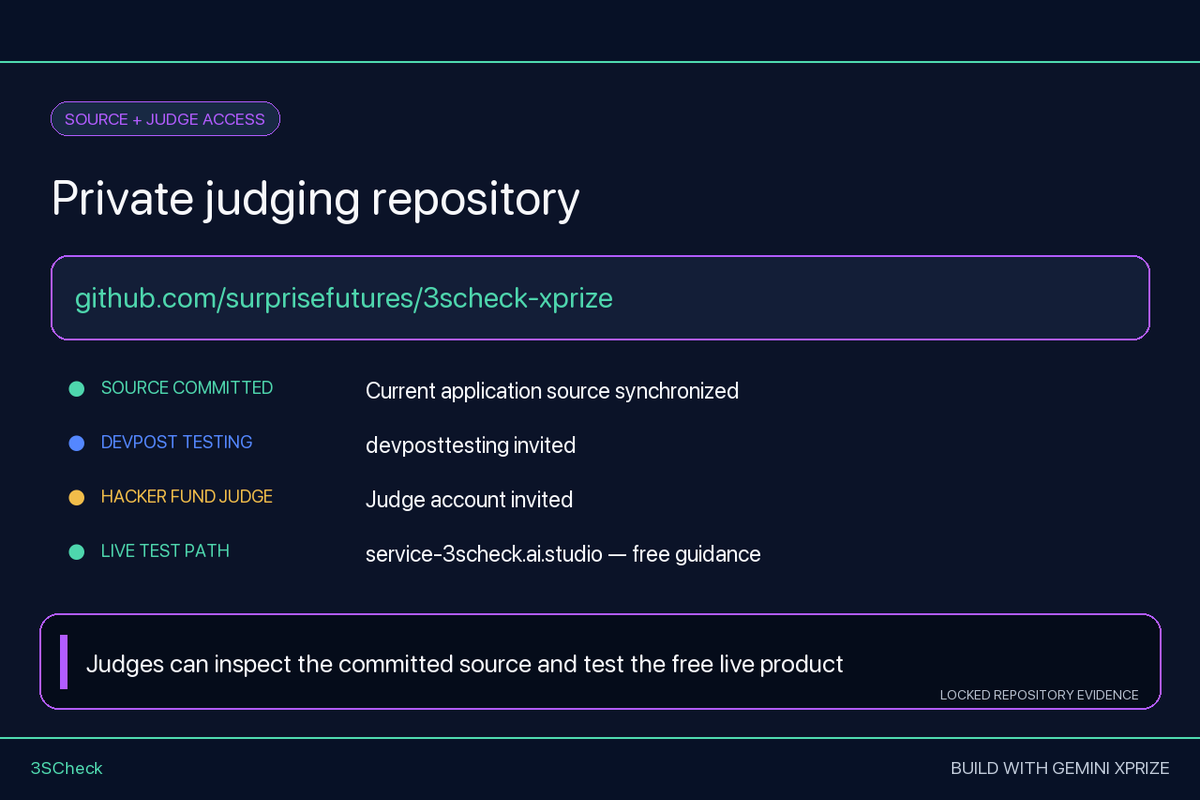
Private Judging Repository Github
-
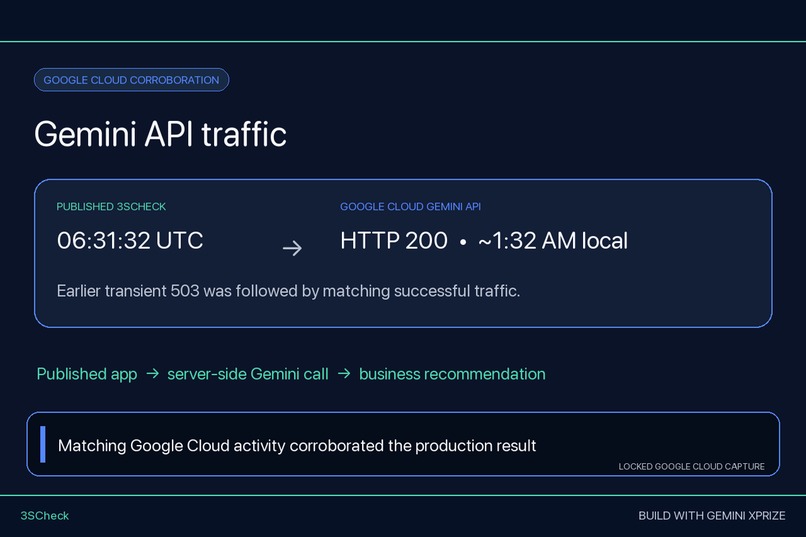
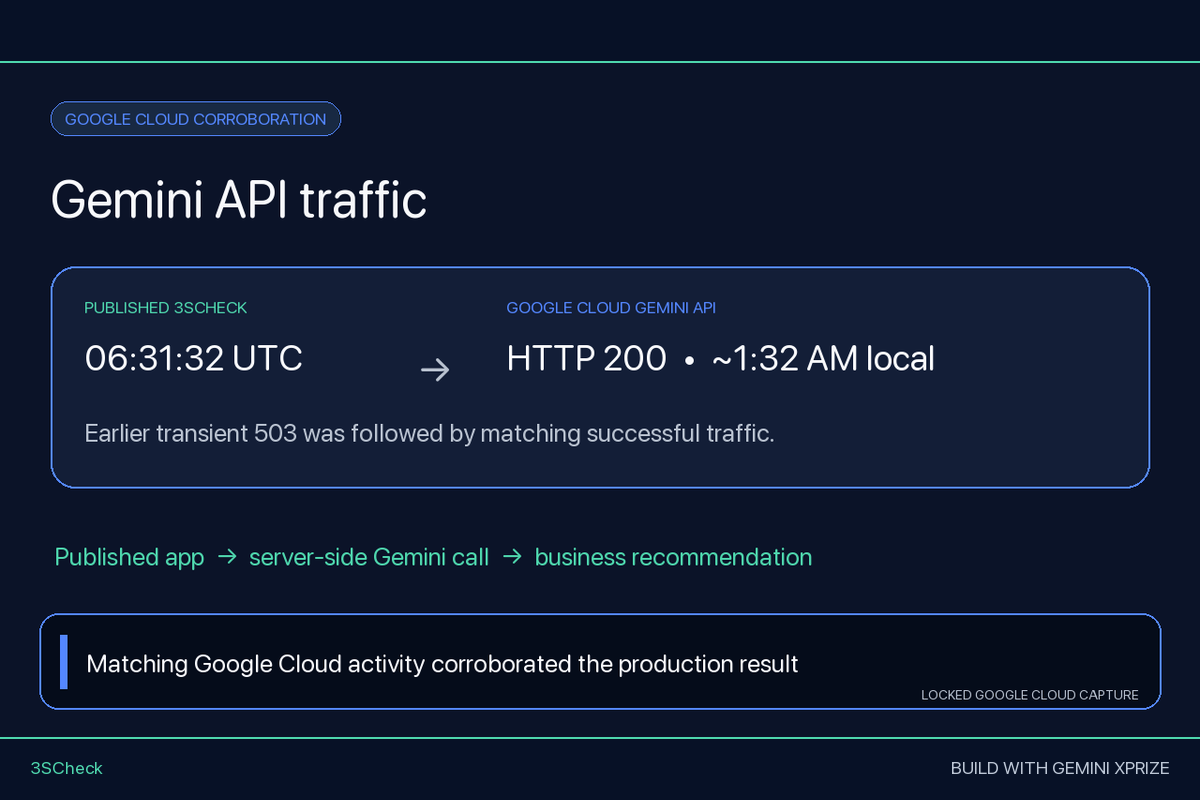
Gemini API Activity
-
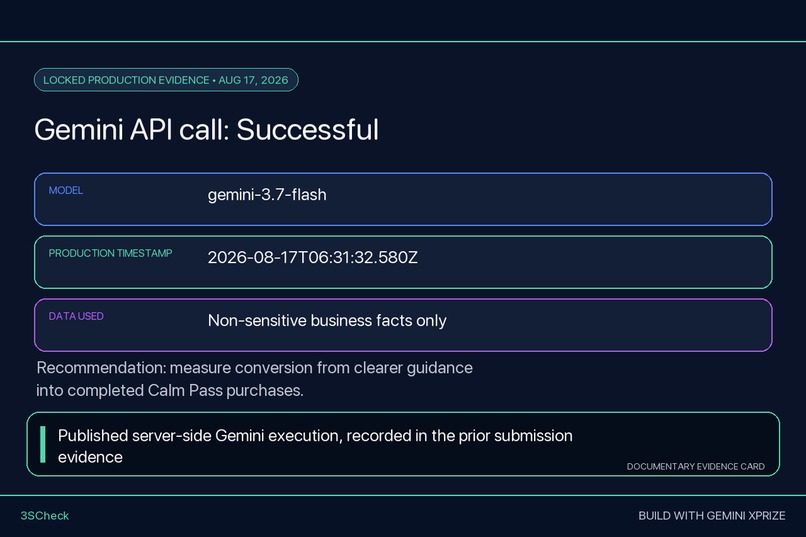
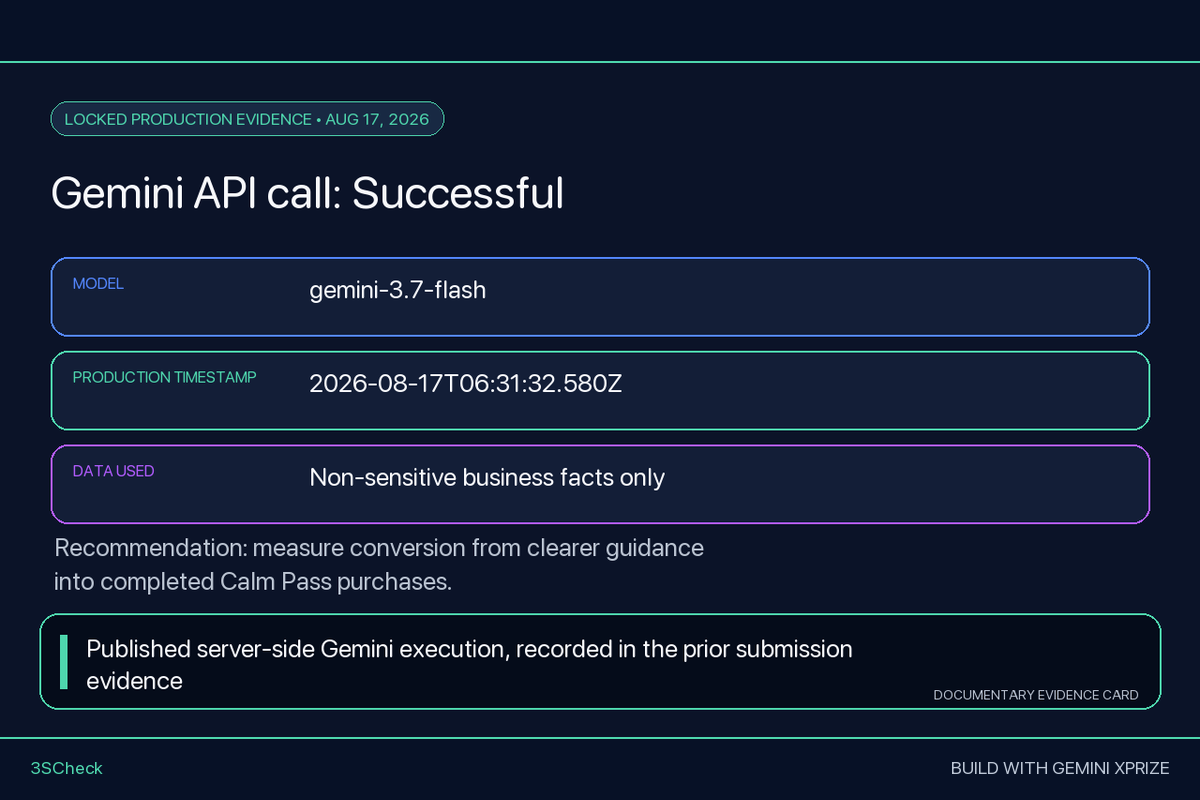
Gemini API Call Successful
-
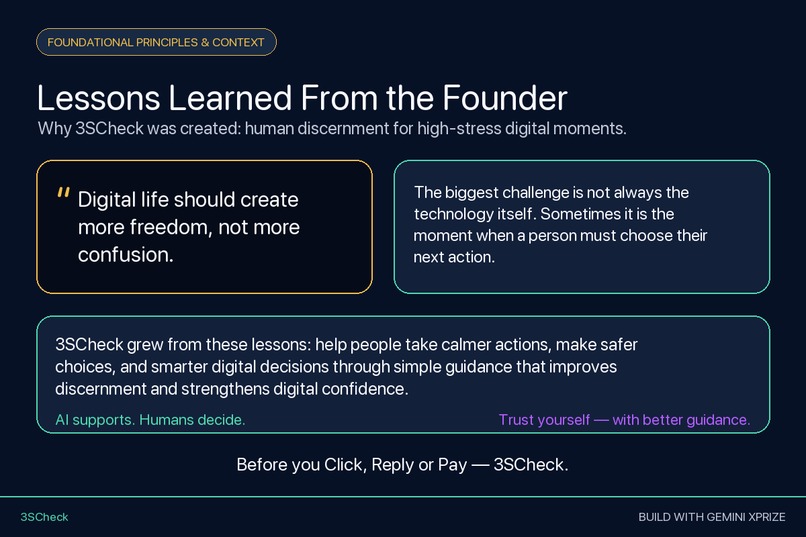
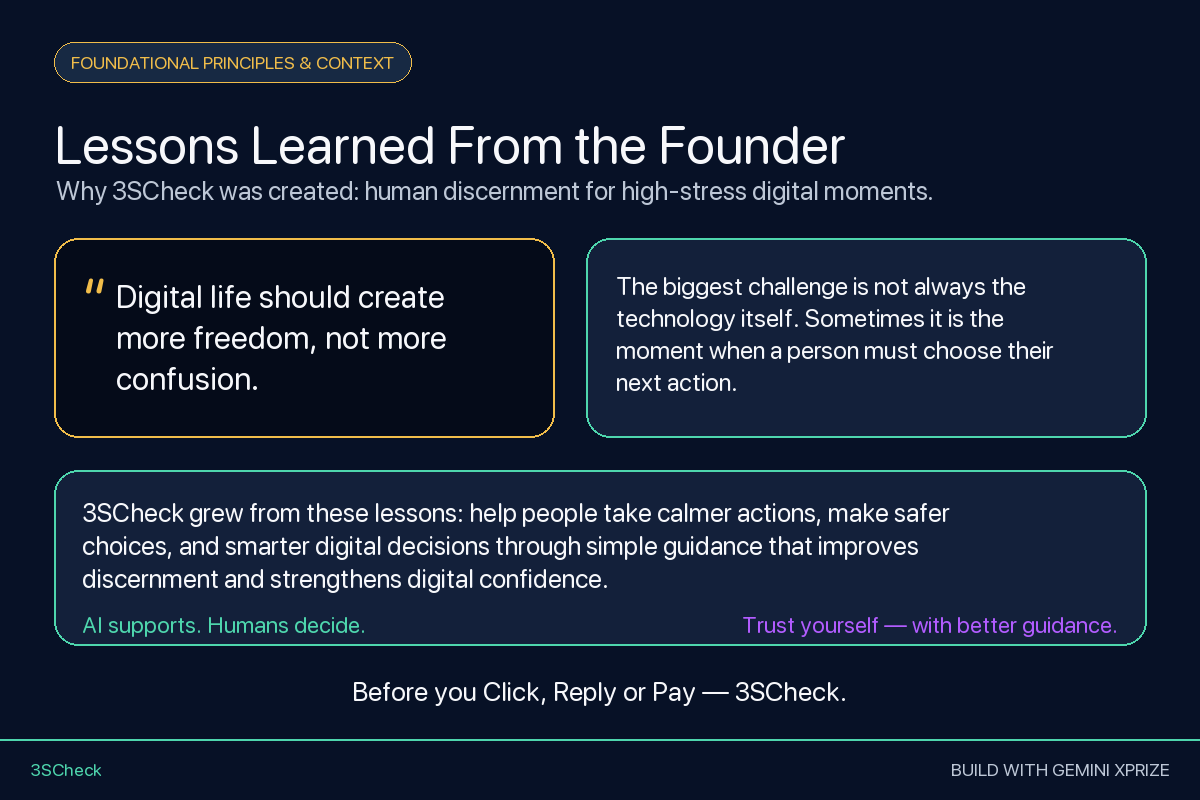
Lessons Learned from the Founder
-
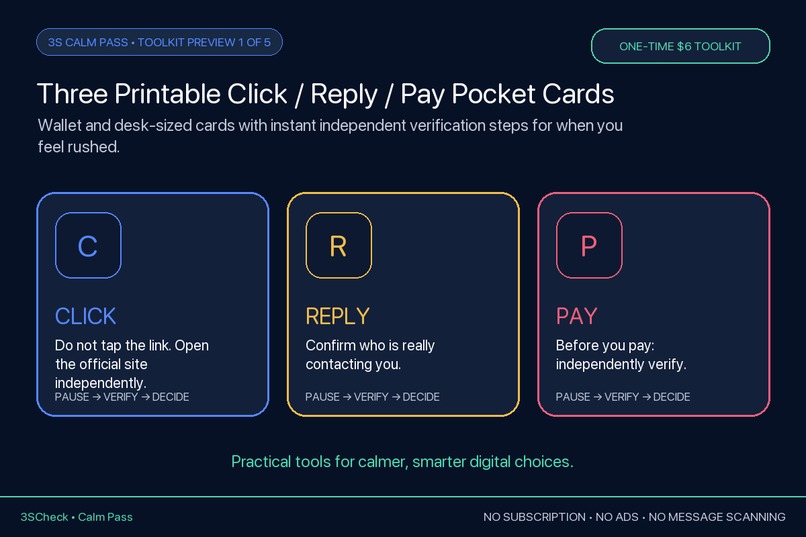
Calm Pass Pocket Cards
-
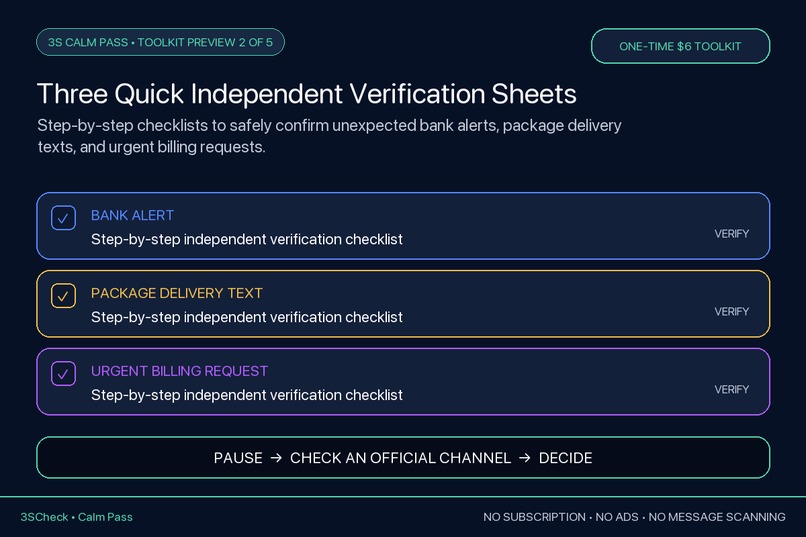
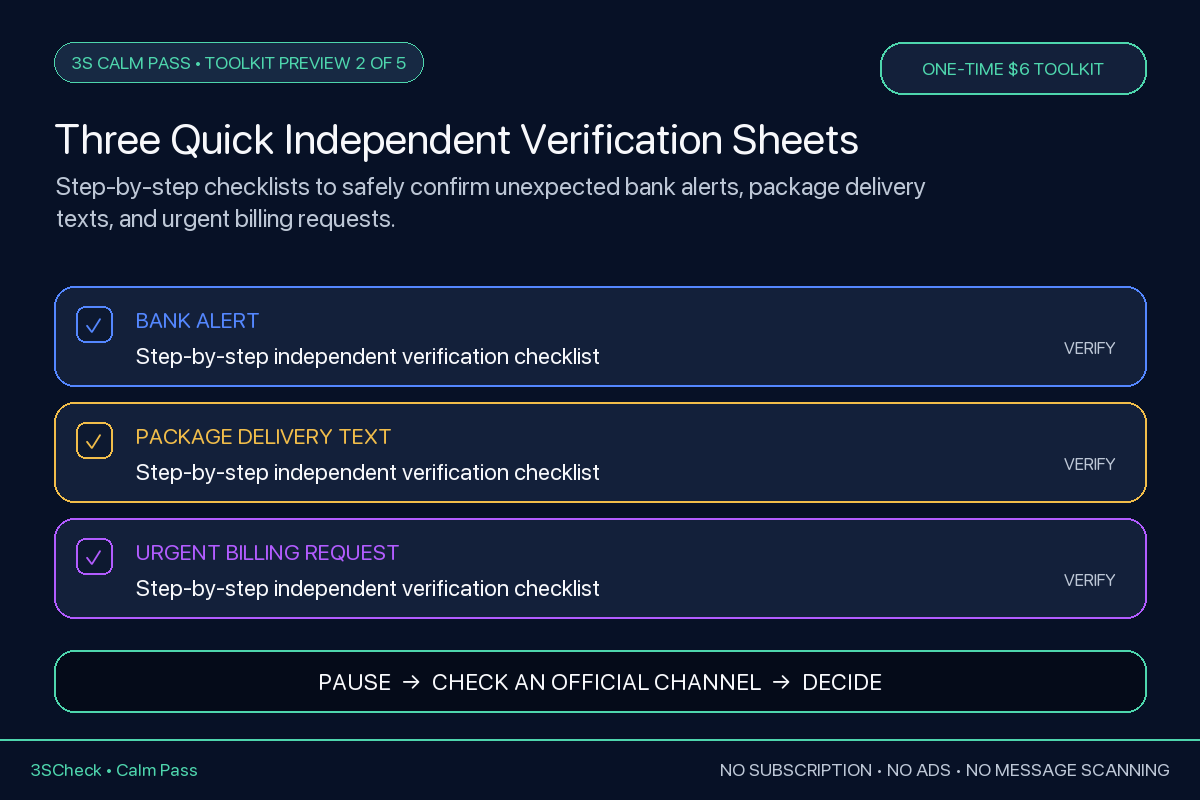
Calm Pass Verification Sheets
-
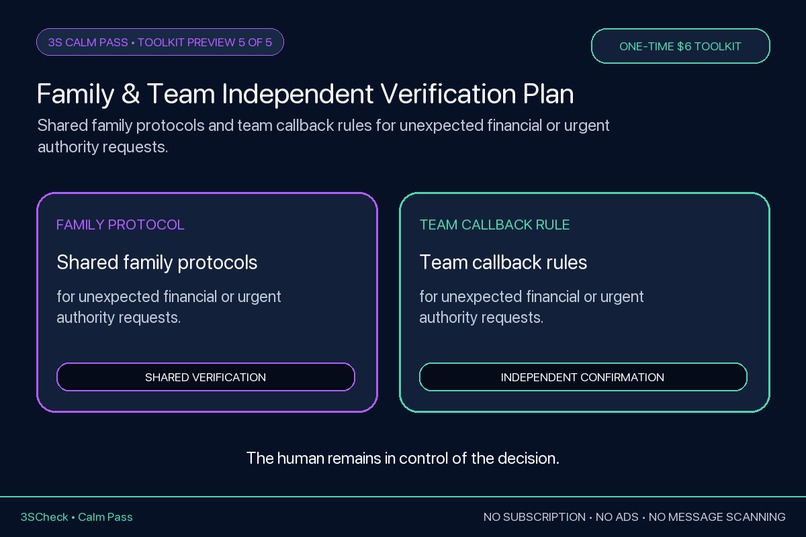
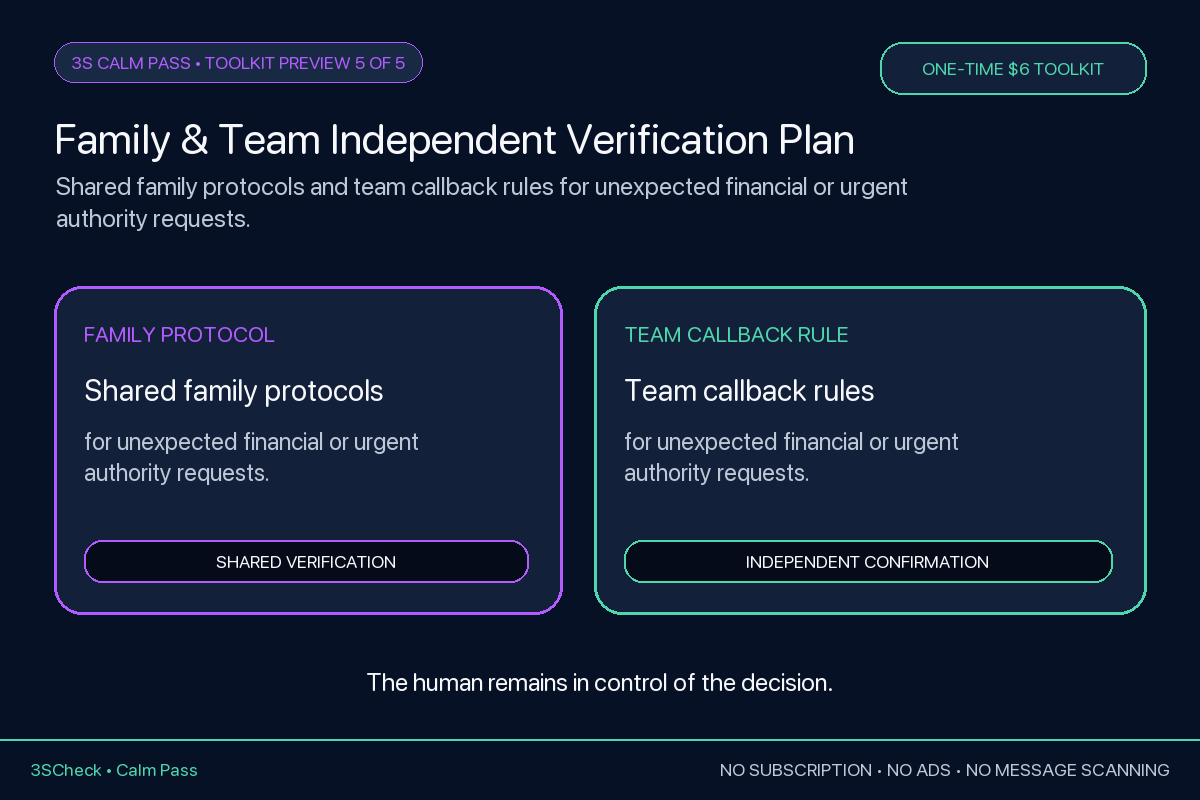
Calm Pass Family Team Independent Verification

Inspiration
Digital life should create more freedom, not more confusion. Yet the most consequential digital mistakes often happen in a brief, high-stress moment: an unexpected link, an unrecognized message, or a payment request that feels urgent.
The biggest challenge is not always the technology itself. Sometimes it is the moment when a person must choose their next action. That moment deserves better support, reliable sources, and calm discernment — to result in smarter decisions, secure options, and wiser choices.
3SCheck was created from a simple conviction: digital safety is not only a technology challenge. It is also a human decision challenge. AI supports. Humans decide.
What it does
3SCheck creates a better moment of choice before someone clicks, replies, or pays.
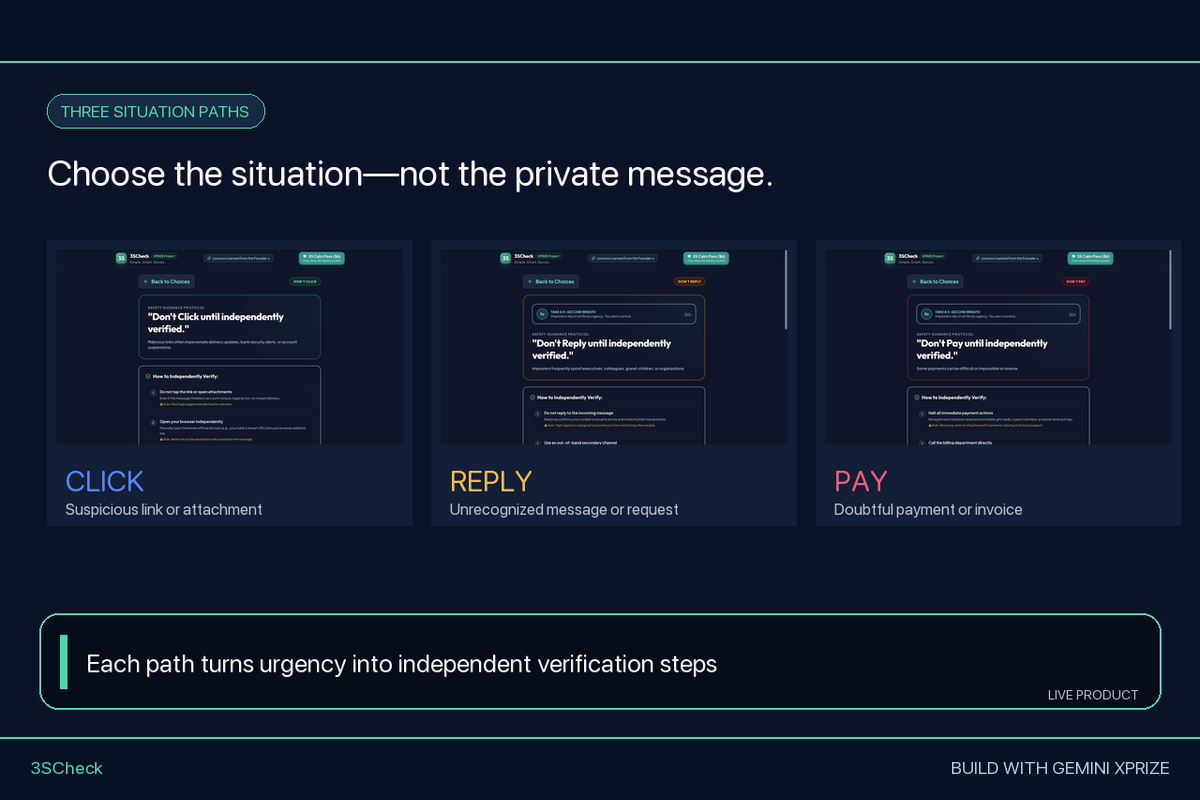
The live homepage begins with one clear question: “Something suspicious happened?” It then teaches the 3S Rule: Pause → Verify → Decide. Pause stops impulse reactions. Verify means checking independent, official channels. Decide means making an informed choice after the urgency has been reduced.
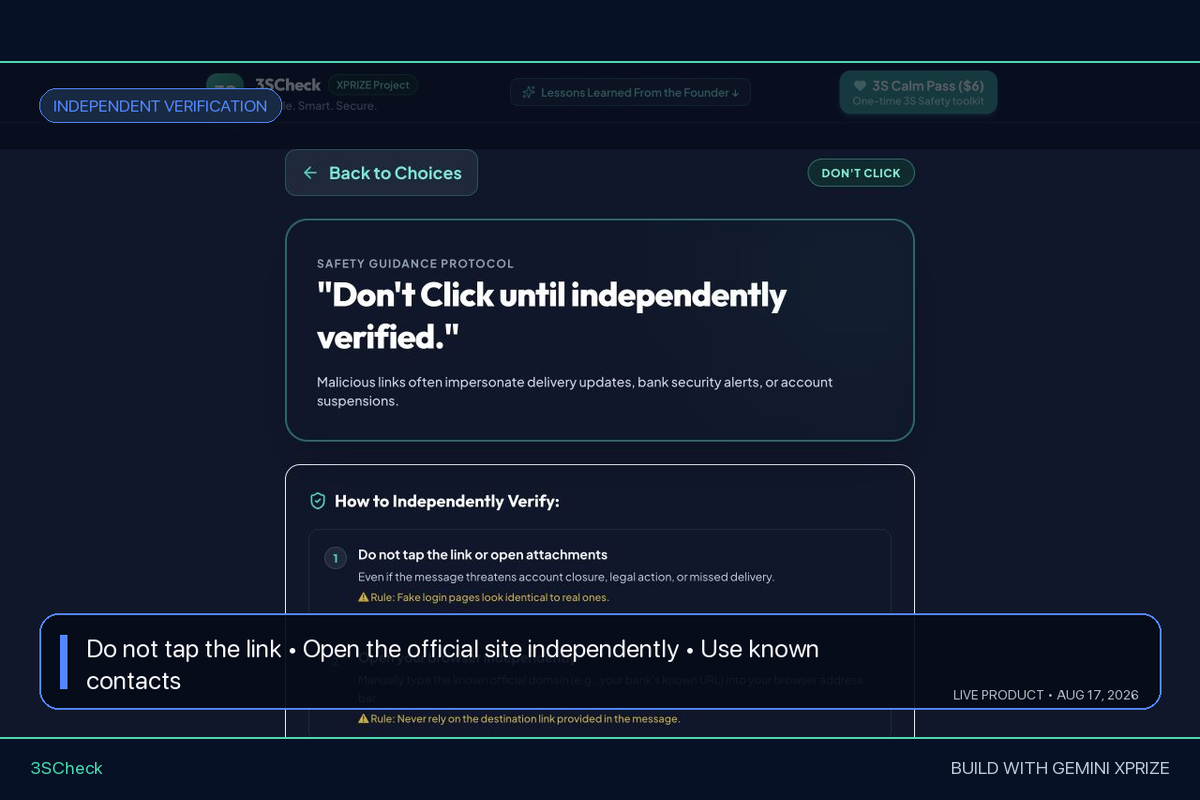
Visitors select the situation they are facing: a suspicious link or attachment, an unrecognized message or request, or a doubtful payment or invoice. Each path provides calm, human-controlled verification steps. For example, the guidance may tell someone not to tap the link, to open the official site independently, and to use known contact details rather than the message itself.
3SCheck is privacy-first. It never scans private messages, uploads suspicious content, interprets personal communications, or stores personal data. It is a human-controlled safety pause, not a scam scanner.
The optional 3S Calm Pass is a one-time $6 toolkit with printable pause cards, independent verification sheets, a home-screen shortcut guide, and shared family or team protocols.
How we built it
3SCheck is a live web product built with TypeScript, React, Vite, Node.js, Google AI Studio, Google Cloud, the Gemini API, Stripe, and GitHub.
The public product delivers situation-based safety guidance without collecting the private message, link, attachment, account, or financial information that caused the concern. Stripe hosts the $6 checkout, so 3SCheck does not receive or handle card details.
Gemini operates behind the business through the unlinked 3S Ops Insight workflow. It uses only non-sensitive operational facts to recommend the next product or business experiment. Customer messages never enter this workflow. On August 17, the published workflow recorded a successful server-side Gemini API call using Gemini 3.7 Flash. Google Cloud recorded matching API traffic and a successful HTTP 200 response.
The source is committed to a private GitHub repository. The required Devpost testing and Hacker Fund judging accounts have been invited, while judges also have access to the free live product.
Challenges we ran into
The central product challenge was clarity. Safety messaging can become so forceful that it creates more confusion at exactly the moment a person needs calm guidance.
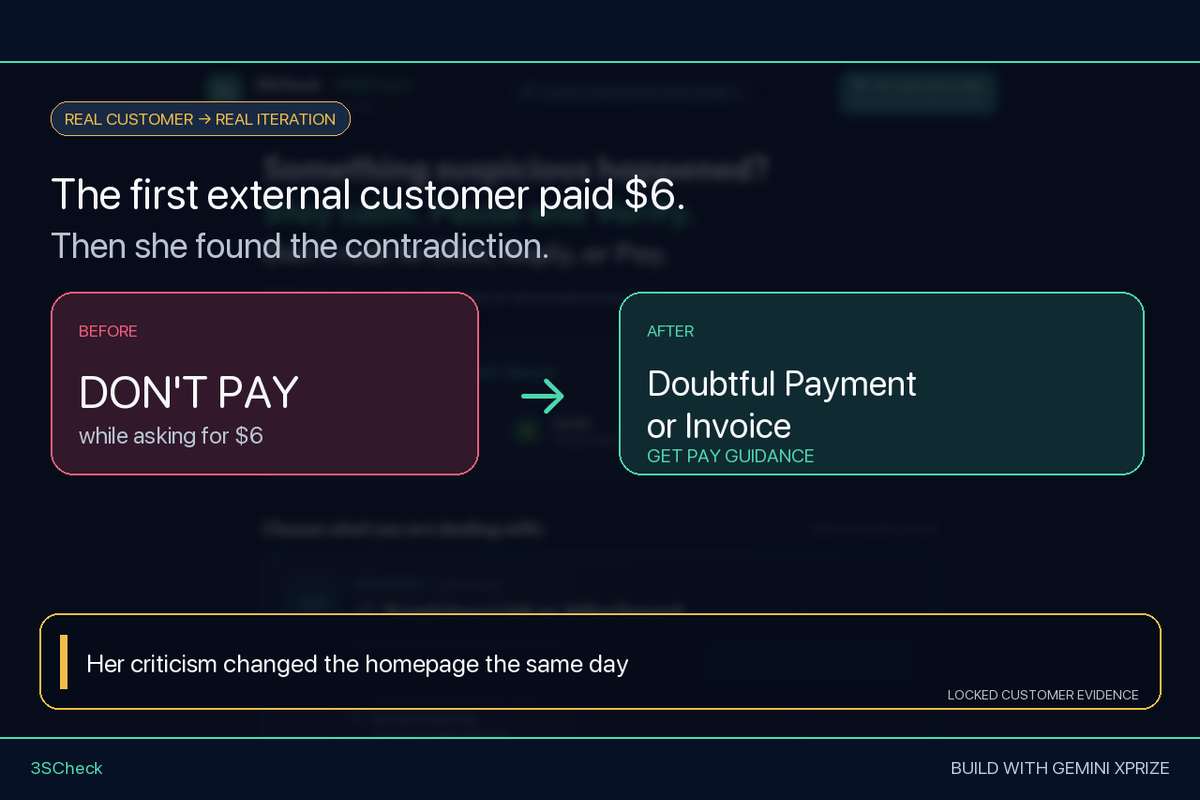
Our first external customer exposed this problem immediately after paying $6. The homepage displayed a large “DON’T PAY” warning while also offering a paid product. The customer correctly identified the contradiction. We responded by replacing the giant warning labels with clear, situation-based choices and guidance buttons.
We also had to keep the product useful without turning it into the obsolete scanner or upload architecture we had rejected. The solution was to preserve the human as the decision-maker, avoid collecting sensitive content, and use AI only where it adds value without compromising that boundary.
Accomplishments that we're proud of
3SCheck became a functioning, publicly accessible product with a real commercial path, a live $6 Stripe checkout, an external paying customer, committed source code, judge access, and verifiable production use of Gemini through Google Cloud literally in one weekend by a soloreneur and her AI team.
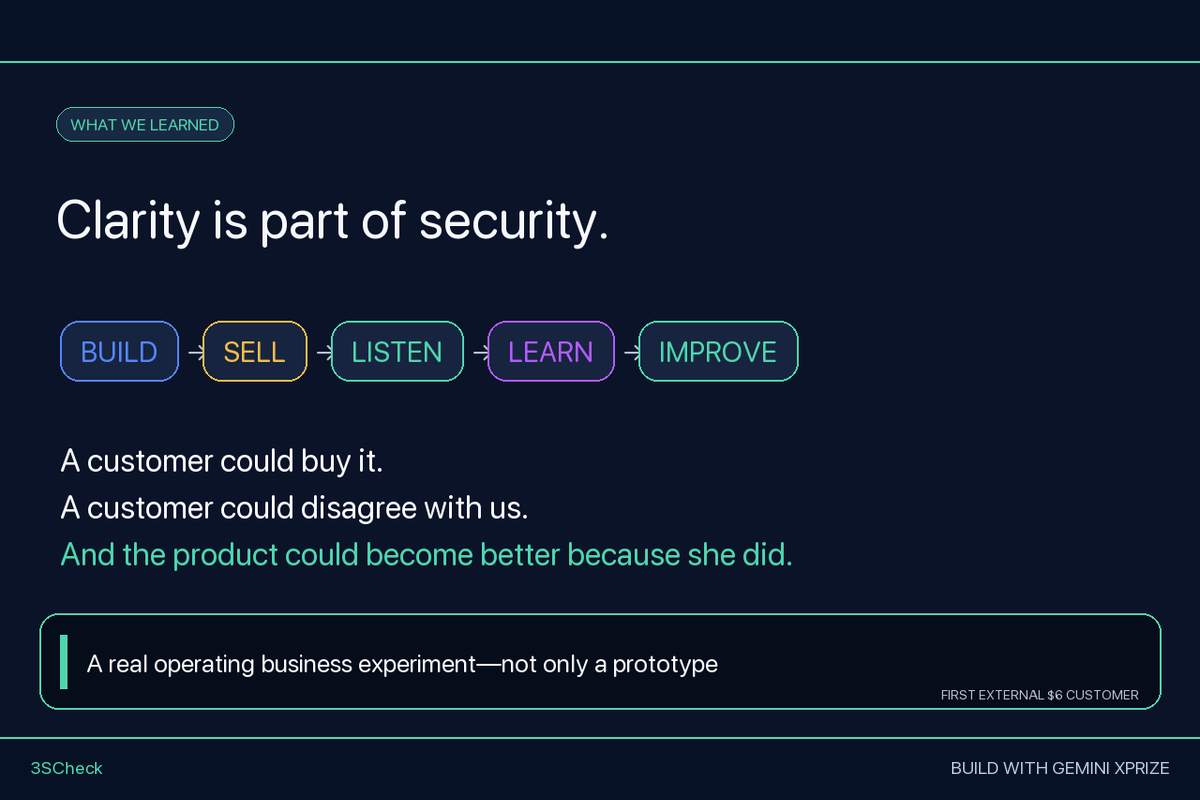
We are especially proud that the first sale did more than validate payment. It created an immediate learning loop that improved the homepage. A customer could buy it. A customer could disagree with it. And the product could become better because she did.
That loop — build, sell, listen, learn, improve — is one of the strongest results of the sprint.
What we learned
Clarity is part of security.
A system designed to protect people should not make legitimate users feel like outsiders to their own accounts, money, communications, or digital lives. Security, accessibility, ease of use, and human support must work together.
We also learned that a privacy-first product can still be AI-native. Gemini does not need access to a customer’s private message to improve the business. By separating customer guidance from non-sensitive operational analysis, 3SCheck can use AI while keeping the human in control of the final decision.
Trust yourself — with better guidance.
What's next for 3SCheck
The next step is to measure which guidance paths most effectively help people move from urgency to a calmer, informed choice, and which experiences lead users to adopt the 3S Calm Pass.
We will continue improving the three situation paths, expanding the practical toolkit, testing clearer calls to action, and using non-sensitive Gemini operational insights to prioritize the next business strategies. The long-term goal is simple: help more people take calmer actions, make safer choices, and smarter digital decisions while strengthening digital confidence.
Built With
- ai-native
- canva
- chatgpt
- claude
- devpost
- gemini
- github
- google-ai-studio
- google-cloud
- grok
- heygen
- node.js
- porkbun
- react
- stripe
- typescript
- vite


Log in or sign up for Devpost to join the conversation.